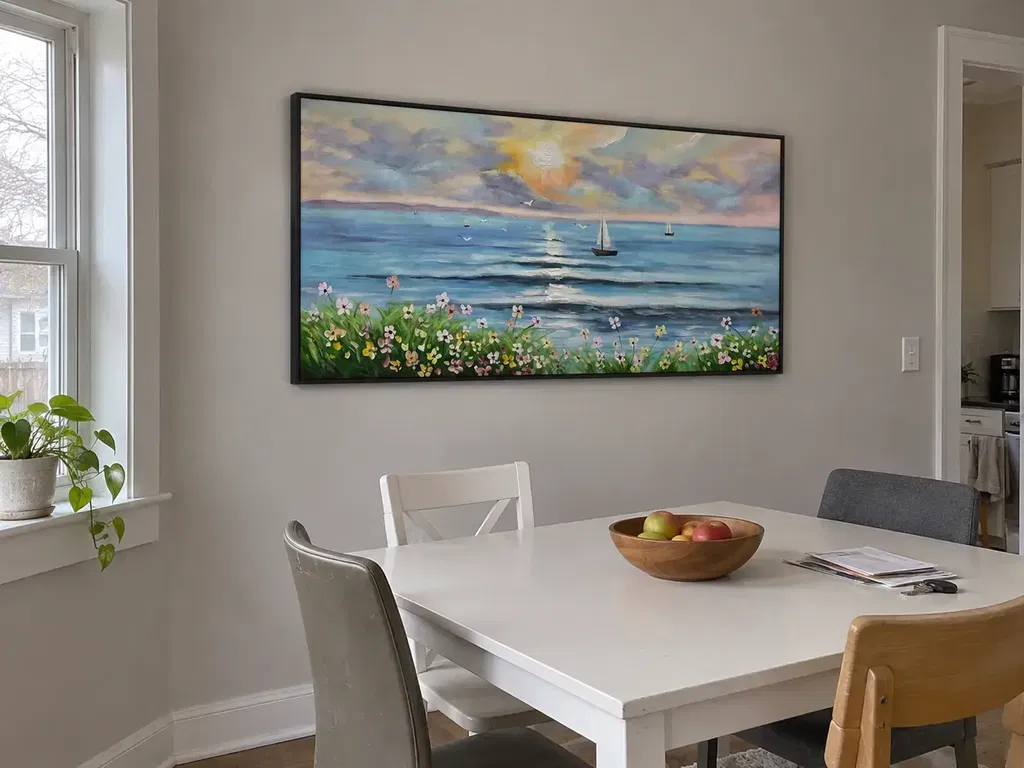
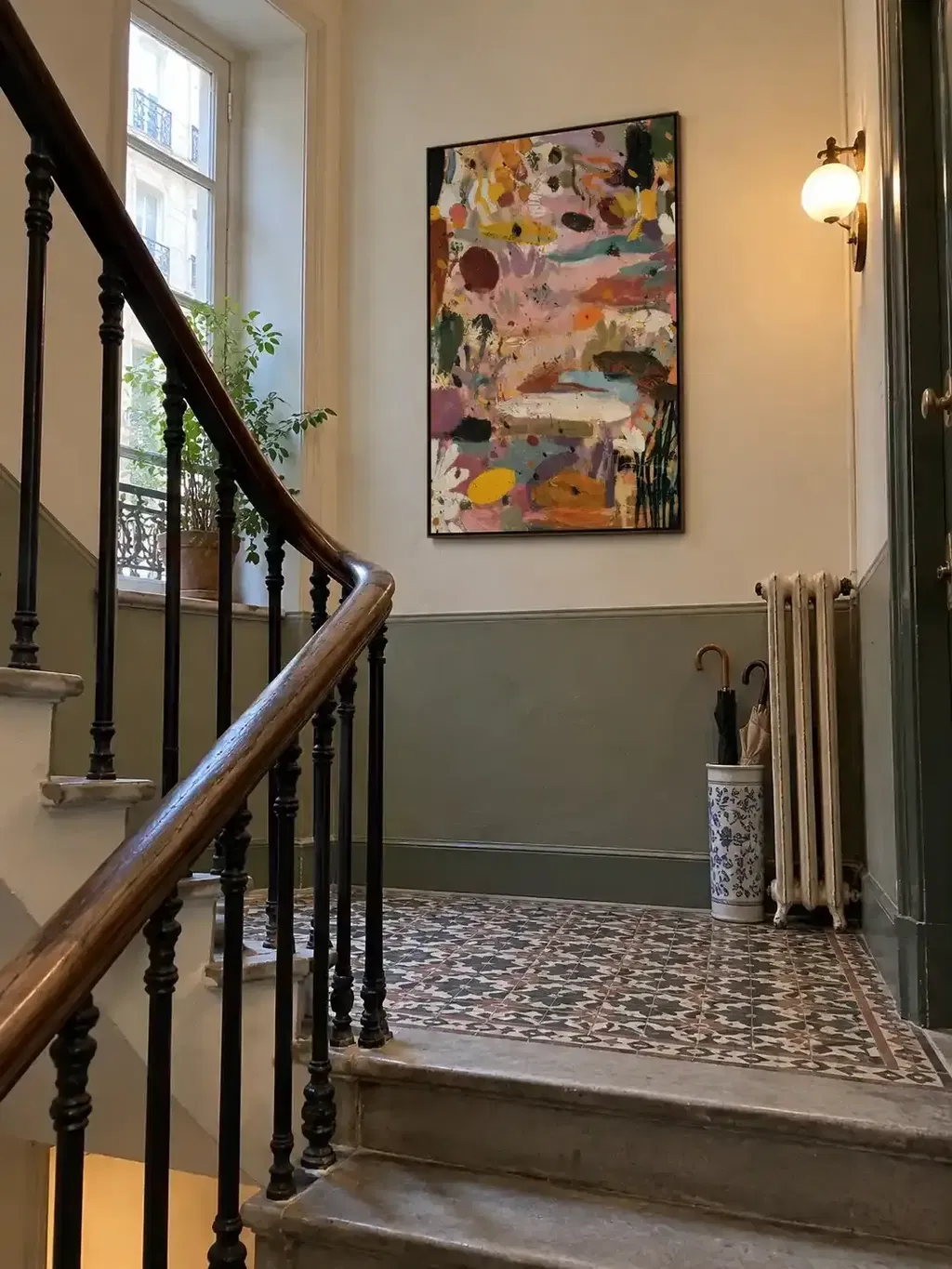
Collector Psychology: Why We Bond with Paint but Not with Ink
Why does a hand-painted canvas feel "alive" while a high-definition digital print often feels static or even hollow? As the global art market undergoes a structural shift—moving away from overpriced vanity auction pieces toward art with real application value—the psychology of art ownership is becoming a central focus for interior designers and collectors alike.
According to the Marketplace Art Report (2025), sales of high-end auction art plummeted 44% year-over-year in 2024. This retreat in purely financial art assets suggests that buyers are returning to what we call "performative authenticity." They are seeking pieces that offer emotional resonance and physical presence rather than just a line item in an investment portfolio.
In this article, we explore the neurological and psychological mechanisms that explain why human beings bond deeply with hand-painted mediums and why digital reproductions, despite their visual accuracy, often fail to sustain long-term satisfaction.
The Psychological Moat: Essential Identity and the Human Touch
The primary reason we bond with paint over ink is a phenomenon known as "artistic contagion." This is the subconscious belief that the artist’s physical energy and "essential identity" are transferred into the medium during the creative process.
The Nuclear Weapon Against AI Art
Research from Columbia University confirms that consumers value art labeled "AI-generated" 62% lower than authentic human-created art. This isn't just about a bias against technology; it's about the perceived lack of soul. Empirical research from the University of Chicago further demonstrates that digital replicas and NFTs lack the artist's "essential identity" in the eyes of the consumer, causing a collapse in perceived value.
When you look at a hand-painted mural, your brain isn't just processing colors; it is reconstructing the artist's gestures. Every visible brushstroke is a record of a human decision—a physical trace of a specific moment in time. This connection creates a "psychological moat" that digital prints cannot cross.
Logic Summary: The Authenticity Gap
- Input: Human gesture vs. Algorithmic output.
- Mechanism: "Essential Identity" transfer (UChicago study).
- Outcome: 62% higher perceived value for human-made works (Columbia study).
- Heuristic: If the texture reveals the artist's "struggle" or "flow," the bond is reinforced.

The Physics of "Micro-Interest" and the Three-Meter Rule
In the interior design world, experts often cite the "Three-Meter Rule." This is a practical heuristic we use to evaluate the aesthetic longevity of a piece.
- At Three Meters: The artwork should provide a cohesive, impactful image that anchors the room.
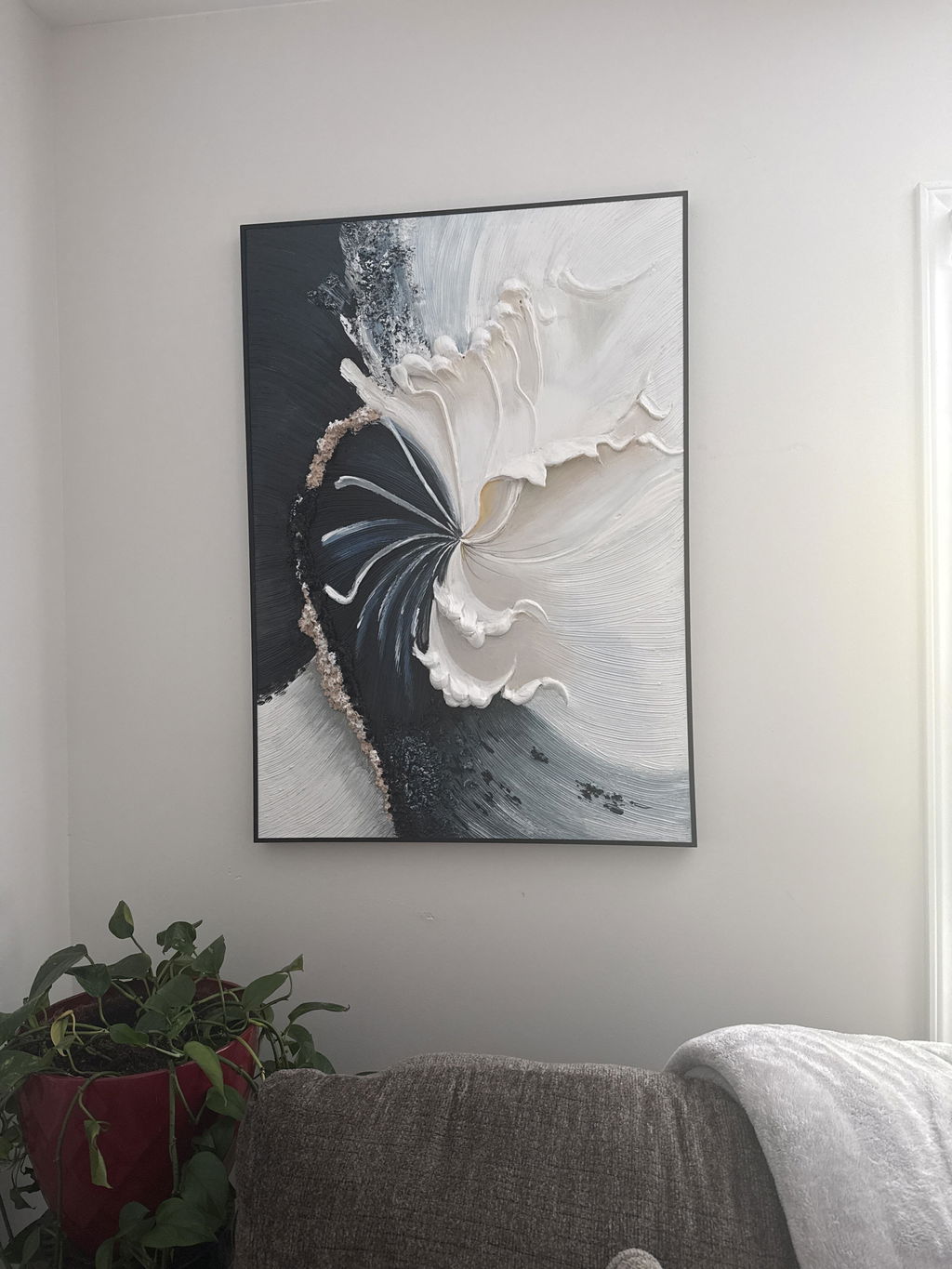
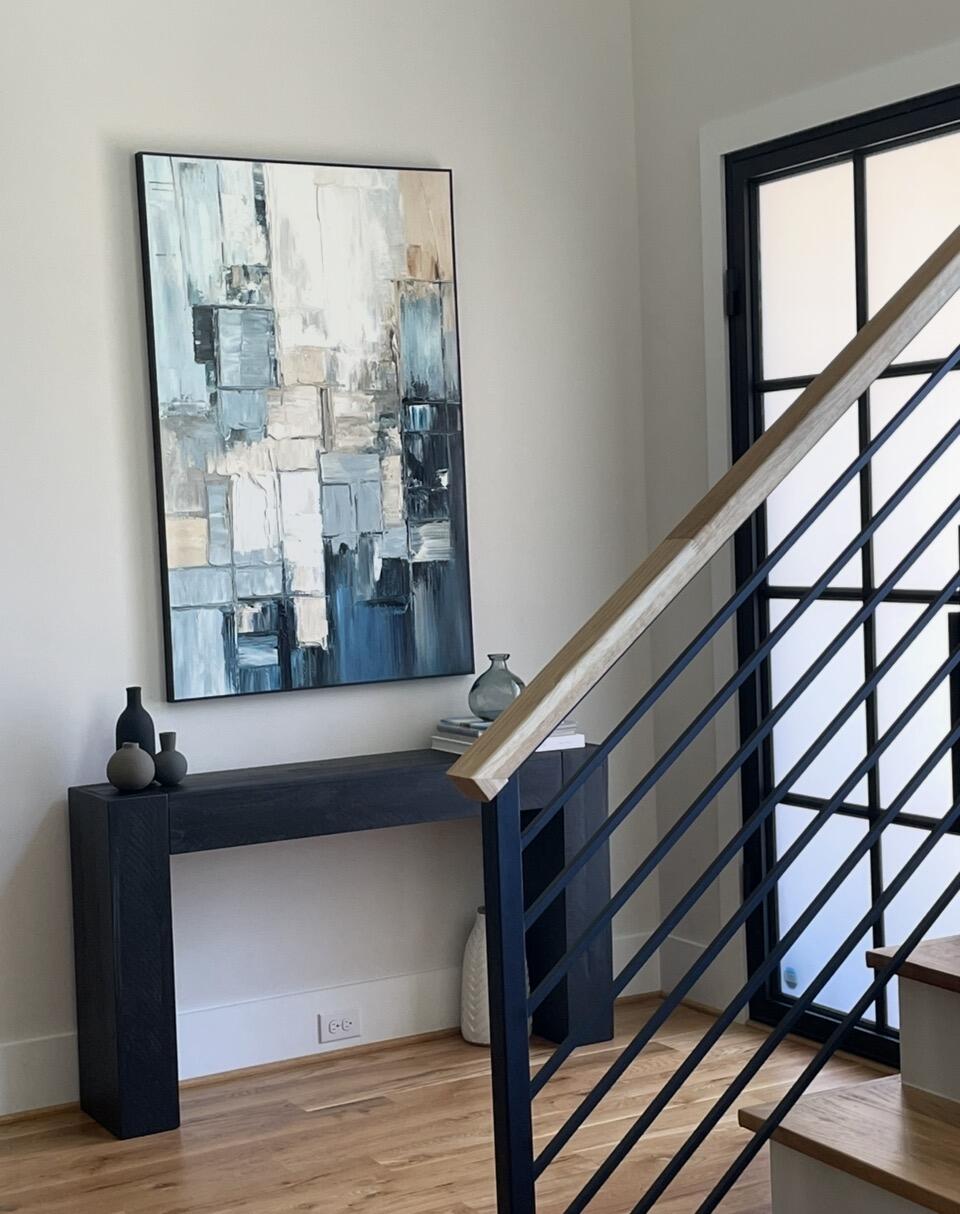
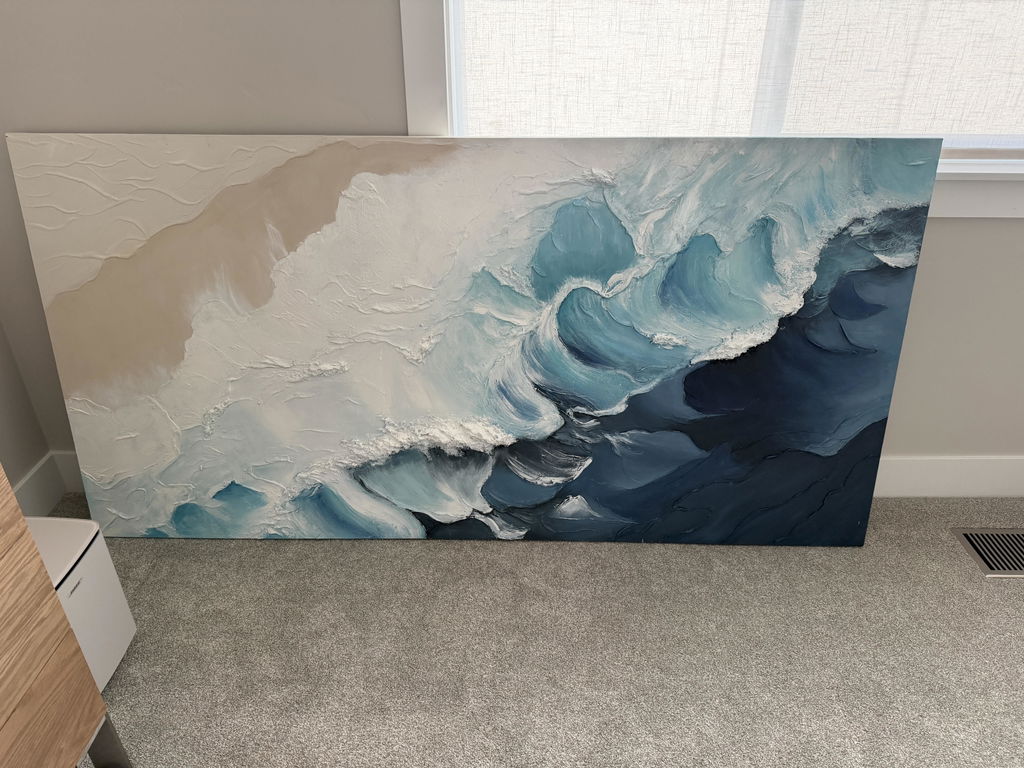
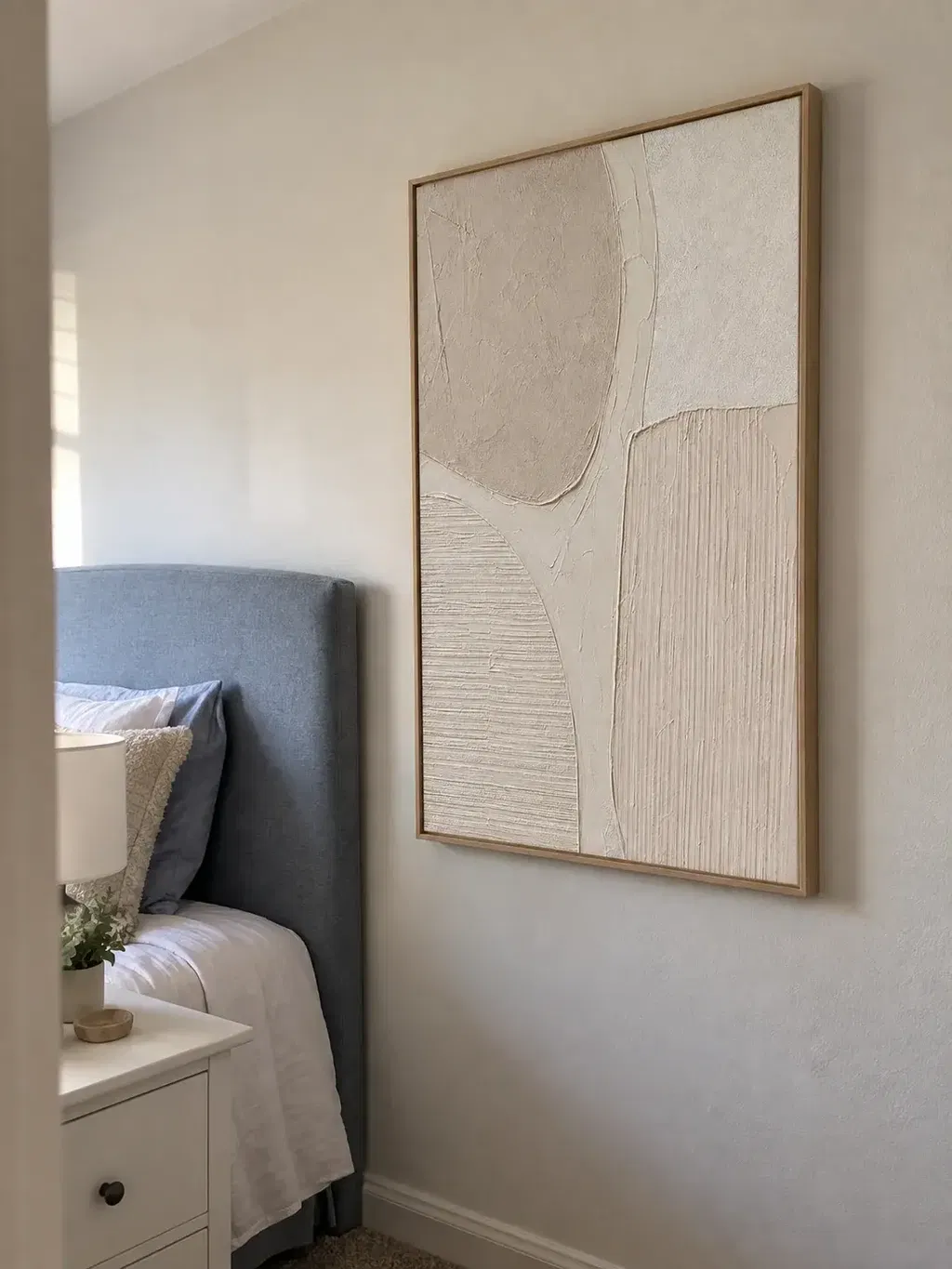
- At Thirty Centimeters: The artwork should reveal a new dimension—a landscape of topographical texture, impasto peaks, and pigment variations.
Digital prints suffer from "aesthetic fatigue" because they lack this micro-interest. Once you have seen the image from a distance, there is nothing left to discover. In contrast, hand-painted art "breathes" with the room.
Shadow Play and Natural Light Cycles
One of the most profound differences between paint and ink is how they interact with light. Hand-painted art utilizes physical relief (impasto) to create what we call "shadow play." Directional lighting, such as picture lights or natural window light, interacts with the physical peaks of the paint to create shifting shadows throughout the day.
This dynamic nature means the artwork changes as the sun moves. According to research on the tactile fruition of artworks, optical microprofilometry proves that the millimeter-scale texture of oil paintings is crucial to their aesthetic value. Tactile exploration—even if just visual—reveals data that the eye misses in a flat print.
The Optical Physics of Pigment
Why do hand-painted colors look deeper? It comes down to the Kubelka-Munk equation, a principle used by the Getty Conservation Institute to explain how light scatters within a paint film.
- Ink-on-Canvas: Light hits a flat layer of ink and reflects directly back.
- Pigment-in-Binder: Light travels into the layers of paint, reflecting off individual pigment particles (like Titanium Dioxide) before returning to the eye.
This internal scattering creates a sense of "inner glow" and saturation that ink simply cannot replicate.
| Feature | Hand-Painted (Oil/Acrylic) | Digital Print (Inkjet/Giclée) |
|---|---|---|
| Texture | 3D Relief (Impasto) | Flat / Implied |
| Light Interaction | Dynamic (Shadow Play) | Static |
| Micro-Interest | High (Visible brushwork) | Low (Pixelation/Dot gain) |
| Refractive Index | High (Variable by pigment) | Low (Uniform ink film) |
| Longevity | Centuries (with care) | Decades (UV fading risk) |
Methodology Note: This comparison is based on standard optical scattering theories and the "Three-Meter Rule" heuristic commonly used in high-end staging and gallery curation.

Neurological Mechanisms: Why Painted Walls Feel Comfortable
It isn't just "art for art's sake." There is a hardwired biological response to hand-painted environments. A systematic review of 85 records published in NCBI shows that passive art viewing consistently activates the medial prefrontal cortex (mPFC) and the amygdala. These areas are responsible for emotional regulation and reward.
The Healing Power of Biophilic Murals
For commercial spaces and private clinics, the stakes are even higher. A University of Pennsylvania review found that 61% of patients in clinical settings explicitly stated that environmental artworks reduced their stress, and 73% reported significant mood improvements.
When these artworks follow biophilic design principles—incorporating natural landscapes and organic textures—they produce the same stress-reduction effects in the brain as being outdoors. Research on Tokyo office spaces suggests that nature-based biophilic murals can intervene in high rates of employee burnout, reducing cognitive fatigue by providing a "soft fascination" focal point.
The Economic Reality: Asset Value and Property ROI
While many buy art for emotion, the financial data is undeniable. Hand-painted art is a "cultural heritage asset," whereas a print is a "disposable decor item."
Boosting Real Estate Prices
The Royal Society conducted a 10-year analysis using the CAR (Condition-Adjustment-Regression) model. They found that neighborhoods with higher "art" geo-tags (specifically murals and public art) saw greater relative house price ranking gains.
In the commercial sector, the impact is even more dramatic. Chicago’s Millennium Park art projects drove an estimated $1.4 billion in real estate-related growth. For property owners, a custom mural isn't just a wall treatment; it’s a "permanent physical billboard" that generates foot traffic. A University of Cincinnati study of over 300 murals confirmed they remain directly correlated with significant increases in pedestrian traffic, even when controlling for population density.
The 2026 Trend: Artisan Craftsmanship
Looking forward, market data from Zillow and Yelp indicates a "flight to quality." Mentions of "artisan craftsmanship" in home listings rose 21% in 2024, and searches for "custom framing" skyrocketed 329% (PA Realtors 2026 Trends). High-end interior design is moving toward "understated elegance" where texture is the soul of the room.
Ethics and Safety: What’s Inside Your Art?
A critical, often overlooked aspect of the "bond" with art is the peace of mind regarding material safety.
The VOC Trap
Many mass-produced prints use solvent-based inks that emit Volatile Organic Compounds (VOCs) for weeks after installation. The EPA warns that indoor air pollution is often deadlier than outdoor. For large-scale murals in healthcare or nurseries, LEED and WELL certifications require strict adherence to low-VOC standards.
Hand-painted murals, when executed with modern professional materials, offer a safer alternative. Aalto University experiments proved that coatings on wood with 16% moisture (common in canvas frames) emit significantly lower VOCs during the curing process than industrial prints.
The Cadmium and Lead Concern
Historically, art was dangerous. Today, professional artists use safer alternatives like Titanium White, which now dominates 90% of the white pigment market, replacing the highly toxic lead white (NCBI). When you commission a hand-painted piece from a reputable source, you are ensuring that the pigments meet ASTM D-4236 standards, which require a toxicologist review of the formulation every five years.
Supporting the Creative Economy
Finally, there is the moral bond. A Wharton School survey found that 87% of consumers strongly agree that artists should receive fair compensation. By choosing hand-painted art, collectors directly support the freelance workforce that the NYC Creative Economy Report identifies as financially vulnerable. This "ethical consumption" adds a layer of satisfaction that a machine-made product can never provide.
Technical Deep Dive: Why Acrylics Haze and Oils Fade
For the hardcore collector, understanding the chemistry of your art is part of the bond.
The "Haziness" Phenomenon
Have you ever noticed a white, hazy film on an acrylic painting? This is not a defect; it is chemistry. Tate Conservation research reveals that PEG-type surfactants in acrylic paint migrate to the surface when humidity rises, forming water-soluble microcrystals. A gentle wipe with a water-based swab—a technique confirmed by the Tate AXA Art Modern Paints Project—actually helps stabilize the paint film and prevents dirt adhesion.
Longevity Modeling: Acrylic vs. Oil
While oil paint is the traditional king, modern acrylics have a hidden advantage. Golden Artist Colors laboratory data clarifies that acrylic polymers are massive long-chain molecules that remain flexible. Oil films undergo "oxidative cross-linking," which makes them brittle over decades.
Modeling Note: Aesthetic Longevity We estimate that a hand-painted acrylic mural in a climate-controlled room (50% RH, 22°C) will maintain 95% of its color saturation for ~75 years before requiring professional cleaning, compared to ~15 years for a standard digital print before UV degradation becomes noticeable.

Conclusion: Investing in the Human Experience
The bond we feel with paint is not a sentimental illusion; it is a multisensory response to physical reality. From the "shadow play" of impasto to the neurological stress reduction of biophilic textures, hand-painted art offers a depth of experience that ink-on-canvas cannot replicate.
As the Art Basel and UBS Art Market Report shows, the global art market remains a $65 billion powerhouse because humans fundamentally value the unique, the handmade, and the authentic. Whether you are an interior designer looking to anchor a luxury space or a homeowner seeking a "camera-ready" sanctuary, the decision to choose paint over ink is an investment in both your environment's value and your own psychological well-being.
References & Authoritative Sources
- Market Trends: Marketplace Art Report 2025 | Art Basel & UBS 2024
- Psychology & Neurology: Columbia University AI Study | NCBI Emotional Regulation Study | UPenn Neuroaesthetics Review
- Economic Impact: Royal Society Property Price Analysis | Americans for the Arts (AEP5)
- Material Science: Getty Conservation Color Science | Tate Modern Paints Project | EPA Indoor Air Quality
Disclaimer: This article is for informational purposes only. When commissioning murals or art for clinical or public spaces, consult with certified environmental health and safety (EHS) professionals to ensure compliance with local building codes and air quality standards.
Related Insights: