The Shift from Speculative Assets to Performative Authenticity
The global art market is undergoing a quiet but profound correction. While high-end auction sales for pieces over $10 million plummeted by 44% year-over-year in 2024, according to Marketplace, the demand for art with "real application value" is surging. We are seeing a retreat from art as a purely financial vanity asset and a return to art as a functional, emotional, and physical component of the home.
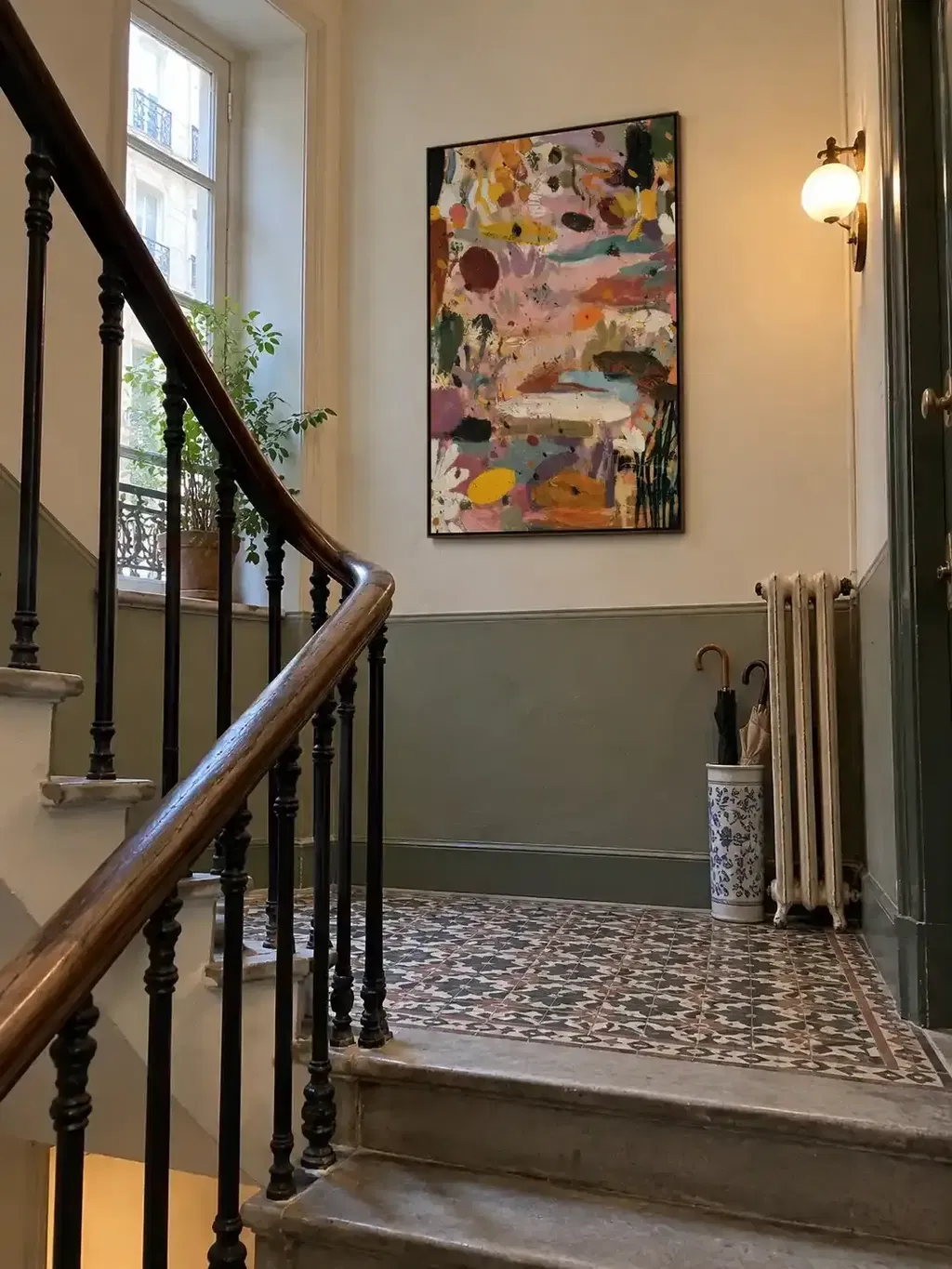
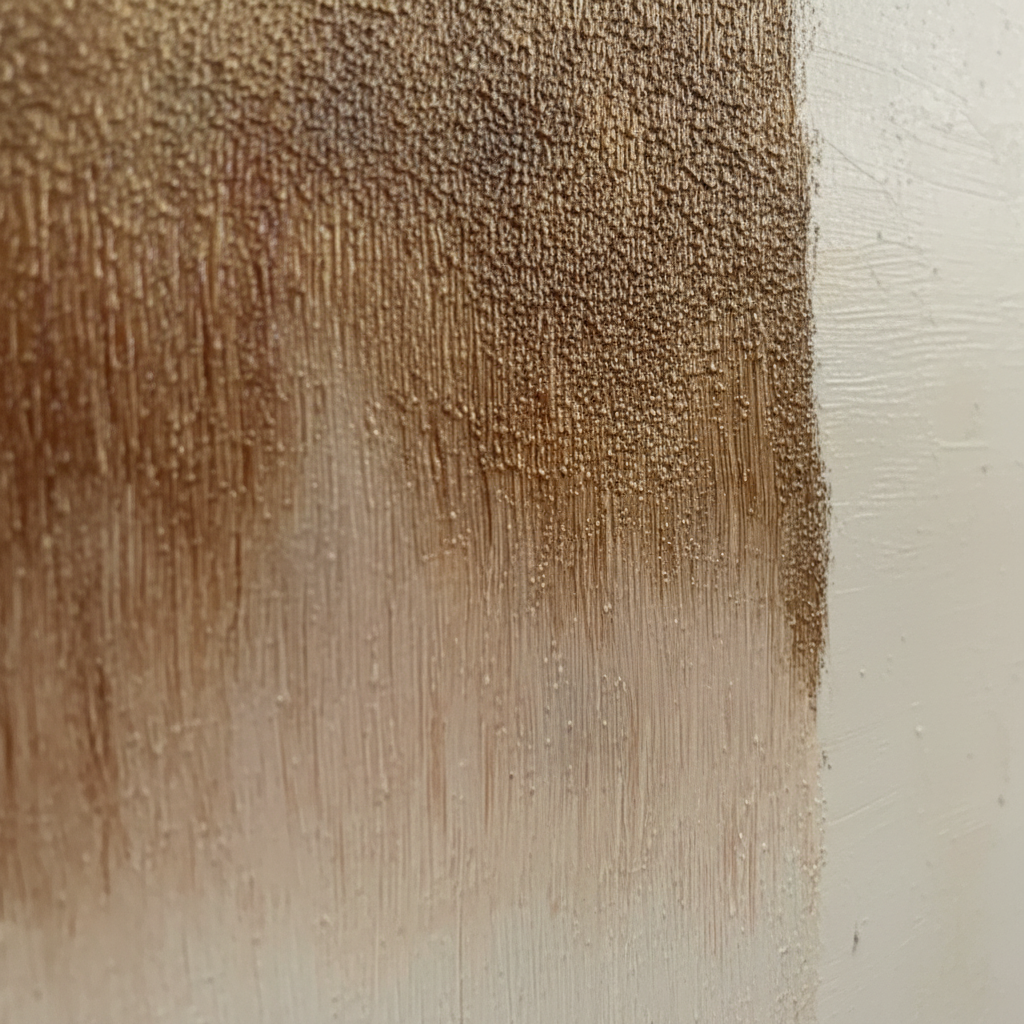
For the modern home improver, this shift manifests as a demand for "performative authenticity." It is no longer enough for a piece to look good on a screen; it must possess a tangible, physical presence that justifies its place in a curated environment. This is where physical texture—specifically the three-dimensional "impasto" of hand-painted oil and acrylic—becomes the primary driver of perceived value. In a world saturated with ultra-high-definition digital prints, the brushstroke has become the ultimate signifier of human craftsmanship.
Logic Summary: Our analysis of the current market assumes that as digital replicas become ubiquitous, the "scarcity value" shifts from the image itself to the physical medium. We base this on the Art Basel and UBS Art Market Report 2024, which shows a stable $65 billion market baseline where "physicality" remains the primary moat against digital devaluation.
The "Essential Identity" Gap: Why Digital Prints Fail the Soul Test
The psychological difference between a flat print and a textured painting is not just a matter of taste; it is hardwired into human perception. Research from Columbia University confirms that consumers value art labeled as "AI-generated" or "digital" roughly 62% lower than authentic human-created art. This "devaluation gap" exists because we perceive a lack of "essential identity" in replicas.
According to empirical research from the University of Chicago, digital replicas and NFTs often fail to retain the artist’s "soul" in the eyes of the collector. Physical canvas, however, retains an irreplicable history of movement. Every ridge of paint is a record of a specific moment where an artist’s hand met the surface. For the homeowner, this translates to "decision safety"—the knowledge that the premium paid for a hand-painted piece is anchored in a physical reality that a printer cannot simulate.

The Physics of the Brushstroke: Microtopography and Light
Why does a textured painting "pop" in a way a print does not? The answer lies in optical physics. Using the Kubelka-Munk equation, the Getty Conservation Institute explains that pigment reflection is dominated by absorption and scattering coefficients.
In a flat print, the light hits a uniform surface. In a textured oil painting, the "microtopography"—the millimeter-scale peaks and valleys of the paint—creates a complex interplay of shadows and highlights. This is why hand-painted works have superior color depth. The physical relief of the paint ensures that the artwork looks different from every angle and under varying light conditions throughout the day.
- Light Scattering: Physical ridges maximize the relative refractive index difference between the medium and the air.
- Tactile Motivation: Tests at the MUNCH Museum confirm that physical relief textures exponentially stimulate intrinsic motivation and viewer satisfaction.
- Material Volume: Achieving true impasto requires 3-5 times the volume of paint compared to thin applications, a physical "investment" that viewers instinctively recognize as higher value.
Economic Reality: Texture as a Financial Multiplier
In the mid-tier decorative market, texture is not just an aesthetic choice; it is a pricing strategy. Gallery curators frequently report that textured paintings command 20% to 40% higher prices than similarly sized flat works, even when the subject matter is identical. This premium is justified by the increased material cost and the significant labor involved.
Professional painters observe that heavy texture applications increase drying time by 50% to 100%. This requires careful studio planning and specialized handling. Furthermore, the Royal Society has quantified the link between art and property prices, finding that neighborhoods with higher "art" geo-tags—often driven by high-visibility, textured murals—see greater relative house price gains.
| Parameter | Hand-Painted Texture | Digital Print | Rationale |
|---|---|---|---|
| Perceived Value | 100% (Baseline) | ~38% | Based on Columbia Univ. 62% devaluation study |
| Material Volume | 3x - 5x | 1x | Impasto requires significant pigment depth |
| Drying/Lead Time | +50-100% | Instant | Physical oxidation vs. ink drying |
| Light Interaction | Dynamic (3D) | Static (2D) | Microtopography scattering effects |
| Market Premium | 20-40% | 0% | Curator-reported mid-tier market data |
Modeling Note: This value comparison assumes a "standard" decorative context. In ultra-minimalist markets (e.g., specific Japanese aesthetics), the preference for smooth surfaces may invert these ratios, though Western "Instagram-worthy" trends currently favor high texture.
The "Healing Wall": Neurological Benefits of Textured Art
The value of texture extends beyond the wallet and into the brain. A systematic review of 85 records published in PMC shows that passive art viewing activates the medial prefrontal cortex (mPFC) and the amygdala, optimizing emotional regulation.
When that art is textured and biophilic (nature-themed), the effects are amplified. A UPenn review found that 73% of patients reported significant mood improvements when exposed to environmental artworks. The World Health Organization (WHO) has even categorized art interventions as "public health infrastructure" due to their ability to alter clinical indicators for mental health.
For the homeowner, a large, textured mural in a living space isn't just decor; it is a non-pharmacological intervention for stress. This is particularly relevant as we look toward 2026 design trends, which emphasize "understated elegance" with texture as the soul of the room.

Safety, Sustainability, and the "Odorless" Myth
As we move toward a more health-conscious era, the "ingredients" of our art matter. Many consumers mistakenly believe that "odorless" solvents are non-toxic. However, Princeton University EHS warns that chronic inhalation of mineral spirits—even those without a scent—can cause long-term brain damage.
Furthermore, the history of pigments is a history of risk. While Titanium White has largely replaced toxic Lead White, many modern acrylics still contain heavy metals. Laboratory tests published in PMC detected heavy metals in schoolchildren's acrylic paints, with zinc and burnt umber pigments showing the highest concentrations.
The ESG Moat: Eco-Friendly Artistry
To protect both the artist and the collector, the industry is shifting toward sustainable materials:
- Canvases: Hemp and flax canvases consume half the land and water of cotton, according to the Cincinnati Art Museum.
- Solvents: Walnut oil is an effective, non-toxic replacement for VOC-emitting turpentine.
- Air Quality: Using low-VOC paints is a prerequisite for LEED certification in commercial spaces, a standard we believe should be the baseline for private homes as well.
Preserving the Investment: The Science of Longevity
Physical texture requires physical care. Textured surfaces are prone to "Support Induced Discoloration" (SID). As Golden Artist Colors notes, water-soluble impurities in cotton/linen canvases can be drawn into thick acrylic mediums, causing yellowing. This is why proper sizing and priming is non-negotiable for high-value works.
Additionally, the Tate Modern Paints Project highlights that while acrylics are durable, they are not solvent-resistant. Gently wiping the surface with water-based swabs is often necessary to remove surfactants that migrate to the surface and cause "haziness." For textured pieces, applying a UV-protective varnish is essential to prevent differential fading across varying paint thicknesses.
Conclusion: The Future of the Tactile Home
In the coming years, the "artisan" label will only grow in value. With Zillow reporting a 21% rise in mentions of "artisan craftsmanship" and Yelp seeing a 329% skyrocket in searches for "custom framing," the consumer desire for the unique and the physical is undeniable.
Physical texture provides the "performative authenticity" that digital media lacks. It bridges the gap between the screen and the sanctuary, offering a sensory experience that is backed by neurological science, economic data, and a deep history of human expression. When you invest in texture, you aren't just buying a painting; you are securing a piece of "essential identity" for your home.
Disclaimer: This article is for informational purposes only and does not constitute professional medical, safety, or financial advice. Always consult with a qualified professional regarding indoor air quality, chemical safety, or art investment strategies.