The 'Plastic' Effect: Why Digital Prints Lower Room Sophistication
In the world of high-end interior design, there is a phenomenon we often call the "uncanny valley" of home decor. You walk into a room featuring Italian leather sofas, reclaimed oak flooring, and custom brass fixtures, yet something feels fundamentally "off." Frequently, the culprit is hanging right at eye level: a large, high-resolution digital print on canvas.
While digital printing technology has advanced significantly, it often fails to bridge the gap between a synthetic reproduction and the prestige of authentic art. High-resolution photos and sophisticated ink-jet processes cannot hide the flat, clinical look of ink on a substrate. This "plastic effect" creates a visual dissonance that can inadvertently lower the perceived value of an entire room.
As the expensive art market continues to shift—with high-end auction sales for purely financial art assets plummeting 44% in 2024—homeowners and designers are returning to real application value. They are seeking pieces that offer emotional resonance and physical presence. In this guide, we break down the technical, psychological, and economic reasons why hand-painted art remains the gold standard for sophisticated interiors.

The Physics of Depth: Why Digital Prints Look "Flat"
The most immediate "tell" of a digital print is its lack of physical depth. To understand why, we have to look at the physics of light interaction.
1. The Refractive Index and Light Scattering
In a hand-painted oil or acrylic piece, pigments are suspended in binders that have specific optical properties. According to classical optical theory, when the particle diameter in a pigment suspension approaches half the wavelength of visible light, the optical scattering capability reaches its theoretical extreme.
Hand-painted layers create a complex "microtopography." Light doesn't just hit the surface and bounce back; it penetrates multiple layers of semi-translucent pigment, refracting and scattering before returning to the eye. This creates "luminous depth." Digital ink, by contrast, is typically translucent and flat. It sits on the surface of the canvas, lacking the volume to absorb and refract light in a way that feels "alive."
2. The Metamerism Nightmare
Have you ever noticed a print that looks perfect in a showroom but turns a sickly greenish or purplish hue once installed under your home's LED lighting? This is known as metamerism. Digital prints are particularly susceptible to this because they rely on a limited CMYK or expanded gamut ink set to "mimic" colors.
Because these inks lack the chemical complexity of traditional pigments, their spectral reflectance curves are often jagged. When the light source changes, the way the eye perceives the color shifts dramatically. Hand-painted oils, using stable mineral pigments, maintain color integrity across various lighting environments, ensuring the "sophistication" of the palette remains constant from morning light to evening lamp glow.
3. Specular Highlights and 3D Shadows
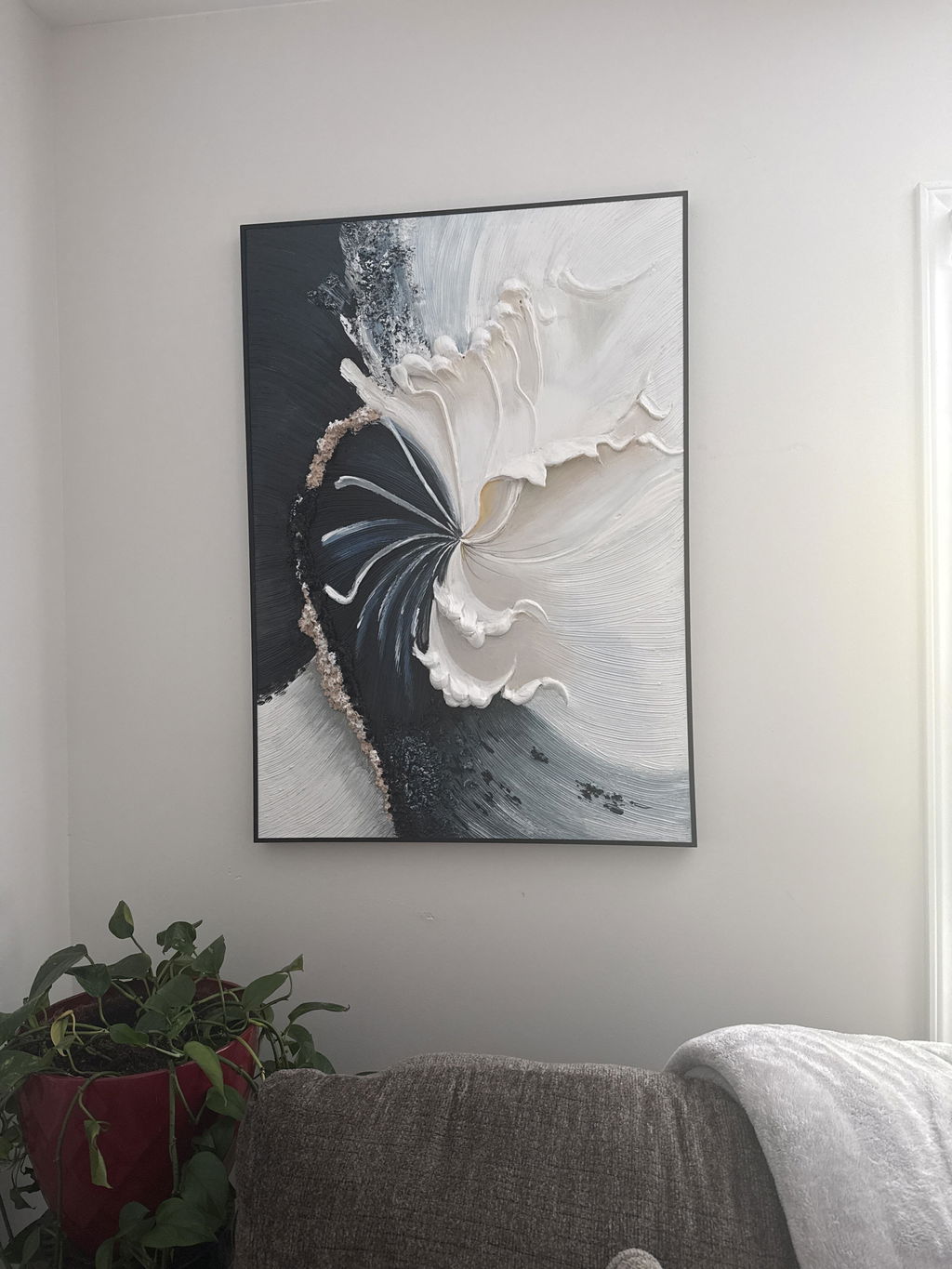
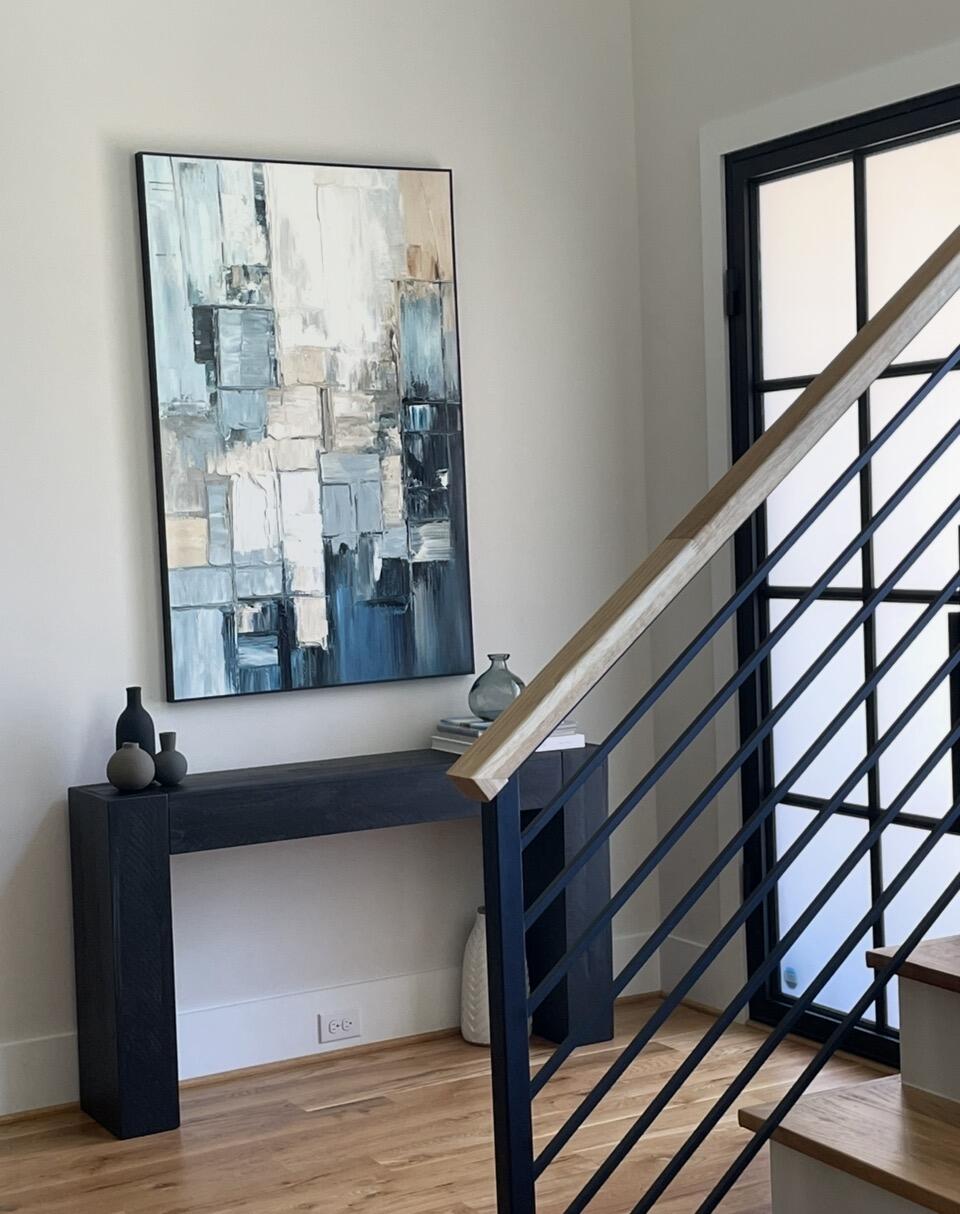
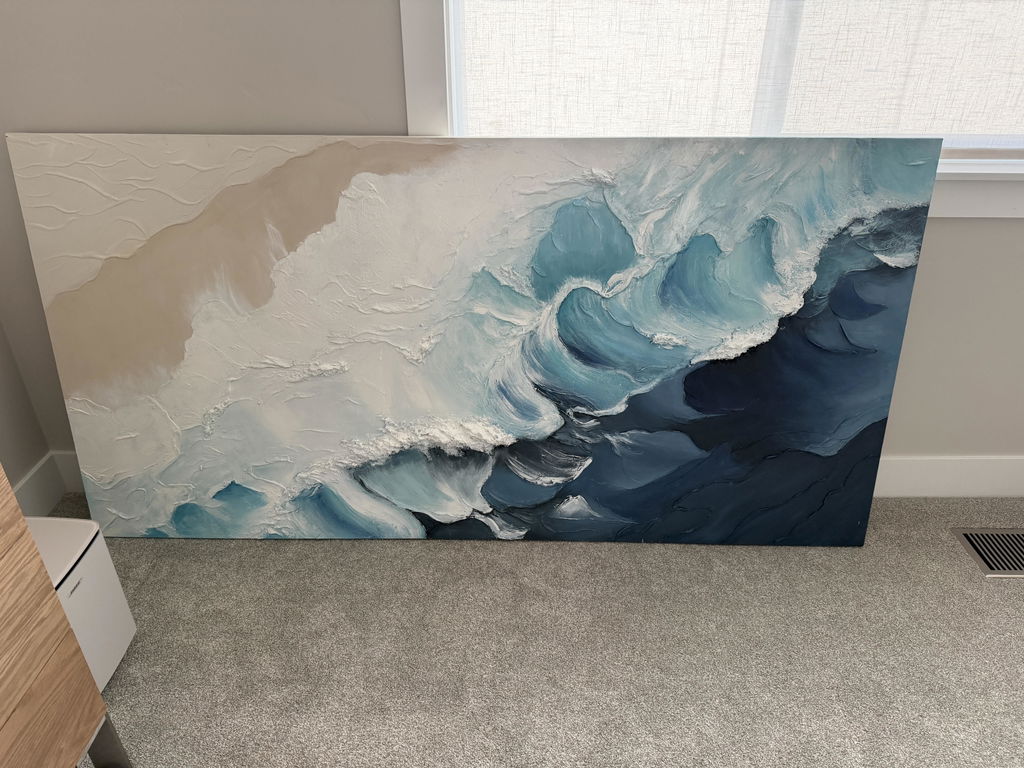
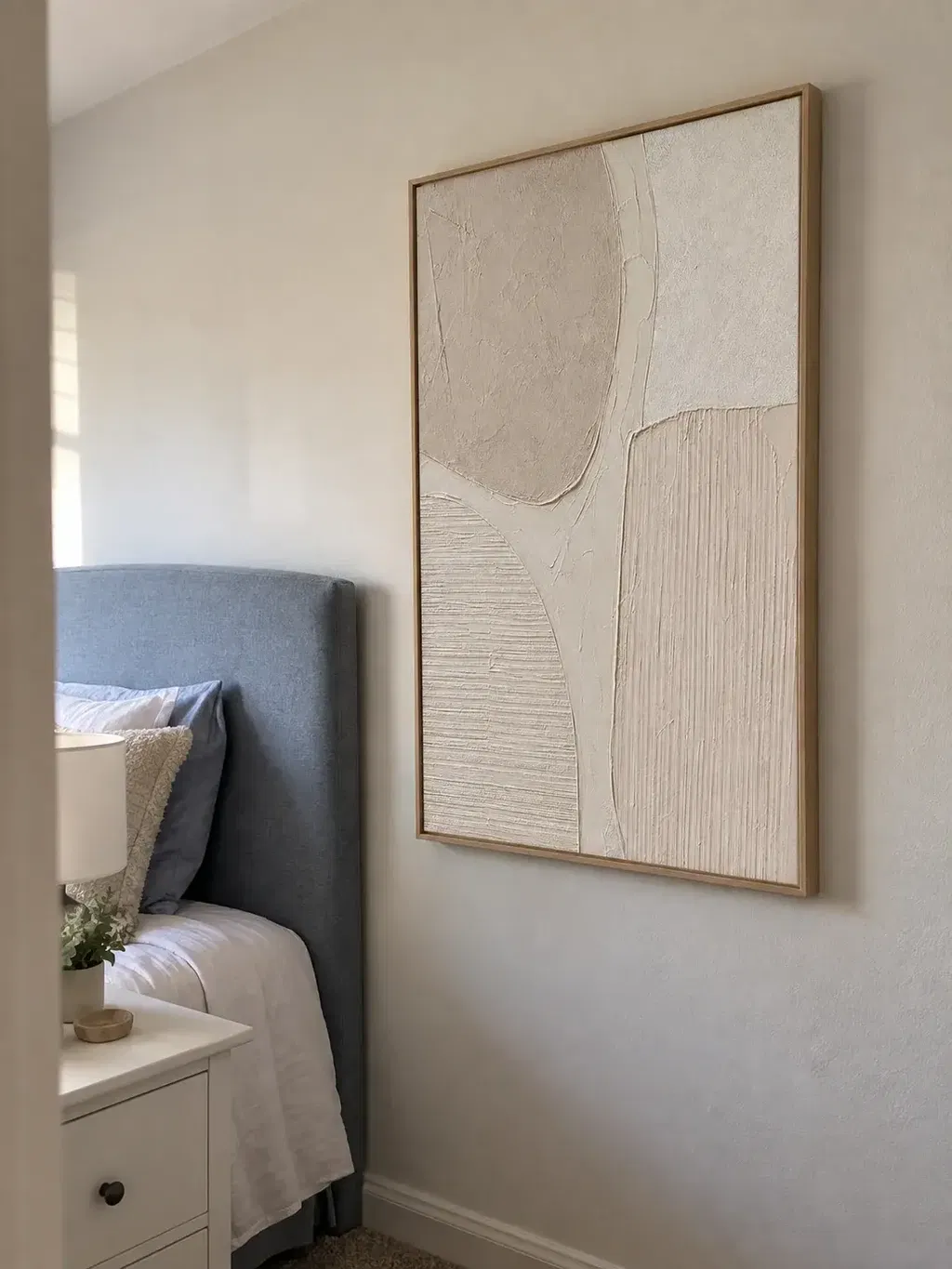
One of the most engaging aspects of real art is its dynamism. As you walk past a hand-painted piece, the light catches the "peaks" of the paint (impasto) and creates tiny, shifting 3D shadows. Experts suggest checking for these "specular highlights" to distinguish quality. Digital prints attempt to "print" these highlights, but because the surface is physically flat, the highlights don't move with the viewer. This static nature is what contributes to the "plastic," lifeless feel of reproductions.
Logic Summary: Our analysis of light interaction assumes a standard residential lighting environment (approx. 3000K–4000K). The "plastic effect" is fundamentally a failure of a 2D surface to replicate the 3D light-scattering properties of layered physical media.
The Scale Problem: Aliasing and the 40-Inch Threshold
Sophistication is often tied to the "seamlessness" of a design. Digital prints frequently break this illusion when scaled up for large focal walls.
- The Aliasing Trap: At scales over 40 inches, digital "aliasing" or pixel smoothing becomes visible to the naked eye. Even with high-DPI files, the "dots" of the printer can create a clinical, mechanical finish.
- The Resolution Limit: While the human eye's angular resolution limit is approximately 1 arcminute—meaning at 6-10 feet, a 300 DPI print exceeds perceived sharpness—this only applies to "sharpness," not "texture." The eye can still detect the lack of physical relief, which the brain interprets as "synthetic."
In our experience handling interior design consultations, we find that large-scale digital prints often clash with the natural textures of linen sofas or wooden flooring. The "perfection" of the digital print feels out of place next to materials that celebrate natural imperfection.

The Psychology of "Essential Identity"
Why do we value a hand-painted mural more than a perfect digital replica? The answer lies in the concept of "essential identity."
Empirical research from the University of Chicago shows that consumers believe digital replicas lack the artist's "essential identity", which causes the perceived value to collapse. There is a psychological "premium" placed on the human hand. In fact, studies confirm that consumers value art labeled "AI-generated" 62% lower than authentic human-created art.
When you choose a hand-painted piece, you are not just buying an image; you are buying the "biochemical crystallization" of human attention. Research in psychology reveals that top painters possess a robust neural control to suppress perceptual illusions, allowing them to translate vision into reality in a way a machine cannot. This "soul" is what guests sense when they enter a room; it’s the difference between a space that feels "staged" and one that feels "curated."
Health, Safety, and the "Hidden Cost" of Materials
Beyond aesthetics, the materials used in your home impact your well-being. Sophisticated living isn't just about looks; it's about the quality of the environment.
VOC Emissions and Air Quality
Many mass-produced digital prints use solvent-based inks that can emit Volatile Organic Compounds (VOCs) for weeks after installation. The EPA warns that indoor air pollution is often more concentrated than outdoor pollution.
In contrast, high-end hand-painted art often utilizes modern, low-VOC acrylics or walnut-oil-based paints. Controlled experiments show that coatings on wood with 16% moisture emit significantly lower VOCs than dry wood, plummeting further during the curing process. Choosing "green" mural options can even help commercial developers secure LEED certification points.
The Microplastic Problem
A growing concern in materials science is the shedding of microplastics. Digital prints and aerosol spray paints can leave thousands of polymer microplastic fragments in the environment. Sophisticated consumers are increasingly moving toward eco-friendly alternatives, such as hemp or flax canvases, which consume half the land and water of traditional cotton.
| Material Feature | Digital Print (Standard) | Hand-Painted (Professional) | Impact on Sophistication |
|---|---|---|---|
| Surface Texture | Flat / Synthetic | 3D Relief (Impasto) | High: Texture is the "soul" of 2026 trends. |
| Light Interaction | Surface Reflection | Multi-layer Refraction | Medium: Affects "glow" and depth. |
| Color Stability | High Metamerism Risk | Pigment Integrity | High: Prevents color shifting under LEDs. |
| Longevity | 50-100 years (Archival) | 100+ years (Museum grade) | Medium: Affects resale/heritage value. |
| Health Profile | Potential VOCs/Solvents | Low-VOC / Natural Oils | Critical: Affects Indoor Air Quality (IAQ). |
Methodology Note: This comparison is based on common industry heuristics and material safety data sheets (MSDS) from major pigment manufacturers. "Professional" hand-painted standards assume the use of ASTM D-4236 compliant materials.
The Economic Case: Art as Property Leverage
For the aesthetic-driven homeowner, art is an investment in property value. The Royal Society's CAR model analysis found that neighborhoods with higher "art" geo-tags saw greater relative house price ranking gains.
This translates to the interior as well. A hand-painted mural or a large-scale original piece acts as a "permanent physical billboard" for the home’s quality. In commercial spaces, the "Busy Streets Theory" suggests that transforming spaces with murals can reduce neighborhood blight, and in retail, murals act as foot traffic generators that e-commerce cannot replicate.
Biophilic Benefits in the Workspace
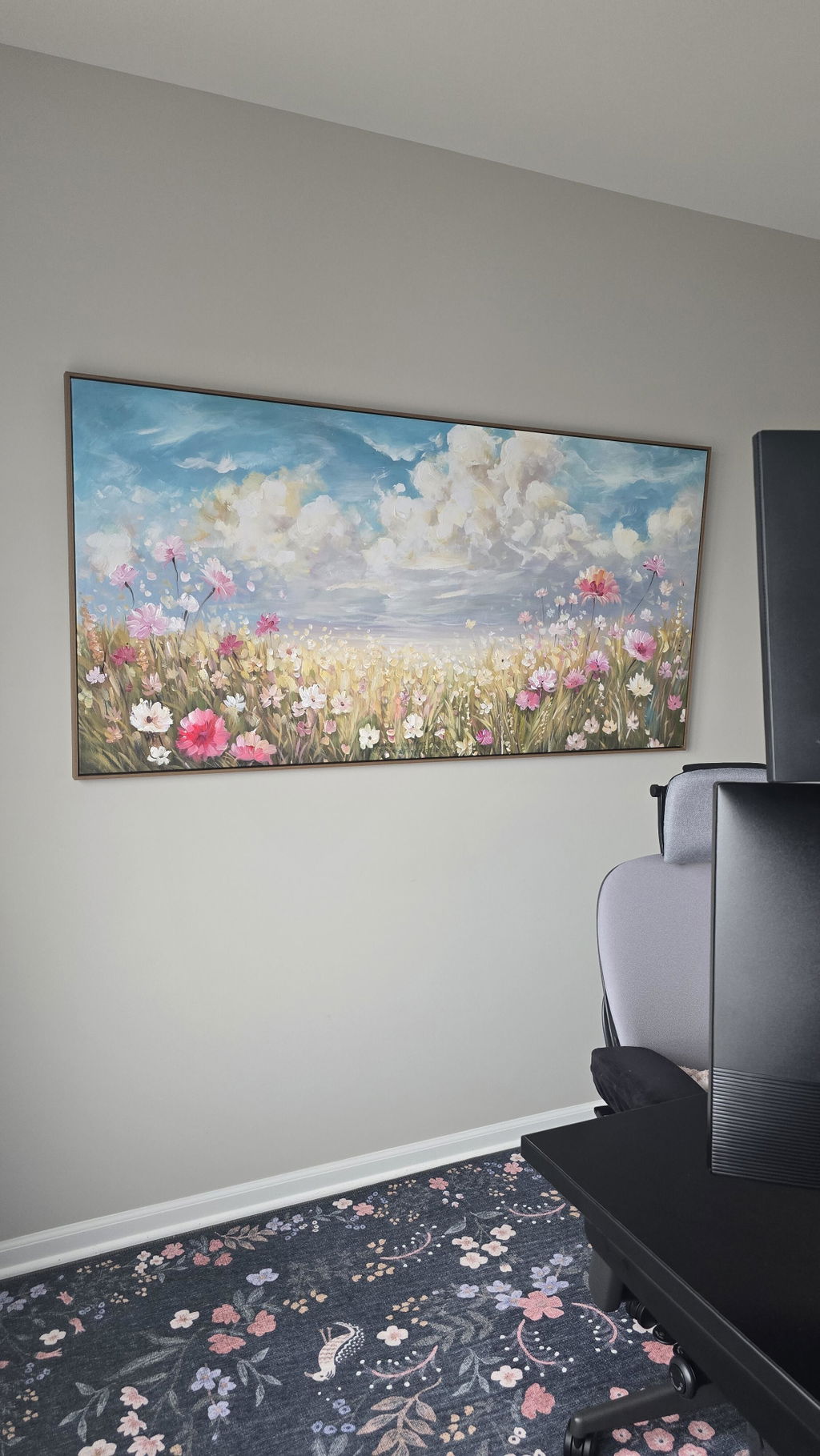
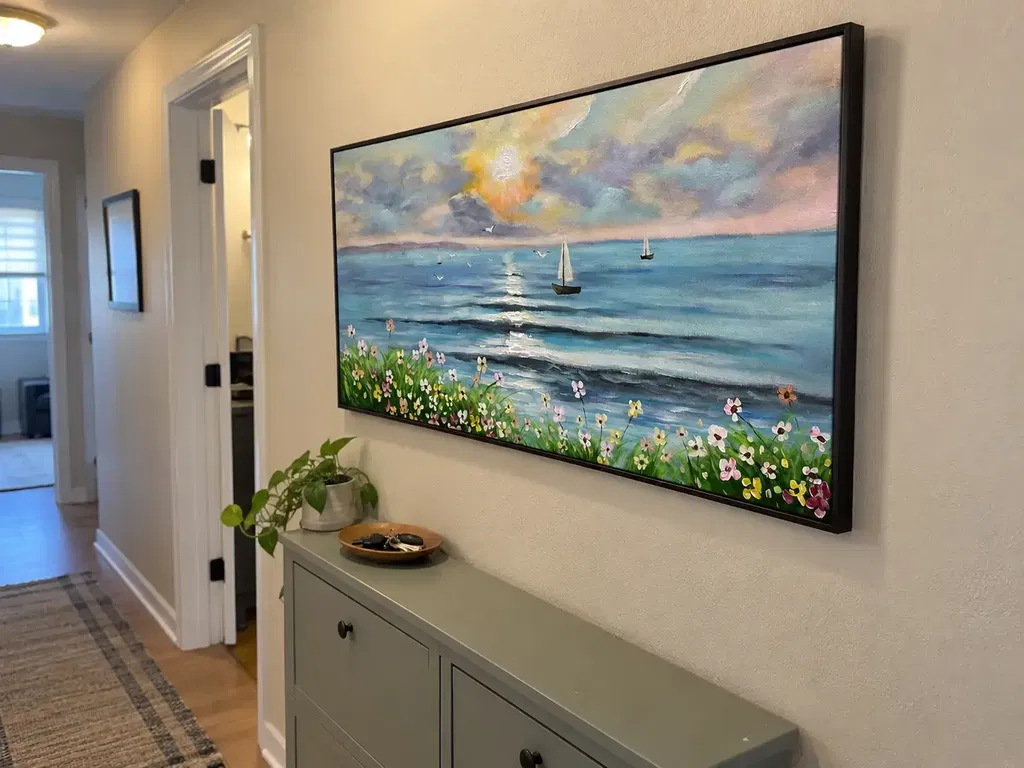
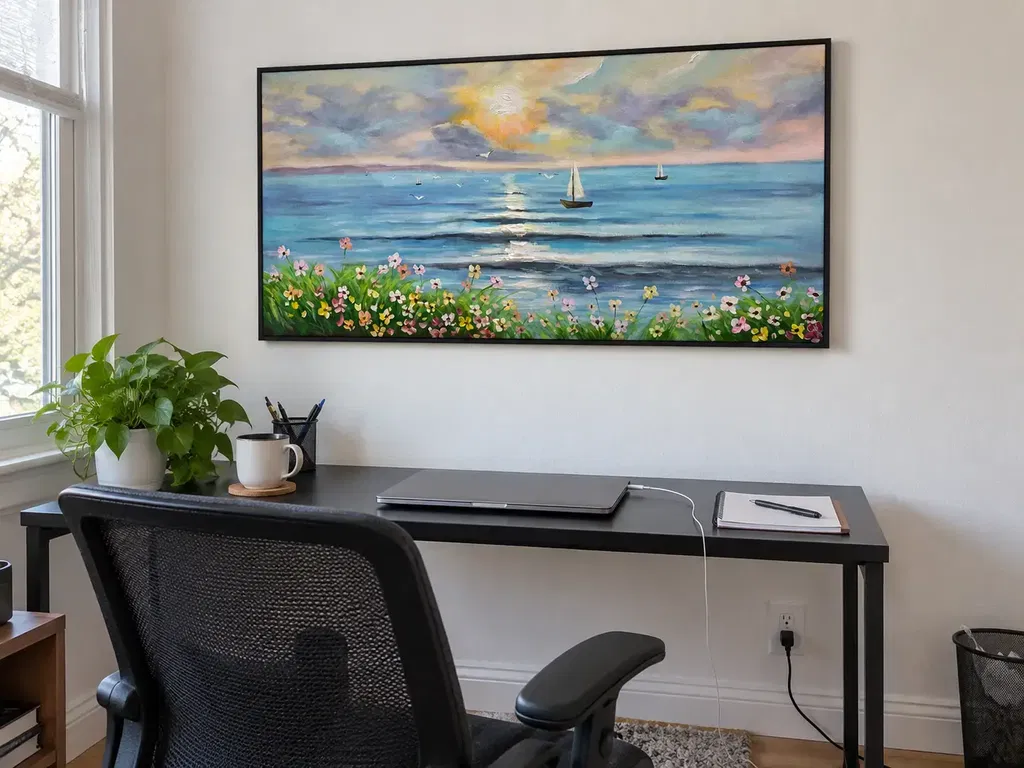
If you are designing a home office or a corporate suite, the "type" of art matters for productivity. Biophilic design—art featuring natural landscapes—produces the same stress-reduction effects in the brain as being outdoors.
Clinical tracking indicates that viewing high-quality art reduces somatic stress, leading to observed reductions in hospital admissions and sedative use. A "plastic" photo of a forest simply doesn't trigger the same neurological response as a hand-painted landscape where the brushstrokes mimic the organic chaos of nature.

Identifying Quality: A Sophistication Checklist
To avoid the visual traps of cheap reproductions, we recommend the following "Expert Audit" when selecting art for your space:
- The Side-View Test: Look at the piece from a 15-degree angle. If the surface is perfectly smooth with no variation in "sheen" or height, it is likely a digital print.
- The "Dead Black" Check: Examine the darkest areas of the piece. Do they look like "ink" (flat and slightly grey/green) or do they have the "bottomless" depth of layered pigment?
- Metamerism Check: View the piece under different light sources (daylight vs. warm LED). If the color shifts dramatically toward a "synthetic" hue, it lacks pigment integrity.
- Aliasing Scan: On pieces larger than 40 inches, look closely at curved lines. If you see "stepping" or a slight blur (pixel smoothing), the resolution is insufficient for the scale.
- The SID Factor: On white canvases, check for "Support Induced Discoloration" (SID). This is a yellowish tint caused by impurities in the canvas being drawn into the paint. While a "flaw," it is a chemical marker of a physical painting process, often absent in digital prints.
The Future of the "Hand-Crafted" Luxury
As we look toward 2026, high-end interior design is trending toward "understated elegance" where texture is the soul of the space. There is a massive spike in interest for "artisan craftsmanship" (up 21% according to Zillow data).
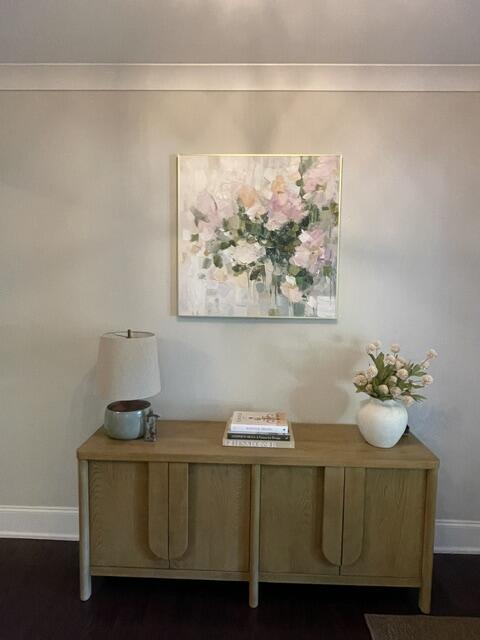
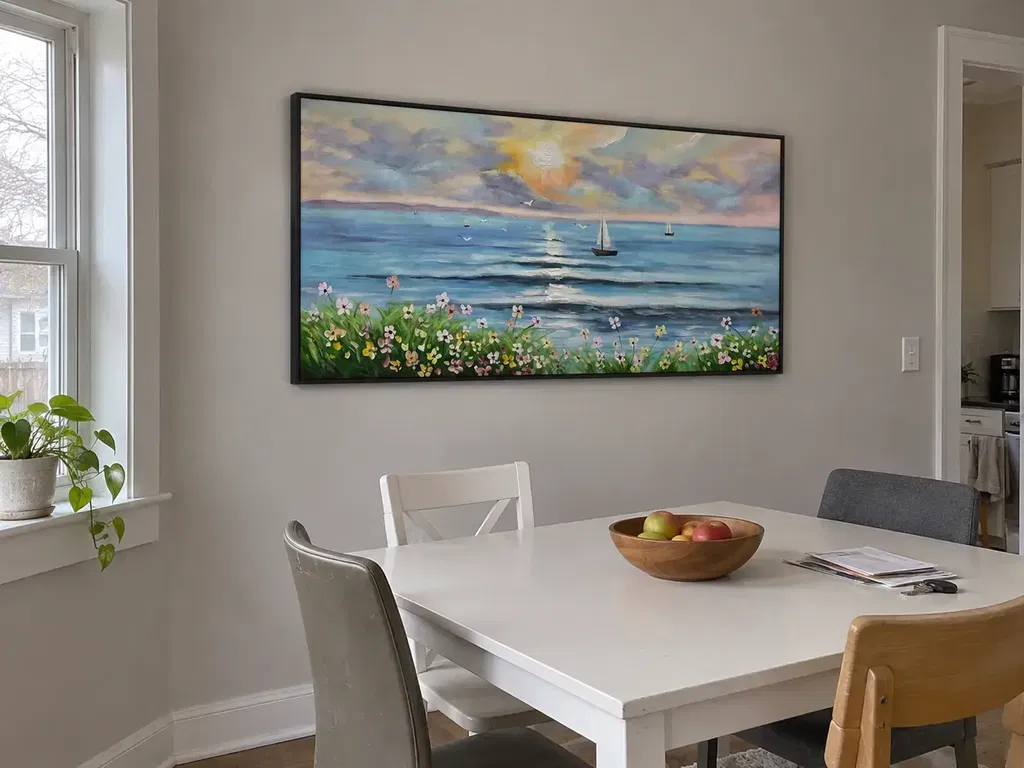
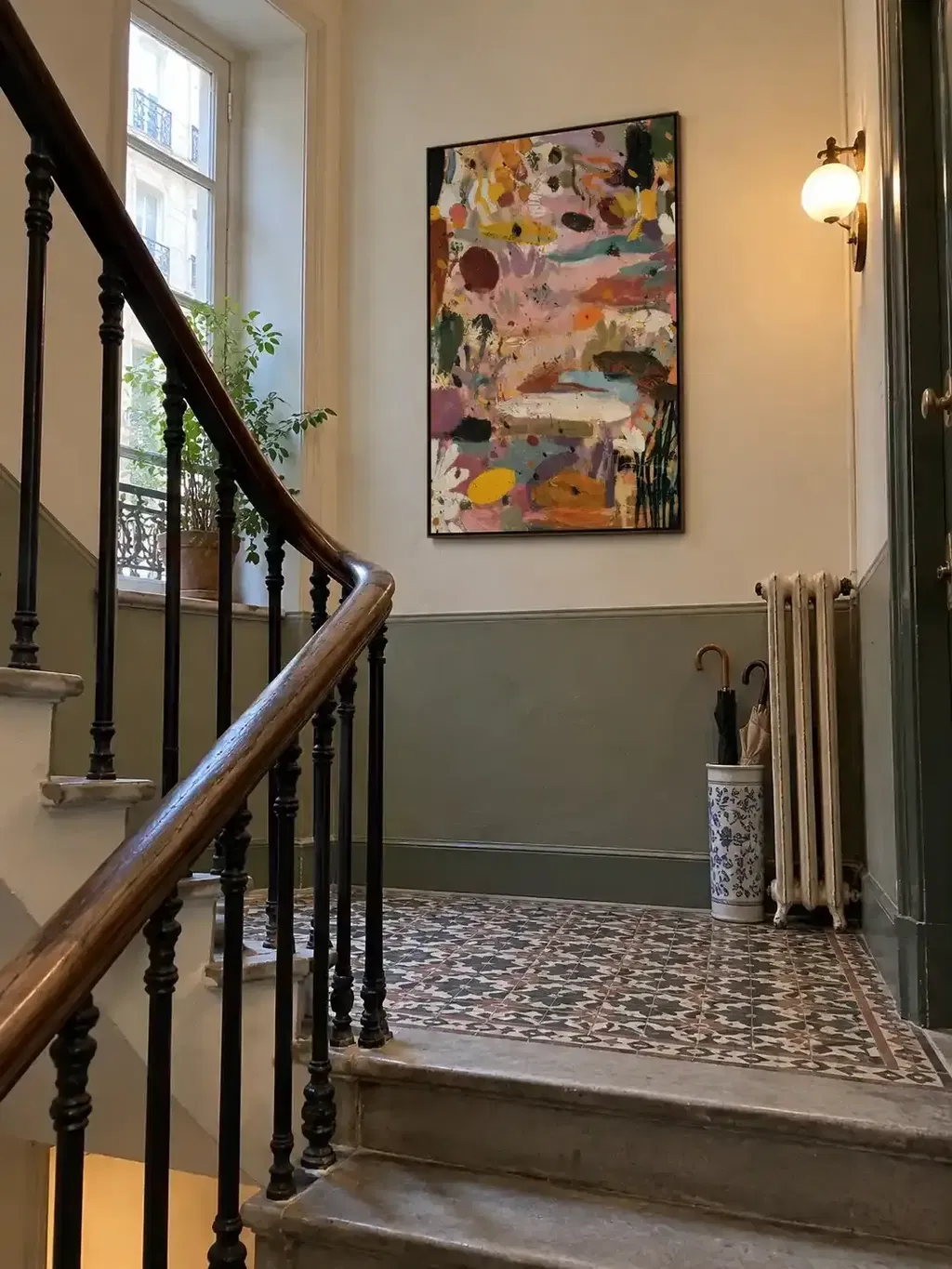
The "plastic effect" is the antithesis of this movement. Digital prints represent the "assembly-line" approach to decor, whereas hand-painted art represents the "absolute authenticity" that modern travelers and homeowners crave. Whether it's a panoramic mural in a powder room or a heavily textured abstract in the foyer, the physical presence of paint on canvas is a marker of a sophisticated, well-lived life.
By rejecting the flat, synthetic look of digital reproductions, you are not just decorating a room; you are investing in a cultural heritage asset that will maintain its aesthetic and emotional value for decades to come.
YMYL Disclaimer: This article is for informational purposes only. The information regarding Indoor Air Quality (IAQ), VOC emissions, and the psychological effects of art is based on current research and should not be taken as professional medical or environmental health advice. Always consult with a certified industrial hygienist or medical professional regarding specific health concerns in your home or workspace.
Sources & References
- Art Market Trends: Marketplace - The expensive art market continues to struggle
- Consumer Perception Study: Columbia Business School - Human-Made vs. AI Art
- Property Value & Art: Royal Society - Quantifying the link between art and property prices
- Health & Biophilic Design: University of Central Arkansas - Ways Biophilic Design Promotes Well-being
- VOCs & Safety: EPA - Indoor Air Quality and Low-VOC Paints
- Color Science: Datacolor - Understanding Metamerism
- Material Longevity: JustPaint - Aspects of Longevity of Oil and Acrylic Paints
- Psychological Identity: University of Chicago - Does Artwork Preserve Essential Identity?