The Danger of Damp Foundations: Why Underlayers Must Fully Cure
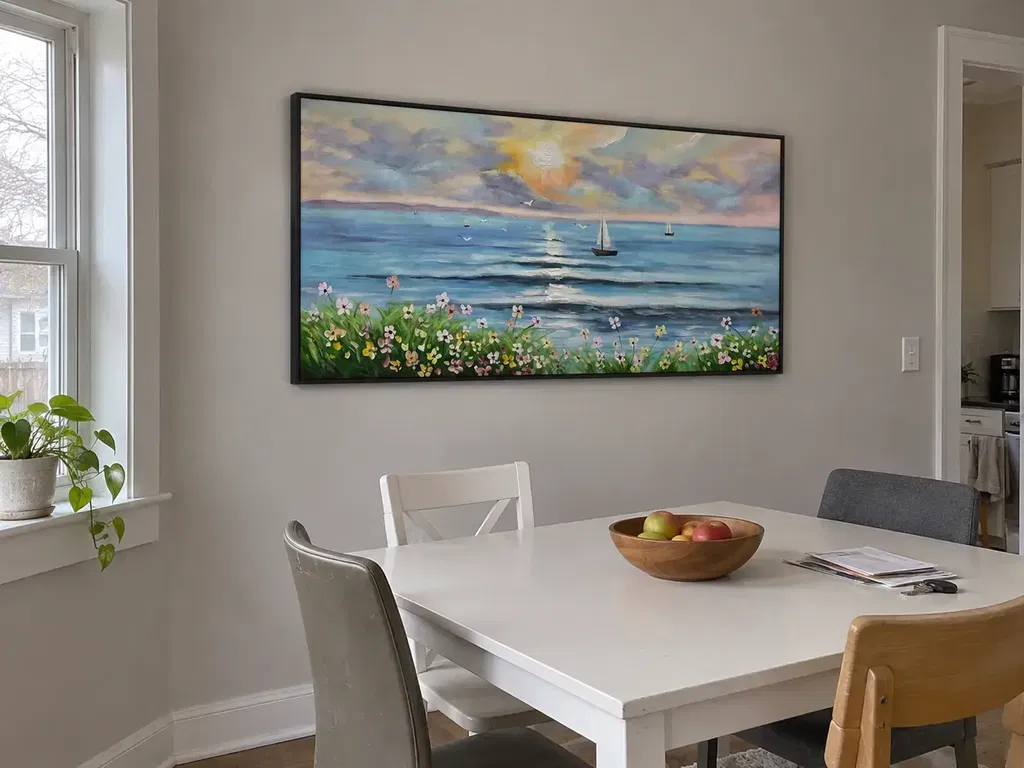
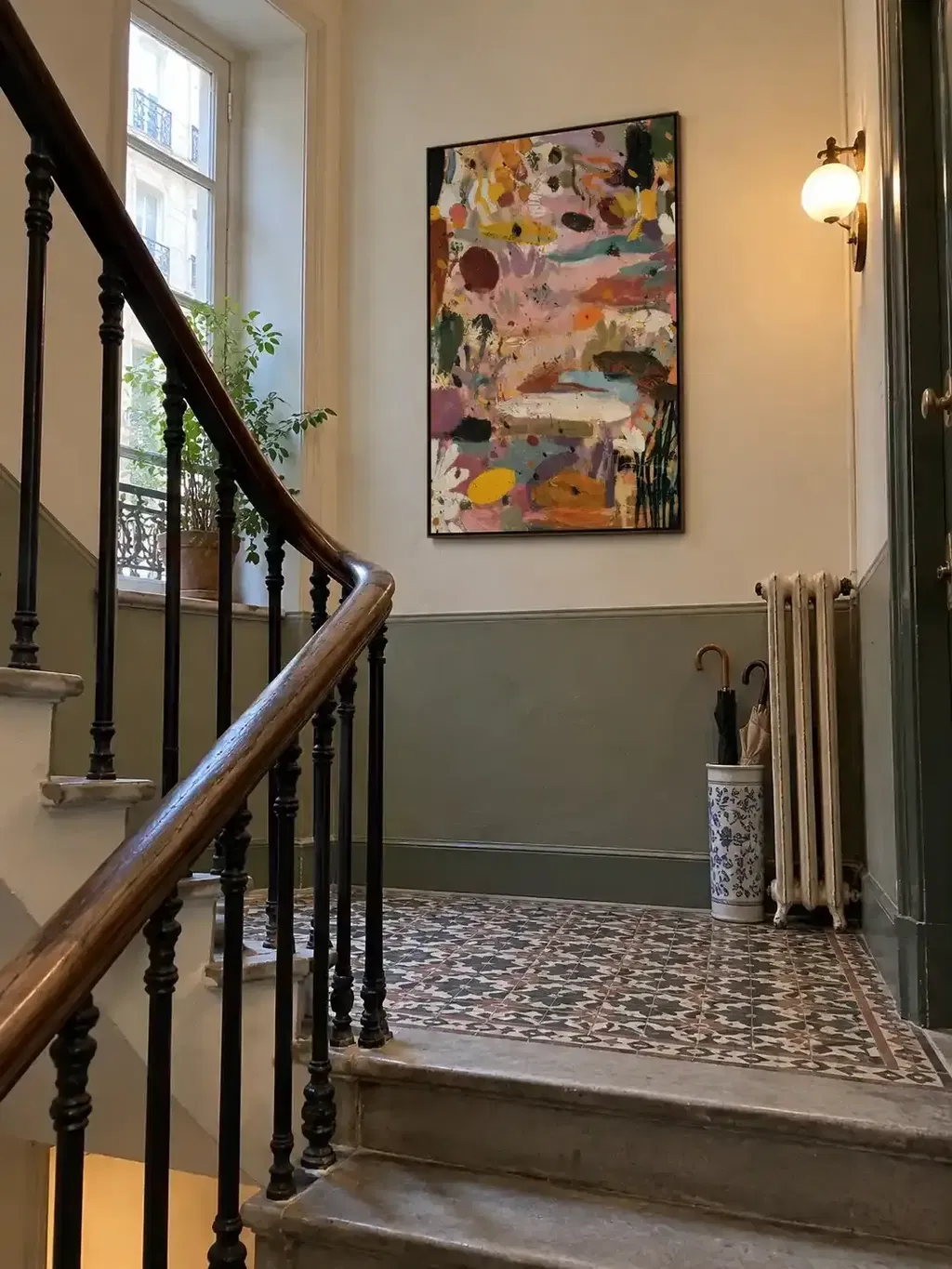
In the modern art market, we are witnessing a significant structural shift. Recent data indicates that high-end auction sales for pieces exceeding $10 million plummeted by 44% year-over-year in 2024, signaling a retreat from purely financial art assets as buyers return to real application value. For interior designers and homeowners, this means a move away from "vanity" auction pieces toward custom, hand-painted murals and canvases that offer emotional resonance and architectural integration.
However, as the art world moves from the gallery wall to the digital storefront, a tension arises between the expectation of e-commerce speed and the physical reality of the artist's studio. We often see clients surprised by a 4-to-6-week lead time for a custom oil painting. The most critical reason for this wait is not the speed of the brush, but the chemistry of the foundation. Applying finishing glazes or detail layers over a foundation that hasn't fully cured is the single most common cause of structural failure in fine art.
Understanding the "Danger of Damp Foundations" is essential for managing project timelines and ensuring that a premium investment retains its "essential identity" and value for decades to come.
The Chemistry of the Foundation: Drying vs. Curing
One of the first things we explain to our partners is that "dry to the touch" does not mean "chemically stable." In our studio experience, the visual cue of surface dryness is the most deceptive trap for an impatient artist.
The Molecular Divide
There is a fundamental difference in how different mediums reach stability. According to Golden Artist Colors, acrylic polymers consist of massive long-chain molecules that form films through a physical process called "coalescence." This involves the evaporation of water, allowing the polymer spheres to move closer and fuse.
Oil paint, conversely, does not "dry" through evaporation. It "cures" through oxidative cross-linking. The oil (typically linseed) reacts with oxygen in the air, creating a complex, three-dimensional molecular web. This process is much slower and results in a film that is initially more brittle than acrylic but possesses superior depth and saturation.
Logic Summary: Our studio workflow assumes that while an acrylic layer may be ready for overpainting in hours, an oil underlayer requires a minimum of 14–21 days to achieve the molecular bonding necessary to support subsequent heavy impasto or thin glazes. This is a heuristic based on common patterns from our production handling and conservation guidelines, not a universal laboratory constant.

The "Surface Dry" Trap: Heuristics for the Professional Studio
In professional painting environments, we've learned that the most common failure in multi-layer works occurs when artists apply finishing layers over foundations that haven't fully cured. This creates a "sandwich" effect where the bottom layer is still moving (contracting or expanding) while the top layer has already set.
The Thickness Multiplier
A practical heuristic used by conservators and our lead artists is that cure time is not linear; it is exponential relative to thickness.
- 1mm Layer: Typically requires 2 weeks for foundational stability.
- 3mm Layer: Often requires 6–8 weeks.
If we accelerate this process using excessive heat or high-velocity ventilation, we risk creating "differential curing rates." This is where the surface shrinks faster than the foundation, leading to micro-cracks that may not appear for months but eventually compromise the work.
| Parameter | Recommended Value | Unit | Rationale / Source Category |
|---|---|---|---|
| Ambient Studio Temp | 60–70 | °F | Optimal for oxidative cross-linking (Princeton EHS) |
| Relative Humidity | 45–55 | % | Prevents "Support Induced Discoloration" (Golden Artist Colors) |
| Initial Drying Phase | 7–10 | Days | Surface evaporation and initial skin formation |
| Structural Cure Phase | 21–30 | Days | Deep molecular bonding for underpainting |
| Max Layer Thickness | 3 | mm | Threshold before requiring specialized drying racks |
Modeling Note: This table represents a scenario model for a standard residential-scale canvas (e.g., 48"x60") in a temperate climate. These are hypothetical estimates based on studio assumptions and may vary significantly based on pigment load and binder type.
Structural Failures: What Happens When We Rush?
When a damp foundation is ignored, the results are often catastrophic and irreversible. For the interior designer, this translates to a "failed installation" and a loss of trust with the client.
1. Support Induced Discoloration (SID)
This is a phenomenon specific to acrylic mediums. As documented in Golden's technical bulletins, water-soluble impurities in common cotton or linen canvas are forcefully drawn out when painters apply transparent mediums thicker than 1/16 inch. If the foundation is "damp" with these impurities, they migrate into the top layer, causing a yellow or brown tint that ruins the intended palette.
2. The "Haziness" Phenomenon
Research from the Tate Modern reveals that PEG-type surfactants in acrylic paints can migrate from inside the paint film to the surface when environmental conditions fluctuate. If the underlayers are not fully cured, these surfactants form water-soluble microcrystals that cause a dreaded "hazy" or cloudy appearance on the surface.
3. Delamination and Cracking
In oil painting, the "Fat Over Lean" rule is the gold standard. Each successive layer must be more flexible (oiler) than the one beneath it. If a "lean" (fast-drying) layer is applied over a "fat" (slow-curing) layer that is still damp, the top layer will crack as the bottom layer continues to shift.

The Production Workflow: Managing the Timeline
To maintain "handmade authenticity" while meeting "ecommerce predictability," our studio implements a staggered workflow. We do not work on one painting from start to finish in a single block. Instead, we progress multiple pieces through cure stages simultaneously.
The Staged Cycle:
- Phase 1: Priming and Sizing: Ensuring the canvas is sealed to prevent canvas rot.
- Phase 2: Underpainting: Establishing the "structural integrity" and tonal depth. This layer then moves to a dedicated drying rack for 14–21 days.
- Phase 3: Detail and Glazing: Applying the final aesthetic layers once the foundation is stable.
- Phase 4: Final Cure and Varnish: A final wait period before shipping to ensure the surface is hard enough to withstand packaging.
This process respects the "essential identity" of the art. A study from UChicago shows that consumers perceive a collapse in value when art feels like a "digital replica" or an "assembly line" product. By strictly adhering to these curing windows, we validate the multi-stage production process as a hallmark of quality, not a logistical delay.
The ROI of Patience: Why Curing Matters for Value
Investing in a hand-painted mural or large-scale canvas is not just an aesthetic choice; it is a financial one. Data from the Royal Society found that neighborhoods and properties with higher "art" geo-tags saw greater relative house price ranking gains. Furthermore, public art projects, like those in Chicago’s Millennium Park, have driven billions in real estate-related growth.
For the homeowner, the ROI of a mural is maximized when the work is permanent. A rushed painting that cracks or yellows within five years is a wasted investment. A properly cured work, where the pigments are locked into a stable molecular matrix, becomes a "non-renewable cultural heritage" asset that can drive property value for decades.
Scenario A: The Residential Focal Piece
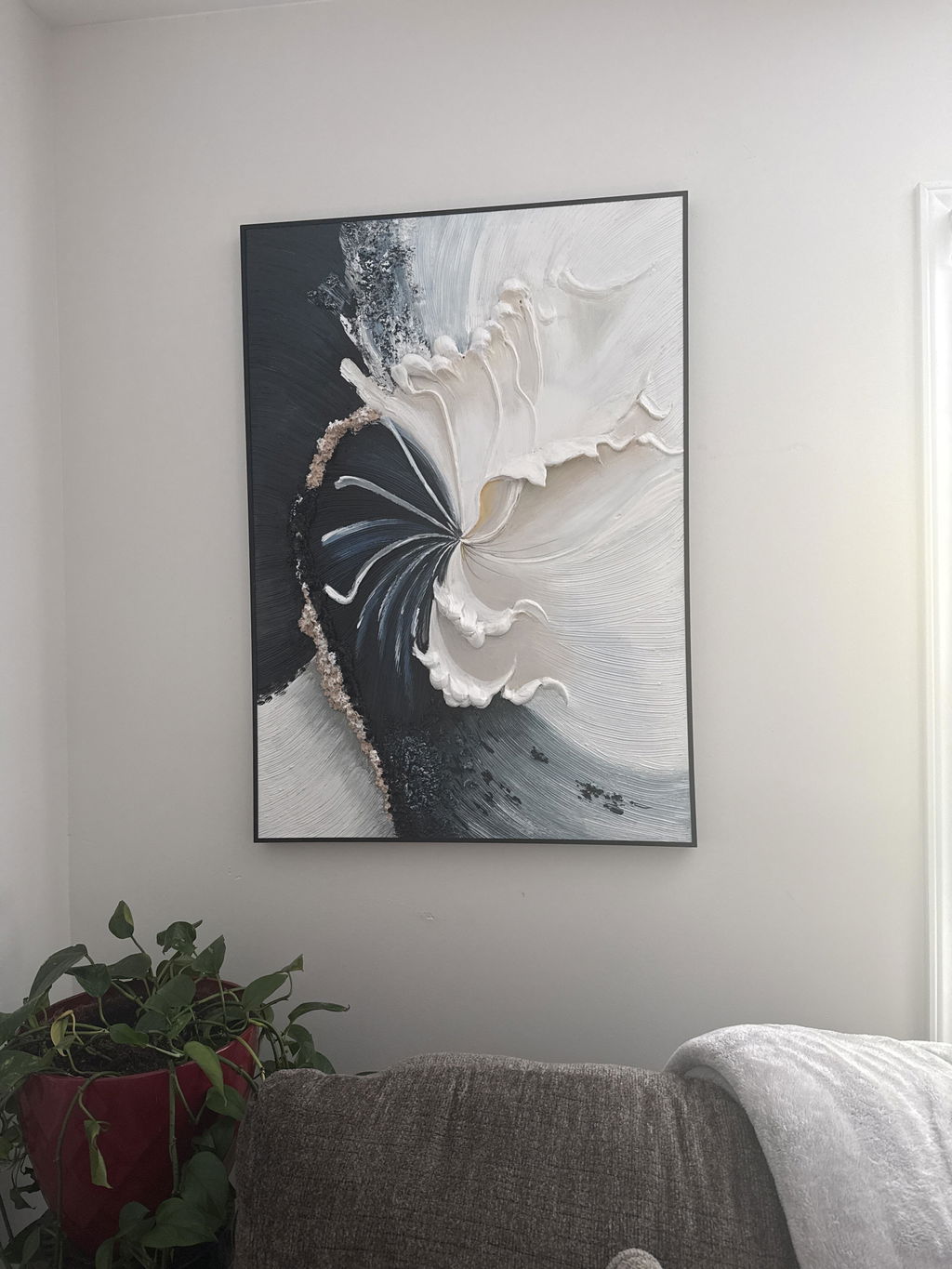
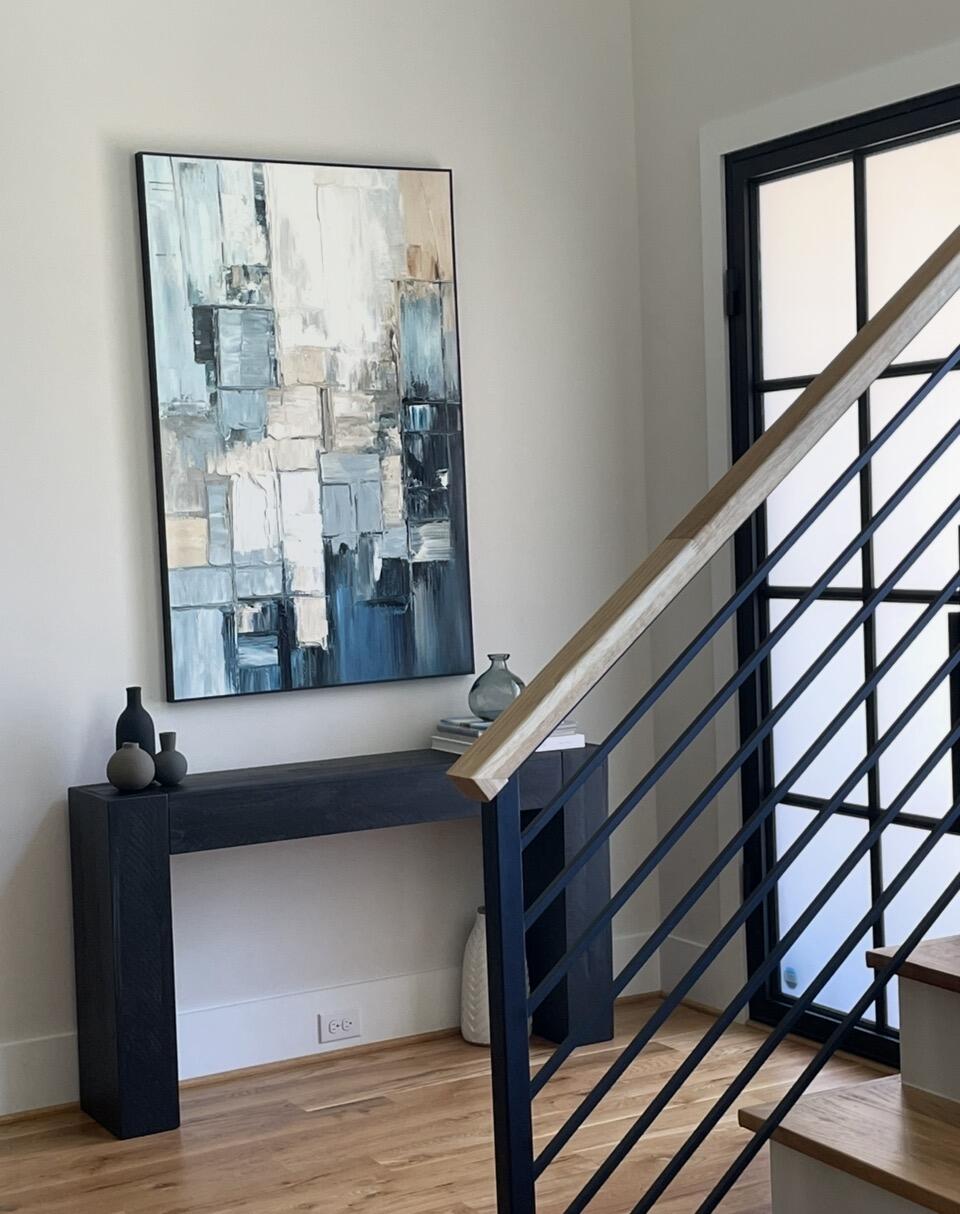
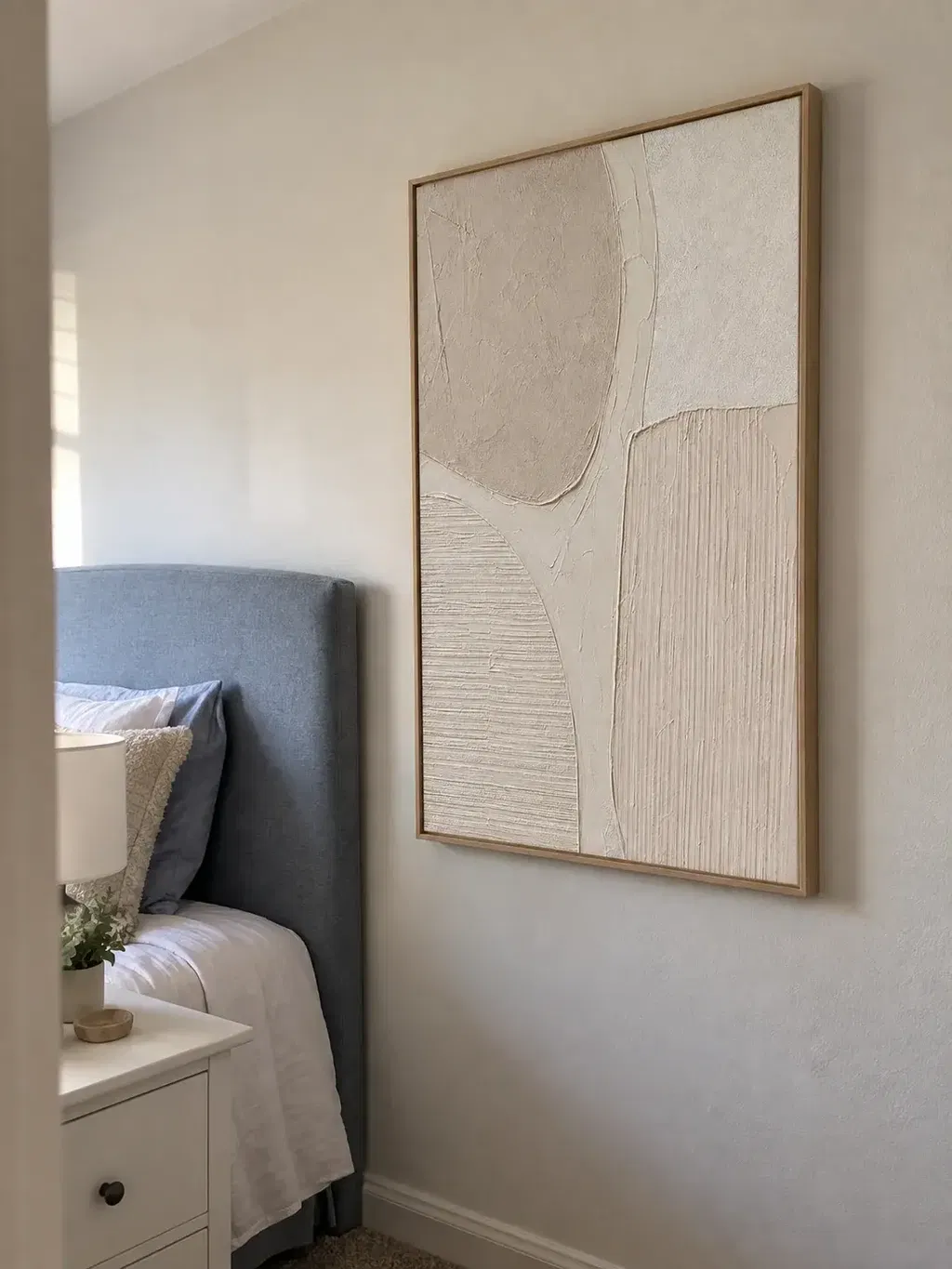
For a homeowner seeking a textured abstract for a minimalist living room, the curing time is the insurance policy against the "Support Induced Discoloration" that often plagues amateur works.
Scenario B: The Commercial Developer
For a developer using murals to boost property sales, the curing process is a matter of liability. Using low-VOC paints and allowing them to fully cure ensures that the Indoor Air Quality (IAQ) meets strict LEED or WELL certification standards, protecting the health of future tenants.
Health, Safety, and the Environment in the Studio
The curing phase is also the period of highest chemical activity. We take safety seriously, adhering to guidelines from the CDC NIOSH regarding paint and coating hazards.
Chronic inhalation of low-level volatile compounds (VOCs) during the curing of alkyd and acrylic paints can lead to central nervous system issues. This is why we maintain separate, humidity-controlled drying environments with industrial-grade exhaust systems. We also prioritize water-based acrylics and walnut oil over toxic turpentine solvents, aligning with the 87% of consumers who believe artists should be fairly compensated and work in safe, ethical environments.
Methodology Note: Our "Indoor Air Quality Promise" is supported by Aalto University research, which proves that coatings on moisture-controlled substrates emit significantly lower toxic VOCs once they pass the initial curing peak.

A Final Checklist for Designers and Buyers
When commissioning or purchasing a premium hand-painted work, use the following checklist to ensure the foundation of your investment is sound:
- Inquire about the Underpainting: Ask if the artist allows for a dedicated curing window between the structural layers and the finishing glazes.
- Verify the Medium: Understand the blending differences between oils and acrylics and how that impacts the timeline.
- Check the Environment: Ensure the work was cured in a climate-controlled space (60–70°F) to prevent surface tension issues.
- Request a "Breathability" Window: If the work is an oil painting, avoid framing it under glass immediately. It needs to "breathe" to continue its oxidative cross-linking for up to six months.
By respecting the biological and chemical "life-time" of the paint, we move beyond disposable decor. We create objects that, as the World Health Organization suggests, serve as "public health infrastructure," reducing stress and improving the mood of everyone who enters the space.
This article is for informational purposes only and does not constitute professional conservation, legal, or financial advice. Always consult with a certified art conservator for specific restoration or preservation needs.
References
- Marketplace: The expensive art market continues to struggle
- Golden Artist Colors: Aspects of Longevity of Oil and Acrylic Paints
- Tate Modern: Conservation Concerns for Acrylic Emulsion Paints
- Royal Society: Quantifying the link between art and property prices
- EPA: Indoor Air Quality and Low-VOC Paints
- World Health Organization: Scoping Review on Arts and Health
- Columbia Business School: Human-Made vs. AI Art Study