
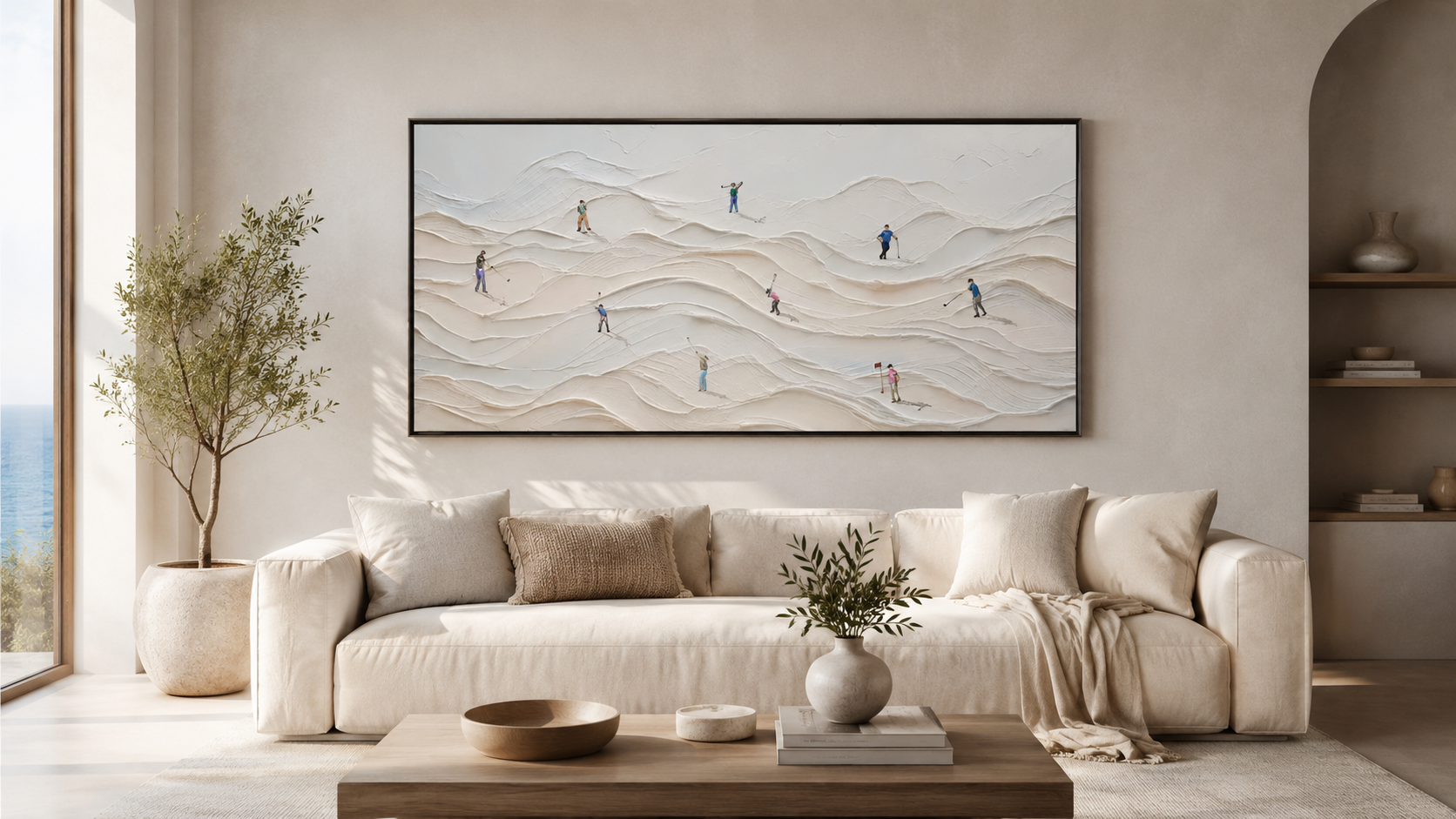
Textured wall art is any artwork that moves beyond the two-dimensional plane to include physical, raised surfaces that can be felt and seen. While traditional prints rely on the illusion of depth through color and perspective, textured pieces use physical material—such as thick paint, plaster, sand, or wood—to build literal layers. This physical presence adds depth because it interacts with the room's environment, casting shadows and catching light in ways that a flat canvas cannot. For homeowners and designers, it provides a sensory, tactile quality that transforms a static wall into a dynamic focal point.
Understanding Textured Wall Art and Its Physical Appeal
To define textured wall art, one must distinguish between tactile and visual texture. Visual texture is an illusion; it is the clever use of shading and brushwork in a 2D painting to make a surface look rough or uneven. Tactile texture, however, is the defining characteristic of this medium. It refers to the physical variations on the surface that you can actually touch. This is why many people refer to these works as 3d art paintings.
Modern creators use a wide variety of materials to achieve this physical appeal. Common components include:
- Plaster and Gesso: Used to build thick, structural foundations on a canvas.
- Sand and Aggregates: Mixed into paint to create gritty, organic finishes.
- Fabric and Fiber: Woven into the piece to add softness or structural complexity.
- Wood and Metal: Attached to the base to create sharp, architectural lines.
This physical height is what creates the "depth" mentioned in interior design. When a piece has physical ridges and valleys, it stops being a mere image and starts being an object. This transition from image to object is what makes the artwork feel grounded and substantial within a room.
Tactile vs. Visual Texture in Modern Decor
In a digital age where most of what we see is behind a flat screen, the human eye craves physical variation. Tactile texture provides a relief from the smoothness of modern drywall and glass. While a high-quality print might capture the colors of a landscape, a textured piece captures the ruggedness of the earth itself. This sensory engagement is a primary reason why textured art remains a staple in high-end residential and commercial design.
How Textured Art Uses Light and Shadow to Create Depth

The secret to the "magic" of textured art lies in physics, specifically the way light interacts with protruding surfaces. On a flat print, light hits the surface uniformly. On a textured piece, every ridge and peak creates a tiny barrier for light. This creates two distinct effects: highlight and shadow.
When light hits a raised edge, the side facing the light source is illuminated (the highlight), while the opposite side is cast into shadow. This micro-contrast is what the human brain interprets as depth. Without these physical shadows, the eye would not perceive the three-dimensional nature of the work as effectively.
The Dynamic Nature of Environmental Lighting
One of the most compelling reasons to choose textured wall art is that it is never the same twice. Because it relies on shadows, the appearance of the art shifts as the light in the room changes.
- Morning Light: Soft, diffused light might highlight subtle undulations in the plaster.
- Midday Sun: Strong, direct light can flatten the appearance if it hits from the front, but grazing light from a nearby window will create long, dramatic shadows.
- Evening Artificial Light: Strategically placed spotlights can emphasize the ruggedness of the peaks, making the art feel more intense at night.
Controlled illumination is essential for preserving the lifespan of art, but for textured pieces, it also serves as a tool for aesthetic transformation. By changing the angle of a lamp, you can effectively "re-style" the artwork without moving it from the wall.
Popular Techniques in Textured Art from Impasto to Relief
There are several established methods artists use to create these physical layers. Understanding these techniques can help you identify the specific aesthetic that fits your space.
1. The Impasto Technique
Impasto is perhaps the most famous method for creating texture. It involves applying paint—usually oil or acrylic—in very thick layers, often so thick that the brush or palette knife strokes remain visible. Artists like Vincent van Gogh and Rembrandt were masters of this style. Rembrandt used a palette knife to create sharp ridges of lead-white paint, a technique that adds a sense of movement and energy to the surface. Modern plaster paintings often borrow from this tradition, using heavy-bodied mediums to create similar ridges.
2. Sculptural Relief
Relief art is a bridge between painting and sculpture. In these pieces, the elements are significantly raised from the background. High-relief art may protrude several inches from the wall, creating a bold, architectural feel. These works often use plaster, clay, or even wood panels to build out geometric or organic shapes that dominate the visual field.
3. Mixed Media and Found Objects
Mixed media artists incorporate physical objects directly onto the canvas. This might include recycled wood, metal shards, or natural fibers. The goal is to create a complex surface that tells a story through material diversity. These pieces are often the heaviest and require the most careful mounting hardware.
4. Cold Wax and Sand
By mixing cold wax or sand into oil paint, artists can create a matte, stone-like texture. This is popular in minimalist and "wabi-sabi" styles, where the focus is on the raw, imperfect beauty of the material rather than bright colors.
Textured Canvas vs. Traditional Flat Prints
Choosing between a 2D print and a 3D textured piece depends on your goals for the room. Below is a comparison of how they stack up in key categories:
| Feature | Traditional Flat Print | Textured Wall Art |
|---|---|---|
| Visual Depth | Created through color and perspective | Created through physical layers and shadows |
| Weight | Lightweight; easy to hang | Often heavy; requires sturdy hardware |
| Maintenance | Low; can be wiped with a microfiber cloth | Moderate; requires gentle dusting of grooves |
| Light Interaction | Static; looks the same in most light | Dynamic; appearance shifts with light angles |
| Sensory Appeal | Visual only | Visual and tactile |
| Price Point | Generally more affordable | Usually higher due to materials and labor |
Strategic Ways to Style Textured Pieces in Modern Interiors

Placement is key when working with three-dimensional art. Because these pieces have physical presence, they occupy more "visual volume" than flat art.
Grounding Open-Plan Living Rooms
In large, open-plan spaces, small or flat art can easily get lost. A large abstract wall art piece with significant texture creates a focal point that "grounds" the room. It acts as an anchor for furniture groupings, drawing the eye and providing a sense of scale.
Softening Industrial and Minimalist Spaces
Modern industrial interiors often feature "hard" materials like concrete, steel, and glass. Modern textured art is an excellent tool for softening these environments. A large, organic plaster piece or a textile-heavy mixed media work provides a necessary contrast to the sharp lines of industrial architecture.
Creating a Minimalist Gallery Wall
If you prefer a monochromatic or minimalist look, texture allows you to create interest without relying on jarring colors. A "white-on-white" textured painting uses only shadow to define its shapes, offering a sophisticated, understated elegance that works perfectly in bedrooms or home offices.
Practical Tips for Hanging and Caring for Heavy Art
Because textured art often uses heavy materials like plaster, wood, or thick acrylic gels, it presents unique challenges for installation and maintenance. Proper care ensures the work remains a centerpiece for decades.
Hanging and Structural Safety
Heavy pieces require more than a simple nail in the drywall. Falling damage is a leading cause of art deterioration, often resulting from aged or insufficient hardware. When hanging heavy textured art:
- Find a Stud: Whenever possible, mount the art directly into a wall stud.
- Use Wall Anchors: If a stud isn't available, use heavy-duty toggle bolts or threaded anchors rated for the specific weight of the piece.
- Check Wire Tension: Ensure the hanging wire is in good condition and not frayed.
- Use Backing Boards: Backing boards help protect the canvas from rear impacts and dust entry.
Cleaning and Maintenance
The ridges and grooves of a textured painting are magnets for dust. Unlike a flat print that sits behind glass, these surfaces are exposed.
- Dusting: Use a soft-bristled brush (like a clean makeup brush or a high-quality goat-hair duster) to gently flick dust out of the crevices.
- Avoid Liquids: Aqueous cleaning systems can alter acrylic-paint surfaces. Never use a damp cloth or chemical cleaners on an unvarnished textured painting, as this can cause the paint to soften or change color.
- Temperature Control: Extreme heat or cold can cause materials like plaster or oil to crack. Keep your art away from fireplaces, radiators, and air conditioning vents.
The Enduring Value of Textured Wall Art
Ultimately, textured wall art offers a depth that goes beyond the physical measurements of the canvas. It provides a bridge between the architectural structure of a room and the personal expression of the owner. By interacting with light and shadow, these pieces become living parts of the environment, evolving throughout the day and providing a rich, sensory experience. Whether you are looking for a massive sculptural relief to ground a minimalist living room or a subtle impasto piece to add warmth to a bedroom, the physical nature of textured art ensures it will always stand out from the crowd.
Safety Notice
This article provides general guidance only. Always follow the manufacturer's instructions for mounting hardware and care. For installations involving heavy structural loads or delicate antique materials, consult a professional art installer or conservator to ensure the safety of both the artwork and the occupants of the home.
FAQs
How do you clean dust from heavy textured paintings?
Use a soft, dry brush like a makeup brush or a soft duster to gently remove dust from the grooves. Avoid using water or cleaning sprays, as these can damage unvarnished paint layers.
Does textured wall art require special lighting?
While not strictly required, textured art benefits greatly from directional lighting. Side-lighting or spotlights create deeper shadows, which emphasize the 3D nature of the piece.
Is oil or acrylic better for impasto texture?
Acrylic with thickening gels is popular for home decor because it dries quickly and is durable. Oil is traditional and offers rich colors, but it takes much longer to dry and can be more prone to chemical changes over time.











