Atmospheric Depth: Why Landscapes Need Wet-on-Wet Blends
The global art market is undergoing a fundamental correction. High-end auction sales for purely financial art assets—those vanity pieces exceeding $10 million—plummeted by 44% in 2024, according to Marketplace. This retreat signifies a return to real application value. We are seeing a decisive shift where collectors and homeowners prioritize art that transforms their living environment rather than just sitting in a tax-haven vault.
At the center of this movement is the demand for atmospheric depth in landscape art. When you step into a room, your brain isn't looking for a "digital replica" or a flat print. It is seeking what researchers at the University of Chicago call "essential identity"—the irreplicable soul of a human-made object. Their empirical research shows that digital replicas and NFTs suffer a collapse in perceived value because they lack the physical presence of the artist.
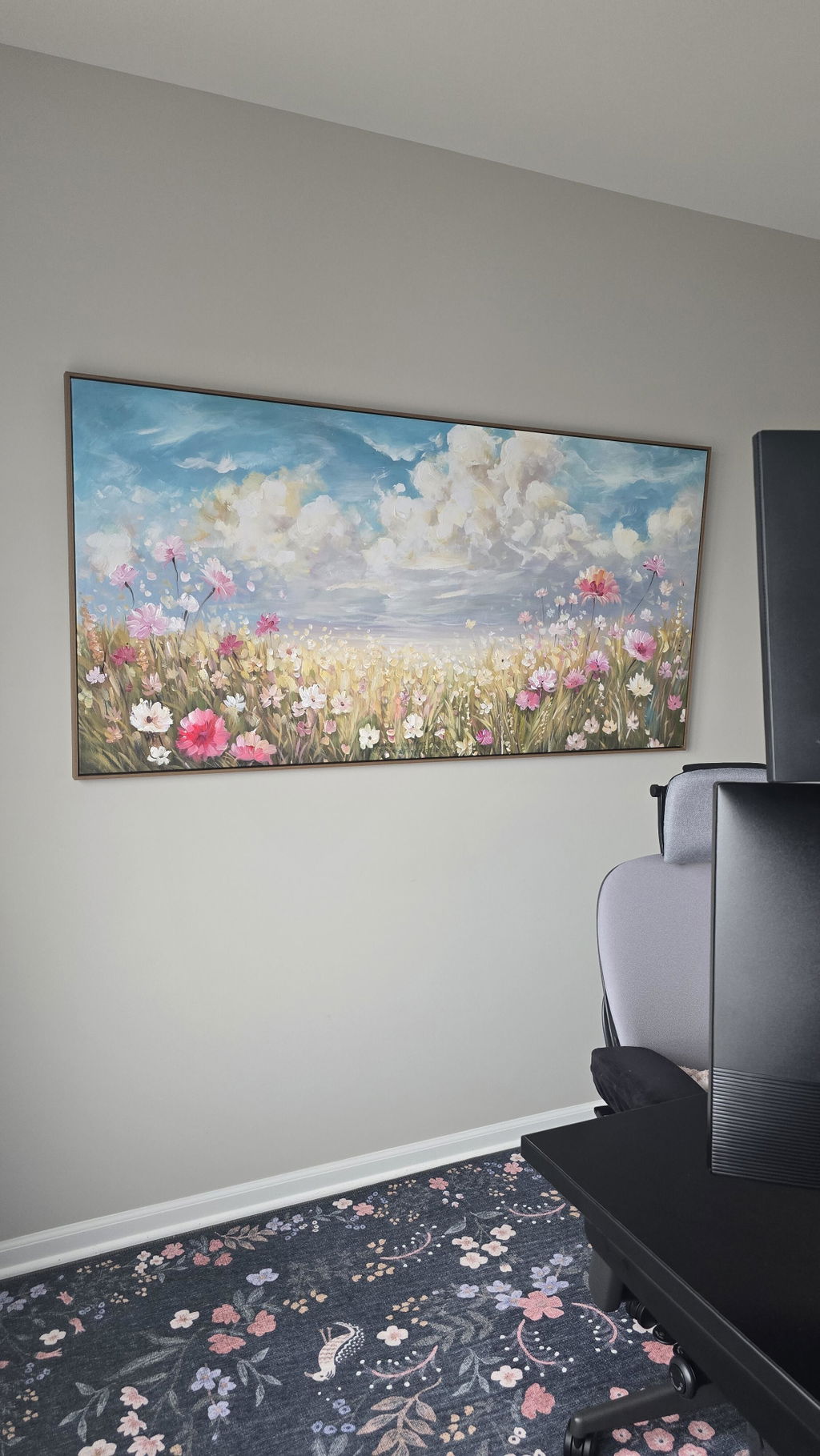
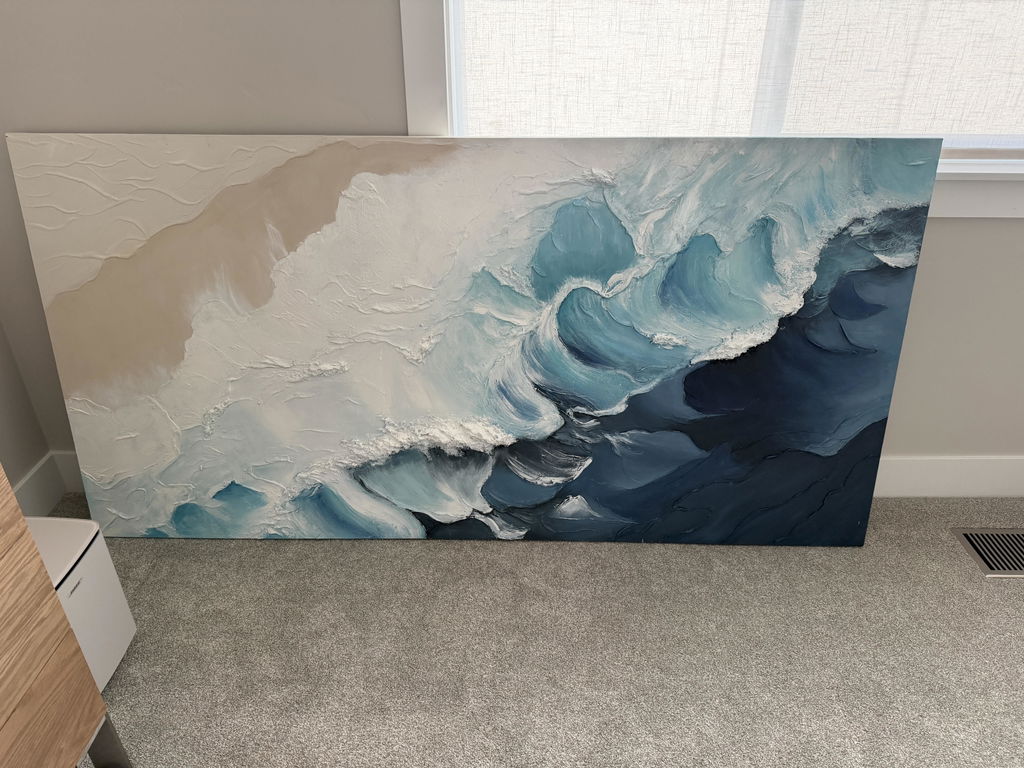
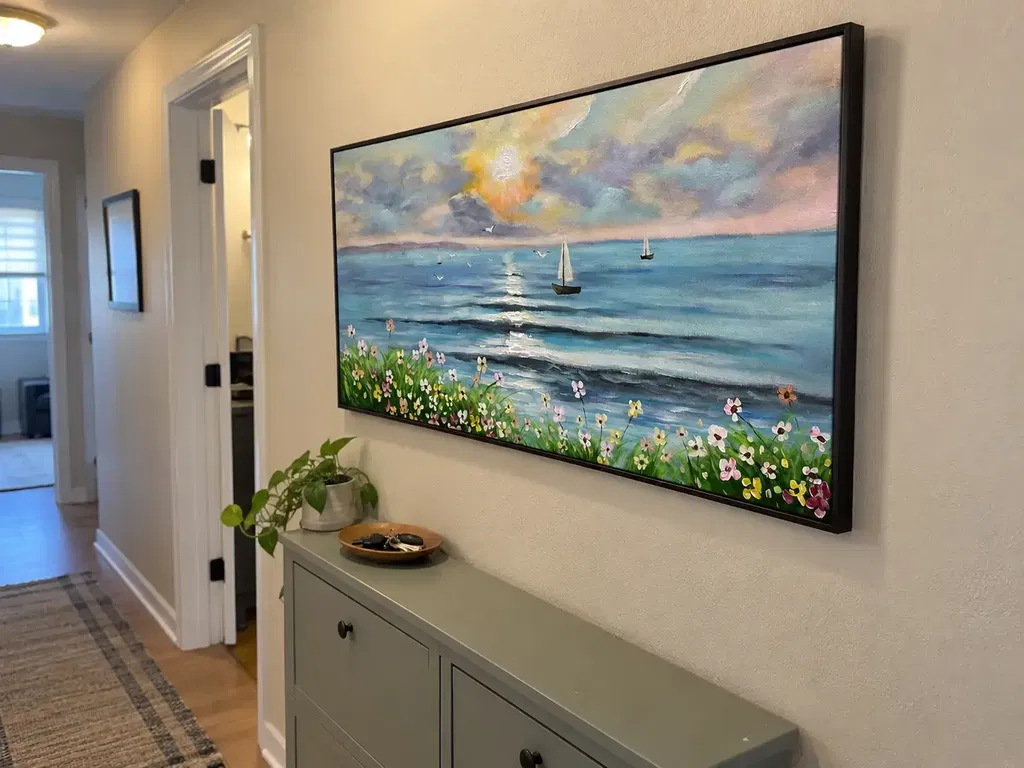
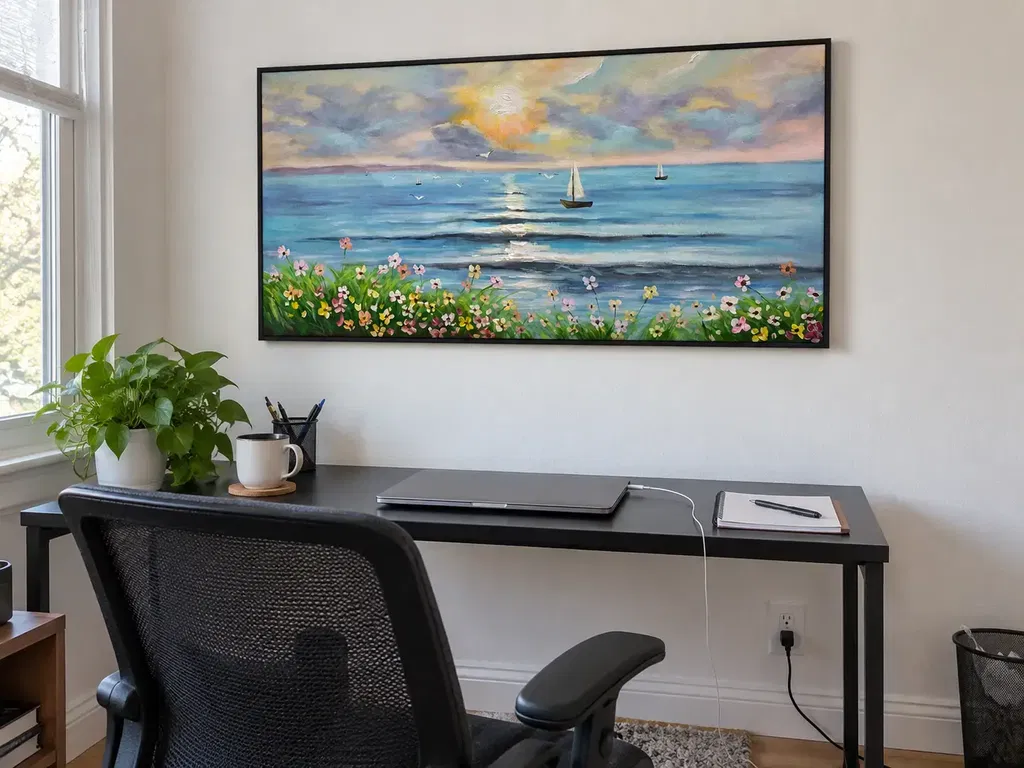
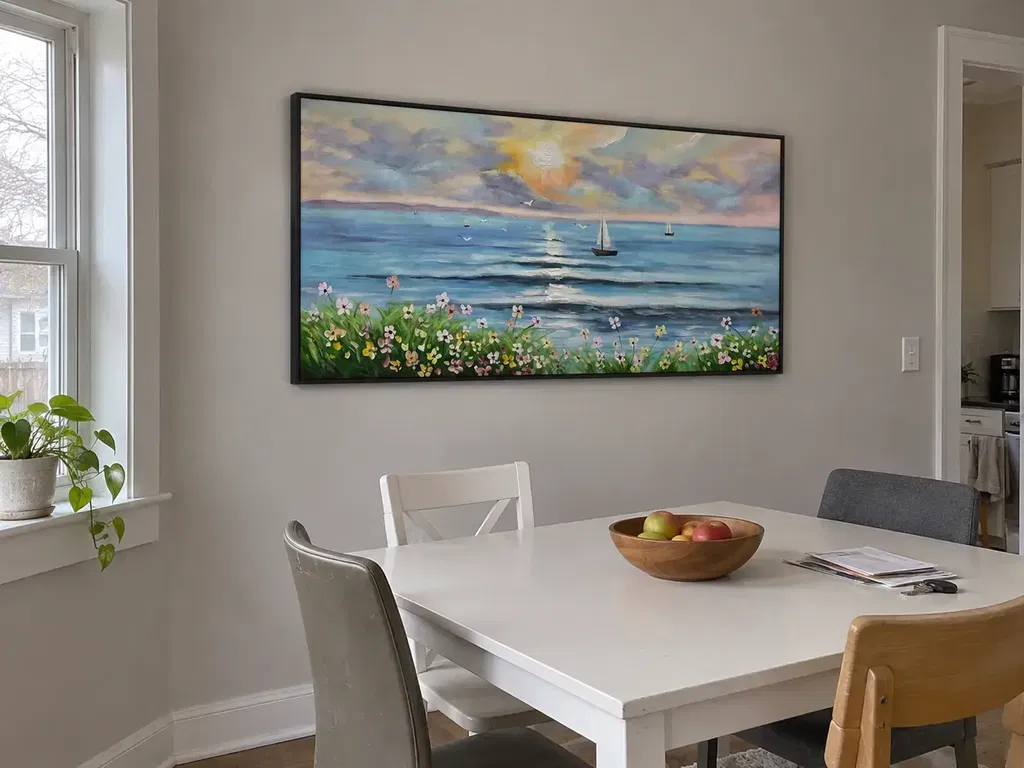
To achieve the serene, deep landscapes that define modern high-end interiors, we rely on the "wet-on-wet" (alla prima) technique. It is the gold standard for creating the soft gradients of a morning mist or the shimmering reflections of a lake. In this guide, we will break down why this specific method is the key to visual tranquility and how to distinguish high-quality craftsmanship from assembly-line imitations.

The Science of Seeing: Why Blending Matters
Why does a hand-painted mural of a forest feel so much more "real" than a high-definition photograph? The answer lies in your neurobiology. A systematic review of 85 records published in PMC reveals that passive art viewing consistently activates the medial prefrontal cortex (mPFC) and the amygdala. These are the brain's emotional regulation circuits.
When an artist uses wet-on-wet blending, they are mimicking the way light actually scatters through the atmosphere. In nature, distant objects appear lighter, cooler, and less detailed due to "aerial perspective." By blending pigments directly on the canvas while they are still wet, the artist creates a seamless transition that the brain interprets as physical depth.
Logic Summary: The Depth Heuristic
- Mechanism: Light scattering simulation via pigment diffusion.
- Visual Result: Reduction of "edge noise," allowing the eye to travel into the horizon.
- Boundary Condition: This effect is most pronounced in nature-themed pieces; architectural or geometric subjects often require the "dry brush" method for structural clarity.
Wet-on-Wet vs. Dry Brush: Choosing Your Aesthetic
Understanding the difference between these two primary application methods is crucial for any interior design project. While wet-on-wet offers fluidity, the dry brush technique provides texture and "grit."
| Feature | Wet-on-Wet (Alla Prima) | Dry Brush (Scumbling) |
|---|---|---|
| Visual Texture | Smooth, fluid, ethereal | Rough, "scratchy," high-contrast |
| Blending | Spontaneous and seamless | Layered and optical |
| Primary Use | Skies, water, mist, clouds | Tree bark, rocks, weathered wood |
| Technical Difficulty | High (requires precise timing) | Moderate (requires patience) |
| Drying Time | Extended (days to weeks for oils) | Fast (hours for acrylics) |
Based on our observations from years of custom mural projects, the most common mistake is trying to force a "blended" look using dry techniques. This often results in muddy colors and a lack of vibrancy. Successful practitioners maintain a consistent humidity level by lightly misting the canvas surface before applying subsequent layers—a technique derived from pattern recognition in high-end studio environments rather than a controlled lab study.

Technical Mastery: The Artist's Heuristics
To the untrained eye, a landscape mural is just paint on a wall. To the expert, it is a complex balancing act of chemistry and physics. When we commission murals for luxury hotel lobbies or private residences, we look for artists who understand the "3:1 Rule."
For atmospheric depth, experienced painters often use a ratio of 3:1 transparent to opaque pigments in distant areas. This allows the light to penetrate the paint layers and bounce back, creating a sense of "glow." As the composition moves toward the foreground, the ratio shifts to 1:3, using thicker, opaque pigments to ground the viewer.
Method & Assumptions: The Atmospheric Modeling Note
- Modeling Type: Deterministic parameterized model for visual depth.
- Key Assumptions: Standard indoor lighting (CRI > 90); viewing distance of 3–5 meters. | Parameter | Value/Range | Unit | Rationale | | :--- | :--- | :--- | :--- | | Pigment Ratio (Background) | 3:1 | Trans:Opaque | Mimics low-density air scattering | | Pigment Ratio (Foreground) | 1:3 | Trans:Opaque | Establishes physical "weight" | | Canvas Humidity | 45–55% | RH | Prevents premature "tackiness" | | Brush Type | Natural Bristle | N/A | Superior water/pigment retention | | Layer Thickness | 0.5–2.0 | mm | Balances texture with drying safety |
We have observed that synthetic brushes tend to hold too much water compared to natural bristles, which can lead to pigment separation. When pigments separate, the artwork loses its "punch" and can appear washed out once dry. This is especially critical in Oil Art for Bright Spaces, where the integrity of the paint film is the only thing protecting the color from UV degradation.
The Safety of Craft: Beyond the Visuals
In the decorative art world, "beauty" is often a mask for toxicity. Many mass-produced paints and industrial coatings contain hazardous heavy metals and volatile organic compounds (VOCs). According to the International Agency for Research on Cancer (IARC), cadmium and its compounds—commonly used in bright yellows and reds—are Group 1 carcinogens.
When we talk about "decision safety" for interior design, we aren't just talking about the look; we are talking about the air you breathe. The EPA warns that indoor air pollution is often deadlier than outdoor pollution. For large-scale healthcare facilities or nurseries, low-VOC paints are strict prerequisites for achieving LEED certification, as noted in EPA guidelines.
The Chemical "Why" Behind the Finish
A common question we receive is: "Why did my acrylic painting turn hazy after it dried?" This is known as "Support Induced Discoloration" (SID). Research from Tate explains that surfactants (PEG-type molecules) migrate from inside the paint film to the surface when humidity rises, forming water-soluble microcrystals.
By choosing professional-grade, hand-painted murals over cheap prints, you are investing in a stable chemical matrix. We prioritize water-based acrylics that pass the BS EN 71-3 standard for heavy metal migration—the same strict standard used for children's toys.
The Economic Impact: Art as an Asset
For commercial developers and property owners, the "alla prima" landscape is more than decor—it's a financial lever. A Royal Society analysis of 10-year data found that neighborhoods with higher "art" geo-tags had greater relative house price ranking gains.
In Chicago, the Millennium Park public art projects drove an estimated $1.4 billion in real estate-related growth. Murals effectively turn physical walls into commercial landmarks, generating massive foot traffic and social media "shareability."
ROI for Business Owners
- Retail/Boutiques: High-quality murals act as permanent physical billboards. A study by University of Cincinnati confirms that murals directly correlate with significant pedestrian foot traffic increases.
- Corporate Offices: Biophilic design (nature-based art) reduces employee cognitive fatigue and burnout. In high-density office spaces like those in Tokyo, nature-themed murals have been shown to improve well-being and productivity.
- Healthcare: 73% of patients in a Cleveland Clinic study reported significant mood improvements when exposed to environmental artworks.

Ethics and the Human Element
The value of a hand-painted mural is also rooted in the ethics of its production. While the AI art market is growing, a Columbia University study confirms that consumers value art labeled "AI-generated" 62% lower than authentic human-created art. There is a "moral premium" attached to the human hand.
Furthermore, we must address the gender pay gap in the arts. Data from the National Museum of Women in the Arts reveals that women still face a severe pay gap despite their commercial success. By choosing to work with firms that guarantee fair compensation for their artists, you are supporting a sustainable creative economy. This appeals to the 87% of consumers who, according to Wharton, believe artists should receive fair compensation for their work.
2026 Trends: The Return of Texture
As we look toward 2026, the high-end interior design market is moving toward "understated elegance" where texture is the soul of the room. Zillow search data shows that mentions of "artisan craftsmanship" rose 21%, while interest in "custom framing" skyrocketed by 329% (Pennsylvania Association of Realtors).
The "wrapping mural wallpaper" trend seen at the 2025 KBIS awards is evolving. Designers are now opting for panoramic, hand-painted landscapes that create an immersive escapism. These aren't just pictures; they are environments.
To achieve this, we recommend:
- Prioritizing Lightfastness: Ensure your mural uses pigments tested under ASTM D4303 protocols to prevent fading in sun-drenched rooms.
- Evaluating Pigment Saturation: Hand-painted pigments offer a depth that Canvas Prints simply cannot match due to the physical refractive index of the paint.
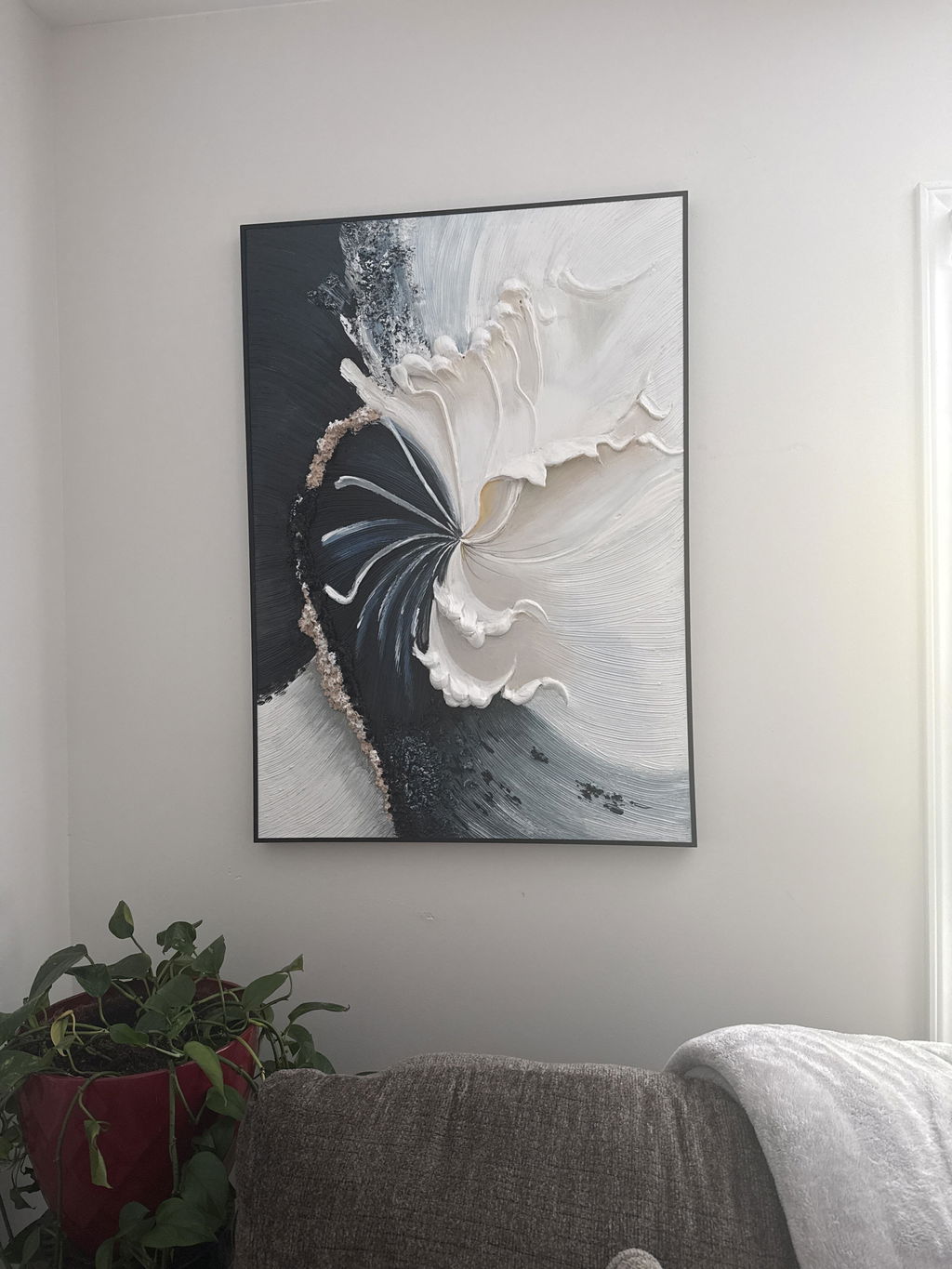
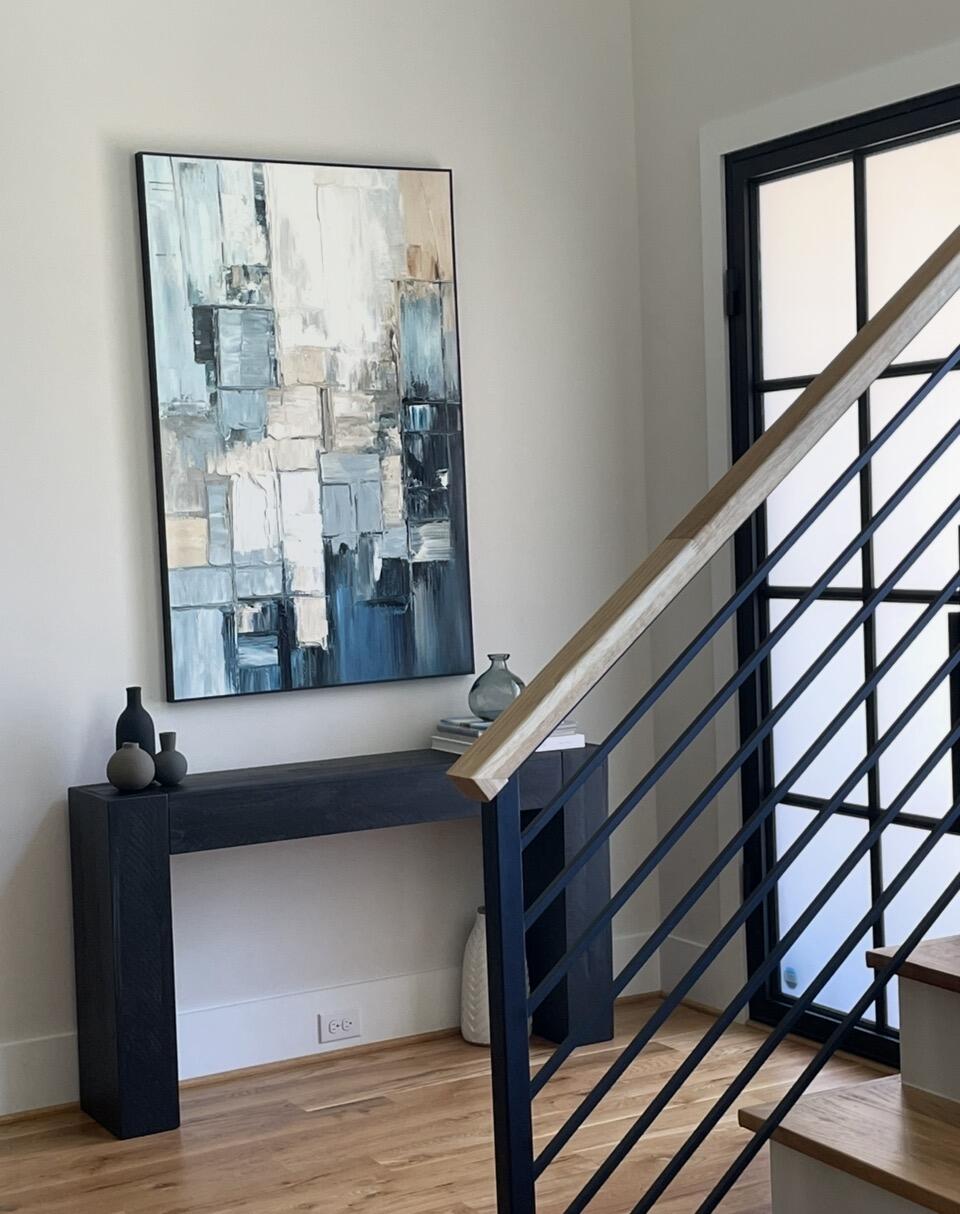
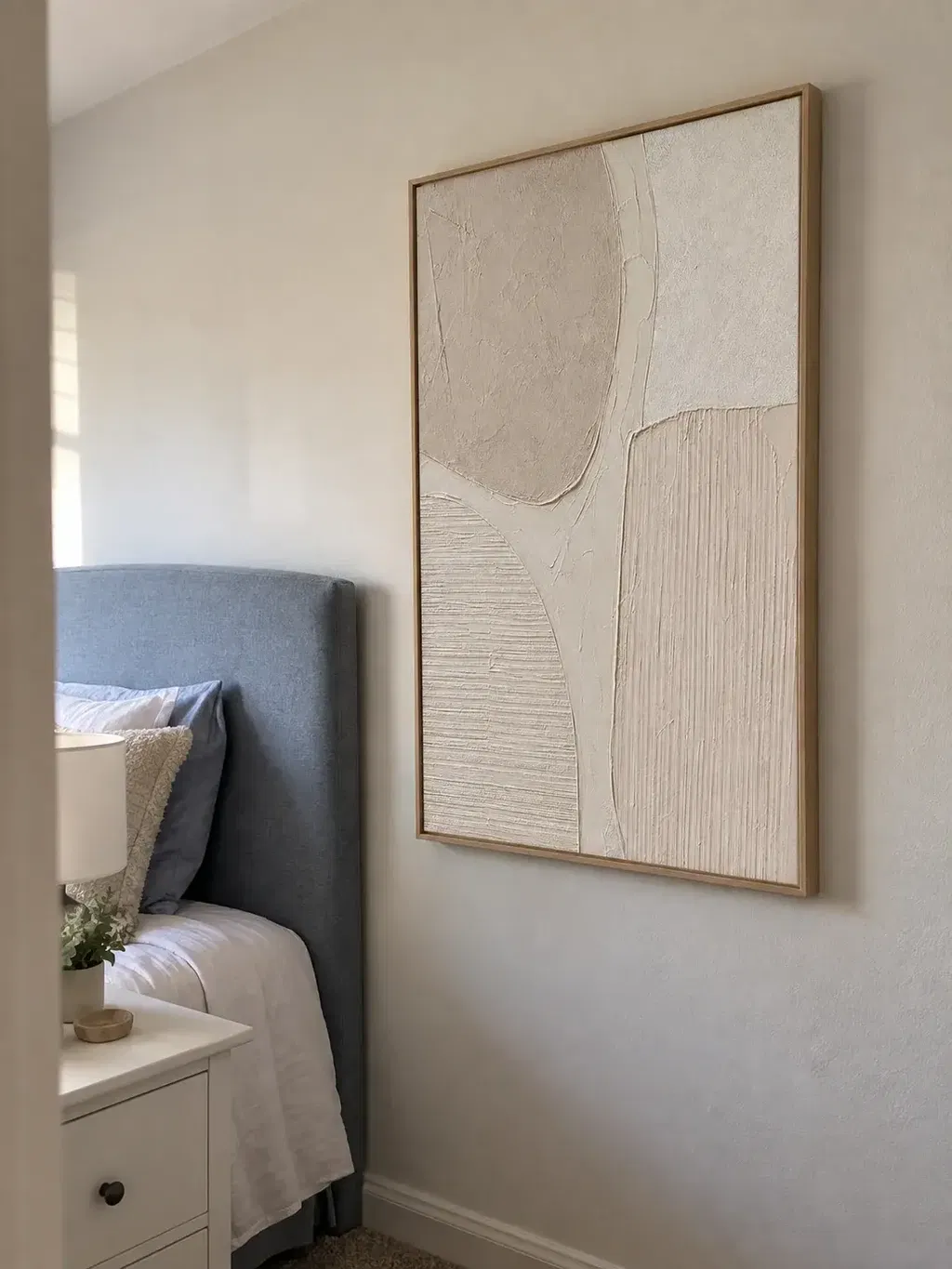
- Balancing Texture: Use Textured Art with Minimalist Decor to create a focal point without overwhelming the space.
A Final Note on Authenticity
In an era of assembly-line digital products, the decision to commission a hand-painted landscape is an act of rebellion. It is a choice to prioritize the biochemical crystallization of human attention over the algorithmic output of a machine. Whether you are looking to Master Smooth Gradients in a private study or revitalizing a commercial district, the wet-on-wet technique remains the most effective way to capture the elusive beauty of the natural world.
Disclaimer: This article is for informational purposes only. When commissioning large-scale murals in public or medical facilities, always consult with a certified industrial hygienist to ensure compliance with local safety regulations and VOC standards.
Sources
- Marketplace: The expensive art market continues to struggle
- UChicago: Does Artwork Preserve Essential Identity?
- Royal Society: Quantifying the link between art and property prices
- WHO: Scoping Review on Arts and Health
- Columbia University: Human-Made vs. AI Art
- EPA: Indoor Air Quality and Low-VOC Paints
- Tate: Conservation Concerns for Acrylic Emulsion Paints