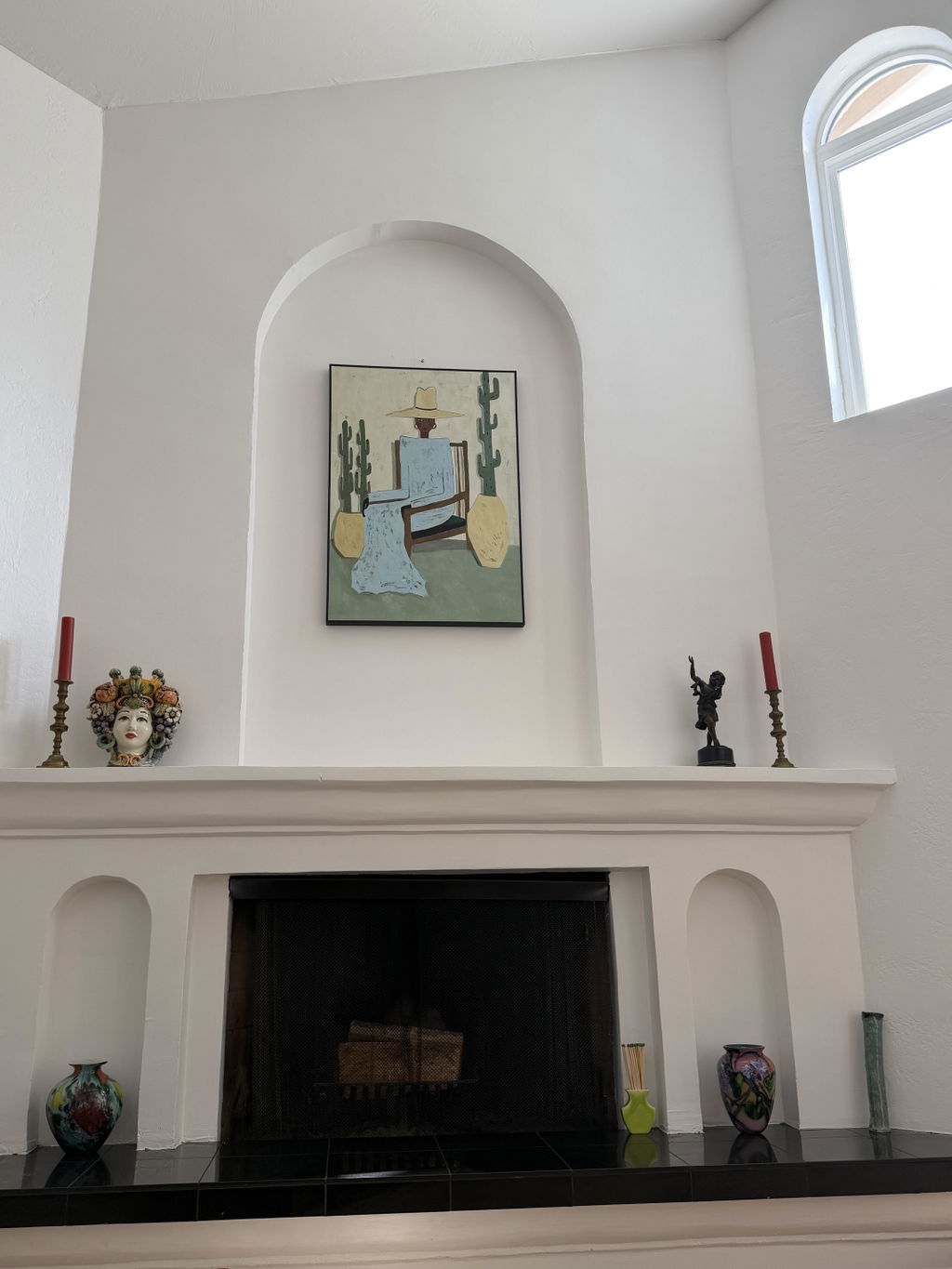
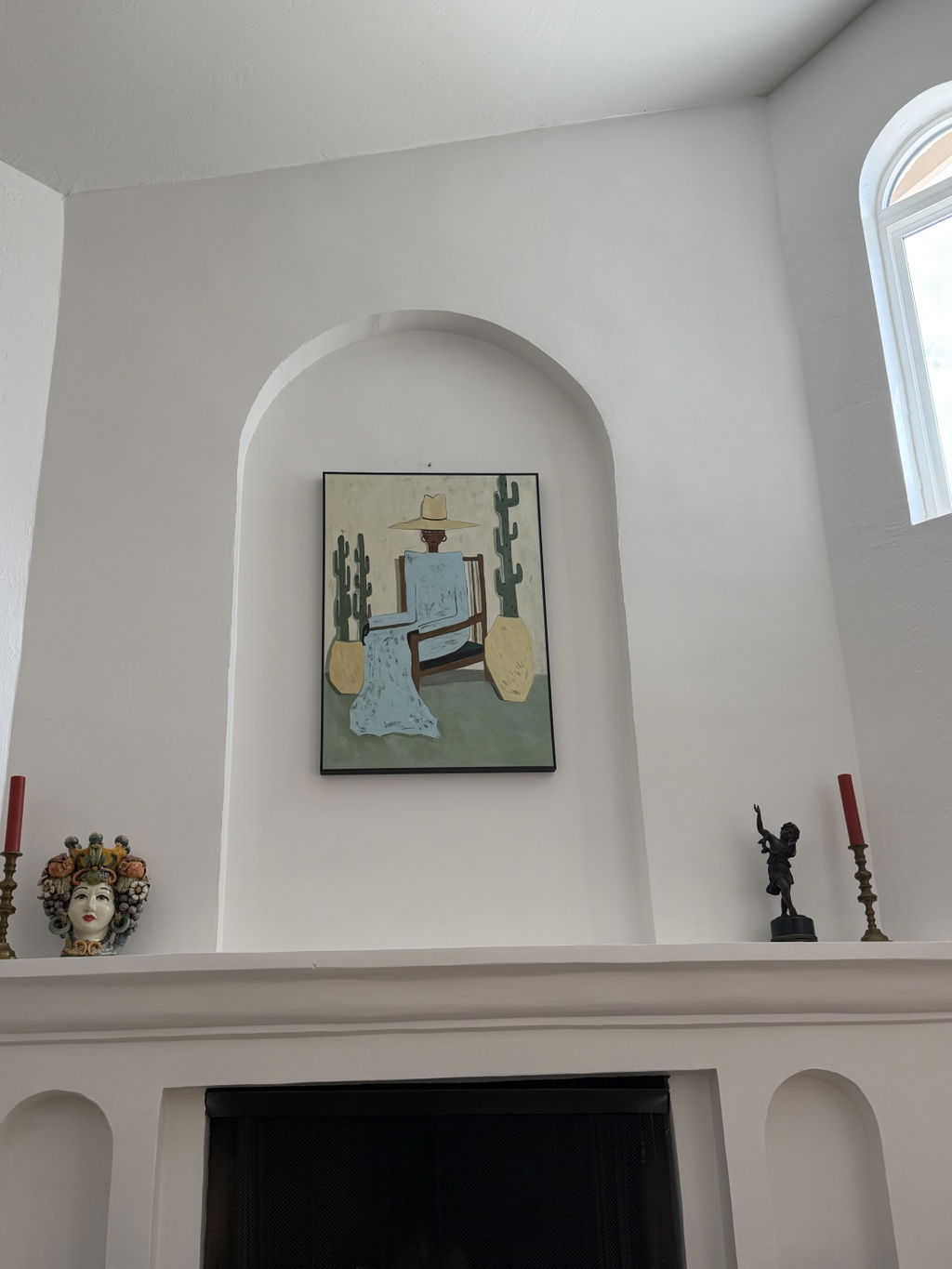
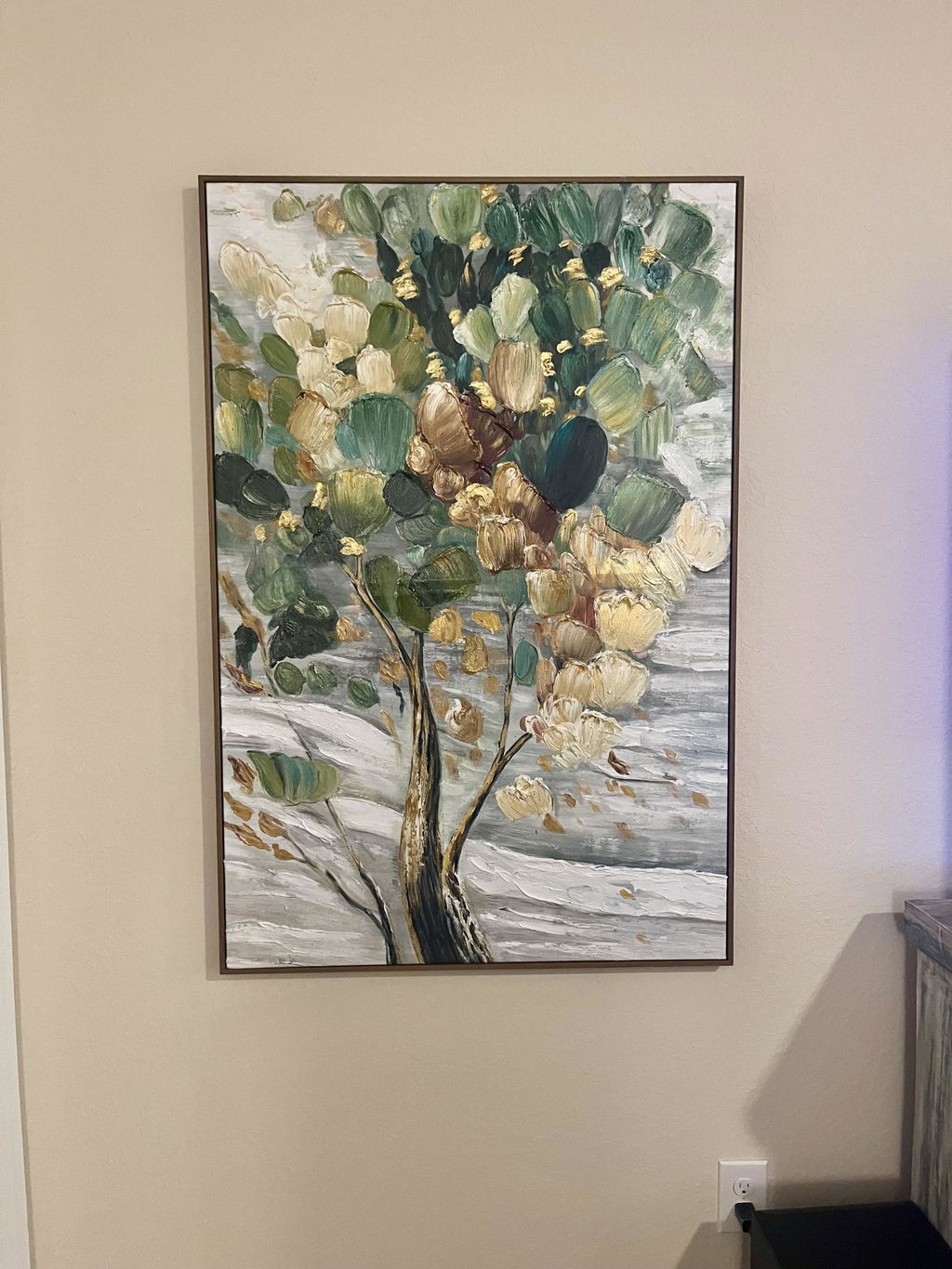
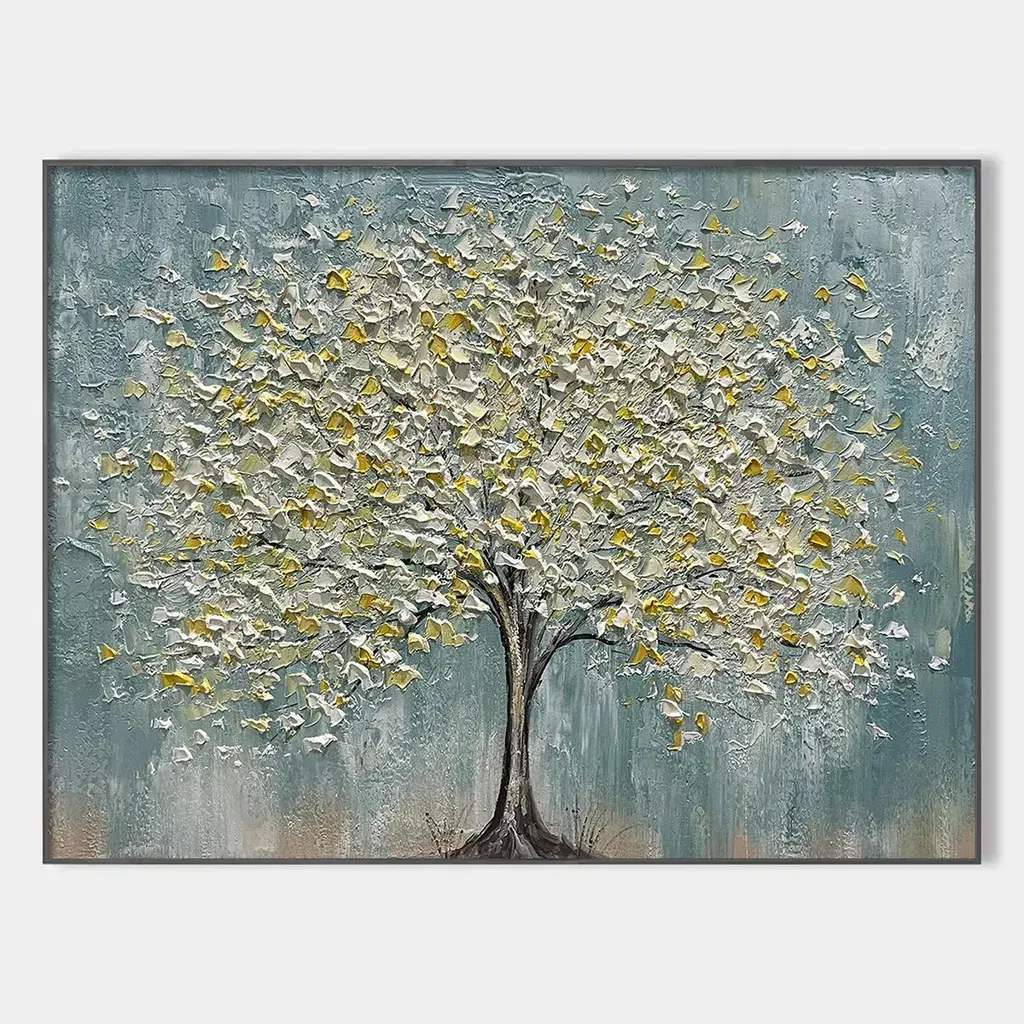
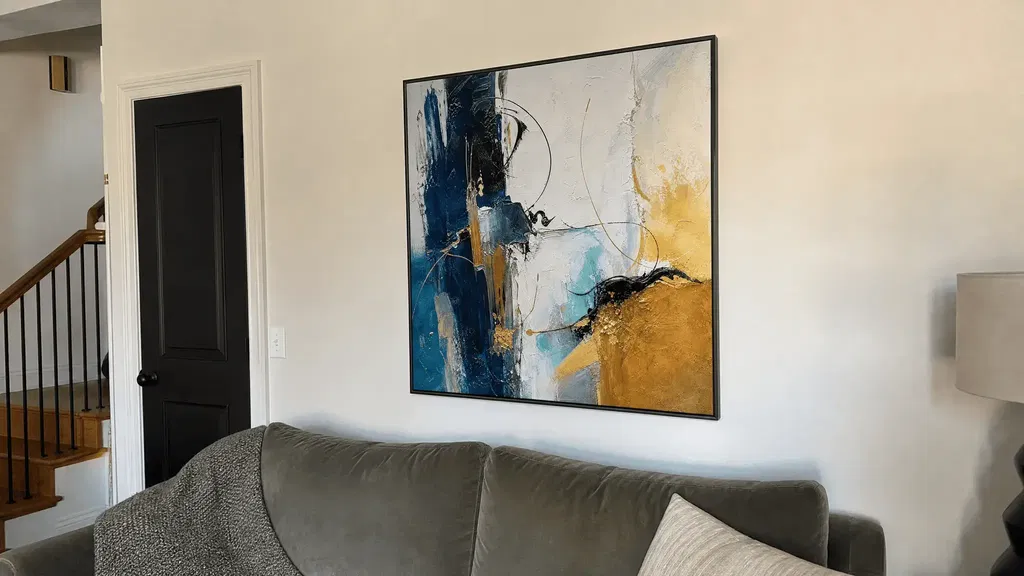
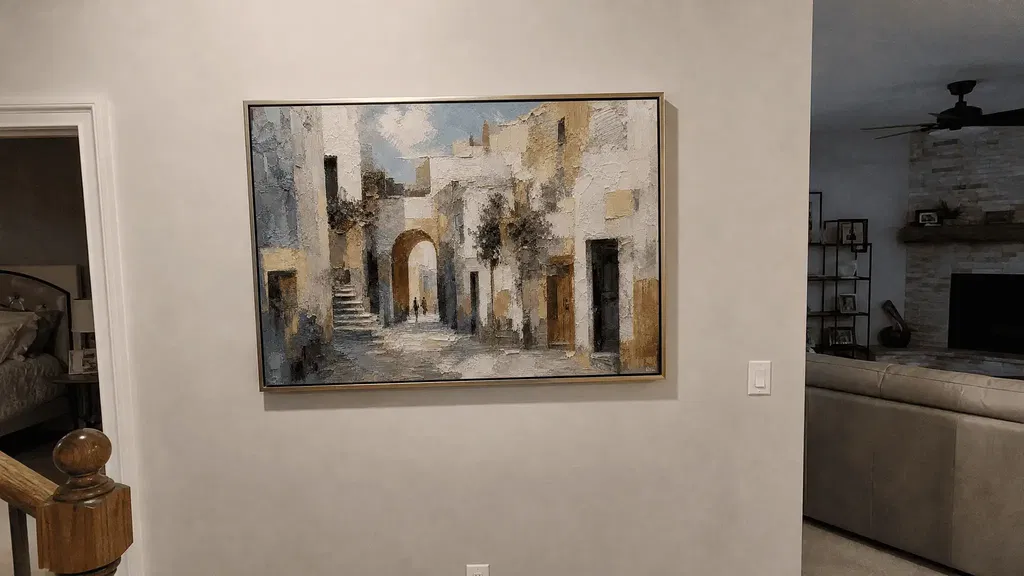
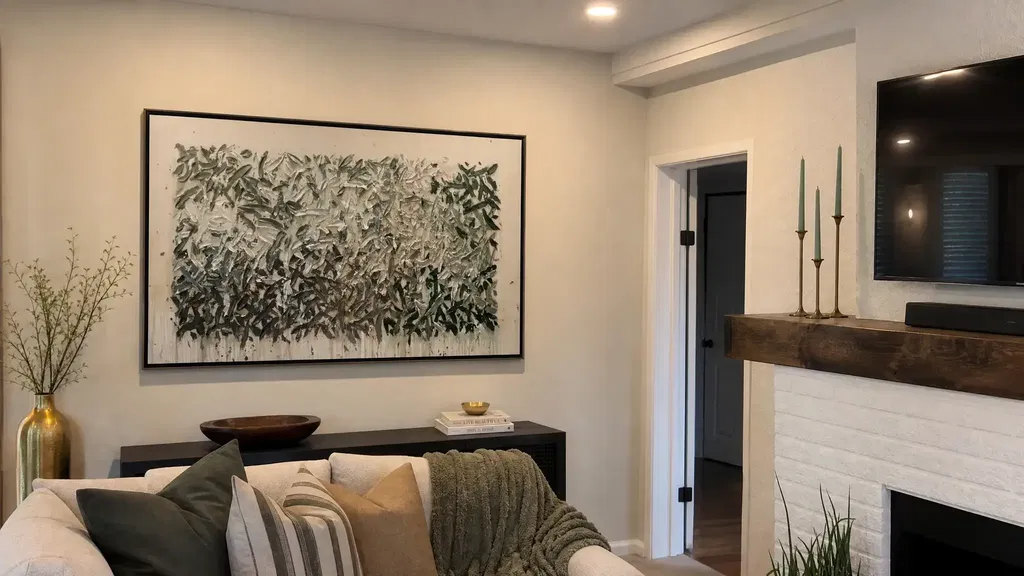
Hotel lobby statement art feels custom when it belongs to the property—not simply because it is large, dramatic, or expensive. Start with the arrival experience, then evaluate each candidate against the hotel's architecture, palette, guest approach, viewing distance, lighting, maintenance access, and sourcing requirements. This process helps a boutique hotel create a distinct visual impression without assuming that a particular style, medium, or size will work in every lobby.
Start With the Arrival Experience, Not the Artwork
Before reviewing artwork, write a one-sentence arrival brief: What should the lobby communicate in the first few seconds, and what aspect of the property should support that feeling? The answer might point to quiet organic simplicity, local energy, refined contrast, or another mood grounded in the hotel's materials and architecture. Hospitality guidance on hotel artwork selection similarly frames lobby art as an arrival-area decision that should express the property's character without overpowering the space.
Use the brief to filter choices by palette, composition, texture, and visual density. A calm, natural property may explore organic simplicity artwork, while a botanical concept could use neutral floral wall art as a visual reference. Neither a category, collection, nor product description proves hospitality suitability; the point is to compare the visual language with the actual space.

Then review the work from the guest's path rather than from a listing image alone. Stand at the entrance, reception queue, seating area, and elevator approach. Ask whether the composition still reads when people, signage, furniture, or changing light partially block it. Request side-angle, close-up, and real-room views when available. Visible brush marks or uneven texture may help you assess whether a work feels hand-painted, but they are verification cues—not proof of custom production.
Size Hotel Lobby Statement Art for the Right Sightlines
Choose scale from measured sightlines and wall context, not from a universal hotel sizing rule. Measure the wall's usable width and height, nearby furniture, signage, circulation paths, and the distances from which guests will first see the work. A taped outline or scaled digital mockup should come before approval, especially when the piece must work from both the entrance and check-in area.
Use proportion and viewing-distance references as starting points, not standards. A wall-art proportion guide or viewing distance guide can help the team ask better questions, but the lobby's actual dimensions and circulation control the decision.

| Decision condition | What to measure | Likely arrangement | Approval check |
|---|---|---|---|
| One clear focal wall with an unobstructed approach | Usable wall area, entry sightline, reception distance, furniture height | One focal work | Does it hold attention without competing with signage or blocking circulation? |
| A wide wall viewed from several angles | Wall width, approach paths, gaps around doors and furniture, visual interruptions | A pair or coordinated horizontal grouping | Does the composition remain legible from each main approach? |
| A tall or narrow wall near active movement | Clear height, corner conditions, queue flow, nearby fixtures | One vertical work or a restrained stack | Does the format fit the wall without narrowing the route or becoming easy to brush against? |
| Long distance from entry with a closer check-in view | First-seen distance, near viewing distance, texture visibility, detail density | A work with a strong overall shape and useful close-range detail | Does it read as a composition from far away without becoming visually noisy up close? |
| Competing art, branding, or directional signage | Existing focal points, contrast, sightline overlap, sign hierarchy | One quieter anchor or a deliberately grouped arrangement | Is the artwork supporting the arrival sequence rather than creating competing instructions? |
If the piece feels too small from the entry but too dense near reception, do not solve the problem by guessing at dimensions. Test a different arrangement, visual density, or placement. The best candidate remains proportionate across the important guest approaches while preserving furniture clearances and the project team's circulation requirements. You can also browse large wall artwork for comparison, but treat category browsing as an idea-generation step rather than a site-fit decision.
Resolve Texture, Lighting, and Maintenance Trade-Offs
Texture, lighting, and maintenance belong in one approval review. Inspect the surface at the intended viewing distances and under installed or realistically simulated lighting, then request piece-specific care, access, mounting, and shipping information before treating the candidate as a lobby fit.
Choose Surface Texture That Supports the Brand Mood
Texture can add shadow, depth, and a handmade visual signal, but its value depends on the property's mood and viewing distance. Compare each option using three questions:
- Visual benefit: Does the surface add the depth or irregularity the arrival brief calls for?
- Likely trade-off: Could the texture read as too subtle from the entry, too busy near reception, or overly reflective under the planned fixtures?
- Documentation needed: What are the confirmed medium, finish, care instructions, and handling limits for this specific piece?
A collection such as impasto artwork can be useful for exploring surface-led options. A medium comparison for commercial projects may also help frame questions, but neither resource establishes that a medium is durable, easy to clean, safe, or compliant in a hotel. Those claims require piece- and site-specific documentation.
Review Lighting Before Approving the Focal Piece
Approve the work under the conditions in which guests will actually encounter it, not under listing photography. Museum and conservation guidance can inform a cautious lighting review, but it does not establish hotel requirements or universal thresholds. The Getty lighting guidance is useful for framing that review.
- Identify daylight, overhead fixtures, decorative fixtures, and nearby reflective surfaces.
- Inspect the artwork from the entrance, reception, seating, and elevator approaches.
- Check for glare, hard shadows, color shifts, and areas where texture disappears.
- Coordinate any fixture, dimming, shielding, or placement change with the project team.
- Recheck the candidate after the proposed adjustment rather than approving it from a verbal description.
Viewing and circulation also deserve project review. Smithsonian exhibition-design guidance can provide useful prompts about visibility and accessible viewing conditions, but it is not a substitute for the hotel's applicable accessibility, building, fire, electrical, or installation review.
Confirm Cleaning, Access, and Installation Boundaries
Do not infer operational performance from labels such as oil, acrylic, impasto, or textured. Instead, make missing information an approval gate. Hospitality art selection guidance places sightlines, lighting, and maintenance alongside visual selection; use those as workflow prompts, not as proof that a particular finish will withstand heavy use.
| Operational question | Why it matters | Evidence to request | Decision consequence |
|---|---|---|---|
| How should this piece be cared for? | Staff need a realistic inspection and care plan | Medium, finish, care instructions, and restrictions | Pause approval if the instructions do not fit the property's routine |
| Can staff or contractors reach it safely for inspection? | A visually suitable piece may be difficult to access after installation | Access needs, location constraints, and service assumptions | Reconsider placement or involve the facilities team |
| What wall and mounting conditions apply? | Wall construction and installation method affect the project plan | Confirmed mounting details and site requirements | Assign review to the responsible installer or project professional |
| How will it be protected in transit and during installation? | Damage risk can arise before the work reaches the lobby | Packaging, handling, delivery, and inspection information | Add an inspection step before acceptance |
| Which reviews are required for this site? | Hotel requirements vary by property and jurisdiction | Project-team determination for accessibility, fire, electrical, and installation matters | Do not treat aesthetic approval as technical approval |
Build Repeatability Without Losing Individuality
A hotel group can create recognition by repeating art-direction rules rather than requiring identical artwork. Set boundaries for mood, palette relationships, scale logic, and texture level, then let each property's architecture, local identity, wall conditions, and guest circulation determine the variation. Examples from historic hotels show how art can contribute to identity across public areas, but they do not establish a required sourcing model. Hospitality art collection examples illustrate the idea without proving a universal approach.
Use four lenses when building the system:
- What can repeat: the emotional register, contrast level, preferred composition types, texture range, and the way art relates to arrival.
- What should vary: dimensions, orientation, local references, architectural response, and the balance between focal and supporting works.
- What to document: the approval brief, acceptable palette boundaries, scale logic, mockup process, care expectations, and who signs off.
- What to verify with a vendor: commission availability, adaptations, repeat orders, replacements, production timing, packaging, delivery, and variation between pieces.
A curated existing artwork may offer faster visual certainty, while a possible commission may offer more control over dimensions, palette, or site response. Compare those paths by control, timing, approval rounds, variation, and supply risk—not by assuming that any seller offers commissions or ongoing reproduction. A large-scale artwork category or organic textured art collection can support early browsing, but a design system is not evidence of inventory continuity.
Turn the Criteria Into a Shortlist and RFQ
The shortlist should contain only candidates that pass brand, scale, sightline, lighting, maintenance, and sourcing checks together. Before requesting pricing or approving a work, turn the decision into a written brief and leave unknown details as open RFQ questions rather than filling them in with assumptions.
- Define the arrival moment. Record the intended mood, property character, primary guest approach, and the role of the artwork: anchor, transition point, or discovery moment.
- Measure the site. Document usable wall width and height, ceiling conditions, furniture, signage, doors, circulation, viewing paths, and competing focal points.
- Set visual boundaries. Note palette relationships, contrast, composition, texture level, and what would feel too generic, too busy, or disconnected from the architecture.
- Review the candidate in context. Request side and close-up views, create a scaled mockup, and inspect the work from the main guest approaches.
- Test lighting and surface behavior. Review daylight and installed or simulated artificial lighting for glare, shadows, color changes, and legibility.
- Request operational documentation. Ask for confirmed dimensions, medium, finish, care instructions, mounting details, packaging, delivery terms, and any site information needed by the project team.
- Assign approval ownership. Identify who approves design, facilities, installation, accessibility, and other project-specific requirements. Establish these inputs before requesting options, alongside the timeline and other procurement parameters. Hotel art sourcing guidance supports documenting those project inputs.
- Record future questions. Ask what can vary, repeat, adapt, replace, or be reordered across future refreshes. If the answer is unknown, record it as a sourcing risk.
For hotel lobby statement art, use square textured abstract art or browse large wall artwork as a starting point for a shortlist, not as a recommendation or evidence that a particular work is approved for hotel use.
The practical next step is to send a hospitality art brief with the measured wall, guest approaches, arrival goal, lighting conditions, finish expectations, care questions, installation requirements, delivery needs, and approval owners. Request a documented shortlist or RFQ response, and keep every unresolved product or site detail visible until the responsible team confirms it.
FAQs
These questions cover previewing, documentation, and sourcing choices that may still need resolution after the main selection review. Treat each answer as a project prompt rather than a universal hotel standard.
How Can a Hotel Preview Statement Art at Different Times of Day?
Review a physical sample, accurate mockup, or approved image during morning, daytime, evening, and artificial-light conditions from the main guest approaches. A mockup cannot fully establish glare or surface depth.
What Information Should Hotels Request Before Ordering Custom Lobby Artwork?
Request confirmed dimensions, medium, finish, care, mounting, production timing, packaging, delivery terms, expected variation, and project documentation. Ask whether the work is one-off, adaptable, or repeatable.
What Is the Difference Between a Custom Commission and a Curated Existing Artwork?
A commission may offer more control but can involve extra approval rounds, timing, variation, and supply questions. Existing work may be faster to review but less adjustable. Compare both using the same RFQ criteria and confirm that the seller provides the service.