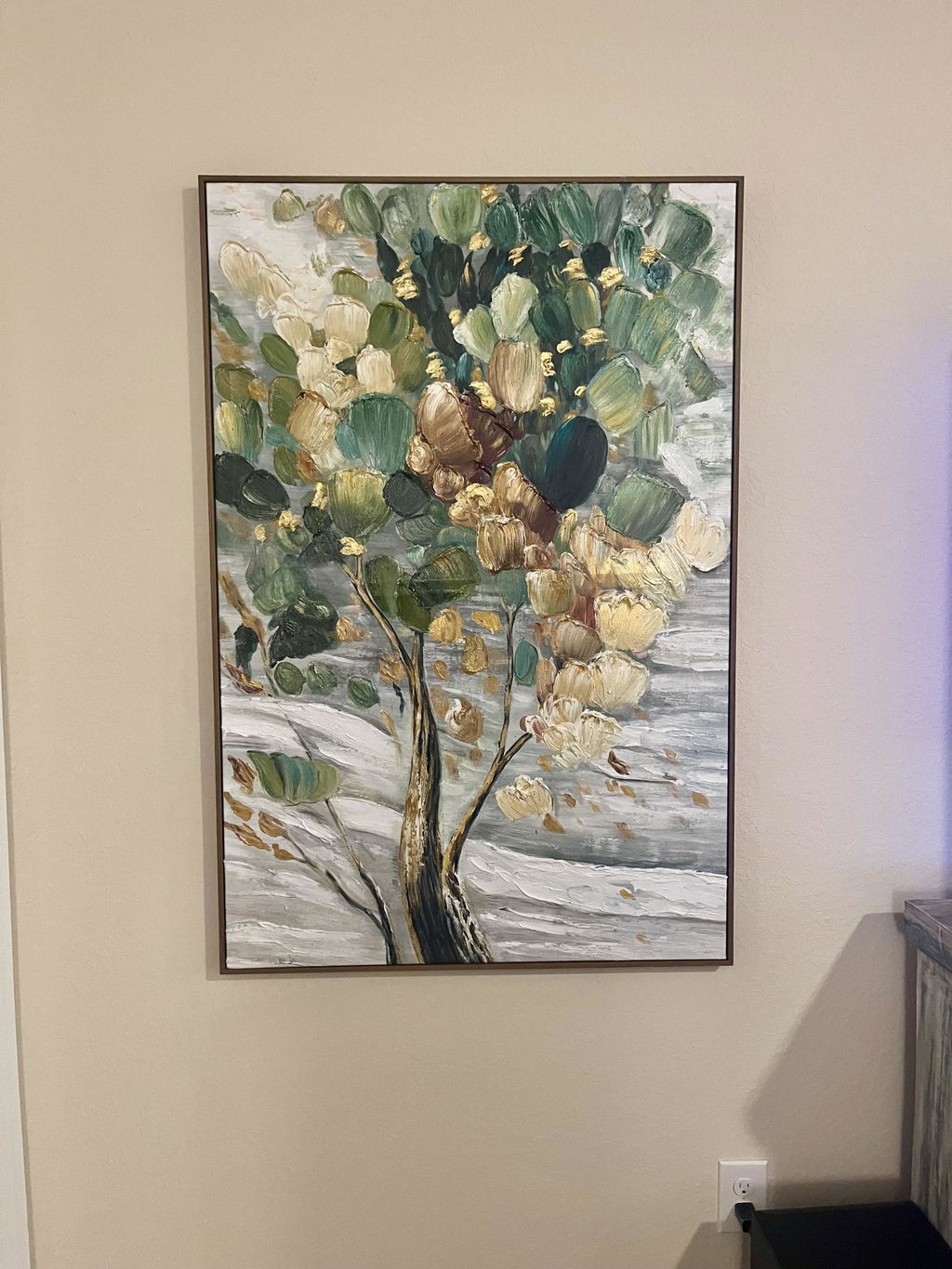
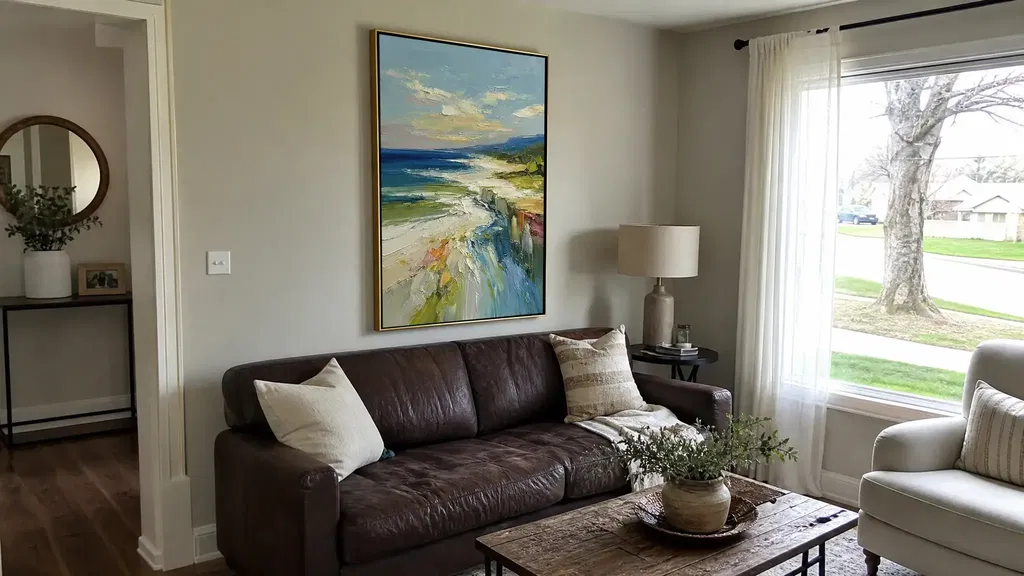
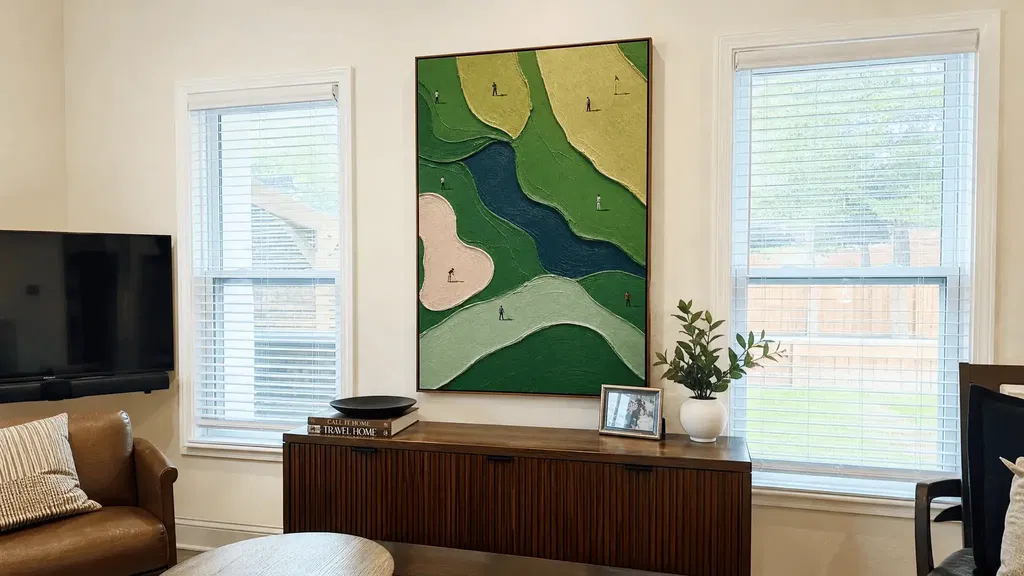
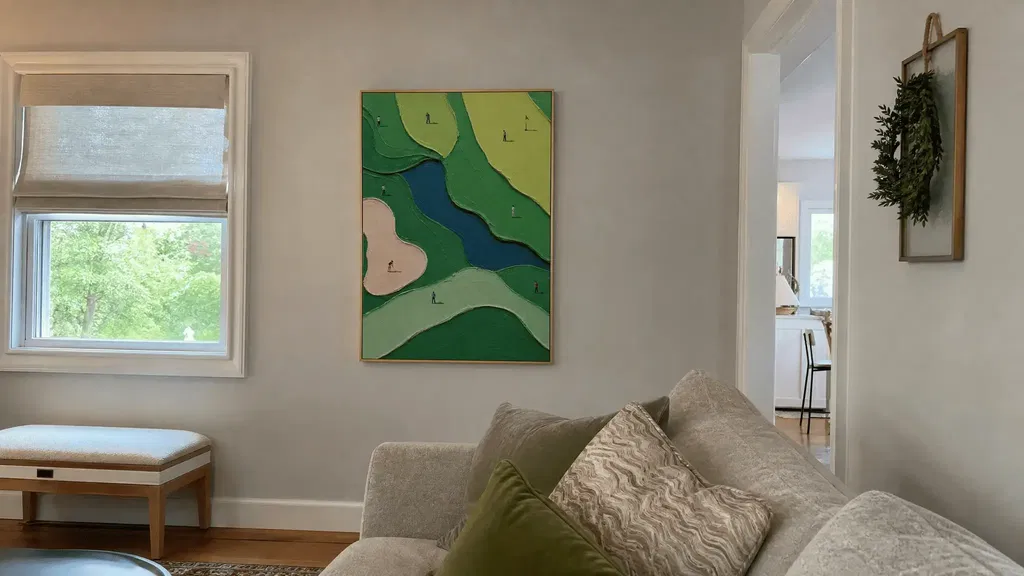
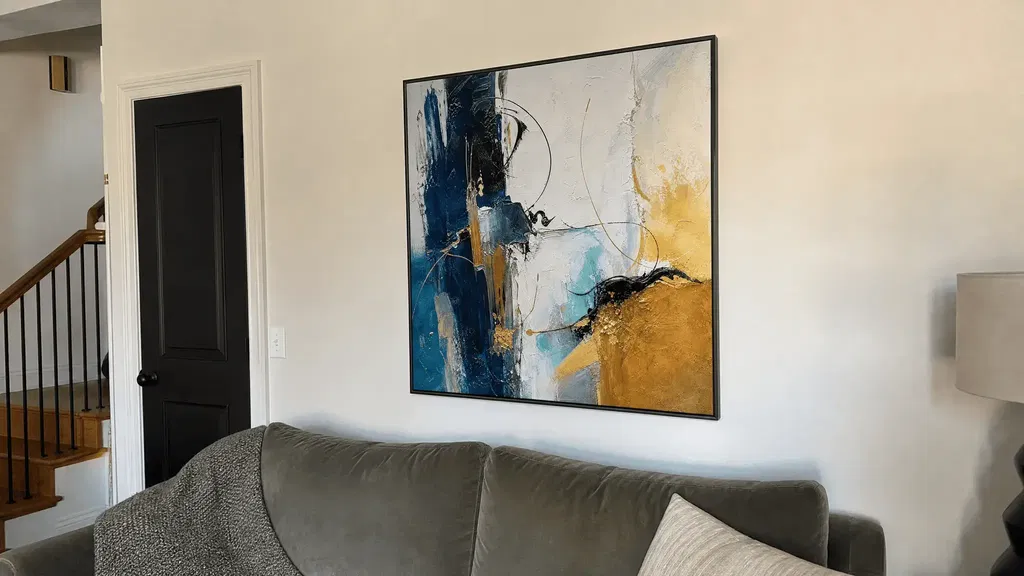
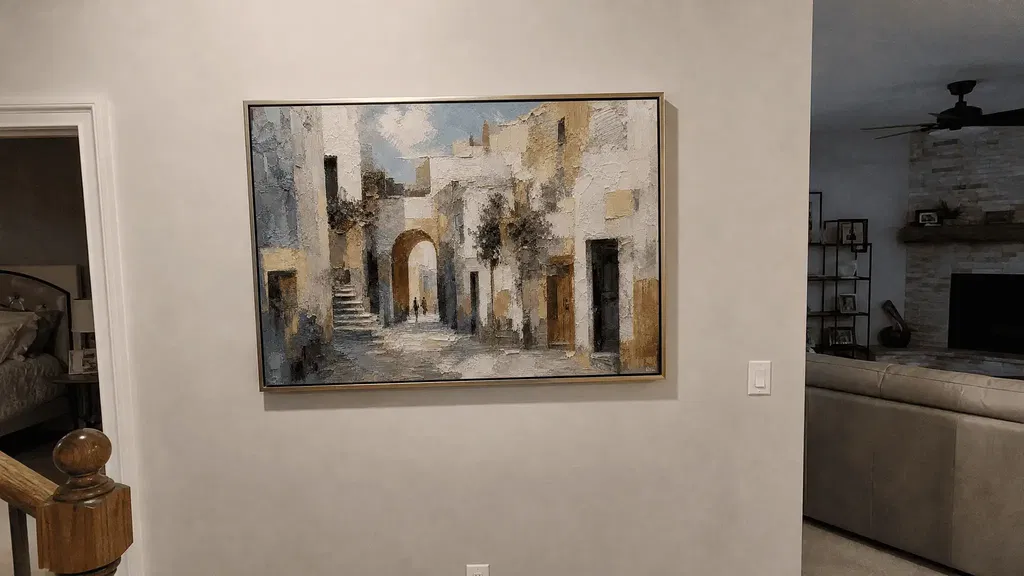
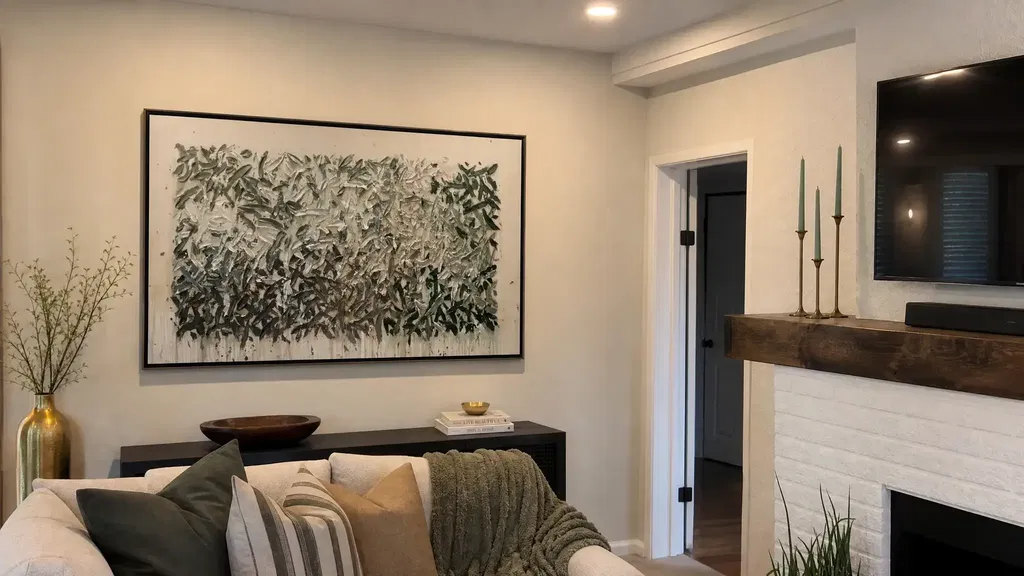
An original painting price usually reflects the artist's time, materials, preparation, physical scale, complexity, presentation, delivery, and pricing practice. Two works with similar dimensions can still require very different amounts of planning, surface preparation, texture work, revisions, or finishing. The most useful question is not whether one headline price is "fair," but whether both quotes cover the same scope and delivered costs.
Use this framework to compare the work, request missing details, and decide whether the complete package fits your room and budget. It explains purchase value—not resale or investment value.
The Main Drivers Behind an Original Painting Price
An original painting price can reflect hands-on labor, materials, preparation, overhead, presentation, shipping, and the seller's pricing practice. Size matters, but it does not explain every difference; use the categories below to identify what the quote actually includes.
Artist Time and Hands-On Labor
The visible painting stage is only one part of the work. Planning, references, surface preparation, painting, drying or curing time, revisions, corrections, and final finishing may all be reflected in the quote. Ask whether the price covers the full process or only the work done directly on the surface.
For a commission, confirm the brief, dimensions, palette, expected deliverables, revision allowance, approval point, and finish before production begins. A quote that omits revisions or preparation may look lower without representing the same amount of work.

Composition, Detail, and Technical Difficulty
Similar dimensions do not guarantee similar labor. Compare observable production details rather than labels such as "premium" or "museum-quality":
- Layers: More layered surfaces may require additional application and drying stages.
- Texture: Deep texture or impasto can require more material, tools, and handling.
- Detail: Fine edges, small forms, or intricate patterns may take longer than broad marks.
- Subject difficulty: A complex figure, architectural scene, or tightly specified composition may require more planning.
- Corrections: Changes made during production can add time or materials.
- Revisions: A custom approval process may create work beyond the original brief.
These features can affect labor and materials, but they do not automatically make a painting more valuable. When comparing online listings, ask for close-up or side-angle views if texture and finish are central to your decision. For additional context, see these textured original cost factors, while treating descriptive claims as questions to verify for the specific work.
Artist Positioning and Pricing Practice
Experience, demand, sales channel, consistency within an artist's body of work, and the services included with a sale may influence a quote. Those signals provide context, not proof of future resale value or a guaranteed return.
Ask how the artist approaches pricing and whether comparable works are priced consistently. Then weigh that explanation against the actual medium, process, finish, delivery terms, and documentation. Avoid paying extra solely for vague prestige language when the observable scope is unclear.
How Size, Materials, Texture, and Finish Change the Quote
Dimensions, medium, support, surface preparation, texture, protective finish, and framing can all change production, presentation, or delivery requirements. Compare the physical scope line by line instead of assuming that wall size alone explains the original art cost.
| What to record | Why it may affect the quote | Status to mark |
|---|---|---|
| Artwork dimensions | Defines the painted surface and display scale | Included / Optional / Unknown |
| Framed dimensions | Affects wall fit, packaging, and delivery | Included / Optional / Unknown |
| Orientation | Helps compare works intended for the same space | Included / Optional / Unknown |
| Support, such as canvas or panel | May change preparation and presentation | Included / Optional / Unknown |
| Medium | Identifies the material used for the original work | Included / Optional / Unknown |
| Surface preparation | Can add labor before painting begins | Included / Optional / Unknown |
| Texture or impasto | May affect material volume, labor, and handling | Included / Optional / Unknown |
| Protective finish | May change the final surface and care instructions | Included / Optional / Unknown |
| Frame and hardware | Adds presentation and installation components | Included / Optional / Unknown |
| Documentation | Clarifies what identifies the work and purchase | Included / Optional / Unknown |
Dimensions and Painted Surface
Record artwork-only and framed dimensions separately. Use the same measurement basis for every quote and note orientation, since a listed canvas size may not match the exterior size once a frame or hardware is added.
Size is a scope and delivery input, not a complete valuation rule. Research on art valuation also treats pricing as more difficult than a dimensions-only formula, although that research concerns classical paintings rather than everyday online purchases. Use the finding as a warning against simplistic benchmarks, not as a consumer price estimate.

Medium, Support, and Material Volume
Before comparing listings, check the following:
- What medium is used in the original itself—not just in a reproduction or embellishment?
- What is the support: canvas, panel, paper, or another surface?
- Was the surface primed or otherwise prepared?
- Is the texture painted, built up with another material, or mainly visible in the image?
- What protective finish is applied, if any?
- Does the listing show the actual original, with close-up views from more than one angle?
- What documentation identifies the work, and is it included or only available on request?
A material or texture can change the work involved, but oil paint, heavy texture, or a particular support is not automatically evidence of greater value. Ask for concrete descriptions and images rather than relying on prestige terms.
Framing and Presentation Finish
Request the frame, glazing or other protection, hardware, and finish as separate line items when possible. Compare framed with framed and unframed with unframed. If one quote includes a finished presentation and another covers artwork only, the headline prices are not directly comparable.
How Customization and Delivery Costs Change the Total
The delivered total may exceed the artwork subtotal when the order includes a custom size or palette, revisions, rush timing, framing, packing, shipping, taxes, installation, or post-delivery services. Ask for the destination-specific total and the relevant policies in writing before paying.
- Custom scope: Confirm the size, palette, subject, finish, and deliverables.
- Revisions: Record the included revision allowance and the cost of additional changes.
- Presentation: Separate framing, hardware, and installation from the artwork subtotal.
- Delivery: Request packing, shipping, taxes, and any service-level details for the destination ZIP code.
- Problem resolution: Record the inspection, damage-reporting, return, and cancellation terms.
Commission Changes and Revision Limits
Use this sequence for a custom commission:
- Define the brief: Record dimensions, orientation, subject, palette, medium, support, finish, and deliverables.
- Confirm the quote: Separate the artwork subtotal from frame, shipping, taxes, and other services.
- Specify revisions: State how many revision rounds are included, what counts as a new request, and when changes affect price.
- Set an approval point: If the artist offers a sketch, plan, or progress approval, identify when it occurs and what it confirms.
- Document timing and payment: Save the deposit amount, remaining balance, estimated completion, cancellation terms, and any rush charge.
- Record changes: Get every scope or price change in writing before production continues.
Do not assume a deposit is refundable, a rush request is available, or a revision is included unless the seller's written terms say so.
Packing, Shipping, and Damage Risk
Shipping depends on size, weight, frame status, destination, packaging, and seller policy. Use this table to turn vague delivery language into checkable terms:
| Cost or risk item | Question to ask | What should appear in writing |
|---|---|---|
| Shipping | What is the charge to my destination ZIP code? | Delivered shipping amount and service details, if available |
| Packaging | How will the artwork and frame be protected? | Packaging scope and any special handling |
| Taxes | Are taxes calculated separately at checkout? | Tax treatment or a clearly labeled estimate |
| Frame shipment | Is the framed exterior included in the shipping quote? | Frame status and shipment responsibility |
| Delivery appointment | Is a signature or appointment required? | Delivery method and recipient requirements |
| Damage window | How soon must a problem be reported? | Seller's stated reporting process and deadline |
| Return shipping | Who handles shipping if a return is permitted? | Return-shipping responsibility and applicable terms |
Keep the packaging until you have inspected the artwork. If damage occurs, photograph the package and work promptly, preserve packing materials, notify the seller within the stated window, and follow the written seller or carrier process. Do not assume insurance, refunds, or a damage remedy is included without confirmed terms.
How to Compare Original Art Quotes Side by Side
A fair comparison starts with scope normalization, not a price-per-square-inch calculation. Create one row for every cost or service, mark it included, optional, or unknown, and compare delivered totals only after the differences are visible.
- List the artwork and presentation details for each quote.
- Separate artwork, framing, shipping, taxes, and other services.
- Mark each field as included, optional, or unknown.
- Record missing information and unresolved questions.
- Compare the complete delivered package only after the scopes match.
Normalize Each Quote to the Same Scope
Copy the following worksheet for Quote A and Quote B. Add a note whenever a field is not comparable.
| Cost or feature | Quote A | Quote B |
|---|---|---|
| Seller or artist; work status | ||
| Artwork dimensions and orientation | ||
| Framed dimensions and frame status | ||
| Medium and support | ||
| Texture, detail, and finish | ||
| Customization and revision allowance | ||
| Production timing | ||
| Artwork subtotal | ||
| Frame, hardware, and presentation extras | ||
| Shipping, packing, and taxes | ||
| Total delivered price | ||
| Payment schedule and cancellation terms | ||
| Returns and damage process | ||
| Documentation | ||
| Unresolved questions |
Pricing cost categories support separating time, materials, overhead or preparation, framing, shipping, and related costs when inspecting a quote. Like-for-like comparison guidance likewise supports comparing works with similar scale and materials rather than applying one universal benchmark. These sources support the worksheet method, not a conclusion that one quote is objectively fair.
Check the Work and Buyer Terms
Before treating the totals as comparable, verify:
- The identity and status of the work: original, commission, reproduction, or embellished piece.
- Condition, medium, support, dimensions, texture, and finish.
- What the images show, especially if the surface cannot be inspected in person.
- Delivery timing, payment schedule, return terms, and damage-reporting process.
- What identifies the work, including artist, medium, dimensions, date, and purchase details.
- Whether a certificate or other documentation is actually included.
Documentation practices vary, so ask the seller to state what paperwork or identifying information accompanies the work. Do not assume a certificate is legally required, automatically included, or a substitute for clear purchase terms.
Spot Missing Costs and Pressure Signals
Unexplained add-ons, an omitted delivered total, rushed payment pressure, or undocumented revisions are reasons to pause—not proof that a seller is acting improperly. Request a revised written quote that identifies every included, optional, and unknown item. If the seller cannot clarify the scope or total, you do not yet have a reliable comparison.
Final Checks Before You Commit to the Purchase
Commit only when the artwork scope, complete delivered cost, payment terms, delivery plan, and problem-resolution process fit your budget and are clear in writing. Use this order:
- Measure the wall and allow for the framed exterior, clearance, and installation position.
- Set a delivered budget that includes the artwork, frame, shipping, taxes, and any installation you choose.
- Verify artwork-only and framed dimensions, medium, support, texture, and finish.
- Request missing quote details, including revisions, timing, documentation, and optional services.
- Review shipping, inspection, damage-reporting, return, and payment terms.
- Save the final quote, commission brief, approvals, payment records, and seller communications.
- Purchase only when the total fits comfortably, the work suits the space, and the written terms are clear.
If you are ready to browse after completing the worksheet, you can browse original art and use the same questions on each listing. We recommend choosing for the room, craftsmanship, personal preference, and documented terms—not expected appreciation.
FAQs
The FAQs below cover narrower questions about documentation, framing scope, negotiation options, print alternatives, and delivery damage.
Can I Compare an Original Painting With a Print Using the Same Budget?
Yes, but compare the complete delivered package rather than the artwork subtotal. Record the intended wall size, frame, finish, lead time, return terms, and the role the piece needs to play in the room. Choose based on your use case and documented scope; an original is not automatically the better practical choice.
Should an Original Painting Price Include a Certificate of Authenticity?
Not necessarily. Documentation practices vary, so ask for the information that identifies the work—artist, medium, dimensions, date, and purchase details—and confirm whether a certificate or another record is included. If the answer is unclear, request it in writing before submitting payment.
How Much Should I Budget for Framing an Original Painting?
There is no universal rate to apply. Request framing as a separate line item and ask about exterior dimensions, frame style, glazing or protection, materials, labor, hardware, and installation. Confirm whether the quoted original painting price covers the artwork alone or the finished framed exterior.
Can I Negotiate the Price of an Original Painting?
You can ask whether the seller can adjust scope, framing, shipping, or payment timing, but do not assume the artwork price is flexible. Any change should appear in a revised written quote. Confirm whether the deposit, revised deliverables, and cancellation terms change before accepting the adjustment.
What Should I Do If an Original Painting Arrives Damaged?
Photograph the unopened package, exterior damage, packing materials, and artwork as soon as possible. Keep everything, notify the seller within the stated reporting window, and follow the written seller or carrier process. Do not discard packaging or arrange a repair before the responsible party explains the next step.