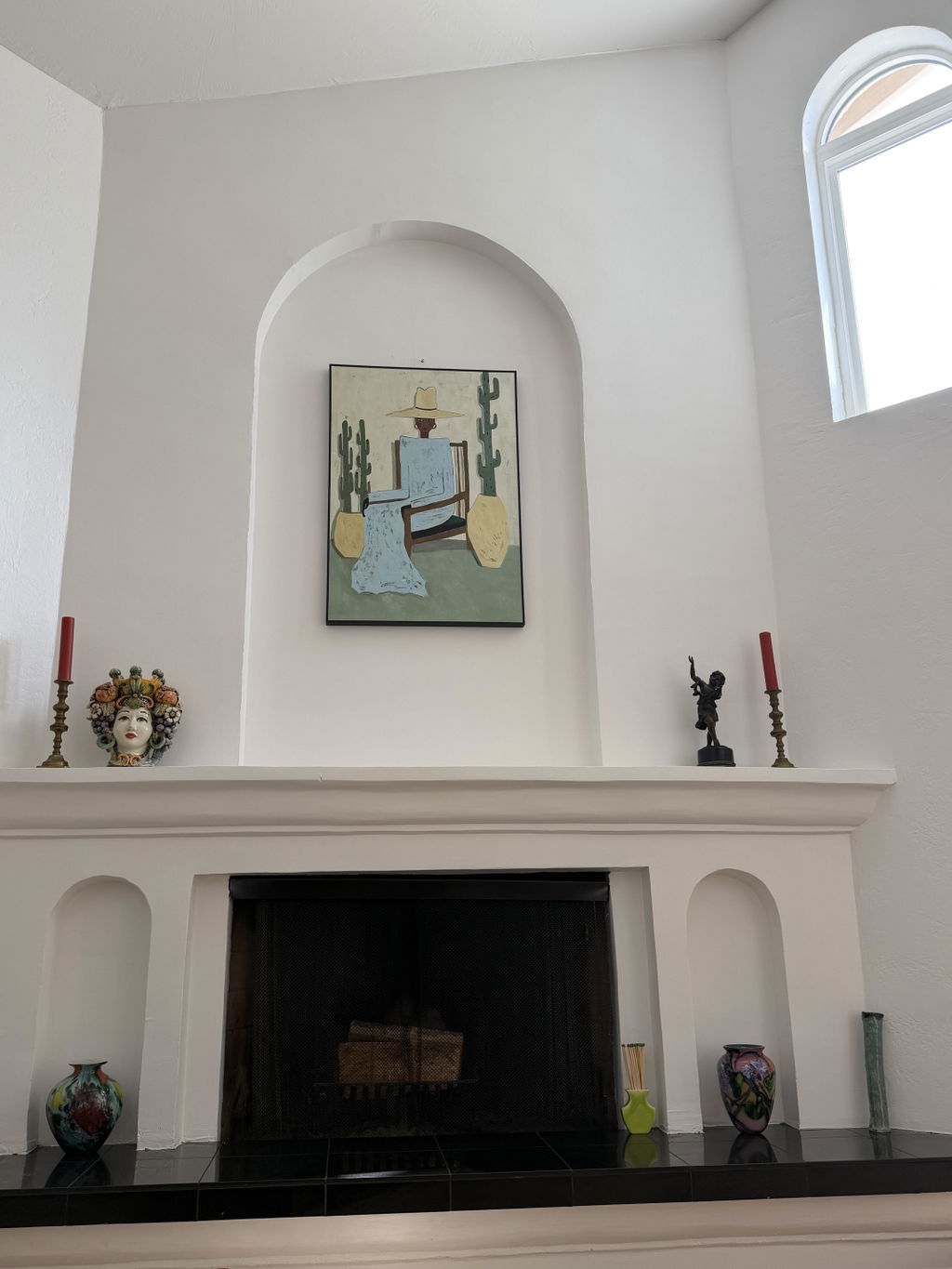
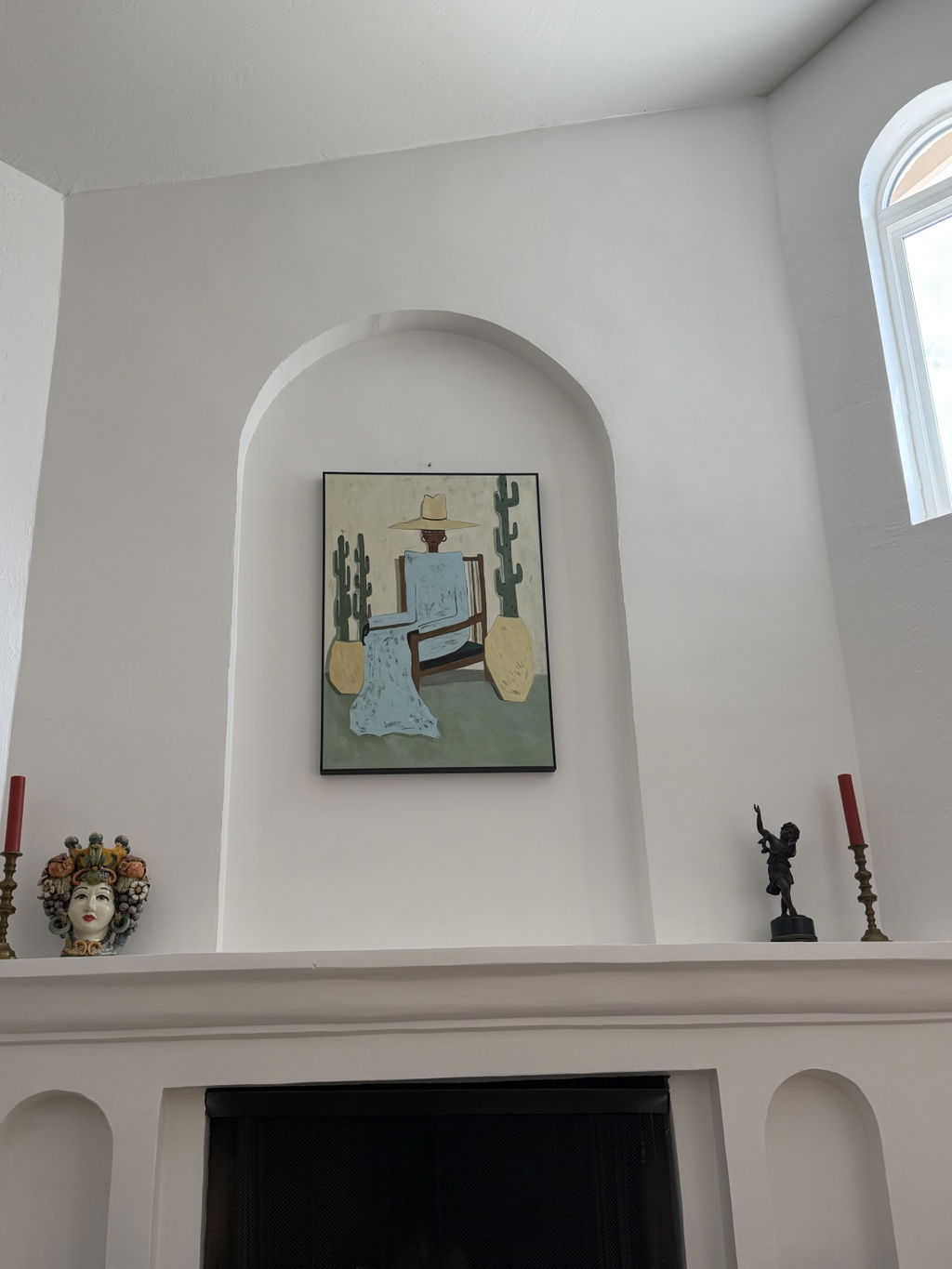
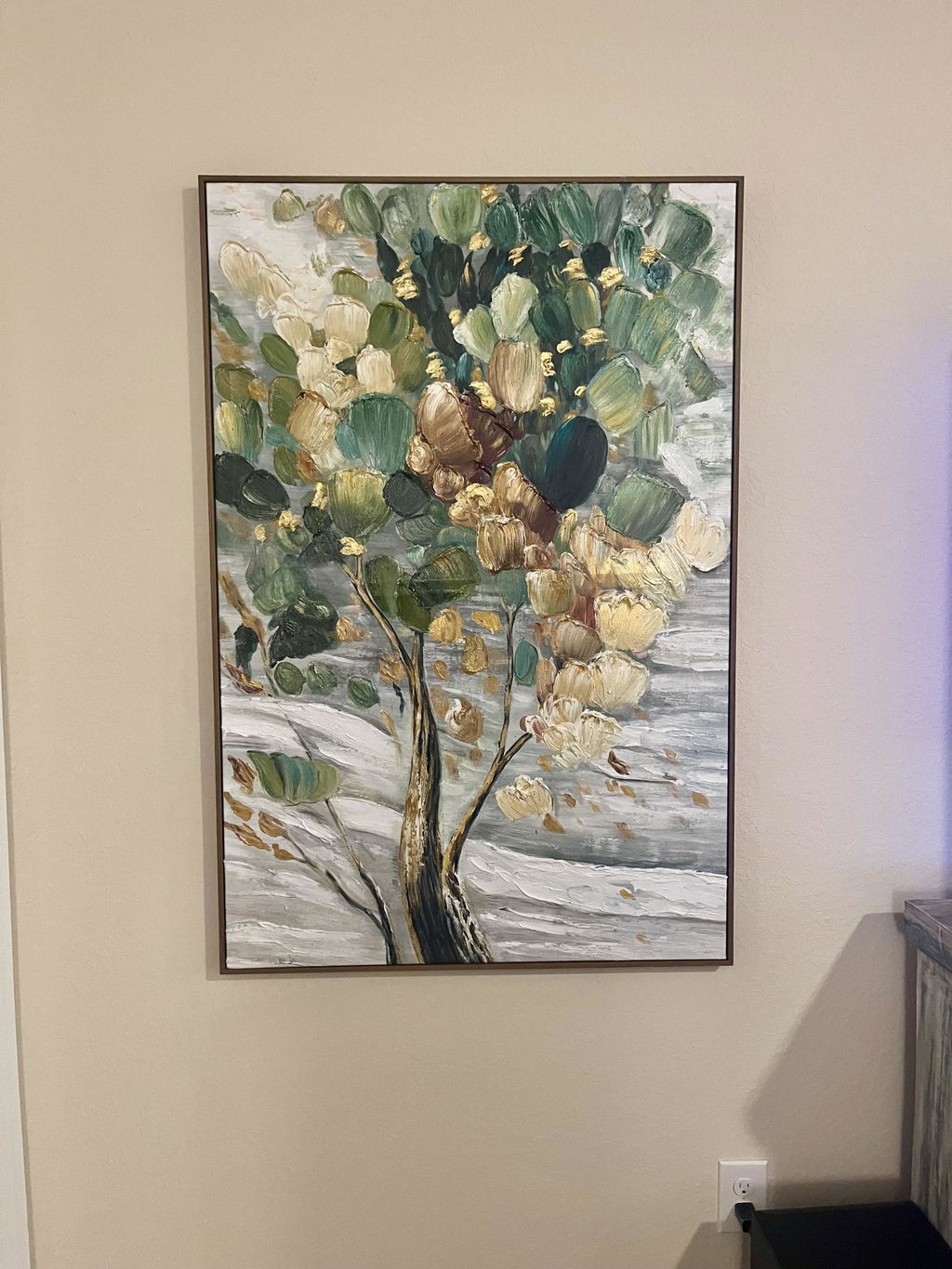
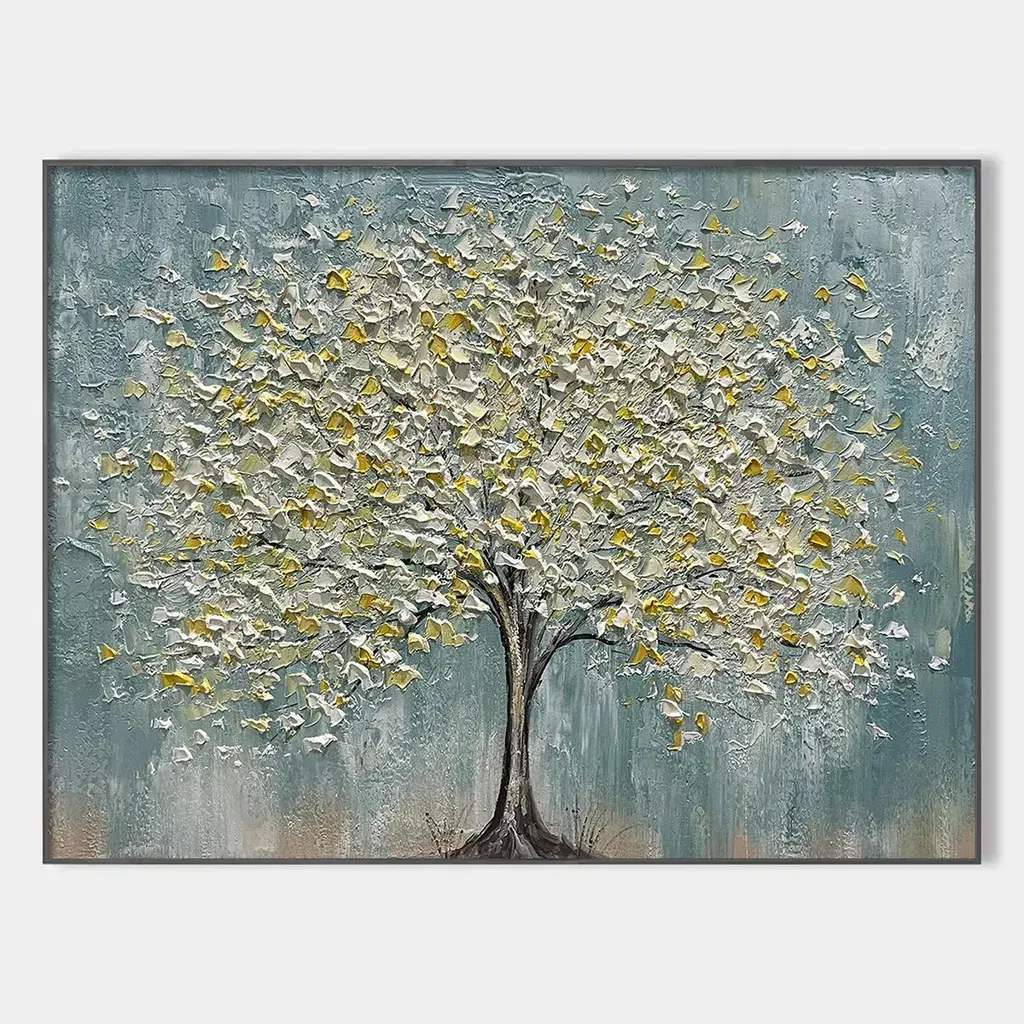
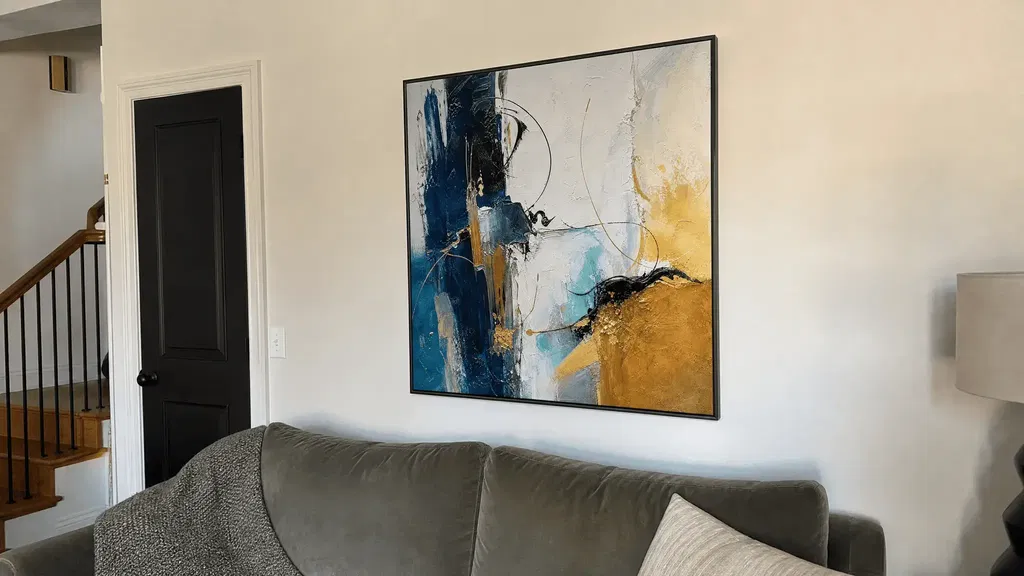
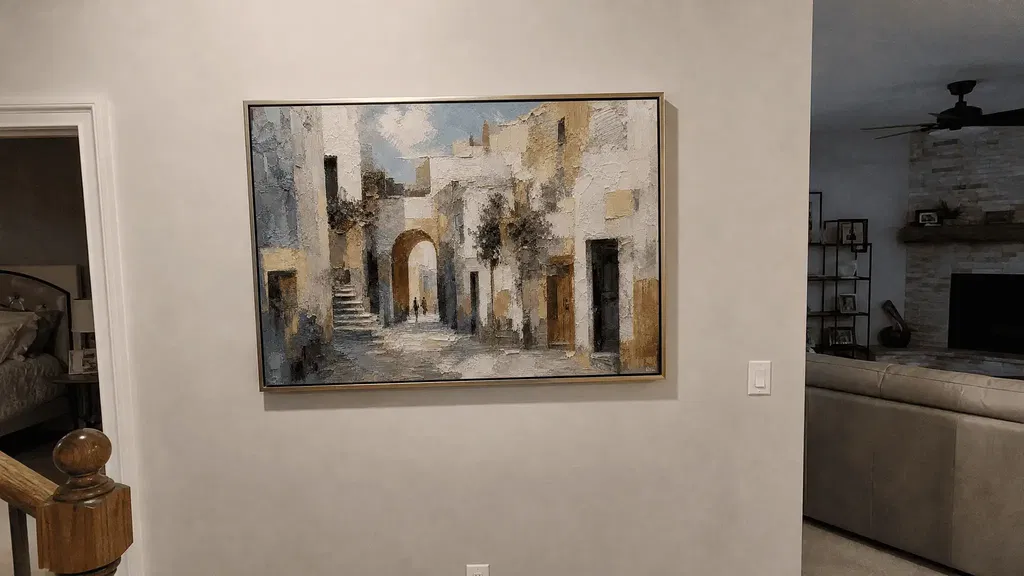
Textured art near a fireplace can work visually, but the placement is conditional—not automatically suitable. A mantel may expose a painting to heat, soot, smoke, drafts, airflow, and repeated environmental changes, while the artwork's materials, condition, weight, and mounting needs create separate concerns. Treat the decision as an exposure check rather than looking for one universal distance or temperature.
Textured Art Near a Fireplace: Separate Style From Exposure
A fireplace wall may be an attractive setting for textured artwork, but decorative fit and environmental fit are different decisions. A piece that balances the mantel can still be a poor choice if direct heat, combustion byproducts, drafts, or repeated fireplace cycling reach its surface or backing.
Conservation guidance on fireplace-adjacent environments identifies heat, soot, and environmental extremes as concerns for nearby collections. The fireplace type matters, but it does not answer the question by itself. Wood-burning appliances can introduce smoke and soot; gas and electric units may have different heat and airflow patterns, vents, and operating cycles. Mantel depth, opening design, room drafts, and the artwork's construction can change the actual exposure. Even a textured painting with a durable-looking surface should be assessed for its paint, texture material, finish, backing, frame, and current condition.
That means art for a fireplace should be chosen based on measured conditions, not appearance alone. For textured art near a fireplace, relocation or professional review is more prudent than experimenting above the hearth when the work is valuable, fragile, made from unknown materials, or already shows cracking, warping, flaking, or discoloration. For general context on repeated heating exposure, see our guide to thermal stress around heating, but do not use a general article as a substitute for appliance-specific instructions.
Check the Fireplace Environment Before You Hang the Piece
Before deciding whether to hang textured artwork near the hearth, record how the fireplace operates and measure the proposed location. Compare those observations with the installed appliance's guidance, a qualified installer's advice, and the artwork's documentation; they cannot be reduced to a universal art-clearance number.
Identify the Heat and Emission Pattern
Start with the exposure that actually occurs in the room, not just the fireplace label. Note whether it is wood-burning, gas, or electric; how often it runs; whether smoke or soot is visible; and whether drafts, vents, or direct rising heat point toward the proposed artwork.
Pay attention to repeated cycling. Wide or frequent temperature changes may contribute to material stress depending on the artwork's construction and condition, so one comfortable room-temperature reading does not describe the full environment. Preservation guidance on display environments supports treating repeated or wide changes as an exposure concern, not as a basis for a universal temperature limit. Nearby heating airflow and vents are also useful inspection points: a strong air path can carry dust toward the surface and should be treated as an exposure question, not a quantified damage prediction.
Record whether the artwork would face a heat path, vent, draft, or combustion byproduct. If you see residue, unusual warmth, or a recurring airflow pattern, document it for the fireplace professional or conservator rather than trying to diagnose the painting yourself.
Measure the Wall, Mantel, and Mounting Area
Use a tape measure and a scale where appropriate, recording dimensions in inches and weight in pounds. The goal is to create a setup record that can be checked against the appliance manual and mounting advice.
- Measure the available wall height and width, mantel depth and width, fireplace opening, and the position of nearby vents.
- Record the artwork's height, width, depth, and weight, plus the frame or stretcher depth and hardware location.
- Identify the mounting surface—such as drywall, masonry, wood, or a built-in surround—and note where secure hardware can be installed.
- Mark the proposed artwork position in relation to direct heat paths, drafts, vents, the mantel, and the fireplace opening.
- Keep the fireplace model and installation documentation with these measurements for the installer's review.
This record helps answer how far should art be from a fireplace in the only reliable way available for a specific installation: by checking the appliance's own requirements and actual heat paths. A distance copied from another room or fireplace is not a universal art clearance.
Limit Soot, Smoke, Dust, and Handling on Textured Surfaces
The safest care strategy is to reduce what reaches the artwork, inspect it regularly, and avoid improvised cleaning. Raised texture can catch dust and residue in its recesses, making contamination harder to spot and careless rubbing more likely to disturb the surface.
Reduce What Reaches the Surface
Maintain the fireplace, flue, doors, and surrounding area according to the appliance manufacturer's guidance. If smoke, soot, visible heat, drafts, or residue repeatedly reaches the artwork, moving it farther away is more useful than assuming a screen, coating, ventilation change, or glazing will guarantee protection.
This is especially relevant to fireplace smoke and oil paintings: documented oil or acrylic care guidance supports taking soot and smoke deposits seriously, but that advice should not be generalized to every mixed-media or unknown surface. Limit exposure at the source, then ask a conservator how the specific medium and finish should be handled.
Dust Without Flattening the Texture
Use an inspect–stop–escalate sequence rather than a routine cleaning recipe:
- Inspect first. Look for soot, discoloration, cracking, warping, flaking, tackiness, or changes in the raised texture before touching the surface.
- Stop when the residue or material is uncertain. Embedded, oily, sticky, or unexplained residue—or any visible condition change—should prompt conservator advice. Museum conservation guidance favors professional handling for soot and smoke deposits, particularly when the documented medium is oil or acrylic (oil-painting conservation guidance and acrylic-painting conservation guidance).
- Use only documented, material-appropriate care. Do not scrub, spray household cleaner, add water, or press a cloth into raised texture when the artwork's materials or the residue are unknown.
For broader background on care decisions, our canvas painting care resource may be useful, but it does not establish that a particular textured piece is suitable beside a working fireplace.
Know When Fireplace or Art Guidance Takes Priority
Stop estimating when the decision involves appliance clearance, an unclear heat path, uncertain mounting, unknown artwork materials, or visible changes. Use two separate escalation paths: the fireplace professional governs the appliance and installation, while a conservator governs artwork condition and cleaning.
Use the Fireplace Manual and Installer's Advice
Check the operating and installation guidance for the exact installed model. Ask the manufacturer, installer, or another qualified fireplace professional about the actual heat path, emissions, vents, combustible materials, mantel relationship, and required clearances.
No universal clearance or temperature rule was verified for every wood-burning, gas, and electric fireplace. Do not infer a requirement from another appliance, a retail listing, or a general art-care article. If you are asking, "can you hang a textured painting above a fireplace," the responsible answer starts with the installed model's instructions and the conditions in that room.
Ask a Conservator About the Artwork
Seek conservator input when the paint, texture, backing, frame, finish, or condition is unknown; when the work is valuable or fragile; or when you see cracking, warping, flaking, discoloration, soot, smoke residue, or another change. Ask before cleaning, applying a coating, adding an enclosure or glazing, or moving a sensitive work into a high-exposure area.
A conservator can assess the specific materials and document an appropriate care approach. That is different from asking a fireplace installer to diagnose the painting, and neither professional should be replaced by a generic online number.
Choose Above, Beside, or Away From the Hearth
Use the table as a conditional placement aid, not a safety guarantee. Proceed only when the measured exposure, mounting, artwork condition, and appliance guidance align; otherwise, relocate the work or obtain qualified advice.
Conservation advice on keeping delicate artwork away from fireplaces and drafts supports treating a farther wall as a risk-reduction option, not a required rule.
| Placement option | When it may be reasonable to consider | What must be checked first |
|---|---|---|
| Above the mantel | The artwork is not unusually fragile, the location has no unexplained smoke or heat exposure, and the appliance guidance supports the proposed installation. | Exact appliance instructions, heat and airflow paths, secure mounting, artwork condition, and the relationship to vents and combustible materials. |
| Beside the fireplace | The side wall appears to have less direct rising heat and the artwork is outside obvious smoke, soot, draft, and vent paths. | Actual airflow during operation, nearby vents, repeated cycling, mounting surface, and whether emissions move sideways through the room. |
| Farther wall | The piece is valuable, delicate, exposure-sensitive, already marked, or the fireplace conditions remain uncertain. | A secure mount and a location that reduces, but does not eliminate, heat, smoke, soot, drafts, and dust exposure. |
For sensitive work, the most conservative next step is often to relocate it farther from the hearth. If the location is important to the room's design, seek fireplace-specific and artwork-specific advice before installation. Protecting wall art near a fireplace is less about adding a single accessory and more about controlling exposure, choosing a sound mount, and responding early when conditions change.
FAQs
These questions address common heat, placement, and care decisions. The right answer depends on the installed fireplace, the room's exposure pattern, and the artwork's materials and condition.
Can Heat Damage a Canvas Painting?
It can contribute to condition changes when exposure is direct or repeated. Ask a conservator about visible cracking, warping, flaking, or discoloration.
Can You Put a Painting Above a Wood-Burning Fireplace?
Possibly, but check the exact fireplace manual and installer guidance for clearances, smoke behavior, vents, and heat paths first.
How Do You Protect Art From Fireplace Soot?
Reduce soot at the source and inspect the surface. Do not rub, wet, spray, or scrub uncertain or embedded residue; ask a conservator instead.
Is Art Safer Beside a Fireplace Than Above It?
It may have less direct rising heat in some rooms, but vents, drafts, smoke, soot, and cycling still need to be checked. If the difference is unclear, choose a farther wall or seek professional guidance.