A hotel wall art order is easier to buy, approve, and install when the team defines the project before reviewing individual pieces. This checklist helps you map rooms and zones, set quantities and target dimensions, document visual rules, create a supplier-ready specification, compare quotes, assign delivery and installation responsibilities, and keep records for future replacement or expansion.
Use it for guest rooms, suites, corridors, lobbies, dining areas, and other public spaces. The right choice may differ by zone, viewing distance, lighting, traffic, and design purpose, so avoid treating the property as one uniform wall.
Set the Hotel Wall Art Scope Before Sourcing
Create a room- and zone-based art schedule before requesting options or quotes. Record each wall, quantity, target dimensions, orientation, constraints, and project phase, then define visual rules for repeat rooms. Measurements, furniture, sightlines, and lighting should determine each location’s target because there is no universal hotel-art size formula. Hotel interior design guidance supports treating artwork as part of the broader room experience, not as an isolated purchase.
Map Rooms, Walls, and Quantities
Connect every proposed piece to a location before requesting options or quotes. This makes quantity changes visible and gives the supplier enough context to quote the intended order.
| Planning Input | What to Record | Why It Affects the Order |
|---|---|---|
| Room or zone | Guest-room type, suite, corridor, lobby, dining area, or other public zone | Function, traffic, viewing distance, and design role may differ |
| Wall and quantity | Wall identifier, number of pieces, orientation, and installation phase | Prevents duplicate, missing, or misplaced pieces across phases |
| Target size and constraints | Measured wall area, furniture relationship, doors, outlets, lighting, sightlines, and nearby obstructions | Sets a project-specific scale and flags placement problems early |
Include a target dimension or dimension range only after checking it against drawings or a site measurement. The schedule should also show whether the order covers the full property, a pilot room block, a renovation phase, or a new-opening phase.
Define the Visual System Across Repeat Rooms
Choose the consistency model before comparing artwork: identical pieces, a coordinated family, or intentionally varied works. Each approach can work, but the decision should be explicit for each room type so a supplier does not interpret “similar” differently from the design team.
Record the palette, subject treatment, texture level, orientation, framing approach, focal zones, and acceptable variation. For example, a guest-room schedule might allow coordinated color and orientation while permitting different surface patterns; a corridor schedule might require a tighter visual sequence. If the project spans multiple properties, standardize art across properties only after defining which rules are genuinely repeatable and which depend on the site.
Turn Design Intent Into a Purchase Specification
A usable specification translates visual intent into fields a supplier can quote and a project team can approve. For each piece, separate what must be delivered from what can change with design approval, and require product-level confirmation for construction, finish, care, and installation details.
Specify Artwork, Scale, and Finish
Describe the intended artwork in measurable, checkable terms rather than relying on a reference image alone. Use the room schedule for location and quantity, then add the following fields to each artwork line.
| Field | Decision to Record | Confirmation Needed |
|---|---|---|
| Zone or SKU | Room, wall, piece identifier, and artwork role | Supplier reference, image, or mockup |
| Size and appearance | Orientation, dimensions, palette, medium or texture, and acceptable variation | Final dimensions, surface description, and approved visual |
| Frame and finish | Frame type, finish, edge treatment, and quantity | Product-specific frame and finish details |
Confirm scale against wall measurements, furniture relationships, sightlines, and lighting conditions. Boutique-hotel research can help with spatial context, but it does not establish a universal artwork dimension or performance threshold; specify textured wall art only after reviewing the actual surface, finish, dimensions, and installation information.
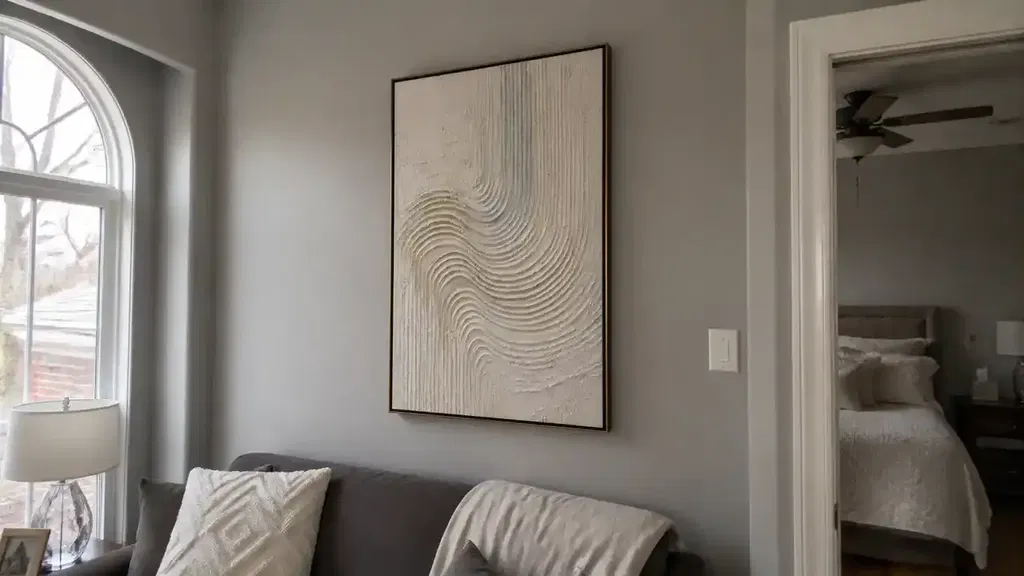
If texture affects the design decision, ask for views or documentation that clearly show the relief and edge treatment. Treat texture as an approval question, not proof of durability, cleanability, or suitability for a hospitality operating environment.
Separate Must-Haves From Approval Choices
Label each field as mandatory, preferred, or approval-dependent. This prevents a preferred color, frame, or surface treatment from being mistaken for a production requirement—or a production change from being accepted without review.
- Mandatory fields: location, quantity, orientation, final dimensions, required palette or subject limits, frame requirements, and any non-negotiable finish.
- Preferred options: alternate palette notes, secondary frame choices, optional texture, or a preferred variation range.
- Acceptable variation: differences allowed between repeat-room pieces, including which characteristics must remain consistent.
- Approval record: reference image or mockup, approver, approval date, revision number, and the product-specific details still awaiting confirmation.
Before sign-off, request images or mockups, final dimensions, frame details, finish information, care instructions, and installation requirements for the actual proposed work. A project specification should record identifiers, dimensions, orientation, finish, placement, and installation notes so the order can be checked against the brief; this is documentation logic, not a universal hotel-art template. Hotel design documentation provides useful background for that approach.
Compare Suppliers on More Than the Artwork
Apparently similar artwork can come with different included services, exclusions, approval steps, and delivery responsibilities. Compare every supplier against the same approved specification and record the answer to each commercial question before treating one quote as lower risk or better value.
Review Quote Completeness
Ask suppliers to return a like-for-like quote. The comparison record should show what is included, what is excluded, and which terms depend on later confirmation.
| Quote Area | Questions to Ask | Decision Record |
|---|---|---|
| Artwork and service scope | Are the dimensions, frame, finish, quantity, customization, samples, and approvals included? What do “custom,” “handmade,” “premium,” or “ready to hang” mean here? | Included scope, exclusions, approved revision, and supplier contact |
| Commercial terms | Are packaging, shipping, taxes, payment milestones, changes, returns, and damage handling stated? When do changes close? | Order-specific terms and unresolved questions |
| Schedule and support | What date is being quoted, what dependencies could change it, and what replacement or substitution support is available? | Supplier-confirmed schedule, dependencies, and future-order terms |
Do not fill missing fields with assumptions. Ask the supplier to identify substitutions, production dependencies, packaging standards, shipping scope, and the point after which a change may affect the order. Generic lead times, exact prices, replacement guarantees, and future matching promises are not reliable planning inputs unless confirmed for the actual order.
Check Evidence for Material and Service Claims
Match every material, finish, maintenance, installation, or compliance statement to the specific artwork and project. A collection description or broad category label is not enough to prove that a particular piece has a certain construction, care profile, mounting method, or suitability for a hospitality setting.
Record the source of each confirmed detail in the specification: supplier documentation, approved drawing, quote attachment, product image, or written response. If a claim cannot be verified, rewrite it as an open confirmation field. For example, “Supplier to confirm surface construction and care requirements for the approved piece” is stronger procurement language than an unsupported promise that the artwork is easy to maintain.
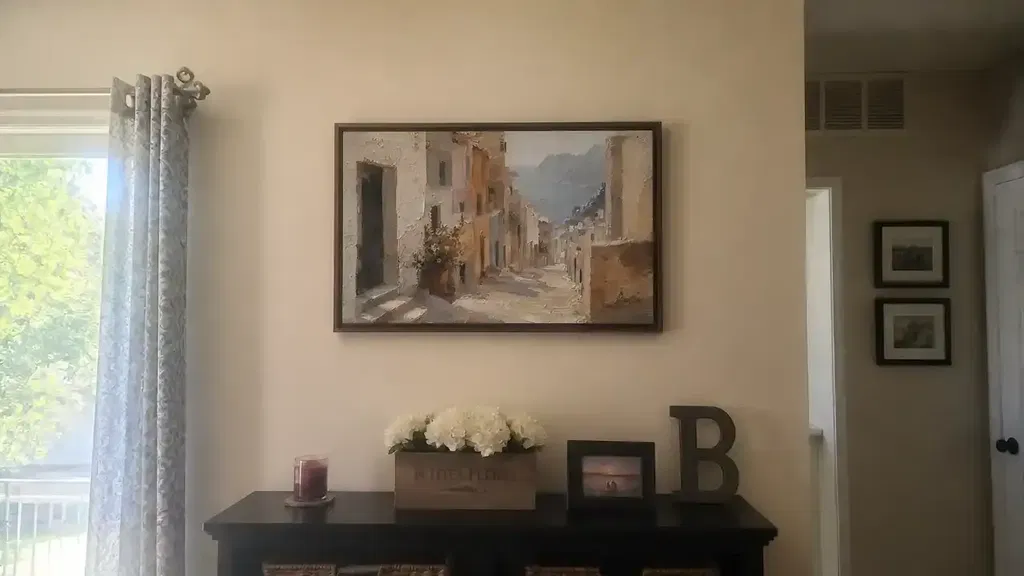
You can review oil painting options as a visual category, but category membership alone does not establish the frame, finish, care requirements, shipping scope, or installation readiness of any item.
Lock Delivery, Access, and Installation Responsibilities
Treat delivery and installation as a project sequence, not an automatic part of buying hotel wall art. Before finalizing the order, assign owners for site readiness, access, receiving, storage, inspection, mounting, installation, and discrepancy resolution. Confirm wall, hardware, and access details with the responsible supplier, installer, or qualified project professional where applicable.
- Confirm the final schedule. Match the approved artwork identifiers, quantities, dimensions, frames, finishes, and installation phase to the order.
- Verify site and access conditions. Check the delivery address, receiving hours, loading or parking limits, elevator and corridor access, storage area, and any restricted delivery windows.
- Assign delivery and receiving owners. Name the authorized receiver and define who records package condition, shipment identifiers, missing pieces, and visible discrepancies.
- Confirm installation responsibility. Establish who verifies wall conditions, supplies hardware, confirms the mounting method, and installs each piece. Ask about special anchoring or hardware requirements where relevant; these are site-verification questions, not proof of code compliance. Hotel FF&E installation questions can help structure the discussion.
- Inspect and document condition. Photograph packaging and artwork before installation, compare each piece with the approved record, and retain the condition documentation.
- Resolve discrepancies before installation. Hold mismatched, damaged, or incomplete items for review under the order’s agreed notification, return, damage, or replacement terms.
Prepare the Site and Receiving Plan
Assign an owner and confirmation date to each group of checks:
- Access: address, receiving hours, loading restrictions, parking, elevator dimensions, corridor path, and delivery contact.
- Receiving: authorized receiver, unpacking location, package count, shipment identifiers, and inspection process.
- Storage: secure holding area, protection from site activity, and the maximum time the project can hold pieces before installation.
- Inspection: packaging photographs, artwork condition, frame and finish check, quantity reconciliation, and discrepancy escalation.
Match handling and unpacking expectations to the actual artwork and frame. Do not assume that a piece arrives with mounting hardware or that the receiving team can determine the correct installation method without supplier instructions.
Document Installation and Handover
The handoff record should identify who verified the wall conditions, who supplied hardware, who installed each piece, and who accepted the final placement. Keep approved images, installation instructions, location records, and condition photographs with the project file.
If the site raises a question about the wall, hardware, anchoring, or code, pause and obtain the project-specific review needed before mounting. The available logistics guidance supports asking these questions; it does not establish a universal mounting standard or replace local project requirements.
Create the Replacement and Closeout Record
Close the order with a location-based register, approved specification, installation record, and supplier file. Treat future availability, exact matching, and reorder timing as supplier-confirmed conditions.
Build a Reorder-Ready Art Register
Use one row per installed piece or approved grouped item.
| Record | Minimum Detail | Future Use |
|---|---|---|
| Location and image | Property, room or zone, wall, approved image, and installed quantity | Identifies the piece that needs replacement or relocation |
| Artwork details | Identifier, dimensions, orientation, frame or finish, and approved variation | Supports a comparable specification or substitution review |
| Order and handoff | Supplier, order date, approval record, installation photo, and agreed replacement path | Helps the next buyer locate terms and decision history |
Record reserve quantities only when the hotel actually holds them. Archive approvals, order terms, condition photographs, final locations, and supplier correspondence; keep any replacement or substitution path tied to the actual order.
Turn this hotel art project specification checklist into a room-by-room schedule, then send it to shortlisted suppliers with the approval, quote, and logistics questions. We can help organize the criteria, while the supplier confirms current product details, shipping terms, installation requirements, and future replacement conditions.
FAQs
How Many Art Pieces Should a Boutique Hotel Order at Once?
Order against the approved room-by-room schedule, not a rough property total. A pilot or first phase may make sense when the project has limited storage, staggered room access, or an approval process that could change after the first installation. Before scaling, reconcile the installed result, remaining quantities, budget release, and the supplier’s production and shipping terms.
Should Hotel Art Be Identical in Every Guest Room?
Not necessarily. Choose identical pieces when strict repeatability is the priority, a coordinated family when rooms need consistency with controlled variation, or intentionally varied work when each room has a distinct design direction. Document the choice, required common traits, and acceptable variation by room type so “coordinated” does not become an uncontrolled substitution.
What Should a Hotel Request Before Approving a Custom Art Order?
Request the final dimensions and orientation, images or mockups, frame and finish details, quantity, production schedule, shipping scope, change cutoff, and return or damage terms. Any claim about material, care, installation, or compliance should have product-specific confirmation attached to the approval package; if it does not, leave it open for written supplier confirmation.
How Should a Hotel Handle Damaged Artwork on Delivery?
Photograph the outer packaging, labels, and damage before installation or disposal, then record the shipment and piece identifiers against the approved schedule. Notify the responsible party within the order’s agreed reporting window and check the applicable return, damage, repair, or replacement terms before accepting or mounting the piece. Keep the correspondence in the closeout record.