The Architectural Intersection of Art and Movement
In the current landscape of high-end residential design, we are witnessing a profound shift in how homeowners and professionals approach art acquisition. According to recent data from Marketplace, high-end auction sales for purely financial art assets plummeted by 44% year-over-year in 2024. This retreat from "vanity" pieces signals a return to real application value—where the primary focus is on how art functions within the living environment.
In modern open-plan dining areas and transition zones, the physical footprint of a canvas is no longer an afterthought. When a passageway is narrow or a dining chair is positioned inches from a wall, the "depth" of the art—determined by the stretcher bar profile—becomes a critical factor in both "decision safety" and visual harmony. Choosing between a slim 1.5-inch profile and a 2.5-inch gallery wrap isn't just an aesthetic preference; it is a technical decision that impacts the flow, safety, and architectural integrity of your home.

The 45-Degree Rule: Navigating Visual Foreshortening
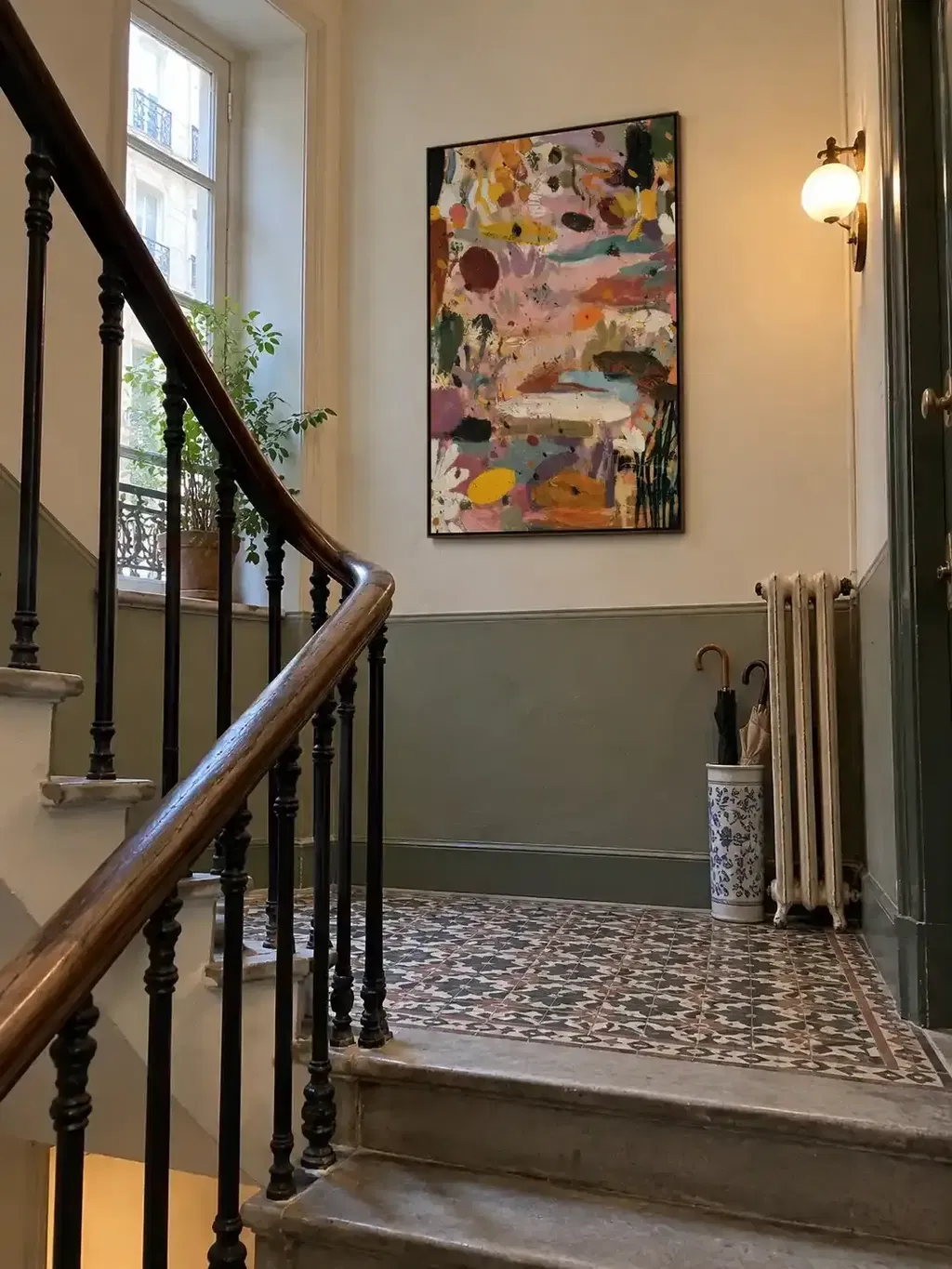
One of the most common challenges we observe in residential curation is the "hallway hurdle." In narrow passageways, viewers rarely approach a painting from a dead-on, 90-degree angle. Instead, they view the work as they walk past it, often at an acute angle.
Through our scenario modeling of high-traffic transition zones, we have identified the 45-Degree Rule. If the primary sightline of a viewer is at an angle of 45 degrees or less—common in hallways or corridors—a 2.5-inch gallery depth can create a phenomenon known as "visual foreshortening." In this scenario, the side of the canvas (the "wrap") actually obscures the face of the painting, making the artwork feel bulky and disjointed from the wall.
For these narrow areas, a slim 1.5-inch profile is typically the superior choice. It maintains a low profile that allows the artwork's face to remain visible even at sharp angles, ensuring the "camera-ready" results that interior design professionals prioritize.
Logic Summary: Passageway Visibility Model Our analysis assumes a standard residential hallway width of 36 to 42 inches. The 45-degree threshold is based on the average walking pace and the point at which peripheral vision engages with wall-mounted objects.
Parameter Value Unit Rationale Hallway Width 36 - 42 Inches Standard US Residential Code Viewer Sightline 45 Degrees Critical angle for foreshortening Stretcher Depth (Slim) 1.5 Inches Recommended for <45° sightlines Stretcher Depth (Gallery) 2.5 Inches Recommended for >45° sightlines Visual Obstruction Risk High N/A Occurs when depth > 2 inches in narrow paths
Dining Flow: The Chair-Back Clearance Heuristic
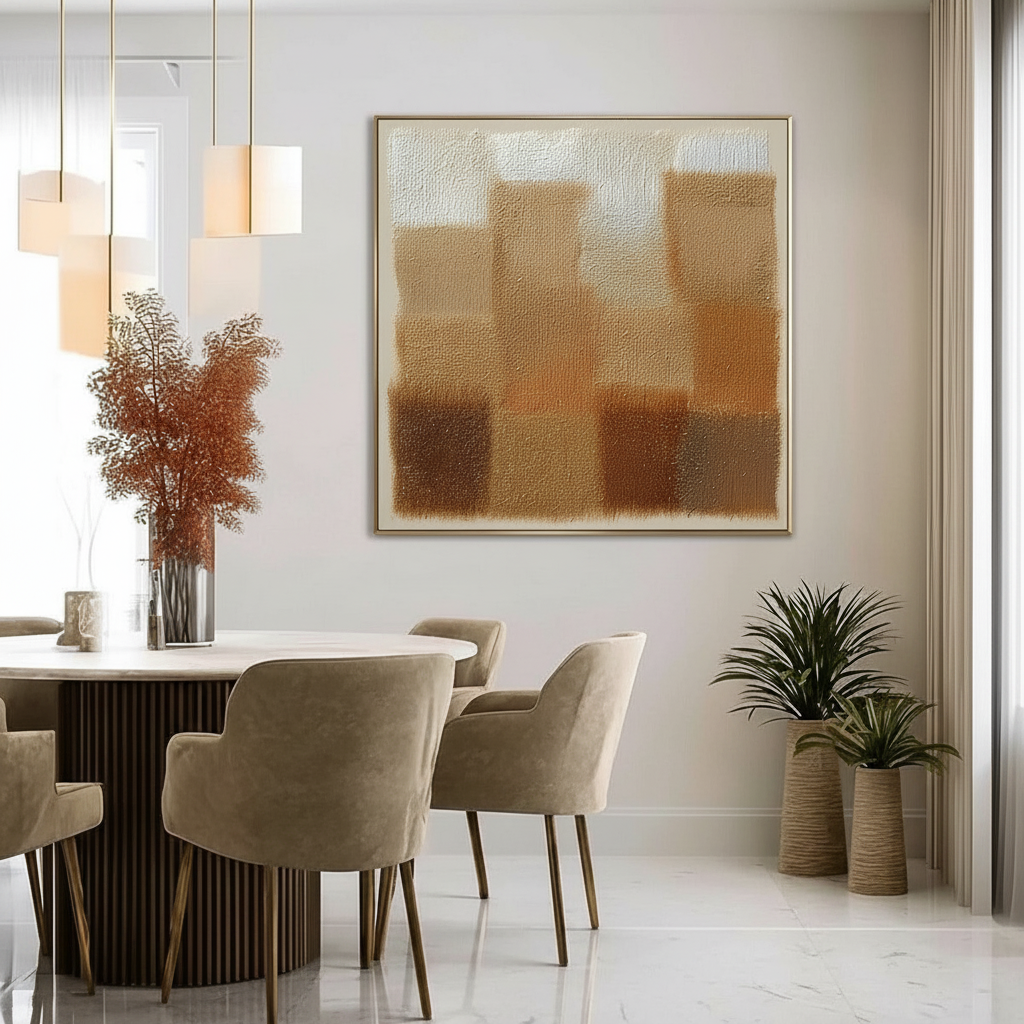
The dining room is a "high-social" zone where physical functionality is as important as visual impact. We often see homeowners select oversized, deep canvases for dining walls without considering the "Chair-Back Clearance."
When guests are seated, the space between the back of their chair and the wall is often minimal. If a guest stands up or pushes their chair back, a 2.5-inch gallery wrap creates a "collision zone." This not only poses a risk to the artwork's physical integrity but can also obstruct the natural movement of guests, leading to an uncomfortable dining experience.
To ensure "decision safety," we recommend art located behind seating use a slim 1.5-inch profile. This provides the necessary clearance to prevent guests from bumping the frame. Furthermore, research from the University of Pennsylvania suggests that environmental artwork can reduce stress by up to 61% in clinical settings; in a home, this stress reduction is only possible if the art doesn't feel like a physical obstacle in the room's flow.

Architectural Integration: Wainscoting and Molding Relief
For homes featuring architectural details like wainscoting, wall niches, or paneling, the stretcher bar depth must be calculated in relation to the existing molding. A common mistake is selecting a stretcher bar that is deeper than the molding relief itself.
If the stretcher bar depth exceeds the depth of the wainscoting or paneling, it creates an awkward "floating" effect. This breaks the architectural line of the room and makes the art look like an unintegrated addition rather than a custom feature. To achieve a seamless look, the stretcher bar depth should ideally be flush with or slightly shallower than the molding's highest point.
For more on managing these boundaries, see our guide on sizing art around windows and wall molding.
Lighting, Shadows, and the Soul of Hand-Painted Texture
The depth of your stretcher bar also dictates how the artwork interacts with the room's lighting. Thicker bars cast deeper shadows, especially in low-light dining environments. While a deep shadow can enhance the texture of a heavy impasto painting, it can also create unwanted "dark voids" if the overhead light source is too close to the wall.
This interaction between light and depth is where the value of hand-painted art truly shines. Research from Columbia University confirms that consumers value art labeled "human-made" 62% higher than AI-generated prints. This is largely due to the "essential identity" and soul retained in the canvas, as noted by UChicago empirical research.
The Science of "Physical Relief"
Unlike flat digital prints, hand-painted pigments possess a microtopography. Optical microprofilometry proves that the mm-scale texture of oil and acrylic paintings is crucial to their aesthetic appeal (MDPI). When you choose a stretcher bar depth that complements your lighting, you aren't just hanging a picture; you are creating a dynamic surface that changes as the sun sets and the dining lights dim.
Safety and Sustainability in the Dining Environment
Because dining rooms are areas of high human contact and food consumption, the materials used in your art are as important as their dimensions. We take "Indoor Air Quality (IAQ)" seriously, grounding our recommendations in data rather than marketing fluff.
VOCs and Pigment Toxicity
Indoor air pollution is often more concentrated than outdoor pollution, as warned by the EPA. Low-VOC paints are a prerequisite for safety in high-visibility areas. Academic studies from Aalto University have shown that coatings on wood (like stretcher bars) emit significantly lower toxic VOCs once they have properly cured.
Furthermore, we must address the "hidden" risks in certain pigments. The International Agency for Research on Cancer (IARC) classifies cadmium and its compounds as Group 1 carcinogens. While cadmium pigments are prized for their vibrancy, they pose risks if dust is inhaled or if they contact broken skin. For dining areas, we prioritize water-based acrylics and non-toxic alternatives that pass strict heavy metal migration tests, such as the BS EN 71-3 standard.
Methodology Note: Material Safety Screening Our safety heuristics for residential art are derived from a cross-analysis of EPA guidelines and clinical toxicology reports. We assume a "worst-case" scenario of a poorly ventilated dining room with 4-6 hours of occupancy.
Safety Factor Standard/Source Metric Recommended Action VOC Emissions Aalto University 28-day chamber test Use water-based, cured acrylics Heavy Metals BS EN 71-3 Saliva/Gastric acid leaching Ensure ASTM D-4236 compliance Pigment Hazard IARC / CDC Group 1 (Cadmium) Avoid dry powder pigments in-home Air Quality EPA IAQ LEED/WELL certification Opt for zero-VOC sealants
The Economic Impact of Custom Art
Beyond personal enjoyment, the decision to invest in high-quality, hand-painted art has measurable economic benefits. A Royal Society CAR model analysis found that neighborhoods with higher "art" geo-tags experienced greater relative house price gains. For homeowners, a custom mural or a perfectly scaled canvas isn't just decor; it's a "cultural heritage asset" that increases the property's value.
This is particularly true for large art in small living rooms, where the right scale can make a space feel grander and more intentional.

Psychological Benefits: Art as Health Infrastructure
The presence of art in social spaces like the dining room does more than fill a wall; it alters the brain's biochemistry. A systematic review of 85 records found that passive art viewing consistently activates the medial prefrontal cortex (mPFC) and the amygdala, optimizing emotional regulation (NCBI).
By integrating nature-themed or "biophilic" designs into your dining area, you can produce the same stress-reduction effects as being outdoors (University of Central Arkansas). This turns the dining room from a simple eating area into a space for cognitive recovery and social bonding.
A Technical Checklist for Stretcher Bar Selection
To ensure your art is "camera-ready" and physically safe, use this final checklist during your curation process:
- Measure the Passageway: If the hallway is under 40 inches wide, default to a 1.5-inch slim profile to avoid visual foreshortening.
- Check the Seating: If art is behind a dining chair, ensure there is at least 3 inches of clearance between the chair back (at rest) and the wall. If space is tight, use a slim profile.
- Audit Architectural Lines: Measure the depth of your wainscoting or wall paneling. Ensure the stretcher bar does not exceed this depth to prevent the "floating" effect.
- Verify Material Safety: Confirm that the painting uses low-VOC acrylics and is free from toxic heavy metals like lead or cadmium, especially in dining zones.
- Evaluate the Viewing Angle: Stand at the most common entry point of the room. If you are looking at the wall at a 45-degree angle, a slim profile will preserve the artwork's face better than a gallery wrap.
Choosing the right stretcher bar depth is a blend of physics, ergonomics, and aesthetic intuition. By prioritizing "decision safety" and understanding the technical mechanisms of spatial flow, you can ensure your art remains a source of joy and value for years to come.
YMYL Disclaimer: This article is for informational purposes only and does not constitute professional architectural, legal, or medical advice. For specific safety concerns regarding indoor air quality or heavy metal exposure, please consult with a certified industrial hygienist or environmental health professional.
Sources
- Marketplace: The expensive art market continues to struggle
- University of Pennsylvania: Visual Art in the Built Environment
- Columbia Business School: Human-Made vs. AI Art
- NCBI: Neurological mechanisms of creative arts
- EPA: Indoor Air Quality and Low-VOC Paints
- Royal Society: Quantifying the link between art and property prices