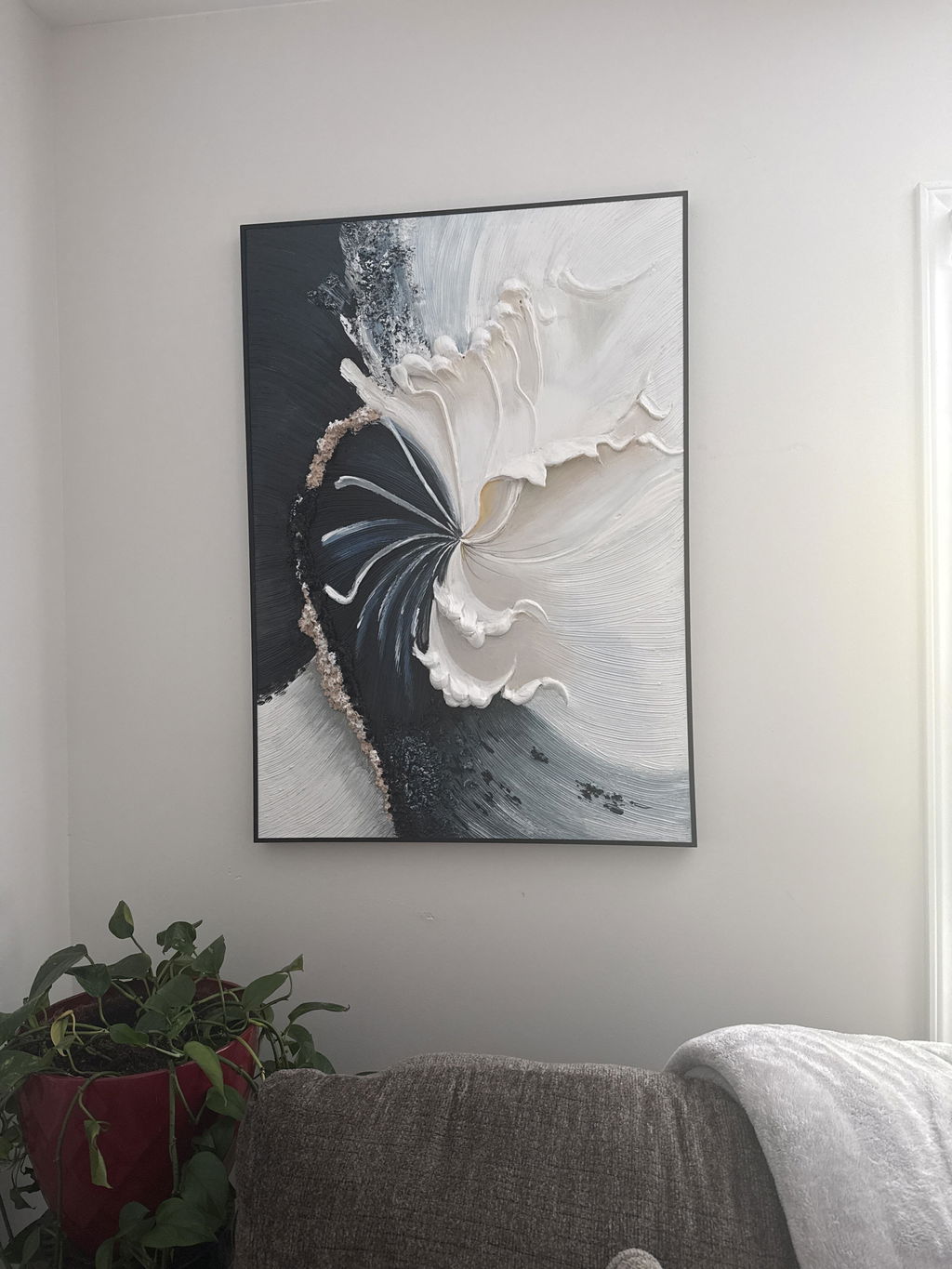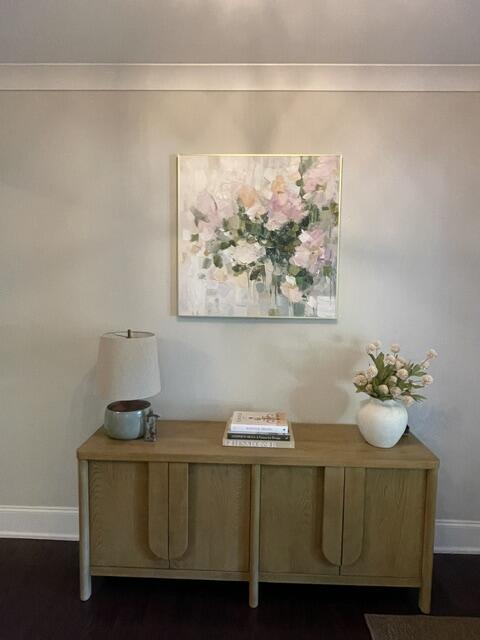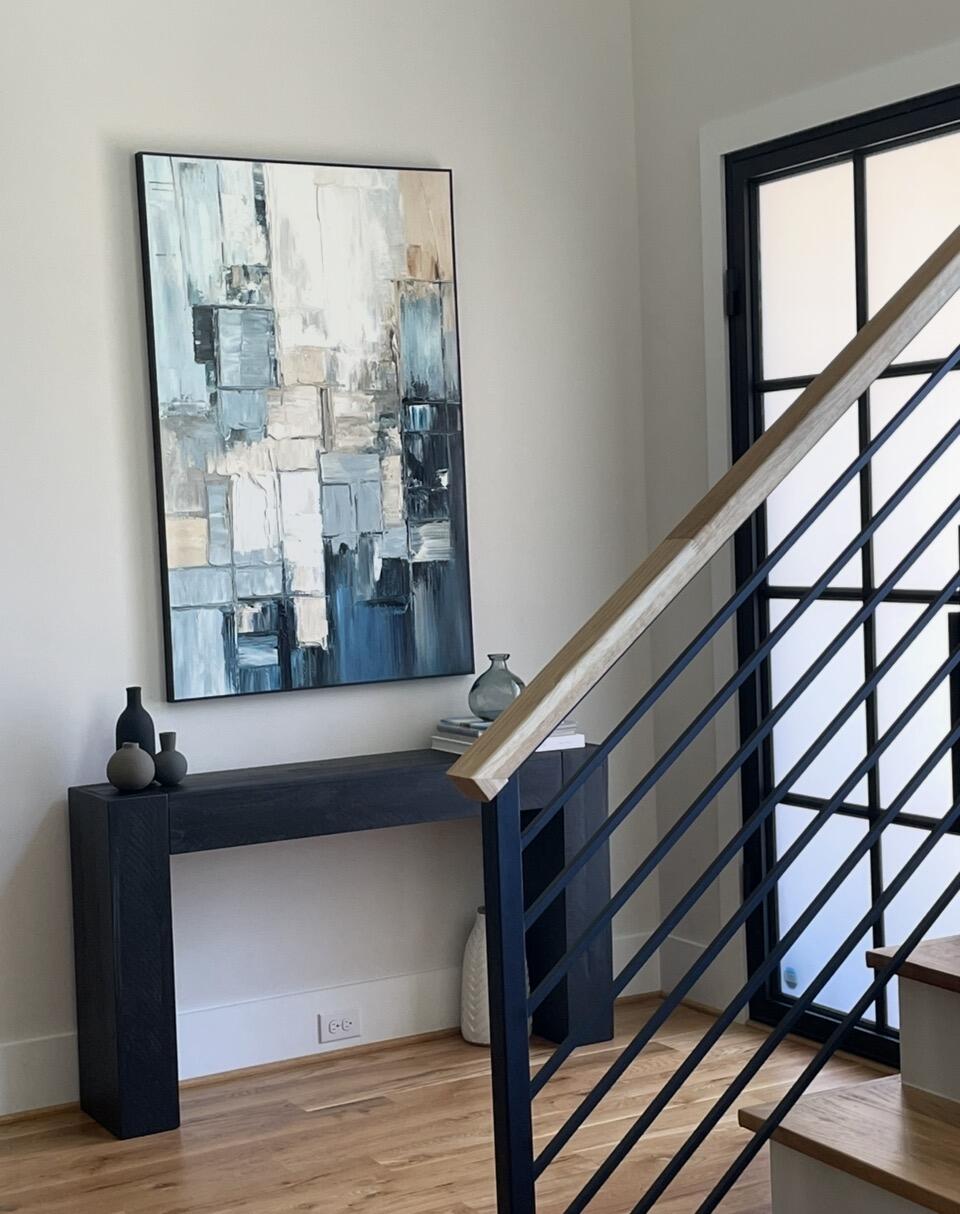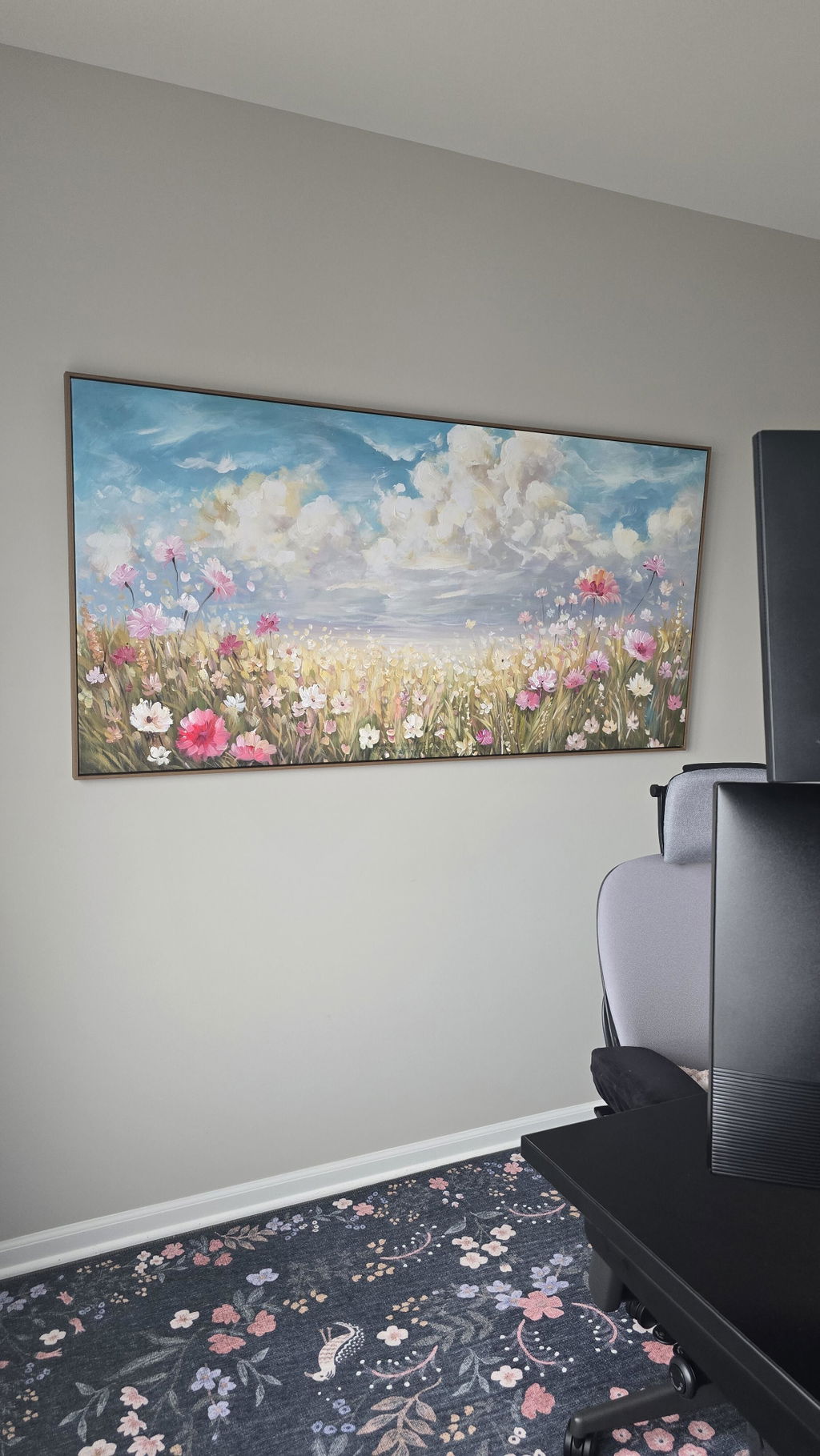
Navigating the Intersection of Architecture and Art
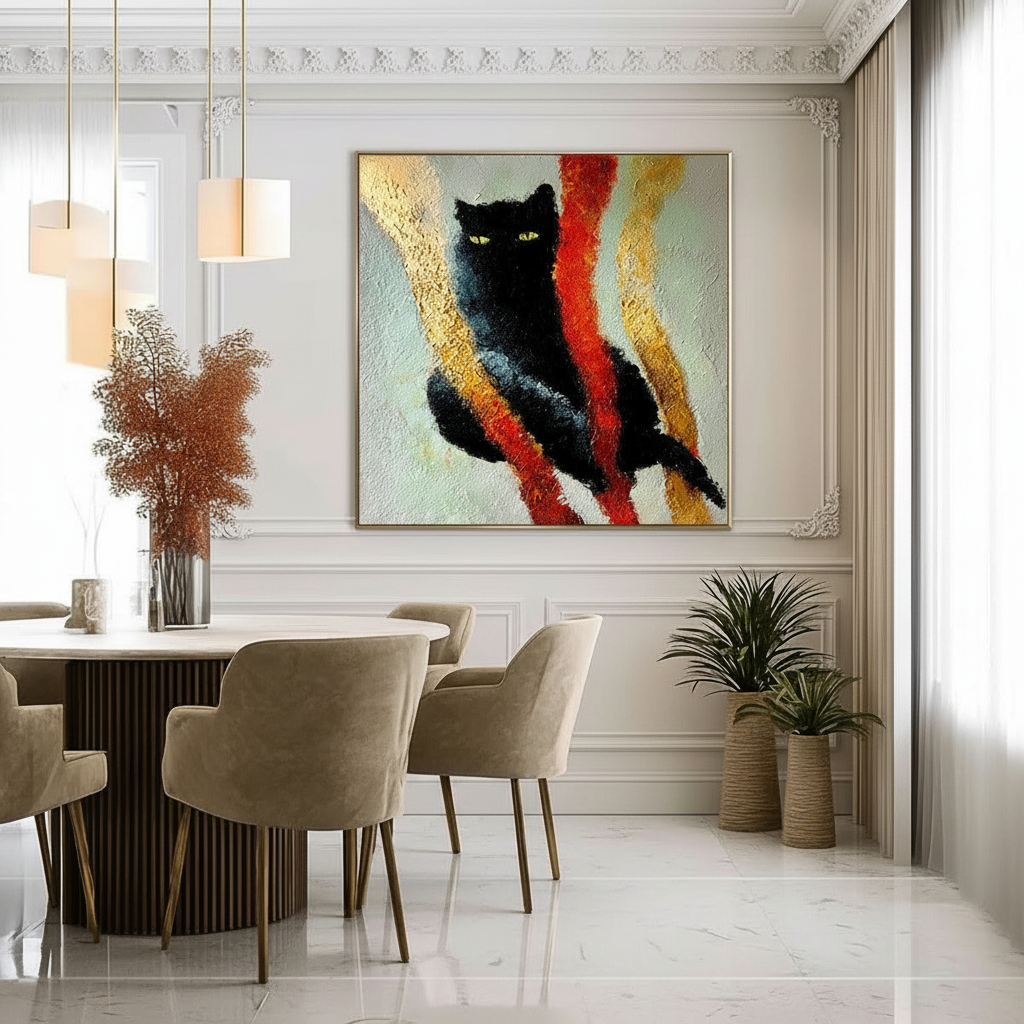
In our studio, we frequently encounter a specific anxiety among homeowners and interior designers: the fear that a high-visibility art investment will "fight" with the room's architectural DNA. This is particularly acute in formal dining rooms, where heavy crown moldings, deep-profile wainscoting, and ornate chair rails create a complex geometric landscape.
The stakes are higher than ever. Recent data from Marketplace.org reveals that high-end auction sales for vanity pieces plummeted 44% in 2024. This shift indicates a retreat from art as a purely financial asset toward art with real application value—pieces that integrate into the home to provide emotional and aesthetic resonance. When art is custom-sized to fit specific architectural constraints, it transcends being a mere "decoration" and becomes a permanent part of the home's soul.
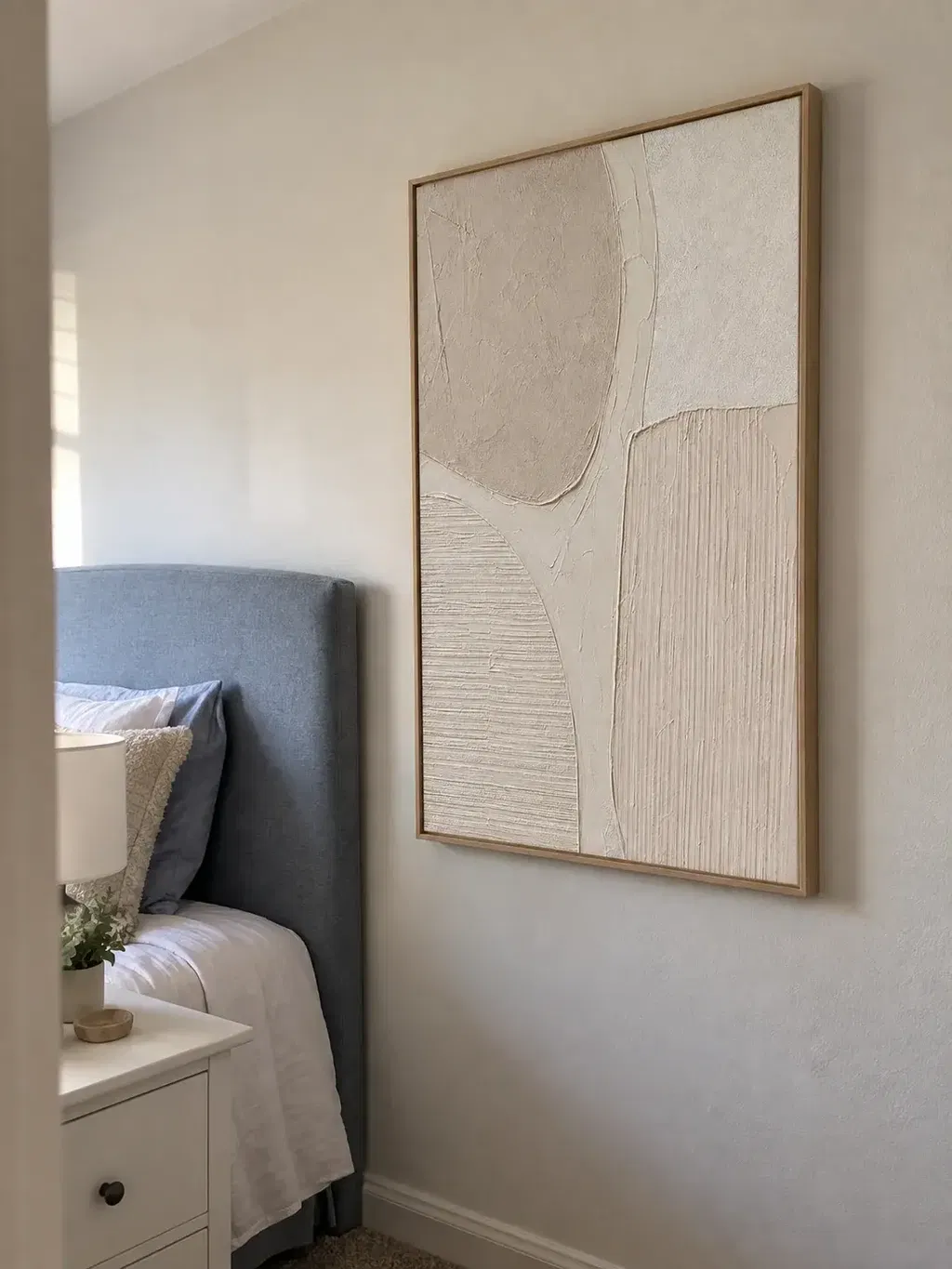
However, art placement near complex moldings is a game of inches. A canvas hung too high feels "squeezed" by the crown molding; one hung too low feels disconnected from the seated experience of a dinner party. This guide breaks down the technical heuristics and material science required to navigate these boundaries with precision.
The Proportional Spacing Heuristic: Beyond the 12-Inch Rule
Conventional interior design wisdom often suggests leaving a flat 12 inches between the top of a frame and the bottom of a crown molding. In our experience handling hundreds of custom installations, we have found that this "one-size-fits-all" approach often fails because it ignores the visual weight of the molding itself.
Instead, we recommend a proportional spacing heuristic based on a 1:3 ratio. If you have a delicate 2-inch crown molding, a 6-inch clearance is typically sufficient. However, for a massive 12-inch ornate plaster cornice, you may need up to 36 inches of clearance to prevent the architecture from overwhelming the artwork.
Modeling Note (Visual Hierarchy): Our spacing model assumes a standard 9-to-10-foot ceiling height. The goal is to maintain a clear visual hierarchy where the molding frames the room, and the art anchors the wall without competing for the same focal plane.
Parameter Standard Approach Proportional Heuristic (1:3) Rationale Molding Height 4 inches 4 inches Input variable Art Clearance 12 inches (Fixed) 12 inches Matches at this scale Molding Height 10 inches 10 inches Input variable Art Clearance 12 inches (Fixed) 30 inches Prevents "visual crowding" Ceiling Clearance N/A 8-10 inches (Min) Required for heavy crowns
When dealing with heavy crown molding, we advise ensuring at least 8-10 inches of ceiling clearance as an absolute minimum. This gap prevents the art from feeling "squeezed," a sensation that can actually trigger subtle environmental stress.

The Seated Perspective: Adjusting for Dining Room Ergonomics
One of the most common mistakes we see in dining room curation is hanging art at the standard "gallery eye level" (57-60 inches from the floor). While this works in a hallway where people are standing, it creates a visual "cut-off" in a dining room where the primary interaction happens while seated.
To create a truly "camera-ready" result, we suggest lowering the art by 2-3 inches from the standard eye level. This aligns the center of the piece with the seated perspective of your guests, ensuring the artwork remains the focal point during the meal.
Navigating Wainscoting and Wall Panels
If your dining room features wainscoting or picture frame molding, the art must interact with these boundaries rather than ignoring them. We utilize the Rule of Thirds for wall panels: the artwork should ideally occupy the central two-thirds of the panel width. This prevents a cramped appearance and allows the molding to act as a secondary frame.
In historic homes where paneling is often asymmetrical or irregular, we move away from geometric symmetry. According to research on Visual Art and Drawing Skill Perception, top painters and curators use "top-down visual selection" to suppress perceptual illusions. In practice, this means positioning art to create balance across the strongest visual planes, even if it requires an offset placement that looks "wrong" on a blueprint but feels harmonious in the physical space.
The Human Premium: Why Hand-Painted Texture Matters
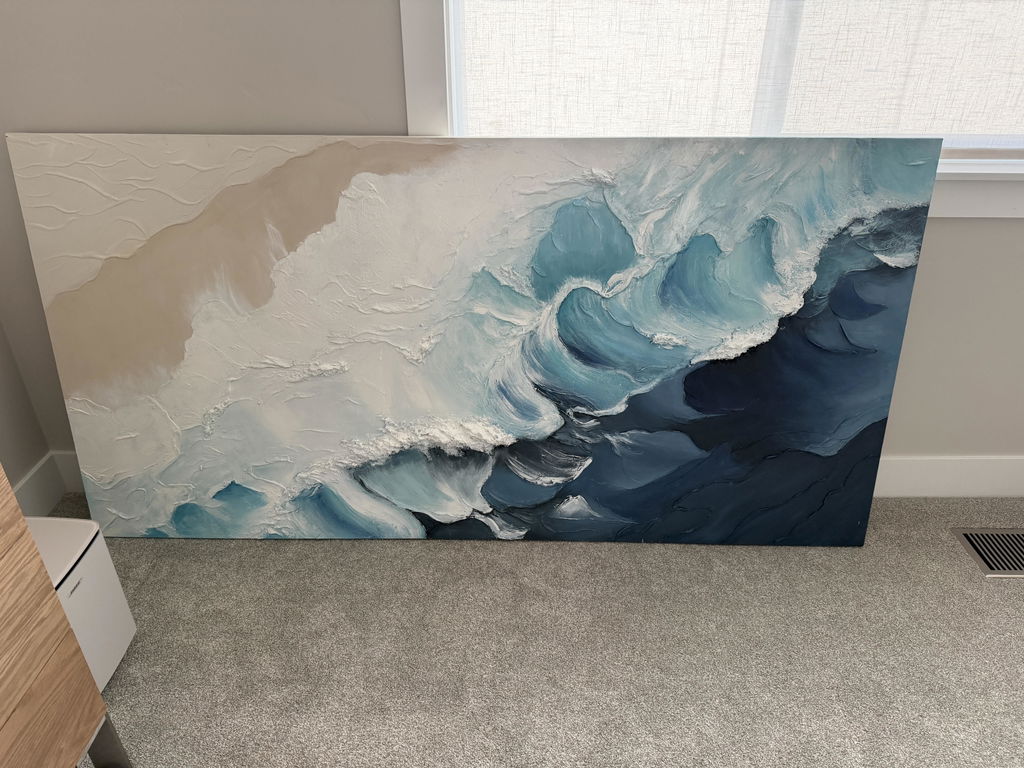
In an era of mass-produced AI prints, the physical presence of a hand-painted oil canvas provides a level of "decision safety" that digital replicas cannot match. A study by Columbia University confirmed that consumers value art labeled as "human-created" 62% higher than AI-generated alternatives.
This isn't just a matter of prestige; it's rooted in the physics of the medium. Optical microprofilometry has proven that the microtopography (the millimeter-scale texture of brushstrokes) is crucial to how we perceive art. When light hits a hand-painted surface, it scatters according to the Kubelka-Munk equation, which accounts for both absorption and scattering coefficients of real pigments.
Logic Summary: Digital prints are flat. Hand-painted oils have a surface refractive index that changes as you move through the room. This "geometric metamerism" is what gives a custom mural its depth and soul—an "essential identity" that University of Chicago research suggests is irreplicable by digital means.

Health, Safety, and the "Indoor Air Quality Promise"
For homeowners, especially those with young families, the chemical composition of the art is as important as its size. The CDC NIOSH warns that chronic inhalation of volatile organic compounds (VOCs) in industrial-grade paints can lead to central nervous system issues.
In our studio, we prioritize materials that align with modern health standards. For instance, the transition from toxic Lead White to Titanium Dioxide (which now dominates 90% of the white pigment market according to NCBI) was a landmark for indoor safety.
If you are pursuing LEED or WELL certification for a high-end residential project, the art must comply with strict VOC limits. The EPA notes that indoor air pollution is often more concentrated than outdoor air; therefore, using low-VOC water-based acrylics or walnut-oil-based pigments is a prerequisite for health-conscious design.
Biophilic Design and the Psychology of the Dining Space
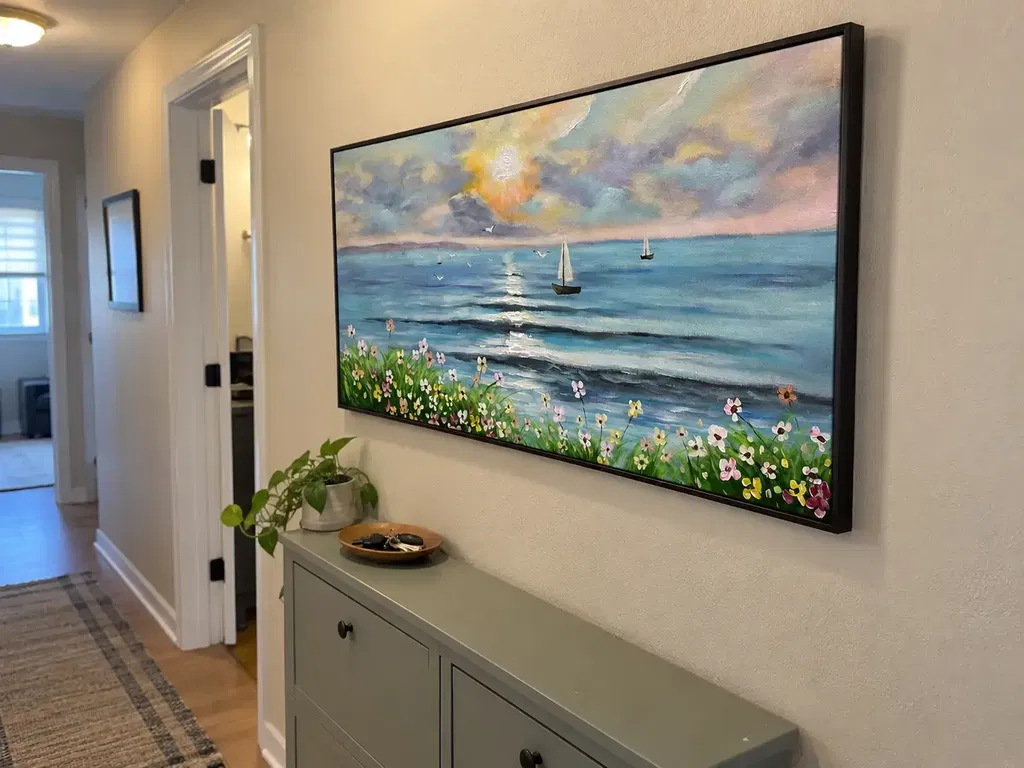
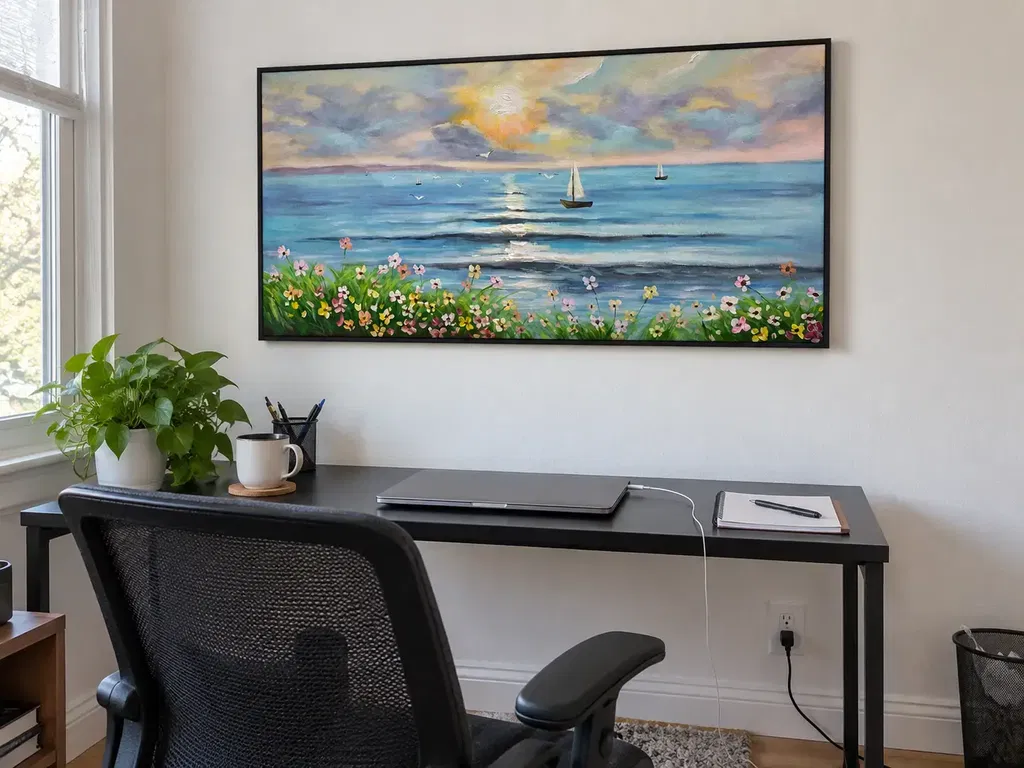
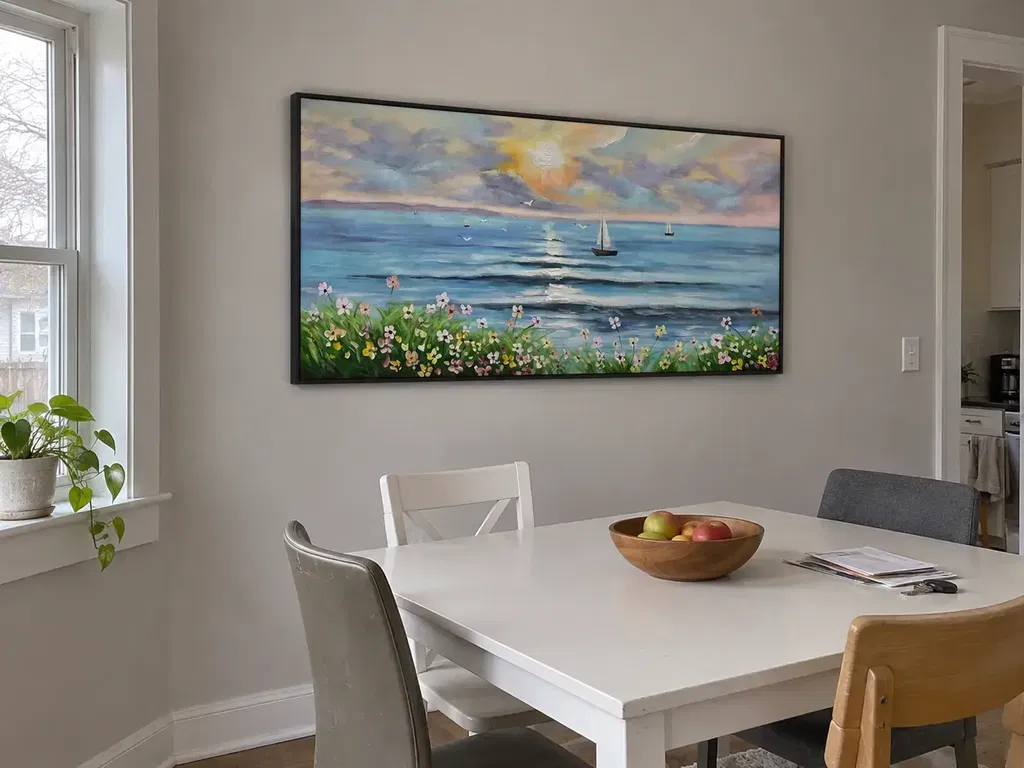
Why do certain dining rooms feel more comfortable than others? The answer often lies in Biophilic Design. Incorporating natural landscapes into interior art produces stress-reduction effects in the brain similar to being outdoors. A UPenn Critical Review found that nature-themed artworks reduced stress in 61% of patients and improved mood in 73% of participants.
In a dining context, a large biophilic mural can mitigate the "cognitive fatigue" of a high-density social environment. This is supported by WHO scoping reviews of over 3,000 studies, confirming that art interventions effectively alter clinical indicators for emotional regulation. By choosing a custom nature-themed piece that fits perfectly within your architectural trim, you are not just decorating; you are installing a piece of "public health infrastructure" for your family.

Technical Mounting: Ensuring a Flush Fit
When art is placed near deep-profile moldings, shadows can become the enemy. If a canvas hangs at an angle, it creates uneven shadows that make the architectural moldings look crooked.
To solve this, we recommend:
- Z-Clips or Low-Profile Security Hangers: These aluminum fasteners allow the canvas to sit perfectly flush against the wall. This is essential when the art is positioned within an inch of a chair rail or wainscot cap.
- Support Induced Discoloration (SID) Prevention: For large acrylic pieces, we use advanced technical mediums to prevent SID. As noted by Golden Artist Colors, water-soluble impurities in cotton canvas can be drawn into the paint film if the medium is applied too thickly, causing yellowing. Our "preview-and-approve" model ensures that the chemical integrity of the substrate is verified before the piece ever reaches your dining room.
The Economic Impact: Art as a Property Value Catalyst
Beyond personal enjoyment, custom hand-painted art is a strategic investment in real estate. A Royal Society CAR model analysis found a direct correlation between high-quality art and property price gains. In commercial contexts, the NAIOP reports that developers use unique art installations as "marketing trump cards" to increase leasing rates and property value.
For the homeowner, a custom mural that respects the architectural integrity of a dining room signals a level of craftsmanship and "artisan whimsy" that is currently trending. According to Zillow data, searches for "artisan craftsmanship" rose 21% recently, reflecting a market that is moving away from the assembly-line aesthetic.
Final Considerations for Your Space
Navigating trim and moldings requires a blend of mathematical precision and aesthetic intuition. By adhering to proportional spacing, adjusting for the seated perspective, and prioritizing human-made textures, you can transform a complex dining room into a cohesive masterpiece.
For further reading on integrating art into challenging spaces, explore our guides on Scaling Large Canvases for Open-Plan Rooms and Vertical Stacking for Narrow Walls.
Disclaimer: This article is for informational purposes only and does not constitute professional architectural, safety, or medical advice. Always consult with a qualified installer or environmental health professional when making structural or material changes to your home.
Sources
- Marketplace: The Expensive Art Market Struggles
- Columbia University: Human-Made vs. AI Art Perception
- UPenn: Visual Art in the Built Environment
- Royal Society: Art and Property Prices
- EPA: Indoor Air Quality and Low-VOC Paints
- Golden Artist Colors: Support Induced Discoloration
- ASTM D4303: Standard Test Methods for Lightfastness