Scaling for Intimacy: Sizing Large Art for Small Dining Nooks
There is a profound shift occurring in the way we curate our most personal spaces. While the high-end art market for "financial assets" has seen a dramatic retreat—with auction sales over $10 million plummeting 44% YoY in 2024—we are observing a resurgence in what we call "application value." According to Marketplace, buyers are moving away from overpriced vanity pieces and toward art that serves a real emotional purpose within the home.
In our work with interior designers and homeowners, we’ve found that the dining nook is the ultimate testing ground for this shift. It is a space defined by proximity. Unlike a grand foyer or a sprawling living room, the dining nook is an intimate theater of conversation. The "camera-ready" aesthetic isn't just about how the room looks in a photograph; it’s about how the space feels when you are sitting thirty-six inches away from the wall.
The most common misconception we encounter is the belief that a small space requires small art. In reality, undersized art can make a nook feel accidental or "choked" by its own architecture. Conversely, a large-scale piece, when sized with precision, provides a visual anchor that expands the room's perceived boundaries. This guide breaks down the technical heuristics and psychological mechanisms behind scaling large art for intimate dining spaces.
The '75% Rule' and the Geometry of Intent
When we talk about "decision safety" in art curation, we are looking for rules that prevent visual imbalance. In a small dining nook, the relationship between the art and the table is the most critical axis.
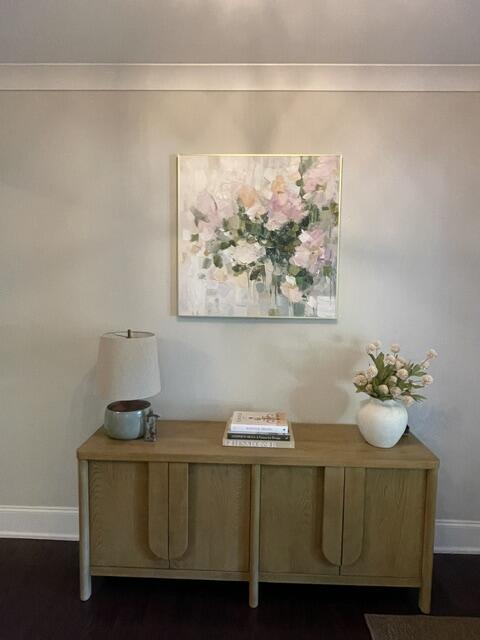
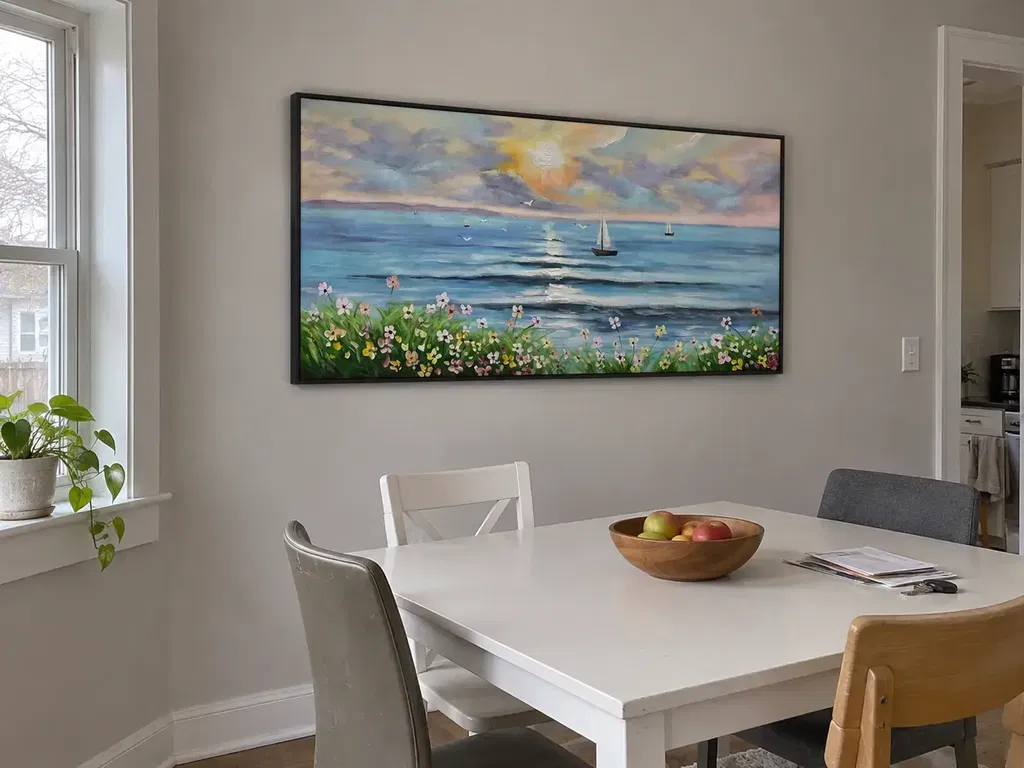
We utilize the 75% Rule as our primary heuristic: for a piece of art to feel intentional rather than haphazard, it should span approximately 3/4 (75%) of the width of the dining table or the banquette it sits above.
- For a 4-Person Table (approx. 36-44 inches wide): A horizontal piece should be roughly 27-33 inches wide.
- For a 6-Person Table (approx. 60-72 inches wide): A large-scale canvas should range from 45 to 54 inches in width.
Why 75%? This ratio creates enough "breathable margin" on the sides to prevent the wall from feeling cluttered, while providing enough mass to "hold" the table in place. If the art is the same width as the table, it creates a heavy, "blocked" look. If it is less than 50%, it loses its status as a focal point and becomes a mere accessory.
Logic Summary: The Heuristic of Intent Our 75% Rule is a shop-tested heuristic derived from common patterns in high-end residential design. It assumes a standard ceiling height of 8-9 feet and is intended to provide a "safety zone" for buyers who cannot physically test multiple sizes. It may vary if the table is placed diagonally or if the wall features heavy architectural molding.

The 'Intimacy Scale': Why Texture Outperforms Prints
In tight quarters, your relationship with the artwork changes from "observation" to "interaction." Because diners sit in such close proximity to the walls, the "Intimacy Scale" dictates that sensory depth becomes as important as the subject matter itself.
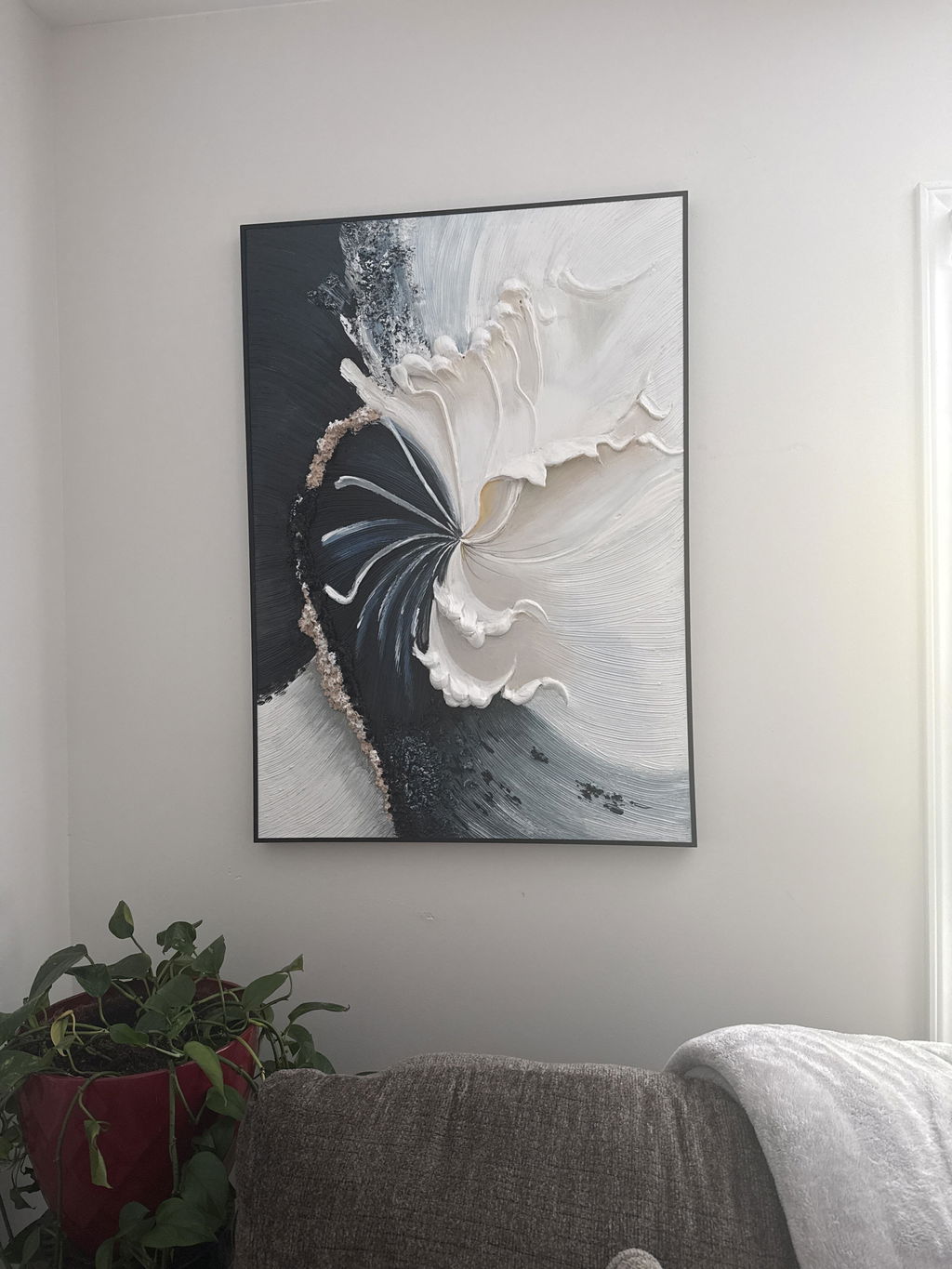
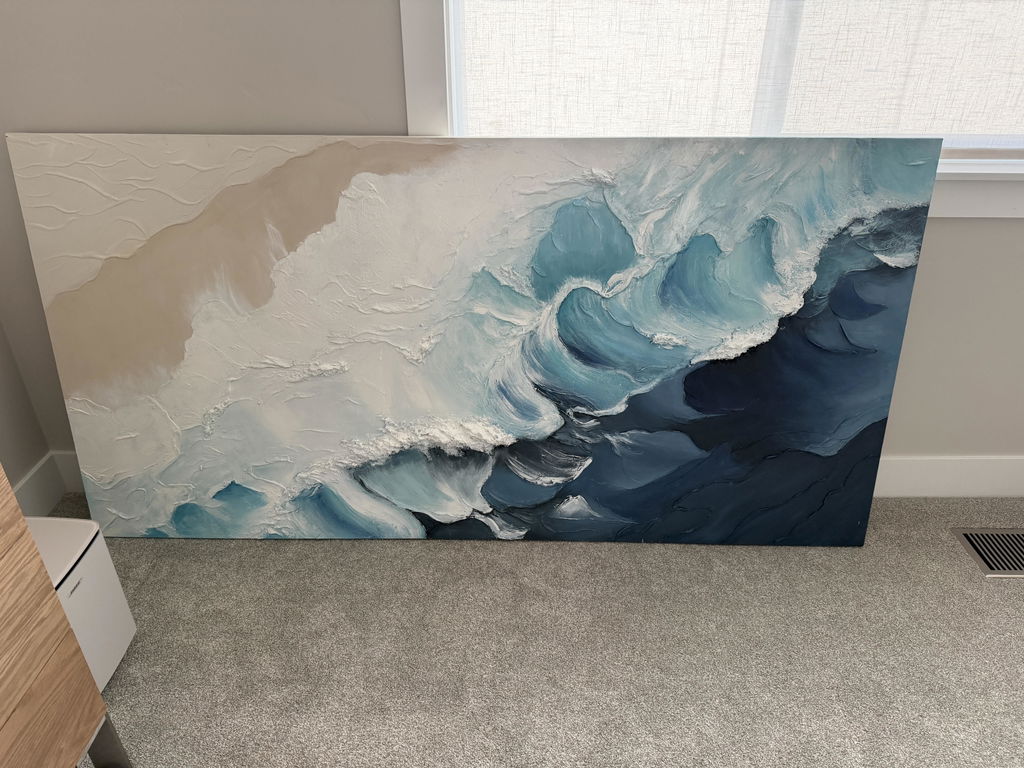
This is where the tactile value of hand-painted oil textures becomes irreplaceable. Research from Columbia University confirms that consumers value art labeled "human-created" 62% higher than AI-generated prints. Psychologically, we crave the "essential identity" of the artist. As noted by UChicago research, digital replicas lack the soul and "essential identity" that a physical canvas retains.
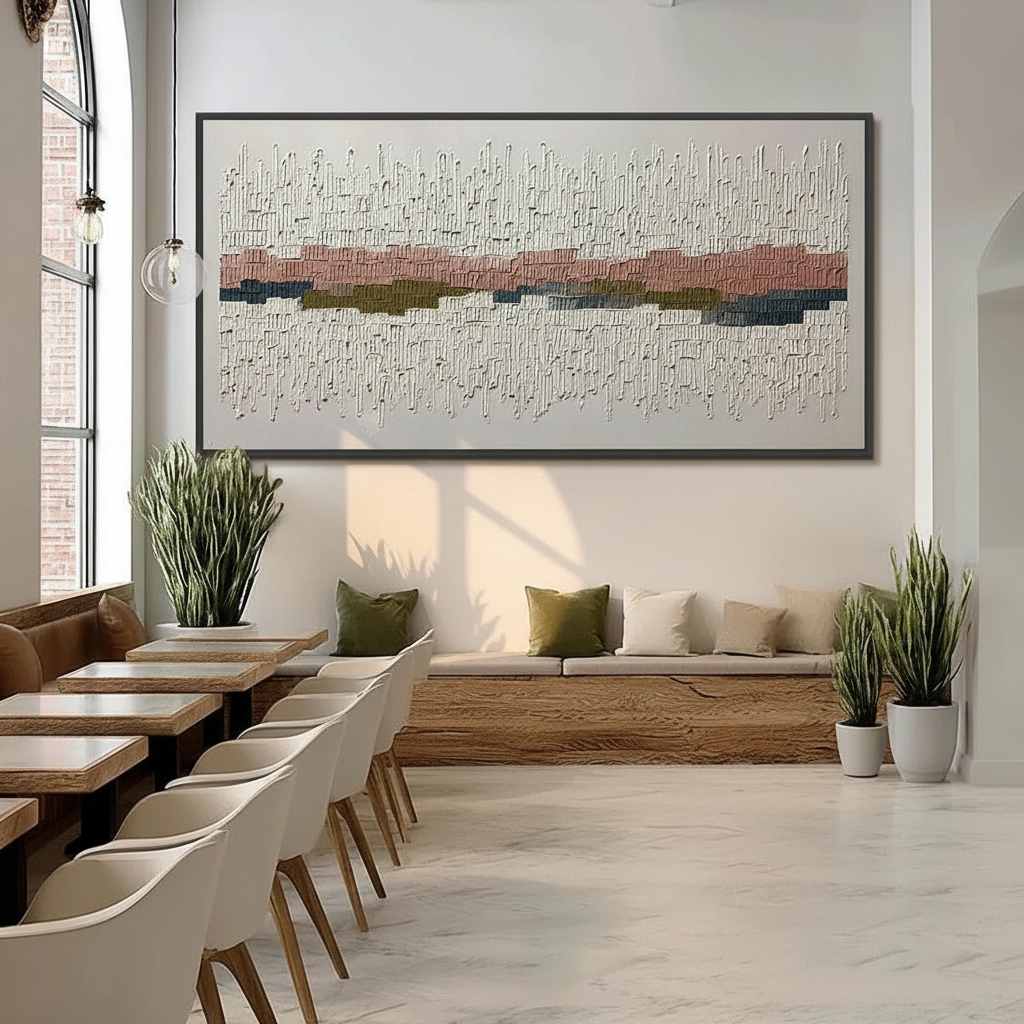
From a technical standpoint, the physics of light scattering on a hand-painted surface creates a different visual experience. According to optical theory, when pigment particles approach half the wavelength of visible light, their scattering capability reaches a theoretical extreme. In a dining nook, where lighting is often low and focused (usually 24-36 inches above the table), the microtopography of heavy impasto or visible brushstrokes catches the light at varying angles. This creates a "shifting" depth that a flat, high-definition print cannot simulate.
The Viewing Paradox: Managing the 36-Inch Clearance
We often encounter a "Viewing Paradox" in small nooks. Conventional wisdom suggests that large art makes a room feel bigger, but reality presents a challenge: in a standard 36-44 inch clearance space, a seated diner cannot achieve the "optimal" viewing distance for a very large piece.
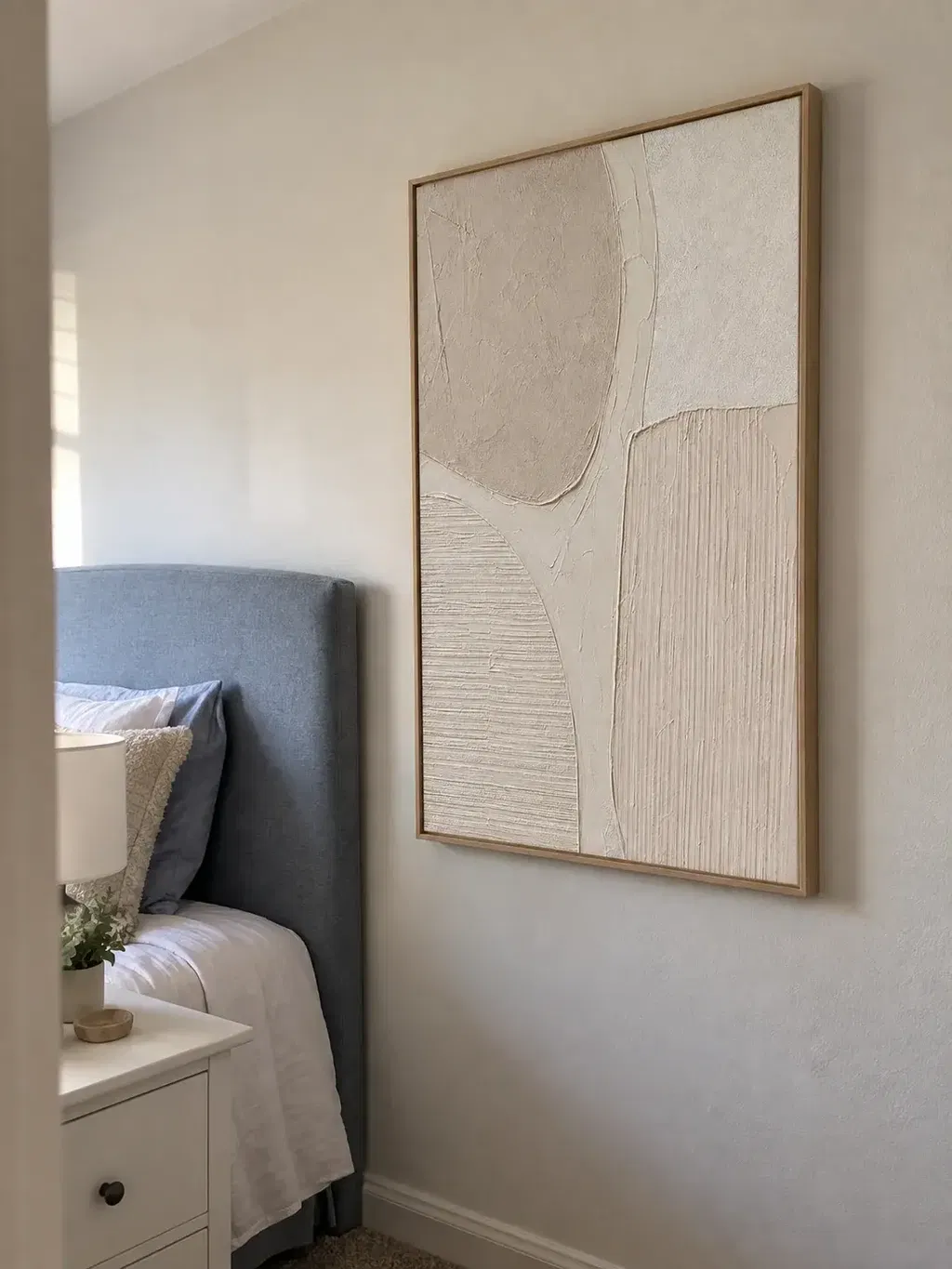
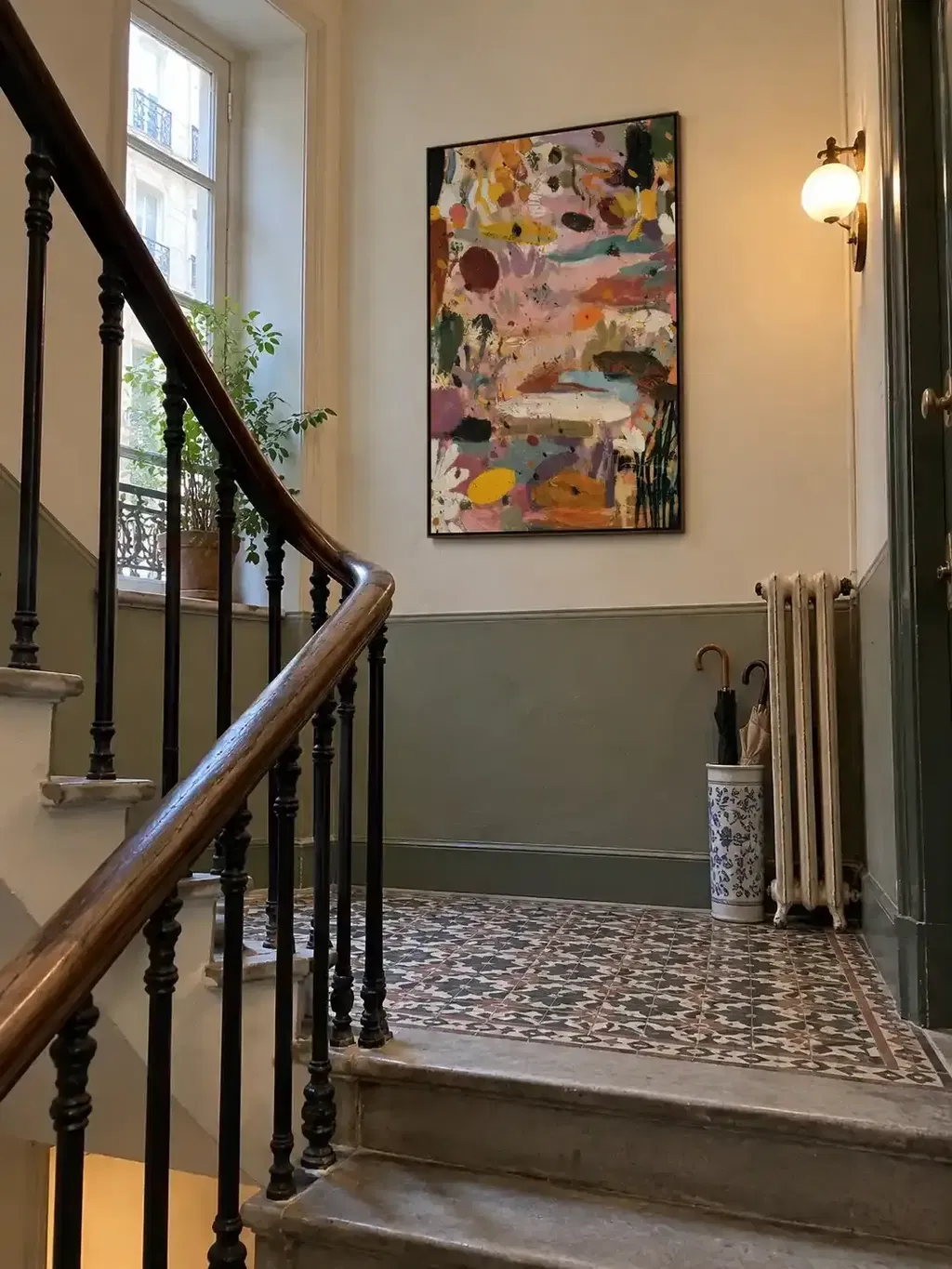
When you sit too close to a large figurative work, the perspective can feel distorted. This is why we recommend Abstract or Textured works for intimate nooks. Abstract art, viewed at oblique angles (30-45 degrees), maintains its aesthetic integrity even when the viewer is "inside" the piece's optimal viewing radius.
To help you visualize this, we have modeled the relationship between art size and psychological comfort in restricted spaces.
Modeling Note: The Nook Perception Model
This model is a hypothetical estimate based on common industry heuristics and user feedback patterns (not a controlled lab study).
| Parameter | Recommended Value | Unit | Rationale |
|---|---|---|---|
| Max Art Width | 75% of Table Width | % | Prevents "architectural choking" |
| Viewing Distance | 36 - 48 | Inches | Standard dining nook clearance |
| Vertical Offset | -3 | Inches | Lowers center point for seated perspective |
| Breathable Margin | 3 | Inches | Minimum distance from moldings/wainscoting |
| Surface Texture | > 1.5 | mm | Minimum relief for tactile "Intimacy Scale" |
Boundary Conditions: This model may not apply to galleries with ceiling heights exceeding 12 feet or nooks with high-intensity floodlighting, which can create a "spotlight effect" that highlights boundaries rather than expanding them.
Architectural Integration: Wainscoting and 'Breathable Margins'
Small dining nooks often feature architectural details like wainscoting or wall niches. These are not obstacles; they are frames. However, they require a specific approach to scaling.
A common mistake is trying to fill the entire paneled section. We advocate for a "Breathable Margin" of at least 3 inches between the frame of the art and the edge of the molding. This prevents the art from looking like it was squeezed into the space.
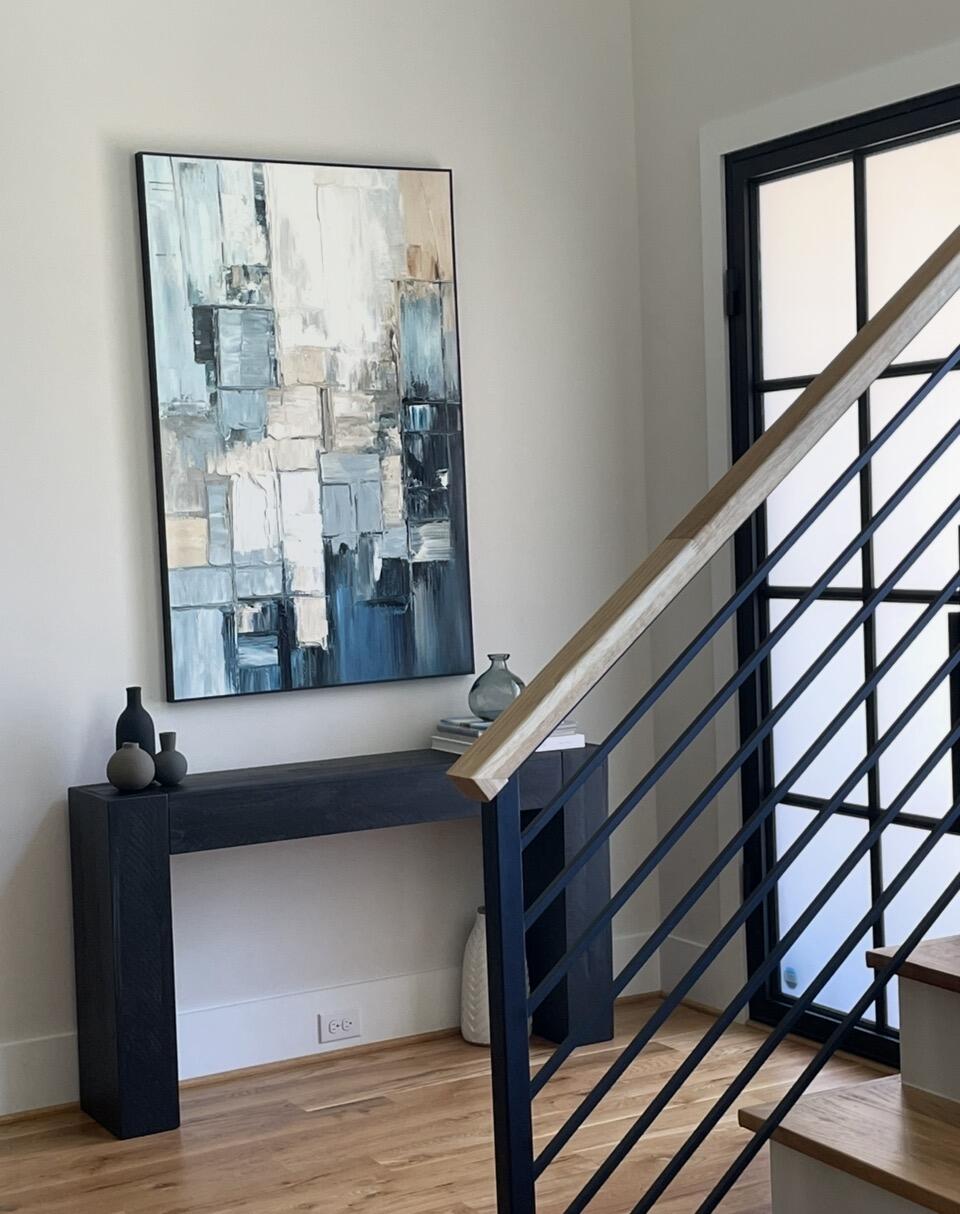
The Vertical 'Cheat Code' If your nook feels cramped but has standard ceiling heights, we suggest a vertical orientation. A tall, narrow piece draws the eye upward, creating an illusion of height that offsets the horizontal clutter of chairs and table settings. This "vertical lift" is a proven strategy for visual expansion in multi-use social spaces.
Neuroaesthetics: The Health Benefits of 'Nature-Themed' Murals
Beyond aesthetics, the art you choose for a dining space has a measurable impact on your well-being. A University of Pennsylvania review found that 73% of patients reported significant mood improvements when exposed to environmental artworks.
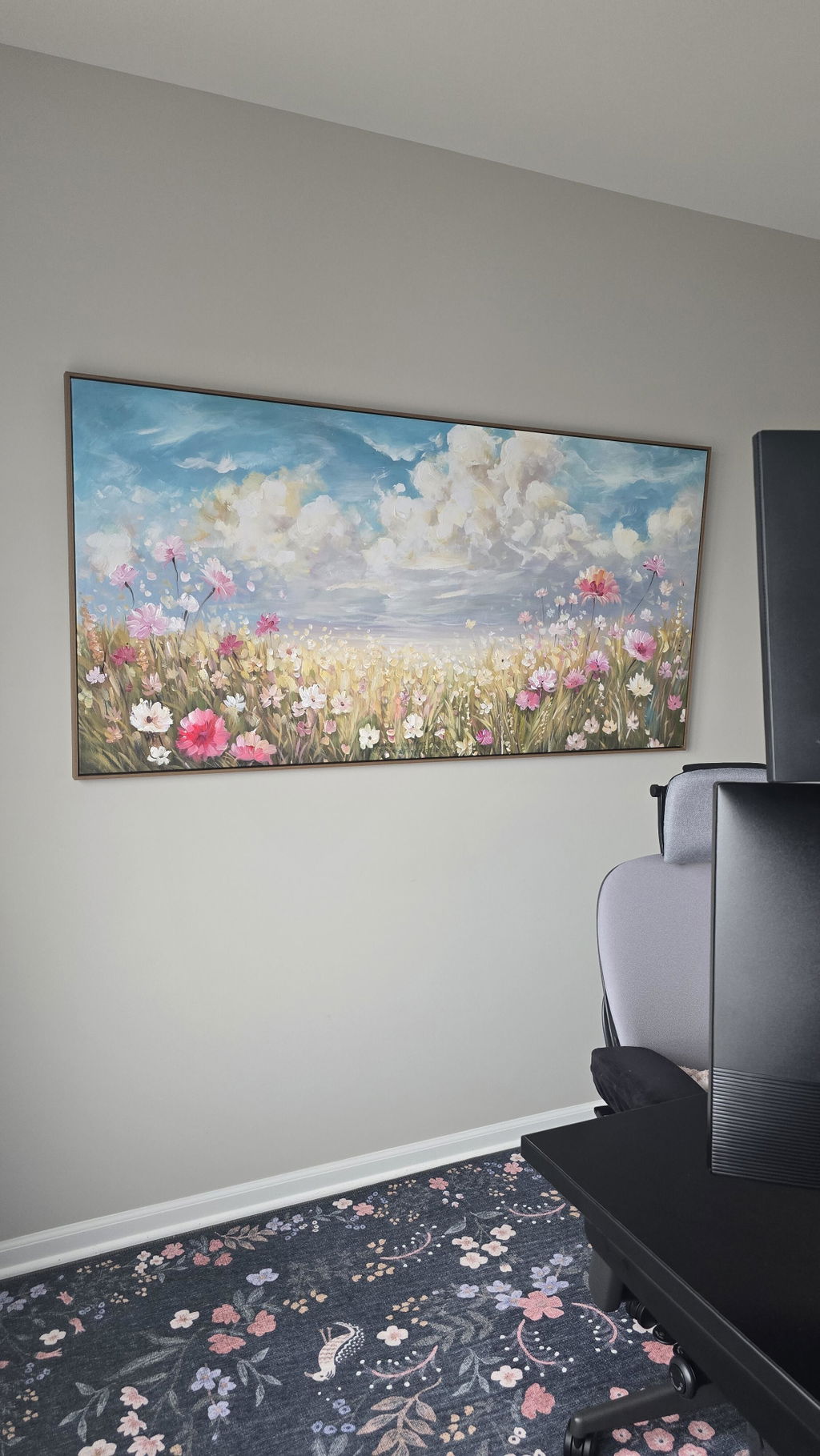
In a dining context, where the goal is relaxation and social cohesion, nature-themed or biophilic designs are particularly effective. The WHO scoping review confirms that art interventions can effectively alter clinical indicators for stress. Passive viewing of art consistently activates the medial prefrontal cortex (mPFC) and the amygdala, which optimize emotional regulation circuits.
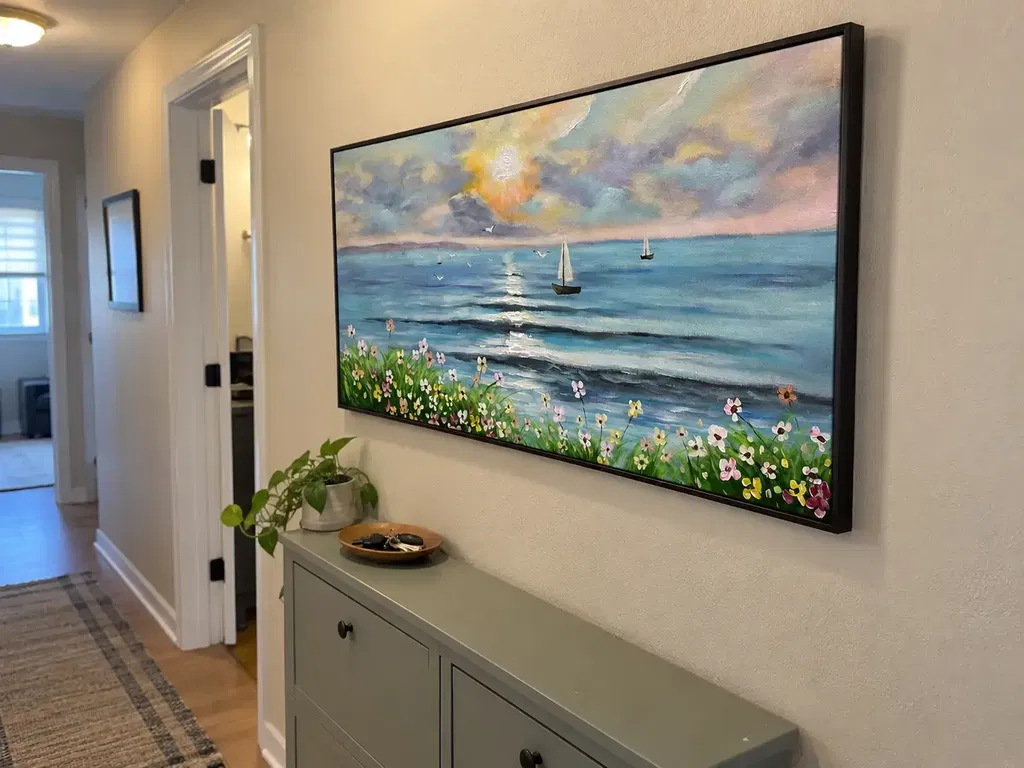
By choosing a hand-painted landscape or a biophilic abstract for your nook, you aren't just decorating; you are installing "wellness infrastructure." The same stress-reduction effects found in the outdoors can be replicated in the brain by high-quality nature landscapes.
The 'Safe' Palette: Chemical Integrity in the Dining Room
Because a dining nook is a space where you consume food, "decision safety" extends to the chemical composition of the art. Many mass-produced prints use industrial solvents that can emit volatile organic compounds (VOCs).
The EPA warns that indoor air pollution is often more concentrated than outdoor pollution. This is why we emphasize the use of low-VOC paints and natural binders.
- The Lead White Myth: Historically, lead white was used for its hiding power, but it is highly toxic. Modern artists have almost entirely shifted to Titanium Dioxide. According to the NCBI, titanium dioxide now dominates 90% of the white pigment market due to its chemical inertness and superior whiteness.
- Safety Labeling: When selecting art, look for the ASTM D-4236 label. However, as the EPA notes, this label only means the warning labels comply with regulations—it doesn't necessarily mean the product is "edible." For a dining space, we prioritize water-based acrylics or oil paintings cured with walnut oil, which replaces toxic turpentine solvents.
Decision Safety: The Online Approval Process
Purchasing large-scale, hand-painted art online can feel risky. However, the market has matured significantly. Artsy’s 2024 report shows that online art e-commerce grew 15% YoY, reaching a four-year high.
To ensure "decision safety," we recommend a "preview-and-approve" model. This bridges the gap between the convenience of e-commerce and the authenticity of a gallery. By seeing the actual brushstrokes and texture of your specific piece via high-resolution video or photography before it ships, you eliminate the "expectation gap" that often plagues online furniture and decor purchases.
Furthermore, we firmly believe in ethical compensation. A Wharton School survey found that 87% of consumers agree artists should receive fair compensation. By supporting real artists rather than AI-generated factories, you are contributing to a creative economy that accounts for 3.1% of global GDP.
Summary Checklist for Your Dining Nook
- Measure the Table: Ensure the art is roughly 75% of the table's width.
- Lower the Center: Drop the hanging height by 2-3 inches to account for the seated perspective.
- Prioritize Texture: Choose hand-painted canvases over flat prints to leverage the "Intimacy Scale."
- Check the 'Breathable Margin': Leave at least 3 inches of space from any architectural molding.
- Verify Safety: Ensure the piece uses low-VOC materials, especially in small, poorly ventilated nooks.
Scaling for intimacy is about finding the "sweet spot" where art enhances the coziness of a small space without overwhelming it. By following these technical heuristics and grounding your choices in neuroaesthetic principles, you can transform a simple dining nook into a camera-ready sanctuary that feels as good as it looks.
Disclaimer: This article is for informational purposes only and does not constitute professional interior design, medical, or environmental safety advice. Always consult with a qualified professional regarding structural installations or chemical sensitivities, especially in households with children or individuals with respiratory conditions.