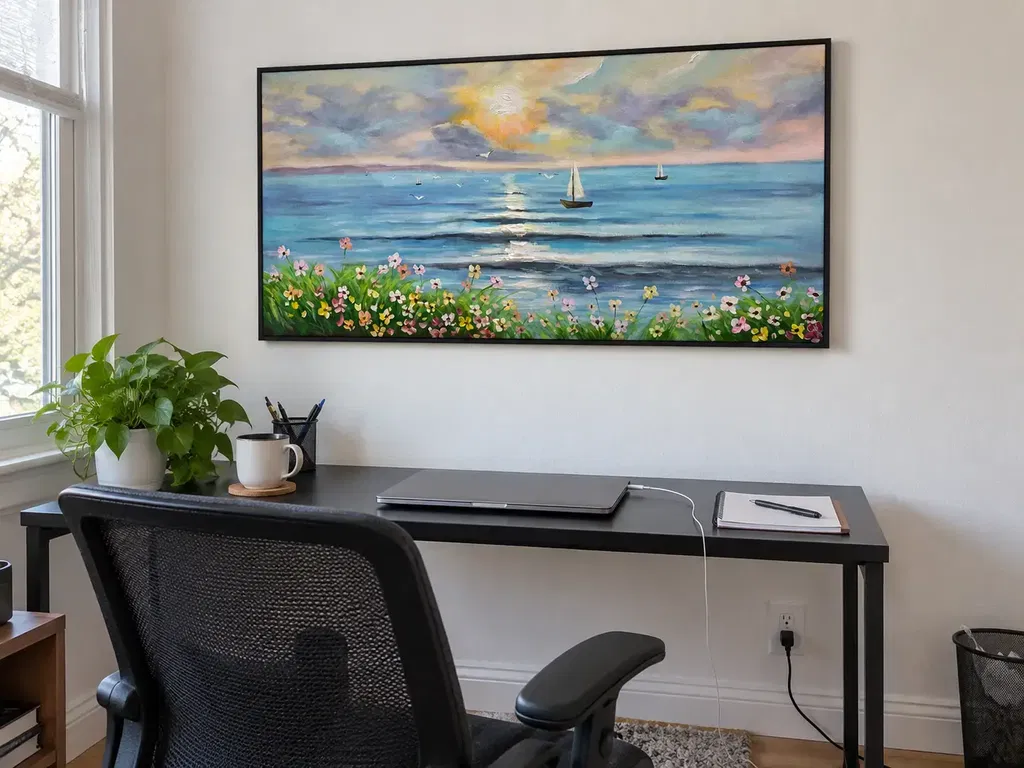
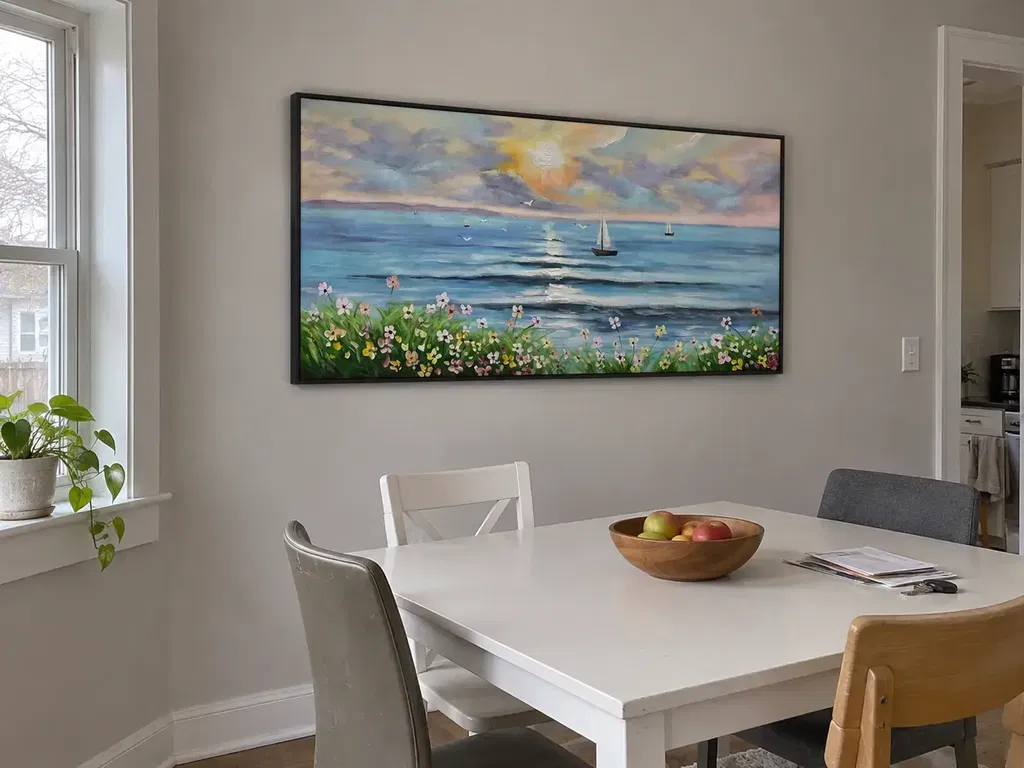
Neither route is always cheaper. Whether stretching rolled canvas locally or ordering pre-framed art costs less depends on the finished size, the finish you actually want, and the real quotes or listing terms you compare, not on the sticker price of the raw canvas.
The only fair way to answer this is to build two finished totals for the exact same presentation, then decide based on the numbers plus how much coordination and risk you're willing to take on.
Which route is cheaper for your canvas?
Local finishing is the practical first choice when you already own a rolled canvas or need a shop-specific frame, mat, or preservation treatment that a standard online listing does not offer. Pre-framed online delivery is the practical first choice when browsing canvas artwork for sale, where a listed format already matches your wall and you'd rather skip a separate shop appointment.
A lower starting price on either side does not tell you the finished total. A $40 rolled canvas can still cost more once you add stretching labor, frame materials, and hardware than an equivalent pre-framed piece with free shipping. Compare the same finished dimensions and presentation style, whether that's a frameless stretched canvas or a fully framed piece, before you judge either option on price. Our comparison of rolled vs framed delivery breaks down how the two formats differ in setup and display readiness.

How to calculate an apples-to-apples total
A fair comparison adds up every cost tied to the finished, ready-to-display piece, not just the canvas price. Use the same formula for both routes: artwork price, plus shipping or pickup, plus labor and materials, plus hardware and tax, plus a time value only if your time actually matters to the decision.
Build two finished-total columns
- Enter the artwork price and the exact selected size or finished dimensions for both options.
- Add shipping, pickup, or delivery charges, plus local labor, stretcher or frame materials, hanging hardware, and any applicable sales tax.
- Add a time value only if the hours spent picking up, dropping off, or waiting would change your decision; skip this if timing doesn't matter to you.
As an illustration only, a reader who already owns a 24x36 inch rolled canvas might see a local quote of roughly $45 for stretching labor, $60 for stretcher bar and staple materials, $25 for hanging hardware, and $12 in local sales tax, for a hypothetical finished total near $142. That figure is not a market price; it's a placeholder to show how the categories stack, and your own quote will differ by shop, location, and canvas size.
Normalize the finish before comparing
- A rolled canvas plus local stretching is not the same deliverable as a fully framed piece; don't compare their prices as if they were interchangeable.
- Match outer dimensions, visible edge treatment, frame profile, and hanging readiness across both options.
- Keep optional frame upgrades as separate line items so they don't get lost inside a base total.
What to ask a local frame shop to quote
Ask for one itemized quote that covers the exact finished result you'd otherwise order online, not just a stretching estimate. A quote that only lists labor and skips materials, hardware, tax, or delivery isn't comparable to a delivered checkout total.
Give the shop a precise scope
- State the canvas's current dimensions and the outer dimensions you want after finishing.
- Name the specific result you want: stretched only, stretched with a frame, or another clearly defined presentation.
- Ask directly whether mounting hardware, pickup, delivery, and tax are included in the quoted number or billed separately.
Use credentials as a screening question
Asking whether a framer holds a relevant certification or has preservation-framing experience is a reasonable screening question, especially for valuable or fragile pieces. Treat the answer as context, though; a credential does not by itself confirm a lower price, specific materials, workmanship quality, or a warranty. The itemized quote, not the certificate, is what tells you the real cost.
What to verify before ordering pre-framed canvas online
A pre-framed listing only saves you a shop appointment if its format and customization options actually match what you want on the wall. Check the selected finish and every checkout term before assuming the delivered price is the final price.
Verify the finished listing
- Confirm the selected format (rolled, frameless stretched, or framed) and compare its finished dimensions with your wall space.
- Check exactly which frame, stretcher, and hanging components are included with that listing.
- Keep listed customization options separate from any promise about guaranteed stock or a specific result; a listing option is a choice, not a guarantee.
Use the documented online example carefully
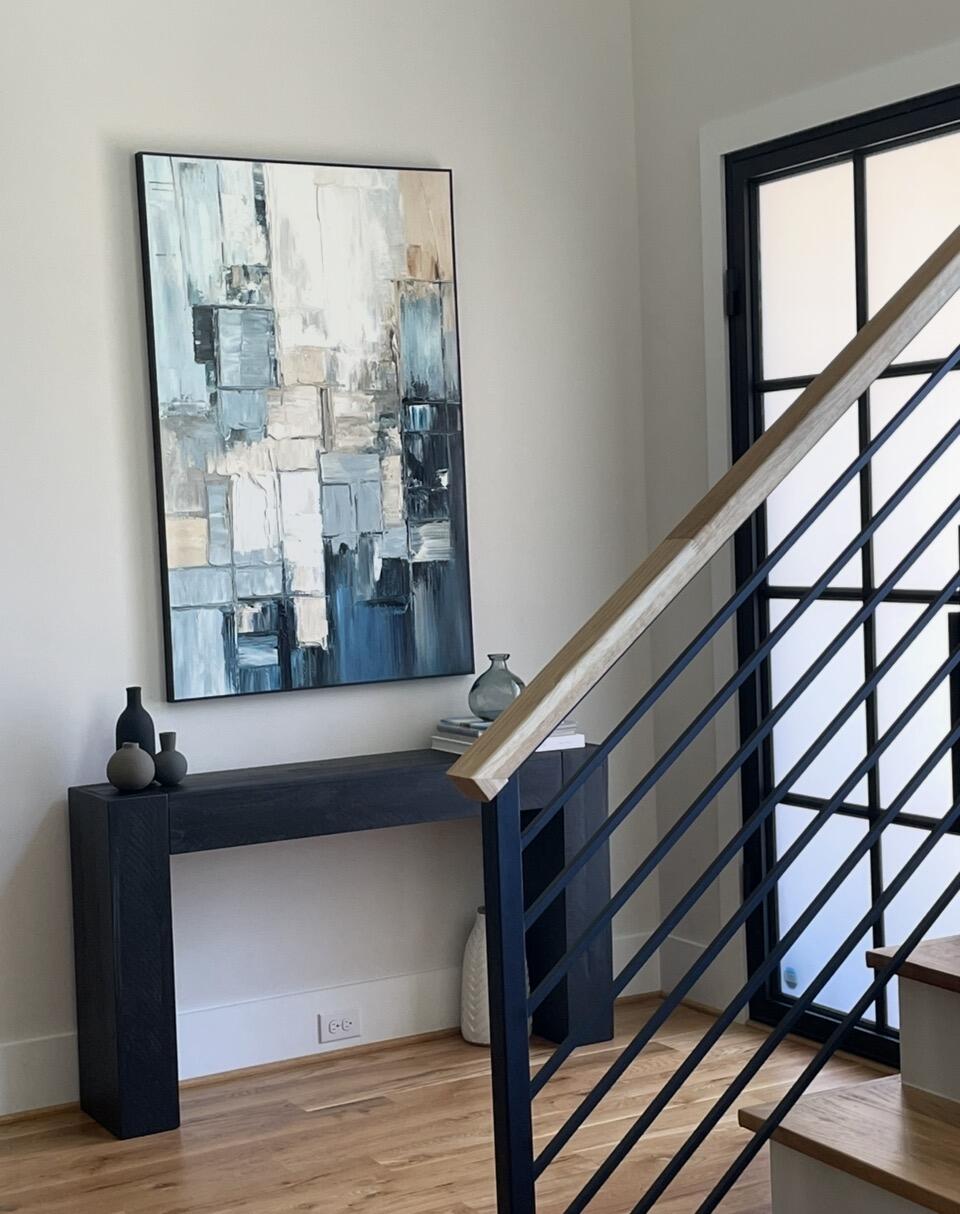
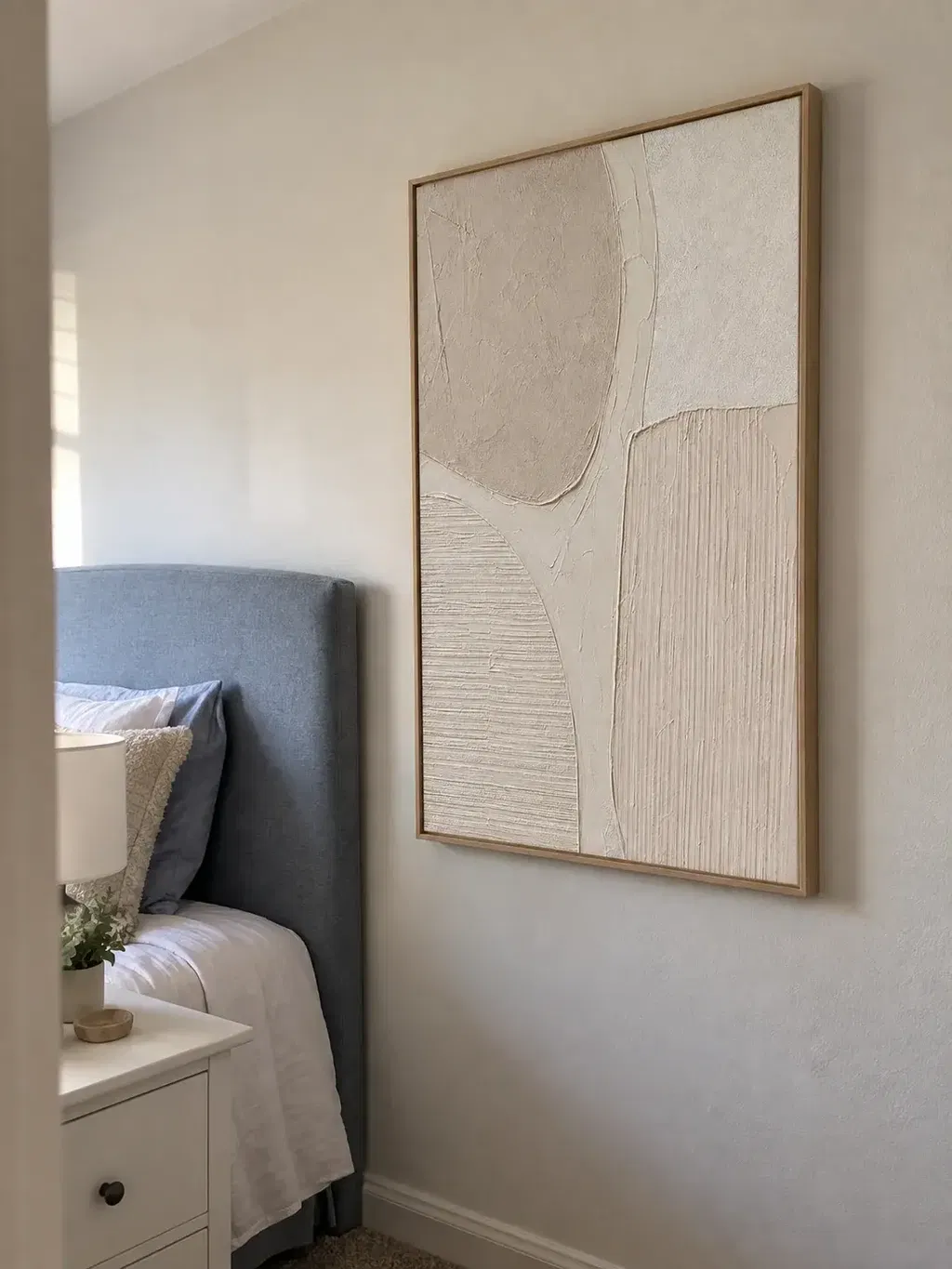
The STRATA Textured Abstract Neutral Oil Painting is a useful example here because its listing offers rolled, frameless stretched, and several framed color choices across eight sizes, plus customization options reviewed with photos and video before shipment. Those are Montcarta-specific listing facts, not a market-wide standard, so treat another seller's listing on its own terms.
Our shipping policy states that US orders ship free, production generally runs three to seven business days, and transit generally adds four to eight business days, with framed or stretched pieces packaged for delivery and every shipment insured against loss or damage; damage claims require photos of both the artwork and the packaging. Free shipping only lowers your total once you've confirmed the format and size match what you need; it doesn't replace comparing the whole checkout.
Local finishing vs. online delivery: the practical differences
Beyond the starting price, the two routes differ in how much coordination they require and where the risk sits. The table below shows what to price or verify on each side rather than a universal winner.
| Dimension | Local finishing: price or confirm | Pre-framed online: verify |
|---|---|---|
| Cost inputs | Labor, materials, hardware, tax, pickup | Listing price, format, shipping, tax |
| Effort | Drop-off, pickup, possible follow-up visit | Select format and size at checkout |
| Timing | Shop's quoted completion date | Seller's stated production and transit window |
| Convenience | Requires a separate service appointment | Finish is chosen during the order |
| Finish control | Custom frame, mat, or preservation options | Limited to the listing's format and customization choices |
| Damage/fit risk | Handling risk while in shop's care; ask who's responsible | Transit risk; check packaging, insurance, and claim process |
A framed shipment's transit risk depends on its size, framing, fragility, and value, so shipping fine art safely requires reviewing packing materials and crate protection beyond the delivery fee itself. If a piece arrives damaged, keep the original packaging and follow the seller's documented claim process; our damaged wall art guide walks through what to photograph first.
Which path fits an existing rolled canvas or a new purchase?
Apply this comparison differently depending on whether you already own the artwork or are still shopping. Either way, the next step is the same: get real numbers before deciding.
If you already own the rolled canvas
Start with the local quote, since the artwork itself is already paid for. Give the shop the finished dimensions and specify whether you want a stretched-only result or a full frame. Then weigh that quote against the time cost of transporting the canvas and coordinating pickup or drop-off, especially if you're on a deadline.
If you are buying new art
Compare the closest like-for-like options: a rolled canvas plus local finishing versus a pre-framed online listing in the same size and style. Choose the online route when its listed finish, dimensions, timing, and damage-claim terms already meet your need without extra coordination. Choose local finishing when a specific frame, mat, or in-person design consultation is the deciding factor.

If the presentation you want is already covered by a listing like STRATA's rolled, stretched, and framed options, we can walk you through picking the right size and finish before you order.
FAQs
Does a framing credential prove that the local option is the better value?
Not on its own. A relevant credential can signal training or preservation knowledge, but it does not fix the shop's labor rate, material quality, or turnaround timeline. Request an itemized estimate outlining stretcher wood, hanging brackets, and sales tax to compare directly against an online delivered order.
How do turnaround times compare between local shops and delivered art?
Neither route guarantees faster turnaround. A local frame shop's schedule depends on current backlog and whether custom moulding or bars must be ordered, while pre-framed online art follows seller production and shipping transit windows. Always confirm exact completion or delivery dates before committing if you face an installation deadline.
What happens if the artwork is damaged before it reaches my wall?
Liability depends entirely on who holds custody. For delivered artwork, check seller transit insurance and photo requirements for shipping claims. For local framing, ask upfront who covers repairs or replacements if the canvas tears or suffers damage while in the shop's workshop.