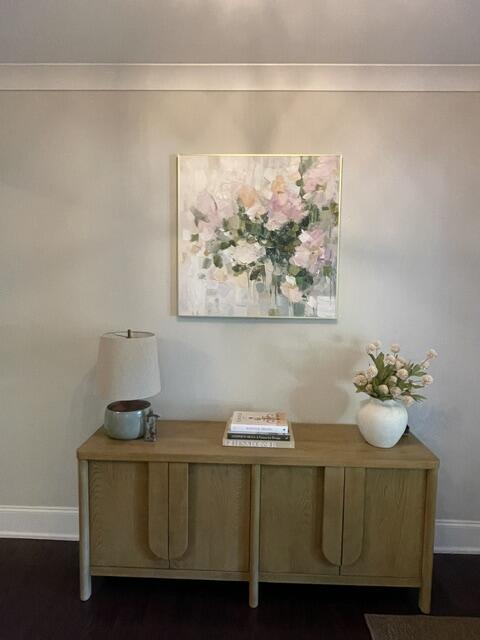
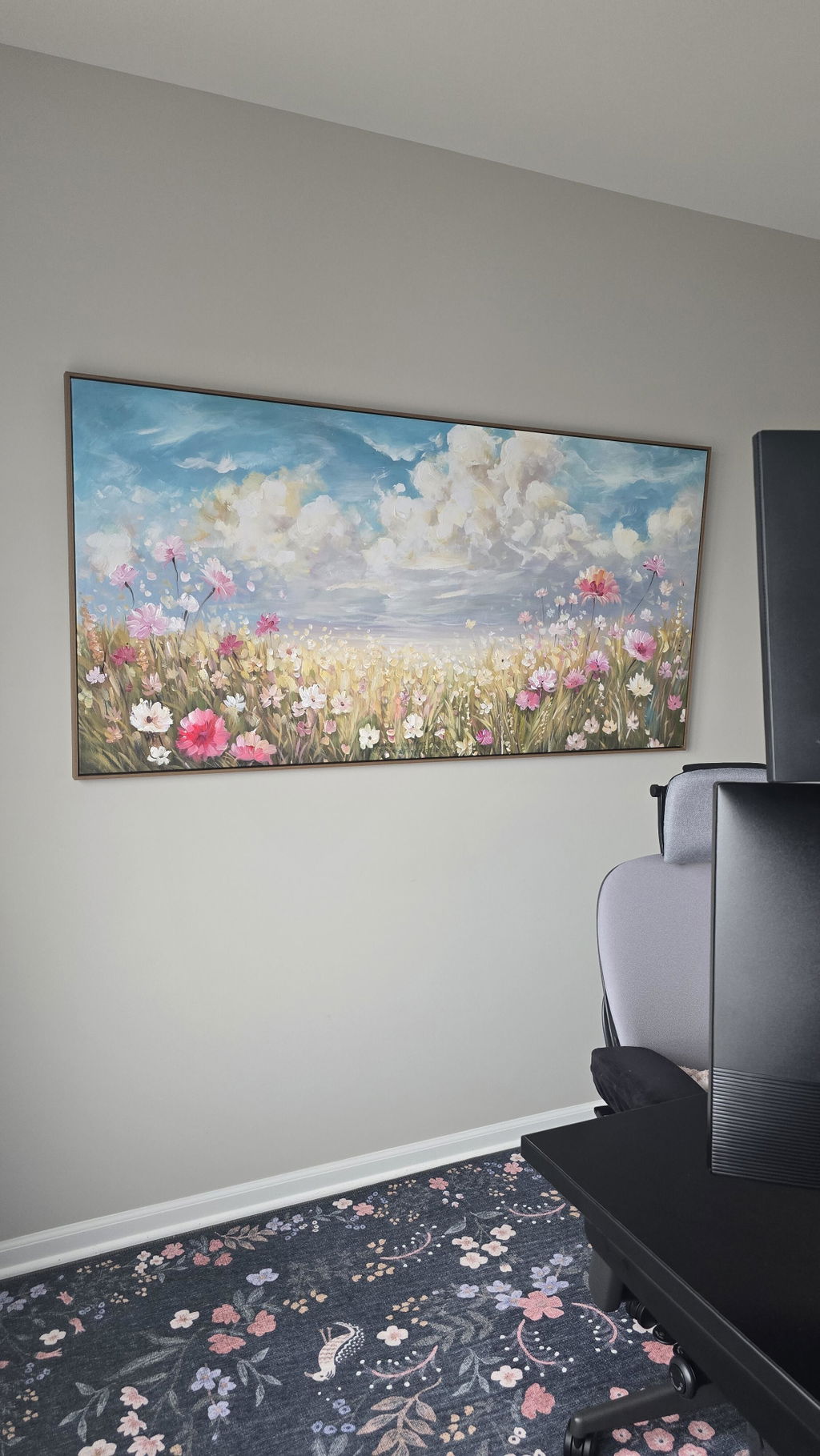
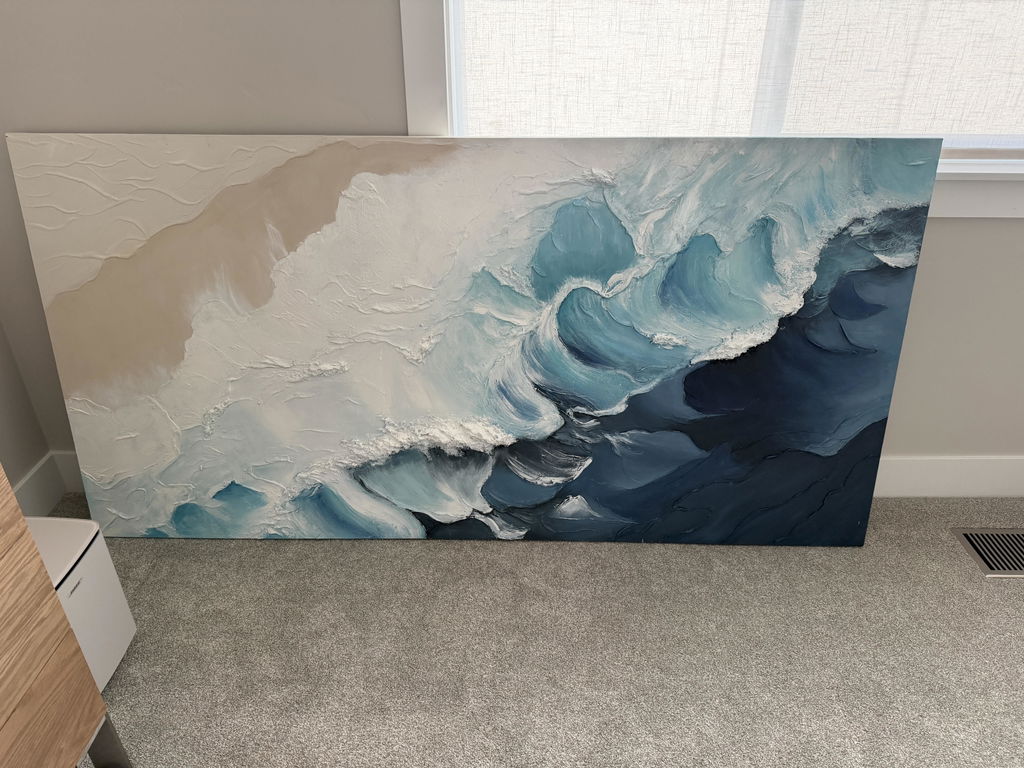
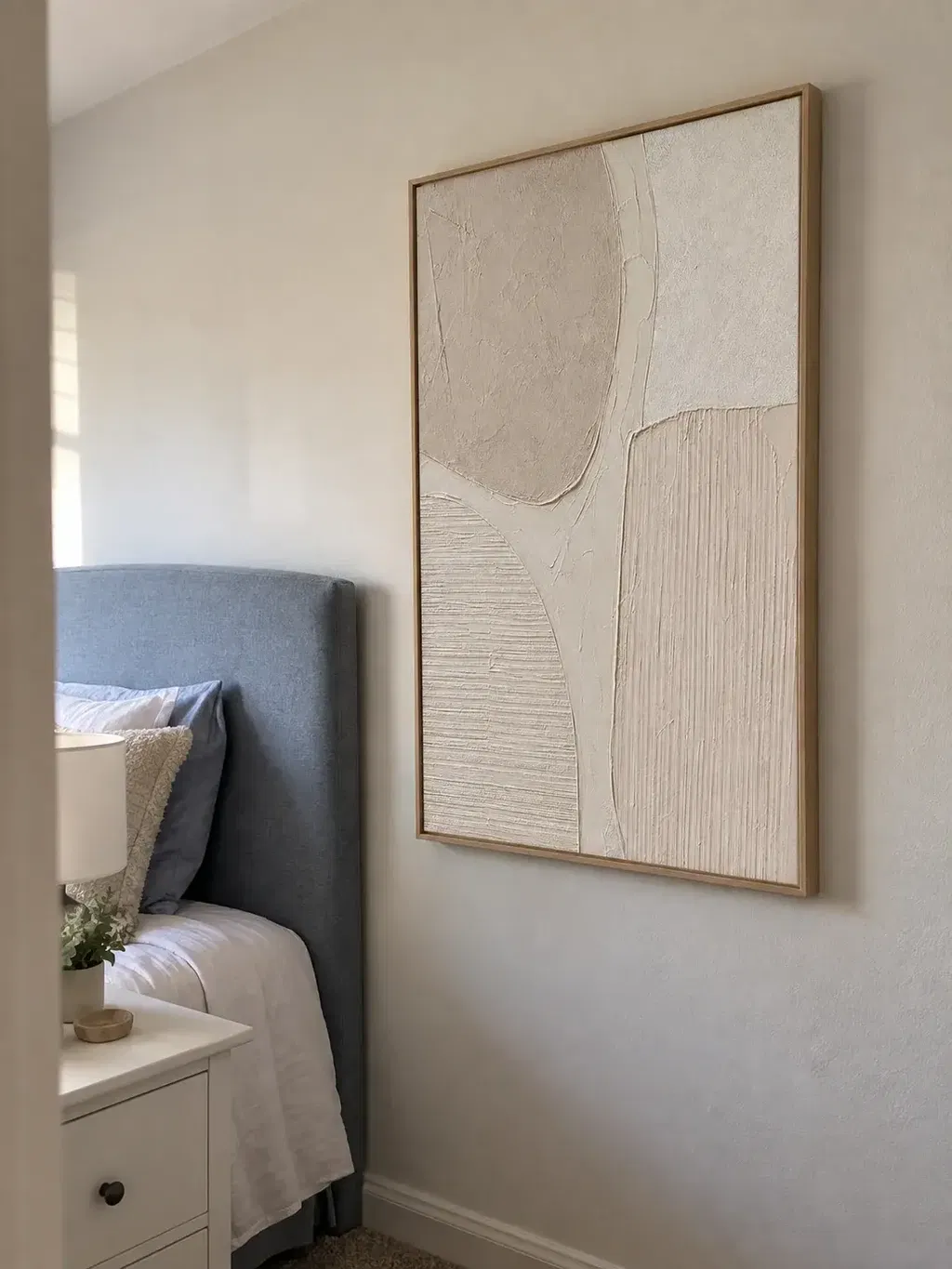
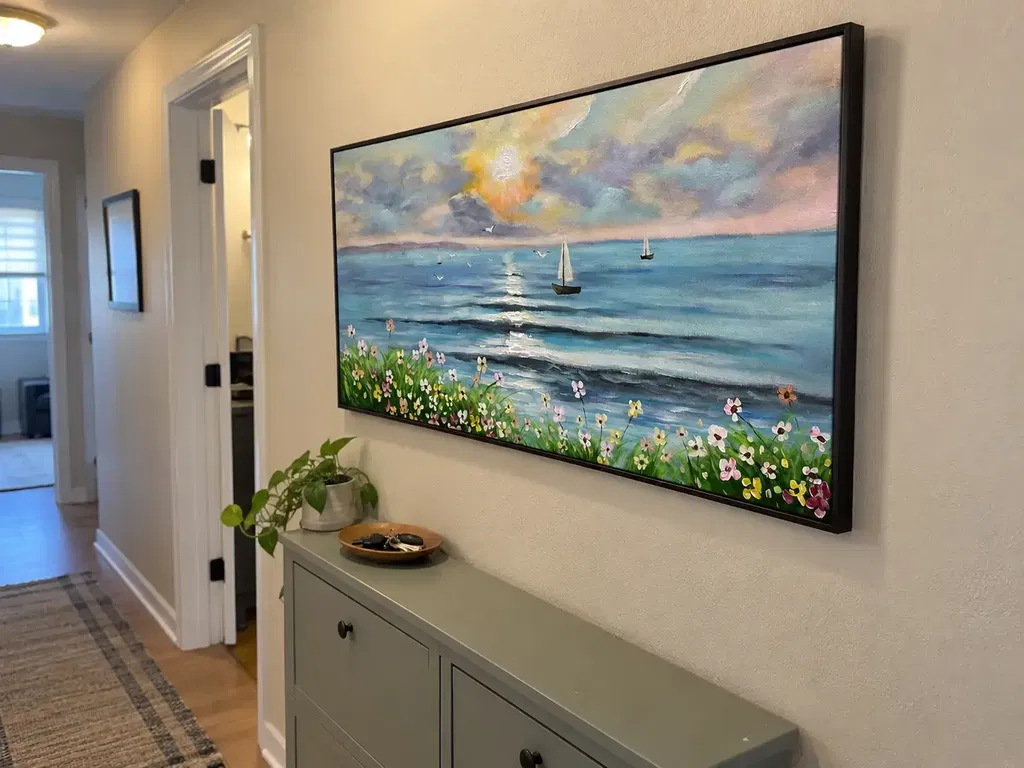
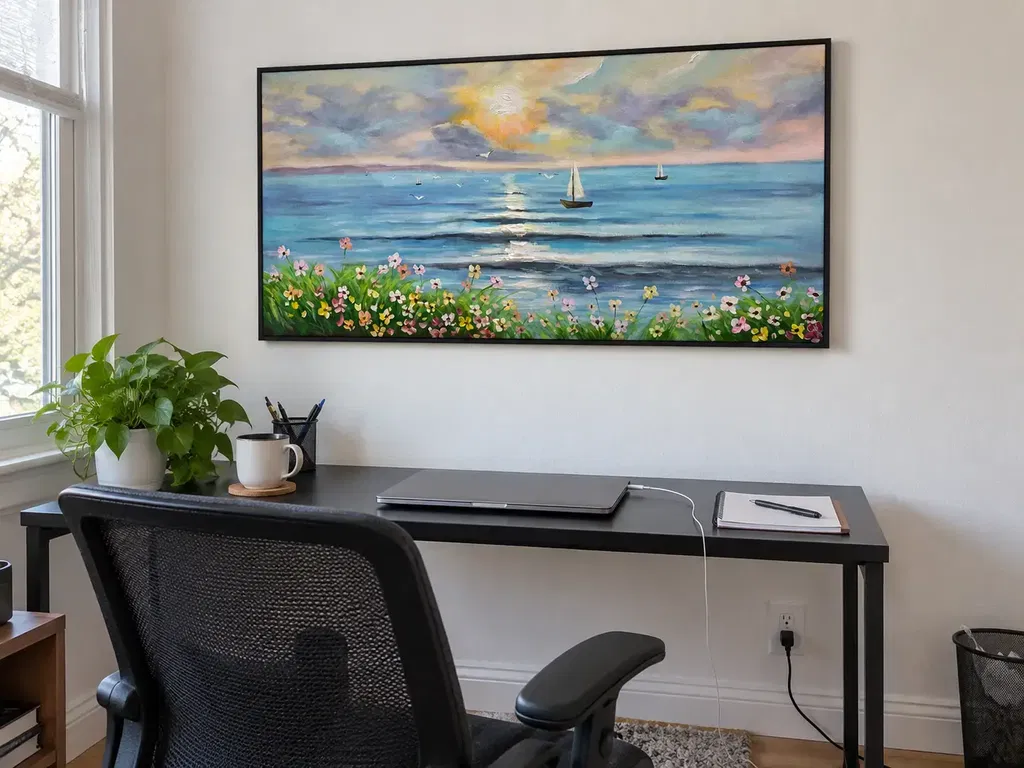
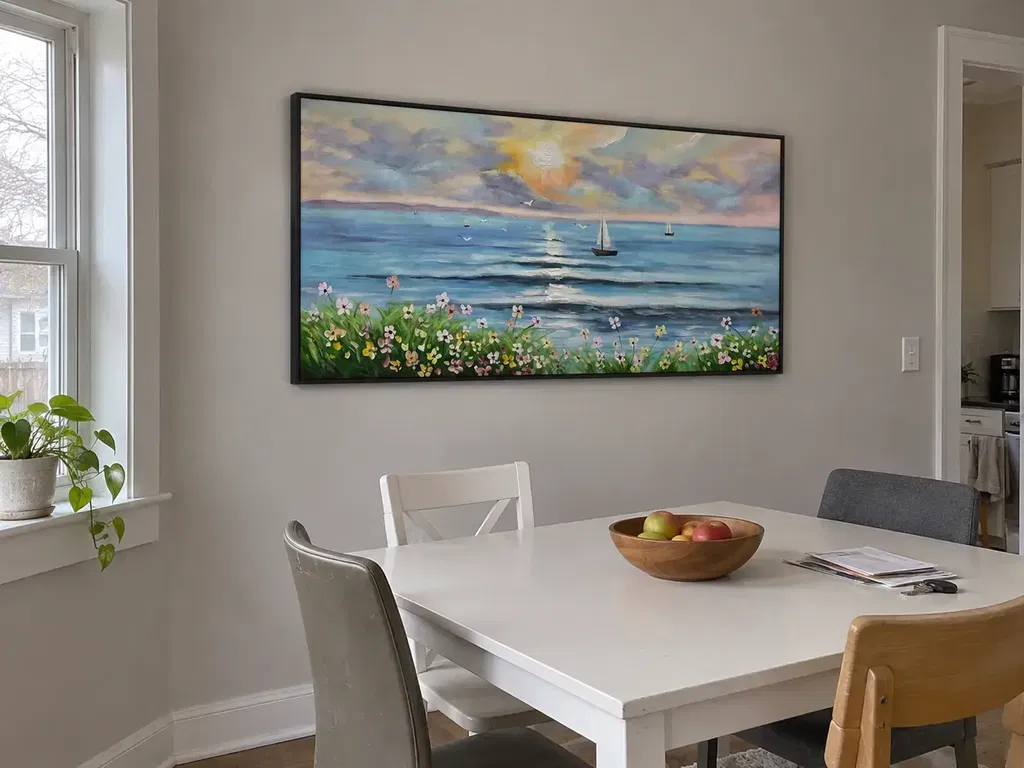
The right choice for large print artwork depends on how much vertical wall space you have and how wide your credenza is, not on whether the piece is labeled horizontal or panoramic. A 4:3 canvas gives you the most height at a given width, a 2:1 panoramic trims that height while staying substantial, and a 3:1 panoramic creates the shallowest visual band but only works when the wall and composition can support it.
All three formats function as horizontal art. The real difference is proportion: how tall the piece gets at a set width, and how wide it gets at a set height.
Which Aspect Ratio Fits Above a Low-Profile Credenza?
Pick 4:3 when you need vertical presence, 2:1 when you want a wide but still substantial band, and 3:1 only when you have enough clear width and a composition that reads well as a thin strip. Aspect ratio is simply the width-to-height relationship of a rectangle, so changing the ratio while holding one dimension steady changes the other.
The table below uses two fixed reference points, a 48-inch width and a 24-inch height, to show how each ratio behaves. These numbers are illustrative geometry, not recommended purchase sizes; substitute your own measurements to see the same pattern.
| Ratio | At 48 in. wide | At 24 in. high | Conditional fit |
|---|---|---|---|
| 4:3 horizontal | 36 in. high | 32 in. wide | Best when you have height to spare |
| 2:1 panoramic | 24 in. high | 48 in. wide | Middle ground for wide, shorter walls |
| 3:1 panoramic | 16 in. high | 72 in. wide | Only with enough span and a strip-friendly subject |
If your wall has plenty of vertical room, 4:3 gives the strongest presence. If the space above your credenza is wide but shallow, 2:1 usually holds more visual weight than a 3:1 strip at the same width. Reserve 3:1 for walls where you specifically want a low, wide band and have confirmed the composition supports it.
What 4:3 Horizontal Artwork Does Best
A 4:3 canvas works best when your wall has real height to spare and you want the large artwork to feel like a strong vertical anchor, not just a horizontal stripe. At 48 inches wide, that translates to roughly 36 inches of height, more than either panoramic option at the same width.
This format struggles when the space between the credenza and the ceiling, a window, or another fixed feature is tight. If mounting a 36-inch-tall piece would crowd that gap, a 4:3 canvas is the wrong shape for that wall, regardless of how wide the furniture is.
When 2:1 Panoramic Artwork Is the Better Compromise
A 2:1 panoramic canvas is the practical middle ground when a 4:3 piece would take up too much height but a 3:1 strip would feel too thin. At 48 inches wide, it runs about 24 inches high, and at 24 inches high, it stretches to roughly 48 inches wide, noticeably more horizontal reach than a 4:3 canvas at the same height.

This makes 2:1 a reasonable pick for a wide credenza on a wall with limited vertical clearance, where you still want the piece to read as a substantial focal point rather than a narrow accent. It is not automatically the right answer for every low-ceiling room, but it is worth testing before jumping straight to a more extreme ratio.
When 3:1 Panoramic Artwork Works—and When It Feels Too Slight
A 3:1 panoramic canvas works when you deliberately want a low, wide visual band and the wall has enough clear width to make that band feel intentional rather than accidental. At 48 inches wide, the illustrative height drops to just 16 inches, the shortest of the three ratios at that width.
That shallow height is also the risk. Don't reach for 3:1 just because the ceiling is low. Pause if that thin strip would leave the wall above the credenza looking visually underfilled, or if the artwork's subject, a tall tree, a stacked composition, a strong vertical focal point, needs more room to read clearly. In either case, a 2:1 or 4:3 format is the safer choice, even though it uses more height.
How Furniture Width and Side Margins Shape Visual Balance
Balance above a low-profile credenza comes down to two measurements: the artwork's finished footprint and the clear wall span around it. There's no established universal percentage of furniture width that artwork must cover; instead, measure your specific setup and check the remaining margins on each side.
Use the finished footprint
Compare the outer finished width and height, not just the canvas or print size. Framing, stretching, or a floating mount can add several inches on every edge, so a canvas listed at 48 inches wide might arrive noticeably larger once finished. Always check the finished dimensions before comparing them to your wall.
Check the clear wall span
Measure the wall span that's actually open, not the full wall length. Outlets, sconces, trim, or a nearby doorway can all interrupt the space you planned to use. Once you know the finished artwork width, subtract it from the clear span to see your remaining side margins on each side. If those margins feel cramped or wildly uneven, the piece and the credenza will read as disconnected rather than as one arrangement. For more on judging when a room needs a bigger piece in the first place, this guide on oversized wall art scale walks through the same width-and-margin logic in more detail.
How Ceiling Height Changes the Choice
Limited ceiling height favors a shorter panoramic format only when the numbers actually support it, not just because the room feels tight. Add your planned artwork height to the gap you want above the credenza, then compare that total to the available space below the ceiling or another fixed feature.
At a fixed width, 2:1 and especially 3:1 use noticeably less vertical space than 4:3, which is exactly why they get recommended for lower ceilings. A gap of roughly 6 to 8 inches above the furniture can work as a starting point if the rest of the wall envelope supports it, but treat that as a rough starting point to test, not a fixed rule. Judge the whole stack together: furniture height, gap, artwork height, and the ceiling or nearest fixed feature above it. If a 2:1 piece still leaves the arrangement feeling top-heavy or cramped, that's a sign to size down or reconsider the format rather than pushing further toward 3:1 by default.
FAQs
How do I calculate the height of a 48-inch-wide piece for each ratio?
Divide the width by the ratio's height factor: 48 divided by 4/3 gives about 36 inches for a 4:3 piece, 48 divided by 2 gives 24 inches for a 2:1 piece, and 48 divided by 3 gives 16 inches for a 3:1 piece. These are illustrative results based on a 48-inch width; use the same division with your own measured width to check any size you're considering.
Should I compare the canvas size or the finished framed size?
Compare the finished outer footprint, including any frame, stretcher bars, or floating mount, rather than the canvas-only dimension. If a listing doesn't state the finished size, ask before ordering, since the fit against your wall stays unresolved until you know the actual outer dimensions.
What if a TV, outlet, or other wall feature reduces the usable span?
Measure the clear span that remains once you account for the obstruction, not the full uninterrupted wall length. If a TV, sconce, or trim breaks up the space you wanted to use for a wide panoramic piece, either narrow the footprint or switch to a format, like 2:1 instead of 3:1, that still fits comfortably within what's actually clear.
Make the Final Choice Before You Buy
Before you commit to a size, measure the finished artwork footprint and compare it against your actual credenza width, clear wall span, and available height to the ceiling or nearest fixed feature. A measured layout sketch lets you see the balance, side margins, and overall envelope before you drill a single hole.
Mock up the exact dimensions you're considering directly on the wall above the credenza, and step back to look at the whole arrangement together. Choose 4:3 when you have the height to spare and want strong vertical presence, 2:1 when you need a wide but still substantial band on a shorter wall, and 3:1 only when you've confirmed the wall and composition genuinely support a shallow strip. If you're finalizing exact measurements for your large-format canvas, our guide to custom wall art dimensions can help you compare made-to-order sizing options once you've settled on a ratio. We carry panoramic and horizontal pieces in a range of sizes, so once you've measured your space, you can browse formats that match the footprint you tested.