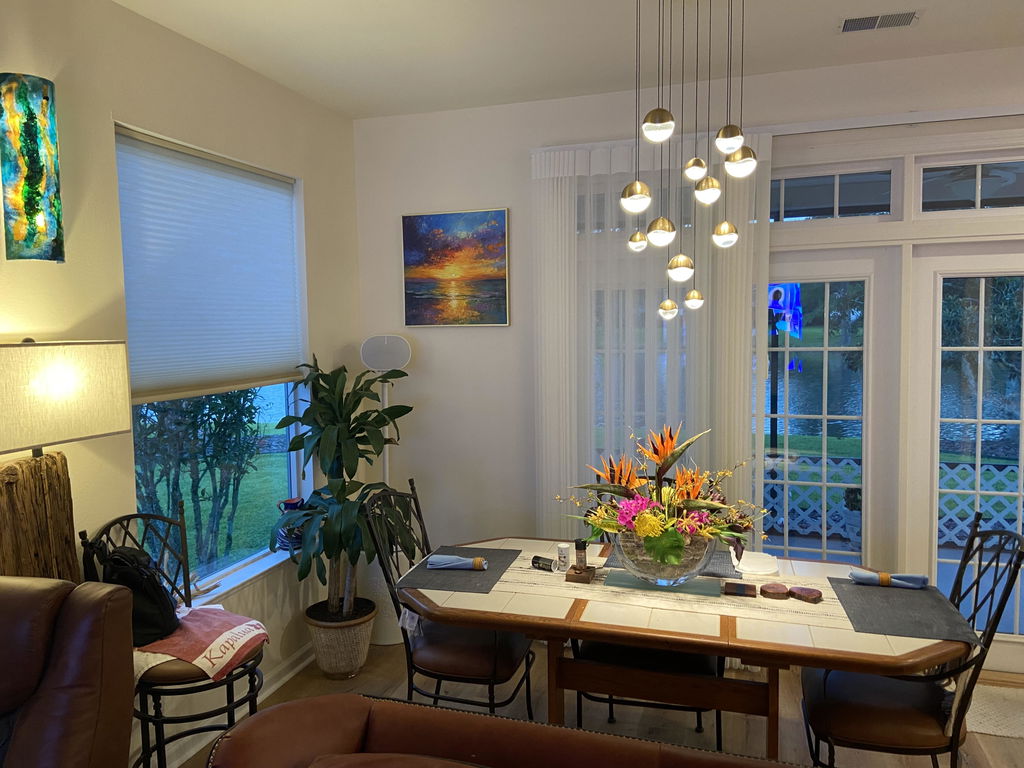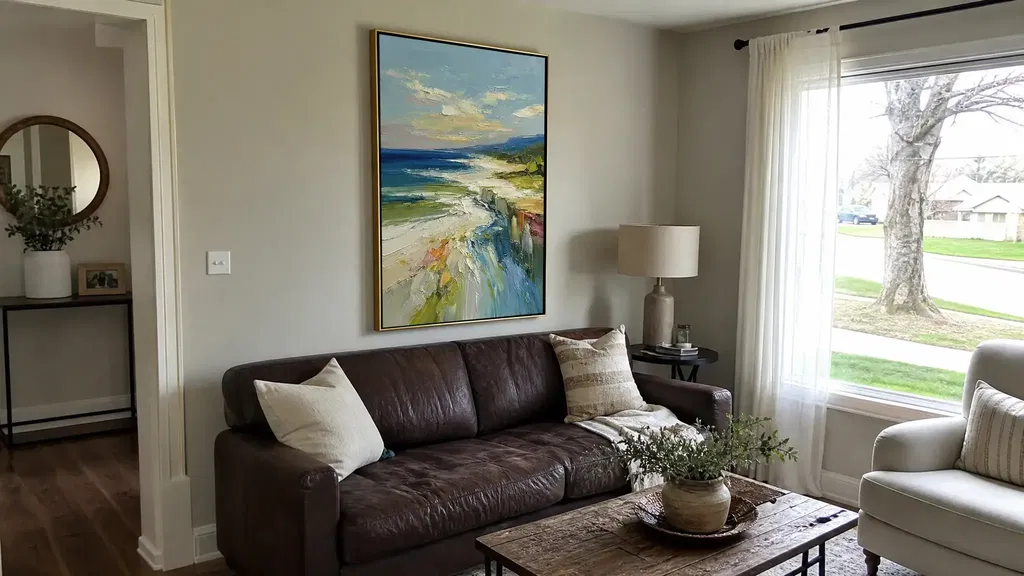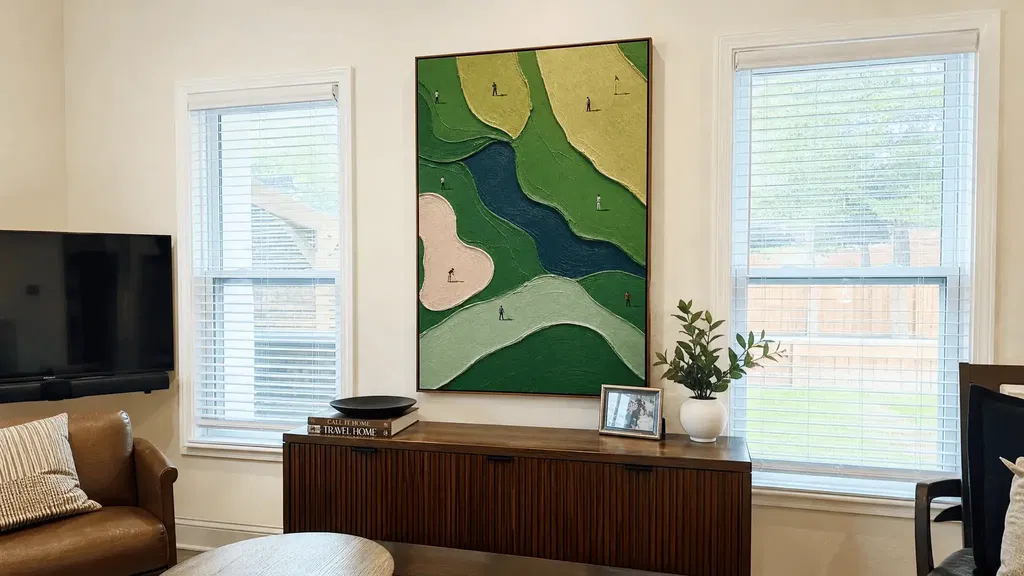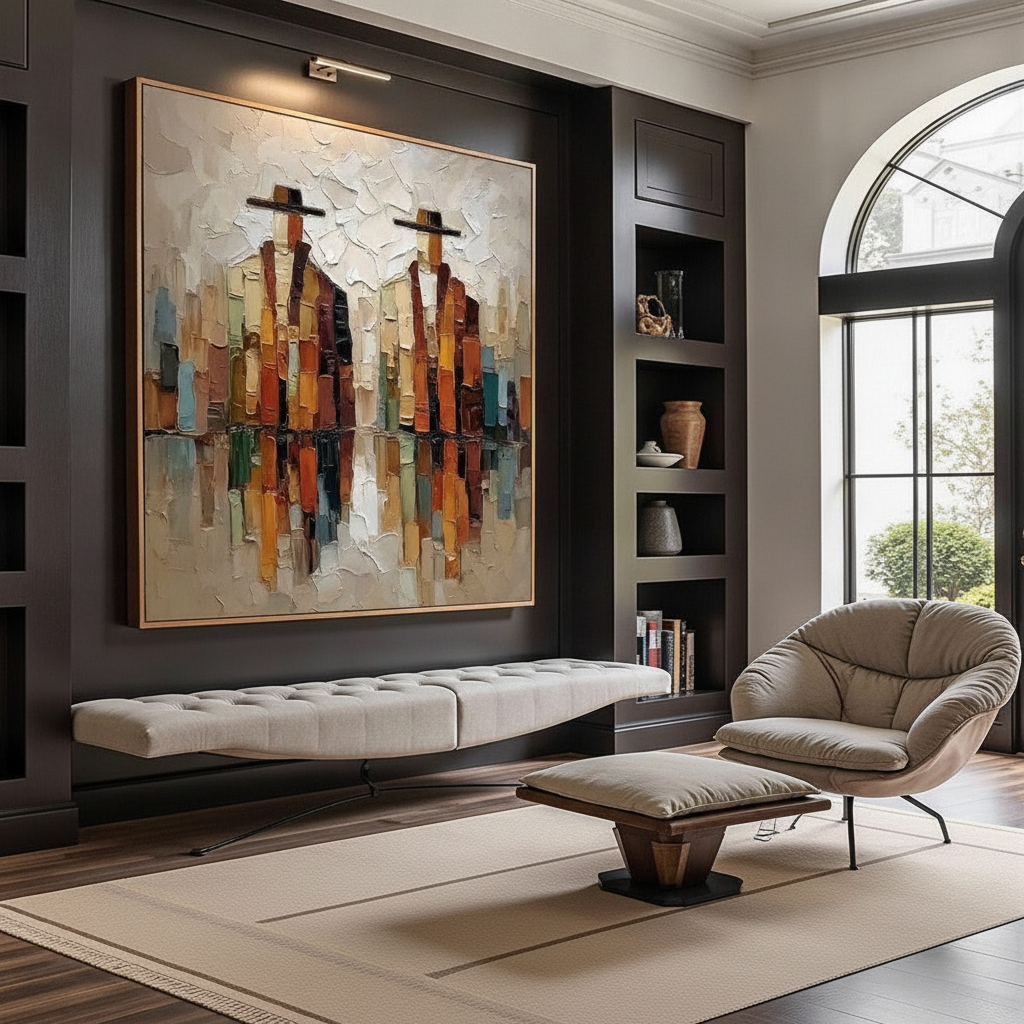
Integrating Smart Home Lighting with Hand-Painted Oils: The New Frontier of Residential Curation
The luxury art market is undergoing a fundamental structural shift. While high-end auction sales for purely financial art assets plummeted 44% in 2024, there is a burgeoning movement toward "performative authenticity"—art that offers real application value and emotional resonance within the home. According to the Marketplace report on the art market, buyers are retreating from overpriced vanity pieces and returning to custom, hand-painted works that define the soul of a living space.
For the modern homeowner and interior designer, the challenge is no longer just acquiring a piece; it is about validating that investment through technology. As hand-painted oils offer a level of texture and "essential identity" that digital prints cannot replicate—a fact supported by UChicago research into artwork and identity—the integration of smart home lighting becomes the bridge between traditional craftsmanship and the camera-ready home.
The Physics of Presence: Why CRI 95+ is Non-Negotiable
When we consult with designers on high-visibility residential zones, the first technical hurdle is always color fidelity. Traditional LED bulbs often "muddy" the complex layers of an oil painting. This occurs because most consumer-grade lighting lacks a full spectral output, particularly in the R9 (red) and R12 (blue) ranges.
For hand-painted oils, a Color Rendering Index (CRI) of 95 or higher is essential. CRI measures how accurately a light source reveals the true colors of an object compared to natural sunlight. In our studio observations, dropping below a CRI of 90 causes cadmium reds to appear brownish and ultramarine blues to lose their depth, effectively "flattening" the artist's work.
Logic Summary: Our lighting recommendations assume a baseline of high-pigment density typical in made-to-order oils. The CRI 95+ requirement is a heuristic derived from the need to activate the specific absorption (K) and scattering (S) coefficients of organic and inorganic pigments, as detailed in Getty Conservation's color science research.

The 30-Degree Rule: Managing Sheen and Texture
One of the most common mistakes in art curation is placing a light source directly above or too far in front of a canvas. This creates two problems: frame shadows and "veiling glare," which obscures the brushwork.
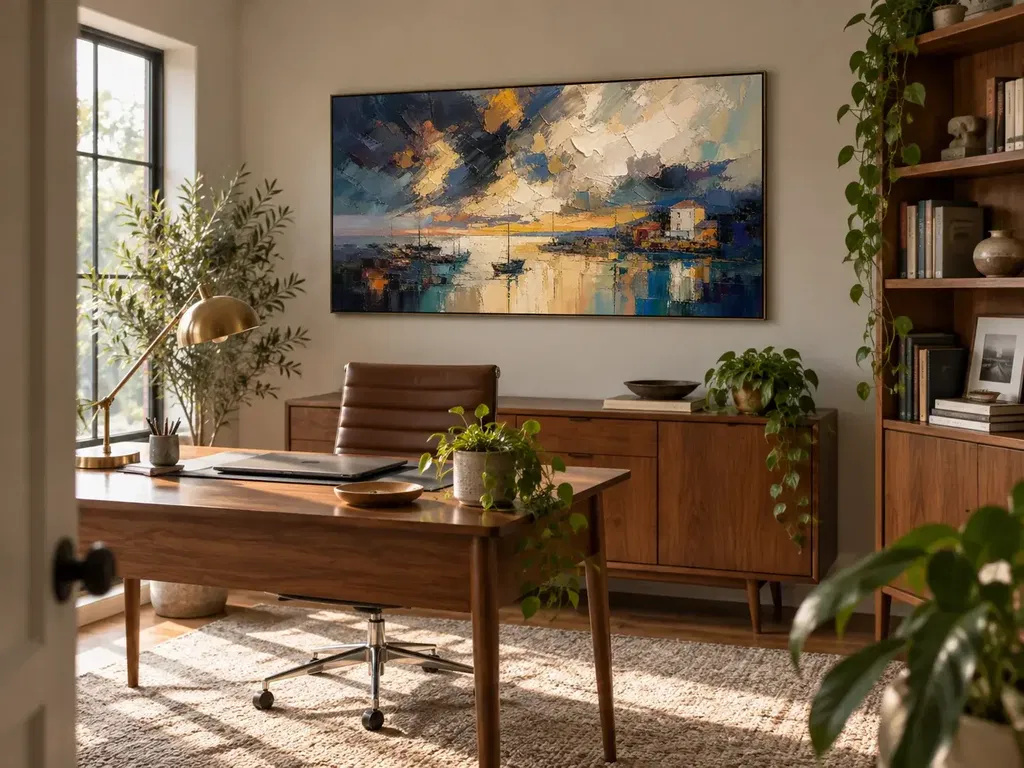
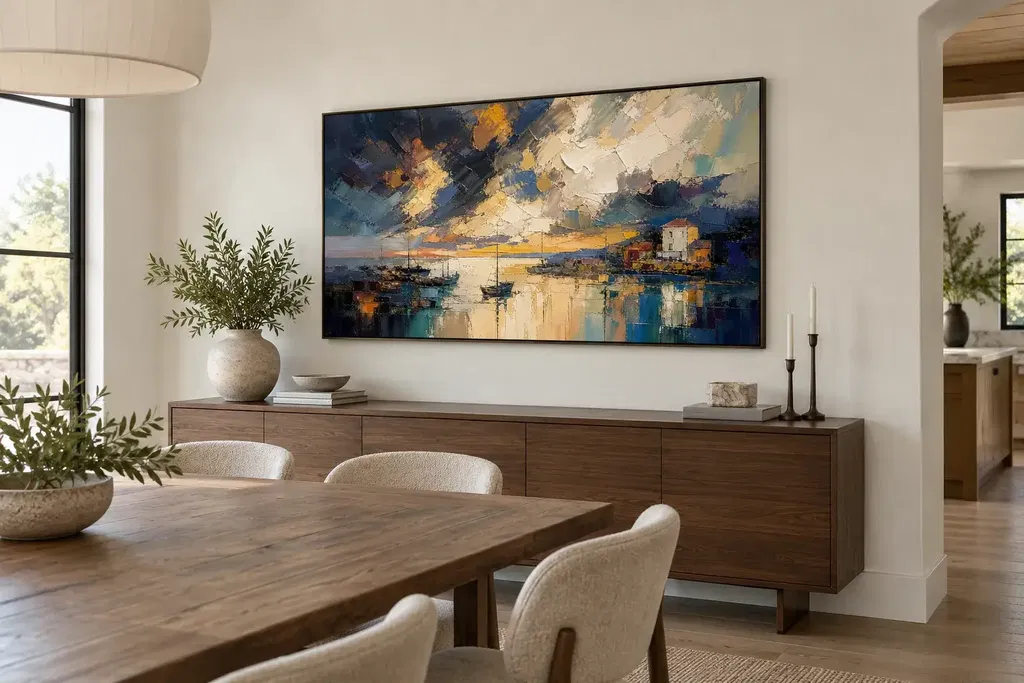
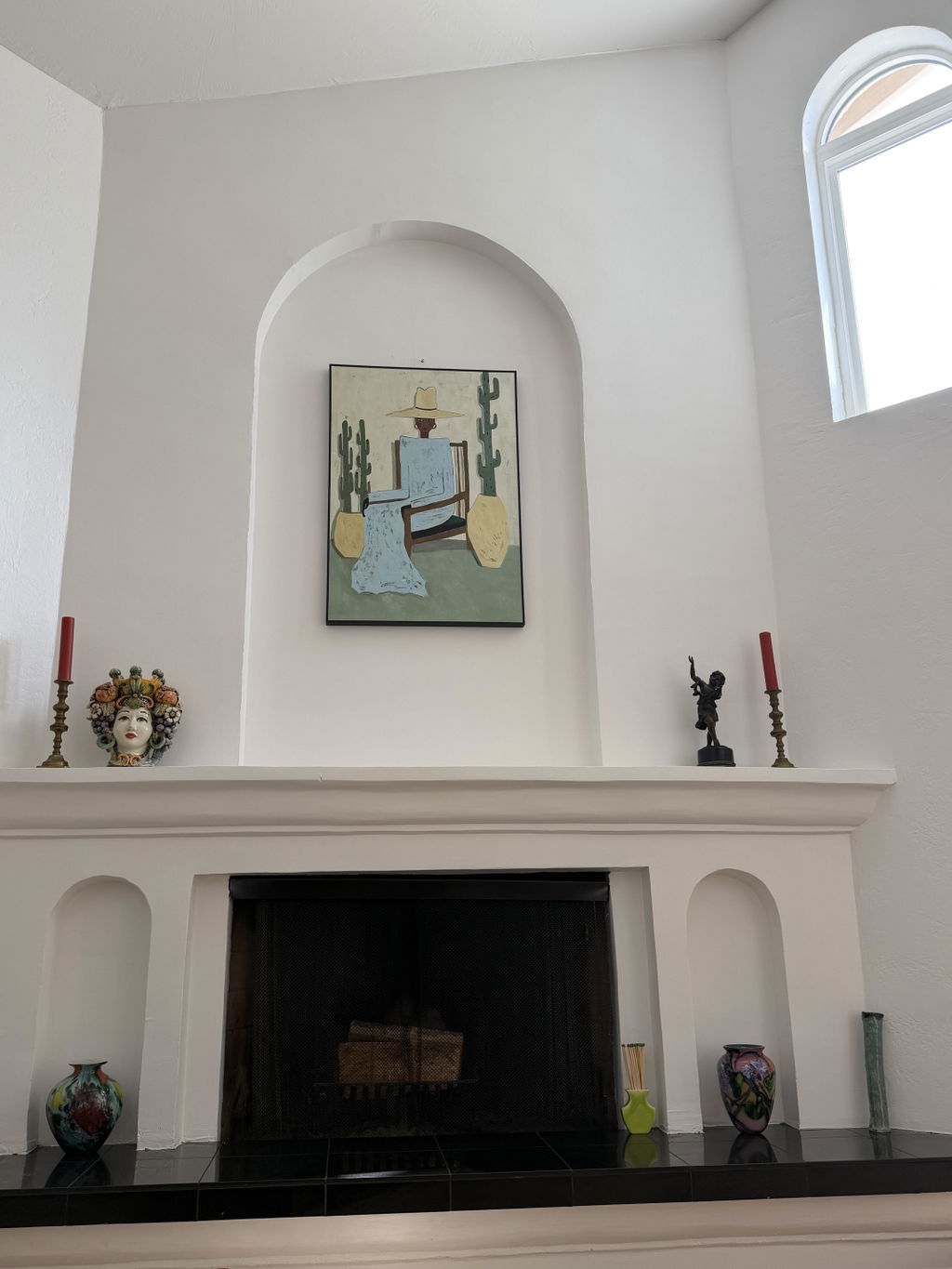
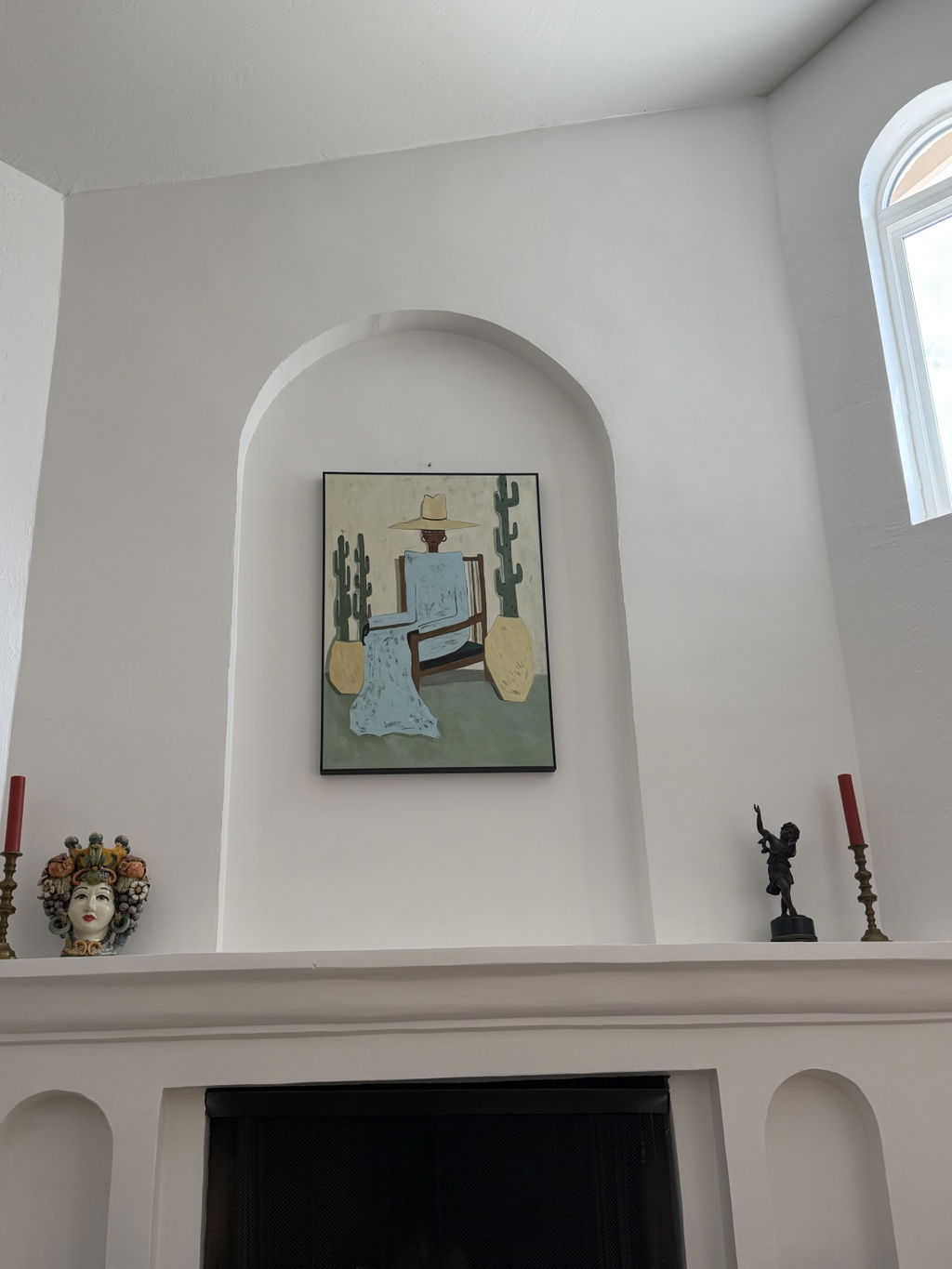
Professional lighting designers adhere to the "30-degree rule." By mounting fixtures so the light hits the center of the canvas at a 30-degree angle from the vertical, you minimize glare while emphasizing the "impasto" (thickly textured) areas of the painting. This angle allows the light to catch the edges of the paint, creating micro-shadows that give the work a three-dimensional "presence."
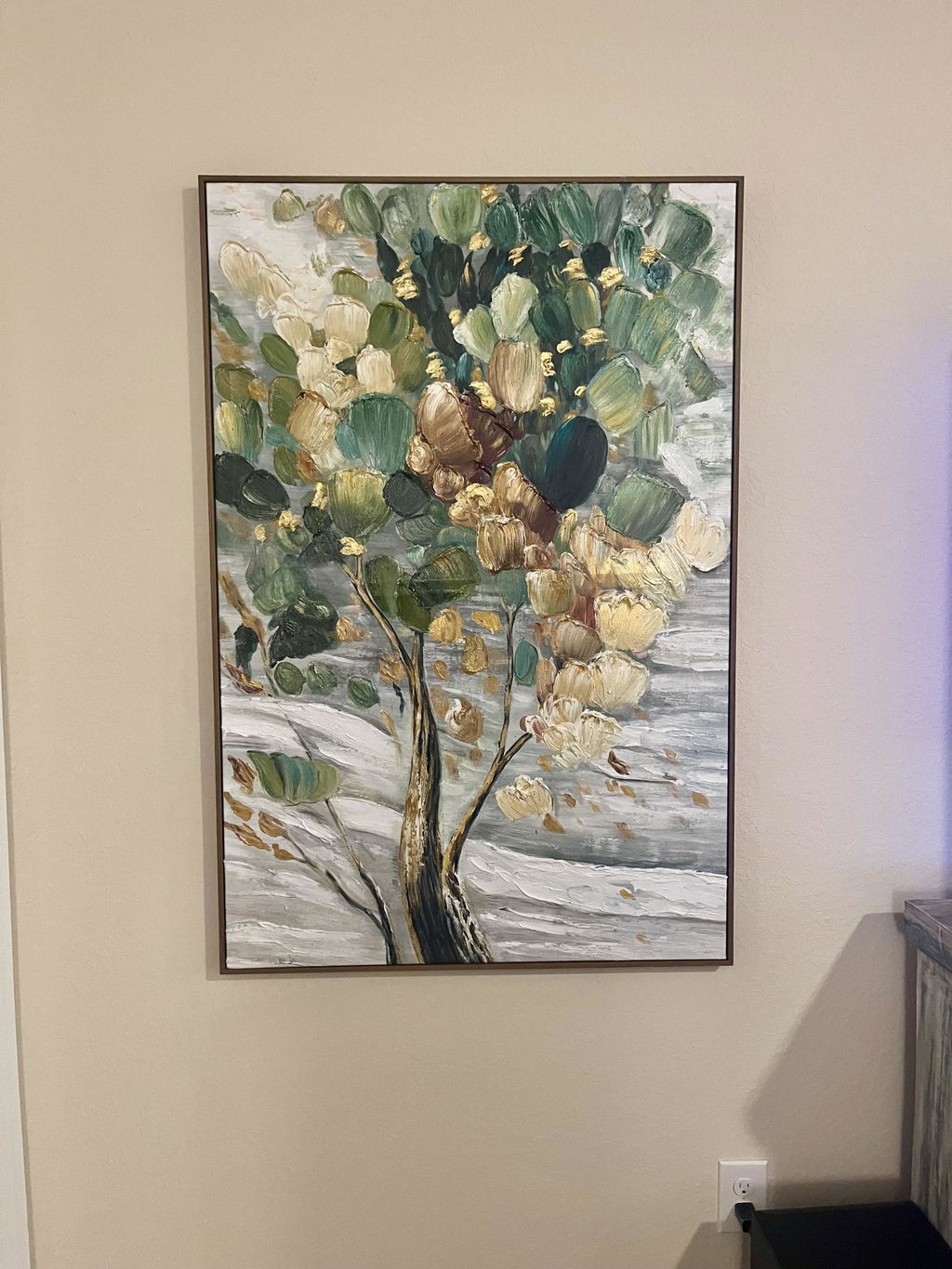
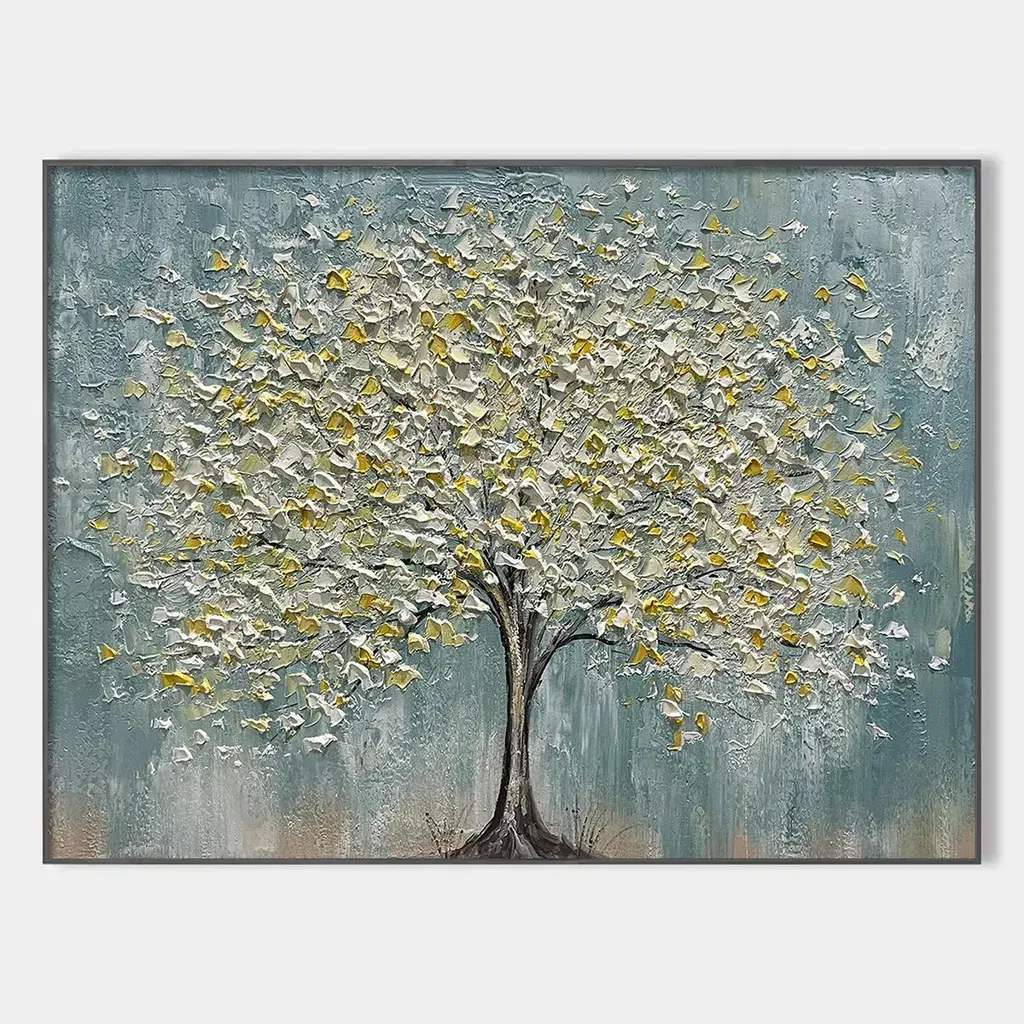
For heavily textured pieces, such as those featured in our guide on Optimal Lighting for Showcasing Oil Painting Texture, this angle is the difference between a flat image and a living masterpiece.
Circadian Programming: Matching Art to Ambient Life
A hand-painted oil painting is a dynamic object; its appearance changes as the sun moves across the sky. To maintain the painting's "presence" during social hours without making it look artificial, we recommend "circadian programming" within smart home systems like Lutron or Savant.
- Daytime (4000K): A cooler, crisp light that mimics daylight, perfect for highlighting the intricate details and "whimsy" often found in modern artisan craftsmanship—a trend Zillow data shows is rising by 15%.
- Evening (2700K): A warm, amber glow that creates an intimate atmosphere for social gatherings, softening the edges of the brushstrokes and making the room feel "camera-ready."
This transition is not merely aesthetic. Research published in PMC shows that passive art viewing activates the medial prefrontal cortex (mPFC) and the amygdala, optimizing emotional regulation. By syncing the lighting to our natural biological rhythms, we enhance the "healing" effect of the art.
Conservation Science: Protecting the Investment
While we want to showcase art, we must also protect it. Light is the primary enemy of organic binders and pigments. Smart dimmers are the most effective tool for "risk reduction" in an investment-heavy room.
We recommend a smart schedule that limits total exposure to roughly 50,000 lux-hours per year. This can be achieved by:
- Occupancy Sensing: Programming art lights to drop to 20% intensity when the room is unoccupied.
- UV Filtering: Ensuring all smart fixtures have dedicated UV filters. Contrary to popular belief, many smart bulbs emit 50-200 µW/lm of UV radiation, far exceeding the 10 µW/lm museum standard.
Modeling Note (Conservation Parameters):
Parameter Value Unit Rationale Target Exposure 50,000 Lux-hours/year Museum standard for sensitive oils Social Intensity 150 Lux Optimal viewing level Idle Intensity 30 Lux 20% dimming during off-hours Daily Duration 4 Hours Average high-intensity social use Annual Total 43,800 Lux-hours Calculated under these constraints Boundary Condition: This model assumes the painting is not in direct path of unshielded south-facing windows.

Material Integrity: The Chemistry of the Canvas
To truly integrate art with smart technology, one must understand the material being illuminated. Oil paintings are living chemical systems. ResearchGate data on the ageing of commercial paints reveals that oil yellow pigments can experience binder separation and melting at temperatures near 100°C. This makes the heat output of your lighting fixtures a critical variable. High-quality LED smart lights are preferred over halogen because they emit significantly less infrared (heat) radiation.
Furthermore, homeowners should be aware of Support Induced Discoloration (SID). As Golden Artist Colors technical bulletins explain, water-soluble impurities in cotton or linen substrates can be drawn into the paint film, causing yellowing. Proper environmental control, managed via smart home sensors that monitor humidity, is the best defense against this chemical degradation.
The Health and Value Proposition
Beyond aesthetics, the integration of art and light serves a functional purpose in health and property value. The World Health Organization (WHO) has confirmed through over 3,000 studies that art interventions effectively alter clinical indicators for mental illness and stress. In a residential context, this translates to a 73% reported improvement in mood for occupants living with nature-themed biophilic murals.
From a financial perspective, the data is equally compelling. A Royal Society CAR model analysis found that neighborhoods with higher "art" geo-tags saw greater relative house price gains. For the homeowner, a well-lit, hand-painted mural is not just decor; it is a "permanent physical billboard" for the property's value.
Navigating the Safety of Modern Pigments
As we move toward more sustainable homes, the "brand ethics" of the art we choose matters. 87% of consumers now value fair artist compensation and eco-friendly practices. We advocate for the use of non-toxic alternatives, such as walnut oil instead of turpentine, and hemp canvases which consume half the water of cotton.
However, "non-toxic" labels can be misleading. The EPA warns that the ASTM D-4236 logo only means warning labels comply with regulations, not that the pigment is inherently safe. Professional-grade oils often contain heavy metals like Cadmium, which the IARC classifies as a Group 1 carcinogen. Smart lighting helps here too—by providing high-intensity, high-CRI light, we can use safer, "hue" based alternatives that might otherwise look dull under poor lighting, ensuring a healthy indoor air quality (IAQ) without sacrificing visual impact.
Summary of Smart Integration Strategies
| Strategy | Technical Requirement | Benefit |
|---|---|---|
| Color Rendering | CRI 95+ (R9 > 80) | Prevents "muddying" of reds and blues |
| Texture Accent | 30-degree mounting angle | Highlights impasto depth; eliminates glare |
| Atmosphere | 2700K to 4000K transition | Matches art to natural circadian rhythms |
| Longevity | < 50,000 lux-hours/year | Protects organic pigments from fading |
| Safety | LED with UV filtering | Reduces heat and UV-induced degradation |
Curation for High-Visibility Zones
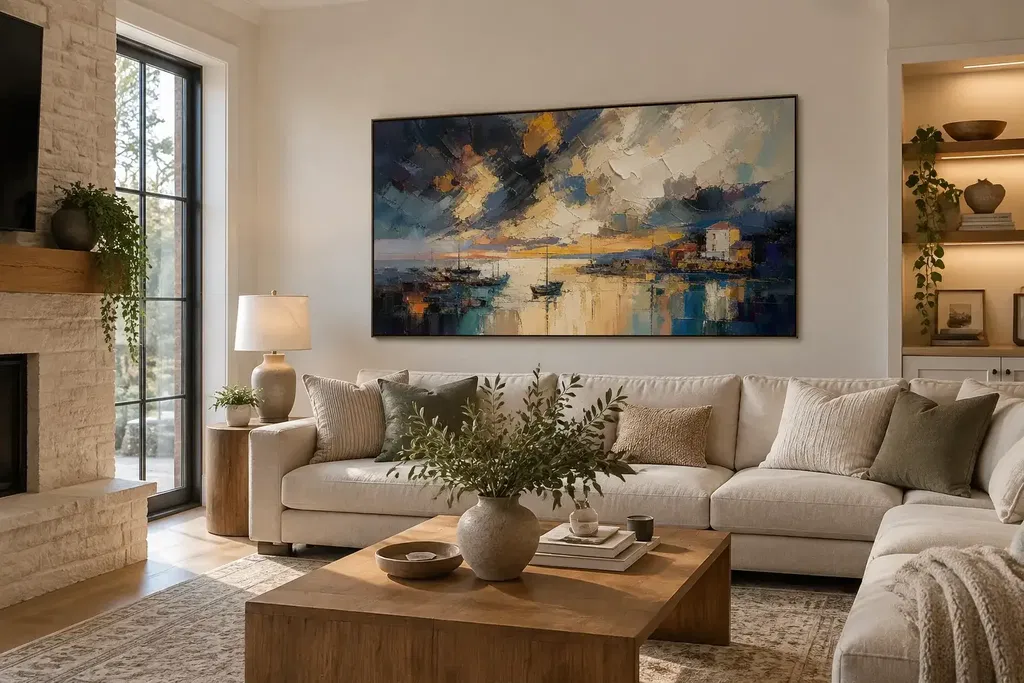
In primary social zones, where natural and artificial light varies throughout the day, the "presence" of an oil painting is its greatest asset. Unlike the flat surface of a digital print, which Columbia University found consumers value 62% lower, hand-painted oils interact with light. They have a "soul" derived from the artist's "essential identity."
When placing art in these zones, consider the "sheen management." High-gloss varnishes can be beautiful but difficult to light. In these cases, we often recommend a satin finish or a specific lighting setup that utilizes diffused smart panels to soften the highlights. For more on this, see our article on Balancing Heavily Textured Art with Minimalist Decor.
The Future of the Camera-Ready Room
The goal of integrating smart lighting with hand-painted oils is to create a space that feels both timeless and technologically advanced. By using data-driven lighting strategies, we protect the "non-renewable cultural heritage" of the home while ensuring it remains a vibrant, healing environment. Whether you are a designer aiming for LEED certification or a homeowner looking to secure the "tactile fruition" of your collection, the marriage of pigment and photon is the ultimate luxury.
Disclaimer: This article is for informational purposes only. Lighting installations involving high-voltage smart systems should be performed by a certified electrician. For the preservation of high-value art, consult a professional conservator. Pigment safety information is based on current environmental standards and may vary by manufacturer.