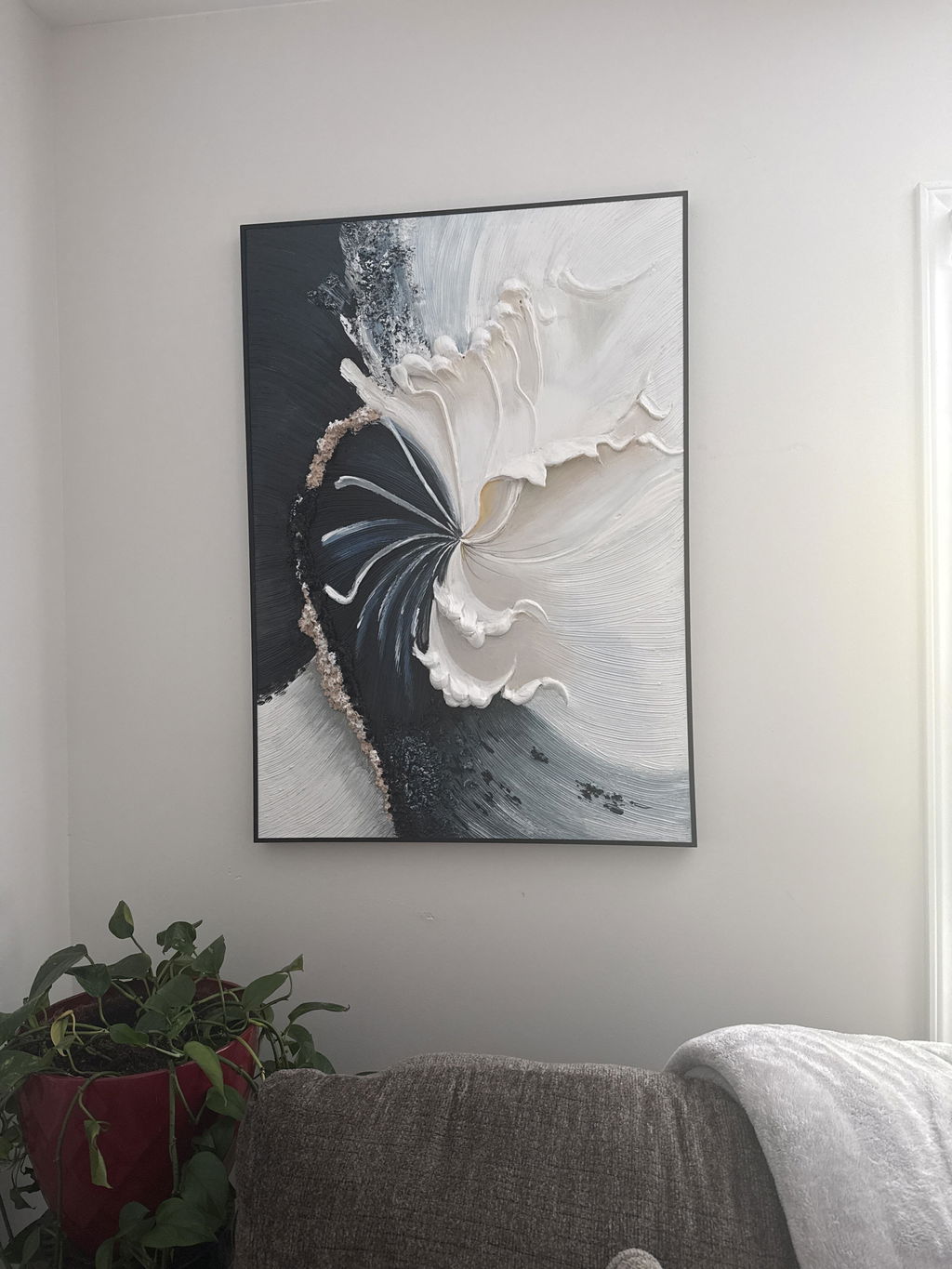
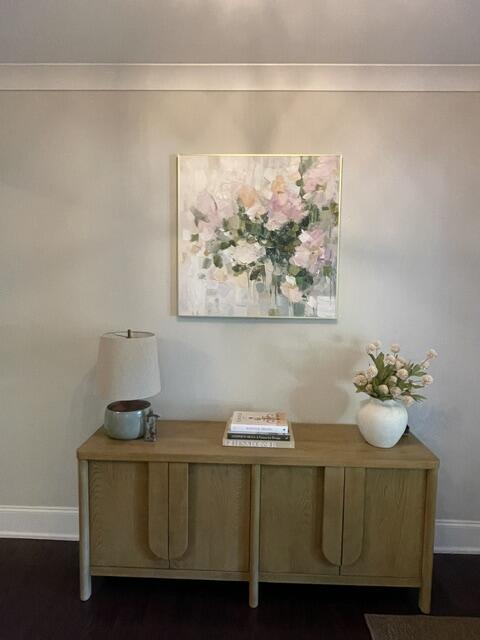
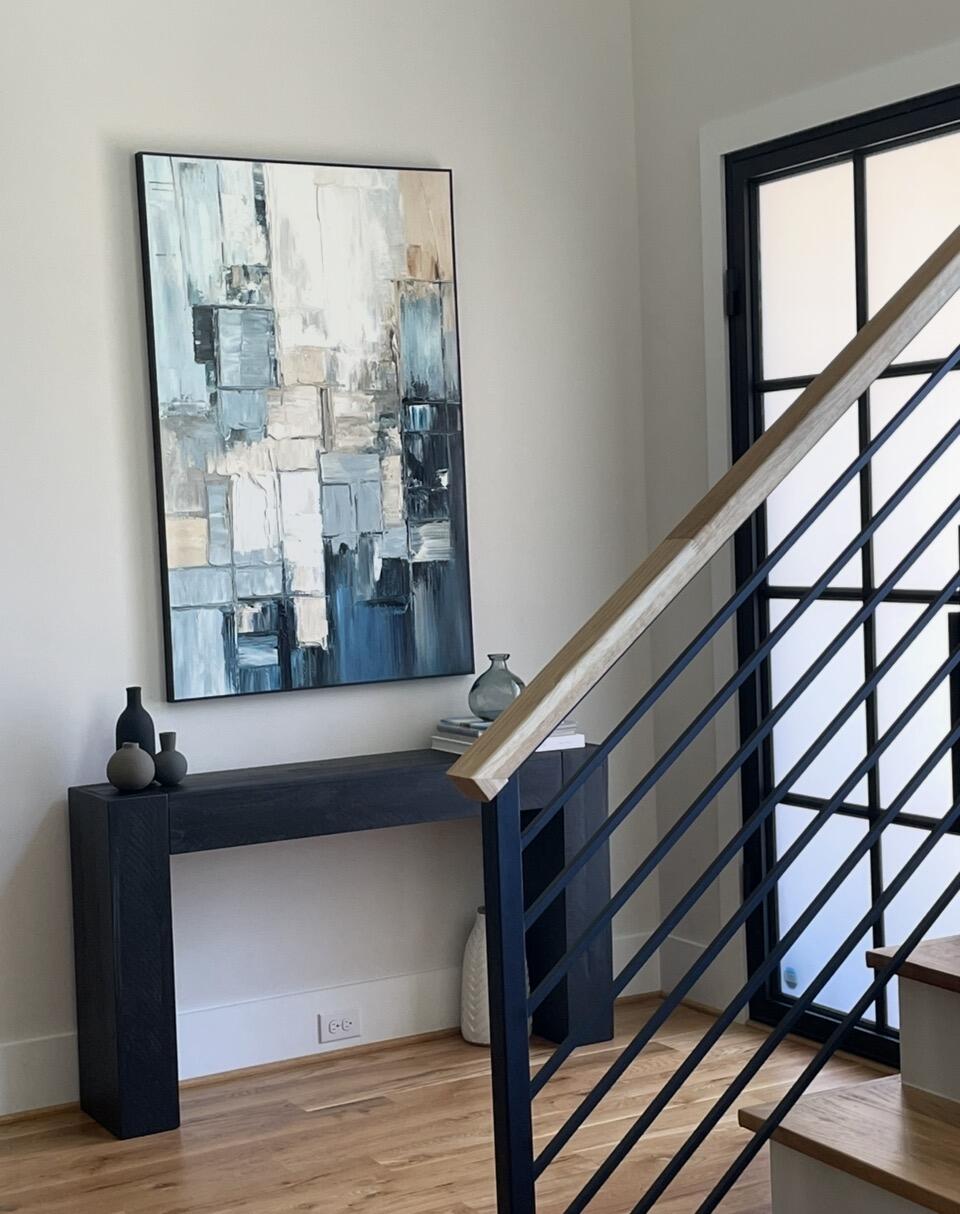
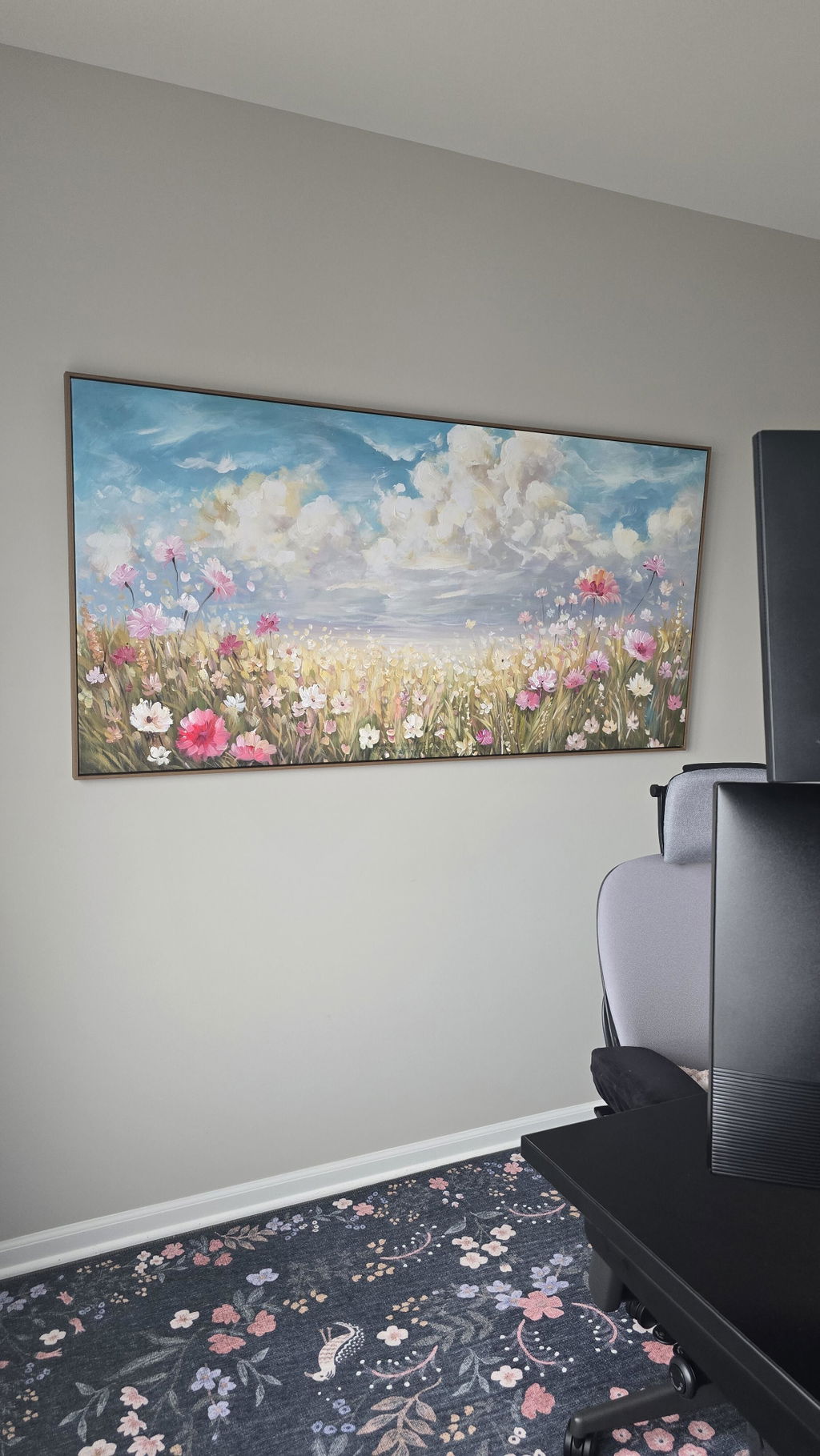
The Modern Renaissance of Hand-Painted Art
The global art market is undergoing a seismic shift in how value is perceived. While high-end auction sales for vanity pieces—those exceeding $10 million—plummeted by 44% year-over-year in 2024 according to Marketplace, the broader market remains robust. The Art Basel and UBS Art Market Report 2024 notes that global sales reached $65 billion in 2023, driven by a return to "real application value." Homeowners and designers are moving away from mass-produced prints and toward the "performative authenticity" of hand-painted murals and canvases.
This shift is rooted in a psychological truth: we value the human touch. Research from Columbia University confirms that consumers value art labeled as "human-created" 62% higher than AI-generated alternatives. Furthermore, University of Chicago studies suggest that digital replicas lack the "essential identity" and soul that only physical brushstrokes can provide.
However, this physical presence—the very thing that makes a MontCarta piece a "camera-ready" asset—comes with a maintenance burden. Unlike a flat, plastic-coated print, a hand-painted oil or acrylic canvas is a living chemical system. The most significant threat to its long-term value isn't sunlight or dust; it is the invisible chemistry of the human hand.
The Invisible Alchemy: Why Skin Oil is a Silent Destroyer
To the naked eye, a quick touch of a canvas seems harmless. In reality, a single fingerprint deposits a complex cocktail of chemicals that initiates a decades-long process of degradation. Human skin surface lipids are a heterogeneous mix of ceramides, free fatty acids, and cholesterol.
The Chemistry of the "Ghost Fingerprint"
Our skin produces sebum, which contains specific unsaturated fatty acids like Δ6-hexadecenoic acid (sapienic acid). According to research published in Springer, these lipids are highly chemically reactive. When transferred to a painting, they don't just sit on the surface; they initiate oxidation chains.
Over time, these fatty acids react with the metal ions present in traditional pigments (such as zinc or lead). This leads to a phenomenon known as "chemical acne"—microscopic, wax-like protrusions that emerge from the paint layer. This process, technically called saponification, can cause the paint to become brittle, transparent, or develop localized yellowing that only appears years after the initial contact.
Logic Summary: Our understanding of skin oil damage is based on the interaction between organic lipids and inorganic pigments. We model the risk as a cumulative chemical reaction where the "incubation period" for visible damage ranges from 2 to 10 years, depending on environmental humidity.

Sweat and Salts
While sebum provides the lipids, sweat provides the catalysts. Sweat is 99% water, but as it evaporates, it leaves behind concentrated chlorides, lactic acid, and urea. These salts are hygroscopic, meaning they pull moisture from the air directly into the paint film. For oil paintings, which rely on a delicate balance of linseed oil binders, this localized moisture spike can cause the binder to swell and eventually delaminate from the substrate.
Material Vulnerability: Oil vs. Acrylic
Not all hand-painted works react to touch in the same way. The degree of "decision safety" a collector has depends heavily on the medium used.
The Oil Paint Paradox
Oil paintings are the most vulnerable to skin oils because their binders—typically linseed or walnut oil—are chemically similar to human lipids. JustPaint notes that oil films undergo oxidative cross-linking over decades. When you touch an oil painting, your skin oils integrate into this cross-linking process, permanently altering the molecular structure of the work.
Furthermore, ResearchGate data shows that under thermal aging (100°C), oil pigments can experience catastrophic binder separation. While your home won't reach those temperatures, the presence of skin oils lowers the "glass transition temperature" of the paint, making it more susceptible to softening even in standard summer heat.
The Acrylic Barrier
Modern acrylics, while more resilient, are not invincible. Acrylic polymers form films through "coalescence," creating a more flexible, plastic-like surface. However, Tate Modern research reveals that acrylics often contain surfactants that migrate to the surface, creating a slightly "tacky" feel. This tackiness acts as a magnet for the dust and salts left behind by fingerprints, leading to a permanent "haze" that cannot be wiped away without specialized solvents.
| Feature | Oil on Canvas | Acrylic Polymer |
|---|---|---|
| Primary Binder | Linseed/Walnut Oil | Acrylic Emulsion |
| Drying Mechanism | Oxidative Cross-linking | Physical Coalescence |
| Touch Sensitivity | High (Chemical Integration) | Moderate (Surface Adhesion) |
| Long-term Risk | Saponification ("Acne") | Surfactant Migration (Hazing) |
| Texture Retention | Excellent (Rigid Peaks) | Good (Flexible Film) |
The "Glove Debate": Professional Handling Standards
In the past, white cotton gloves were the hallmark of a serious collector. Today, professional art conservators have largely abandoned them for high-texture "impasto" works.
The Problem with Cotton
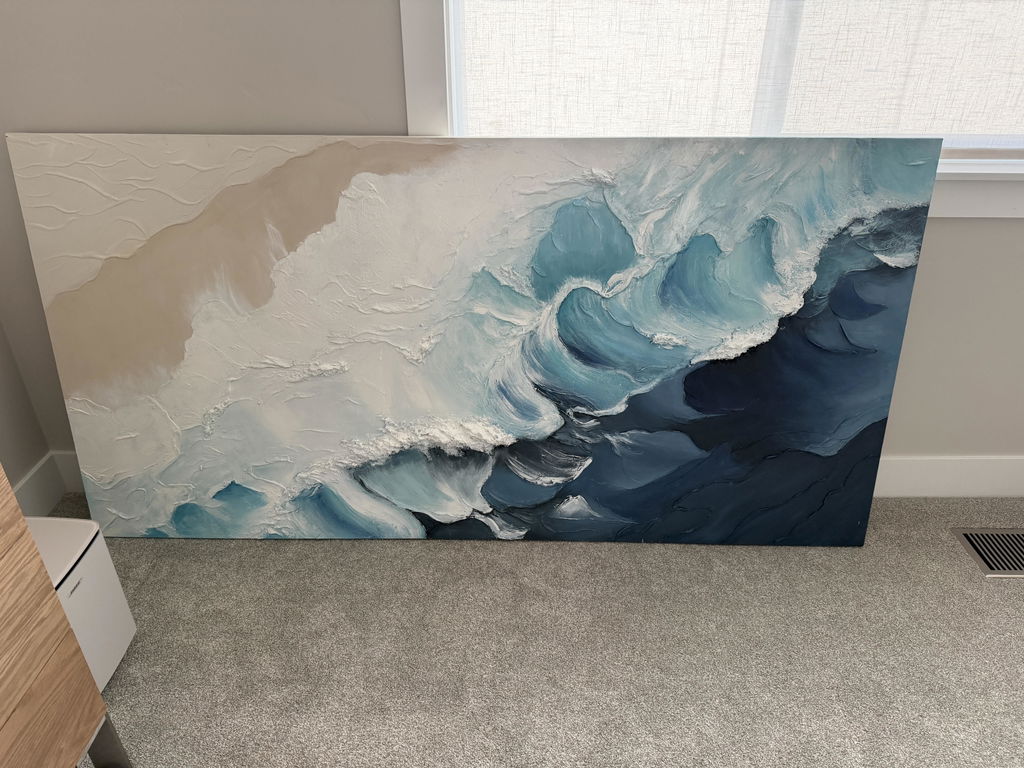
Cotton is fibrous. On a heavily textured MontCarta painting, the sharp "peaks" of the paint can act like tiny hooks. Expert observations from the conservation community indicate that cotton gloves often snag on these textures, leaving behind microscopic lint. This lint becomes embedded in the paint and is nearly impossible to remove without risking the integrity of the brushwork.
The Nitrile Standard
For handling original art, powder-free nitrile gloves are now the industry standard. They offer several advantages:
- Zero Fiber Transfer: No risk of snagging on impasto peaks.
- Chemical Barrier: They are 100% impermeable to skin oils and acids.
- Enhanced Grip: They provide better tactile feedback, reducing the risk of accidental drops during installation.
Rule of Thumb: If the painting has visible physical texture (impasto), use nitrile gloves or handle by the wooden stretcher bars only. If you must use bare hands, wash and dry them thoroughly immediately before touching, and only touch the outer edges of the frame or stretcher.
Moving and Installation: The "Rule of Thirds"
During home renovations or moves, art is at its highest risk. Most damage occurs not from dropping the piece, but from improper pressure.
Pressure Migration
A common mistake is gripping a canvas by the center. Even if you are wearing gloves, applying pressure to the back of the canvas is dangerous. Skin oils from a previous handler may be sitting on the raw fabric of the back. When you press the center, you force those oils into the fibers. According to conservation standards, these oils can migrate through the fabric and cause the primer (gesso) to delaminate from the canvas over time.
The Handling Protocol:
- The Edge Rule: Always lift from the sturdy wooden stretcher bars or the outer frame.
- The Support Rule: When moving large canvases, use two people. Each person should support one bottom corner and one side, ensuring no pressure is applied to the "void" of the canvas.
- The Face-to-Face Rule: If stacking art, always place "face-to-face" or "back-to-back" with a rigid acid-free barrier (like Glassine or archival foam board) between them. Never let the face of a painting touch the back of another, as the back of a canvas is often a reservoir for dust and acidic residues.

The Economic Impact: Preservation as Investment
Why go to such lengths? Because hand-painted art is a high-performing asset. Data from the Royal Society shows a direct correlation between "art-rich" environments and property value increases. In commercial sectors, NAIOP reports that developers use unique, hand-painted installations as "marketing trump cards" to drive leasing in competitive markets.
A well-preserved painting retains its "Texture Premium." As we discussed in our guide on Why Physical Brushstrokes Command Higher Resale, the secondary market values the "micro-topography" of the paint. A single visible thumbprint or a patch of "chemical acne" can reduce the appraisal value of a work by 20-30% because restoration—especially for modern acrylics—is incredibly labor-intensive.
Health, Safety, and the Environment
Beyond the preservation of the art, we must consider the preservation of the home environment. Mass-market prints often off-gas VOCs (Volatile Organic Compounds) from industrial inks. In contrast, premium hand-painted works are increasingly moving toward eco-friendly standards.
The VOC Promise
Research from Aalto University proves that coatings on properly cured wood and canvas emit significantly lower VOCs over time compared to synthetic prints. For "decision-safe" designers, this is critical for achieving LEED or WELL building certifications.
Pigment Safety
It is a common myth that "all paint is toxic." While the IARC classifies cadmium as a carcinogen, modern artist-grade paints often use "hue" alternatives or highly stable, calcined inorganic pigments that do not leach into the air. By choosing hand-painted works over cheap imports, you are often choosing materials that have passed strict ASTM D-4236 chronic health labeling requirements.
Modeling the Longevity: A Practical Comparison
To demonstrate the impact of proper handling, we can look at a hypothetical "Value Retention Model" for a $5,000 hand-painted original over 20 years.
Method & Assumptions: Modeling Note
This model assumes a standard residential environment (20°C, 50% RH) and compares "Active Handling" (no gloves, frequent moving) vs. "Archival Handling" (nitrile gloves, professional installation).
| Parameter | Value | Unit | Rationale |
|---|---|---|---|
| Initial Asset Value | 5,000 | USD | Baseline for premium hand-painted art |
| Annual Appreciation | 4 | % | Based on Artsy 2024 Market Trends |
| Degradation Rate (Active) | -2.5 | %/yr | Cumulative effect of skin oils and surface dirt |
| Degradation Rate (Archival) | -0.2 | %/yr | Natural aging of stable binders |
| Restoration Cost (Year 20) | 1,200 | USD | Professional cleaning and stabilization |
Scenario A (The Standard Collector): Without careful handling, the accumulation of "ghost fingerprints" and localized hazing leads to a visible loss of vibrancy by year 12. The asset value plateaus as the cost of restoration begins to approach the potential resale gain.
Scenario B (The Archival Collector): By following the "Rule of Thirds" and using nitrile gloves, the painting retains its "Texture Premium." By year 20, the work requires only a light surface dusting, and its market value has effectively doubled, outperforming generic decor by a wide margin, as noted in our analysis of Original Art vs. Generic Decor.
The Biophilic Bonus: Why Care is Worth the Effort
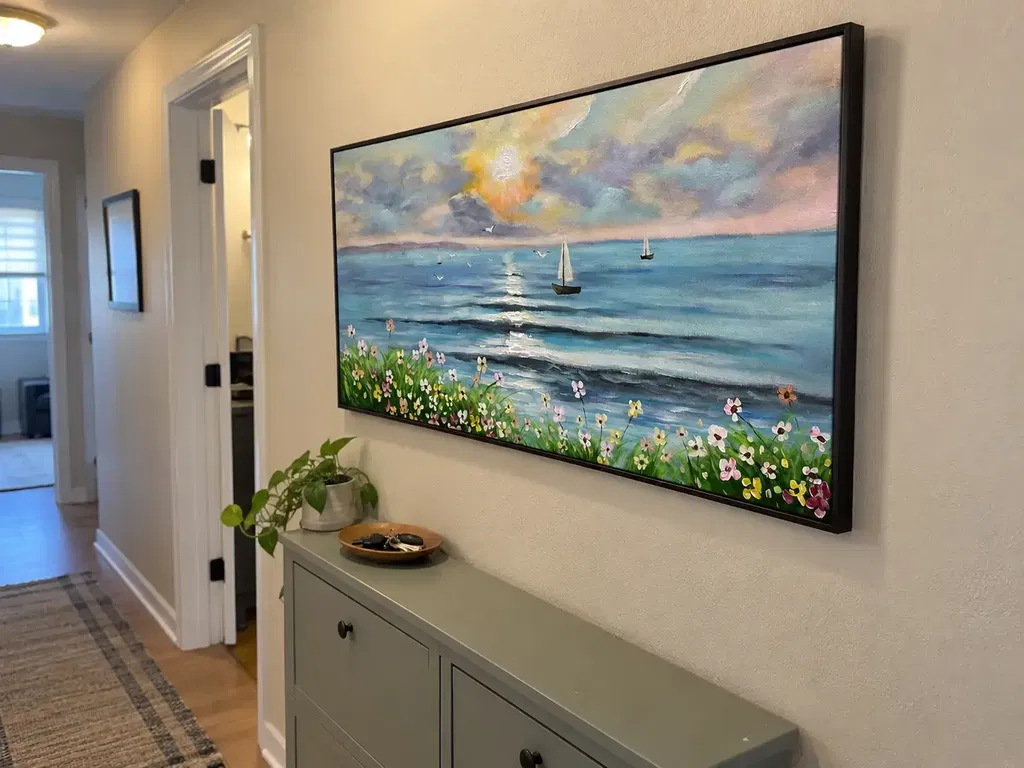
Finally, we must acknowledge the "human ROI." Art isn't just a financial asset; it's a wellness tool. A University of Pennsylvania review found that 73% of people reported significant mood improvements when exposed to high-quality environmental art. Nature-themed murals, in particular, produce the same stress-reduction effects as being outdoors, according to the University of Central Arkansas.
When you protect a hand-painted piece from skin oils, you aren't just protecting your money; you are protecting the clarity of the visual experience. A fingerprint on a serene, biophilic landscape acts as a "visual snag," breaking the immersion and reducing the neurological benefits of the work.
Summary Checklist for Owners
To ensure your hand-painted art remains a "camera-ready" centerpiece for decades, adopt these professional habits:
- Wear Nitrile: Keep a box of powder-free nitrile gloves near your collection for any adjustments or cleaning.
- Edge Handling Only: If gloves aren't available, touch only the frame or the very edge of the stretcher bars.
- The Rule of Thirds: Never apply pressure to the center of the canvas. Support from the corners and sides.
- Climate Consistency: Skin oils react faster in high humidity. Maintain a stable environment (45-55% RH) to slow down any accidental contamination.
- Professional Cleaning: If you spot a fingerprint, do not use household cleaners. Consult a professional or refer to our guide on Maximizing Resale Appeal Through Cleaning.
By bridging the gap between fine art care and practical home maintenance, you transform a beautiful object into a lasting legacy. Hand-painted art demands a higher standard of handling precisely because it offers a higher standard of beauty and value. Treat it with the respect its "performative authenticity" deserves.
YMYL Disclaimer: This article provides general information on the care and handling of artwork based on current conservation trends and materials science. It is not a substitute for professional conservation advice. For high-value or antique works, always consult a certified member of the American Institute for Conservation (AIC) or your local equivalent before attempting cleaning or restoration.
Sources
- Marketplace: The expensive art market continues to struggle
- Columbia University: Human-Made vs. AI Art
- Springer: Fatty Acid Structure and Degradation in Fingerprint Residues
- Tate Modern: Conservation Concerns for Acrylic Emulsion Paints
- WHO: Scoping Review on Arts and Health
- Royal Society: Quantifying the link between art and property prices