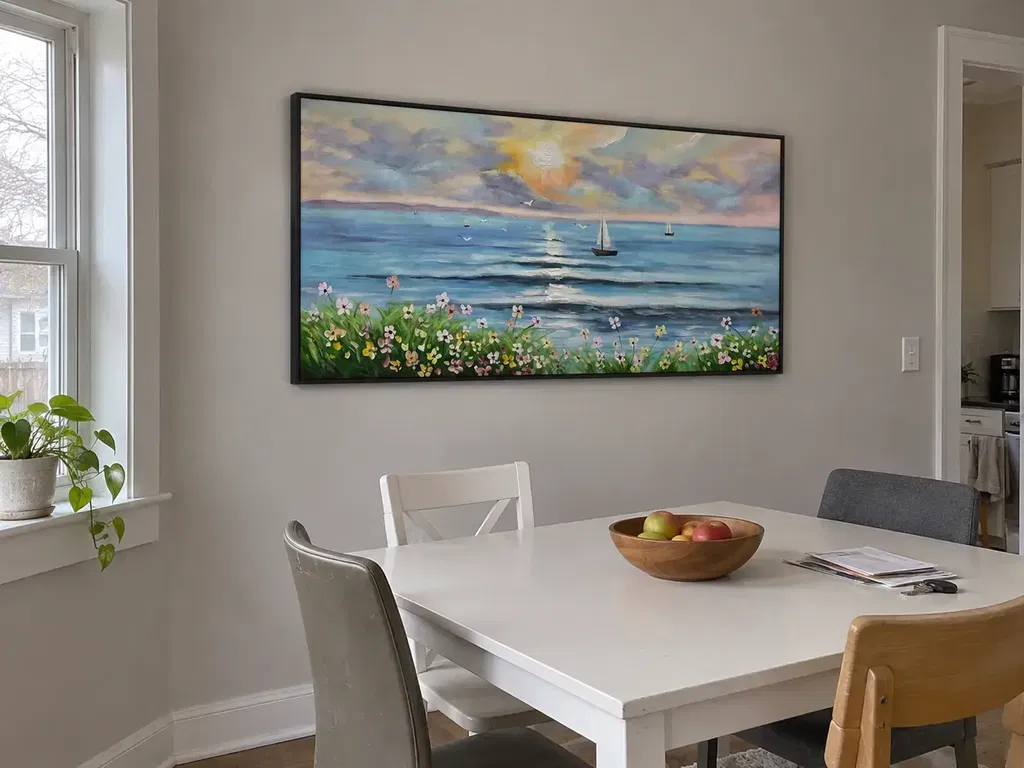
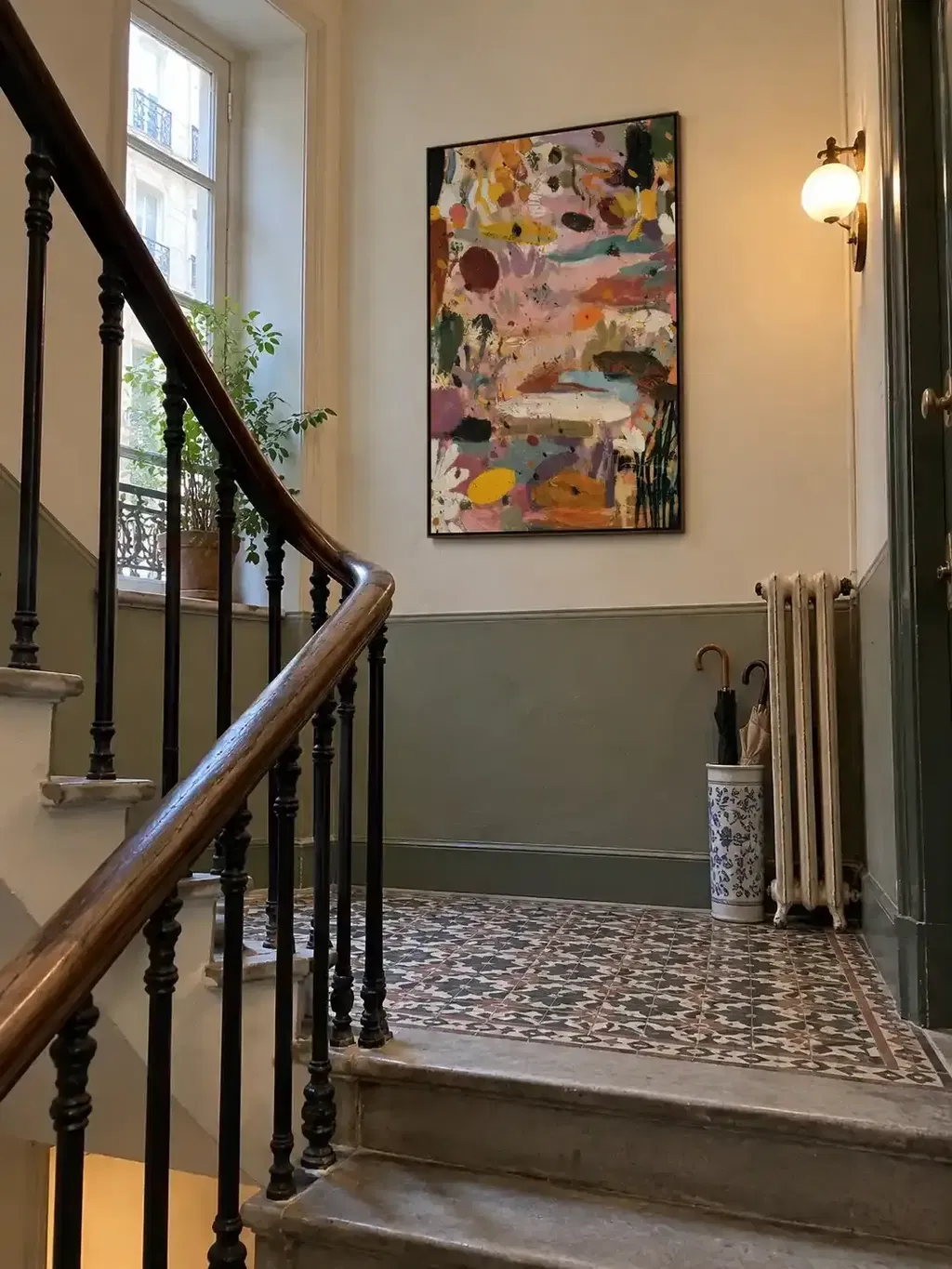
The Shift from Speculation to Tangible Value
The global art market is undergoing a structural transformation. For decades, the narrative was dominated by high-stakes auctions and speculative financial assets. However, recent data indicates a significant cooling at the top. According to Marketplace, sales of high-end auction art (pieces over $10 million) plummeted by 44% year-over-year in 2024. This retreat from purely financial "vanity" assets suggests that buyers are returning to what we call "real application value"—art that serves a functional, emotional, and aesthetic purpose within a physical space.
For the modern homeowner and interior designer, this shift highlights a critical distinction: the "Texture Premium." In a world increasingly saturated by digital replicas and AI-generated prints, physical brushstrokes and impasto depth have become the ultimate indicators of authenticity and value retention. This isn't just about "liking" the look of a painting; it is about the long-term price floor of a physical asset.
Logic Summary: The Value-Retention Model Our analysis of the secondary art market assumes that "Decision Safety" for high-end buyers is driven by three factors:
- Verification Ease: Can the medium be proven as human-made without lab equipment?
- Physical Durability: Will the colors shift or the substrate degrade within 10 years?
- Tactile Scarcity: Does the piece offer a sensory experience that cannot be reproduced by a giclée printer?
The "Side-Angle Premium": Why 45 Degrees Matters
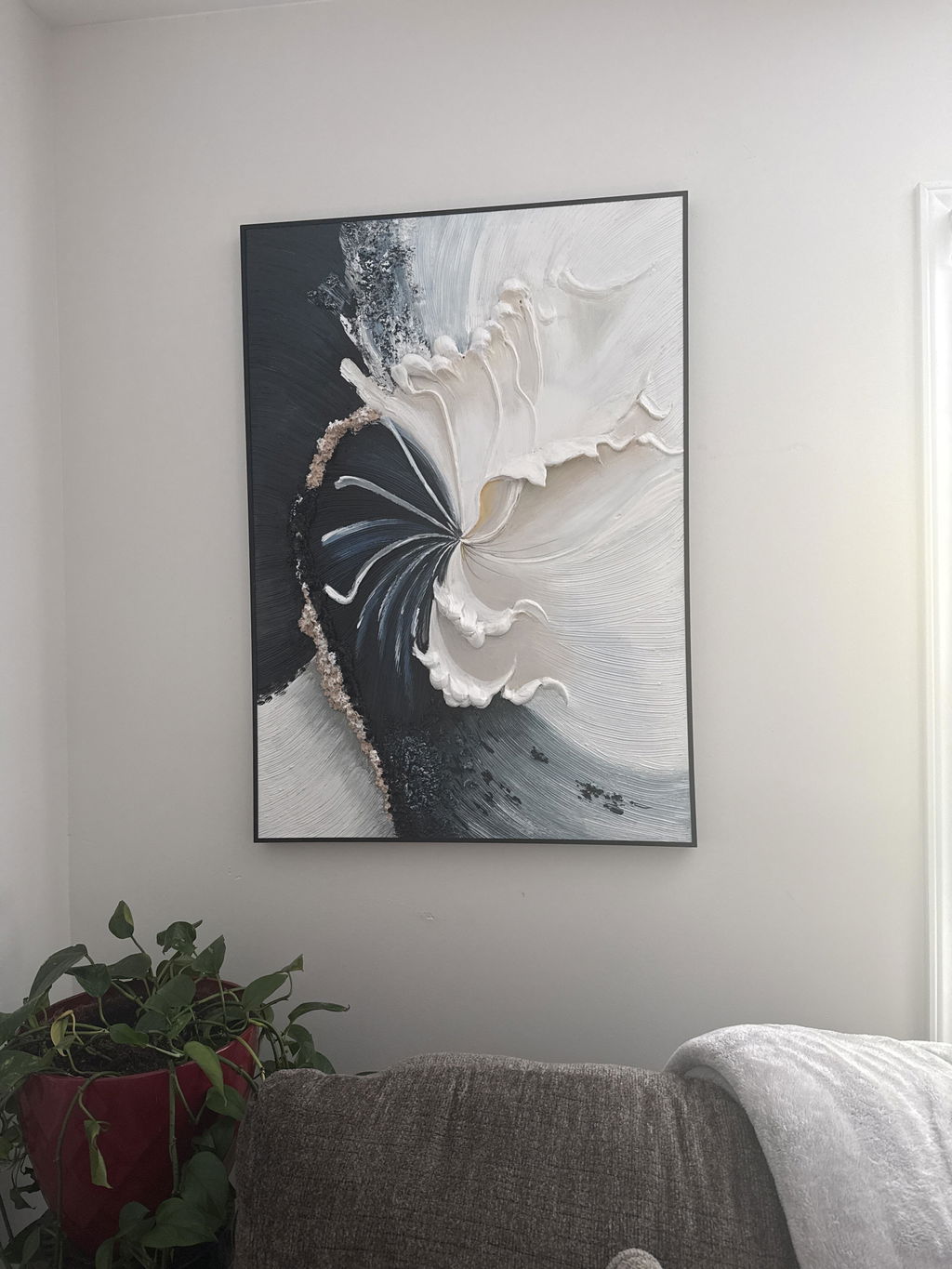
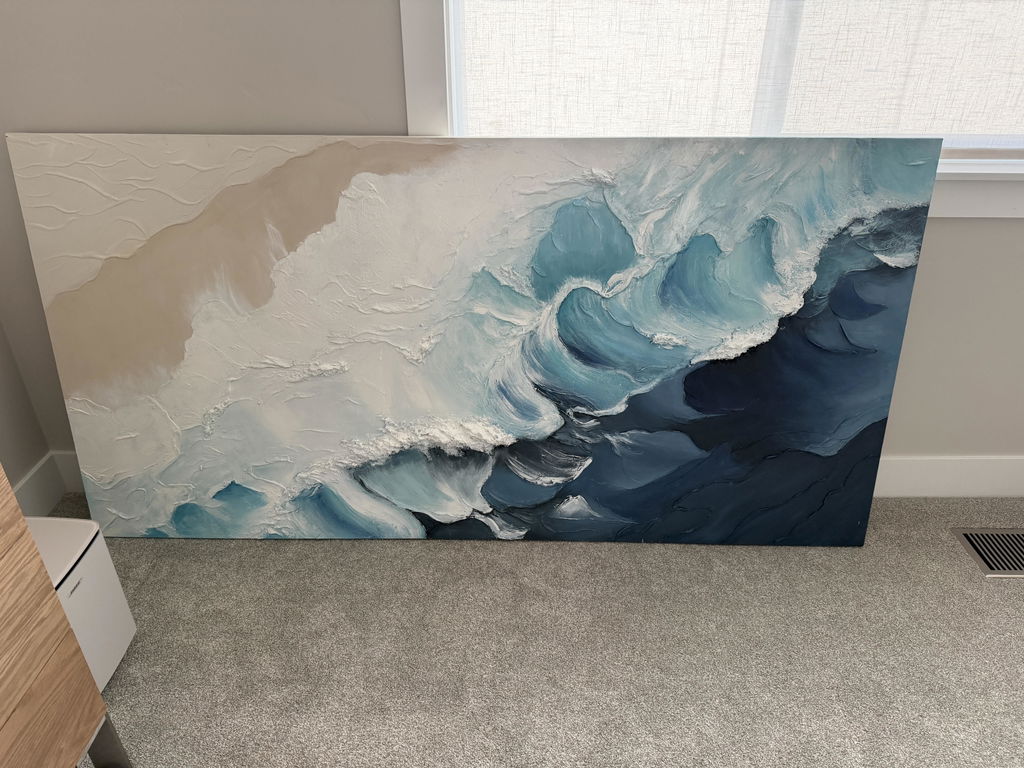
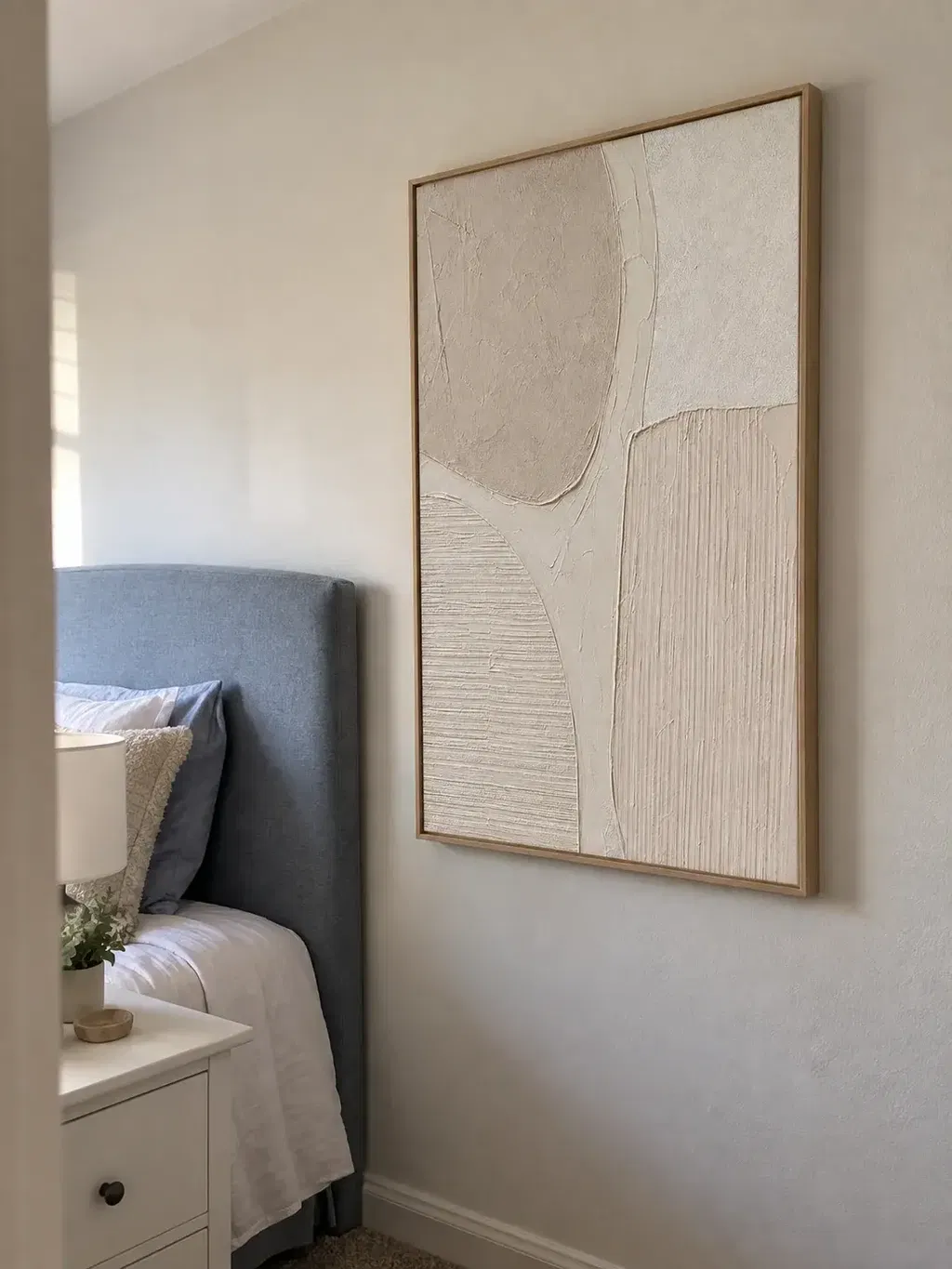
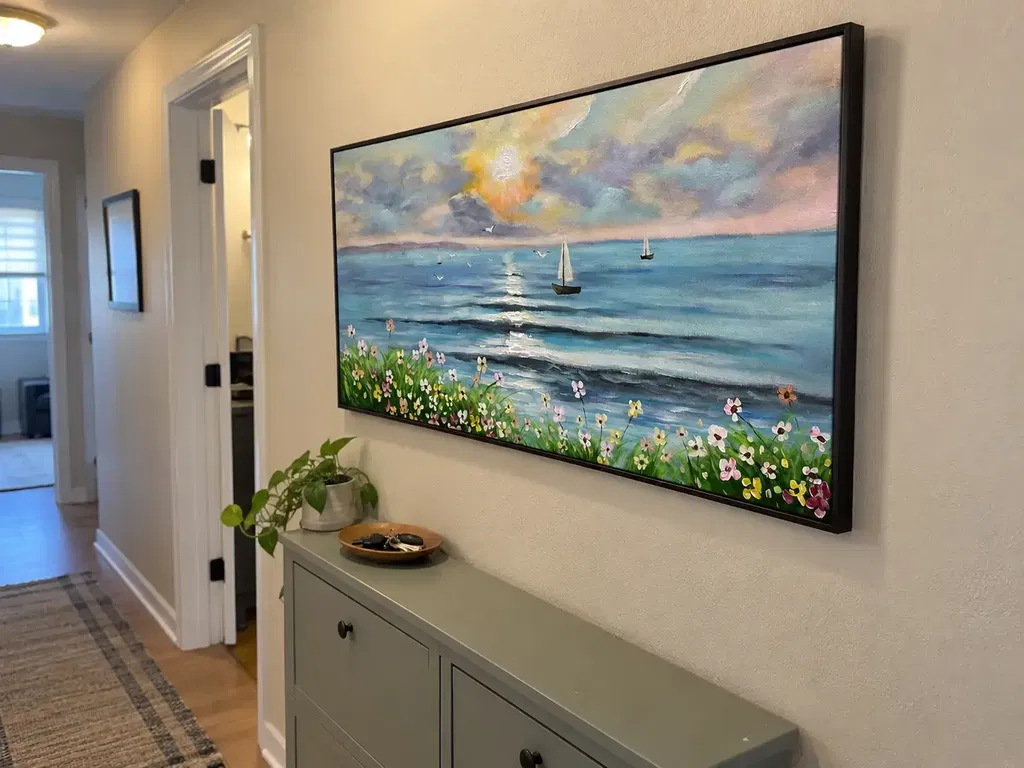
In the world of online secondary markets—platforms like 1stDibs or Chairish—the most requested photograph isn't the front-facing shot. It is the 45-degree "side-angle" view. Practitioners in high-end home staging and art resale observe a consistent "Side-Angle Premium." Buyers want to see the physical "relief" of the paint.
Pieces with visible, sculptural paint layering typically command a 40–60% higher price floor than flat giclées or "embellished" prints. This physical relief is perceived as irrefutable evidence of non-replicable labor. While a printer can replicate a color perfectly, it cannot replicate the way a palette knife drags a heavy body of oil paint across a canvas, creating peaks and valleys that catch the light.

The Human Moat in the Age of AI
The economic importance of this "human touch" is backed by empirical research. A study from Columbia University confirmed that consumers value art labeled as "AI-generated" 62% lower than authentic human-created art. Furthermore, research from the University of Chicago suggests that digital replicas lack an "essential identity" in the eyes of consumers. Physical texture acts as a biological "watermark" of the artist’s presence, securing a value premium that digital media cannot bridge.
The Technical Reality: Why Prints Suffer a "Depreciation Cliff"
One of the most common mistakes in art acquisition is treating a high-quality print as a long-term asset. In the secondary market, mass-market decor often hits a "depreciation cliff" within 7 to 10 years. This is primarily due to chemical instability.
The Cyan-Shift and Yellowing
Digital prints, even those using high-end archival inks, are susceptible to what conservators call the "cyan-shift." Over time, exposure to UV light causes certain pigments in the ink-jet process to fade faster than others, leading to a distorted, sickly yellow or blue tint. In contrast, physical oil-based pigments are engineered for lightfastness.
According to the ASTM D4303 Standard, which quantifies the lightfastness of artist paints, high-quality oils and acrylics are tested under accelerated aging conditions (equivalent to decades of indoor light) to ensure they maintain saturation.
| Asset Type | 10-Year Value Outlook | Primary Degradation Risk | Verification Method |
|---|---|---|---|
| Hand-Painted Oil | Appreciating/Stable | Substrate SID (Yellowing) | Physical Relief / Impasto |
| High-End Giclée | -50% to -80% | UV Cyan-Shift / Fading | Micro-dot pattern (Magnified) |
| AI-Generated Print | Near Zero | Market Oversaturation | Metadata / Lack of Texture |
| Textured Acrylic | Stable | Dust Adhesion / Softness | Tactile "Tooth" |
Methodology Note: This table represents a comparative asset model based on secondary market trends observed on luxury resale platforms (not a controlled longitudinal study).
The Chemistry of the "Support Induced Discoloration" (SID)
Even with hand-painted works, expertise matters. Advanced technical bulletins from Golden Artist Colors reveal a phenomenon called Support Induced Discoloration (SID). When transparent mediums are applied too thickly to an improperly primed canvas, water-soluble impurities from the cotton or linen are drawn into the paint film, causing a brown or yellow tint. A "Texture Premium" is only maintained if the artist understands the molecular interaction between the pigment and the substrate.
Functional Benefits: Shadow Play and Environmental Interaction
Beyond resale value, the physical texture of a painting provides a functional benefit that flat media cannot replicate: Shadow Play.
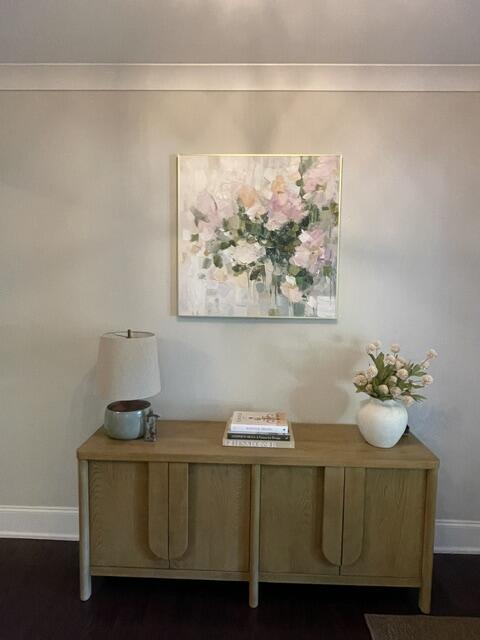
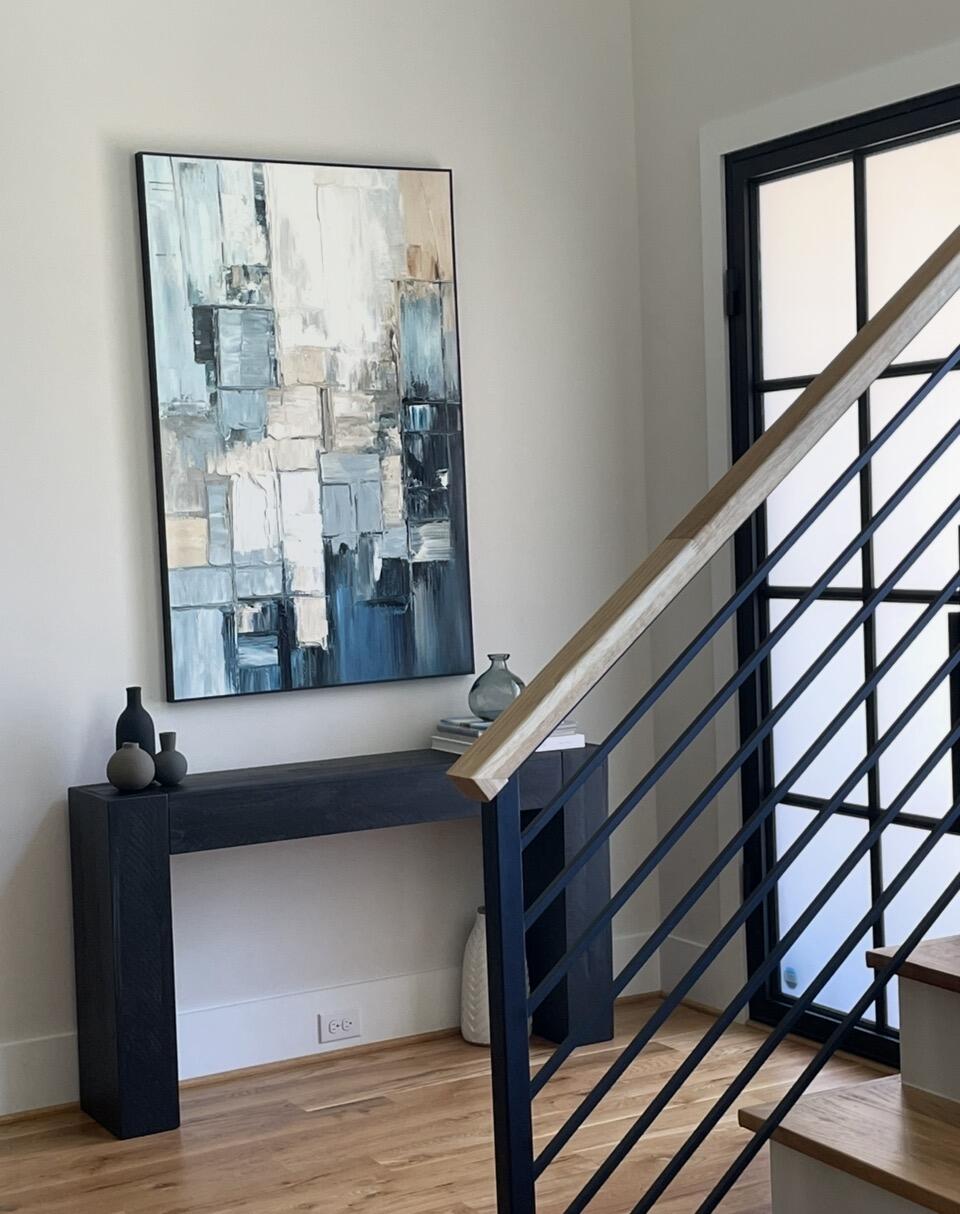
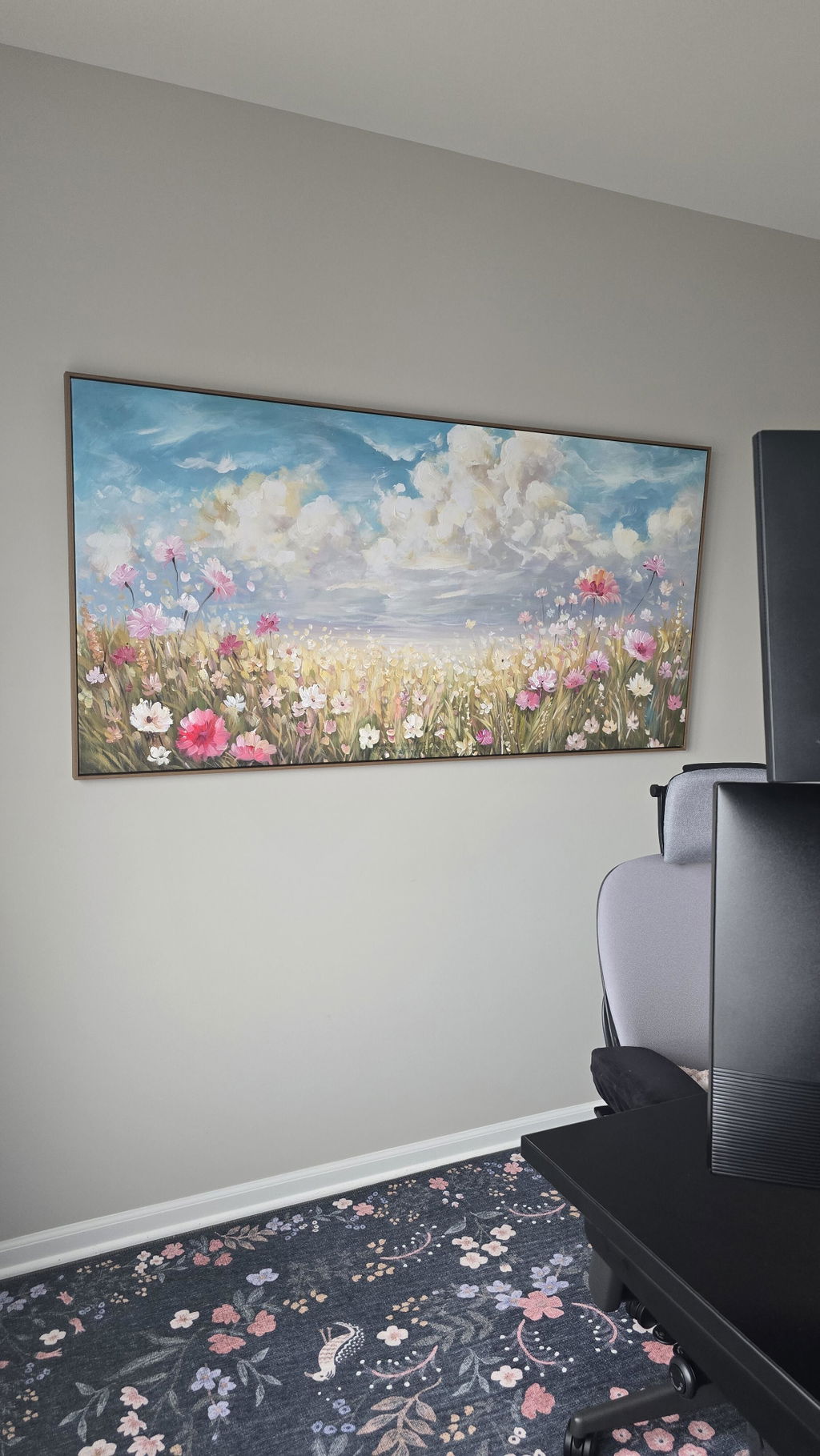
In rooms with high natural light, a heavily textured impasto piece becomes a dynamic object. As the sun moves across the sky, the raised ridges of the paint cast changing shadows across the canvas, altering the depth and mood of the piece throughout the day. Expert stagers use this effect to anchor large minimalist spaces, providing a "visual weight" that prevents the room from feeling sterile.

The Neuroaesthetics of Texture
Why does this feel better to us? It’s rooted in our biology. A systematic review of neurological mechanisms published in PMC shows that passive art viewing consistently activates the medial prefrontal cortex (mPFC) and the amygdala—the areas of the brain responsible for emotional regulation.
Furthermore, research from the University of Pennsylvania found that 73% of patients in clinical environments reported significant mood improvements when exposed to art with "biophilic" or natural textures. The tactile nature of hand-painted art isn't just "pretty"; it is a form of environmental health infrastructure.
Real Estate ROI: The "Art Geo-Tag" Effect
For commercial developers and homeowners looking to sell, the investment in hand-painted murals and large-scale textured art has a direct correlation with property value. A Royal Society analysis of a 10-year dataset found that neighborhoods with higher "art" geo-tags (indicating the presence of murals and public art) saw greater relative house price ranking gains.
In the B2B sector, the impact is even more pronounced. The Chicago Millennium Park public art projects drove an estimated $1.4 billion in real estate-related growth. For a property owner, a custom mural isn't just decor—it's a "permanent physical billboard" that drives foot traffic and social media engagement, which University of Cincinnati research proves is a primary driver of neighborhood economic revitalization.
The Ethics of Acquisition: Why "Fair Pay" Protects Your Investment
A final factor in the "Texture Premium" is the ethical provenance of the piece. As social consciousness rises, the "Brand Ethics" of an art provider become a value-retention asset. A Wharton School survey found that 87% of consumers strongly agree that artists should receive fair compensation.
When you purchase a piece from a source that guarantees fair wages and supports local artists—particularly women, who still face a significant gender pay gap in the gallery world—you are participating in a sustainable creative economy. This "Fair Trade" narrative adds a layer of social value to the piece that can be leveraged during resale, appealing to the millennial and Gen Z buyers who now dominate the market.
Safety and Environmental Compliance
High-end collectors are increasingly sensitive to Indoor Air Quality (IAQ). Standard industrial paints and cheap art supplies often emit high levels of Volatile Organic Compounds (VOCs). According to the EPA, indoor air pollution can be significantly higher than outdoor levels, making low-VOC paints a prerequisite for LEED and WELL-certified luxury buildings.
The Toxic Pigment Warning
It is also vital to be aware of what is inside the paint. The International Agency for Research on Cancer (IARC) classifies cadmium compounds—common in bright yellow and red pigments—as Group 1 carcinogens. Professional-grade hand-painted art often utilizes modern, non-toxic alternatives like Titanium White (which replaced toxic Lead White) or water-based acrylics that pass strict heavy metal migration tests, such as the BS EN 71-3 standard.
Logic Summary: Safety Verification To ensure your art investment is safe for a home or healthcare environment:
- Request a Low-VOC Guarantee for the binders and sealants.
- Verify that the artist uses ASTM D-4236 compliant materials.
- Avoid dry powder pigments (pastels/charcoal) in high-traffic areas unless they are professionally fixed and sealed behind glass.
Navigating the "Texture Authenticity Crisis"
As technology evolves, some high-end printers are beginning to use 3D printing and UV-cured "gel coats" to mimic physical brushstrokes. This has created a "texture authenticity crisis."
To maintain the resale value of your collection, documentation is key. Real impasto is characterized by microscopic "peaks" and "valleys" that are irregular. According to research published in MDPI Sensors, optical microprofilometry can distinguish between the mechanical repetition of a 3D printer and the organic variance of a human hand.

The Preservation Factor
Finally, potential buyers should account for the "U-shaped curve" of texture valuation. While extreme texture (impasto) adds 20-30% to the value for specific collectors, it also requires more rigorous preservation. Dust accumulates in the crevices of heavy paint layers. According to fine art restoration experts, the cost of professional cleaning can sometimes offset the resale premium if the work is not properly protected by a high-quality, non-yellowing UV varnish.
Moving Toward a Tangible Future
The data is clear: the market is moving away from the "flat" and the "reproducible." Whether you are a homeowner looking to create a healing environment or an investor seeking a stable price floor, the "Texture Premium" offers a roadmap for decision safety. By prioritizing physical relief, lightfast pigments, and ethical provenance, you aren't just buying a decoration—you are acquiring a piece of "essential identity" that will maintain its saturation and its soul for decades to come.
YMYL Disclaimer: This article is for informational purposes only and does not constitute professional financial, legal, or medical advice. Regarding health and safety, always consult a certified industrial hygienist or a medical professional if you have concerns about pigment toxicity or indoor air quality.
Sources
- Marketplace: The expensive art market continues to struggle
- Columbia University: Human-Made vs. AI Art Perception Study
- Royal Society: Quantifying the link between art and property prices
- EPA: Indoor Air Quality and Low-VOC Paints
- ASTM International: Standard Test Methods for Lightfastness (D4303)
- Golden Artist Colors: Technical Bulletin on Support Induced Discoloration
- University of Chicago: Does Artwork Preserve Essential Identity?