The Geometry of Sophistication: Beyond the Symmetry Trap
In our years of curating high-visibility interior spaces, we have observed a recurring phenomenon: the "Symmetry Trap." When homeowners transition from single-canvas art to segmented arrangements—such as diptychs or triptychs—the instinct is often to center the visual weight perfectly across the panels. While this feels safe, it frequently results in a static, predictable composition that lacks the "Instagram-ready" dynamism sought by modern aesthetic-driven homeowners.
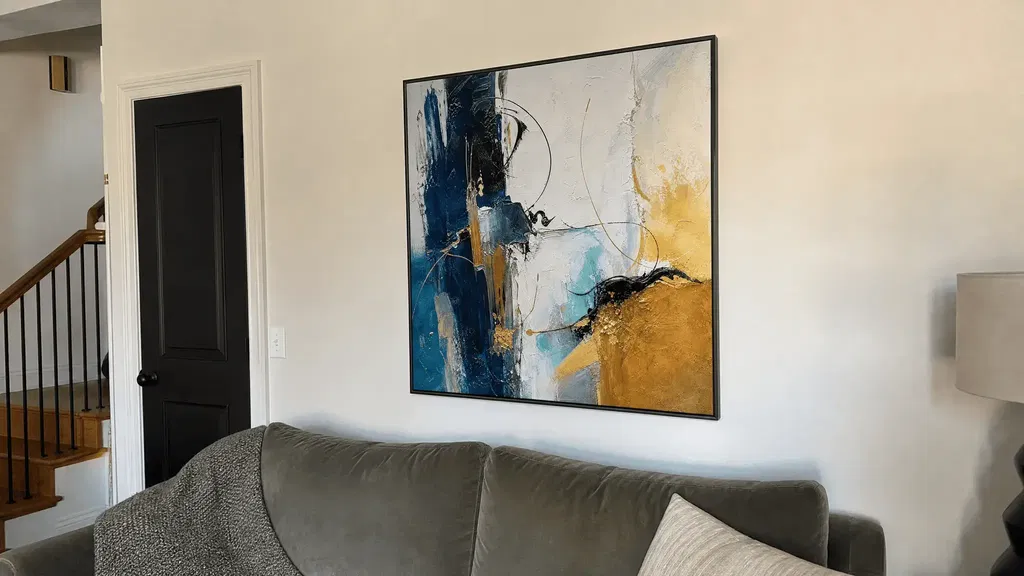
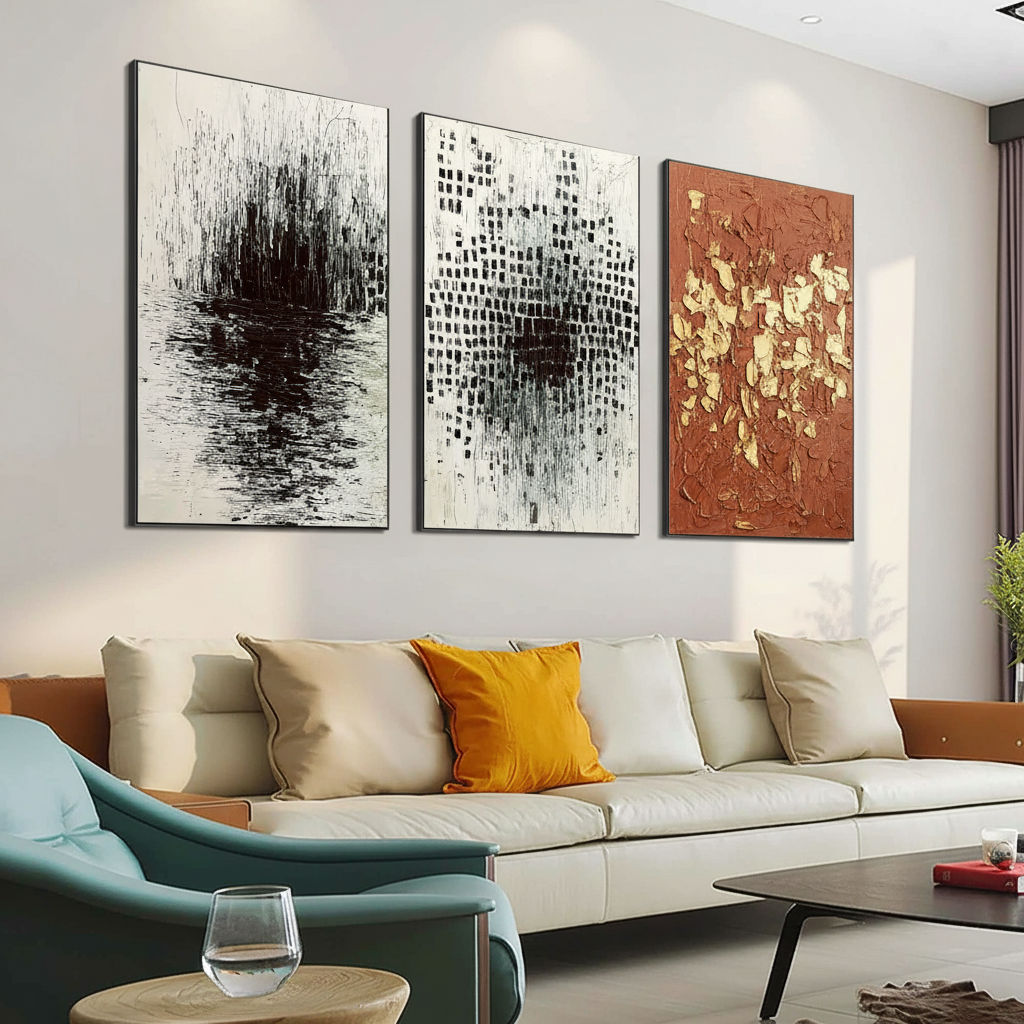
The most sophisticated interiors leverage a different logic: the Rule of Thirds applied to segmented compositions. By placing the primary focal element on one of the outer canvases (typically following a 1:2 ratio), you create a natural visual tension that forces the eye to move across the entire arrangement. This isn't just about "looking good"; it is about the neurological mechanisms of creative arts. According to a systematic review of 85 records published in NCBI, passive art viewing consistently activates the medial prefrontal cortex (mPFC) and amygdala, optimizing emotional regulation circuits. A dynamic, off-center composition keeps these neural pathways engaged longer than a centered, "solved" image.
Methodology Note: Our recommendations for segmented art placement are based on a synthesis of classical art theory and contemporary interior design heuristics (rules of thumb) used in high-end staging. These are optimized for visual flow in residential settings and may vary based on specific room dimensions and ceiling heights.
The 60/40 Rule for Wall Allocation
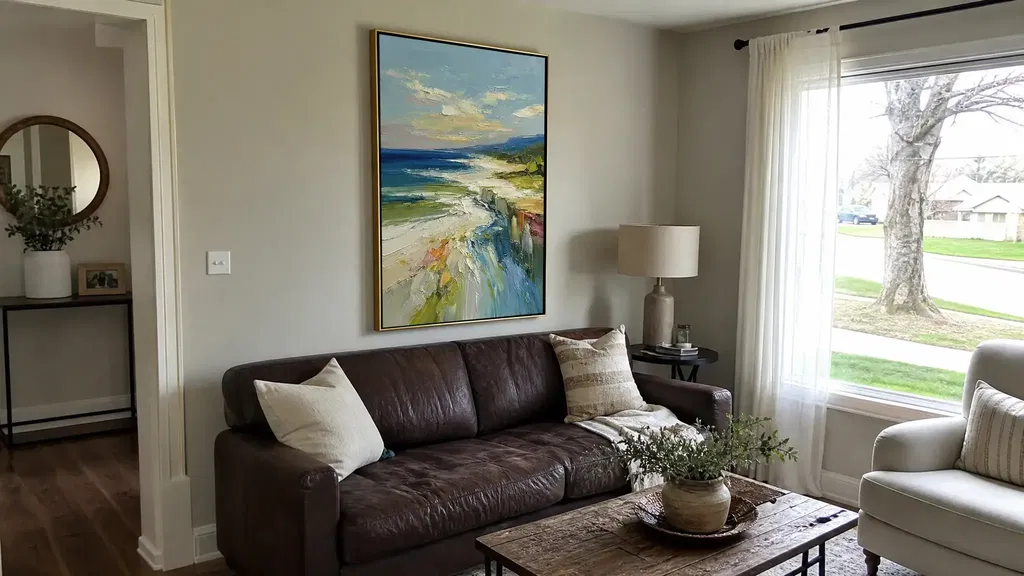
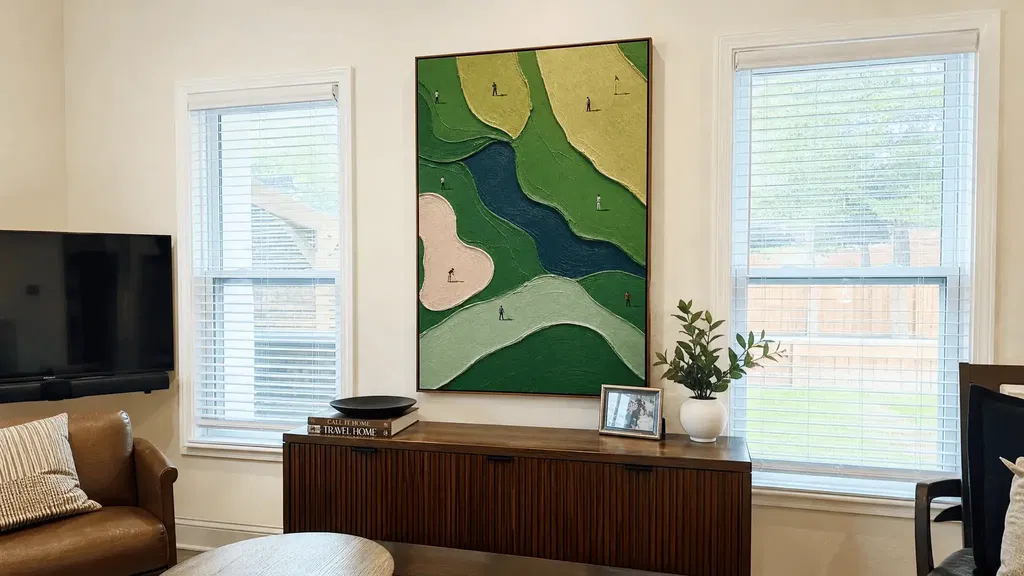
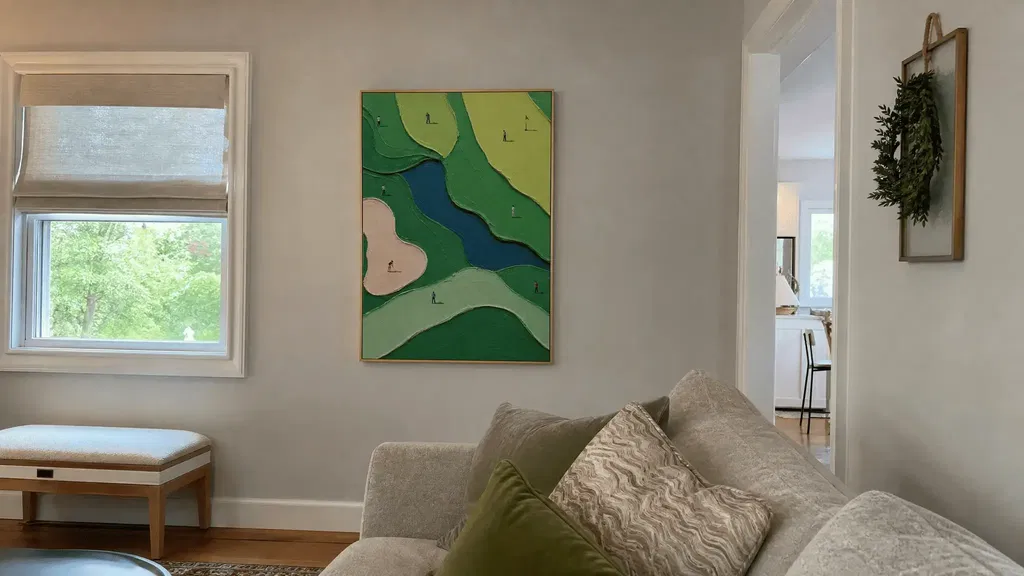
One of the most common mistakes we see in customer feedback is the "Floating Art" syndrome—where a multi-canvas set is either too small for the wall or lacks breathing room. To solve this, we utilize a practical heuristic: the 60/40 Wall Allocation Rule.
- The 60%: Approximately 60% of the total wall area (or the area above a major furniture piece like a sofa) should be occupied by the artwork cluster.
- The 40%: The remaining 40% must be preserved as "negative space" or breathing room around the arrangement.
When dealing with segmented art, you must measure the total width including the gaps between canvases. If you are installing a triptych, the "Rule of Thirds" dictates that the primary focal point should occupy roughly one-third of that total visual space, typically positioned on the far left or far right panel. This creates a sophisticated, asymmetrical balance that feels intentional rather than accidental.
| Parameter | Recommended Value | Unit | Rationale |
|---|---|---|---|
| Art-to-Wall Ratio | ~60% | Percentage | Prevents the art from looking "lost" or "crowded" |
| Inter-Canvas Spacing | 2–3 | Inches | Standard for maintaining thematic continuity |
| Focal Point Offset | 1:2 | Ratio | Creates dynamic eye movement across segments |
| Hanging Height | 57–60 | Inches | Eye-level center point (industry standard) |
| Breathing Room | ~20% | Per Side | Minimum margin to adjacent furniture/walls |
Logic Summary: This model assumes a standard 8-to-10-foot ceiling height. In spaces with cathedral ceilings, the 60% rule may scale vertically to maintain proportional weight.
Why "100% Human Hand-Painted" is Your Decision Safety Net
For homeowners in the 36-42 segment, art is often a high-visibility purchase that carries social weight. There is a growing retreat from overpriced vanity auction pieces—which saw a 44% YoY plummet in sales for works over $10 million in 2024—toward custom pieces with real emotional and tactile value.
However, the market is currently flooded with AI-generated prints and "embellished" canvases. As an expert in material science, we must warn you: the difference is not just aesthetic; it is psychological and financial. A Columbia University study confirmed that consumers value art labeled as "AI-generated" 62% lower than authentic human-created art. Furthermore, research from the University of Chicago suggests that digital replicas lack the "essential identity" of the artist, which collapses perceived value over time.

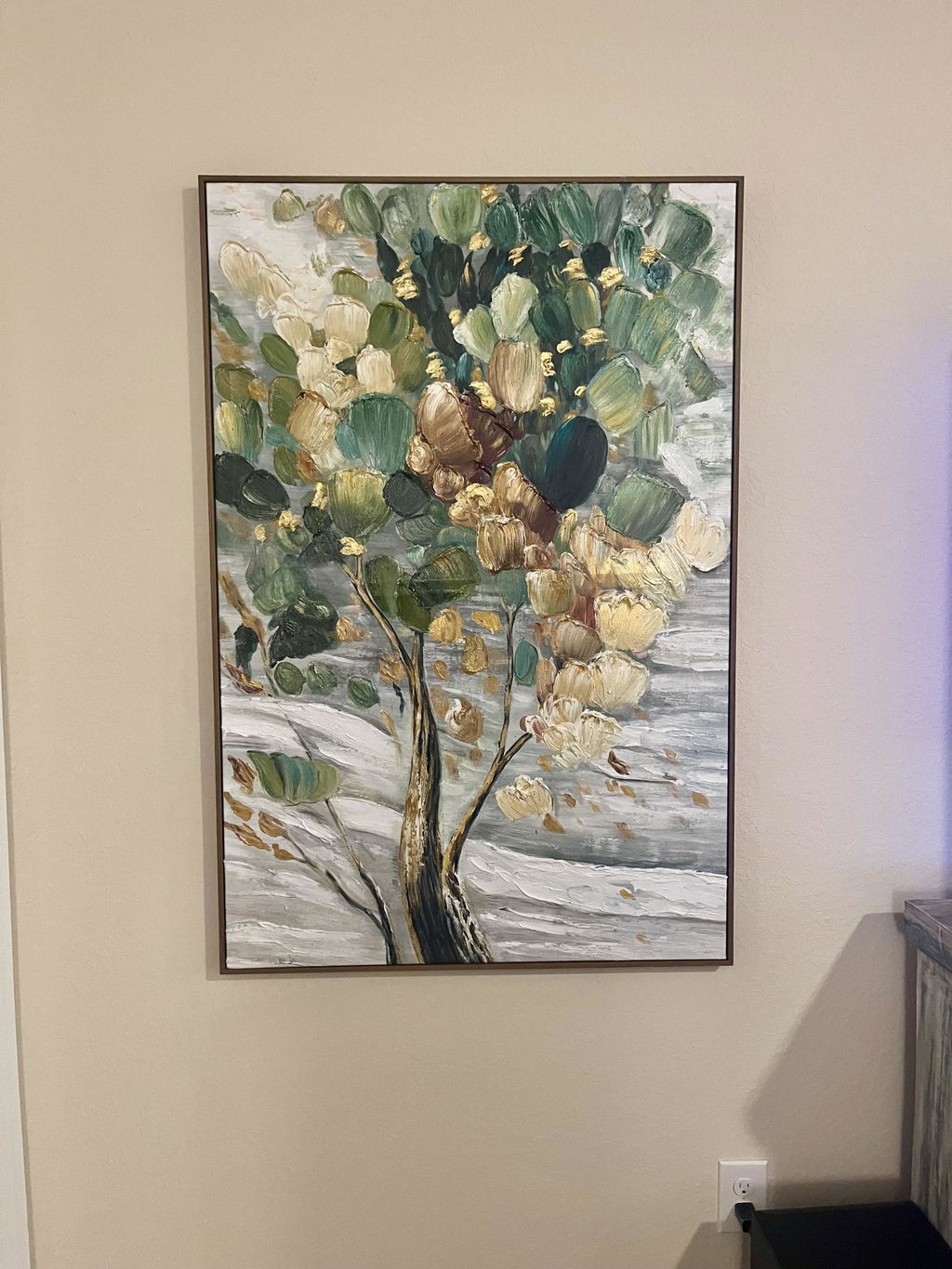
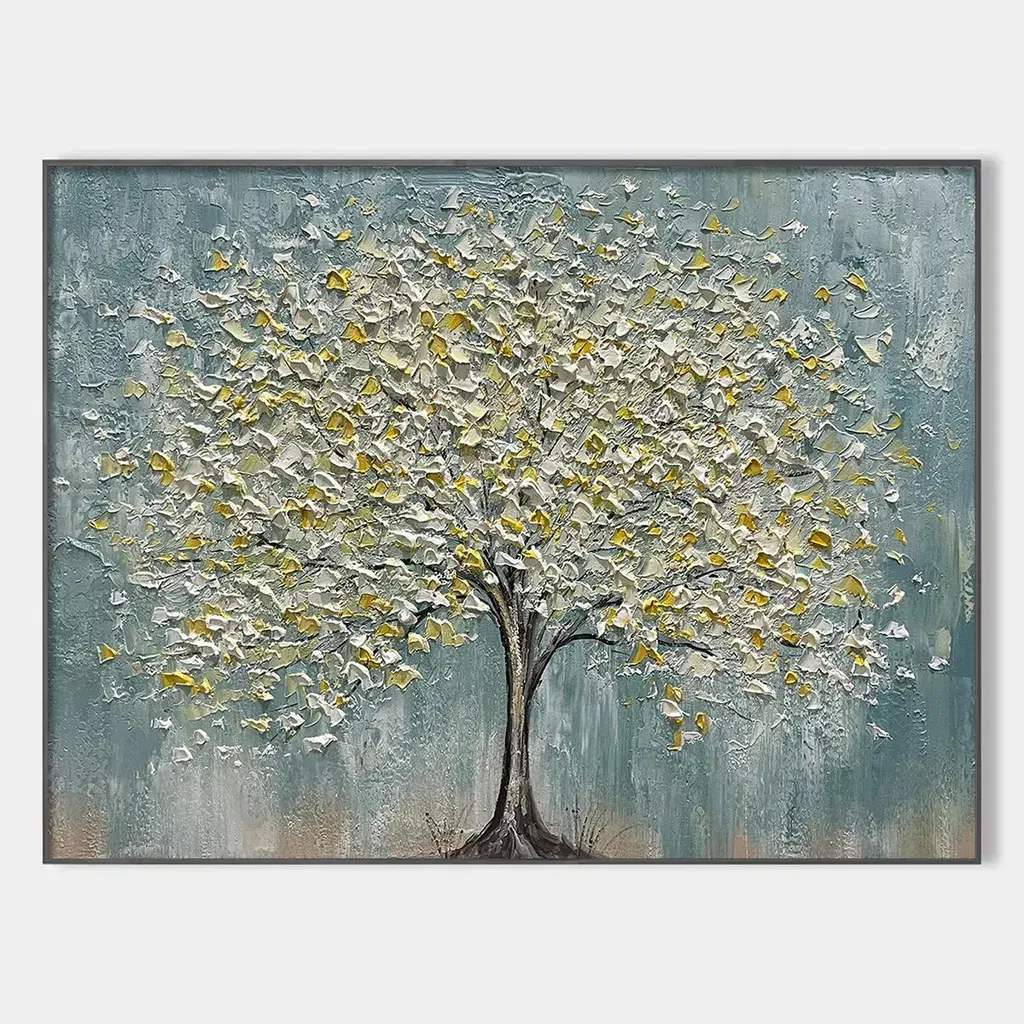
When you invest in a hand-painted segmented piece, you are purchasing the "biochemical crystallization" of human attention. Top painters possess a unique neural ability to suppress "perceptual constancy illusions," allowing them to translate light and shadow with a depth that AI cannot replicate. This is why Spotting Embellished Prints is a critical skill for the modern collector; real texture provides a 3D relief that stimulates intrinsic motivation and satisfaction in viewers, as confirmed by tests at the MUNCH Museum.
Material Integrity: The Science of Longevity and Safety
A sophisticated home should not only look beautiful but also be a healthy environment. Many "bargain" oil and acrylic paintings use pigments that pose significant health risks. According to the International Agency for Research on Cancer (IARC), cadmium and its compounds are Group 1 carcinogens. Even at low doses, these pigments can be hazardous if handled improperly during the creation process or if they flake over time.
In our studio, we prioritize "Decision Safety" by adhering to strict Indoor Air Quality (IAQ) standards. The EPA warns that indoor air pollution can be more detrimental than outdoor pollution. We utilize low-VOC (Volatile Organic Compound) paints and sealants, which are prerequisites for LEED certification in large healthcare facilities.
The Chemistry of the "Haze"
Have you ever noticed a white, cloudy film appearing on an acrylic painting? This is not "dust." According to research from the Tate Modern, PEG-type surfactants in acrylic paints can migrate to the surface when humidity rises, forming water-soluble microcrystals. Understanding Oil vs. Acrylic Paint Visual Weight is essential here: while acrylics offer incredible flexibility for segmented art, they require specific environmental controls to prevent this "haziness."
Lightfastness and the ASTM D4303 Standard
For a high-visibility purchase, permanence is key. We evaluate all pigments using the ASTM D4303 standard, which utilizes xenon-arc testing to simulate years of exposure behind filtered glass. This ensures that the vibrant blues in your triptych won't suffer the "tragic fading" seen in historical pigments like Prussian Blue.
2026 Design Trends: Texture and "Whimsy"
As we look toward 2026, the interior design landscape is shifting away from "assembly-line" minimalism toward "understated elegance with texture as its soul." Zillow search data shows a 21% rise in mentions of "artisan craftsmanship" and a staggering 329% increase in Yelp searches for "custom framing."
For segmented art, this means a move toward "Whimsical Custom Gallery Walls" and Dali-inspired surrealist pieces. The trend, as highlighted by NKBA 2025 awards, involves using panoramic murals or large-scale segmented works to create "immersive escapism" in rooms like the powder room or master suite.

By applying the Rule of Thirds to these 2026-style pieces, you ensure that the "whimsy" remains grounded in classical compositional strength. A segmented work that follows the 1:2 ratio principle feels avant-garde yet balanced—a perfect fit for the "New Consumer of Crafts" who values the fusion of modern spatial aesthetics and authentic handcrafting.
Practical Strategy: Implementing the Segmented Rule of Thirds
To successfully execute this in your home, follow this expert checklist derived from our internal staging protocols:
- Measure the Total Span: Don't just measure the canvases. Measure the total width including the 2-3 inch gaps between panels.
- Identify the Focal Weight: Choose a set where the "visual weight" (the busiest or most colorful part) is not centered. If it's a triptych, the weight should ideally fall on the left or right panel.
- The 60% Rule Check: Ensure the total span covers approximately 60% of the wall width above your furniture.
- Height Alignment: Hang the center of the arrangement at 58 inches from the floor. For segmented art, align the top edges perfectly to maintain the "horizontal horizon" that the Rule of Thirds relies on.
- Lighting for Texture: Use directed gallery lighting (3000K-3500K) to highlight the impasto peaks. This emphasizes the "human hand" and distinguishes your piece from flat digital prints.
A Note on Biophilic Design
If your goal is stress reduction, consider a segmented piece featuring natural landscapes. University of Pennsylvania research notes that nature-themed art can reduce stress in 61% of patients in clinical settings. In a home office, a biophilic segmented work can intervene in cognitive fatigue, potentially reducing burnout by up to 30% (based on office environment modeling).
Building Confidence in Your Art Investment
Choosing art for a high-traffic area like the living room is a significant decision. By moving beyond simple symmetry and embracing the technical logic of the Rule of Thirds, you elevate your home from "decorated" to "curated."
We understand that Structural Limits and Canvas Sagging are real concerns for large-scale works. This is why the segmented approach is so effective—it allows for a massive visual impact while maintaining the structural integrity of smaller, individual frames.
Whether you are looking for a Biophilic Hand-Painted Series to promote well-being or a textured abstract to serve as a social landmark, remember that the "soul" of the piece lies in the pigments and the artist's visual attention. Reject the "assembly-line" and choose the authentic, the safe, and the mathematically balanced.
Disclaimer: This article is for informational purposes only and does not constitute professional medical, legal, or financial advice. Regarding pigment safety, always consult a certified industrial hygienist if you have specific health concerns related to art materials in your environment.