The Art of Illumination: Solving the Multi-Panel Glare Challenge
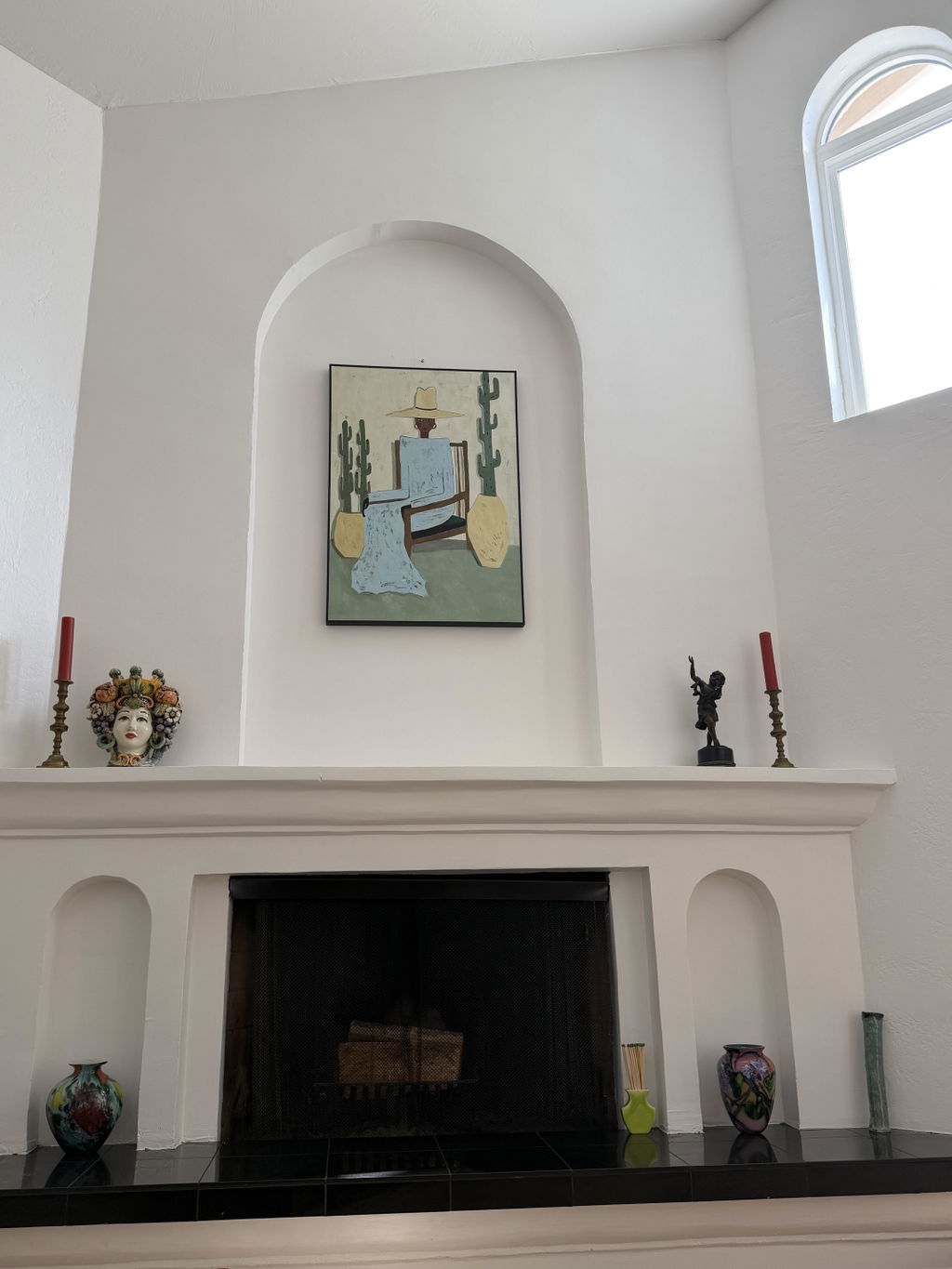
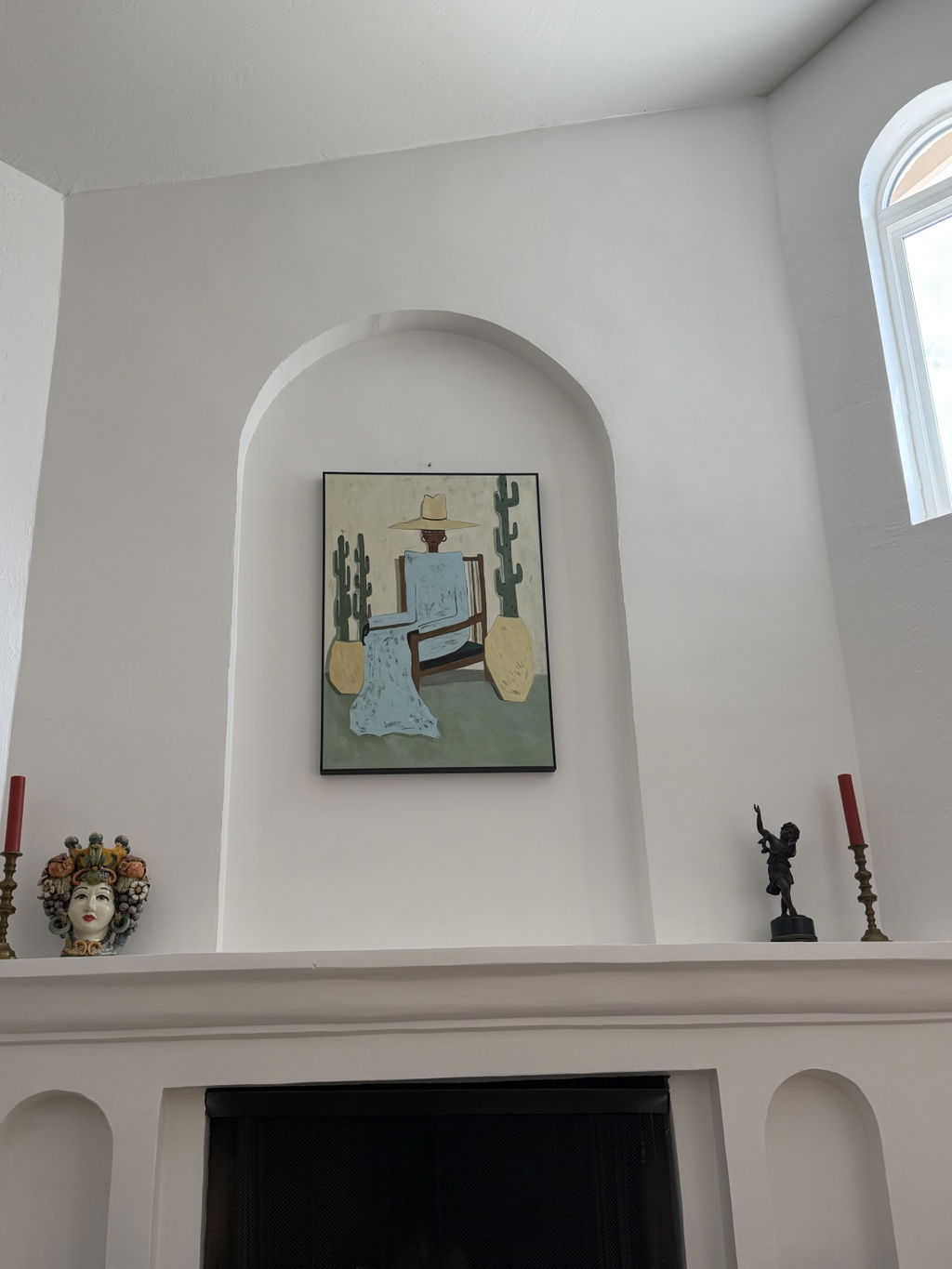
Lighting a five-foot triptych is fundamentally different from lighting a single canvas. While a single piece of art requires a focused beam, a multi-panel array—whether a diptych or a polyptych—functions as a unified visual field. Without a coordinated lighting strategy, the segments often suffer from uneven illumination, harsh "hot spots," and distracting surface glare that obscures the hand-painted details.
The global art market reached a staggering $65 billion in 2023, according to the Art Basel and UBS Art Market Report 2024. However, as the Marketplace.org report on the struggling expensive art market notes, high-end auction sales for purely financial assets plummeted 44% in 2024. This shift indicates that collectors are moving away from "vanity" pieces and toward art with real application value and emotional resonance.
For the modern homeowner, premium hand-painted art represents an investment in "essential identity." Research from UChicago suggests that digital replicas and NFTs lack the artist's soul, leading to a collapse in perceived value. To protect this value, you must ensure your art is visible in its best light—literally.

The Physics of Texture: Why Hand-Painted Art Glitters and Glares
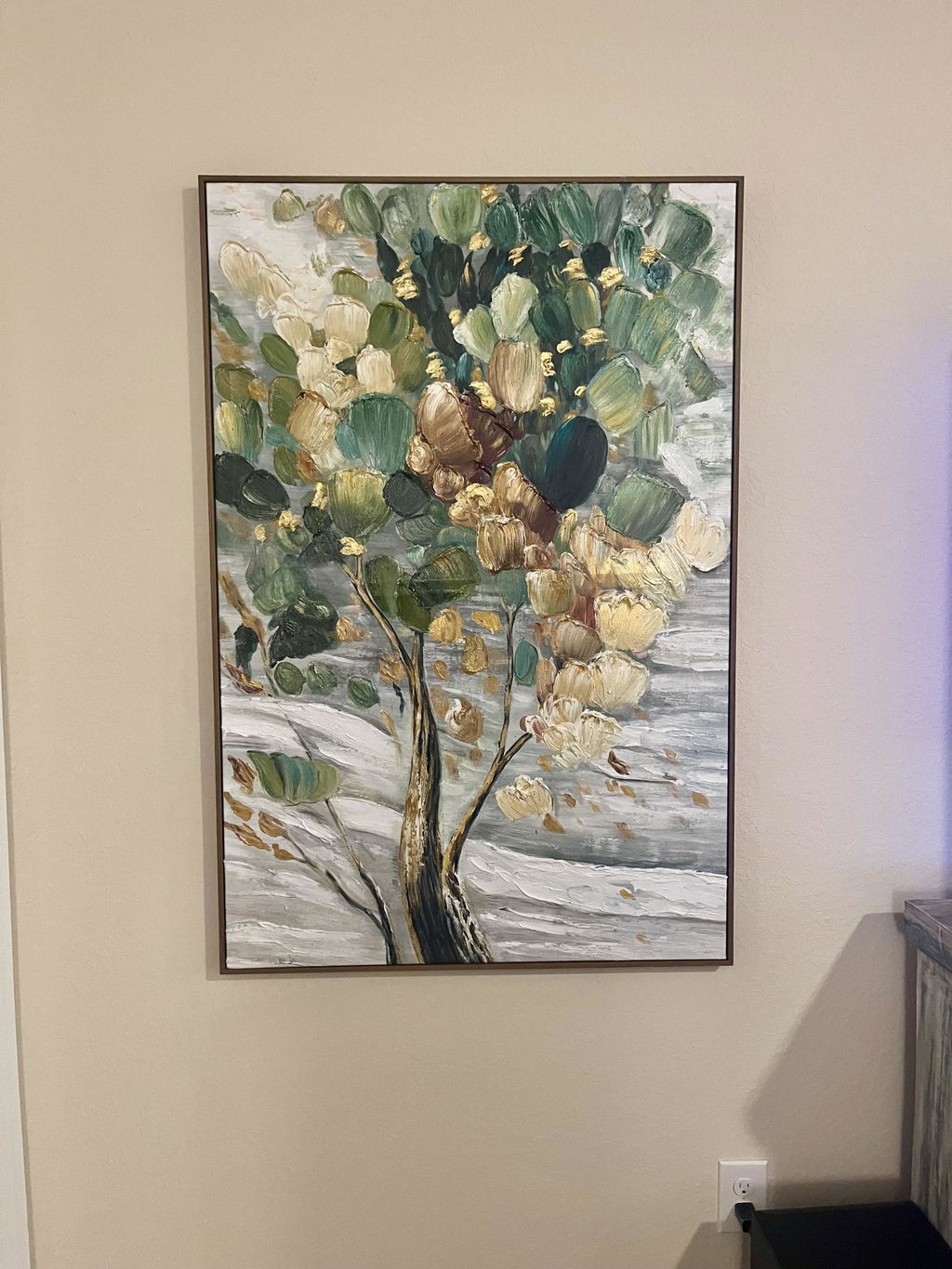
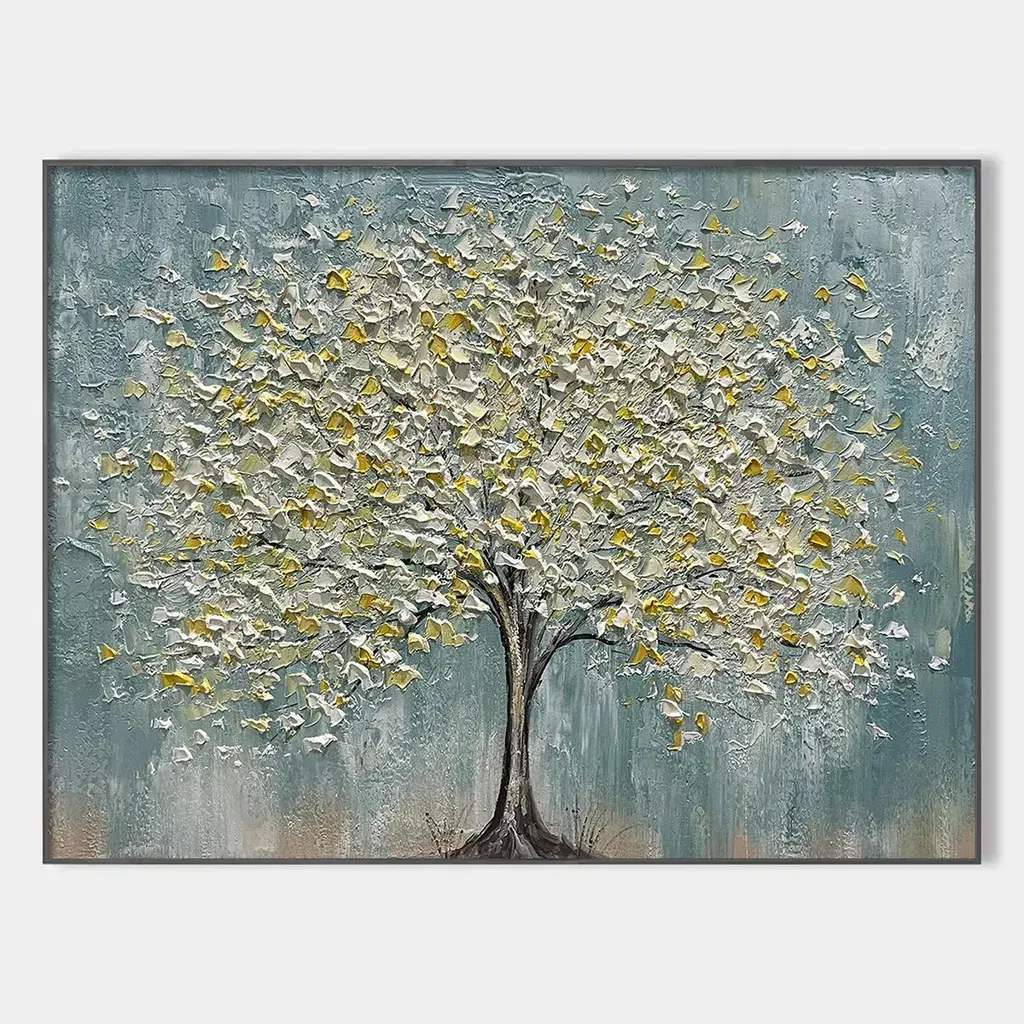
Unlike flat, mass-produced prints, original hand-painted works possess a complex microtopography. Brushstroke valleys and peaks reflect light at varying angles, a phenomenon studied through optical microprofilometry. According to research published in Sensors, the mm-scale texture of oil paintings is crucial to their aesthetic, but it also makes them susceptible to "geometric metamerism"—where the color appears to shift based on the lighting angle.
The Refractive Index Challenge
The Getty Conservation Institute explains that pigment reflection is dominated by absorption and scattering coefficients. In hand-painted canvases, the surface refractive index varies across the impasto (thick paint) areas.
Professional installers have observed that textured canvases create more glare variability than prints. The peaks of a palette-knife stroke act like tiny mirrors. To combat this, experienced designers often adjust light angles 5-10 degrees lower than they would for smooth surfaces. This "grazing" light emphasizes texture without bouncing a direct "hot spot" back into the viewer's eyes.
Modeling Note: Lighting Heuristics for Textured Surfaces The following parameters are derived from common professional installation patterns and industry-standard calculators (not a controlled lab study).
Parameter Typical Value Unit Rationale / Source Category Optimal Beam Angle 30 Degrees Lightology Industry Standard Glare Offset -5 to -10 Degrees Compensation for heavy impasto texture Track Distance 1.5x Array Width Ratio Professional installer heuristic for multi-panel Minimum CRI 90+ Index Necessary for accurate pigment rendering Picture Light Spacing 18 - 24 Inches Optimal coverage for segmented panels
Strategic Positioning for Multi-Panel Arrays
When dealing with triptychs or diptychs, the most common mistake is treating each panel as an independent entity. This results in competing shadows in the gaps between the frames.
The 1.5x Rule for Track Lighting
For track lighting, a practical heuristic is to set the distance from the wall to approximately 1.5 times the total width of the multi-panel array, rather than the width of an individual segment. This allows the beams to overlap slightly, creating a "wash" of light that bridges the gaps between canvases.
According to the Lightology Art Lighting Tool, a 30-degree angle is the "sweet spot" for minimizing glare while maximizing color saturation. If the light is too close to the wall (a steep angle), it creates long, dramatic shadows from the texture. If it is too far away (a shallow angle), the light reflects directly off the paint surface into the viewer's eyes, causing a "white-out" effect.

Coordinating Picture Lights
If you prefer the classic look of picture lights, the rule of thumb is one fixture for every 18 to 24 inches of horizontal width. For a triptych, this might mean three smaller lights or one continuous "gallery-style" bar. The key is coordination; the lights must be at the same height and extension to ensure the shadows cast by the frames are identical across all segments.
Beyond Aesthetics: Health, Safety, and Longevity
Lighting isn't just about how the art looks; it's about how the environment feels and how the art survives.
The Biophilic Connection
Integrating nature-themed, hand-painted murals or multi-panel landscapes does more than decorate a room. University of Central Arkansas research shows that biophilic design produces stress-reduction effects in the brain similar to being outdoors. In high-density environments like Tokyo, nature-based art has been used to intervene in employee burnout. Proper lighting ensures these "healing" colors remain vibrant and effective.
Air Quality and VOCs
When installing large-scale art, especially in nurseries or bedrooms, air quality is a valid concern. The EPA warns that indoor air pollution can be more concentrated than outdoor. Fortunately, modern professional pigments have evolved. Aalto University experiments prove that coatings on moisture-controlled wood emit significantly lower VOCs during curing than industrial paints. Choosing art created with walnut oil or eco-friendly binders, as suggested by the Cincinnati Art Museum, further reduces risks.
Lightfastness and the ASTM D4303 Standard
To prevent your investment from fading, you must understand lightfastness. The ASTM D4303 standard defines how pigments respond to accelerated indoor aging. While Tate Modern research has debunked the myth that oil holds color better than acrylic (Prussian Blue, for instance, fades at the same rate in both), the type of bulb matters. LED lights are preferred because they emit negligible UV radiation, which is the primary driver of pigment degradation.
The Financial "ROI" of Premium Display
Investing in original, hand-painted art—and lighting it correctly—is a proven strategy for increasing property value. A Royal Society CAR model analysis found that neighborhoods with higher "art" geo-tags saw greater relative house price ranking gains. Furthermore, public art projects like Chicago’s Millennium Park drove $1.4 billion in real estate growth.
In the home, a well-lit multi-panel piece acts as a "permanent physical billboard" for your taste and the home's premium status. Zillow search data shows that mentions of "artisan craftsmanship" rose 21% recently, suggesting that buyers are looking for the tactile, human element that only hand-painted work provides.
Why Human-Made Art Wins
A Columbia Business School study confirmed that consumers value art labeled "AI-generated" 62% lower than authentic human-created art. This "human premium" is tied to the "essential identity" of the work. When you light a hand-painted piece, you are highlighting the "biochemical crystallization of apex human visual attention," as described in Stockton University psychology research.

Installation Checklist: The Mockup Phase
Before committing to permanent fixtures, follow these steps used by professional curators to ensure a glare-free environment:
- The Clamp Light Test: Use temporary clamp lights during the mockup phase. Move them 2-3 inches at a time to find the angle that eliminates hotspots.
- The "Shadow Check": Observe the gaps between the panels. If one panel is casting a shadow on its neighbor, the light is too far to the side. Move the fixture more central to the array.
- The Texture Tweak: For pieces with heavy impasto, lower the light fixture or increase the distance from the wall to create a shallower angle. This "grazes" the paint and highlights the 3D quality.
- CRI Verification: Ensure your bulbs have a Color Rendering Index (CRI) of 90 or higher. Low CRI bulbs (common in cheap LEDs) will make vibrant reds and blues look muddy and gray.
- Dimmer Integration: Always install a dimmer. The "perfect" lighting at 2 PM with natural sunlight will be much too bright at 8 PM.
The Future of Spatial Art Integration
As we look toward 2026, interior design is moving toward "understated elegance" where texture is the soul of the room (Design State of Mind). The trend of "wrapping murals" or multi-panel art entirely around walls to create immersive escapism is becoming a dominant feature in high-end homes, as seen in the NKBA 2025 design awards.
By mastering the technical aspects of lighting, you transform a set of canvases into a window. You aren't just hanging art; you are curating an experience that activates the medial prefrontal cortex (mPFC) and amygdala, optimizing emotional regulation circuits in the brain (PMC11480958). In a world increasingly filled with digital noise, the physical, hand-painted, and perfectly lit wall remains the ultimate luxury.
YMYL Disclaimer: This article is for informational purposes only. When handling art materials or installing electrical fixtures, always follow manufacturer safety guidelines and local building codes. Some historical pigments may contain heavy metals; avoid direct contact or inhalation of dust from aged paintings. Consult a professional electrician for all lighting installations to prevent fire hazards.
References & Sources:
- The Art Basel and UBS Art Market Report 2024
- Columbia University: Human-Made vs. AI Art Perception
- Getty Conservation Institute: Color Science and Pigment Mixture
- Royal Society: Quantifying the link between art and property prices
- Lightology: Art Lighting Placement Guide
- World Health Organization (WHO): Scoping Review on Arts and Health
- EPA: Indoor Air Quality and Low-VOC Paints