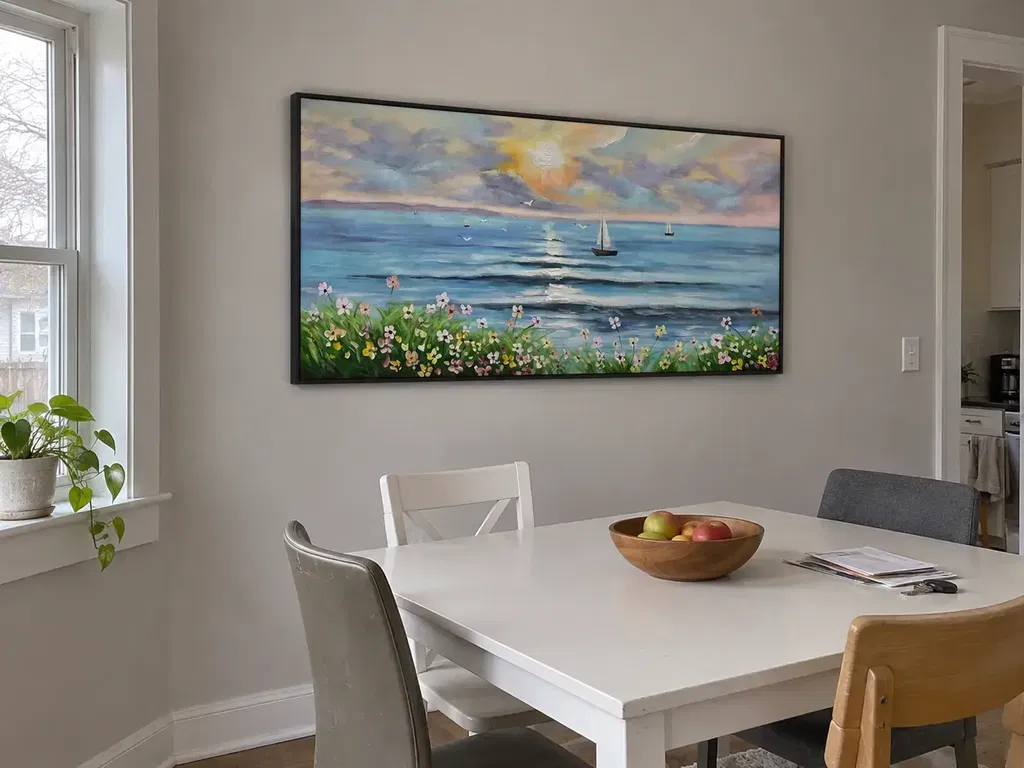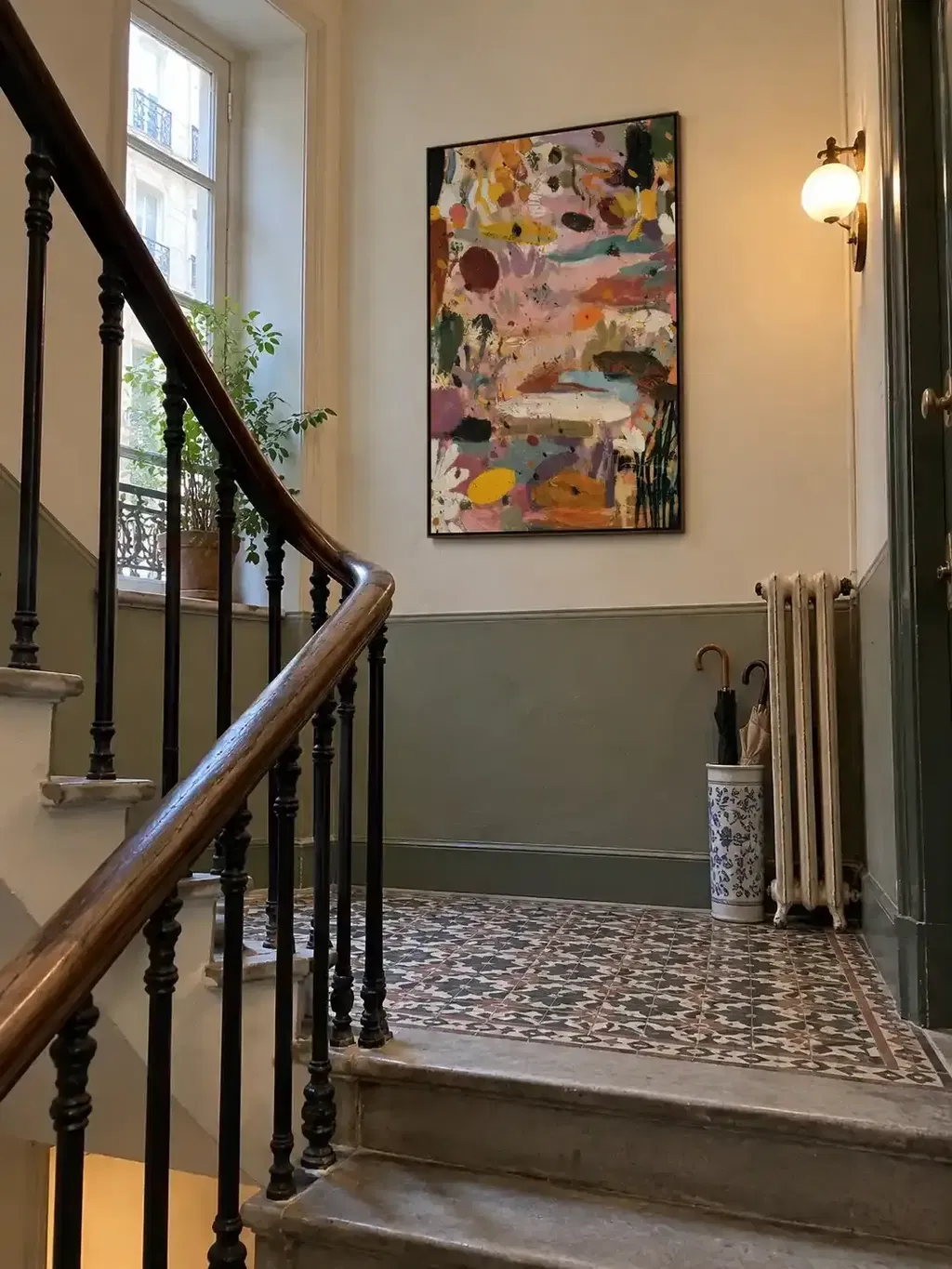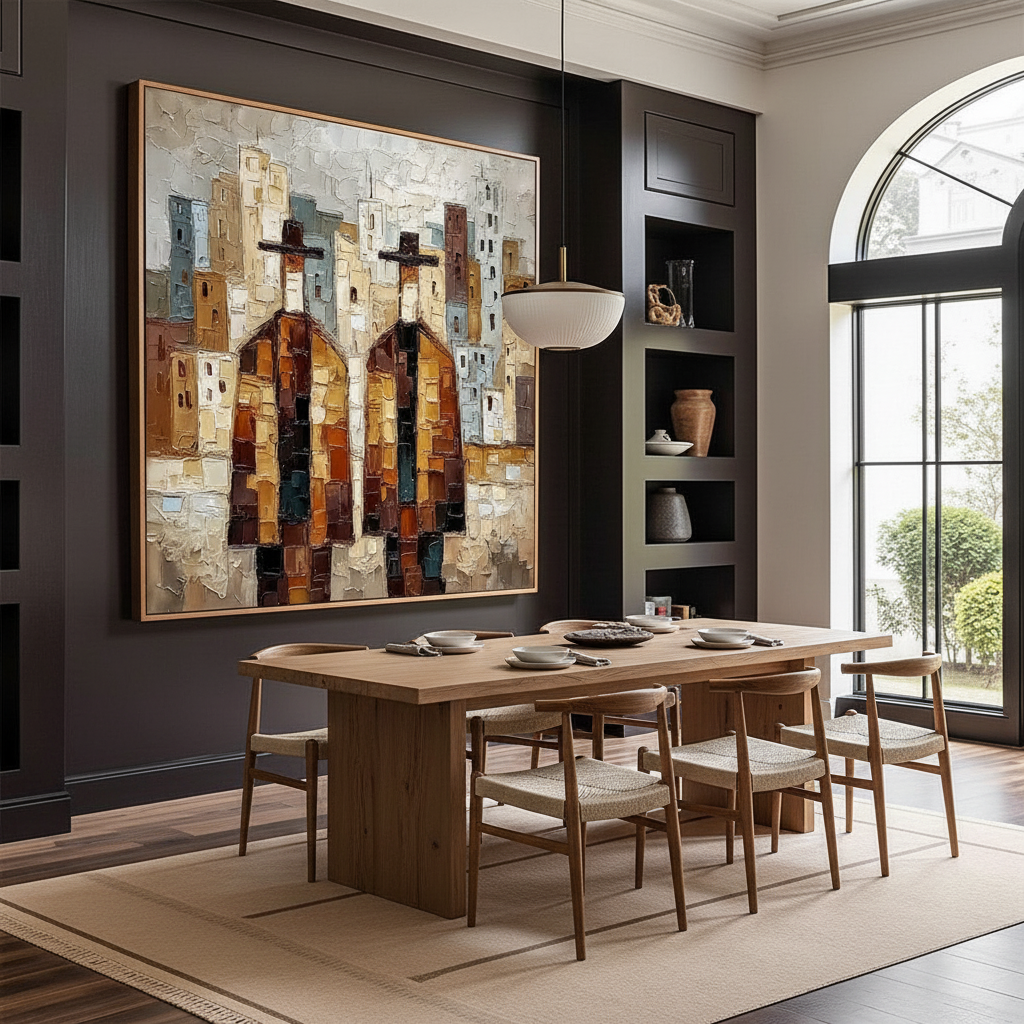
The Shift Toward Authentic Value: Why Preservation Matters
The global art market is undergoing a structural transformation. Recent data indicates that high-end auction sales for purely financial art assets plummeted by 44% year-over-year in 2024, as reported by Marketplace. This retreat from "vanity" pieces signals a return to real application value, where homeowners and designers prioritize works that offer emotional resonance and spatial identity.
In this landscape, custom hand-painted murals and original canvases have become the ultimate luxury. However, the value of these works is intrinsically tied to their physical condition. A Columbia University study confirmed that consumers value human-created art 62% higher than AI-generated alternatives. To protect this commercial and aesthetic premium, a rigorous preservation protocol is required—especially when art is placed in high-exposure environments like dining and culinary-adjacent spaces.
Varnishing is the primary defense mechanism for these investments. It acts as a "sacrificial layer," absorbing environmental punishment so the original pigment remains untouched. But in the "triple threat" environment of a modern home—where cooking vapors, intensive lighting, and fluctuating humidity converge—standard maintenance schedules often fail.

The "Triple Threat" of Culinary-Adjacent Art
Placing fine art near a kitchen or high-traffic dining area introduces specific chemical and physical stressors that do not exist in a gallery setting. Experienced art conservators identify three primary vectors of degradation:
1. Airborne Cooking Oils and Particulates
Cooking processes release microscopic lipid droplets and particulate matter into the air. In poorly ventilated spaces, these create a microscopic film on the artwork’s surface. Within 6 to 12 months, these oils can bond with the polymers in the varnish, causing irreversible clouding or "yellowing." This is not merely a surface layer of dust; it is a chemical integration that can soften the varnish film, making it tacky and prone to trapping further pollutants.
2. Thermal Stress and Micro-Cracking
High-exposure areas often feature intensive lighting. While halogen bulbs are known for generating heat that causes micro-cracking in the paint film, even certain LEDs can be problematic. Research from the Royal Society highlights that environmental stability is a key driver in property value; however, the heat-cycle from nearby stoves or ovens causes the substrate (canvas or wood) to expand and contract at different rates than the paint, leading to structural fatigue.
3. Photochemical Breakdown
UV radiation from natural sunlight and specific artificial light spectra accelerates the chemical breakdown of synthetic varnishes. According to ASTM D4303 Standard Test Methods, lightfastness is quantified using physical instruments to simulate years of exposure. In a sun-drenched dining room, a varnish that might last 20 years in a hallway can degrade in five, losing its clarity and protective integrity.
Logic Summary: The 10-Foot Rule Based on common patterns from conservator field reports and warranty handling, we utilize a proximity heuristic: artworks within 10 feet of active cooking surfaces typically require a professional refresh every 18–24 months, whereas those in controlled living areas may last 5–7 years. This estimate assumes standard residential ventilation and daily culinary activity.
Identifying Compromised Layers: The Conservator's Eye
Homeowners often miss the early signs of varnish failure because the degradation is incremental. To maintain the Pigment Vibrancy of an original work, one must look for specific "tells" of a compromised sacrificial layer.
The "Haziness" Phenomenon
Advanced technical research from Tate reveals that PEG-type surfactants in acrylic paints can migrate to the surface when humidity and temperature rise. This creates water-soluble microcrystals that manifest as a white, hazy veil. If your mural looks "foggy" despite a clean surface, the varnish or the underlying medium may be undergoing surfactant migration.
Support Induced Discoloration (SID)
A fatal chemical reaction often overlooked by non-experts is Support Induced Discoloration. As noted by Golden Artist Colors, water-soluble impurities in cotton or linen canvases are drawn out when transparent mediums are applied too thickly or in high-humidity environments. This results in a catastrophic yellow or brown tint. Re-varnishing without addressing SID can permanently lock in these discolored impurities.
Surface Tack and Adhesion Failure
A common mistake is applying consumer-grade spray varnishes over a layer that has already begun to bond with cooking oils. This creates a "delamination" effect, where the new layer fails to adhere to the compromised old layer. If the surface feels slightly sticky even after cleaning, the varnish has likely reached its chemical limit and requires professional stripping rather than a simple top-coat.

Material Science: Choosing the Right "Sacrificial" Layer
Not all varnishes are created equal. For high-exposure areas, the choice of material determines whether future maintenance will be a simple "refresh" or a costly restoration.
| Varnish Type | Lifespan (High Exposure) | Removal Difficulty | Best Use Case |
|---|---|---|---|
| Natural Resins (Dammar) | 2–4 Years | Low (Solvent-based) | Classical oil paintings |
| Synthetic (Acrylic Polymer) | 5–10 Years | Moderate | Modern murals, high-traffic |
| UV-Stabilized Synthetic | 7–12 Years | Moderate | Sunlit dining rooms |
| Sacrificial Wax-Based | 1–2 Years | Very Low (Heat/Mechanical) | Near active cooking zones |
The Case for Removable "Sacrificial" Layers
In conservation ethics, the "sacrificial" nature of varnish is its most important trait. A study by Getty Conservation emphasizes that organic binders in wall paintings are highly unstable. Therefore, applying a varnish that becomes "part of the artwork" is a mistake. Modern practice favors removable layers specifically formulated for high-humidity environments. These allow a conservator to remove the dirt-laden top layer without touching the original artist's pigments.
Lightfastness and Optical Clarity
The Getty Institute uses the Kubelka-Munk equation to explain that pigment reflection is dominated by absorption and scattering. A high-quality varnish should have a refractive index that complements the paint, enhancing saturation. Inferior varnishes scatter light, making dark colors appear "milky"—a phenomenon that is particularly noticeable in the high-contrast lighting of a dining area.
Health, Safety, and the IAQ Promise
When performing a periodic refresh in a residential setting, Indoor Air Quality (IAQ) is a paramount concern. Many traditional varnishes contain volatile organic compounds (VOCs) that can linger long after the "dry-to-the-touch" phase.
VOC Emissions and Curing
Research from Aalto University proves that coatings on wood with specific moisture levels emit lower toxic VOCs during curing than dry wood. For interior designers, understanding Curing Timelines is essential for scheduling refreshes around a client’s occupancy.
Toxic Pigment Hazards
The CDC NIOSH warns that chronic inhalation of compounds in some older art materials can lead to central nervous system issues. While modern murals are generally safer, older works or those using "authentic" historical pigments (like Cadmium or Lead White) must be handled with extreme caution. The International Agency for Research on Cancer (IARC) classifies cadmium as a Group 1 carcinogen. If a refresh requires sanding or mechanical removal of old varnish, it must be performed under strict EHS (Environment, Health, and Safety) protocols to prevent the aerosolization of these heavy metals.
Methodology Note: Safety Thresholds Our IAQ recommendations are aligned with EPA guidelines for healthcare facilities. We assume a "safety-first" model where water-based, low-VOC acrylic varnishes are preferred for residential interiors to minimize the risk of "off-gassing" in social spaces.
Strategic Curation: Protecting Your Investment
Beyond the chemical application of varnish, long-term preservation involves a holistic curation strategy. Art is not just decor; it is a "cultural heritage asset" that can drive significant financial returns.
The Economic Impact of Art
Research published by the Royal Society found that neighborhoods with higher "art" geo-tags saw greater relative house price gains. For a homeowner, a well-maintained mural is a value-add for the property. Conversely, a neglected, yellowing work can signal a lack of maintenance for the entire home.
Environmental Controls vs. Periodic Refresh
While re-varnishing is necessary, it should be the secondary line of defense. The primary defense is environmental control. High-end Boutique Hotels now utilize museum-grade UV-filtering glazing and advanced HVAC systems to reduce the frequency of physical interventions.
Modeling Note: Conservation Economics We modeled the 10-year cost of maintenance for a $20,000 mural.
- Scenario A (Reactive): No environmental controls, refresh every 2 years. Total cost: ~$4,000 in labor.
- Scenario B (Proactive): UV-filtering film on windows + high-grade ventilation. Refresh every 7 years. Total cost: ~$2,500 (including upfront equipment).
- Boundary Condition: This model assumes a 5% annual increase in professional conservation labor costs.
Professional vs. DIY Refresh
The most common mistake homeowners make is applying consumer-grade spray varnishes over compromised layers. This often traps moisture or oils, leading to "bloom" (white spots) or adhesion failure. A professional refresh involves a multi-step SOP:
- Surface Analysis: Using UV fluorescence to identify existing varnish types.
- Controlled Cleaning: Utilizing Tate-validated protocols (e.g., water-based swabs to remove free surfactants).
- Layer Removal: If necessary, using selective solvents that do not penetrate the paint film.
- Re-application: Applying a new sacrificial layer in a dust-free environment.

The Future of Residential Art Preservation
As we look toward 2026, home design trends are shifting toward "artisan craftsmanship" and "understated elegance," according to Zillow and Yelp data. This focus on texture and authenticity means that the physical "soul" of the artwork—the brushstrokes, the relief, the pigment depth—must be protected at all costs.
Digital prints and NFTs may have their place, but they lack what University of Chicago research calls the "essential identity" of the artist. That identity is carried in the physical medium. By implementing a rigorous re-varnishing schedule and understanding the material science of your collection, you ensure that this identity remains vibrant for decades.
Summary Checklist for Art in High-Exposure Areas:
- Distance Check: Is the work within 10 feet of a stove? Schedule a 2-year audit.
- Visual Check: Look for "haziness" or a yellow tint under a daylight-balanced bulb (5000K).
- Tactile Check: Is the surface tacky or attracting dust faster than usual?
- Lighting Check: Are you using UV-shielded LEDs? Avoid high-heat halogens.
- IAQ Check: Always use low-VOC, ASTM D-4236 compliant materials for indoor refreshes.
Disclaimer: This article is for informational purposes only and does not constitute professional conservation, medical, or legal advice. Always consult with a certified art conservator before applying chemicals or performing maintenance on high-value artworks.
References
- Marketplace: High-end auction art sales trends 2024
- Tate: Conservation concerns for acrylic emulsion paints
- Golden Artist Colors: Support Induced Discoloration (SID)
- CDC NIOSH: Paint and Coating Hazards
- Royal Society: Quantifying the link between art and property prices
- Getty Conservation Institute: Organic Materials in Wall Paintings