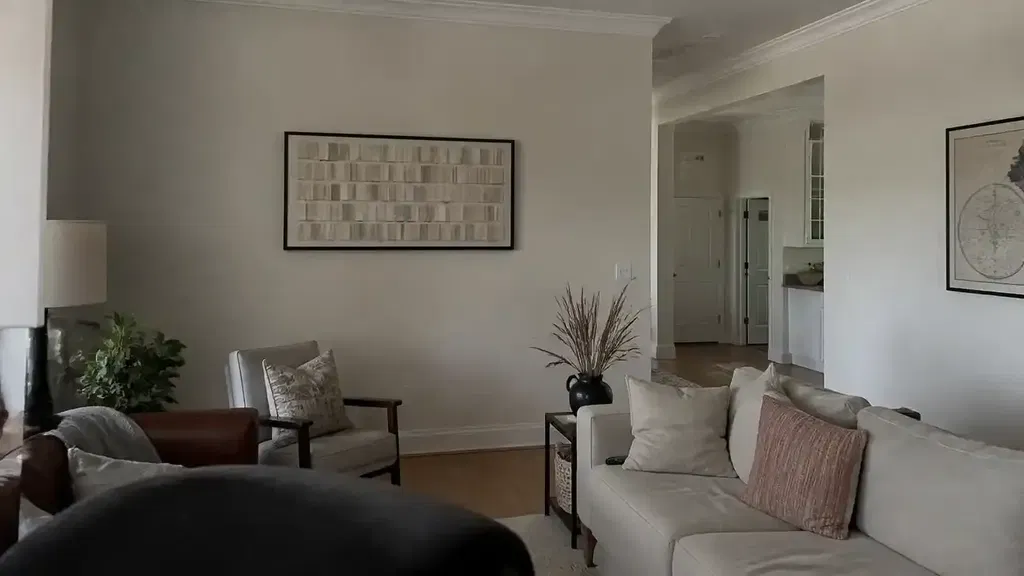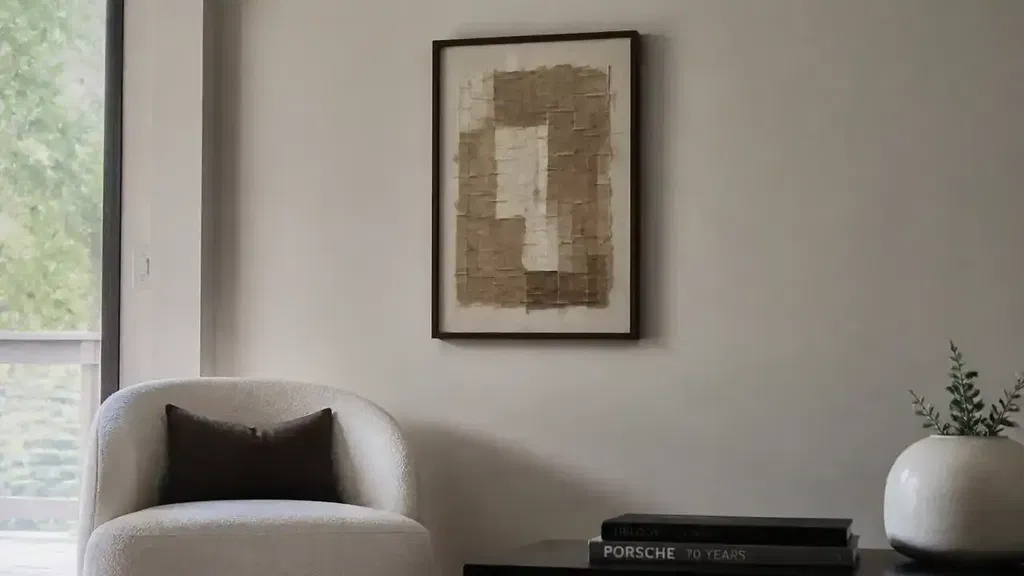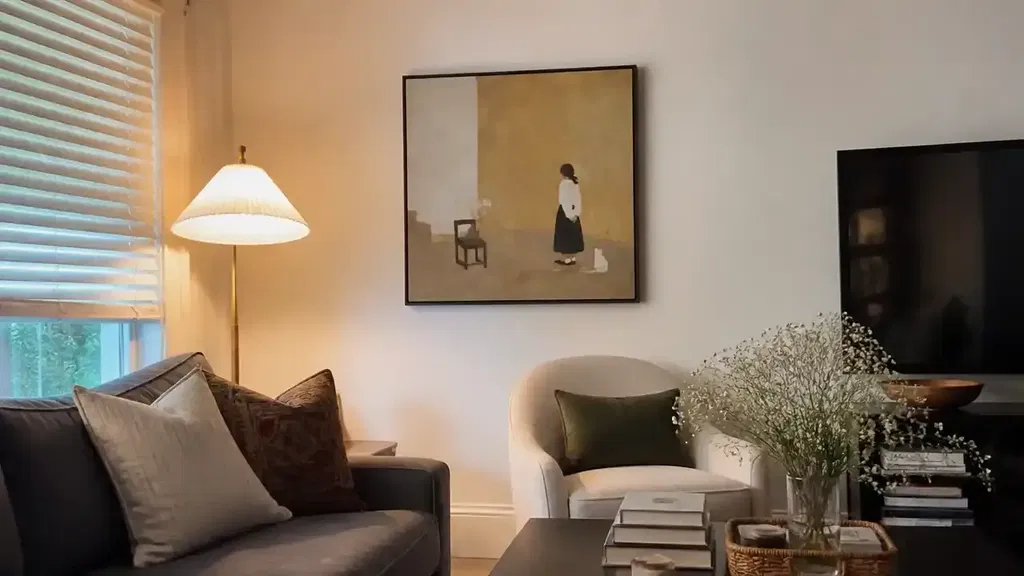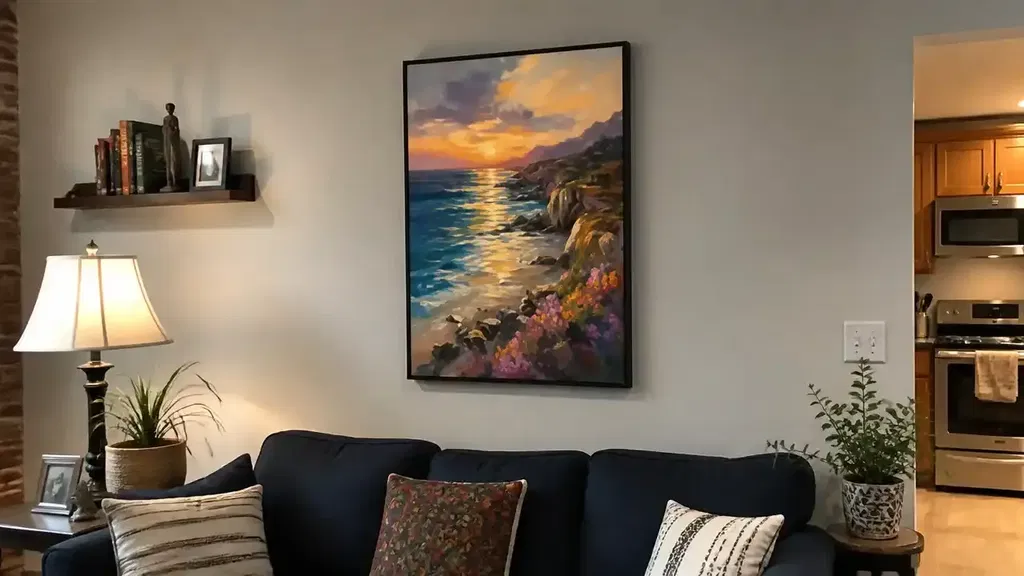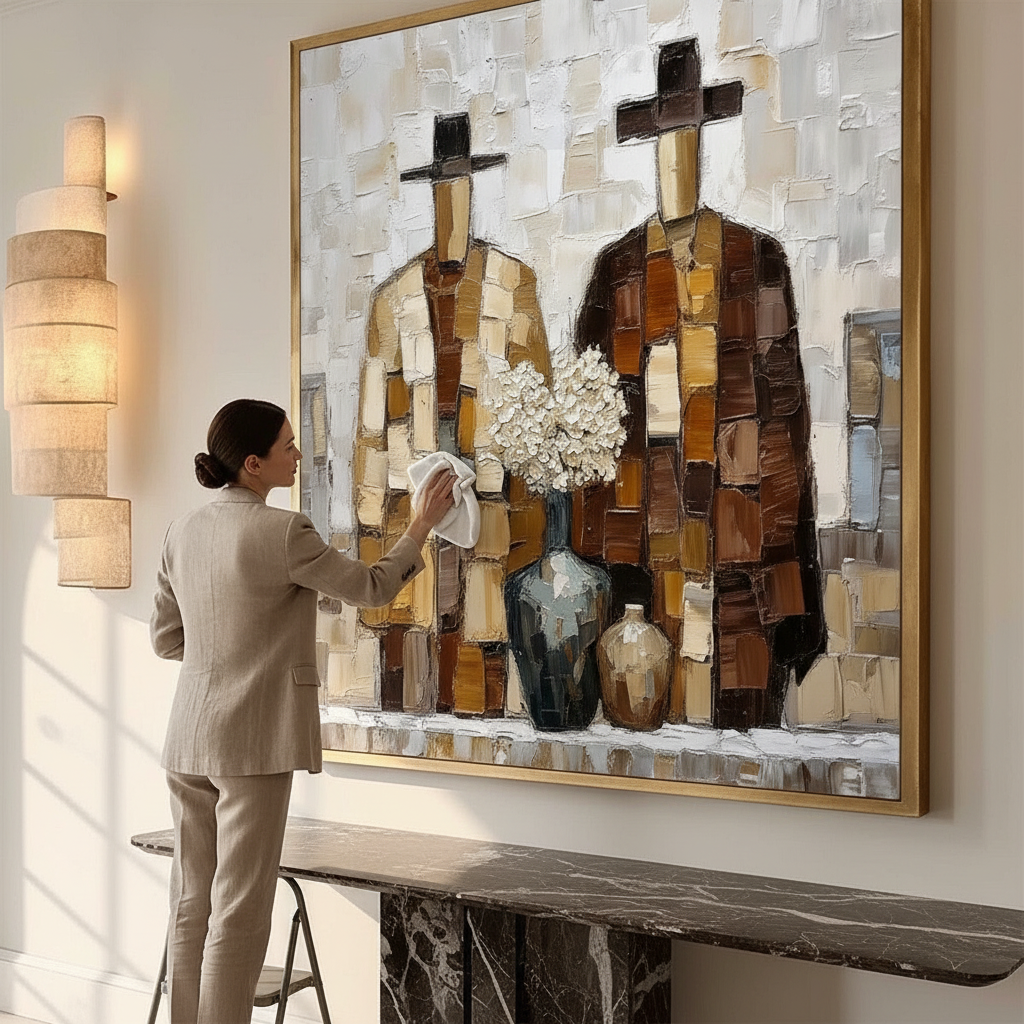
Beyond the Auction Block: The Shift Toward Authentic Social Art
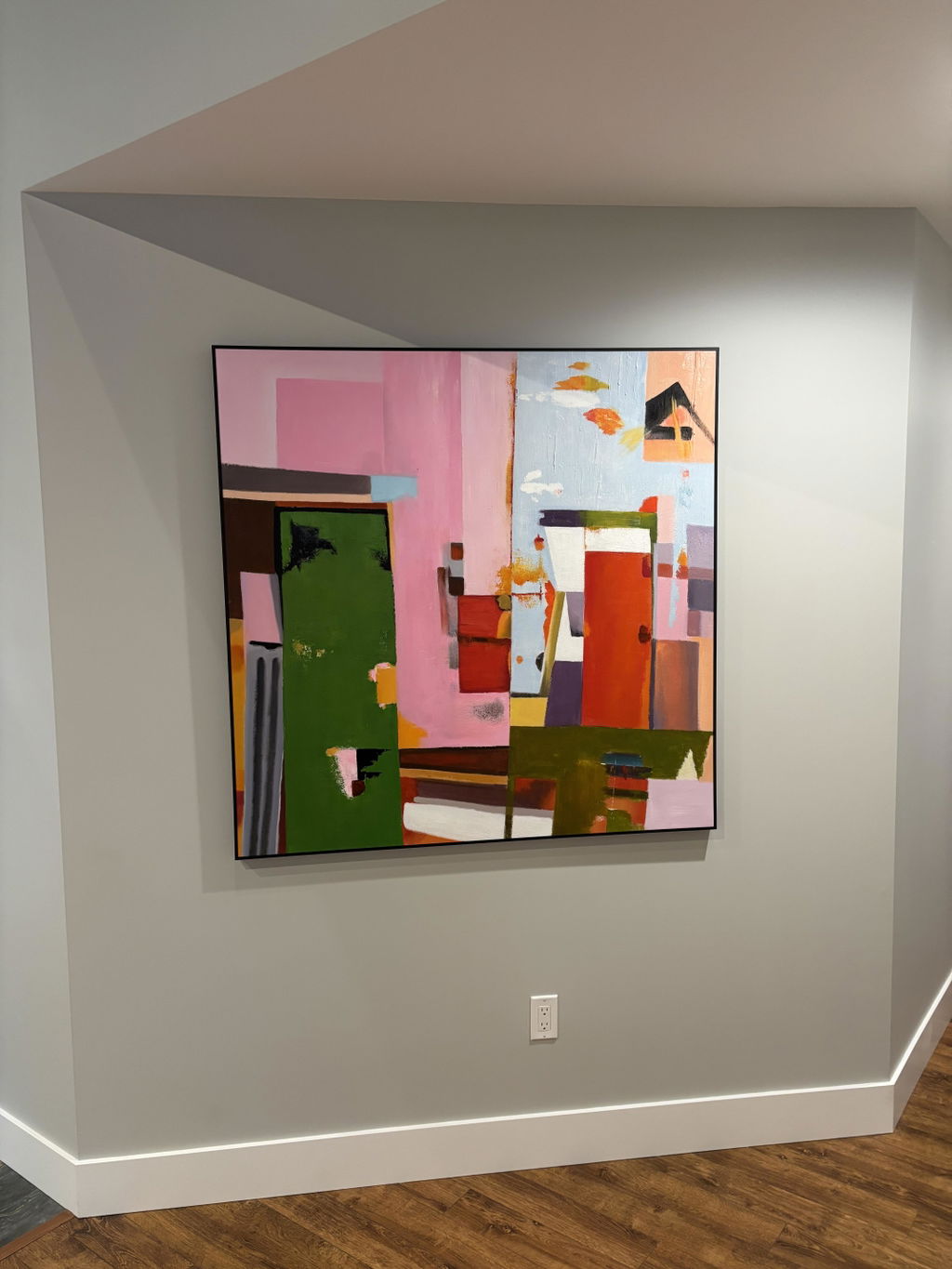
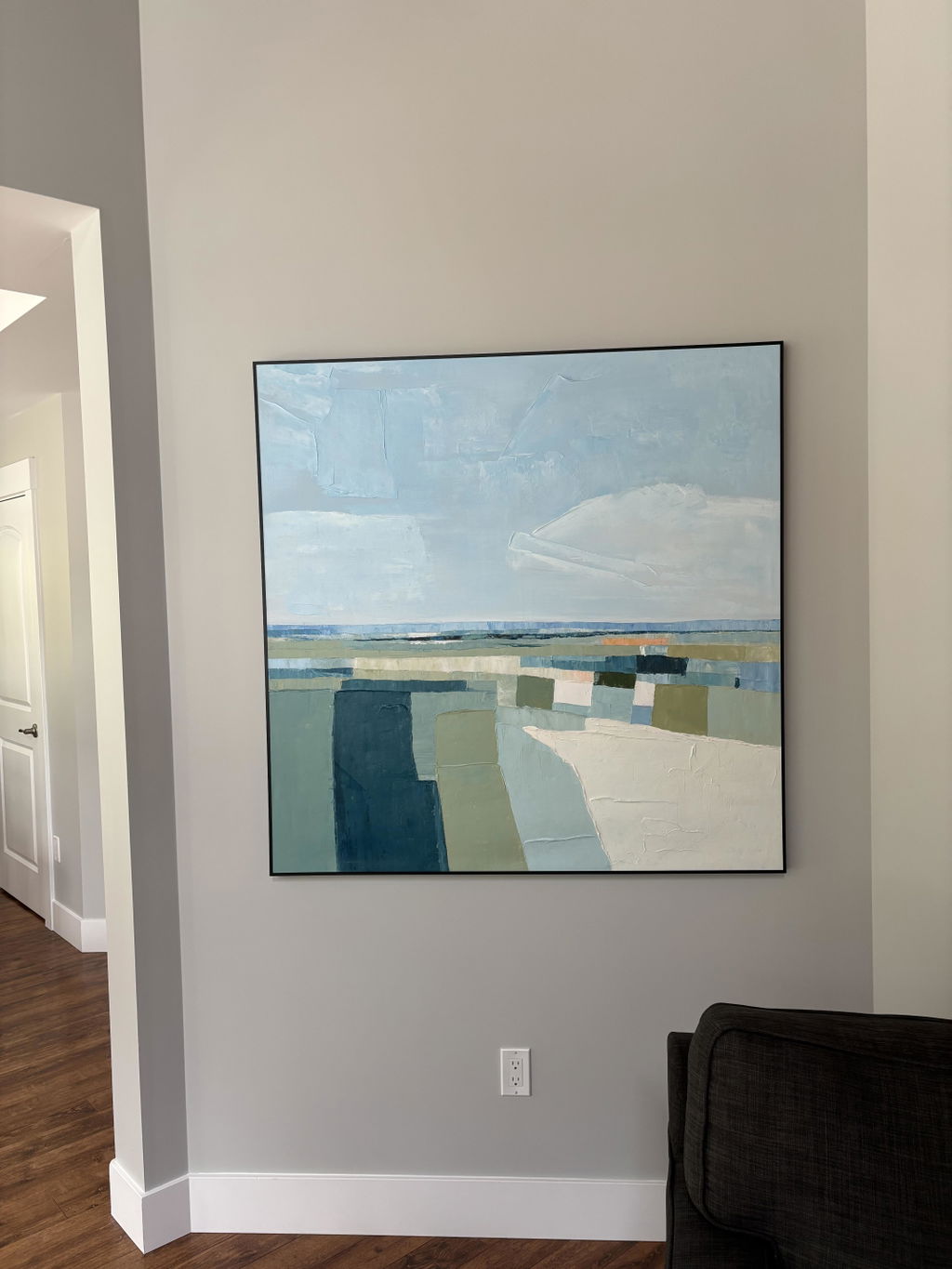
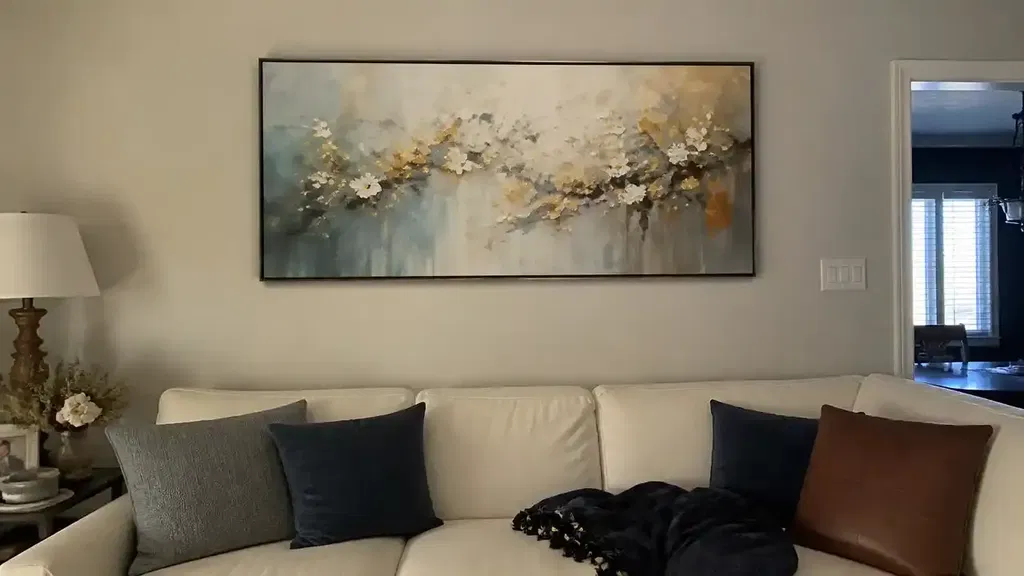
The landscape of high-end art acquisition is undergoing a fundamental transformation. While the traditional auction market for vanity assets has seen a significant retreat—with sales of pieces over $10 million plummeting 44% year-over-year in 2024 according to Marketplace—a new priority has emerged for the modern homeowner. We are seeing a move away from speculative financial assets toward "real application value": hand-painted works that define the soul of a home’s social spaces.
This shift is rooted in a psychological need for authenticity. Research from Columbia University confirms that consumers value art labeled as "human-created" significantly higher than AI-generated alternatives. Furthermore, according to the University of Chicago, digital replicas lack the "essential identity" and soul that only a physical canvas, layered with the artist’s neural and physical labor, can provide.
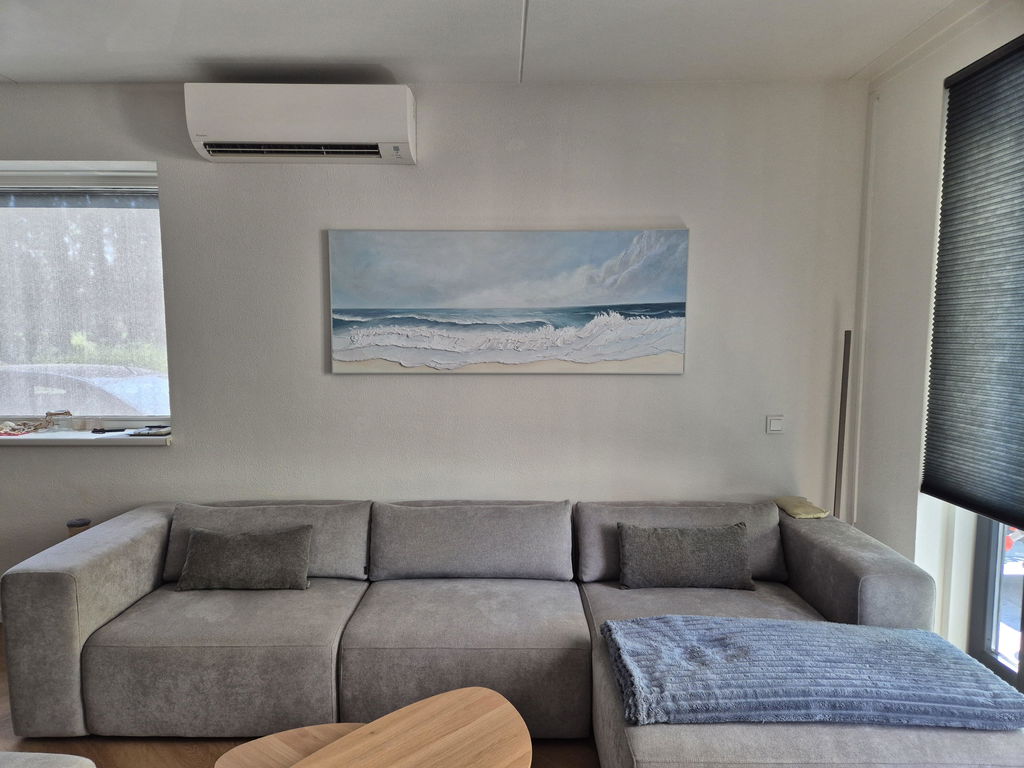
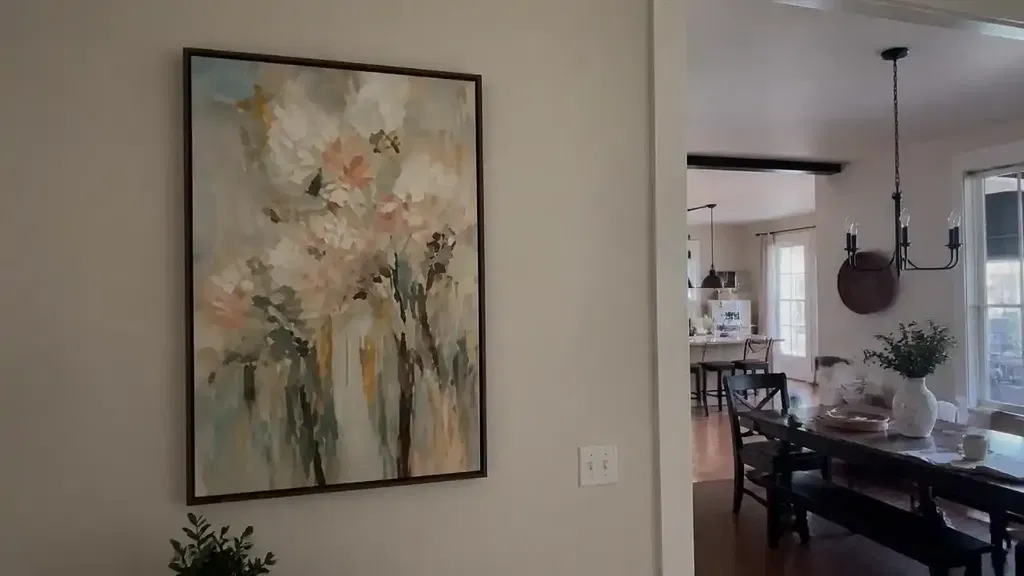
However, placing these high-value, hand-painted investments in high-traffic social areas—such as dining rooms, foyers, or open-plan living spaces—introduces a unique tension. These are "culinary-adjacent" environments where art is exposed to cooking vapors, fluctuating humidity, and well-intentioned but potentially catastrophic cleaning habits. In our experience handling high-end commissions, the most common threat to an artwork’s longevity isn't neglect; it is the use of inappropriate household solvents.

The Chemistry of the Canvas: Why Household Cleaners Fail
To understand why your kitchen spray is a "death sentence" for a professional painting, we must look at the microtopography of the surface. Authentic oil and acrylic paintings are not flat; they are complex, porous structures. According to optical microprofilometry research, the millimeter-scale texture of a painting is crucial to its aesthetic and how it interacts with light.
When you apply a standard glass or multi-surface cleaner to these textures, you aren't just "wiping the surface." You are introducing aggressive surfactants and solvents into a delicate chemical matrix.
The pH Fallacy in Art Preservation
A common misconception in home maintenance is that "pH-neutral" means "safe for everything." However, as noted in research from Conservation OnLine (CoOL), optimal pH for cleaning varies dramatically by medium. A solution that is perfectly neutral (pH 7) might still be too aggressive for certain organic binders or could trigger the migration of additives within the paint film.
Methodology Note: Solvent Risk Modeling Our assessment of solvent impact is based on a deterministic scenario model comparing common household chemicals against the chemical resistance profiles of modern artist media.
Solvent Type Common Household Source Primary Risk to Art Mechanism Ammonia Glass Cleaners Varnish Dissolution Strips protective layers, causing permanent clouding. Citric Acid "Natural" Degreasers Pigment Etching Low pH (2-3) reacts with metal-based pigments. Sodium Bicarbonate Abrasive Pastes Mechanical Abrasion Scratches the micro-texture (refractive index change).
| Alcohol/Ethanol | Disinfectant Wipes | Swelling/Softening | Breaks down acrylic polymer chains instantly. |
Logic Summary: This model assumes standard room temperature (21°C) and a curing time of at least 6 months for the artwork. Boundary conditions: Results may vary for unvarnished works or "wet-on-wet" techniques.
The "Hazy" Acrylic Mystery: Surfactant Migration
If you own an acrylic work, you may have noticed a mysterious white, cloudy film appearing over time, especially in humid social spaces. This isn't necessarily dirt; it is often a phenomenon known as "surfactant migration."
According to the Tate Modern Paints Project, acrylic paints contain PEG-type surfactants that can migrate to the surface when environmental temperature and humidity rise. These surfactants form water-soluble microcrystals that create a "hazy" appearance.
The danger arises when a homeowner attempts to "scrub" this haziness away with a standard cleaner. Because acrylic films are formed through physical coalescence rather than the oxidative cross-linking found in oils (JustPaint), they remain softer and more prone to absorbing liquid cleaners. This can trap the cleaner’s residue inside the paint film, leading to permanent structural damage or "Support Induced Discoloration" (SID), where impurities from the canvas are pulled forward into the paint (Golden Artist Colors).

Preservation Protocols for Culinary-Adjacent Spaces
Social spaces often overlap with dining areas, exposing art to what we call the "Culinary Challenge." Cooking vapors are essentially aerosolized fats and oils. When these settle on a painting, they create a sticky "magnet" for dust.
1. The Low-Pressure Air Technique
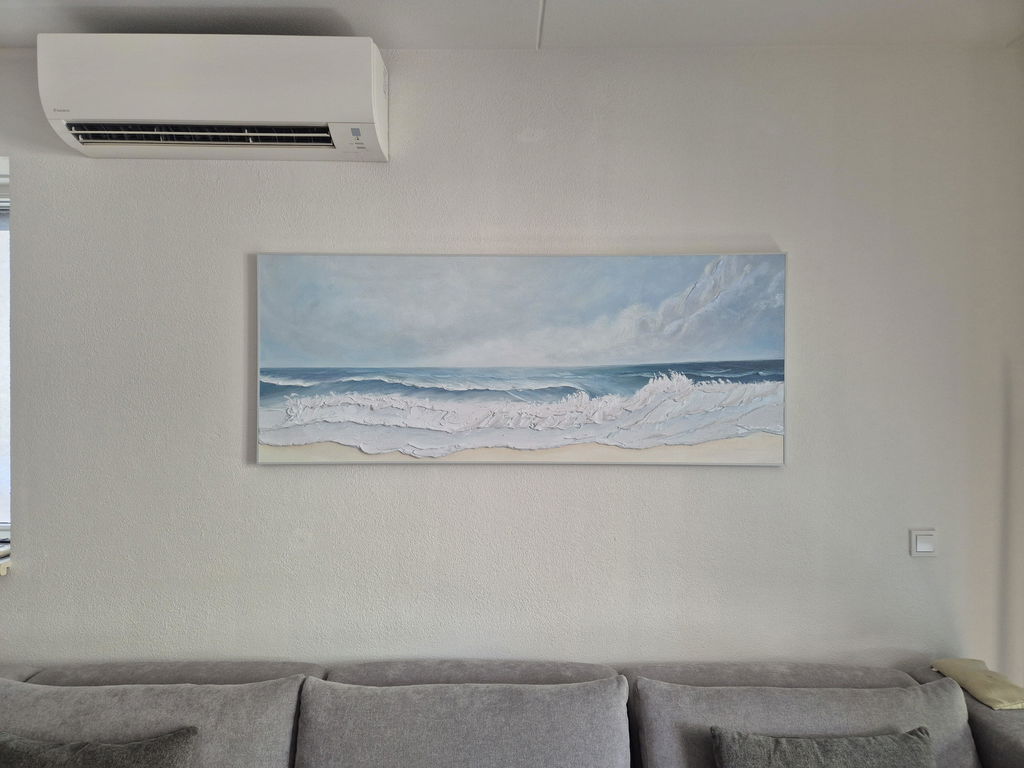
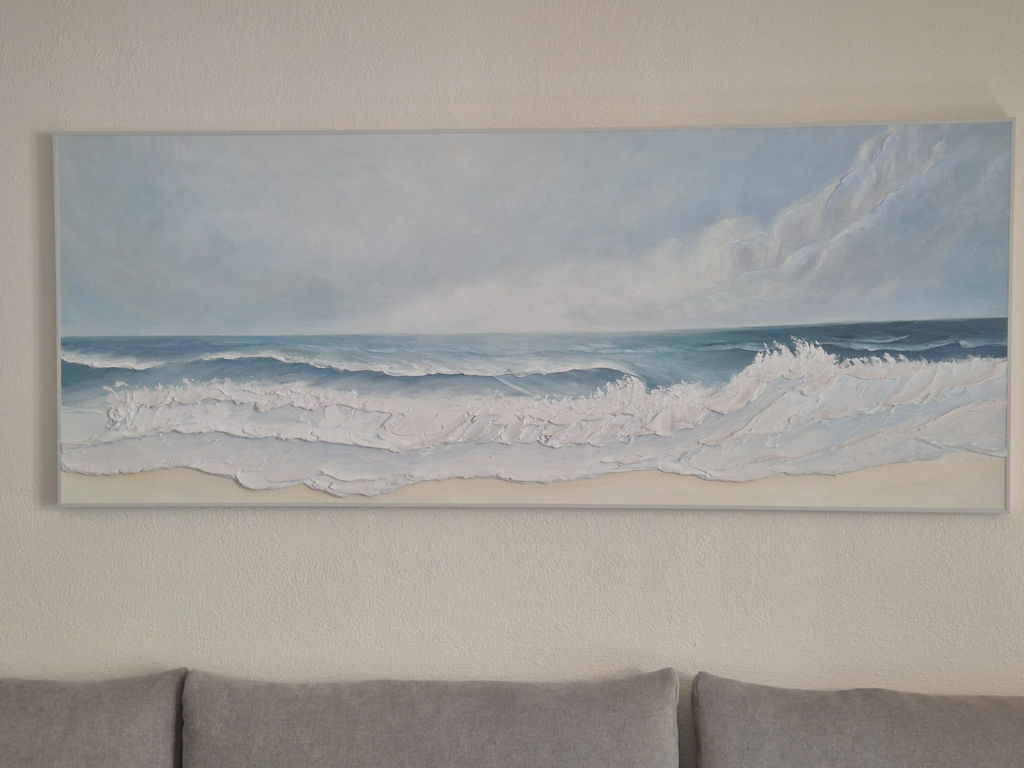
For textured oil paintings—especially those with heavy impasto—wiping is often the worst first step. Brushstrokes trap cleaning solutions, leading to uneven drying and cracking. Instead, we recommend using compressed air at a controlled pressure of 10-15 PSI. This removes loose particles without introducing moisture or friction.
2. The Distilled Water Standard
When a dry microfiber cloth is insufficient, the only "solvent" a homeowner should consider is distilled water. Why distilled? According to Frizzlife, the removal of minerals and ions prevents the "spotting" or chemical reactions that tap water can trigger when it encounters metal-based pigments like Cobalt or Cadmium.
The Two-Step Cleaning Protocol:
- Dry Lift: Use a high-GSM microfiber cloth to gently lift (not rub) surface dust.
- Swab Method: Lightly dampen a medical-grade cotton swab with distilled water. Work in tiny circular motions, starting from the edge of the artwork and moving inward. This prevents the "pushing" of dirt into the center of the piece.
Safety and Toxicity: The Hidden Hazards of Pigments
While we focus on protecting the art, we must also protect the inhabitants of the home. Many premium hand-painted works utilize traditional pigments that carry significant health risks if handled improperly during "cleaning" or restoration.
The International Agency for Research on Cancer (IARC) classifies cadmium compounds—found in the most vibrant reds and yellows—as Group 1 carcinogens. While safe when locked in a cured paint film, aggressive cleaning that "chalks" or abrades the surface can release toxic particles into the home environment.
Furthermore, the EPA warns that indoor air pollution is often more severe than outdoor levels. This is why we advocate for works created with low-VOC (Volatile Organic Compound) materials. Research from Aalto University shows that coatings on moisture-controlled substrates emit significantly lower VOCs, a critical factor for achieving LEED or WELL certifications in high-end residential and healthcare developments.
The ROI of Art Preservation
Investing in original hand-painted art is not just an aesthetic choice; it is a financial one. Data from the Royal Society found that neighborhoods with higher "art" geo-tags saw greater relative house price gains. In the commercial sector, the Urban Institute reports that public art projects can drive billions in real estate growth and even reduce pedestrian accidents by 50% through "asphalt art" interventions.
When you maintain your art using gallery-standard protocols, you are preserving a "non-renewable cultural heritage asset" (PMC). This longevity ensures that the work continues to activate the medial prefrontal cortex (mPFC) and amygdala of your guests, optimizing emotional regulation and social cohesion (NCBI).

Strategic Placement: Lighting and Environment
Beyond cleaning, the "Social Space" protocol requires managing light. ASTM D4303 is the industry standard for measuring lightfastness—how well a pigment resists fading. Even the most "lightfast" oils can suffer if placed in direct, unfiltered UV light.
We often suggest a "Biophilic Design" approach, which uses nature-themed murals to reduce stress (University of Central Arkansas). However, these works must be protected with UV-absorbing varnishes. These varnishes act as a sacrificial layer; they are designed to be removed and replaced by a professional conservator every 20-30 years, taking the accumulated grime of social life with them while leaving the original paint untouched.
For those navigating the complexities of color change, our guide on Yellowing vs. Patina: Why Oil Painting Colors Change Over Time provides a deeper look into the natural aging process of binders.
Summary Checklist for Social Space Art Care
To ensure your hand-painted investment remains a gallery-quality centerpiece for decades, follow these expert-vetted heuristics:
- The 6-Month Rule: Never attempt any "wet" cleaning on a new oil painting for at least 6 months to a year. Oils dry through oxidation, a slow process that requires the film to fully cross-link before it can resist moisture.
- The "Kitchen Counter" Test: If a cleaner is designed to strip grease from a stove, it will strip the life from your painting. Avoid all household degreasers.
- Microfiber Only: Never use paper towels or "scrubby" sponges. These can leave behind fibers or create micro-scratches that alter the painting's Pigment Saturation.
- Distilled Water Only: If a dry wipe fails, use a cotton swab dampened with distilled water.
By treating your art with the same technical rigor used by museum conservators at the Tate or the Getty, you protect not just the physical object, but the emotional and financial value it brings to your home.
Disclaimer: This article is for informational purposes only and does not constitute professional conservation advice. Always consult with a certified art conservator before attempting major cleaning or restoration on high-value artworks.