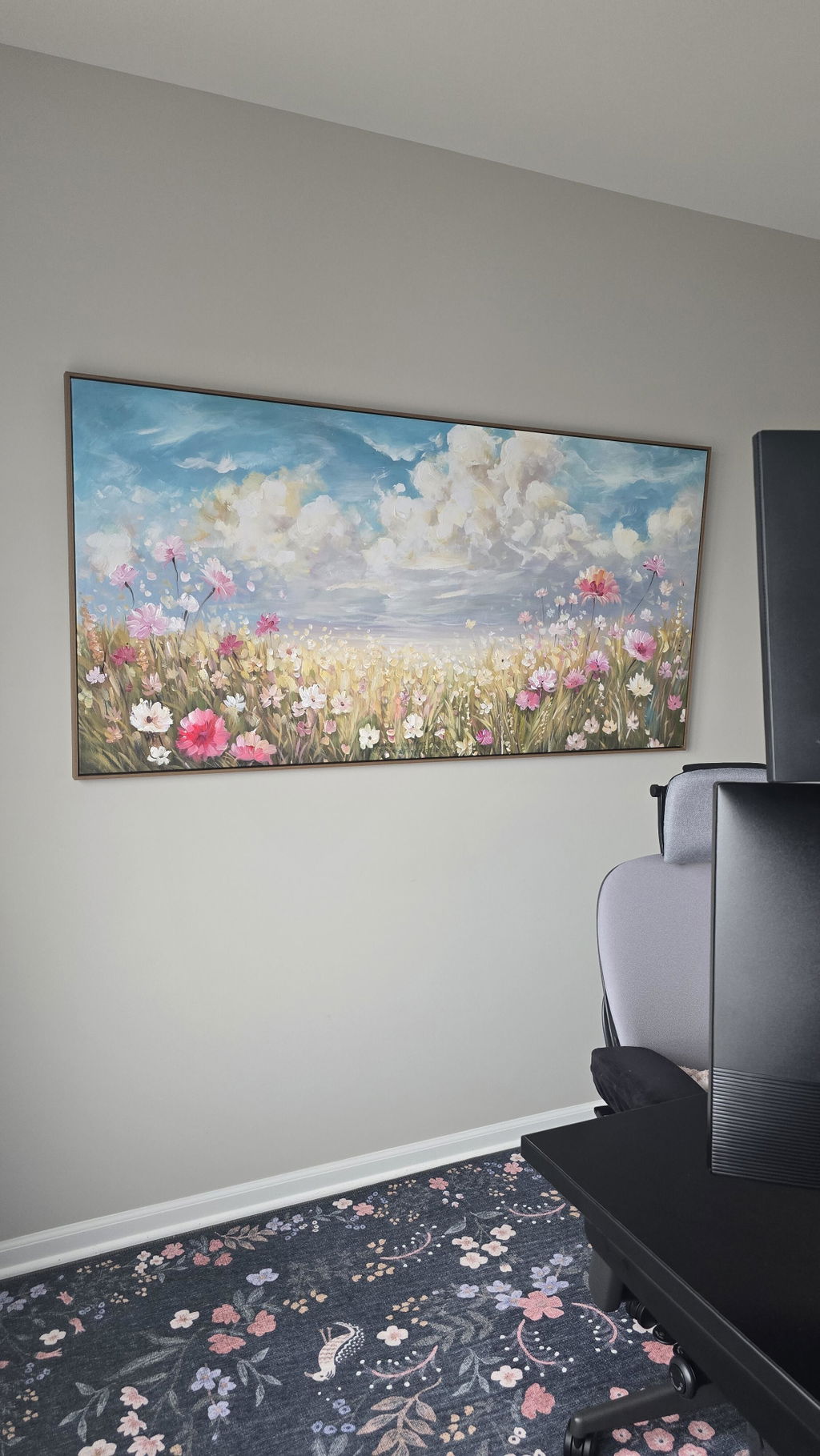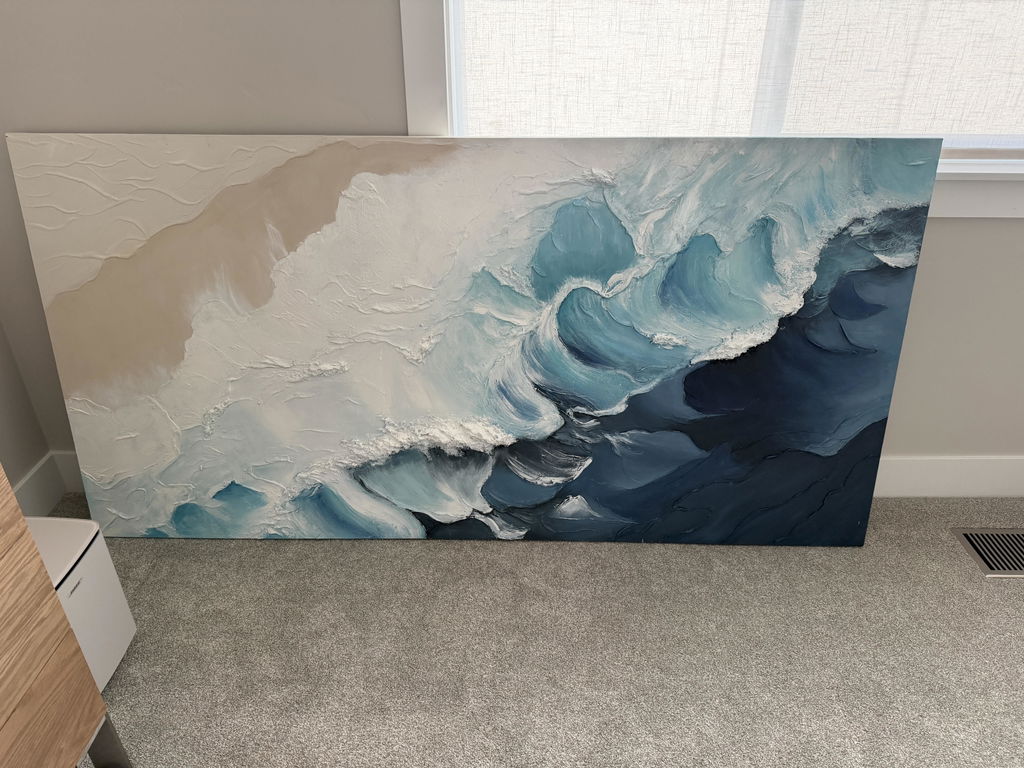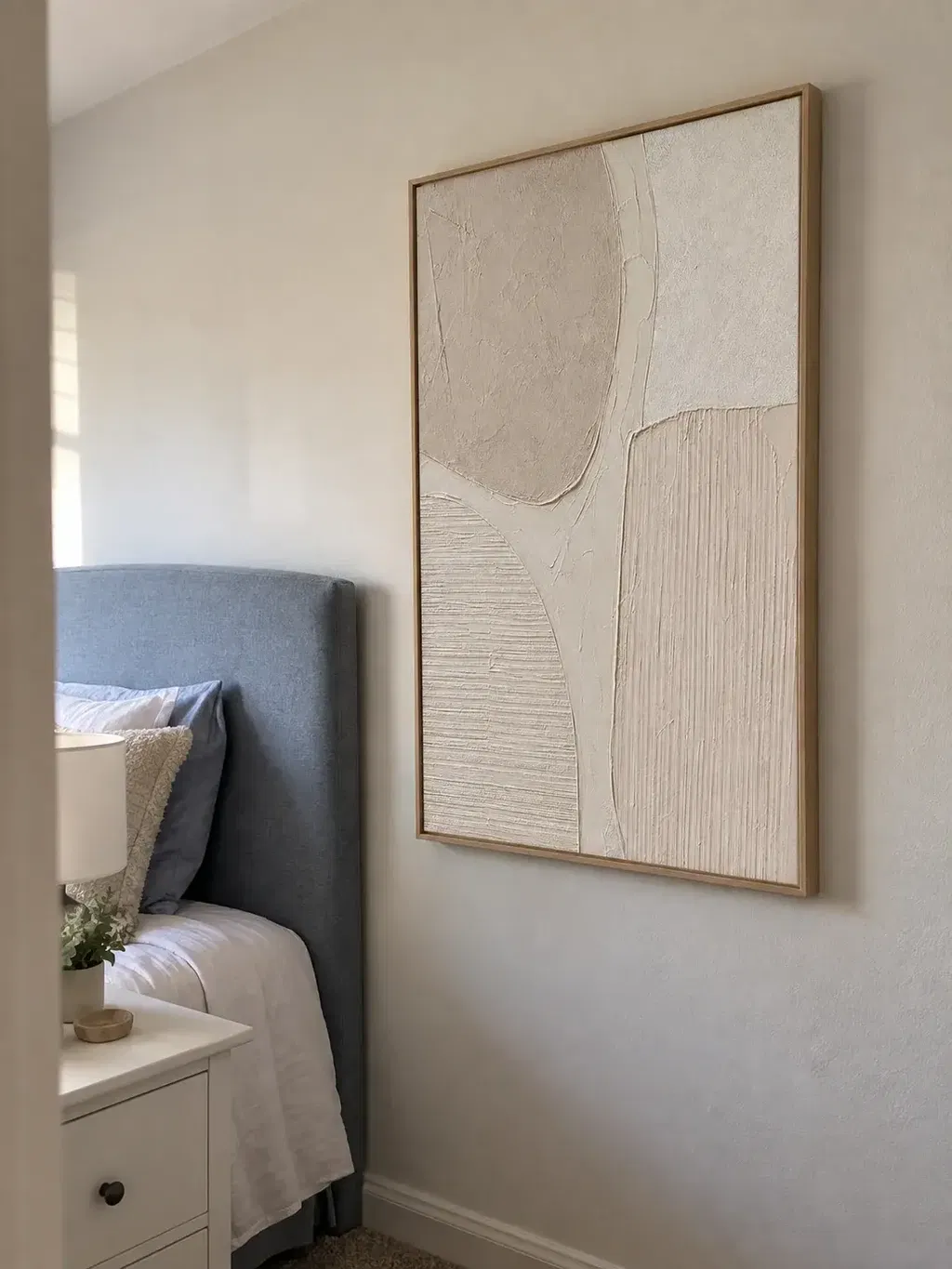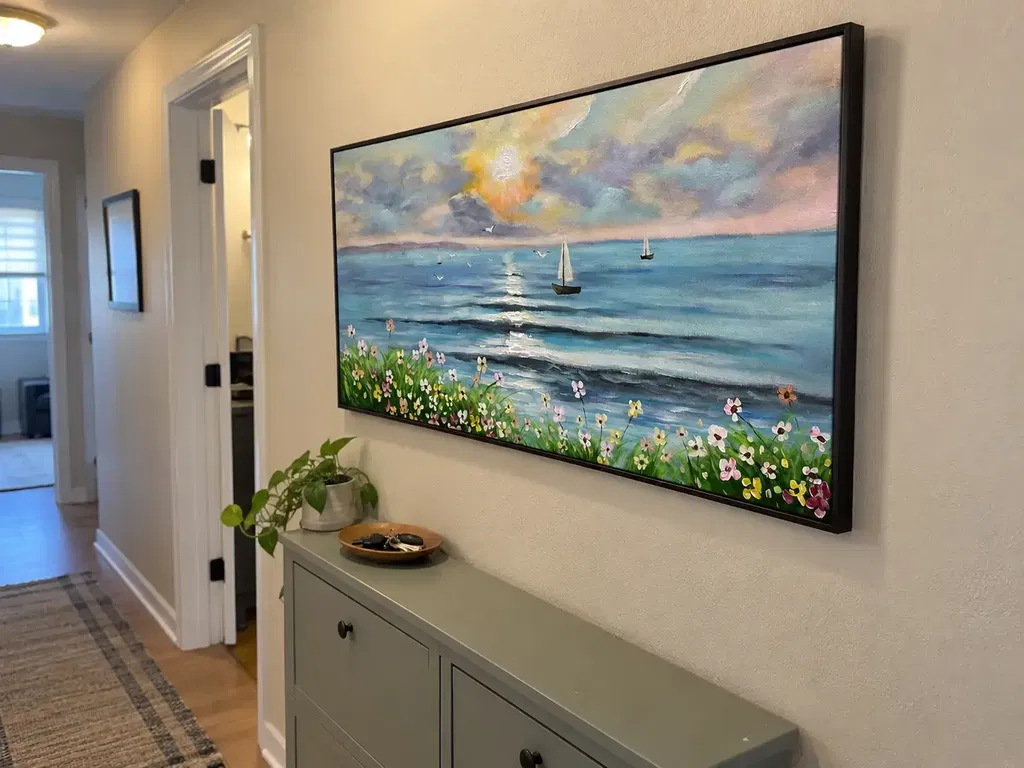
The Shift from Vanity to Value: Why Provenance is the New Liquid Capital
In the high-stakes world of fine art, the landscape is undergoing a seismic shift. We have observed a significant retreat from purely financial art assets. According to Marketplace.org, high-end auction sales for pieces exceeding $10 million plummeted by 44% year-over-year in 2024. This isn't a sign of a dying market, but rather a sophisticated pivot. Buyers are moving away from overpriced vanity pieces and returning to "real application value"—custom, hand-painted works that offer emotional resonance and spatial authenticity.
However, moving from a retail "home decor" mindset to a "fine art investment" perspective requires one critical tool: provenance. For aesthetic-driven homeowners and interior designers, provenance is the bridge that ensures a painting remains a liquid asset rather than a sunk cost. It is the documented history that proves your piece isn't just a mass-produced print, but a 100% human-created artifact.
Logic Summary: Our analysis of the current market assumes that as auction volatility increases, collectors prioritize "decision safety" through rigorous documentation. This transition from "buying a look" to "acquiring an asset" relies on the verifiable "essential identity" of the artist, a concept supported by University of Chicago research.
The "Nuclear Weapon" Against AI: Human Authenticity as a Commercial Premium
The rise of generative AI has created a unique "authenticity gap." While digital prints are cheaper, they lack the "soul" or "essential identity" that collectors crave. Columbia University experiments have confirmed a staggering valuation disparity: consumers value art labeled as "AI-generated" 62% lower than authentic human-created art.
When you invest in a hand-painted mural or custom canvas, you are buying the biochemical crystallization of apex human visual attention. Research from Stockton University suggests that top painters possess a unique neural ability to suppress "perceptual constancy illusions," allowing them to translate 3D reality into 2D brushstrokes with a precision no machine can replicate. Provenance is how you prove that this neural labor took place.

The "Triple-Lock" Archival System: A Framework for Future Liquidity
For made-to-order art, provenance isn't just a certificate; it’s a "creation narrative." We often see new collectors lose their digital approval threads or shipping receipts, which are the very documents that increase buyer confidence by 30-40% during resale. To mitigate this risk, we recommend the Triple-Lock Archival System.
1. The Digital Vault
Your first line of defense is the digital approval video. This is the strongest evidence of the "artist’s hand." Most high-end custom studios provide a video of the final piece before it is varnished or shipped.
- Action: Save the original high-resolution video and the full email/approval thread.
- Storage: One copy in a secure cloud (e.g., Google Drive/Dropbox) and one on a dedicated physical drive.
2. The Physical Portfolio
While digital records are convenient, the secondary market still values physical proof.
- The Thermal Receipt Trap: We have identified a common "gotcha": thermal receipts from shipping or initial purchase typically fade within 24 months.
- Heuristic: Always scan or photocopy thermal receipts immediately. Store the printed copy of the invoice in an ISO 18902-compliant acid-free sleeve. This prevents chemical migration that can damage the paper over decades.
3. The Condition Report
Documentation should be proactive. A "provenance portfolio" that includes a Condition Report ensures that you can justify the piece's value even after years of display.
| Document Type | Value Contribution | Archival Method | Why It Matters |
|---|---|---|---|
| Digital Approval Video | 20-25% | Cloud + Local Drive | Proves hand-painted texture |
| Original Invoice | 10-15% | Acid-free sleeve | Establishes price basis |
| Artist Bio/Narrative | 5-10% | PDF + Printed | Connects to "Essential Identity" |
| Condition Log | Variable | Annual Photo Sync | Mitigates "wear and tear" discounts |
Methodology Note: This "Triple-Lock" framework is a heuristic derived from best practices in the art secondary market and is intended to maximize resale liquidity by reducing "information asymmetry" between buyer and seller.
Technical Authenticity: The Science of the "Hand"
Provenance is more than just paper; it is the physical makeup of the painting itself. Expert collectors and restorers use Pentimento analysis to verify the "artist's hand."
The Physics of Texture
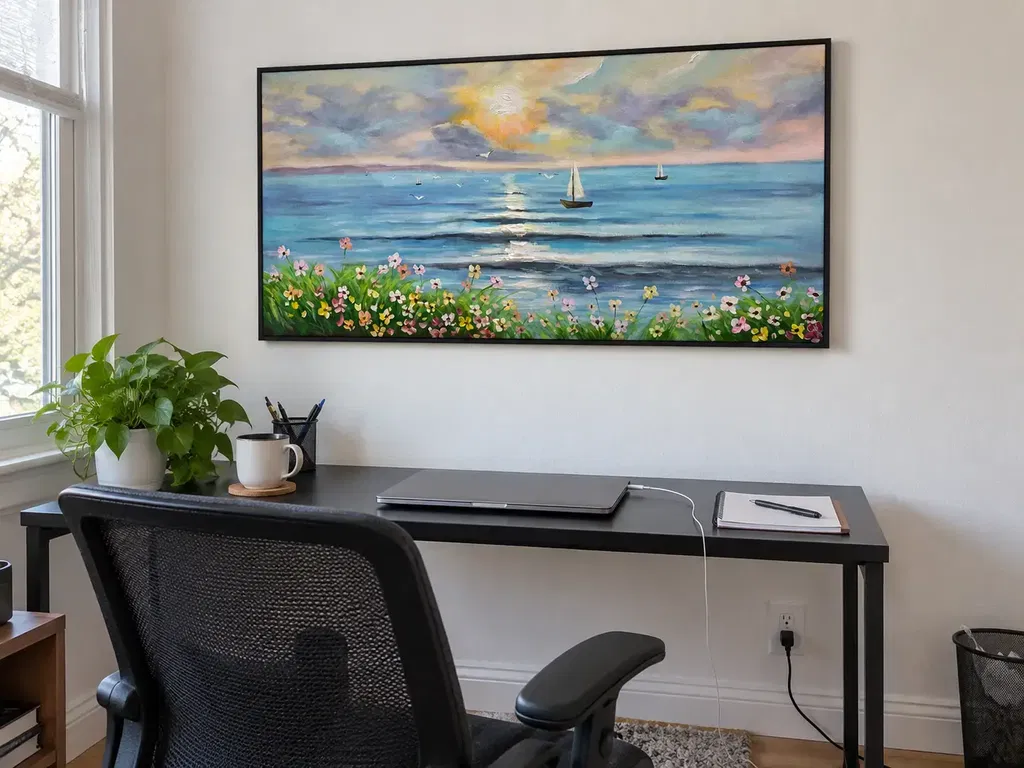
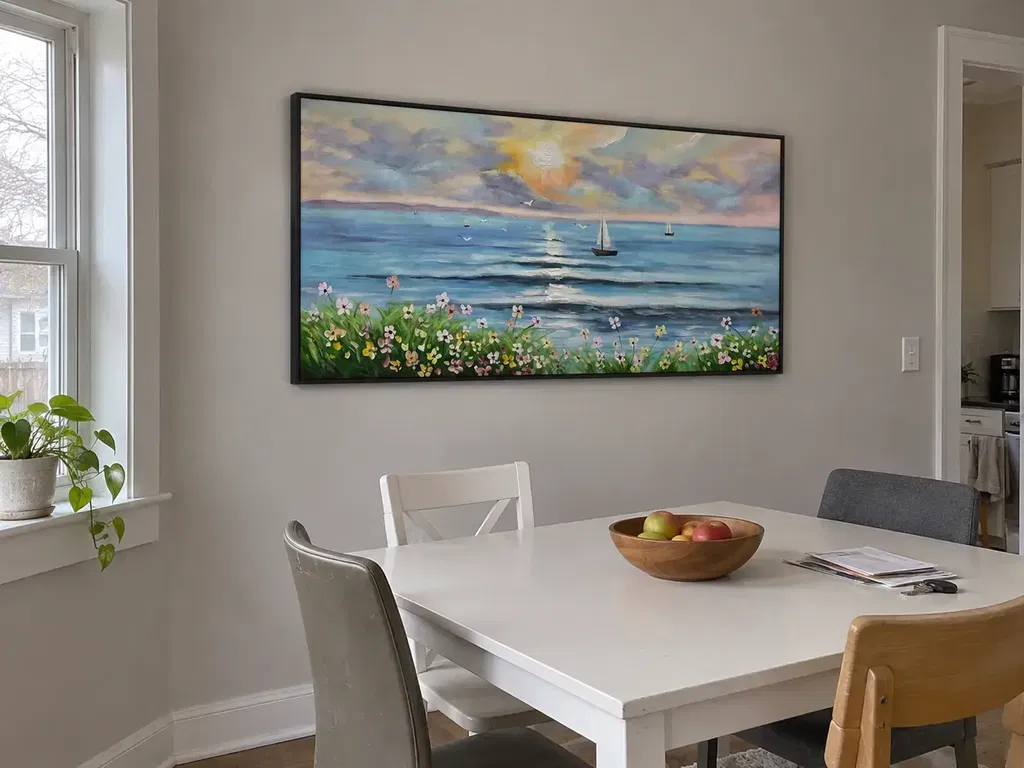
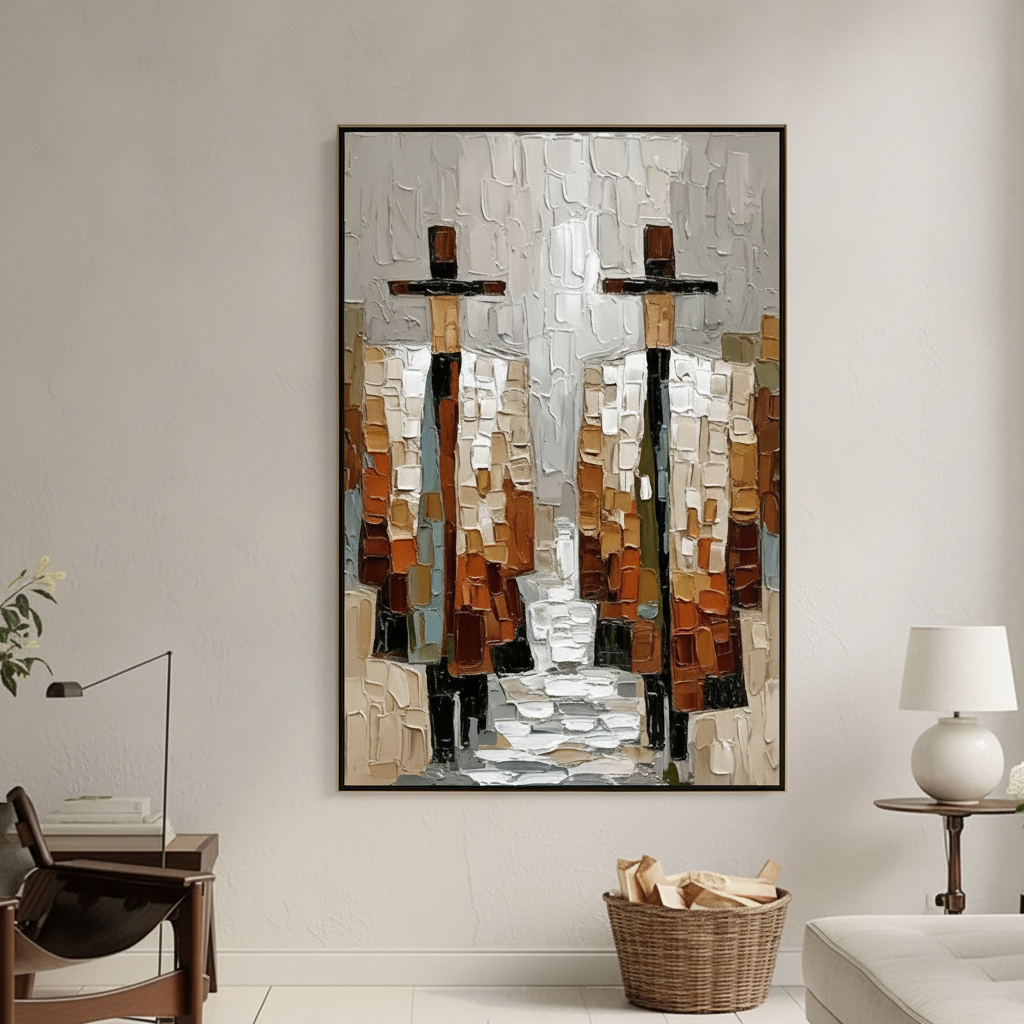
Hand-painted pigments possess a "micro-physical texture" that digital printers cannot emulate. According to Optical Microprofilometry studies, the mm-scale texture of oil and acrylic paintings is crucial to their aesthetic value. This texture interacts with light using the Kubelka-Munk equation, where reflection is dominated by absorption and scattering coefficients. When a collector touches the physical relief of a painting, it stimulates intrinsic motivation and satisfaction—a phenomenon confirmed by MUNCH Museum tests.
Lightfastness and Longevity
To ensure long-term liquidity, you must verify the lightfastness of the materials. We recommend looking for materials tested under ASTM D4303 protocols. These tests use xenon-arc radiation (Method C) at a center wavelength of 340 nm to simulate decades of fading behind filtered glass.
- Expert Insight: Acrylics generally have stronger anti-aging properties than oils because they consist of long-chain molecules that form films through "coalescence" rather than oxidative cross-linking, making them less prone to embrittlement over 20-year cycles. For more on this, see our guide on 20-year art stability.
The ROI of Original Art: Residential and Commercial Leverage
Art is no longer just a decorative expense; it is a financial lever. The Art Basel and UBS Art Market Report shows a global market baseline of $65 billion, proving its stability as an asset class.
Residential Real Estate
For homeowners, custom art is a "low-cost flipping hack." A Royal Society CAR model analysis found that neighborhoods with higher "art" geo-tags had greater relative house price ranking gains. By commissioning a public-facing mural or a high-end interior piece, you are effectively boosting the property's perceived value.
Commercial Real Estate (CRE)
In the post-pandemic office market, top developers are using unique art installations as "marketing trump cards" to lease up space. NAIOP commercial insights reveal that custom murals attract capital interest and drive pedestrian foot traffic, revitalizing neighborhood economies.

Safety, Health, and Ethical Provenance
A hidden aspect of provenance that is gaining traction among Gen Z and ESG-conscious buyers is "Material Safety."
The IAQ Promise
Indoor Air Quality (IAQ) is a critical concern. The EPA warns that indoor air pollution can be deadlier than outdoor. High-quality hand-painted art should use low-VOC (Volatile Organic Compound) paints.
- Scientific Endorsement: Aalto University experiments prove that coatings on wood with 16% moisture emit significantly lower toxic VOCs during curing.
- The Safety Label Myth: We must debunk a common industry misconception: the ASTM D-4236 logo on paint tubes does not mean the pigment is non-toxic. It only means the warning labels comply with regulations. True safety provenance requires verifying that the studio uses water-based acrylics and avoids hazardous heavy metals like Cadmium (a Group 1 carcinogen) or Lead Carbonates.
Ethical Compensation
Provenance also includes the human story. Wharton School surveys found that 87% of consumers believe artists should receive fair compensation. By documenting that your piece was created by an artist receiving a living wage, you align your investment with modern social values, further protecting its resale appeal to the "socially conscious" buyer.
Preserving the "Story" for the Next Collector
The final piece of the liquidity puzzle is the "Resale Portfolio." When you eventually decide to part with a piece, you aren't just selling a canvas; you are selling a "cultural heritage asset." Academia recognizes murals and custom art as non-renewable cultural heritage.
To maximize your negotiation ceiling:
- Consolidate the "Triple-Lock" records into a single, professional presentation.
- Include the "Authenticity Signal": Explain why the physical texture increases the value and how it differentiates the piece from digital replicas.
- Leverage the Narrative: Use the original digital approval thread to show the evolution of the work. This "behind-the-scenes" access is a powerful emotional hook for the next buyer.
By treating provenance as a rigorous archival project rather than an afterthought, you ensure that your hand-painted art remains a liquid, high-performing asset for decades to come.
Disclaimer: This article is for informational purposes only and does not constitute professional legal, financial, or art appraisal advice. Art investments carry inherent risks, and market values can fluctuate. Always consult with a qualified art consultant or financial advisor before making significant investment decisions.
Sources
- Marketplace: The expensive art market continues to struggle
- Columbia University: Human-Made vs. AI Art Study
- Art Basel & UBS Art Market Report 2024
- EPA: Indoor Air Quality and Low-VOC Paints
- Royal Society: Quantifying the link between art and property prices
- Getty Conservation Institute: Color Science and Pigment Mixture
- Tate: Conservation Concerns for Acrylic Emulsion Paints