Appraisal Readiness: Documenting Art for Insurance Coverage
The high-end art market is undergoing a structural shift. In 2024, sales of auction pieces exceeding $10 million plummeted by 44% year-over-year, according to Marketplace.org. This retreat from purely financial, "vanity" assets suggests that high-net-worth (HNW) collectors are returning to "real application value"—art that serves a functional and aesthetic purpose within a lived environment. However, as collectors pivot toward made-to-order original oils and custom murals, a new challenge emerges: "decision safety."
For a traditional masterpiece, provenance is established through centuries of auction catalogs. For a bespoke, hand-painted commission, provenance begins the moment you click "approve" on a digital proof. To protect these assets, homeowners and designers must adopt a rigorous documentation strategy that satisfies the specific demands of modern insurance carriers.
The "Documentation Cliff" and Asset Valuation
One of the most common misconceptions among collectors is that documentation requirements scale linearly with a collection's value. In our experience auditing insurance portfolios, we observe what we call a "documentation cliff effect."
According to insights from Art2App, insurers utilize threshold-based systems where the burden of proof for a claim jumps dramatically at specific value points—typically at the $50,000, $100,000, and $250,000 marks. Below these levels, simplified receipts may suffice; above them, a lack of USPAP-compliant documentation can lead to a total claim denial or a settlement based on significantly lower "Fair Market Value" (FMV) rather than the actual cost of the commission.
Documentation Investment Heuristics
While conventional wisdom suggests spending 1–3% of an artwork’s value on documentation, our analysis of professional appraisal standards indicates that an investment of 2–4% is often required for comprehensive, audit-ready records.
| Asset Value Tier | Recommended Documentation Level | Typical Documentation Cost (%) | Rationale |
|---|---|---|---|
| < $50,000 | Basic: Invoice, high-res photo, COA | 1–2% | Standard ecommerce records usually suffice for "Personal Property" riders. |
| $50k – $250k | Intermediate: Professional photography, Verso shots, Approval Gate logs | 2–3% | Threshold where insurers demand proof of the "Artist's Hand." |
| > $250,000 | Advanced: USPAP appraisal, material safety data, spectral baseline | 3–4%+ | High-risk tier requiring forensic-level condition reports to avoid "evidence traps." |
Logic Summary: These ranges are based on common industry heuristics and standard insurance threshold modeling. They assume a standard residential risk profile and may vary based on the specific carrier's underwriting guidelines (e.g., Lloyds vs. Chubb).

Proving the "Artist's Hand": The Raking Light Technique
The primary risk for made-to-order art is "authenticity collapse." In an era where AI-generated prints are ubiquitous, insurers are increasingly skeptical of "original" claims. A study by Columbia University confirmed that consumers (and by extension, adjusters) value art labeled as human-created 62% higher than AI-generated equivalents.
To secure your investment, you must document the physical topography of the paint—the "essential identity" of the work. UChicago research suggests that digital replicas lack this soul because they lack the tactile relief of the artist’s struggle with the medium.
The Raking Light Protocol
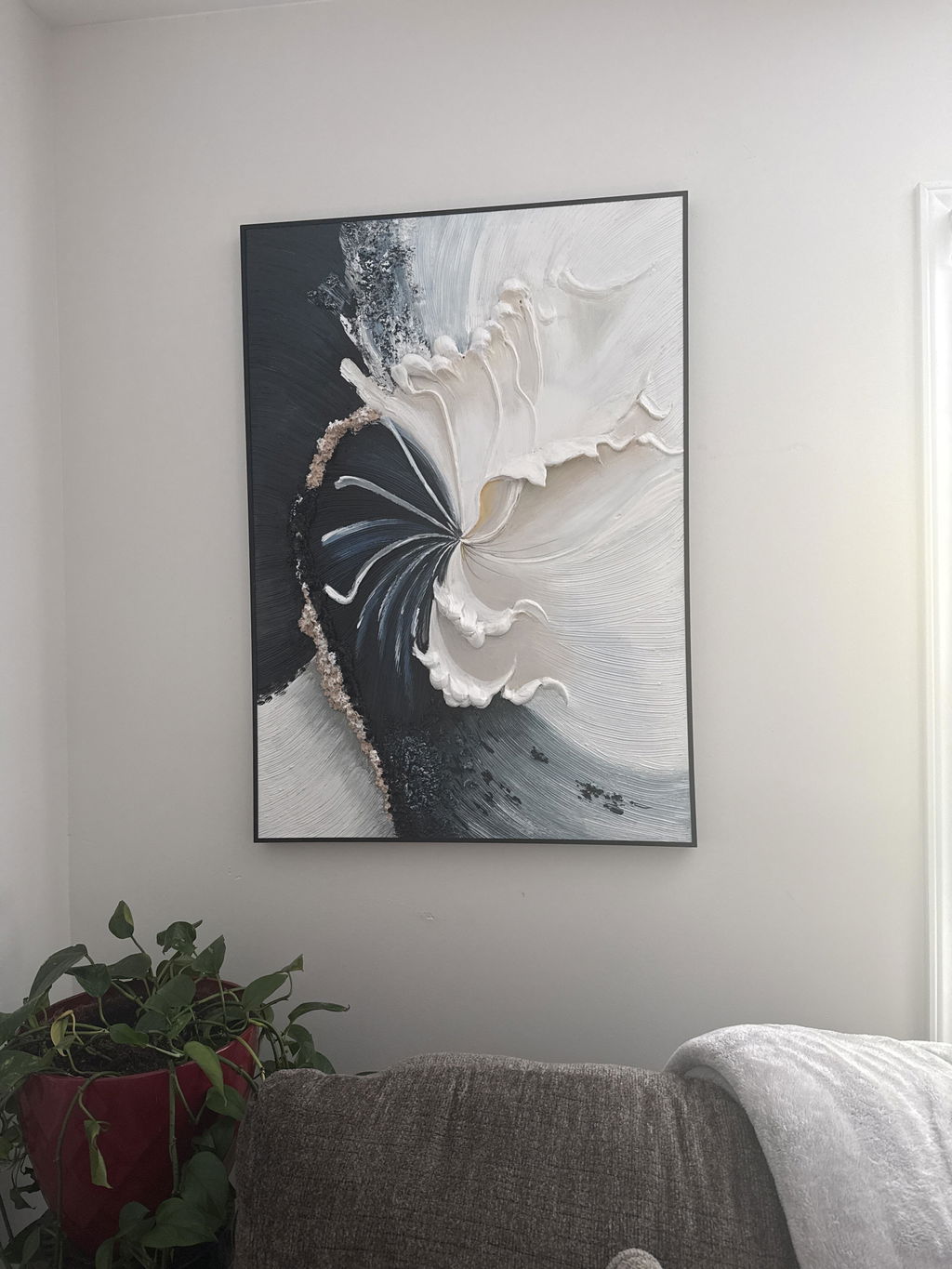
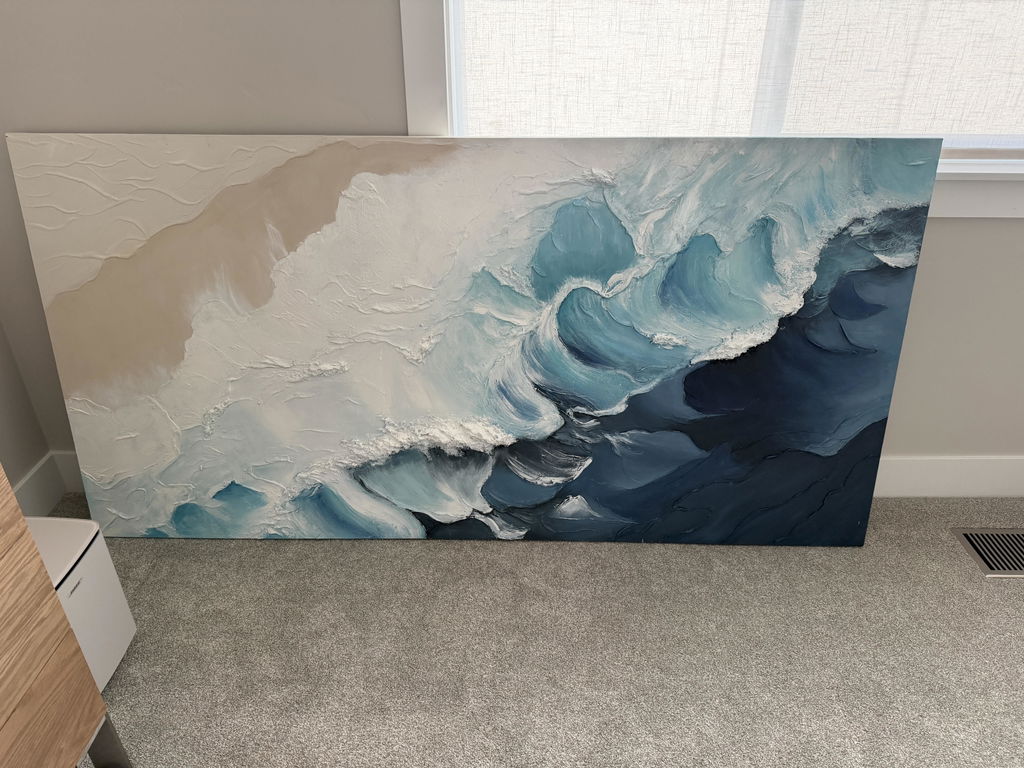
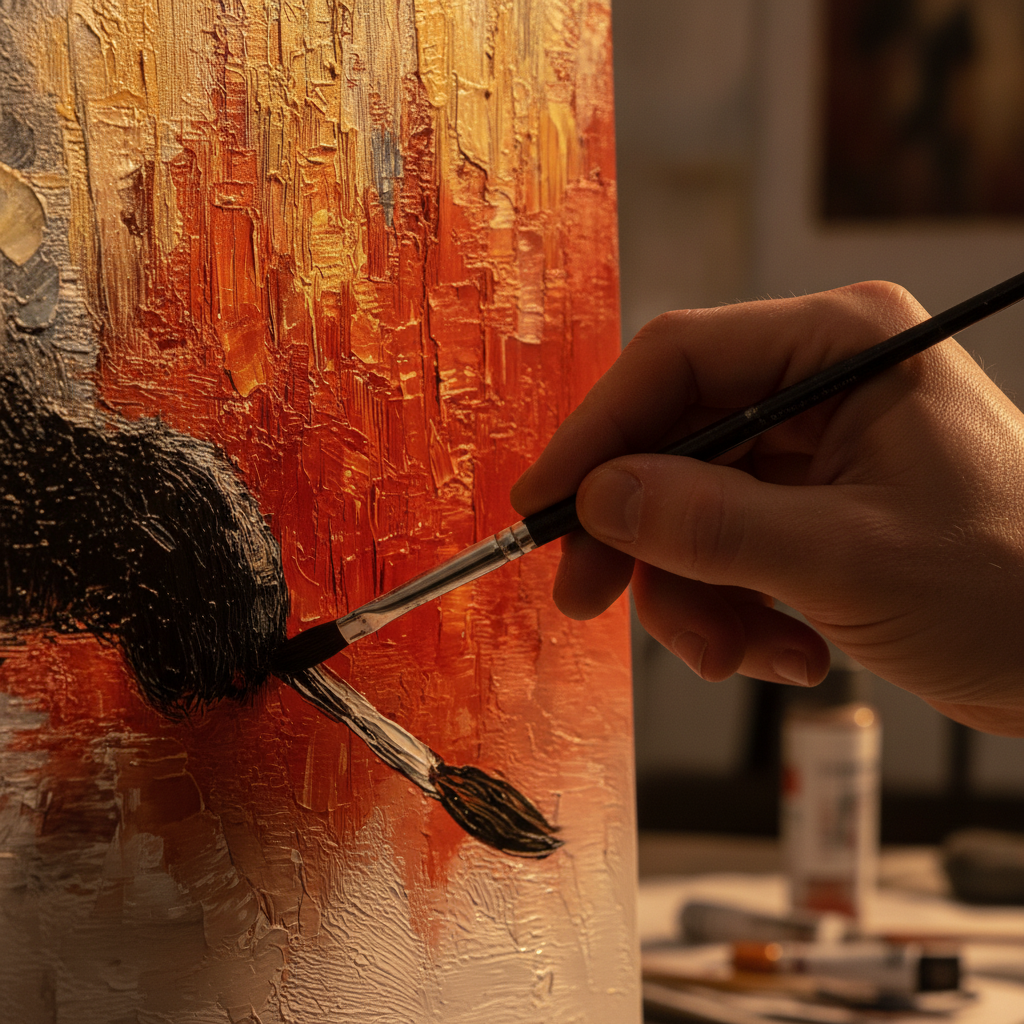
We recommend the "Raking Light" photograph as the gold standard for proving the handmade nature of a piece. By placing a light source at a sharp side angle, you highlight the impasto (the physical depth of the paint). This distinguishes an original oil from a flat, high-definition print.
Furthermore, always document the "Verso" (the back) of the canvas. Insurance adjusters use the stretcher bar construction, canvas tensioning, and the presence of hand-stapling to verify that the piece was not mass-produced on a mechanical line.
The Physics of Texture
The aesthetic and financial value of these textures is rooted in optical physics. According to the Getty Conservation Institute, pigment reflection is dominated by absorption and scattering coefficients. The physical differences in surface refractive index—created by the uneven application of paint—are what produce the "saturated" look unique to oils. When you document these with high-resolution photography, you are capturing the "analytical signature" of the work.
Leveraging "Approval Gate" Media for Provenance
The made-to-order model offers a unique documentation advantage: the digital trail of the creation process. For high-net-worth collections, the videos and high-resolution photos provided during the commission process serve as a timestamped quality baseline.
In the event of a claim, these "Approval Gate" assets establish the condition and authenticity at the point of fulfillment. This is particularly critical because online art ecommerce is growing—Artsy reported a 15% year-over-year increase in online gallery sales in 2024, as noted in the Artsy Art Market Report.
However, we often see a "technology obsolescence risk." As On-Sight art documentation specialists point out, digital formats from just five years ago can become incompatible with current insurance verification systems. We recommend maintaining a "hybrid archive":
- Cloud-based logs: All approval videos and high-res proofs.
- Physical Certificate of Authenticity (COA): Signed by the artist/studio.
- Material Data Sheets: Specifying the pigments and binders used (essential for restoration).

The "Replacement Cost" Rider vs. Fair Market Value
For original oils that lack a secondary auction history, the standard "Fair Market Value" (FMV) appraisal is often a disadvantage. FMV is based on what a willing buyer would pay a willing seller in an open market—a figure that can be volatile and difficult to prove for custom works.
Instead, we advise high-net-worth clients to secure a "Replacement Cost" rider. This coverage pays the expense of commissioning a new, equivalent work from the same artist or studio at current market rates.
Why Replacement Cost Matters
- Artisan Trends: Interest in "artisan craftsmanship" rose 21% recently, according to Zillow search data. As the demand for custom work increases, the cost of labor and materials rises.
- Economic Impact: The U.S. Bureau of Economic Analysis reports that arts and cultural industries added $1.2 trillion to the GDP in 2023. This massive economic baseline means that the "cost to recreate" often outpaces the "resale value" for decorative but high-quality custom pieces.
For valuation standards on decorative works, the Appraisers Association of America provides frameworks that can help your insurance agent justify higher premiums for these specialized riders.
Health, Safety, and the "Hidden Provenance" of Materials
In the modern insurance landscape, the chemical composition of your art is a liability and asset protection issue. Insurers are becoming more sensitive to Indoor Air Quality (IAQ) and the long-term stability of materials.
The Non-Toxic Premium
Aalto University’s research on VOC emissions from painted wood proves that high-quality coatings emit significantly fewer toxins during curing. For HNW clients, documenting the use of low-VOC, non-toxic pigments (like Titanium White instead of Lead White) is not just a health choice—it’s a way to "secure green building points" for LEED-certified properties, which can impact property valuation.
Furthermore, the WHO Scoping Review on Arts and Health has elevated art from "decor" to "public health infrastructure." Documenting that your art uses eco-friendly flax canvases or walnut oil binders—which consume half the water of cotton and avoid toxic solvents—appeals to the 87% of consumers who demand fair artist compensation and ethical material sourcing.
Lightfastness and Longevity
The ASTM D4303 standard defines how we measure the fading of pigments. When documenting your art for insurance, include the lightfastness ratings of the pigments used. This prevents insurers from claiming "inherent vice" (natural decay) if a painting fades prematurely due to poor material quality.
Methodology Note: Our recommendation for material documentation is a "risk-mitigation model." By documenting ASTM ratings, you shift the burden of proof from the owner to the manufacturer/studio in the event of material failure.
Commercial Applications: Murals and Property Value
For interior designers and commercial developers, documenting art is a direct link to property ROI. A study published by the Royal Society found that neighborhoods with higher art geo-tags saw greater relative house price ranking gains.
In commercial spaces, murals are "lowest-cost physical foot traffic generators." The University of Cincinnati found a direct correlation between murals and pedestrian increases. For insurance, this means the mural is not just "paint on a wall"; it is a commercial asset that drives revenue. Documenting the "catalytic effect" of these works—how they reduce crime by 40% (UMich's "Busy Streets Theory") or increase student scores by 18% (Americans for the Arts)—is essential for securing business interruption insurance that covers the loss of "landmark status" if the work is damaged.

Checklists for Appraisal Readiness
To ensure your collection is "appraisal ready," we recommend the following documentation framework, aligned with existing insights on art authenticity.
The Essential Document Bundle
- Sales Invoice: Clearly stating the "Made-to-Order" nature and the artist's name.
- COA (Certificate of Authenticity): Including dimensions, medium (e.g., heavy-body oil), and date of completion.
- The "Raking Light" Photo Set: 3–5 side-angle shots showing texture.
- Verso Documentation: Clear photos of the back of the canvas and stretcher bars.
- Material Safety Data (Optional but Recommended): Confirmation of low-VOC/non-toxic pigments to protect IAQ.
- Approval Gate Log: A PDF export of the digital approval process.
Common Documentation Errors to Avoid
- Failing to document "Support Induced Discoloration" (SID): As Golden Artist Colors notes, impurities in canvas can cause yellowing. Documenting the primer/gesso layer used can help distinguish this from environmental damage (like smoke or UV).
- Ignoring the "Haziness" Phenomenon: Acrylics can turn hazy due to surfactant migration (Tate Research). Documenting the cleaning protocol (e.g., using water-based swabs) is vital for maintenance coverage.
- Underestimating the "Documentation Cliff": Don't wait until your collection hits $100k to start professional archiving. The cost of "forensic reconstruction" after a loss is 10x higher than proactive documentation.
The Future of Art Protection
As we move toward 2026, the trend in high-end design is "understated elegance with texture as its soul" (Design State of Mind). This focus on the physical, tactile nature of art makes documentation more complex but also more rewarding.
By treating your commissioned art as a high-performance asset—documenting its chemical safety, its physical relief, and its creation history—you provide yourself with "decision safety." You are no longer just buying a beautiful object; you are securing a documented piece of cultural heritage.
YMYL Disclaimer: This article is for informational purposes only and does not constitute professional legal, financial, or insurance advice. Art valuation and insurance requirements vary by jurisdiction and carrier. Always consult with a qualified art appraiser and insurance broker before making significant investment or coverage decisions.
Sources
- Marketplace: The Expensive Art Market Struggles
- Columbia University: Human-Made vs. AI Art Perception
- Getty Conservation Institute: Color Science and Pigment Mixture
- Royal Society: Quantifying the link between art and property prices
- WHO: Arts and Health Scoping Review
- EPA: Indoor Air Quality and Low-VOC Paints
- Art2App: Insurance Documentation Checklist
- Appraisers Association of America