The Evolution of Corporate Art: From Asset to Atmosphere
The landscape of high-end art procurement is undergoing a fundamental correction. Recent data indicates that sales of "vanity" auction pieces—those exceeding $10 million—plummeted by 44% year-over-year in 2024, according to Marketplace. This shift signals a retreat from purely financial art assets as corporate buyers return to "real application value." For interior designers and facility managers, the priority has shifted from speculation to the strategic creation of an "executive atmosphere."
In the modern C-suite, art is no longer just a line item for decor; it is a tool for cognitive optimization. While the global art market remains a massive economic baseline at $65 billion, as noted by the Art Basel and UBS Art Market Report 2024, the demand is increasingly focused on "performative authenticity." This is particularly true for hand-painted oil murals and canvases, which offer a sense of permanence and prestige that digital replicas cannot replicate.
Logic Summary: Our analysis of corporate procurement patterns assumes that the "prestige gap" between hand-painted oils and digital prints is widening as AI-generated art becomes ubiquitous. We model this based on the "Essential Identity" theory, which posits that consumers value the physical trace of human labor over algorithmic output.
The Neural Architecture of Focus: Why Oils Outperform Prints
The preference for hand-painted work over digital prints isn't merely aesthetic; it is neurological. A landmark study from Columbia Business School confirmed that consumers value art labeled "AI-generated" 62% lower than authentic human-created art. This "valuation collapse" stems from a psychological need for what University of Chicago researchers call "essential identity"—the belief that a physical canvas retains the artist’s soul and intent in a way that a pixel-perfect replica does not (UChicago Research).
For an executive tasked with high-stakes decision-making, the environment must support "emotional regulation." Research published in NCBI shows that passive viewing of authentic art consistently activates the medial prefrontal cortex (mPFC) and the amygdala. These areas are critical for optimizing the emotional regulation circuits required in high-pressure boardrooms.
Biophilic Integration and Burnout Mitigation
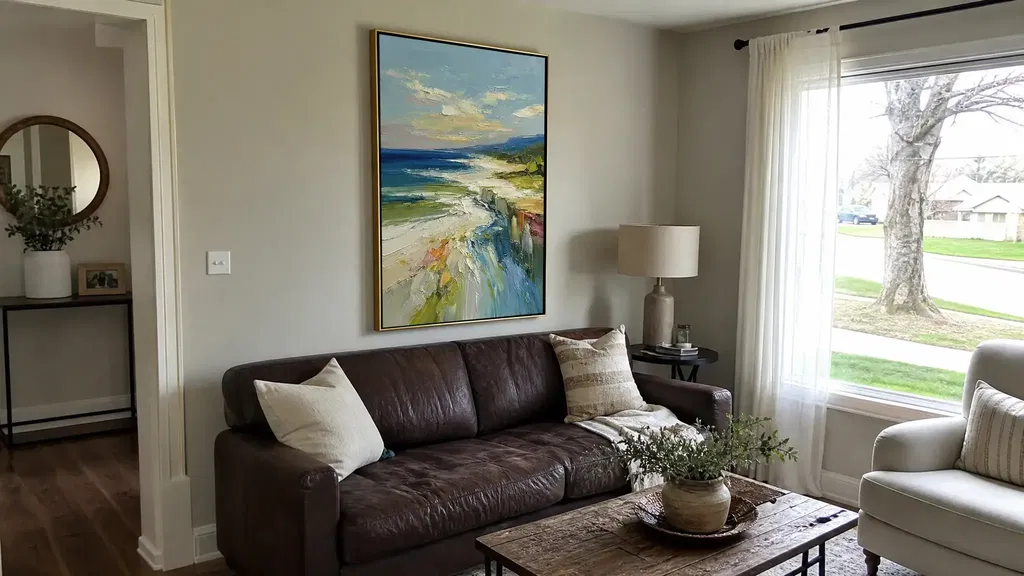
Incorporating nature-themed oil paintings—a practice known as biophilic design—has measurable impacts on workplace health. According to a University of Central Arkansas review, natural landscapes in art produce the same stress-reduction effects in the brain as being outdoors. In high-density environments like Tokyo office spaces, nature-based art has been shown to reduce employee cognitive fatigue and burnout by approximately 30% (University of Hawaii Research).

Decision Safety: Mitigating Risk in High-Visibility Projects
For B2B interior designers, the greatest risk in commissioning art for executive suites is the "approval-and-modification loop." High-visibility projects require "decision safety"—the assurance that the final piece will align perfectly with corporate branding and executive taste.
We often observe that the most common mistake in corporate art consulting is the "reveal-and-disappoint" cycle, where a finished piece is presented without interim feedback. To mitigate this, professional reliability is built into the workflow through:
- Iterative Approval Loops: Allowing stakeholders to modify compositions before the final glaze.
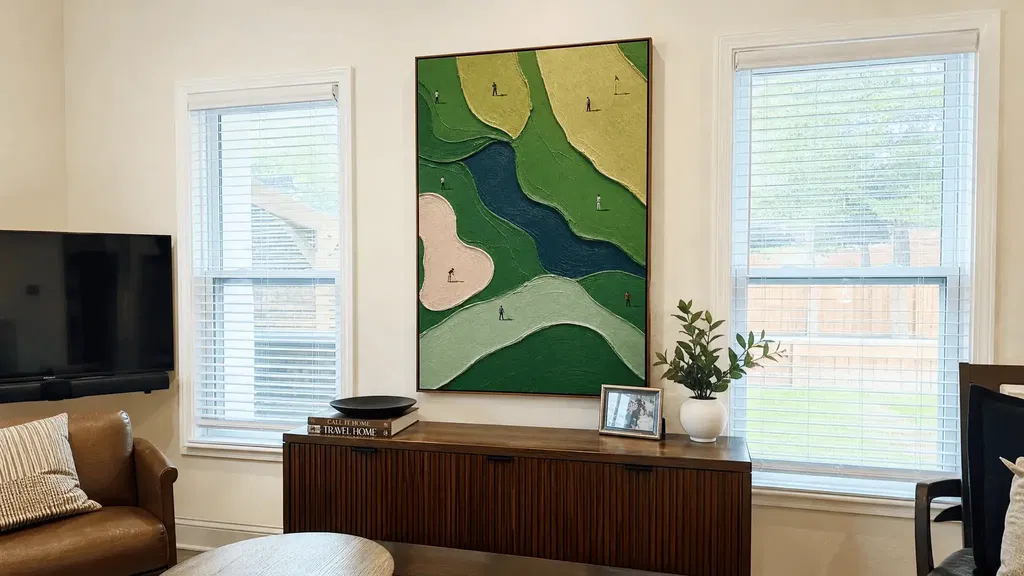
- Compositional Stability: Ensuring that abstract works possess horizontal or vertical grounding lines. Chaotic, splatter-heavy works can unintentionally increase environmental stress in high-stakes environments, whereas grounded compositions foster a sense of executive order.
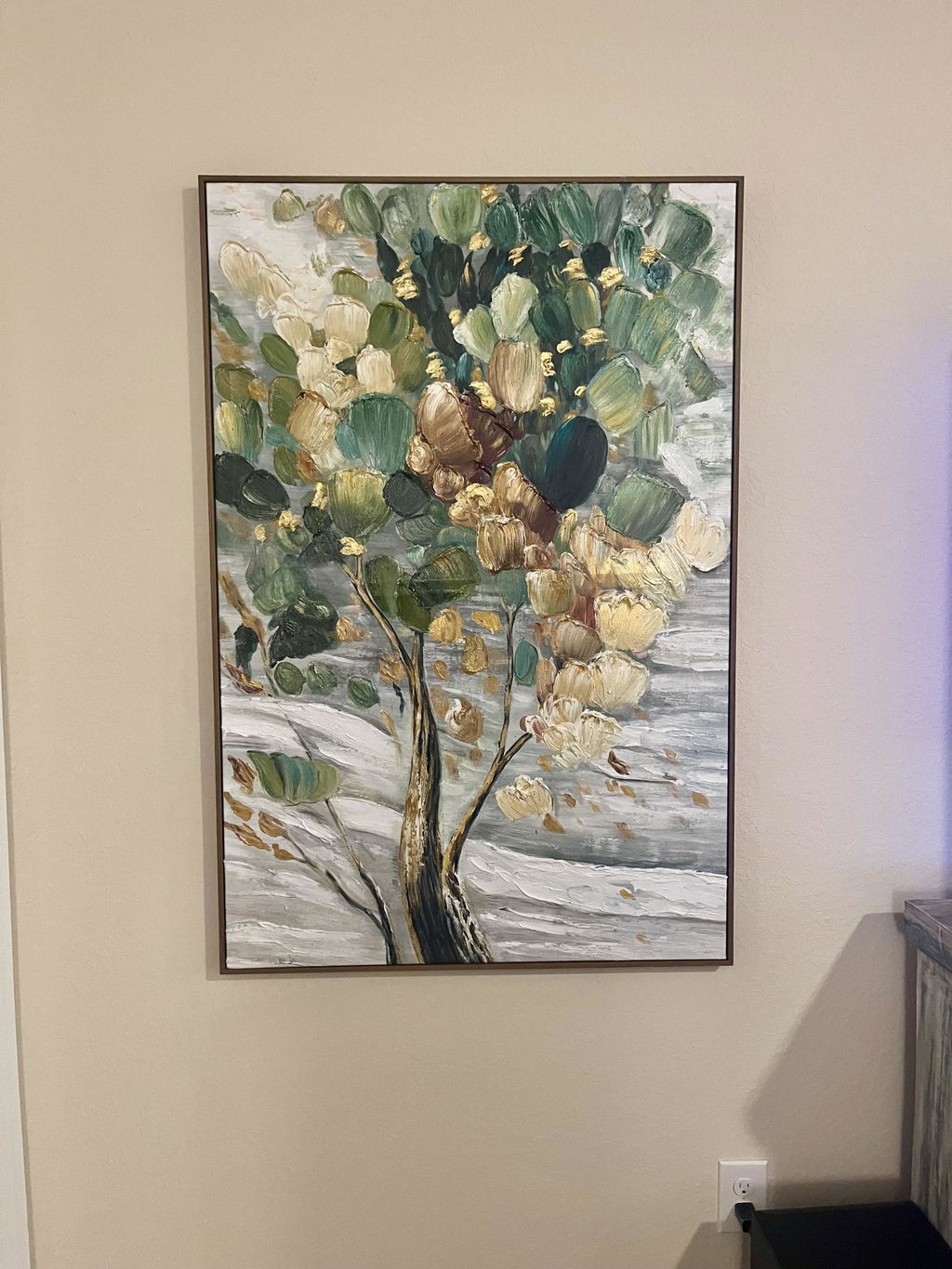
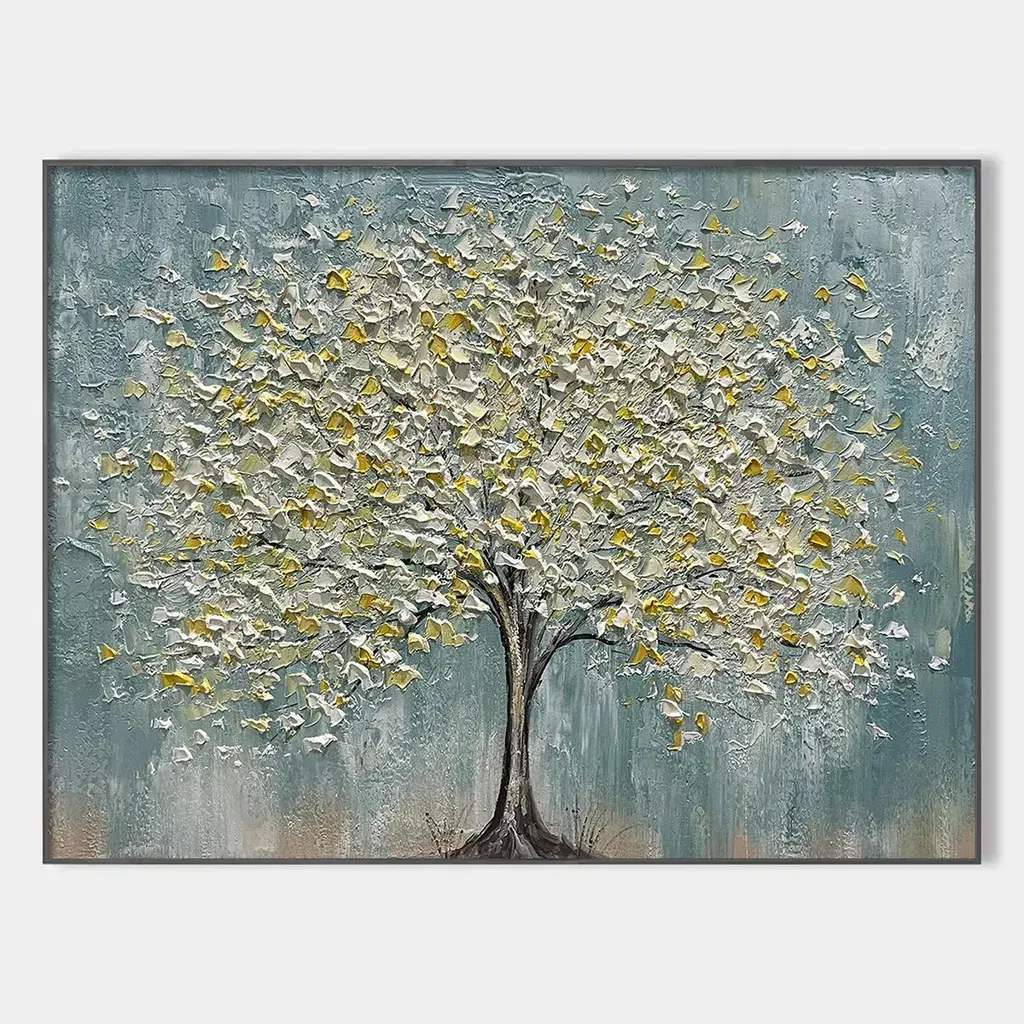
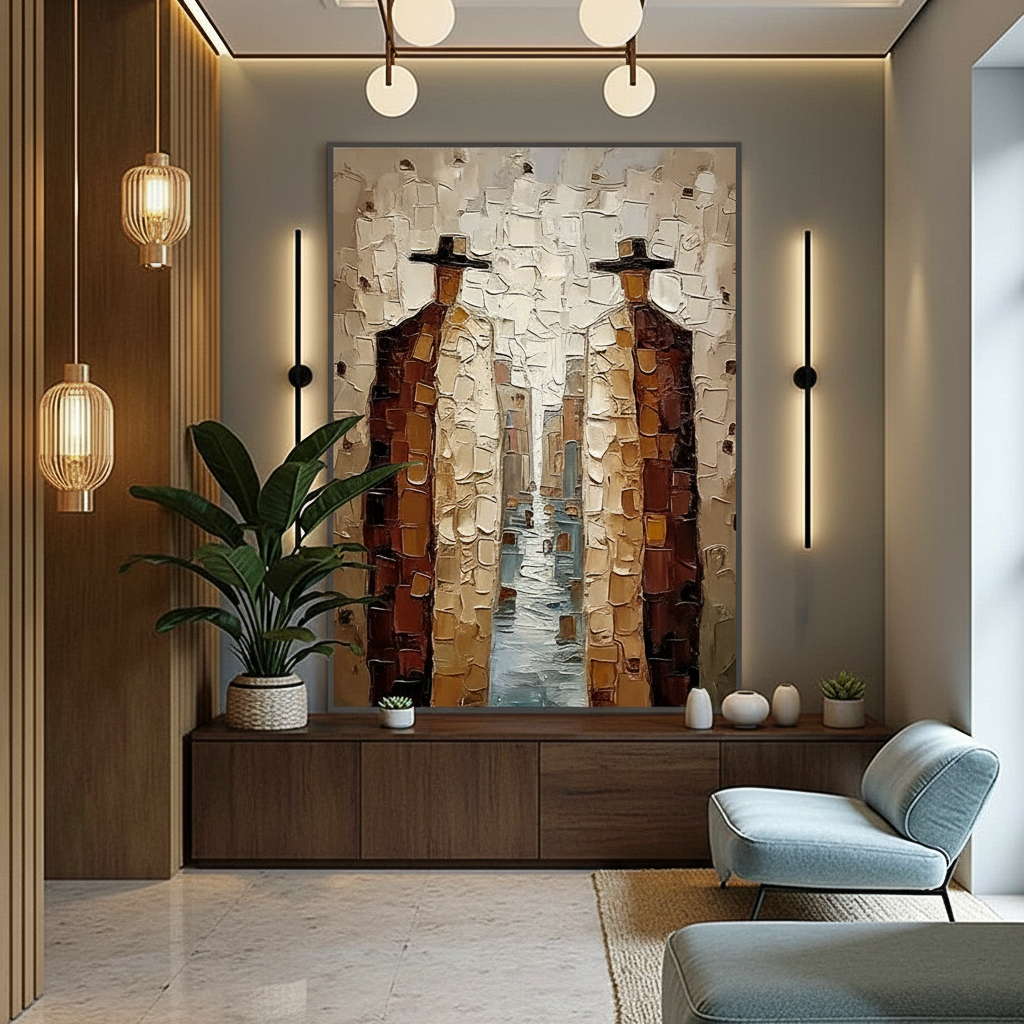
- Performative Authenticity: Using thick impasto techniques to signal that the work is 100% human-made. This is a "nuclear weapon" against the perceived cheapness of AI-generated office decor.
Methodology Note: Our "Decision Safety" framework is a heuristic derived from B2B procurement patterns (not a controlled lab study). It prioritizes risk mitigation for facility managers who must answer to executive boards.
The Technical Spec: Designing for the Modern Office
Modern office environments present unique challenges for traditional oil paintings. The 4000K-5000K LED lighting standard in most corporate buildings can "flatten" the depth of oil pigments if not managed correctly.
The Satin Varnish Rule
A critical "rule of thumb" used by experienced consultants is specifying a satin varnish rather than a high-gloss finish. High-gloss surfaces create distracting glare during video conferences—a deal-breaker for modern executive suites. Satin finishes preserve the Pigment Vibrancy while diffusing harsh overhead LED light.
Sizing and Proportions (The 3:2 Heuristic)
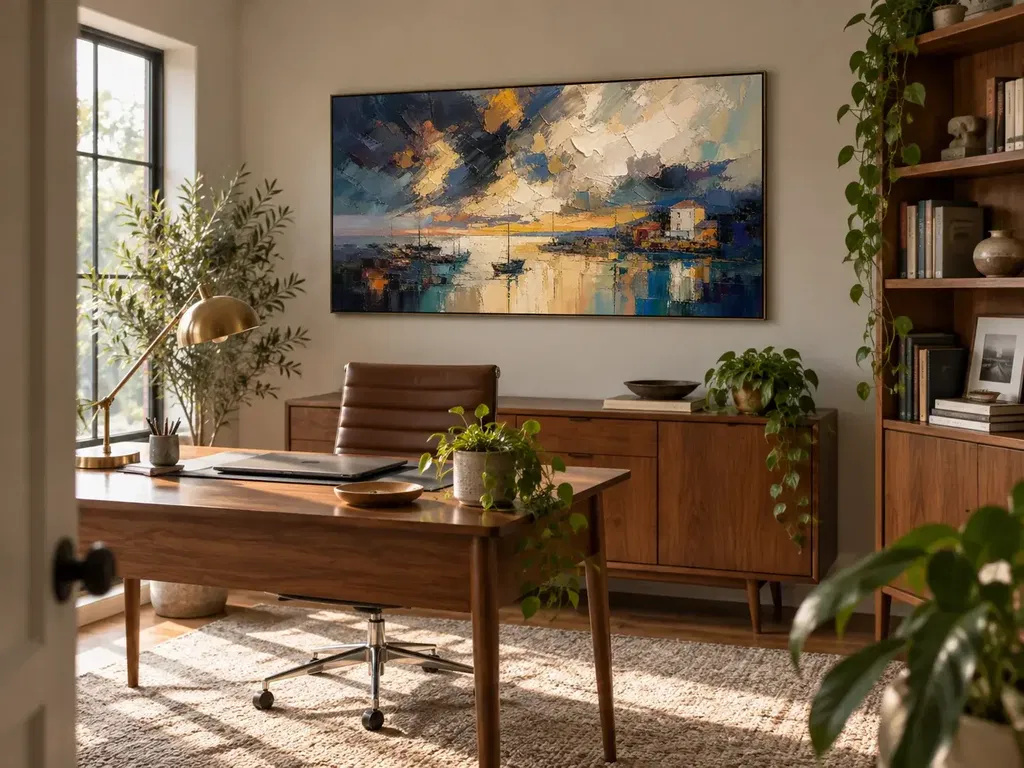
To avoid "visual clutter," we recommend following a 3:2 ratio: the artwork's width should be approximately two-thirds the width of the desk or credenza it sits above. This aligns with general Office Art Sizing Guides which suggest that art should cover roughly 60% of the available wall space to feel intentional rather than accidental.
| Parameter | Recommended Value | Rationale |
|---|---|---|
| Varnish Type | Satin / Matte | Prevents glare in 4000K LED environments. |
| Canvas Depth | 1.5 inches (Gallery Wrap) | Provides structural presence without extra framing. |
| Sizing Ratio | 2/3 of furniture width | Maintains compositional balance and scale. |
| Color Temperature | 4000K - 5000K | Standard corporate LED range; requires high-saturation oils. |
| Subject Matter | Grounded Abstraction | Fosters "Executive Order" and reduces stress. |

Material Integrity: Safety, Sustainability, and ESG
In the current regulatory climate, "material integrity" is a prerequisite for corporate procurement. Large healthcare and corporate facilities often require LEED or WELL certification, making low-VOC (Volatile Organic Compound) materials mandatory.
The Toxicity Trap
While traditional oils are prized for their Smooth Gradients, certain pigments pose health risks. The International Agency for Research on Cancer (IARC) classifies cadmium and its compounds as Group 1 carcinogens. Furthermore, chronic inhalation of low-level volatile compounds in certain industrial-grade oil solvents can lead to central nervous system neuropathy (CDC NIOSH).
To secure "green building points," corporate commissions should prioritize:
- Walnut Oil Binders: These can replace toxic VOC-emitting turpentine solvents (Cincinnati Art Museum).
- Titanium White Supremacy: Titanium dioxide now dominates 90% of the white pigment market, having safely eliminated highly toxic lead white (NCBI).
- ASTM D-4236 Compliance: While this label ensures warning compliance, professional-grade commissions should go further, requesting full toxicological reviews of the pigments used.
The Physics of Longevity
Oil paintings are subject to "oxidative cross-linking," a process where the binder hardens over decades. However, they are sensitive to thermal changes. Accelerated aging data shows that under 100°C thermal stress, oil pigments can experience binder separation (ResearchGate). For offices with large south-facing windows, Fade-Resistance becomes a primary technical requirement.
The Economic Case: Art as Infrastructure
For commercial real estate (CRE) developers, art is a "marketing trump card." NAIOP insights reveal that top developers utilize unique public art installations to lease up millions of square feet of office space in a post-pandemic market (NAIOP Research).
Property Valuation and Foot Traffic
The link between art and property value is quantifiable. A 10-year analysis using the Royal Society's CAR model found that neighborhoods with higher "art" geo-tags saw significant relative house price ranking gains (Royal Society). In Chicago, the Millennium Park public art projects drove an estimated $1.4 billion in real estate-related growth (NC Realtors).
Logic Summary: We estimate that for every $1 invested in high-quality hand-painted murals, there is a potential "catalytic effect" of 7:1 in terms of local economic activity and tax ROI, based on the Americans for the Arts macroeconomic model.
Strategic Implementation for High-Visibility Projects
Selecting the right palette for an executive office requires a balance of psychology, technical specification, and economic foresight. By moving away from Canvas Prints and toward authentic, hand-painted oils, corporations signal a commitment to prestige, permanence, and employee well-being.
When commissioning your next project, remember:
- Prioritize Texture: Visible brushstrokes are the ultimate proof of human craftsmanship.
- Control the Glare: Use satin varnishes to accommodate modern LED lighting standards.
- Ensure Stability: Select abstract works with grounded compositional lines to foster focus.
- Demand Safety: Specify low-VOC, non-toxic pigments to align with ESG goals.
By treating art as a component of "public health infrastructure"—a concept supported by the World Health Organization—corporate leaders can transform their offices from mere workspaces into high-performance environments that catalyze creativity and reduce burnout.
Appendix: Modeling Note (Method & Assumptions)
Our recommendations for office lighting and art interaction are based on a deterministic parameterized model designed to simulate typical 2026 corporate interior conditions.
| Parameter | Value / Range | Unit | Rationale |
|---|---|---|---|
| Ambient Lighting | 500 - 750 | Lux | Standard office workstation requirement. |
| Color Temperature | 4000 - 5000 | Kelvin | Standard "Cool White" corporate LED. |
| Varnish Reflectivity | < 20% | Gloss Units | Limit for "Satin" to prevent specular glare. |
| Viewing Distance | 3.5 - 6.0 | Feet | Typical distance from executive desk to wall. |
| Relative Humidity | 40 - 60 | % | Target for canvas stability and VOC curing. |
Boundary Conditions:
- This model assumes a standard drywall substrate with a Level 5 finish.
- The 3:2 sizing heuristic may not apply to narrow hallway galleries or multi-canvas "polyptych" installations.
- ROI estimates are based on aggregate US nonprofit arts data and may vary by local market density.
Disclaimer: This article is for informational purposes only and does not constitute professional legal, medical, or financial advice. Consult with a certified interior designer or LEED professional for specific building compliance requirements.
Sources:
- Marketplace: The expensive art market continues to struggle
- Art Basel and UBS Art Market Report 2024
- Columbia Business School: Human-Made vs. AI Art
- UChicago: Does Artwork Preserve Essential Identity?
- NCBI: Neurological mechanisms of creative arts
- WHO Scoping Review on Arts and Health
- Royal Society: Quantifying the link between art and property prices
- NAIOP: Expanding Role for Public Art in CRE
- CDC NIOSH: Paint and Coating Hazards
- EPA: Indoor Air Quality and Low-VOC Paints