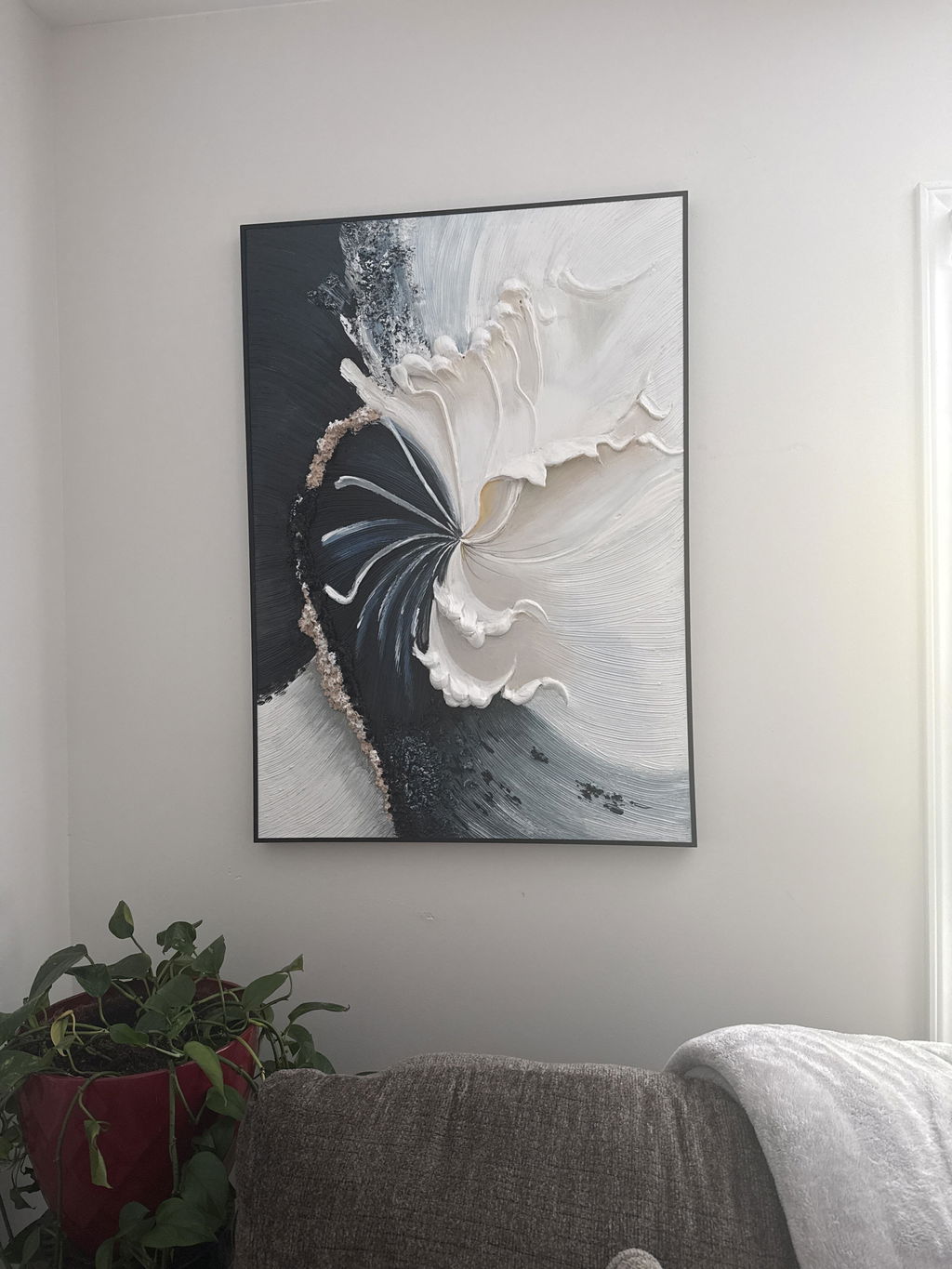
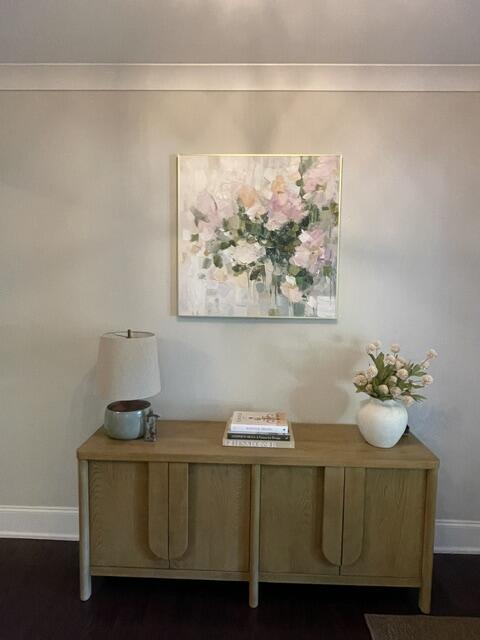
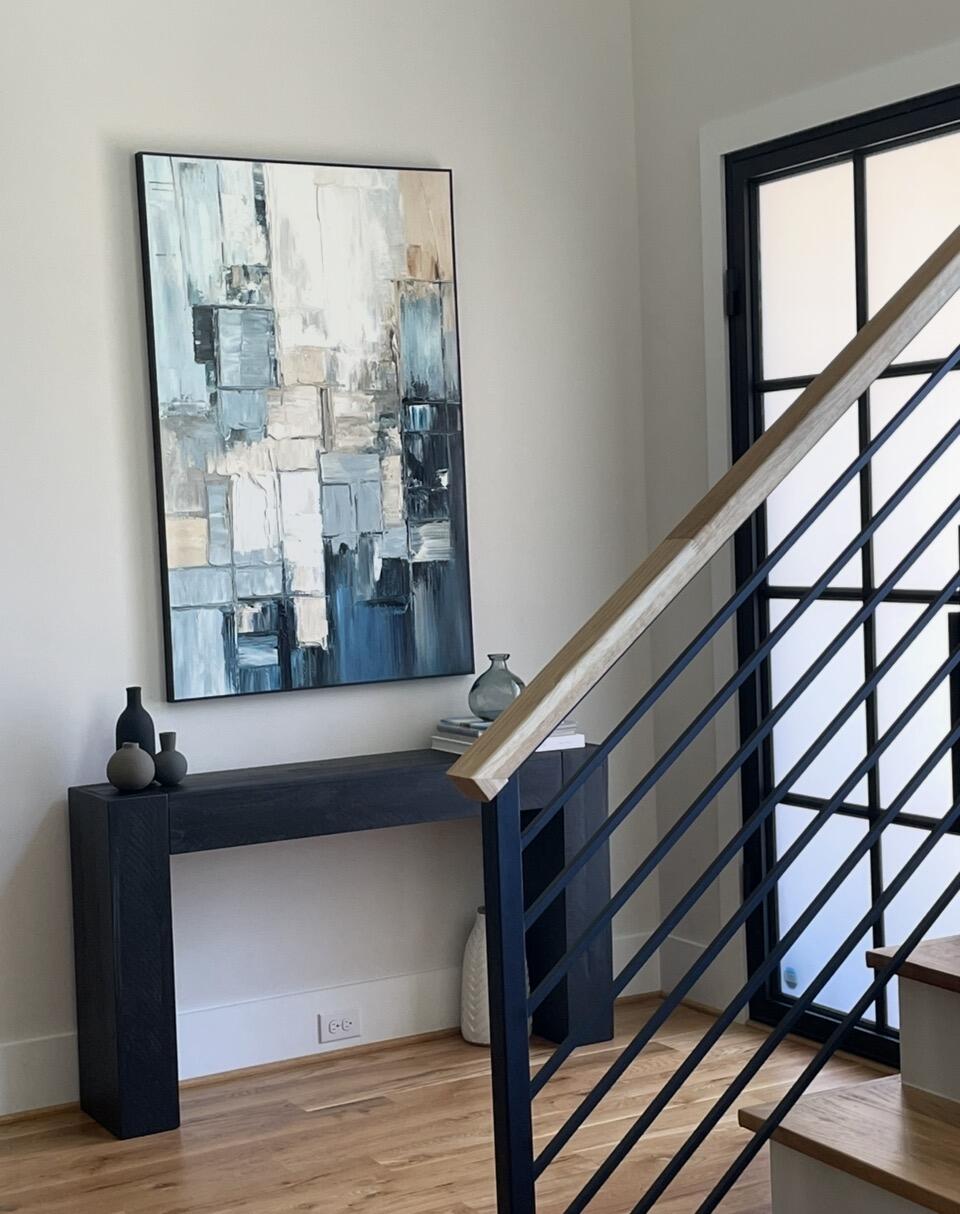
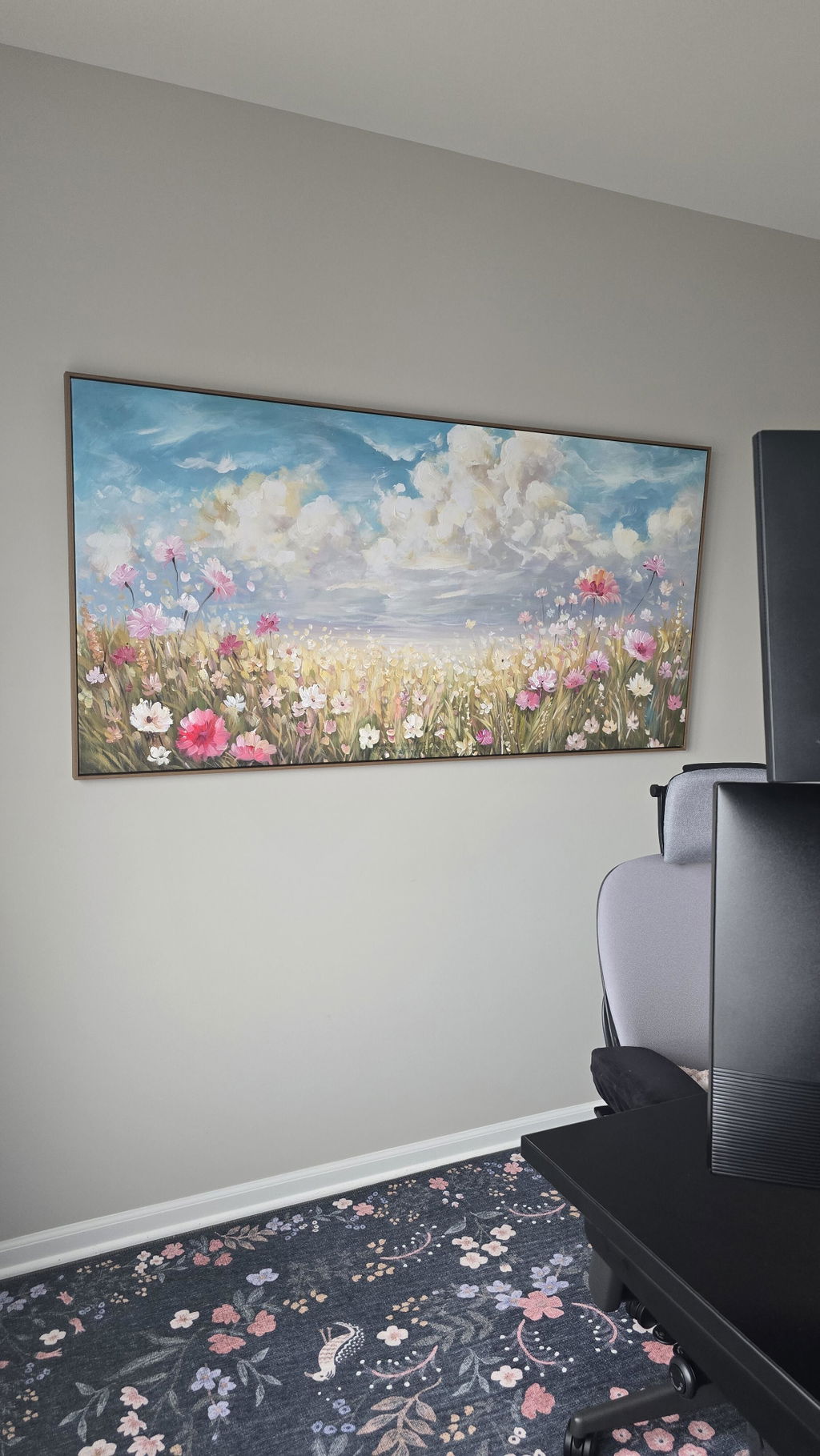
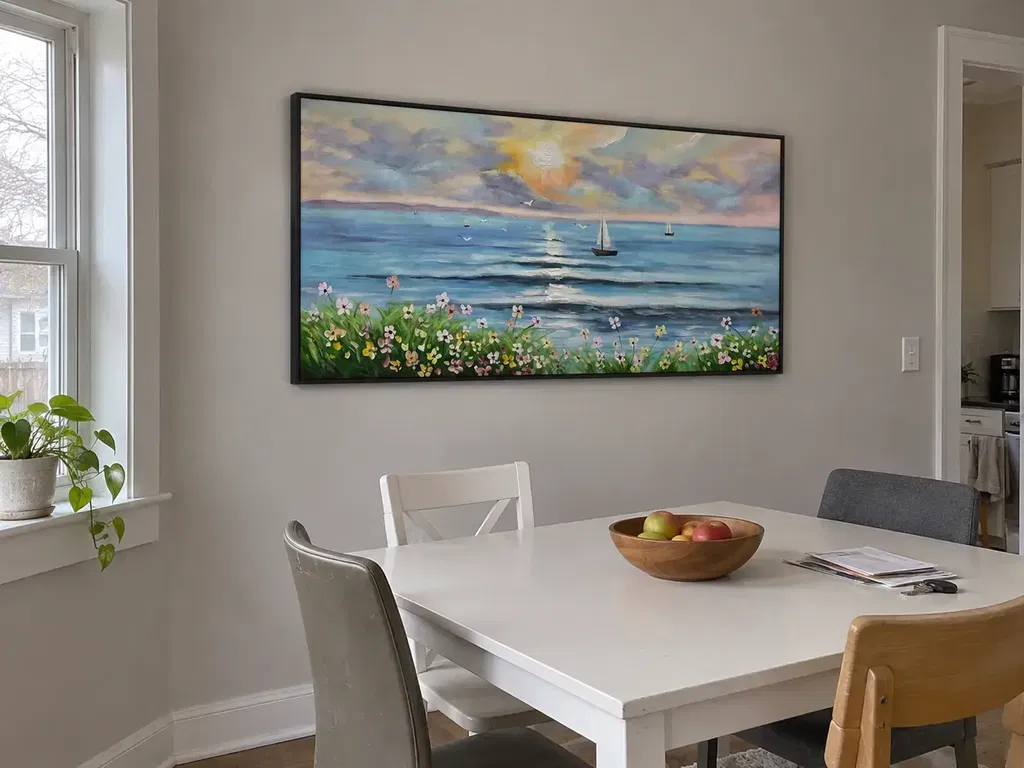
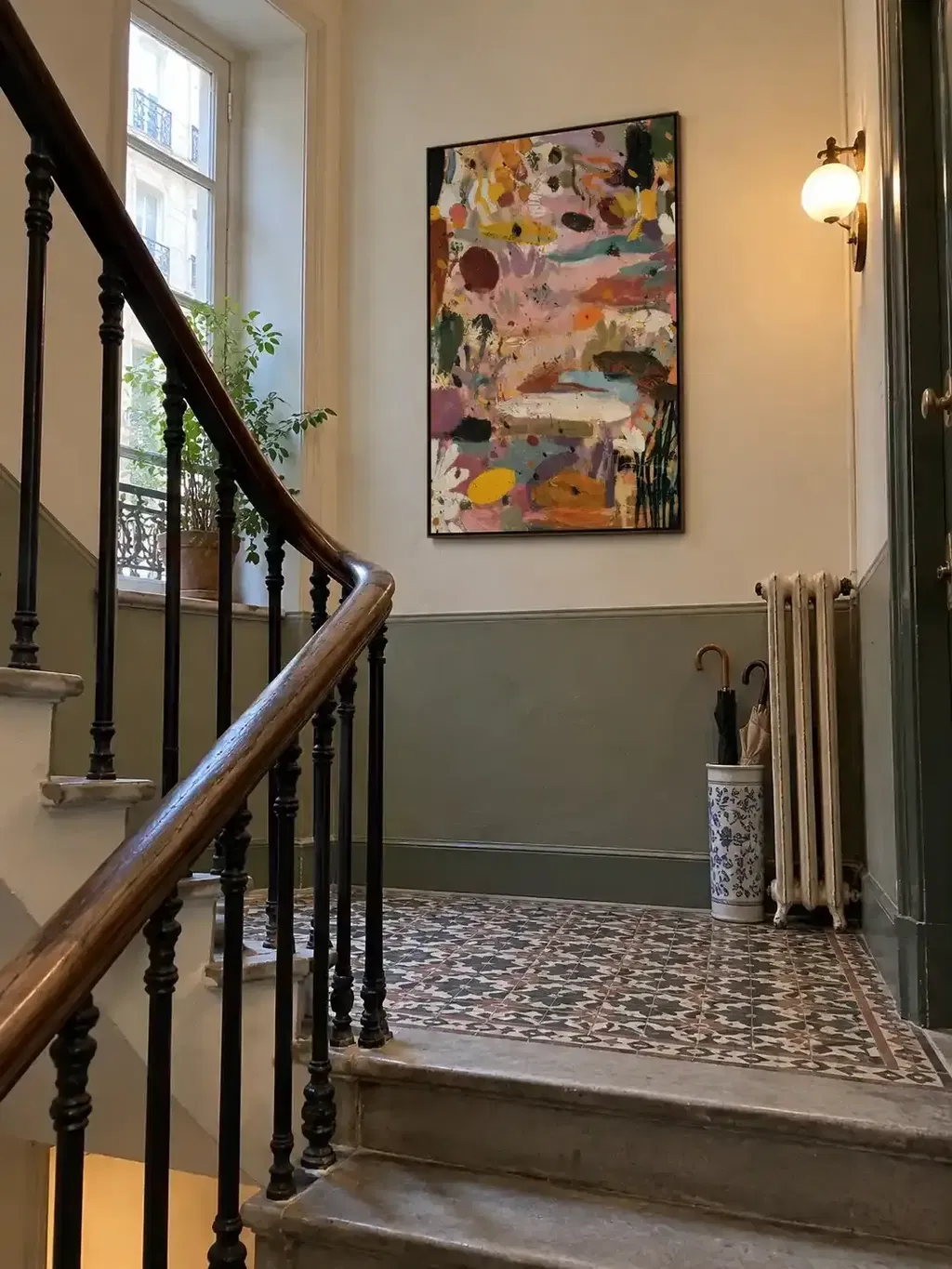
Start with the wall, not the premium features. When buying large textured wall art on a budget, figure out the minimum effective scale and the room’s practical limits first. Then spend on the feature that addresses the wall’s biggest weakness. A simpler frame, fewer custom details, or a less elaborate format may be reasonable compromises. Undersizing the piece, accepting vague texture evidence, or overlooking delivery and installation can create more regret than skipping a premium feature.
What Creates Impact in Large Textured Wall Art
Impact starts with proportion and room fit, not with any single premium feature. Once the artwork relates properly to the wall and furniture, texture, contrast, and format can address what the room still lacks.
Scale That Fits the Wall and Furniture
Measure the usable wall width and height, furniture width, ceiling height, trim, doors, walkways, and normal viewing distance before comparing pieces. Include the full installed footprint—not just the image area—because frames, panel gaps, visible edges, and hanging clearance all affect how large the arrangement feels.
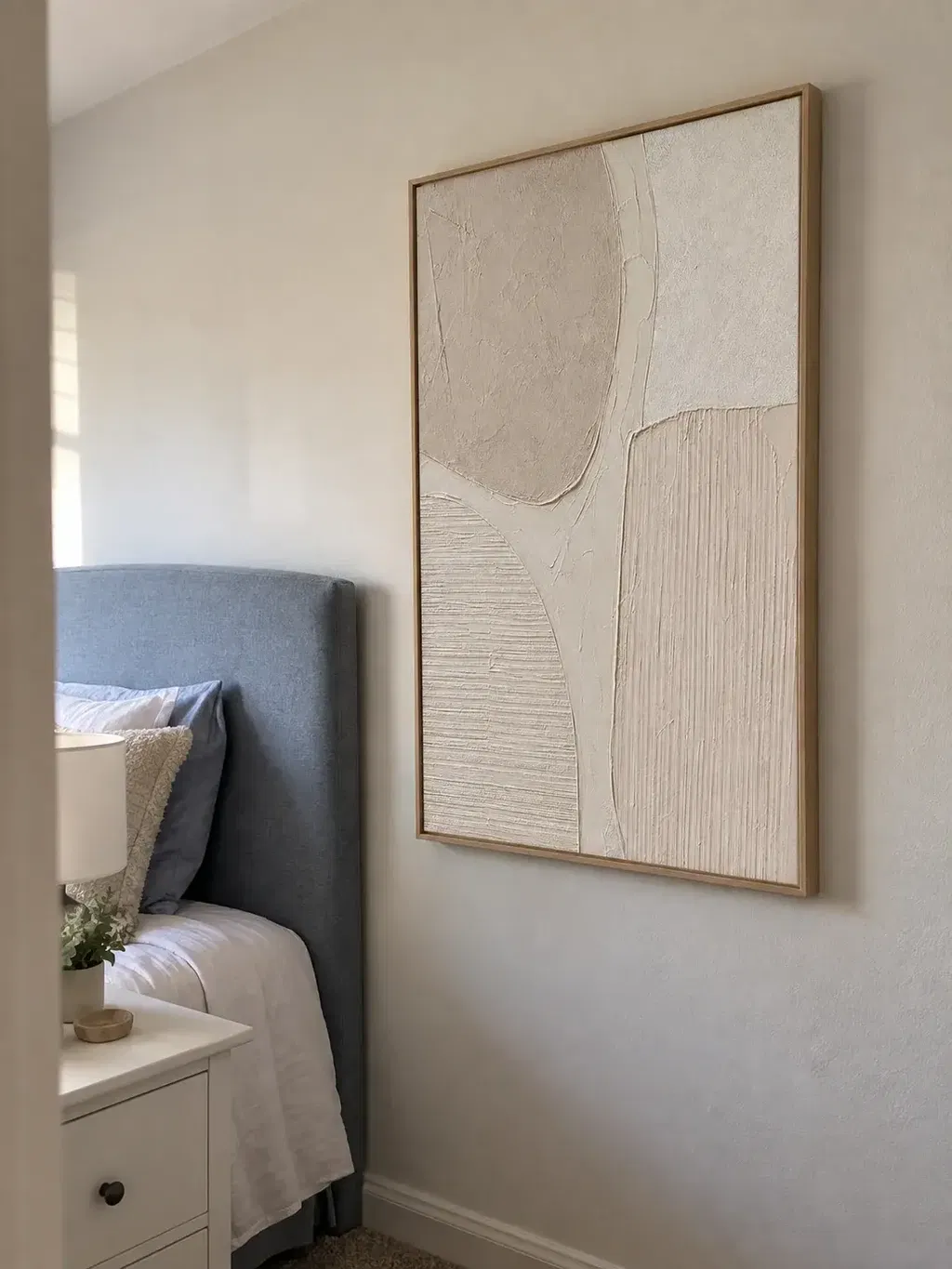
The familiar two-thirds proportion can be a useful starting point above a sofa, bed, or mantel, but it’s a planning heuristic, not a universal rule. Adjust it for unusually tall ceilings, low furniture, narrow clearances, and the room’s viewing distance. For a practical follow-up, review the 2/3 sizing rule, then let your measurements decide.

A piece that is technically large can still feel timid if the wall is broad and the furniture below it is substantial. If the budget forces a choice, protect the footprint that makes the wall feel resolved before paying for customization or decorative extras.
Texture, Contrast, and Viewing Distance
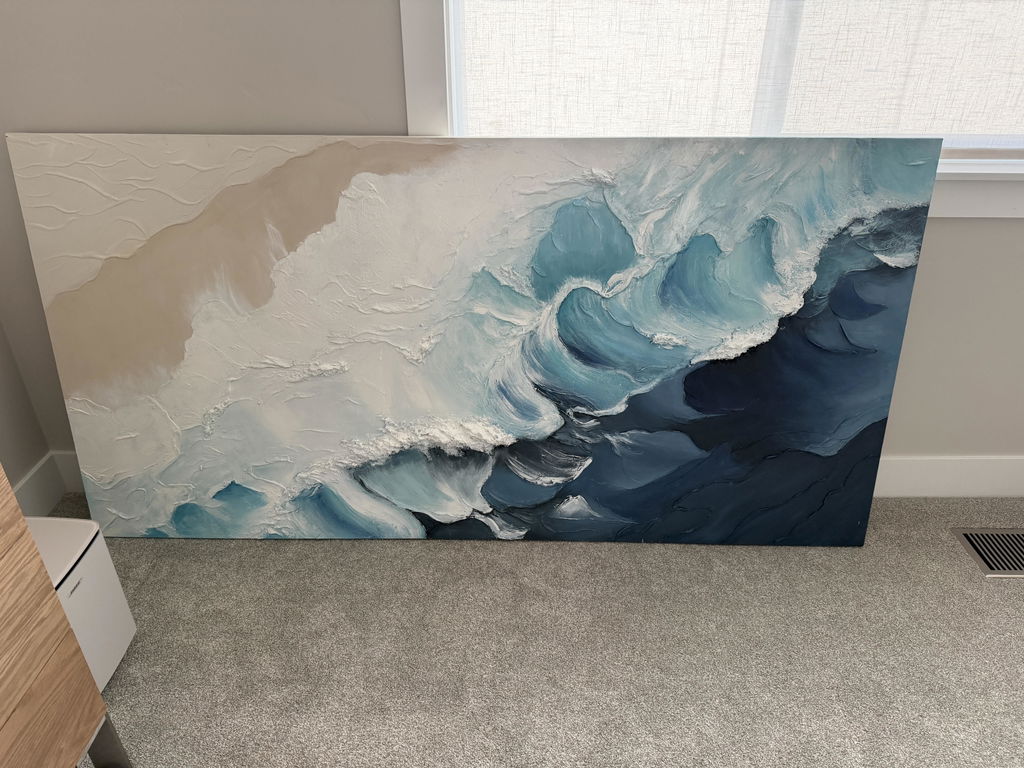
Texture deserves budget priority when the wall looks flat and the surface detail remains readable from the room’s normal viewing distance. Don’t treat the word “textured” in a listing as proof of pronounced relief or a particular finish.
Look for a close-up, a side-angle image, visible brush marks or irregularity, and a clear description of the material or finish. Compare those views with the distance from the sofa, bed, or entry path. A subtle surface may suit a quiet bedroom, while a low-contrast piece may disappear against a similarly colored wall. Neither result can be judged reliably from a styled room photograph alone.
If you’re comparing original work with printed alternatives, original textured art versus prints can help frame the questions to ask. Still, verify the individual listing rather than assuming a category label guarantees a certain tactile effect.
One Statement Piece or a Flexible Format
Choose one focal piece when a clean visual anchor matters more than segmentation. Consider a modular arrangement when the wall is unusually wide, access favors smaller cartons, or you want more flexibility in placement—but account for alignment, panel spacing, hardware, and installation work.
Judge the complete arrangement, not the size of one panel. A triptych can divide a long wall attractively, while a single canvas may simplify a room with competing furniture or sightlines. The format should follow the wall’s proportions, access route, and desired visual rhythm. This single canvas or triptych comparison is a useful starting point, not a promise that either option will fit or cost less.
Where to Spend and Where to Simplify
Spend first on the feature that solves the room’s most obvious problem, then compare the complete delivered purchase. Scale, surface interest, presentation, customization, and delivery don’t contribute equally in every room, so use the table to decide what deserves attention before checkout.
| Feature | Visual contribution | When to prioritize it | Where simplification may be reasonable | Verify before checkout |
|---|---|---|---|---|
| Scale | Establishes presence and the relationship to the wall and furniture | The wall still feels empty or the art would be dwarfed by the furniture | Reduce secondary extras before reducing the usable footprint | Artwork dimensions, full installed footprint, orientation, and clearances |
| Texture and surface finish | Adds visible variation, shadow, or contrast when it can be seen in the room | The wall’s main weakness is a flat or generic-looking surface | Choose a quieter finish if strong relief would compete with the room | Close-ups, side-angle views, stated materials, and finish details |
| Framing or edge presentation | Changes the finished boundary and how the piece relates to nearby furnishings | Exposed edges, a formal room, or a specific installation plan makes presentation important | Simplify only when the listing clearly shows the intended edge treatment | Whether framing is included, visible edges, hardware, and installation requirements |
| Customization | May help with a particular size, orientation, or color constraint | A standard format can’t meet a measured wall or furniture relationship | Skip it when a verified standard size already fits | What can actually be customized, lead time, price, and return terms |
| Delivery and handling | Determines whether the planned purchase is practical to receive and install | The artwork or packaging is bulky, access is limited, or the budget is tight | Don’t treat delivery as an afterthought; compare formats instead | Packed length, width, height, weight, handling, access, and live terms |
Larger framed objects may require different packing methods than small framed objects, so compare packaging as part of the format decision instead of assuming similar handling. Museum packing guidance makes that distinction clear, although it isn’t a residential price guide.

Shipping is also affected by the package, not just the artwork’s display dimensions. USPS Ground Advantage pricing identifies weight, size, and shape as pricing inputs. In the cited USPS commercial context, parcels over 1 cubic foot may be rated by actual or dimensional weight, whichever is greater, under the applicable rules; check the current USPS terms before applying that example to a shipment.
The same comparison logic applies to other carriers: UPS explains dimensional weight as the space a package occupies compared with its actual weight. Ask for packed dimensions and weight, then add the art price, frame or edge treatment, shipping, handling, installation, and return constraints. Neither one large canvas nor a triptych is predictably cheaper without comparing the complete arrangement.
Match the Art Format to the Room and Budget
Match the format to the wall’s shape, furniture, sightlines, and access before narrowing by style. Use product and collection pages as browsing starting points only; confirm the individual listing’s dimensions, presentation, and current terms before treating it as a candidate.
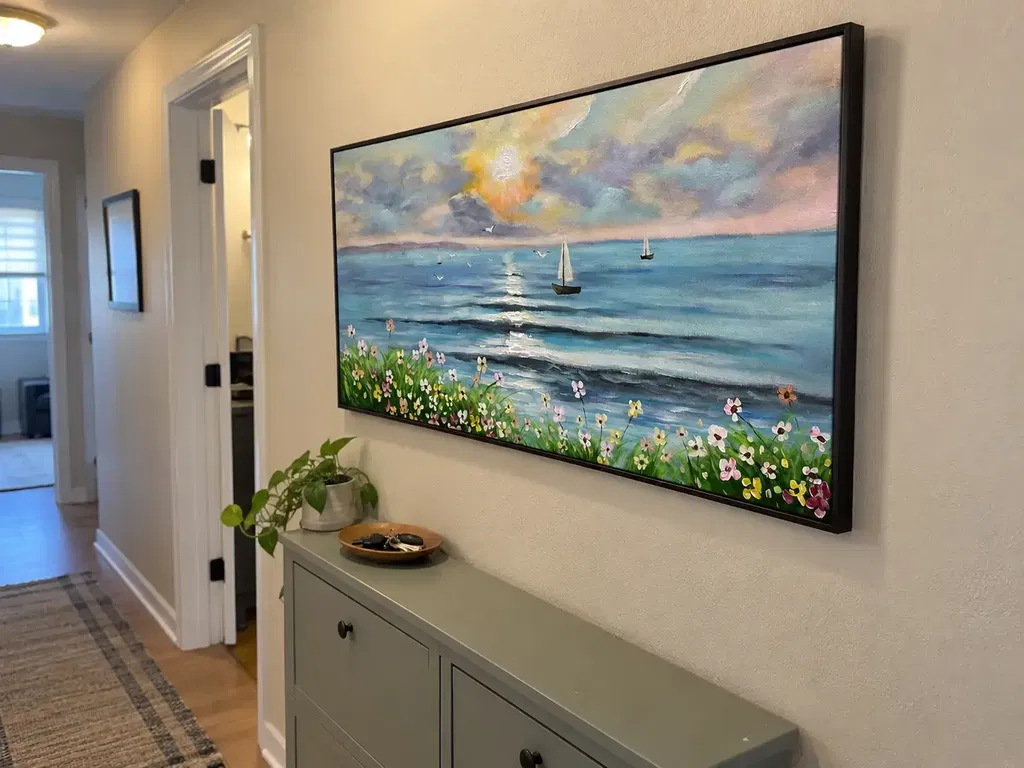
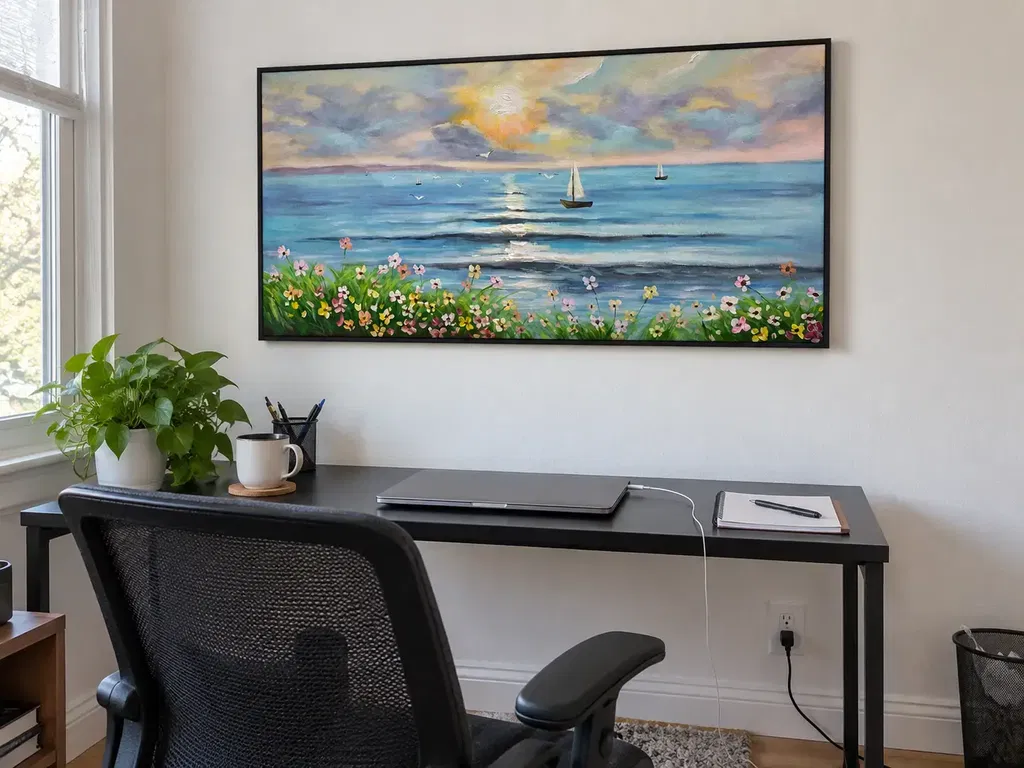
- Wide wall above a sofa or console: Start with a horizontal piece or coordinated modular arrangement whose total width relates to the furniture. Check the full footprint, panel spacing, and walking clearance. You can browse horizontal textured artwork as an orientation example, not as a verified fit or specification.
- Tall or narrow wall: A vertical or square proportion may use the space more naturally than the largest horizontal piece. Compare height, width, doors, trim, and sightlines; a square option can work only if its actual dimensions leave comfortable clearance. Review square textured artwork as a format reference, not a universal recommendation.
- Bedroom or quiet neutral space: Prioritize scale that feels settled from the bed and texture or contrast that remains legible without overwhelming the room. If the wall is compact, a simpler focal piece may be more practical than a multi-panel installation.
- Dining room or entry wall: Check approach paths, door swings, chair movement, and glare before choosing a heavily segmented arrangement. The best format is the one that remains readable without narrowing the usable passage.
- Uncertain layout or difficult access: Modular art may offer placement flexibility, but it adds alignment, hardware, carton, and installation checks. If a single piece can enter the home and fit the measured wall, its simplicity may matter more than theoretical flexibility.
For broader room-based browsing, extra-large living room art is a navigation option. Don’t infer its products’ dimensions, prices, framing, shipping, or durability from collection titles.
What Not to Cut Too Far
The wrong compromise is one that leaves the artwork undersized, unverifiable, difficult to present, or impractical to receive. Protect the checks that determine whether the piece can function in the room before simplifying cosmetic extras.
First, pause if reducing the size leaves the artwork unrelated to the furniture or leaves most of the wall visually unresolved. A lower price doesn’t create value if the usable footprint no longer addresses the original problem.
Next, separate presentation evidence from marketing language. A styled photograph or generic “impasto” or “textured” label can’t establish how the surface looks from the side, in ordinary room light, or at your normal viewing distance. If close-ups and finish details are missing, treat that uncertainty as a reason to ask questions or keep comparing.
Don’t overlook the boundary and installation details: visible edges, frame inclusion, hanging hardware, mounting requirements, delivery access, returns, and who will handle installation. Museum preservation guidance includes secure framing and hanging as practical display checks, but it shouldn’t be treated as a residential code or a guarantee of safety. If the listing doesn’t explain the presentation clearly, don’t assign that feature a value in your budget yet.
Finally, consider household fit. If the room, access route, or willingness to handle the piece conflicts with the format, changing the surface style won’t solve the underlying problem. You can review gold-accented textured art or giant wall art for visual direction, but verify every product-specific detail before ordering.
Make the Final Budget Allocation
The strongest large wall art on a budget decision preserves effective scale and practical fit first, then directs the remaining money toward the feature that most improves the room. Use this sequence before placing an order:
- Measure the setting. Record usable wall width and height, furniture width, ceiling height, trim, doors, walkways, viewing distance, and the access route from delivery point to wall.
- Name the main visual gap. Decide whether the wall needs presence, more visible surface variation, stronger contrast, or a format that handles an unusual shape. This keeps you from paying for every premium option.
- Compare format and surface evidence. Review the total installed footprint, orientation, panel spacing, close-ups, side-angle images, stated materials, finish, edges, and hanging information.
- Calculate the complete purchase. Add the artwork price to applicable framing, handling, shipping, installation, and return considerations. Use packed dimensions and weight where available, and rely on current seller checkout or carrier terms rather than a guess.
- Complete the policy check. Confirm current dimensions, what is included, delivery access, returns, customization terms, and any unanswered presentation questions. If the facts don’t line up, pause and keep comparing.
When those checks align, you can shop extra-large wall art with a clearer budget boundary. The goal isn’t the cheapest listed piece; it’s a complete purchase that fits the wall, the room, and the practical limits you measured.
FAQs
Before ordering, resolve the details that can change fit, presentation, logistics, or total cost. These questions focus on checks that remain specific to the piece and your room.
Why Is Oversized Art More Expensive Than Smaller Wall Art?
Oversized work may involve more surface area, materials, labor, framing, packing, handling, and delivery space. The difference varies by seller and construction. Compare the complete specification and delivered terms rather than assuming size alone explains the price.
How Can I Make a Large Wall Feel Finished on a Budget?
Set the artwork’s footprint against the wall and furniture, then choose one focal piece or a coordinated arrangement. If the wall still feels incomplete, check lighting, nearby contrast, and visual balance before adding several unrelated pieces.
Is a Triptych Usually More Affordable Than One Large Canvas?
Not reliably. Compare total surface area, carton count and dimensions, edge or frame treatment, hardware, alignment work, installation, return constraints, and current delivery terms. A panel format can change logistics without creating a predictable saving.
Should I Buy Framed or Unframed Large Textured Wall Art?
Check the visible edges, room style, installation plan, and listing details. Verify whether framing is included, whether the piece is intended to hang unframed, and whether the final boundary works with nearby furniture before choosing either option as the lower-cost choice.
What Measurements Matter Before Ordering Oversized Wall Art Online?
Measure usable wall space, furniture width, clearances around trim and doors, viewing distance, orientation, and the access route. Request packed length, width, height, and weight when available; display dimensions alone may miss a delivery or installation mismatch.