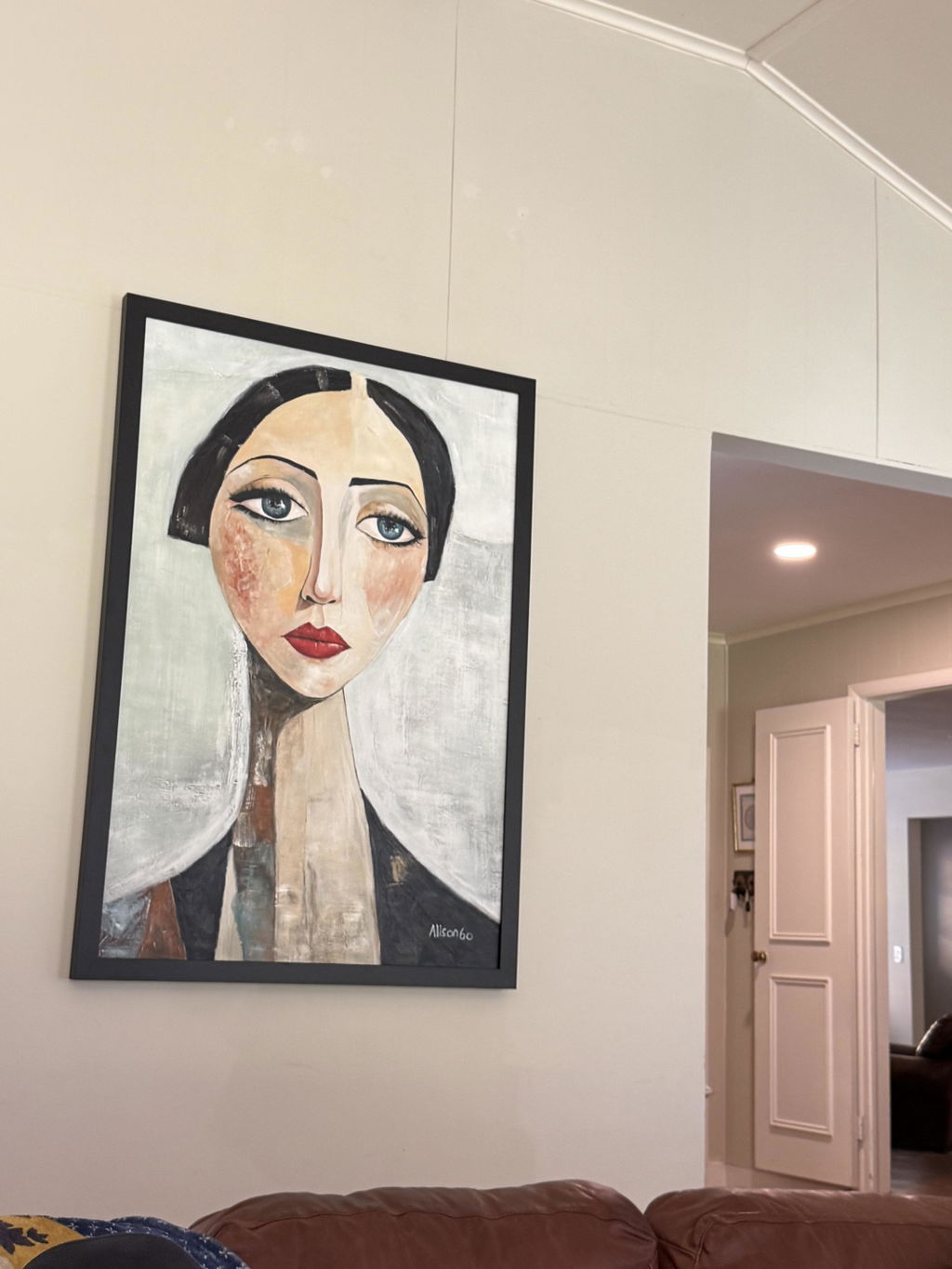
Housewarming wall art can feel more personal than a standard host gift, but it is also easier to mismatch with a room or the recipient's taste. The lower-regret approach is to check visible design clues, the intended wall, style flexibility, personalization terms, production timing, and return conditions before ordering. When those details are unavailable, choose the least identity-specific option rather than guessing.
Why Housewarming Wall Art Can Be a Low-Regret Gift
Housewarming wall art can be thoughtful when it suits the recipient's lifestyle and space, not simply because it adds another decorative object. Define "low regret" as reducing avoidable mismatch: you are looking for a piece that has a reasonable chance of working in the home while leaving room for the recipient's own decorating choices.
Art requires more information than a broadly consumable gift because it occupies a specific wall and remains visible. A practical buying sequence is: look for recipient clues, identify the intended wall, compare style flexibility, limit personalization, calculate timing, and verify the seller's policies. A thoughtful art gift can then feel distinctive without making the recipient solve an avoidable placement problem.

What Should You Check About the Recipient and Room?
Check the recipient's visible palette and mood alongside the intended wall, scale, orientation, framing expectations, and room use. These clues do not guarantee a match, but they give you something more reliable than choosing solely from your own taste.
Read the Recipient's Existing Design Signals
Existing decor is usually stronger evidence than a guessed style label. Look for recurring colors, materials, shapes, room mood, and art subjects in photos or in the home itself. A preference for warm wood, soft neutrals, bold color, vintage objects, or clean lines can help you narrow the visual language without assuming the recipient wants an exact replica.
Useful clues include:

- Colors repeated in rugs, furniture, bedding, or accessories
- Whether existing art is minimal, figurative, floral, graphic, or heavily textured
- Materials and finishes that appear more than once
- The mood of the room: calm, playful, dramatic, rustic, or formal
- Whether the gift is for a shared room or one person's private space
If you can ask a natural question, request a photo of the intended wall or ask which colors they are considering for the room. That small conversation may reduce more risk than a highly specific guess.
Confirm the Intended Wall and Format
Ask where the piece will live, how wide the available area is, whether the wall is horizontal or vertical, and whether the recipient expects framed, stretched, or ready-to-hang art. Room use matters too: an entryway, bedroom, living room, office, and temporary first apartment may call for different levels of visual emphasis and installation effort.
The wall's dimensions are only one input. Note nearby furniture, doors, windows, traffic, lighting, and the viewing distance. A framed art checklist can help you compare size, placement, glazing, frame finish, and hanging hardware before you commit.
Handle Missing Information Conservatively
When the wall and taste are unknown, reduce specificity. Avoid a size that depends on a precise furniture arrangement, a subject that dictates the room's theme, or a format that requires installation the recipient may not want to handle.
A flexible piece in a broadly compatible format may leave more placement options, but "flexible" is not the same as universally suitable. If the gift is for a shared home and you cannot confirm either person's preferences, asking for a registry-style color or room preference may be more considerate than preserving the surprise at all costs.
Which Art Style Is Lower Risk When Taste Is Unclear?
No art style is universally safe. As a conditional default, restrained textured abstraction may require fewer assumptions when taste and wall details are limited; expressive floral or colorful work needs stronger evidence of the recipient's preferences; custom art requires the highest level of information and commitment.
| Art direction | Best when you know… | Placement flexibility | Main caution |
|---|---|---|---|
| Restrained textured abstraction | The palette or room mood, but not a precise subject preference | Often broader because the subject is less literal, though size and color still matter | Neutral or restrained does not guarantee a match; texture and care requirements still need checking |
| Expressive floral or colorful work | The recipient already displays saturated color, floral motifs, or statement decor | More dependent on palette, subject, and room role | The buyer may prefer the piece more than the recipient does if those signals are absent |
| Custom or commissioned art | A clear milestone, strong preference evidence, and willingness to approve details | Usually narrower because the final design is more specific | Approval, production, shipping, and return conditions can create a higher-commitment purchase |
Choose Restrained Texture for Limited Clues
A neutral or softly layered abstract piece can be a lower-specificity starting point when you know little about the recipient's taste. Its potential advantage is not that it suits everyone; it is that it may avoid a literal subject or strong theme that conflicts with the room.
Use the recipient's existing palette and the wall's scale as the deciding checks. If you are browsing neutral artwork, compare the actual colors, orientation, dimensions, finish, and framing details rather than assuming the collection label settles the fit. Textured wall art as a gift may still be a poor choice for someone who prefers smooth, minimal surfaces or has no suitable wall.
Choose Expressive Color When Taste Is Visible
Floral, saturated, or strongly thematic art can work well when the recipient already uses expressive decor. Look for supporting evidence such as colorful furnishings, botanical motifs, a statement wall, or previous comments about a favorite palette or subject.
This is a scenario-based choice, not a quality ranking. Match the intensity to the intended room and consider whether the work is meant to blend with existing decor or act as a focal point. If you cannot identify those signals, choose a less literal direction or ask for guidance before ordering.
Treat Custom Art as a Higher-Commitment Gift
Custom art deserves stronger taste evidence because the final piece may be harder to revise, return, or place. Before choosing a commission, confirm what the artist can change, whether you receive a proof, when approval locks the specifications, how customization affects timing, and what policy applies if the result is not what you expected.
You can browse abstract paintings or other formats as a way to compare visual directions, but do not treat a category page as proof that a particular piece fits the recipient. The useful distinction is commitment level: custom work is not automatically worse, but it leaves less room for uncertainty.
How Can You Use Personalization Without Overcommitting?
Personalization is most defensible when it adds one restrained, recipient-relevant detail and you understand the approval, final-specification, timing, and return process. A meaningful date, place, palette, or format can work when it reflects a known relationship or milestone; it becomes riskier when the buyer is using customization to compensate for not knowing the recipient's taste.
Personalize One Meaningful Detail
Choose one detail that connects to the recipient without dictating the entire room. For example, a familiar location, a shared milestone, or a color associated with the couple may be more adaptable than a large name, prominent date, or highly literal scene.
Before ordering, separate what is editable from what is fixed. Ask whether the seller can change:
- Size or orientation
- Color balance or subject details
- Text, dates, or location references
- Composition, finish, or framing
- Proofs, revisions, and final approval
A restrained detail can preserve placement flexibility. It also gives the recipient a clearer reason to keep the work if the room changes later.
Confirm Approval and Return Conditions
Use this five-question check before paying for personalized work:
- What exactly can change? Confirm the editable elements and the aspects that are fixed.
- Who approves the design? Ask whether you, the recipient, or both can review a proof.
- When do final specifications lock? Find out whether changes remain possible after approval or production begins.
- How does customization affect timing? Include approval, production, drying, framing, and transit in the schedule.
- What return terms apply? Confirm whether commissioned work follows different return or exchange rules from standard art.
MontCarta's FAQ distinguishes its stated terms for non-commissioned and commissioned work; verify the live policy before ordering rather than applying it to another seller. If customization or return terms are unclear, a non-commissioned piece with a flexible visual language may be the lower-regret choice.
How Early Should You Order Handmade or Custom Art?
Work backward from the date the gift must be in hand: order deadline = gifting date − production or approval window − transit estimate − contingency time. There is no category-wide lead time for handmade or custom wall art, so use the seller's current estimates and add time for the parts of your situation that are uncertain.
Build the Order Deadline Backward
- Set the real arrival date. Use the housewarming party, handoff, or date the recipient can receive the package—not merely the move-in date.
- Add production time. Include painting, drying, framing, and any seller-stated processing period.
- Add customization and approval. Allow time for questions, proof review, revisions, and final sign-off.
- Add transit time. Use the current estimate for the destination and selected format.
- Add contingency. Account for holidays, weather, carrier disruption, address uncertainty, or a move-in date that may shift.
The method breaks down when the seller does not publish a dependable production or shipping window. In that case, ask for a written estimate before ordering or choose a ready-to-ship option whose timing is clearer. Order earlier when the date is immovable, the work is commissioned, or the recipient's address may change.
Check the Seller's Live Timing Details
MontCarta's FAQ currently lists typical processing and domestic delivery windows and notes that textured paintings may take longer depending on drying conditions. Treat those figures as brand-specific estimates, not a guarantee, and recheck the live FAQ, product page, destination, format, and seasonal conditions before checkout.
Also verify whether framing or stretching changes the schedule, how tracking is provided, whether an address can be changed after production starts, and what happens if the move-in date shifts. A seller's listed window is useful only when it matches the actual piece and your destination.
What Should You Verify Before Ordering?
Before checkout, verify fit, material, logistics, and policy details. If the listing does not clearly state the medium, finish, format, care, or return conditions, pause the purchase and ask the seller rather than filling the gaps with assumptions.
Confirm Fit and Presentation
Check the artwork's dimensions, orientation, framing or stretching status, finish, hanging needs, and intended placement. Confirm whether hardware is included, whether the recipient can install the piece, and whether rolled delivery requires additional preparation.
If the recipient prefers to choose a frame, unframed or rolled art may offer more control. If installation is a concern, framed or ready-to-hang work may be more convenient—but do not assume it is easier without checking weight, hardware, shipping format, and the intended wall.
Match Care to the Medium
Care depends on the medium, finish, framing, and display conditions. For paper-based or otherwise light-sensitive work, avoid direct sunlight or intense light and ask about glazing and placement; the Library of Congress framing guidance explains why light exposure belongs in the check.
For acrylic paintings, the Smithsonian Museum Conservation Institute advises medium-specific care considerations, including surface handling and protective presentation. Broader environmental factors such as light, moisture, heat, and handling also matter, as summarized by the Getty Conservation Institute. Do not apply paper, acrylic, or oil guidance to every textured artwork.
Review Shipping and Returns
Confirm packaging, tracking, damage procedures, address rules, custom limitations, and the seller's current return or exchange terms. For personalized work, ask whether a return is excluded after approval and what happens if the finished piece differs materially from the agreed specifications.
MontCarta's FAQ states brand-specific distinctions between non-commissioned and commissioned returns; verify those terms at the time of purchase. Other sellers may use different policies, so a comparison based on one brand's rules would be misleading.
Use This Low-Regret Housewarming Art Chooser
Match the art direction to your confidence level: flexible and restrained when clues are thin, expressive when the recipient's taste is visible, and custom only when approval and timing risks are acceptable. The goal is not to find a style that works for everyone; it is to choose the option that remains reasonable if one of your assumptions is wrong.
Choose by Confidence Level
| Recipient situation | Art direction to consider | Why it may fit | Main caution |
|---|---|---|---|
| Taste or wall details are uncertain | Less literal, adaptable art with a restrained palette | It may leave more placement options than a highly thematic piece | Do not guess at a precise size, subject, or custom design |
| Expressive color or floral decor is already visible | Colorful, floral, or more distinctive art | It follows evidence the recipient already displays | Check saturation, subject, scale, and whether the work suits a shared room |
| The recipient has a meaningful milestone and clear preferences | Restrained personalization or a custom direction | One known detail can make the gift feel connected to the occasion | Confirm proof, final specifications, timing, and custom return terms first |
Run the Five-Item Checkout Check
Before placing the order, confirm:
- Recipient clues: Do you have evidence from existing decor, conversation, photos, or a shared preference?
- Wall and format: Do you know the intended location, approximate scale, orientation, framing expectations, and installation needs?
- Style specificity: If your main assumption is wrong, will the piece still have plausible placement options?
- Deadline: Have you accounted for production, approval, transit, seasonal conditions, and contingency?
- Seller terms: Are the medium, care, packaging, tracking, damage process, personalization limits, and return rules clear?
If several answers are no, choose a less specific non-custom piece, ask one targeted question, or wait until the room information improves. If the answers are yes, compare the current style, color, placement, format, timing, and policy details on the seller's live listing before adding the gift to your cart.
Housewarming Wall Art FAQs
Is Art a Good Housewarming Gift If I Do Not Know Their Exact Style?
It can be, but proceed only if you can verify at least one useful clue, such as a palette, room, or preferred format. If you have none, ask for a registry-style preference or choose a flexible, non-custom piece that does not depend on a specific theme.
What If the Couple Has Different Decorating Preferences?
Treat shared-space art as a joint preference decision. Look for overlap in palette, mood, or placement rather than selecting from one person's style alone. If their tastes diverge sharply, ask which room the gift is for or choose a smaller, less dominant format that does not define the whole space.
Should I Give Framed or Unframed Wall Art as a Housewarming Gift?
Neither is automatically easier. Check whether the recipient can install the piece, whether they prefer to select a frame, how the art ships, and whether the intended wall can support the format. For a surprise gift, confirm framing expectations indirectly before choosing a presentation that may create extra work.
Can I Personalize Wall Art for a Housewarming Gift Without Making It Too Specific?
Yes, if you limit the design to one meaningful detail and confirm the proof process, final specifications, timing, and custom return terms first. Avoid prominent text or a fixed scene when you do not know where the piece will hang; a subtle palette or place reference may remain easier to live with.
What Should I Do If the Move-In Date Changes After I Order?
Contact the seller immediately and ask about production status, address changes, tracking, delivery updates, and cancellation or rerouting options. Do not assume any of those choices are available, especially after customization or shipment. If the package is already moving, coordinate with the carrier only through the seller's stated process.