The Shift from Speculation to Substance: Why Art Sizing Matters Now
The global art market is undergoing a structural correction. In 2024, sales of high-end auction pieces (those exceeding $10 million) plummeted by 44% year-over-year, according to data from Marketplace. This retreat from purely financial art assets suggests a significant pivot: buyers are returning to "real application value." For the urban condo owner, art is no longer just a line item in a portfolio; it is a functional tool used to solve the architectural frustrations of high-density living.
In a small living space, the primary challenge is "visual volume"—the perceived openness and luxury of a room regardless of its literal square footage. When art is sized incorrectly, it either "underwhelms" the space, making the walls feel sparse and the owner look indecisive, or it "overwhelms" the room, contributing to a cramped, claustrophobic atmosphere. Achieving "decision safety" in art selection means utilizing custom sizing to ensure the piece acts as a high-visibility anchor rather than a visual burden.
The Geometry of Grandeur: The 60-75% Heuristic
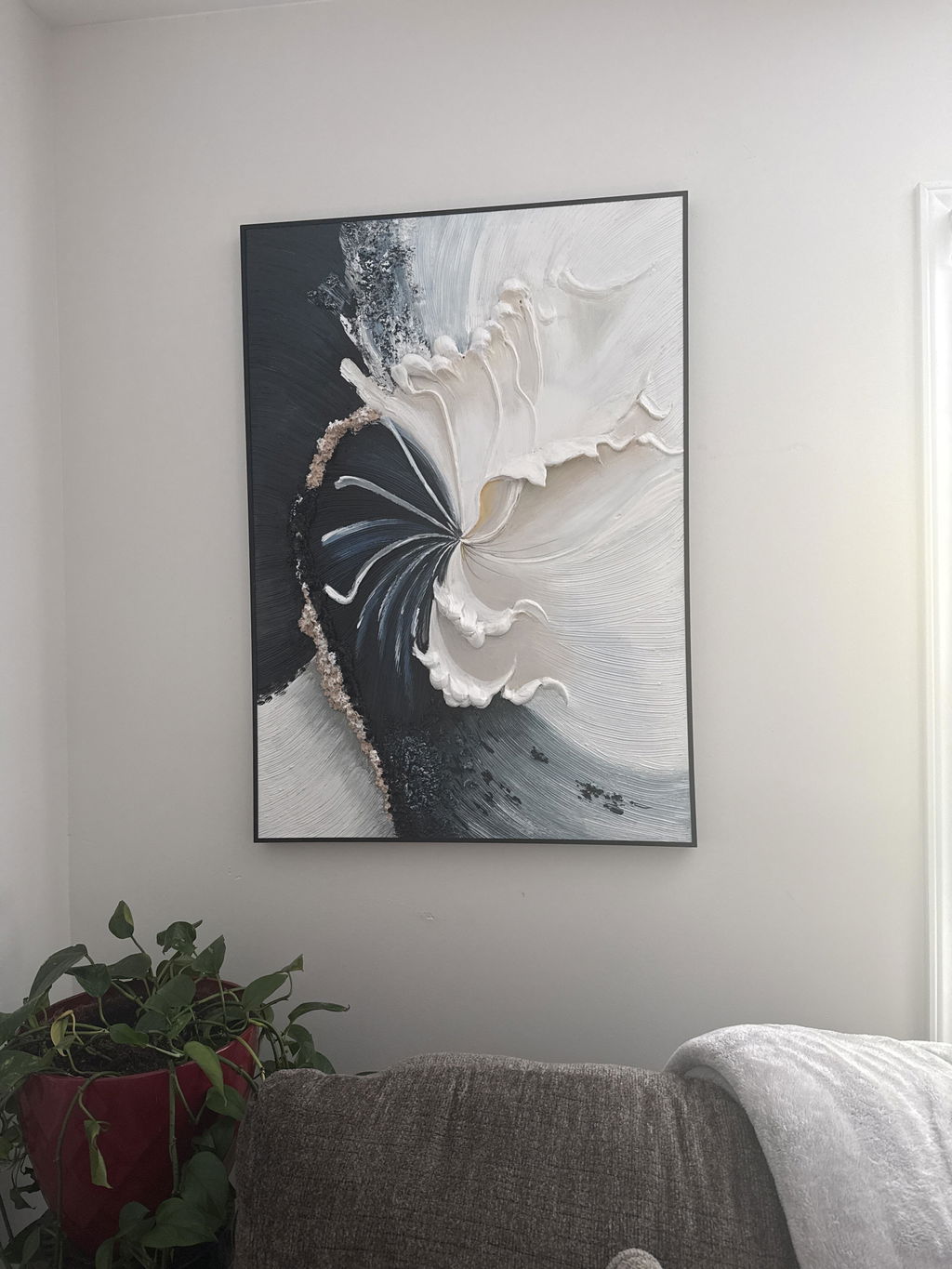
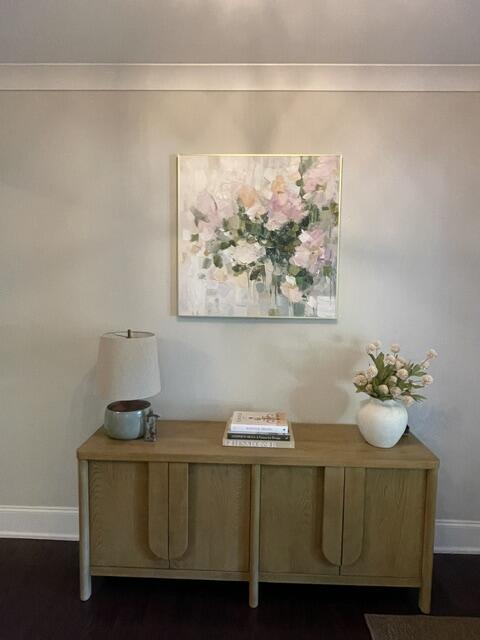
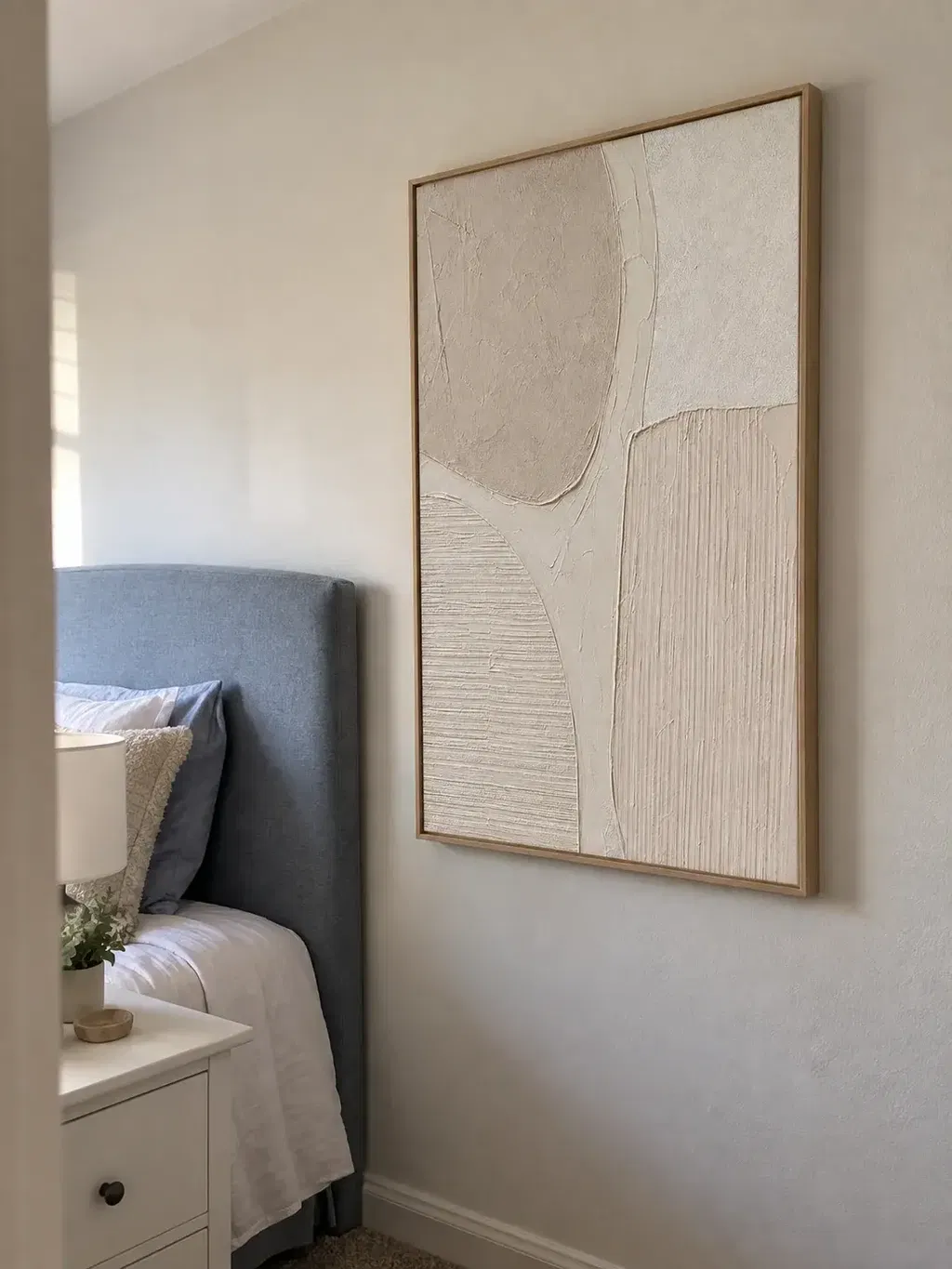
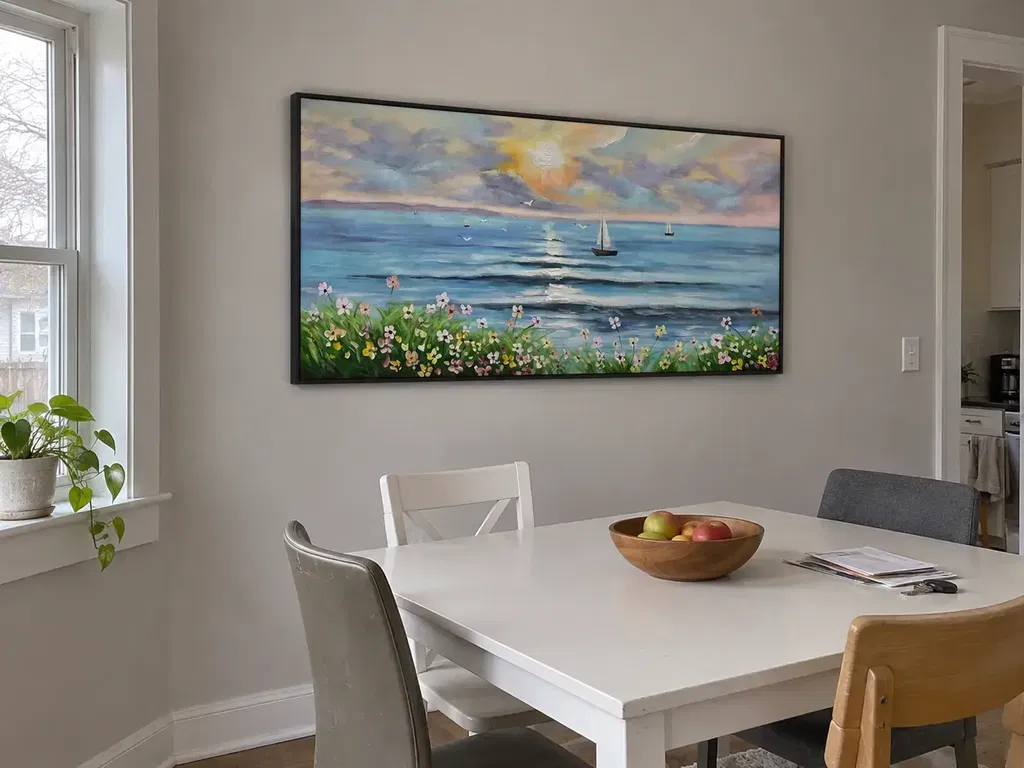
A common mistake in condo decor is the "postage stamp" effect—hanging a small, lonely piece on a large expanse of wall. To maximize visual volume, practitioners in high-end staging often utilize the 60-75% Rule. This is a heuristic (rule of thumb) suggesting that art should occupy roughly two-thirds to three-quarters of the available wall space above a piece of furniture, such as a sofa or console.
Logic Summary: The 60-75% Rule is a spatial proportion model used to balance visual weight. Our analysis assumes a standard viewing distance of 8–10 feet and a goal of creating a "focal anchor" that prevents the eye from wandering to the room's physical boundaries (corners), thereby expanding the perceived center.
Breaking the "Bitty" Room Syndrome
In tight quarters, many owners attempt to use "gallery walls" comprised of multiple small frames. However, expert designers suggest that a single "oversized" statement piece is superior. This approach reduces cognitive load and visual noise—the primary drivers of that "cramped" feeling. By providing one clear destination for the eyes, you simplify the room's visual hierarchy.

The Negative Space Illusion
For condos with standard 8–9ft ceilings, hanging art slightly below the traditional 57-inch "eye-level" center point can actually make the ceiling feel higher. This creates more negative space above the piece, tricking the brain into perceiving a greater vertical distance. Furthermore, choosing a "gallery wrap" (where the painting continues around the edges) without a bulky frame prevents the art from encroaching on the room's physical walking path, maintaining a sleek, unobtrusive profile.
The Physics of Perceived Depth: Texture vs. Flatness
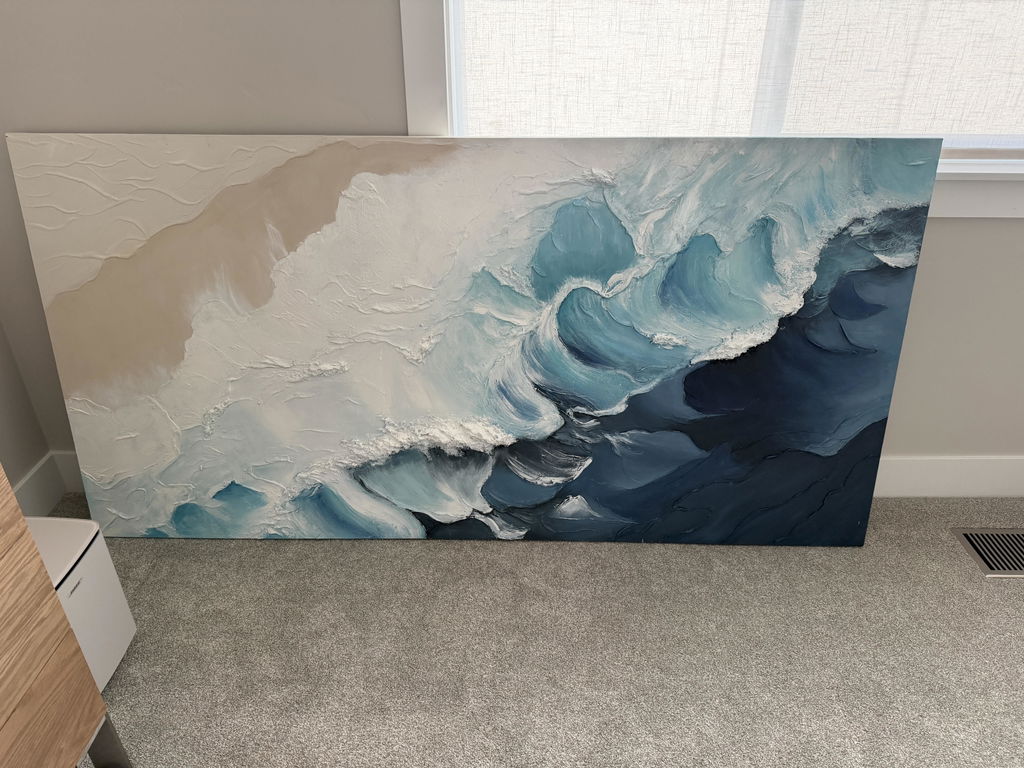
Why does a hand-painted oil canvas feel more "expensive" and "spacious" than a high-definition print? The answer lies in microtopography. Research published in Sensors proves that the mm-scale texture of oil paintings is crucial to their aesthetic impact.
The Kubelka-Munk Effect
The way light interacts with physical pigment is fundamentally different from how it hits a flat print. According to the Getty Conservation Institute, pigment reflection is dominated by absorption and scattering coefficients (the Kubelka-Munk equation). Hand-painted art features varying thicknesses of paint—known as impasto—which creates physical relief.
Tests at the MUNCH Museum confirm that interacting with art featuring physical relief textures exponentially stimulates intrinsic motivation and satisfaction. In a small condo, this texture provides "visual depth," allowing the wall to recede and making the room feel like it has more layers than it physically does.

The Health and Safety of High-Density Living
In the confined environment of an urban condo, indoor air quality (IAQ) is a critical component of "decision safety." The EPA warns that indoor air pollution can be significantly more concentrated than outdoor pollution.
VOCs and LEED Certification
When commissioning custom murals or large-scale canvases, it is vital to ensure the materials are non-toxic. High-quality acrylics and oils that utilize walnut oil instead of industrial turpentine solvents are preferred. According to Aalto University, coatings on wood and canvas emit significantly lower VOCs (Volatile Organic Compounds) once fully cured, but the initial selection of low-VOC paints is a prerequisite for projects seeking LEED or WELL building certifications.
The Neurological Impact
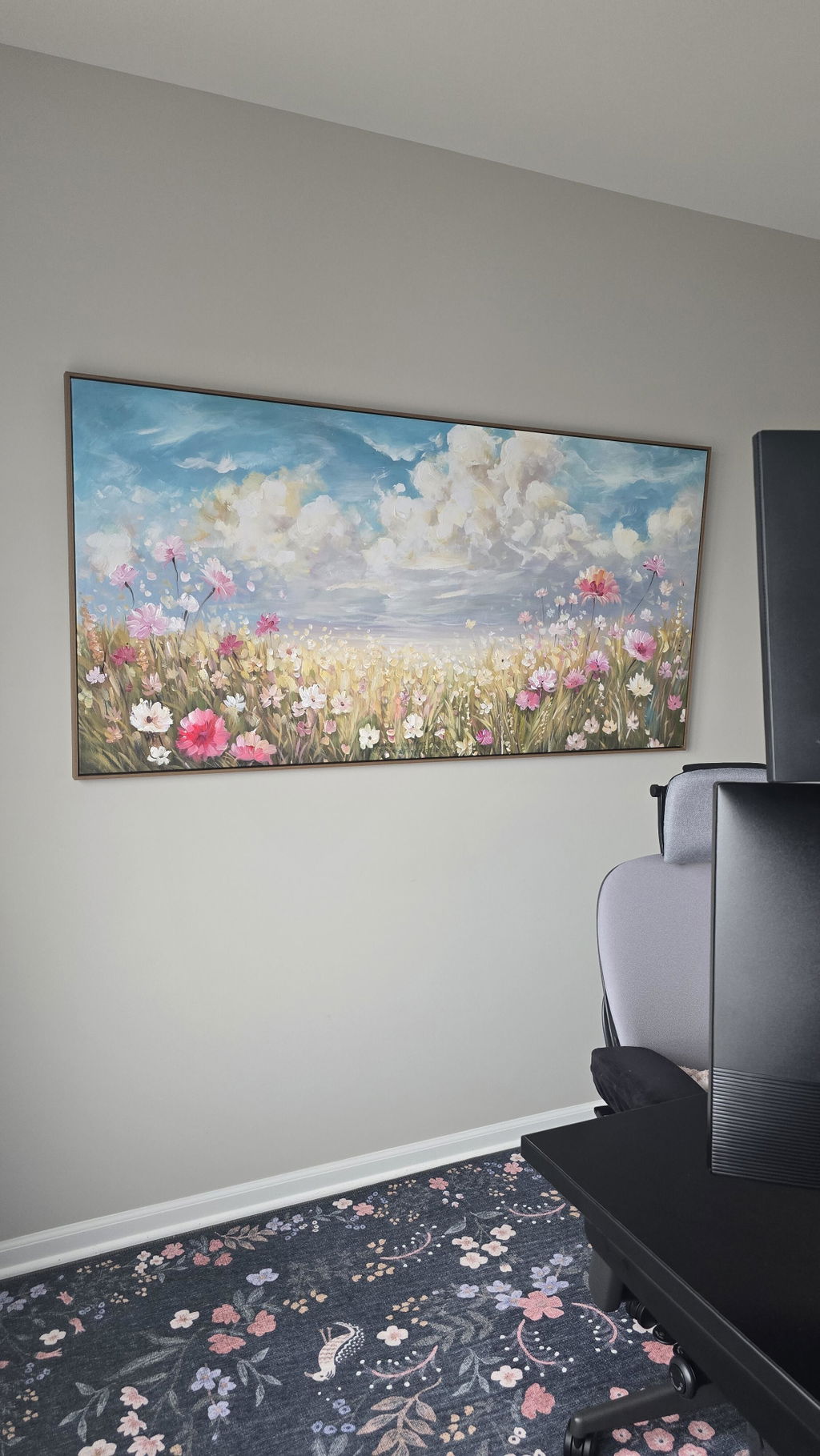
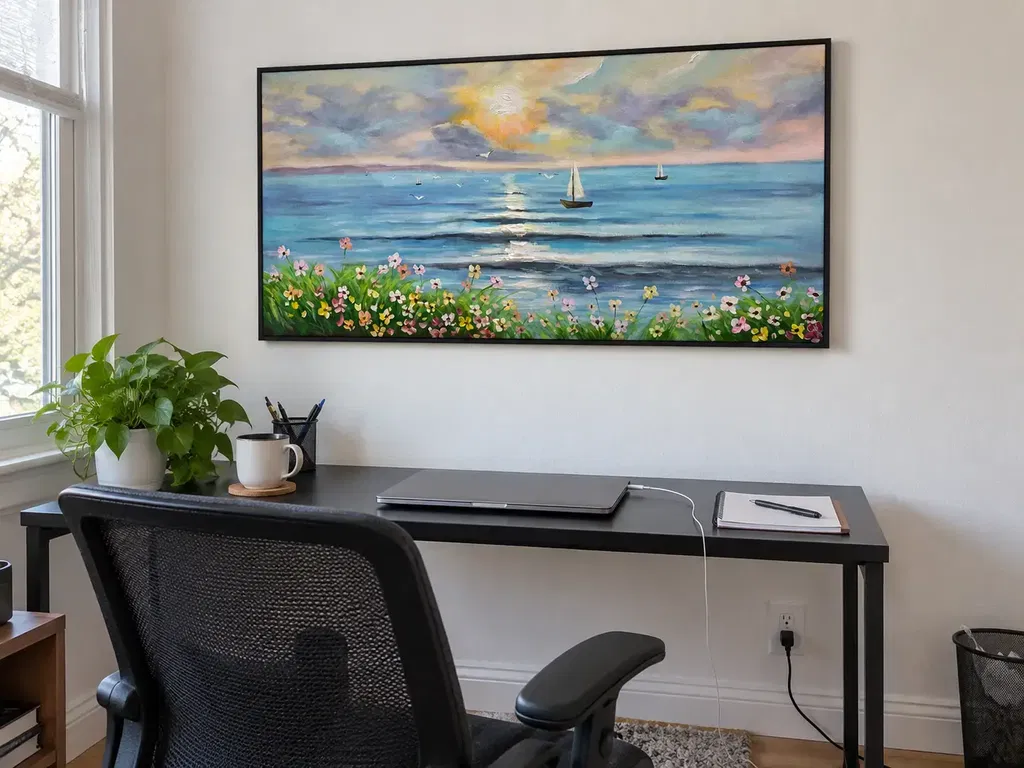
Art is not merely decorative; it is "public health infrastructure" for the home. A University of Pennsylvania review found that nature-themed artworks reduced stress in 61% of patients and improved mood in 73%. For a condo owner working from home, a Biophilic Hand-Painted Series can produce stress-reduction effects in the brain similar to being outdoors, optimizing emotional regulation circuits in the medial prefrontal cortex (mPFC).
Economic Catalysts: Art as a Property Value Driver
Strategic art placement is a high-ROI staging tactic. A CAR model analysis by the Royal Society found that neighborhoods with higher "art" geo-tags experienced greater relative house price ranking gains.
| Metric | Impact Level | Source / Rationale |
|---|---|---|
| Property Value Gain | Significant | Royal Society CAR Model (Bootstrapped coeff -116.74) |
| Consumer Value (Human vs AI) | 62% Premium | Columbia University Study |
| Staging ROI | High | Artisan craftsmanship mentions rose 21% (Zillow 2026 trends) |
| Safety Compliance | Mandatory | ASTM D-4236 and LHAMA Act standards |
| Lightfastness | Long-term | ASTM D4303 Standard (Xenon-arc testing) |
The "Performative Authenticity" Premium
In an era of AI-generated content, consumers are placing a massive premium on "100% human-created" art. The Columbia University study mentioned above confirms that consumers value art labeled as "AI-generated" 62% lower than authentic human work. By investing in a custom hand-painted piece, you are not just buying decor; you are securing an "essential identity" that digital replicas cannot provide, as noted by University of Chicago research.
Practical Sizing Scenarios for Condo Owners
To ensure you don't over-invest or under-scale, consider these two primary spatial scenarios.
Scenario A: The Multi-Use "Great Room"
In condos where the living, dining, and kitchen areas blend together, art acts as a "zoning" tool. Instead of trying to fill every wall, select one primary "anchor wall."
- The Goal: Use a single piece that is 75% the width of your main seating area.
- The Benefit: This creates a visual boundary for the "living zone" without the need for physical dividers.
- Reference: Zoning with Art: Using Large Acrylics in Multi-Use Rentals.
Scenario B: The Architectural Nook (Alcoves & Entryways)
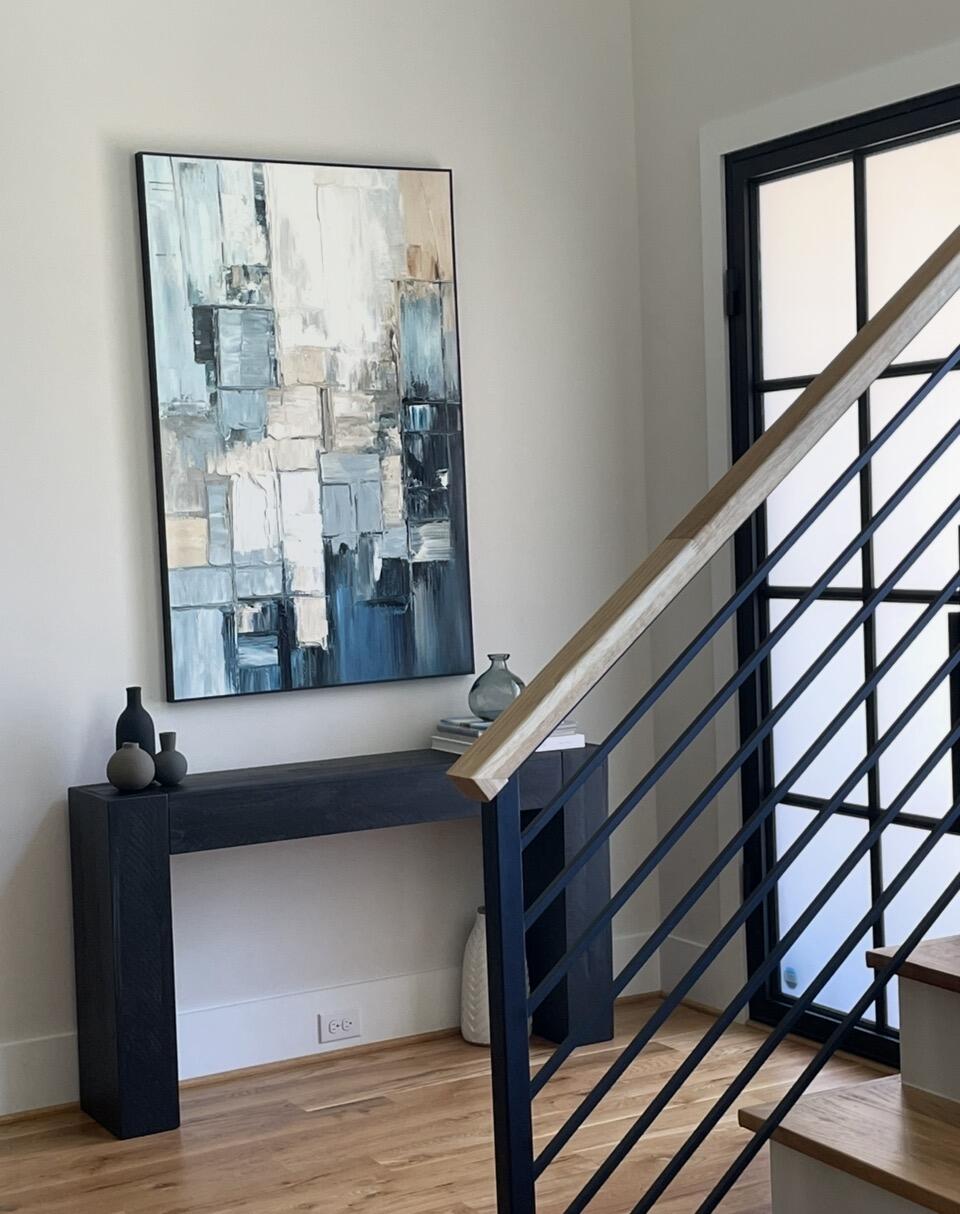
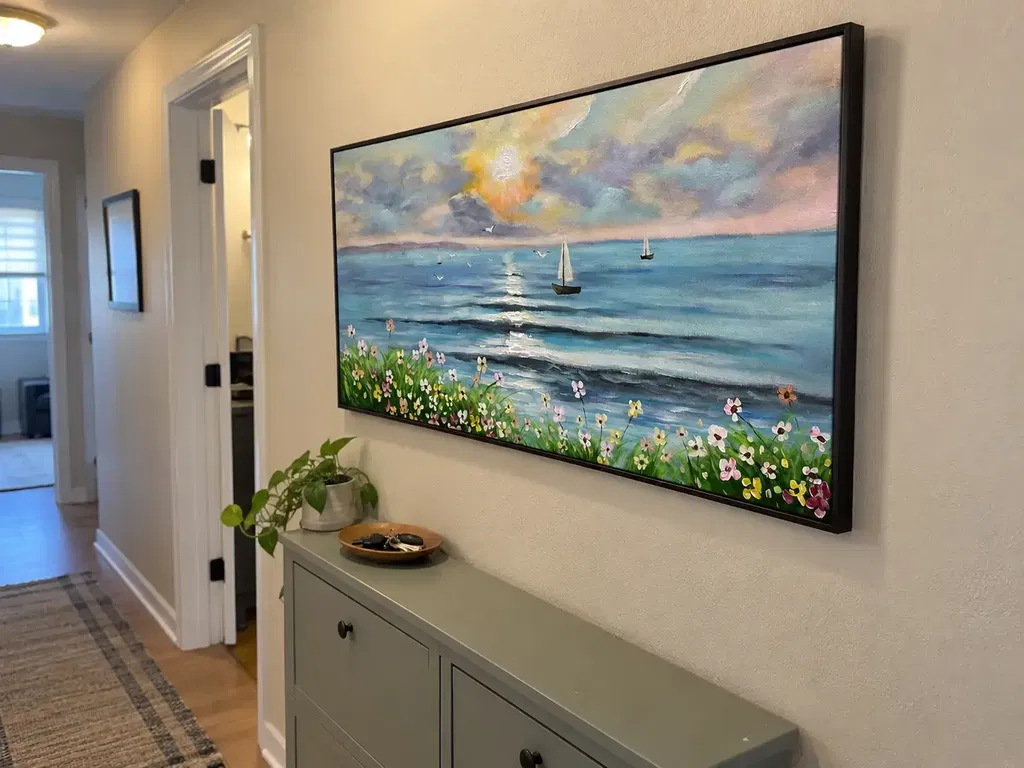
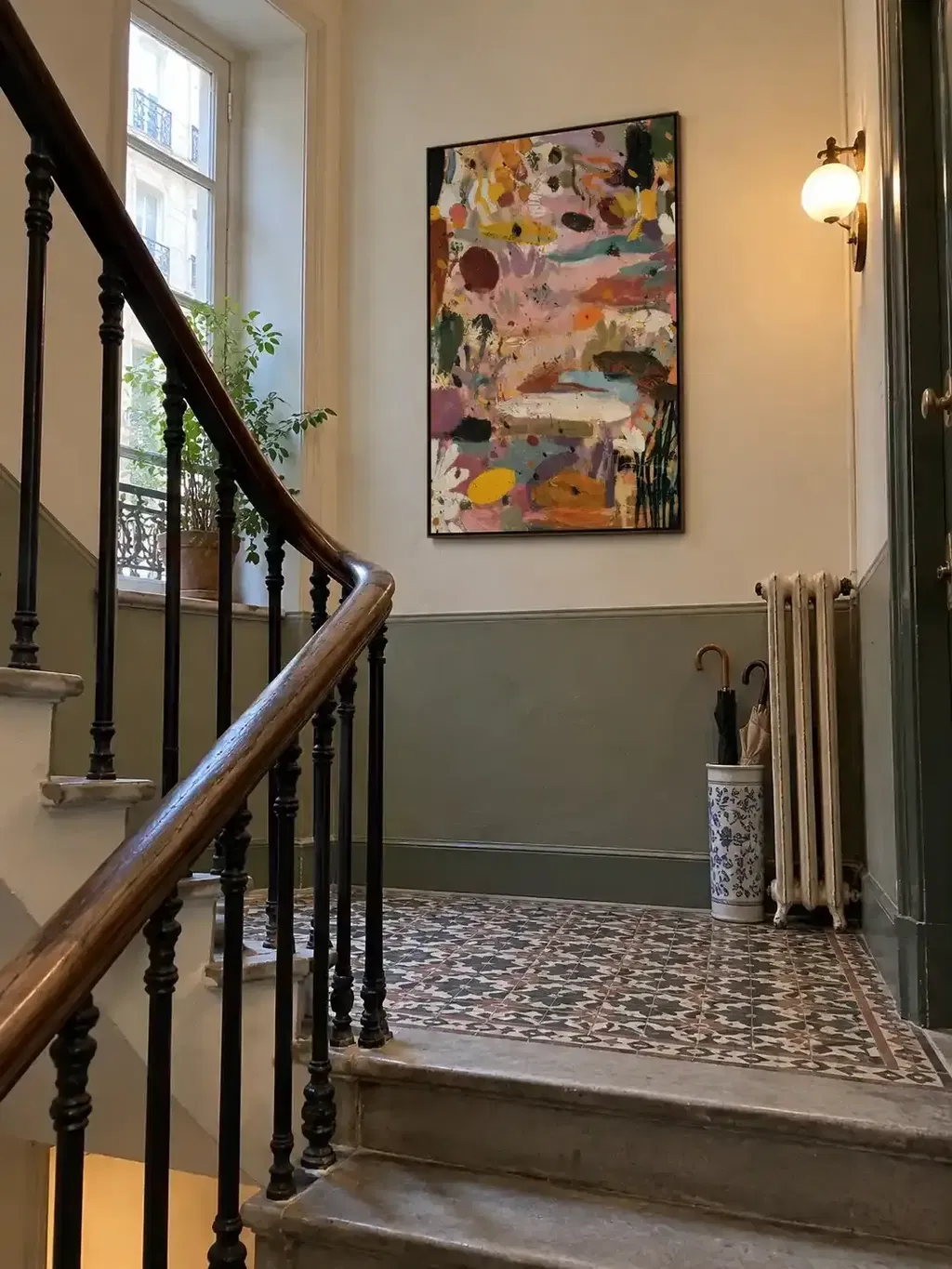
Small "dead zones" like entryways or dining alcoves are perfect for "visual volume" experiments.
- The Goal: Scale the art to fill 90% of the nook's width, leaving only a small sliver of "breathing room" on the sides.
- The Benefit: This creates an immersive, jewel-box effect that makes the small space feel intentional rather than accidental.
- Reference: Dining Alcoves: Scaling Gallery-Quality Art for Inset Walls.

Technical Deep-Dive: Pigment Longevity and "Decision Safety"
When purchasing custom art online, "decision safety" also involves the physical durability of the piece. You want to ensure the investment doesn't fade or discolor.
Lightfastness and ASTM D4303
Professional-grade paints are tested for lightfastness. Micom Laboratories utilizes Method C's xenon-arc test, which simulates years of exposure behind filtered glass. When selecting your custom piece, ensure the artist uses pigments with a high lightfastness rating to prevent the "Smalt Fade" or "Prussian Blue" decay seen in historical works.
Support Induced Discoloration (SID)
A common technical "gotcha" in custom acrylic art is Support Induced Discoloration. According to Golden Artist Colors, water-soluble impurities in cotton/linen canvases can be drawn out when applying thick mediums, causing a yellow tint. High-end custom studios prevent this by using specialized sealants and high-quality primers, a detail often missed by mass-produced "canvas print" companies.
Methodology Note: How We Modeled Visual Volume
Our recommendations are based on a Deterministic Spatial Model (scenario modeling, not a controlled lab study). We assume the following parameters for a "Standard Urban Condo" environment:
| Parameter | Value or Range | Unit | Rationale |
|---|---|---|---|
| Wall Height | 96 - 108 | Inches | Standard US/UK condo height |
| Viewing Distance | 72 - 120 | Inches | Average living room depth |
| Art-to-Furniture Ratio | 0.60 - 0.75 | Ratio | The "60-75% Rule" heuristic |
| Ambient Light | 300 - 500 | Lux | Standard residential lighting levels |
| Negative Space (Top) | 12 - 18 | Inches | Minimum required to avoid "crowding" the ceiling |
Note: These models may not apply to spaces with extreme architectural features like sloped 20ft ceilings or floor-to-ceiling glass walls where hanging is impossible.
Summary of Spatial Strategy
To maximize your condo's visual volume, move away from the "more is more" philosophy of gallery walls and embrace the "bigger is better" logic of oversized originals. By adhering to the 60-75% rule and prioritizing the physical texture of hand-painted oils, you create a space that feels both larger and more authentic.
Custom sizing eliminates the risk of "buyer's remorse" by ensuring every inch of canvas is optimized for your specific architectural footprint. As the art market shifts toward value and substance, your home should reflect a similar commitment to quality, health-safe materials, and performative authenticity.
Disclaimer: This article is for informational purposes only and does not constitute professional interior design, architectural, or medical advice. Regarding chemical safety and VOCs, always consult material safety data sheets (MSDS) provided by the manufacturer. If you have pre-existing respiratory conditions, consult a professional before installing large-scale painted works in poorly ventilated spaces.
Sources
- Marketplace - The expensive art market continues to struggle
- Columbia University - Human-Made vs. AI Art Study
- Royal Society - Quantifying the link between art and property prices
- UPenn - Visual Art in the Built Environment: A Critical Review
- EPA - Indoor Air Quality and Low-VOC Paints
- Getty Conservation Institute - Color Science and Pigment Mixture
- Frontiers in Computer Science - Interaction with physical 3D replicas