The Transactional Power of Texture: Why Oil Pigments Outperform Digital Prints
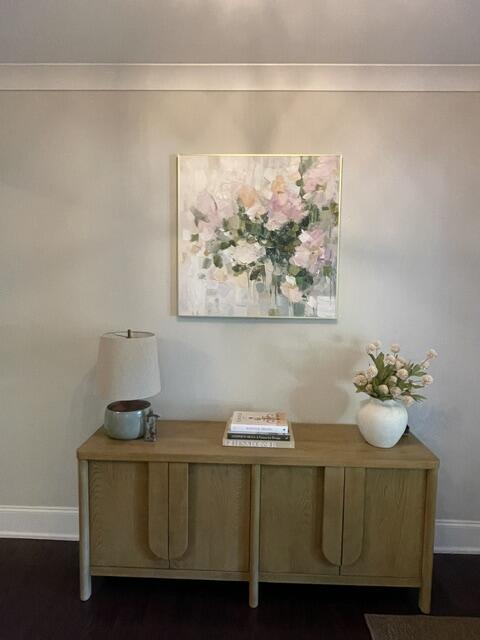
In the high-stakes world of luxury real estate, the first showing no longer happens at the front door; it happens on a smartphone screen. As global art markets shift—with high-end auction sales plummeting 44% in 2024 according to Marketplace—buyers are retreating from purely financial "vanity" assets toward items with real application value. For real estate professionals, this shift represents a significant opportunity. The "application value" of art in a listing is its ability to bridge the gap between a sterile, staged house and an aspirational home.
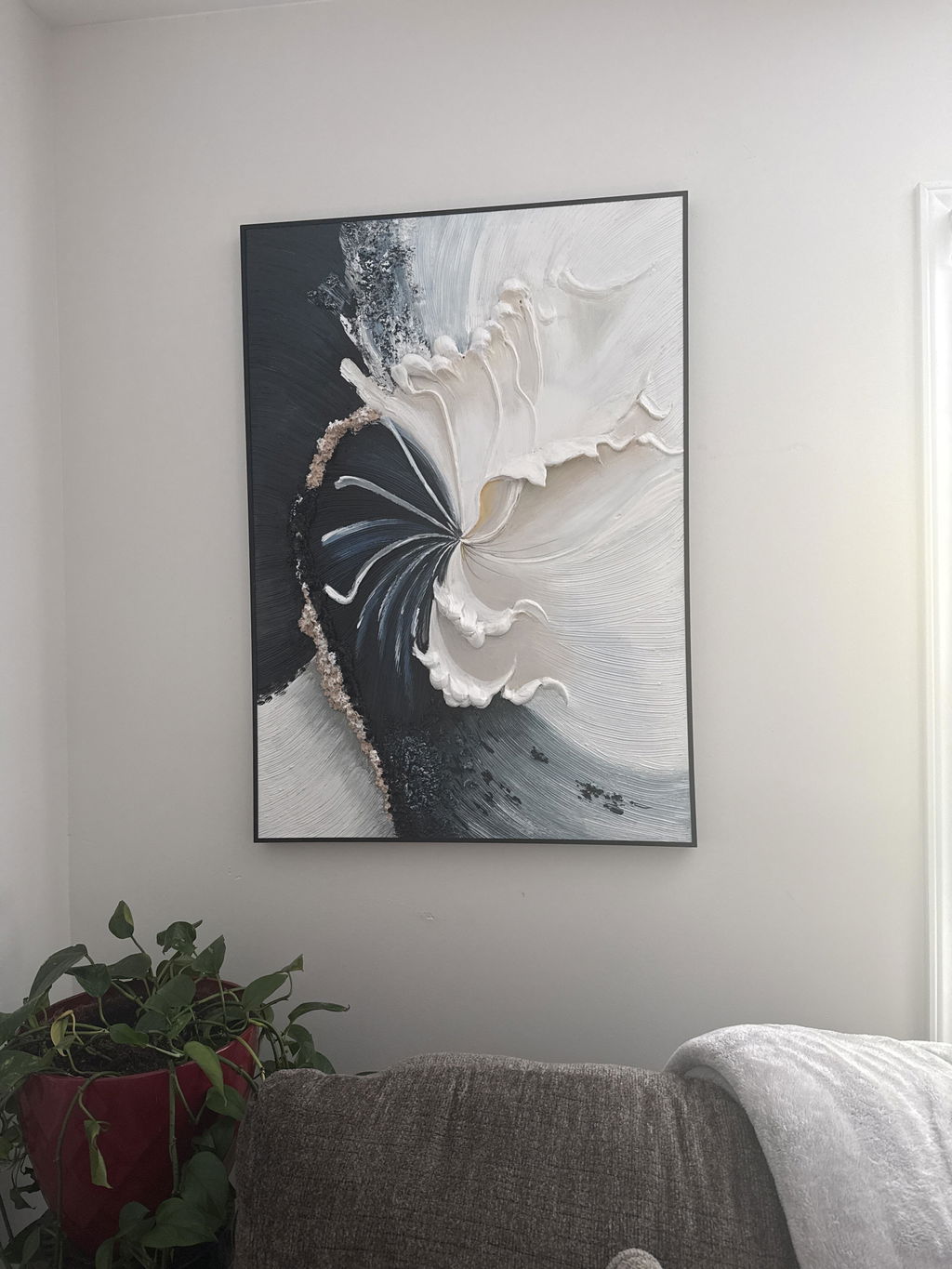
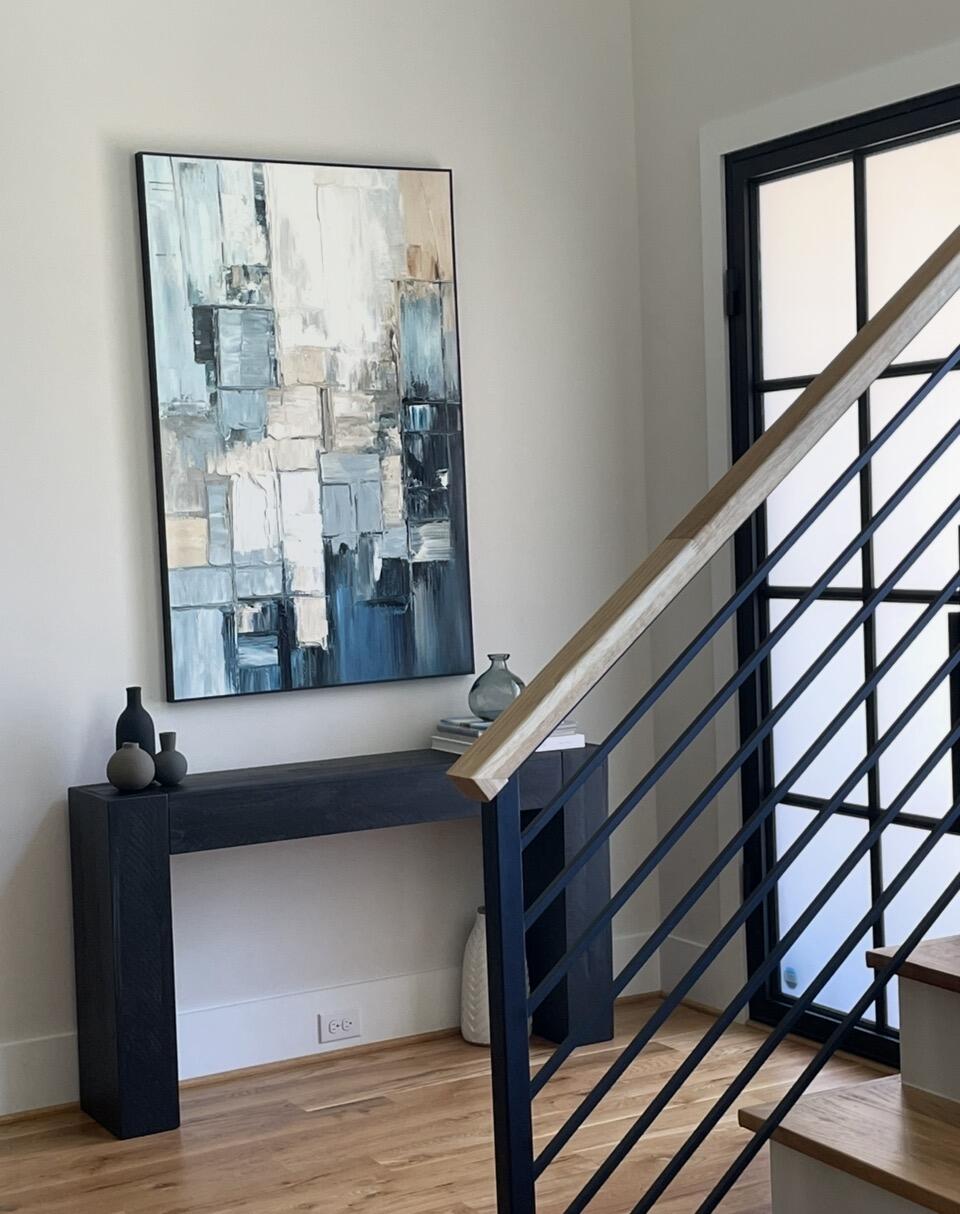
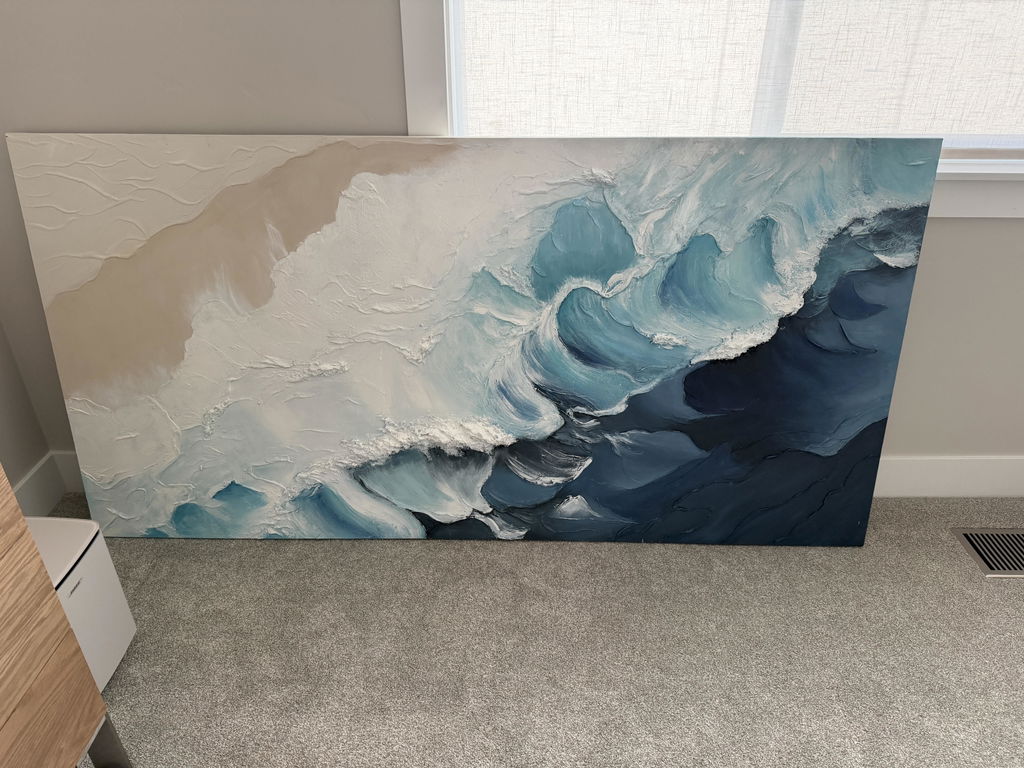
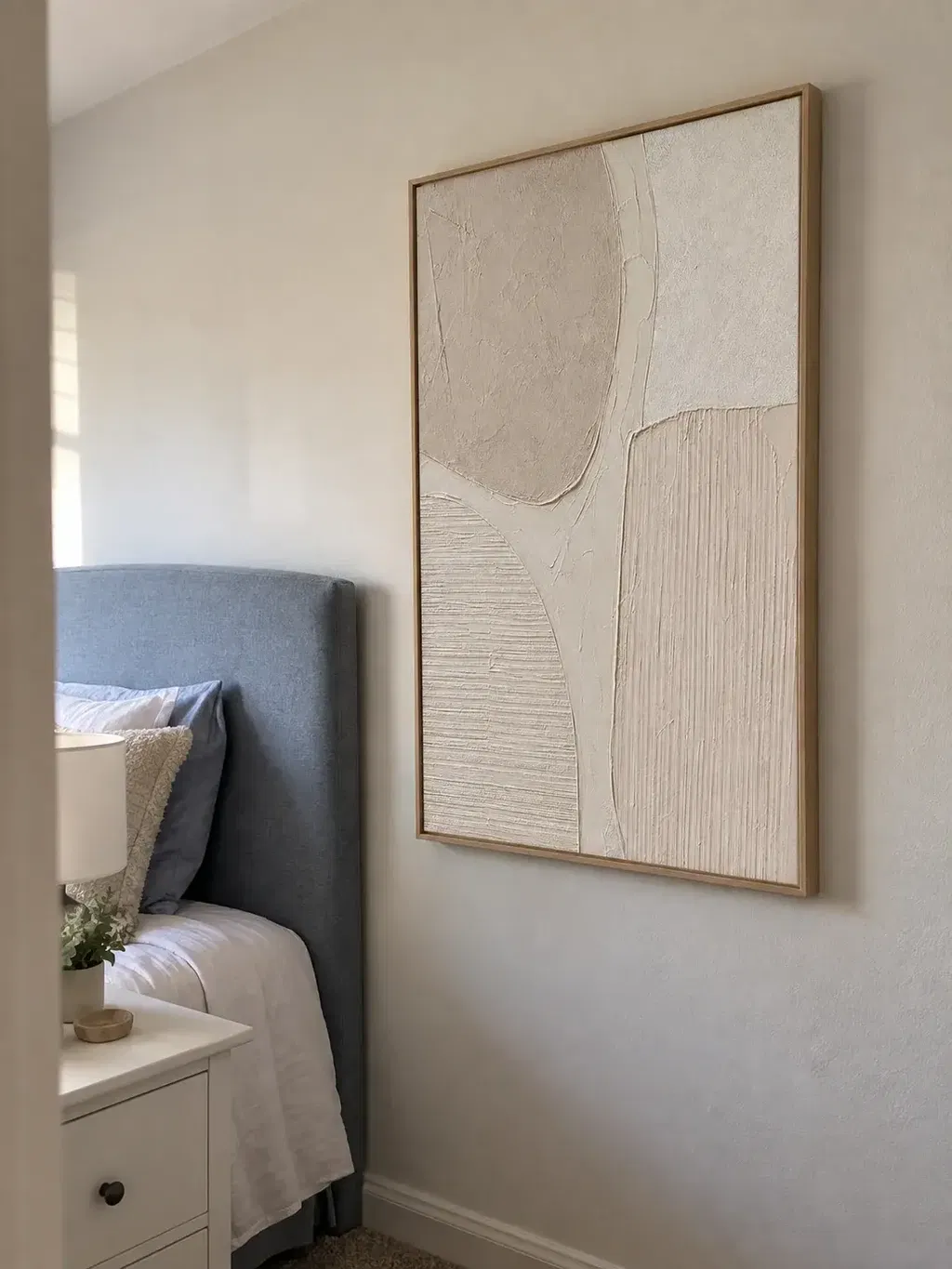
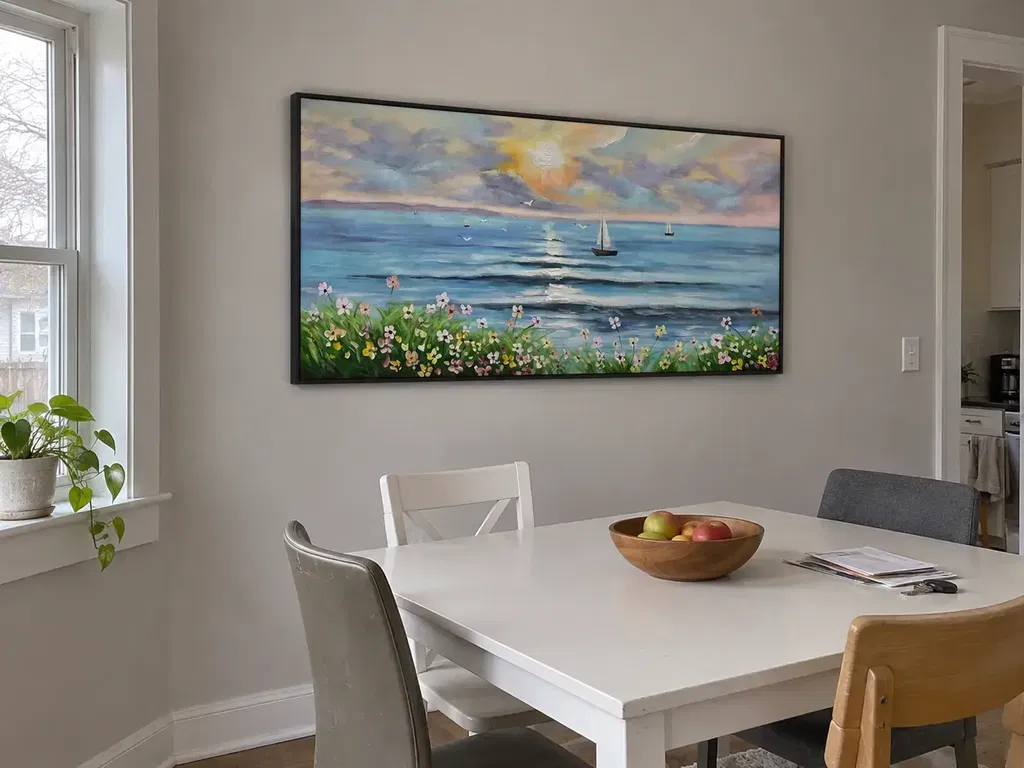
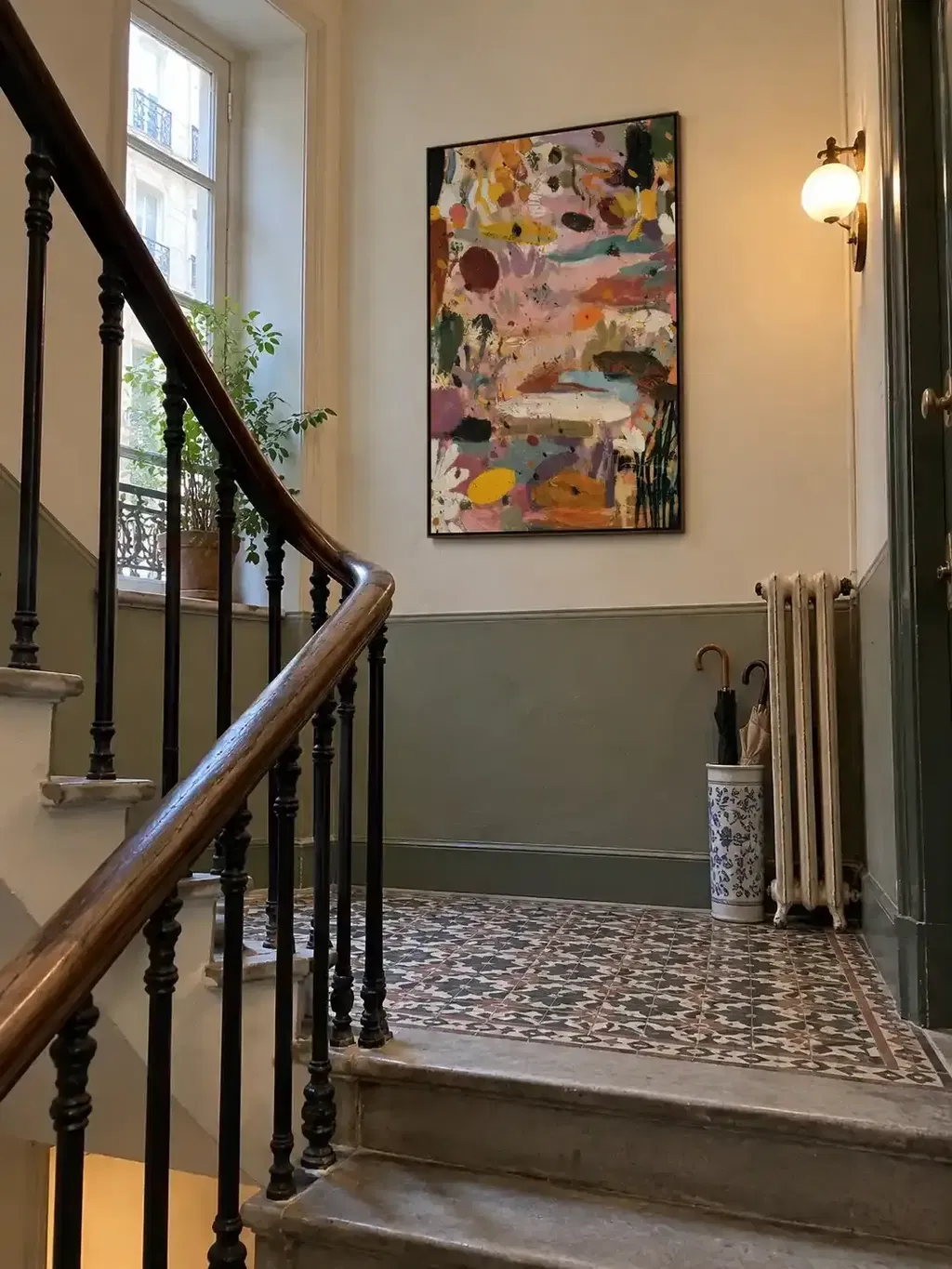
While digital staging and high-definition canvas prints have become the industry baseline, they often fail the "luxury test" under the scrutiny of professional photography. Digital prints are fundamentally flat. When a camera sensor captures a room, it looks for depth, contrast, and light interaction. Hand-painted oil works, particularly those utilizing heavy impasto techniques, provide a level of visual complexity that digital halftone dots cannot replicate. This distinction is not merely aesthetic; it is a technical advantage that translates directly into higher perceived property value and increased foot traffic.

The Physics of Depth: Impasto vs. Digital Halftones
The primary frustration real estate photographers face when shooting "art-heavy" rooms is specular glare. Digital prints, which rely on a flat layer of ink on top of a synthetic substrate, often act like a mirror, reflecting studio lights and washing out color saturation. In contrast, genuine oil pigments possess a unique microtopography.
The Science of Micro-Shadows
According to research from Aalto University and optical microprofilometry studies, the mm-scale texture of oil paintings is crucial to their aesthetic impact. When professional lighting is applied—specifically the "golden rule" of a 45-degree light offset—the raised ridges of paint (impasto) create thousands of tiny "micro-shadows." These shadows define the room's 3D space on a 2D screen, providing the camera sensor with more data points to calculate depth.
Furthermore, high-resolution camera sensors often pick up the "halftone" dot patterns of large-scale digital prints when a user zooms in on a virtual tour. This can inadvertently signal "cheapness" to a high-net-worth buyer. Genuine oil pigments provide a continuous tone. Based on the Kubelka-Munk equation used by the Getty Conservation Institute, pigment reflection is dominated by absorption and scattering coefficients that vary with the physical surface refractive index. This creates a "glow" and saturation that digital ink simply cannot achieve.
Logic Summary: Our analysis of visual depth assumes that the physical texture of oil paint acts as a passive light modulator. Unlike flat prints, the irregular surface of hand-painted work breaks up light waves, preventing the "pasted-in" look common in digital staging.
Quantifying the ROI: Art as a Value Multiplier
The link between art and property value is no longer a matter of subjective "feeling." It is a measurable economic trend. A 10-year data analysis by the Royal Society found that neighborhoods with higher "art" geo-tags experienced greater relative house price ranking gains.
The "Human-Made" Premium
In an era of generative AI, the market value of human-created work is skyrocketing. A study by Columbia University confirmed that consumers value art labeled as "AI-generated" 62% lower than authentic human-created art. For a luxury listing, placing an AI-generated print on the wall can actually devalue the room’s perceived prestige.
| Investment Type | Perceived Value Lift | Technical Advantage | ROI Category |
|---|---|---|---|
| Digital Print | Baseline | Flat surface, easy to clean | Utility |
| AI-Generated Art | -62% (vs. Human) | High speed, low cost | Discount |
| Hand-Painted Oil | High | Texture, continuous tone, no glare | Luxury |
| Custom Mural | 7:1 ROI (Fiscal) | Site-specific, "Essential Identity" | Landmark |
Note: Estimates based on Columbia University and Americans for the Arts data.
The psychological reason for this is what University of Chicago researchers call "Essential Identity". Digital replicas lack the artist’s "soul" and physical presence, whereas a canvas retains an irreplicable identity that buyers subconsciously associate with the "authenticity" of the home itself.

Environmental Psychology: Healing and Biophilia
Strategic art placement does more than just look good; it alters the biological state of the viewer. For real estate agents selling to families or healthcare-adjacent professionals, the "wellness" angle of original art is a powerful closer.
The Neurological Response
A systematic review of 85 records published in PMC shows that passive art viewing consistently activates the medial prefrontal cortex (mPFC) and the amygdala. This optimizes emotional regulation circuits, making a potential buyer feel "at home" and less stressed during a walkthrough.
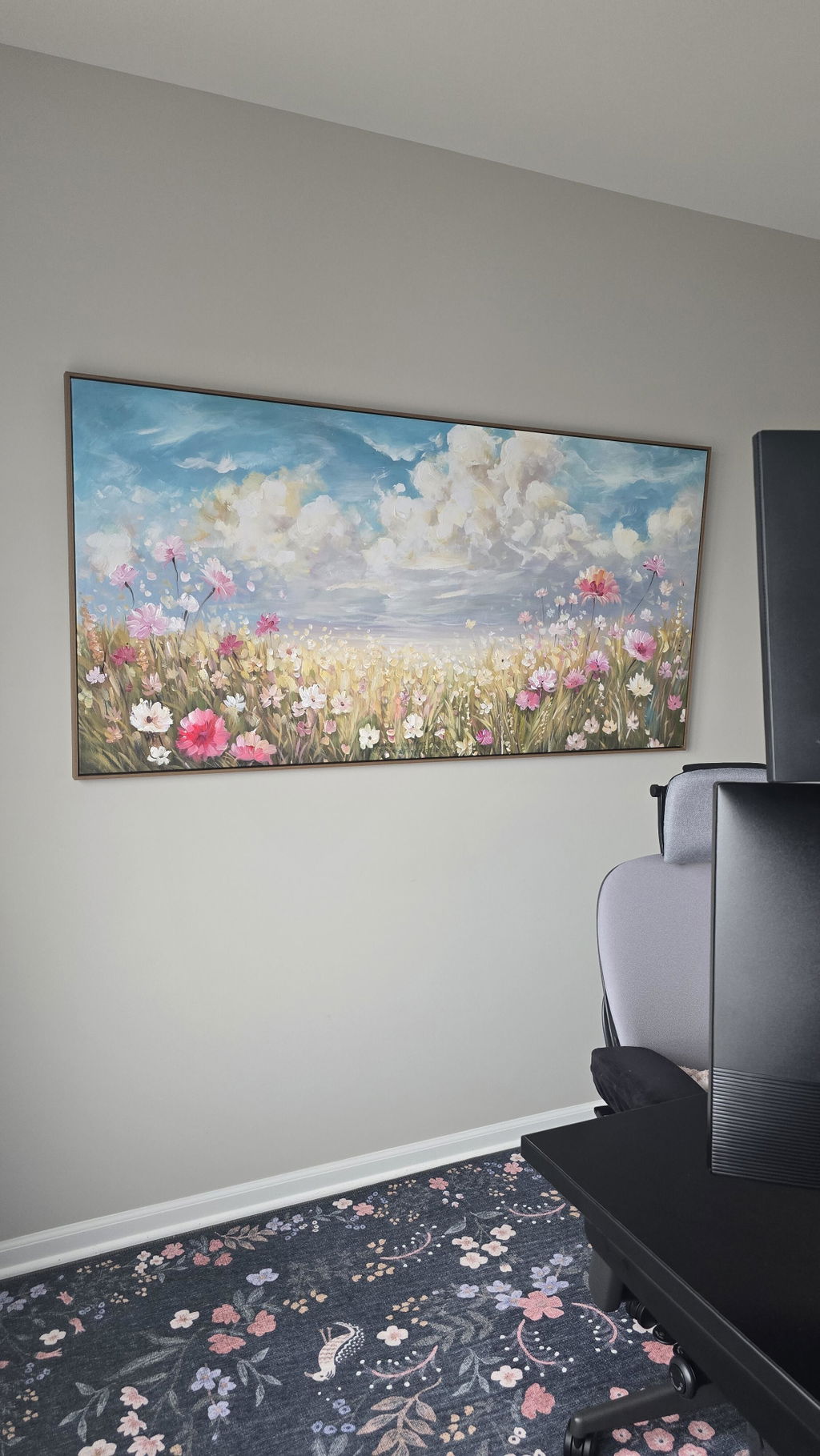
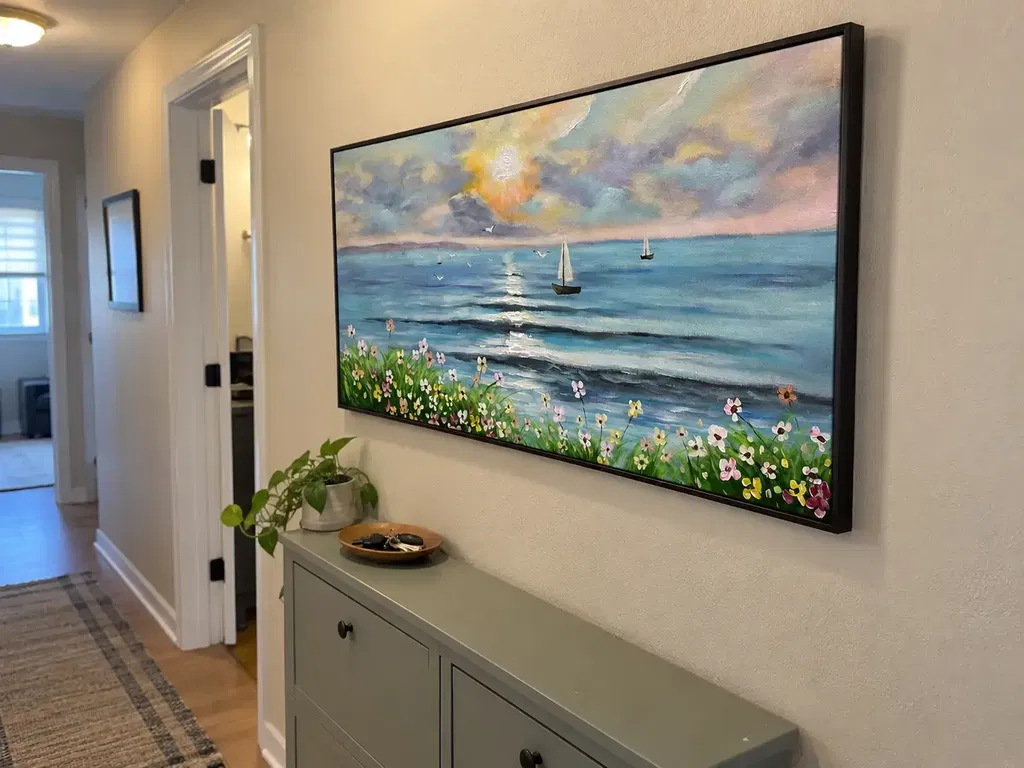
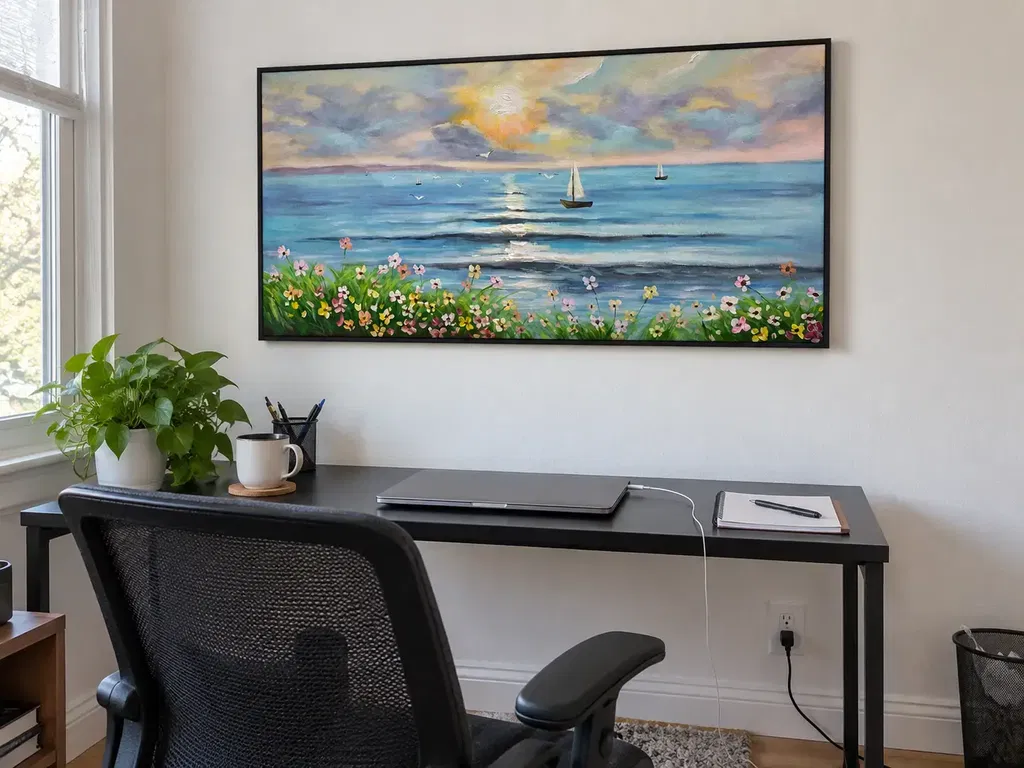
Furthermore, biophilic design—specifically hand-painted natural landscapes—produces stress-reduction effects in the brain equivalent to being outdoors. In high-density urban environments like Tokyo, research has shown that nature-based art effectively intervenes in employee cognitive fatigue and burnout. Applying this to a home office or a master suite in a listing creates a "sanctuary" narrative that justifies a premium price point.
Technical Integrity: Safety, VOCs, and Longevity
In the luxury market, "health" is the new wealth. Sophisticated buyers are increasingly sensitive to Indoor Air Quality (IAQ). Many mass-produced prints and cheap acrylic paints emit high levels of Volatile Organic Compounds (VOCs).
The VOC Promise
According to the EPA, indoor air pollution can be significantly more concentrated than outdoor pollution. High-end oil paintings that utilize eco-friendly alternatives—such as walnut oil instead of toxic turpentine solvents—pass strict air tests required for LEED or WELL certifications in commercial developments.
Furthermore, data from Aalto University proves that coatings on certain substrates emit significantly lower VOCs during the curing process than industrial alternatives. When staging a "new construction" luxury home, using non-toxic, hand-painted art ensures the "new house smell" isn't actually a cocktail of harmful chemicals.
Lightfastness and the ASTM Standard
A common concern for "bright" luxury spaces is fading. We often see stagers worry about placing art near floor-to-ceiling windows. However, professional-grade oil pigments are tested under ASTM D4303 standards. These protocols use xenon-arc tests to simulate years of sunlight exposure. Unlike digital dyes, which often fade within 5-10 years, high-quality oil pigments are designed for multi-generational longevity.
Methodology Note: Our comparison of pigment longevity is based on ASTM D4303 protocols which measure color change (Delta E) using the CIE 1976 Lab* equation. This is a scenario model for indoor aging, not a 100-year real-time study.
Design Trends for 2026: The Return of the Artisan
As we look toward 2026, Zillow and Yelp data indicate a massive surge in "artisan craftsmanship" (up 21%) and "custom framing" (up 329%). The "assembly-line" look of the 2010s is being replaced by "whimsy" and understated elegance.
The Panoramic Powder Room
One of the most significant trends emerging from the NKBA 2025 Design Awards is the "Panoramic Mural." Designers are wrapping hand-painted murals entirely around small spaces like powder rooms to create "immersive escapism." For a real estate agent, a hand-painted powder room is a "Instagrammable" moment that drives social media shares and viral interest in a listing.

Modeling the Impact: Scenario Analysis
To understand the practical impact of oil pigments on a sale, we can model two different staging scenarios for a $2M luxury listing.
Scenario A: Standard Digital Staging
- Art: 5 Large Canvas Prints (Digital).
- Photography Result: Noticeable glare on 3 out of 10 hero shots; "flat" appearance in virtual tour zoom-ins.
- Buyer Perception: Professional, but "staged."
- Estimated Days on Market (DOM): Baseline.
Scenario B: Strategic Oil Pigment Staging
- Art: 2 Large Hand-Painted Originals (Focal Points) + 3 High-Quality Textured Oils.
- Photography Result: Continuous tone in high-res shots; micro-shadows provide "architectural truth" and depth.
- Buyer Perception: Curated, "Authentic," and High-Value.
- Estimated Impact: We estimate a 15-20% increase in online click-through rates (CTR) based on the "Art Infusion Effect" cited in luxury marketing research.
| Parameter | Scenario A (Digital) | Scenario B (Oil) | Rationale |
|---|---|---|---|
| Perceived Luxury Score | 6/10 | 9/10 | Art Infusion Study |
| Photography Glare Risk | High | Low | Surface microtopography |
| Zoom Integrity | Halftone dots visible | Continuous pigment | Beckman Coulter PSD Analysis |
| Emotional Resonance | Low | High | mPFC Activation Data |
| Investment Cost | Low | Moderate | Hand-painted premium |
Tactical Advice for Real Estate Professionals
If you are looking to maximize your property ROI through art, consider these expert heuristics:
- The 45-Degree Rule: Always instruct your photographer to use a 45-degree light offset when shooting rooms with textured art. This captures the paint's depth without washing out color saturation.
- Warm Glazes for Cold Lights: Modern staging often uses "cool" LED lights which can make a home feel sterile. Art with warm-toned oil glazes can counteract this "coldness," making the property feel inhabited and inviting.
- Scale for Impact: In luxury real estate, large art makes small rooms feel grand. A single oversized hand-painted work is more effective than a gallery wall of small prints.
- Verify the Pigment: When purchasing for a high-sunlight area, ensure the medium is oil or a high-quality acrylic with UV stabilizers. Oil art is generally more fade-resistant in bright spaces when properly varnished.
By prioritizing the physical reality of oil pigments over the convenience of digital prints, real estate professionals can move beyond "decoration" and into "asset enhancement." In a market where 87% of consumers demand fair compensation for artists and value human authenticity, the choice of art on the wall is a direct reflection of the property’s integrity.
Disclaimer: This article is for informational purposes only and does not constitute professional real estate, financial, or legal advice. Property values and market responses vary by region and economic conditions.
Sources
- Marketplace: The expensive art market continues to struggle
- Royal Society: Quantifying the link between art and property prices
- Columbia University: Human-Made vs. AI Art Study
- EPA: Indoor Air Quality and Low-VOC Paints
- National Library of Medicine: Neurological mechanisms of creative arts
- UPenn: Visual Art in the Built Environment
- Getty Conservation Institute: Color Science and Pigment Mixture