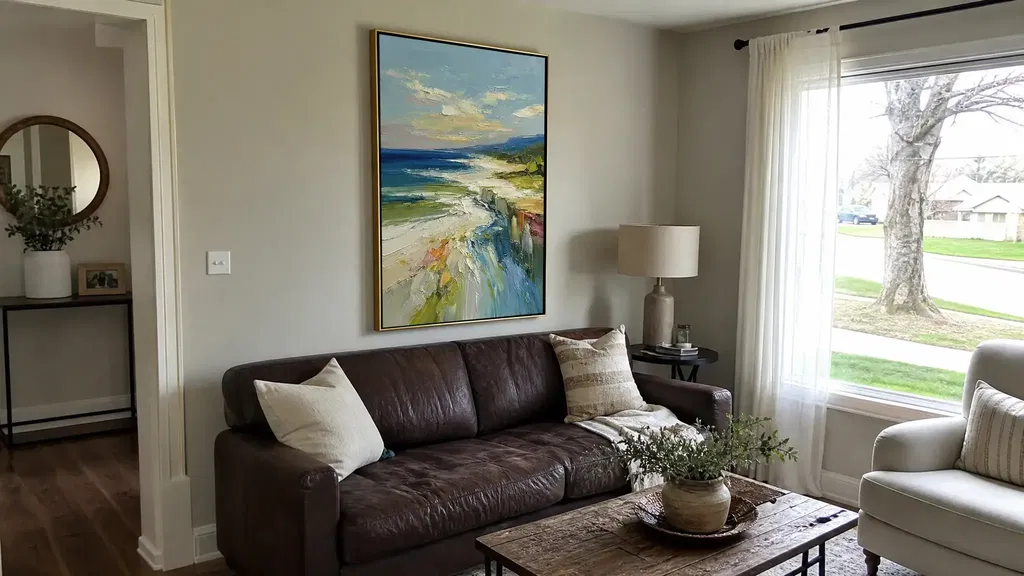
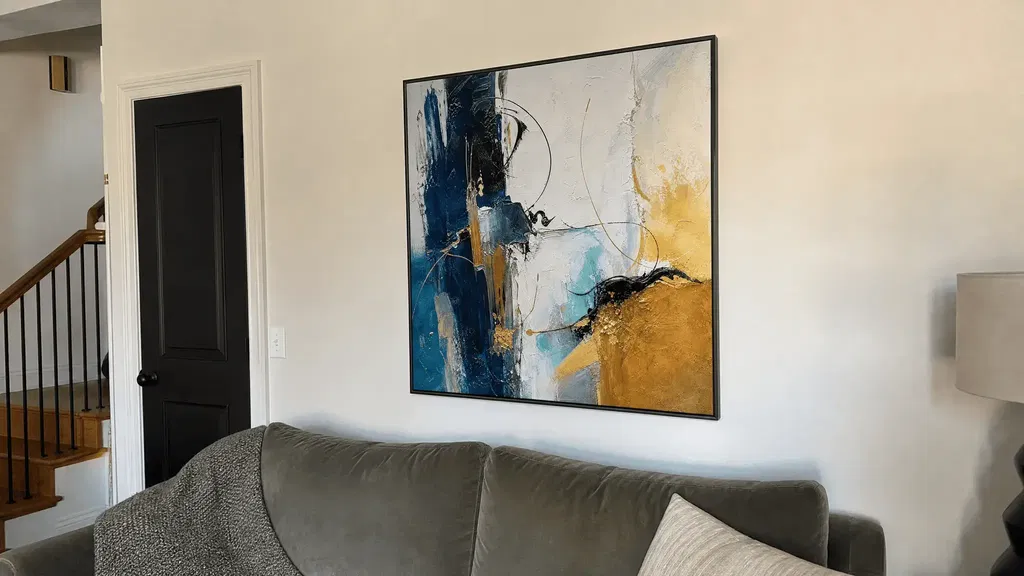
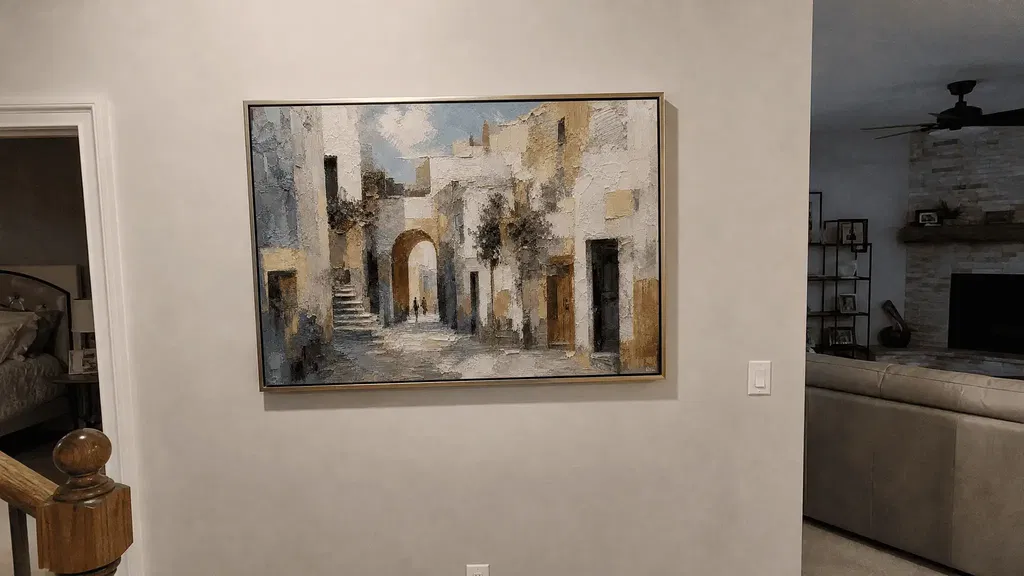
A handmade painting listing should give you enough information to compare the pictured work with the written product details before checkout. Front, detail, angled, edge, and back photos can reduce uncertainty, but they cannot independently prove authorship or authenticity. Use the page to identify what appears consistent, note what's missing, and decide whether the remaining questions justify contacting the seller or choosing another listing.
Start With the Handmade Painting Listing's Visual Evidence
The photos should help you match the actual object to its description and presentation. A polished hero image is useful for judging style, but piece-specific details matter more when texture, support, framing, or finish affects your decision.
Check Process Photos and Texture Close-Ups
Look for visual evidence that adds information beyond the main front-facing image:
- Process-stage images showing the work at more than one point in production.
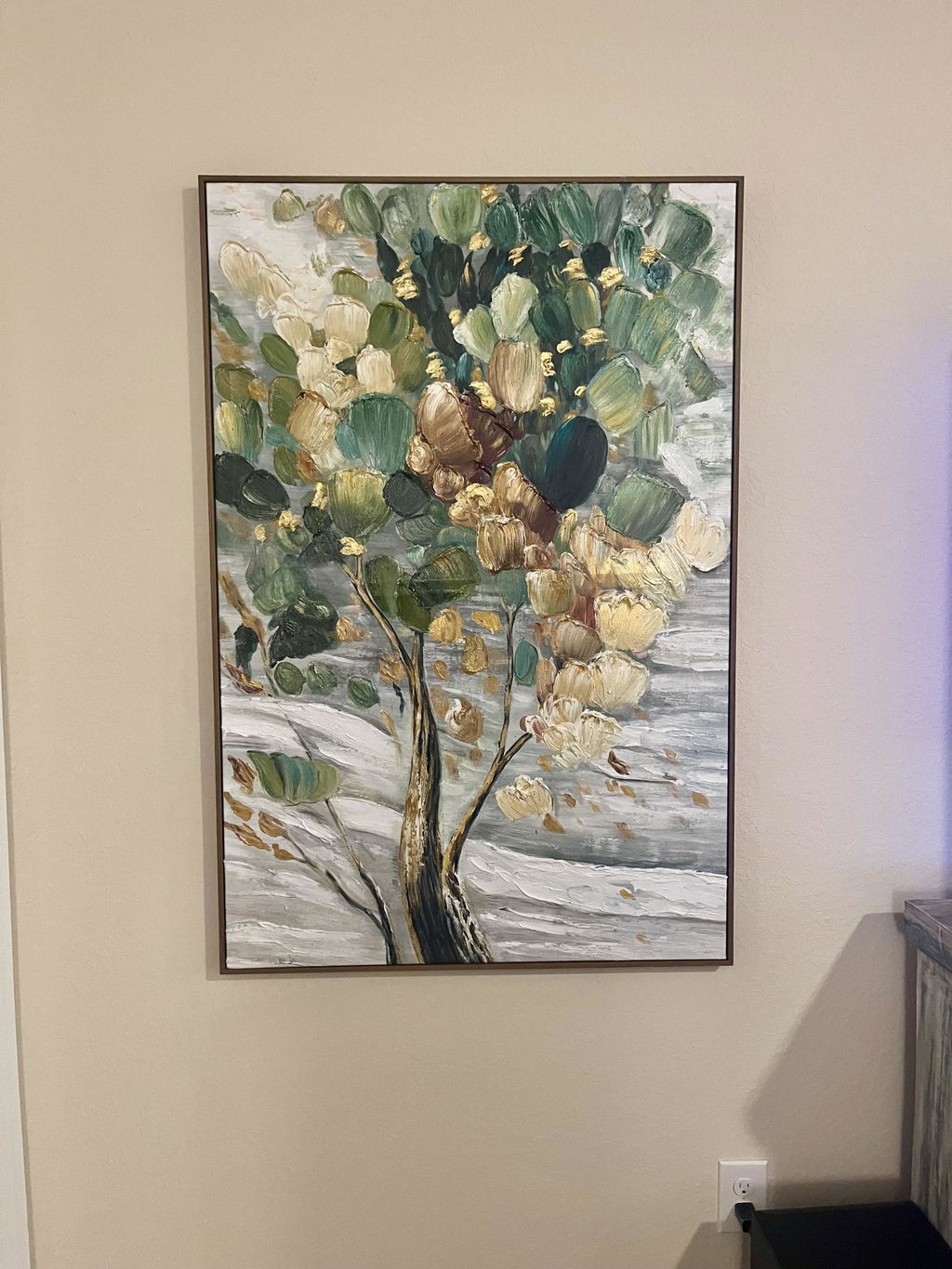
- Macro or close-up views of the surface, including visible brushwork or palette-knife marks where relevant.
- Angled or raking-light views that make raised texture easier to compare.
- A detail image that appears to show the same finished painting, rather than a generic sample.
- Consistency between the close-up, the full image, the stated medium, and the style description.
Texture and visible marks are signals, not a final verdict. A close-up can help you determine whether the image shows the exact piece and whether the surface matches the description; it does not establish that the work is entirely hand-painted. If surface depth matters to your choice, a guide to brushwork close-ups can provide useful viewing vocabulary without replacing seller verification.
Inspect the Edges, Back, and Finish
Use the less glamorous views to check how the painting is built and presented:
- Painted edges, exposed canvas, or a visible support that matches the stated presentation.
- A back view showing the support, backing, frame status, or hanging hardware when those details are relevant.
- Clear confirmation of whether the frame is included, excluded, or simply shown for display.
- A finish description explaining whether the surface is matte, satin, glossy, or otherwise treated.
- A note about glare, lighting, or color variation when the finish is difficult to judge onscreen.
Do not treat sheen or varnish as a fixed visual fact. Lighting, camera exposure, glare, and your screen can change how glossy or textured a painting appears. If the edge or back view is absent, the listing makes the presentation and support harder to assess. Ask for the specific image instead of assuming the work is misleading.
Verify the Product Facts Before Comparing Price
A listing is easier to compare when it separates the artwork's facts from the seller's marketing language. The details below are practical buyer criteria, not a universal legal checklist; if a field is missing, don't fill it in from the photograph.
| Listing detail | What a clear listing should state | Why you need it |
|---|---|---|
| Medium and support | Oil, acrylic, mixed media, or another medium; canvas, panel, or other support | Sets expectations for surface, care, and comparison |
| Artwork dimensions | Height, width, and depth when relevant, measured for the artwork itself | Shows whether it fits the intended wall or display area |
| Framed dimensions | Outside frame measurements, if framed or shown with a frame | Prevents a wall-fit mistake based on canvas size alone |
| Presentation and finish | Framed or unframed status, finish, and included hardware if stated | Clarifies what arrives and how it may look in the room |
| Attribution | Artist name, title if used, and any identifying details tied to the pictured work | Helps match the written record to the exact object |
| Production status | One-of-a-kind, ready to ship, made to order, or representative image | Tells you whether the pictured work is the one you will receive |
| Variation language | Expected differences in color, texture, composition, or dimensions | Sets a realistic expectation for made-to-order work |
| Included items and timing | Frame, certificate, hardware, production timeline, and shipping timing when offered | Reveals purchase details that can affect budget, deadline, and setup |
Pay particular attention to artwork versus framed dimensions. A listing that says "16 by 20 inches" without explaining what is measured may not answer the wall-fit question. Likewise, "hand-painted paintings for sale" is not enough detail for comparison if the page doesn't identify the medium, support, production status, and size.
For broader comparison, you can browse canvas artwork for sale, but treat each listing's specifications as separate seller-provided information. A collection page doesn't establish that two works share the same materials, dimensions, finish, or delivery terms.
Separate Strong Signals From Missing Proof
The strongest listing evidence is specific, consistent, and connected to the exact work. Generic labels may sound reassuring, but they carry less decision value when they aren't supported by matching photos, specifications, attribution, and terms.
Treat Specific, Consistent Details as Stronger Signals
Give more weight to details that agree across the page and any documents provided:
- The artist name, title, medium, dimensions, and images describe the same piece.
- The page clearly says whether the image shows the exact work or a representative example.
- Production status and variation language match the way the item is sold.
- Delivery timing and presentation details are defined rather than implied.
- A certificate identifies the issuer and the exact artwork through matching details such as image, title, medium, dimensions, date, or signature.
A certificate or artist statement can add context, but neither should be treated as automatic proof of authorship, uniqueness, or material quality. The useful question is whether the document identifies the same work described on the page. A generic certificate with no clear issuer or exact-work identifiers should prompt clarification, not automatic confidence or an accusation.
Recognize Gaps That Require Verification
Pause when an omission or mismatch could change the purchase. Common examples include:
- The medium or support is unclear.
- The dimensions don't say whether they include the frame.
- The image may be a sample, but the variation process isn't explained.
- The finish, frame, hardware, or included items aren't stated.
- A certificate, artist name, or title doesn't match the listing.
- Delivery timing is unclear for a made-to-order, international, gift, or deadline-sensitive purchase.
- The seller uses repeated generic imagery without identifying which image represents the item for sale.
These are unresolved questions, not proof that a painting is fake or mass-produced. The importance of each gap depends on your budget, wall-fit needs, intended use, deadline, and willingness to manage a return or delay. One missing decorative detail may be tolerable; an unclear exact-piece status may not be.
Ask the Seller Only What the Listing Cannot Answer
Contact the seller when one unanswered fact could change your decision. Keep the request narrow, ask for relevant documentation or images, and compare the response with the original page rather than relying on a broad assurance.
- Identify the decision-changing gap. Write down whether the issue is the exact piece, medium, dimensions, finish, attribution, certificate, variation, production time, delivery, or returns.
- Ask one precise question. For example: "Does this image show the exact painting I will receive, or is it a representative example?" Avoid asking for a general guarantee that the work is authentic.
- Request the relevant evidence. Ask for a current angled close-up, edge or back view, separate artwork and framed dimensions, an exact-work certificate image, or the stated production and shipping timeline—whichever addresses the gap.
- Save and compare the response. Check that the seller's answer matches the listing, photos, document details, and stated policies. If it changes a material fact, reassess the purchase instead of treating the new answer as a minor note.
A seller-provided photo or answer is additional documentation, not independent verification. For an unusually valuable, disputed, or consequential purchase, independent specialist advice may be appropriate. For routine decor, start with the targeted question and compare other listings before assuming a formal examination is necessary.
Choose Buy, Verify, or Move On
A complete listing can support a purchase decision without proving authenticity. Buy when the exact-piece status, key specifications, presentation, timing, and available policies align with your needs and the remaining uncertainty is acceptable. Verify when one missing fact could change the choice; move on when important answers remain vague, inconsistent, or unavailable.
Use this final decision rule:
- Buy: The photos and written facts describe the same object, purchase-critical details are clear, and the remaining uncertainty fits your budget, purpose, deadline, and tolerance for returns or delays.
- Verify: Ask for the missing fact when it affects wall fit, material expectations, finish, exact-work status, delivery, or the value you place on documentation.
- Move on: Compare another listing when the seller can't resolve a material gap, the response contradicts the page, or the timing and return conditions don't suit your situation.
For a gift or time-sensitive order, delivery and production timing may matter more than another texture photo. For a framed or heavily textured work, separate dimensions and finish details may matter more than a certificate. For a high-value or disputed purchase, consider independent specialist review rather than treating listing completeness as authentication. The right next step is the one that addresses the fact most likely to change your decision.
FAQs About Buying a Handmade Painting
These questions cover details that can affect what you receive, how it fits your space, and whether the timing works for your purchase.
Can a Certificate of Authenticity Prove That an Online Painting Is Handmade?
Not by itself. Check the issuer and exact-work identifiers, then compare them with the listing. A mismatch calls for clarification, not automatic confidence or an accusation.
What If the Listing Shows a Different Painting?
Ask whether the image is representative and how color, texture, composition, or dimensions may vary. Confirm the applicable approval, exchange, or return terms before ordering.
Do Listed Dimensions Include the Frame?
Ask for artwork-only and fully framed measurements. Compare the outside framed size with your available wall space, and confirm whether the frame and hardware are included.
What If the Seller Will Not Provide a Close-Up?
Treat the missing view as unresolved evidence, not proof of wrongdoing. Weigh the price, purpose, return terms, and deadline, or compare another listing.
Should the Listing State a Delivery Date?
Ask for production and shipping timing when the work is made to order, shipped internationally, or needed by a specific date. Confirm how delays are handled for the exact variation you are ordering.