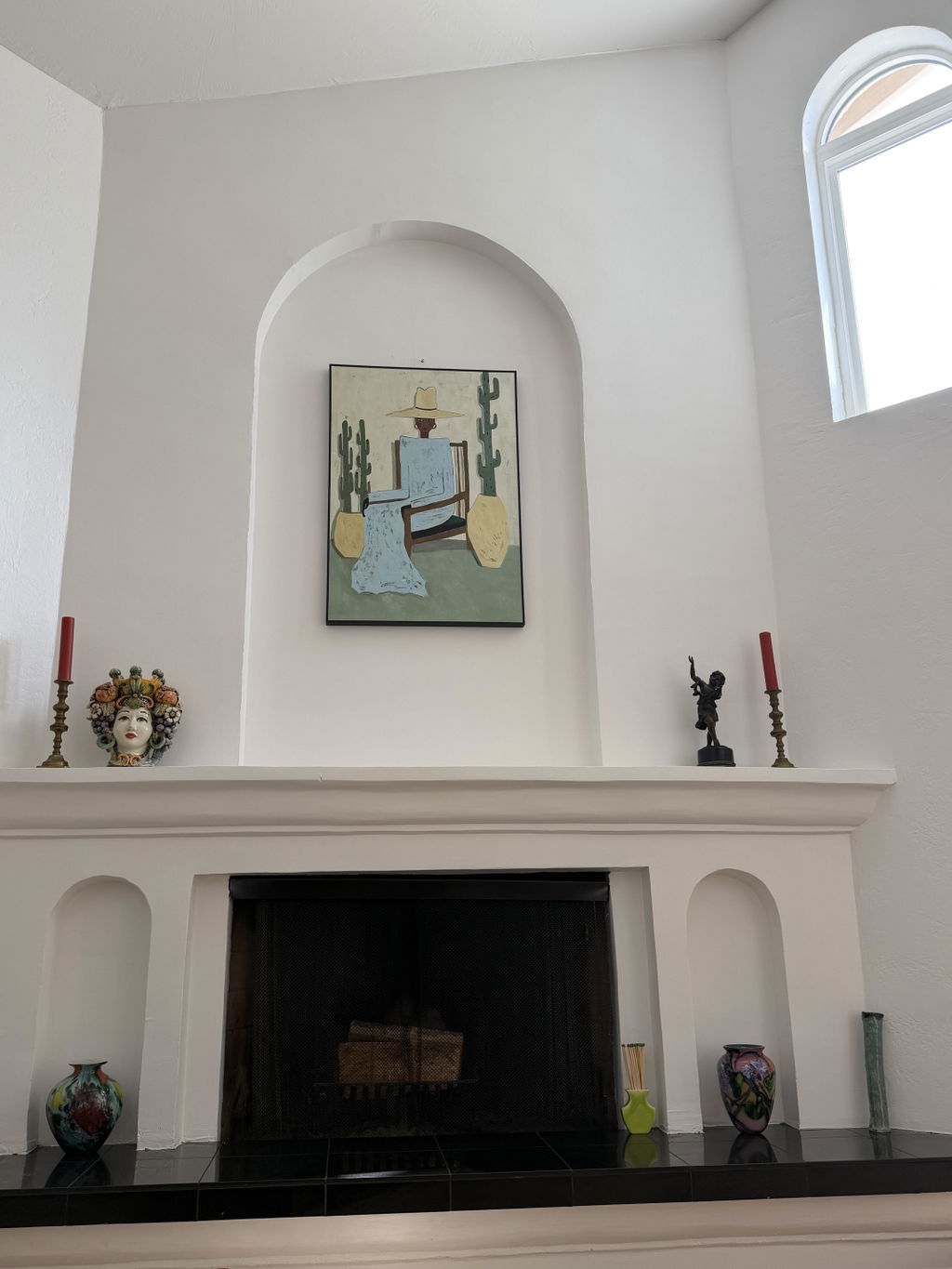
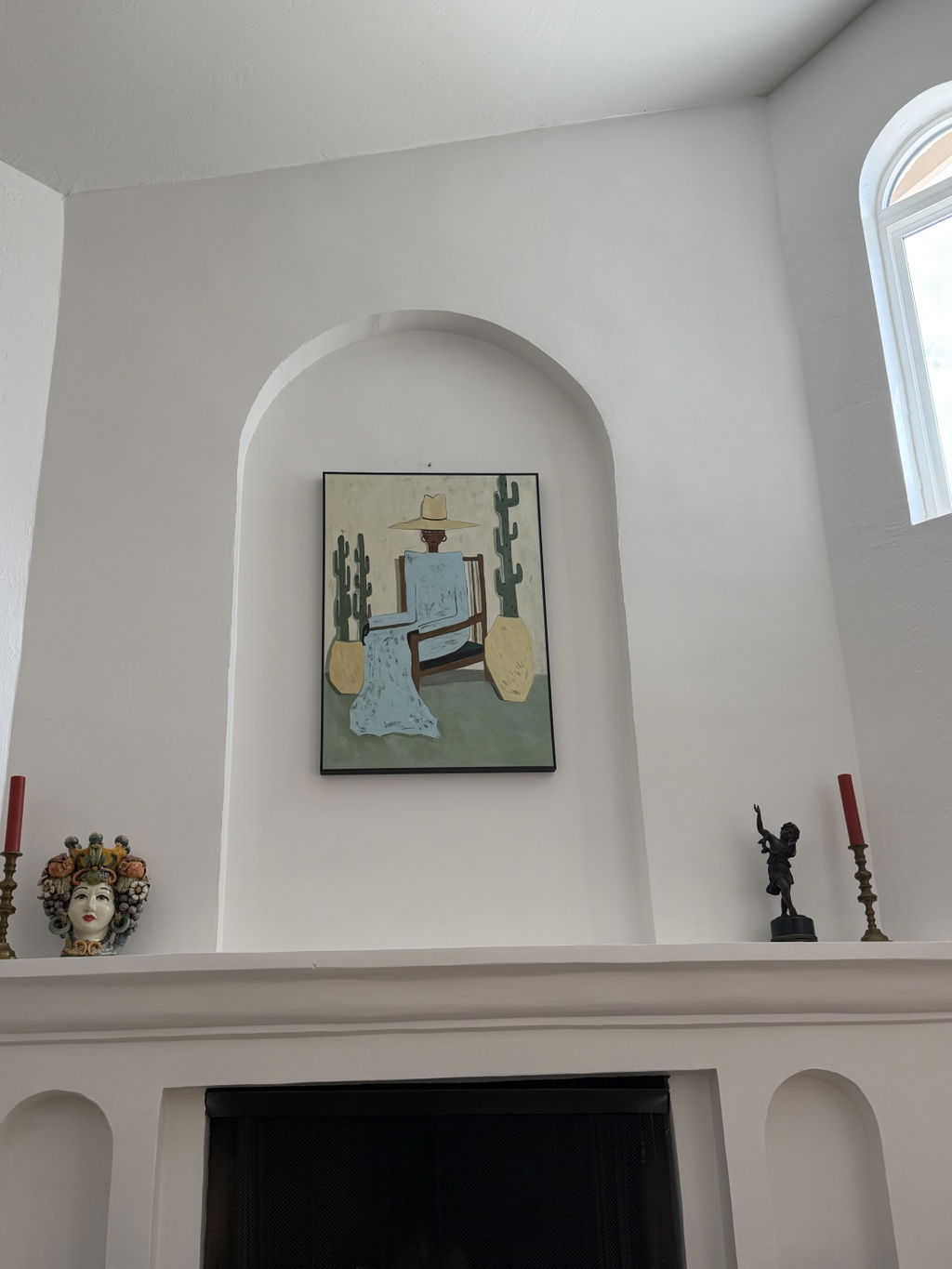
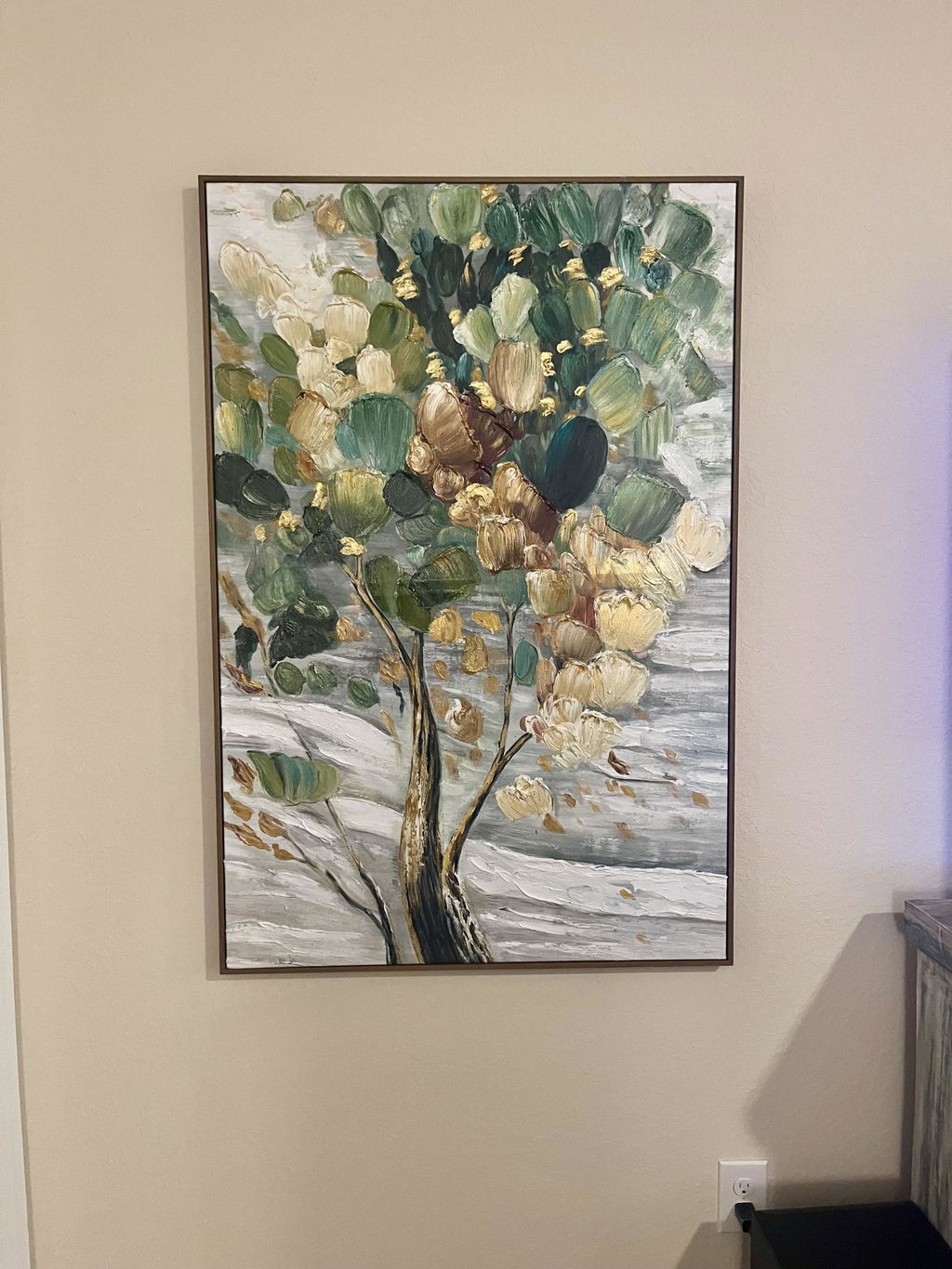
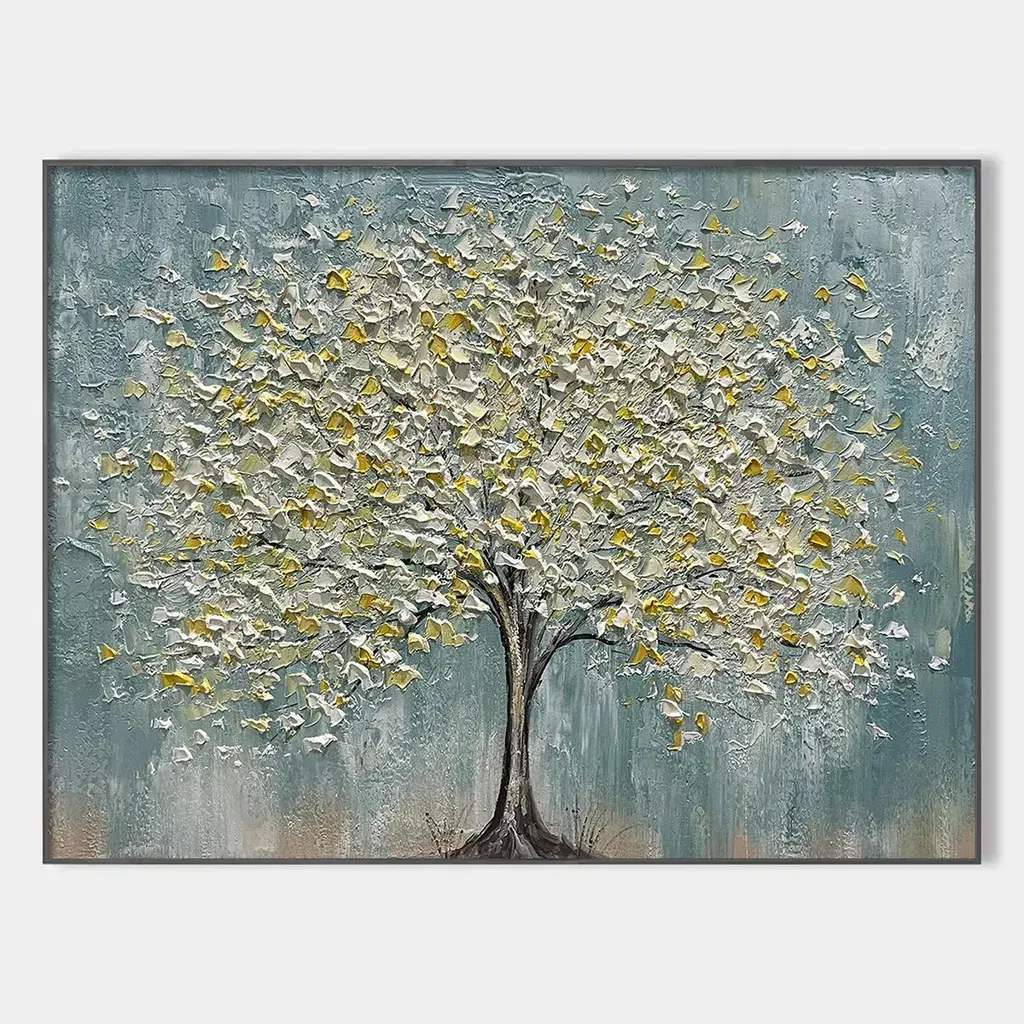
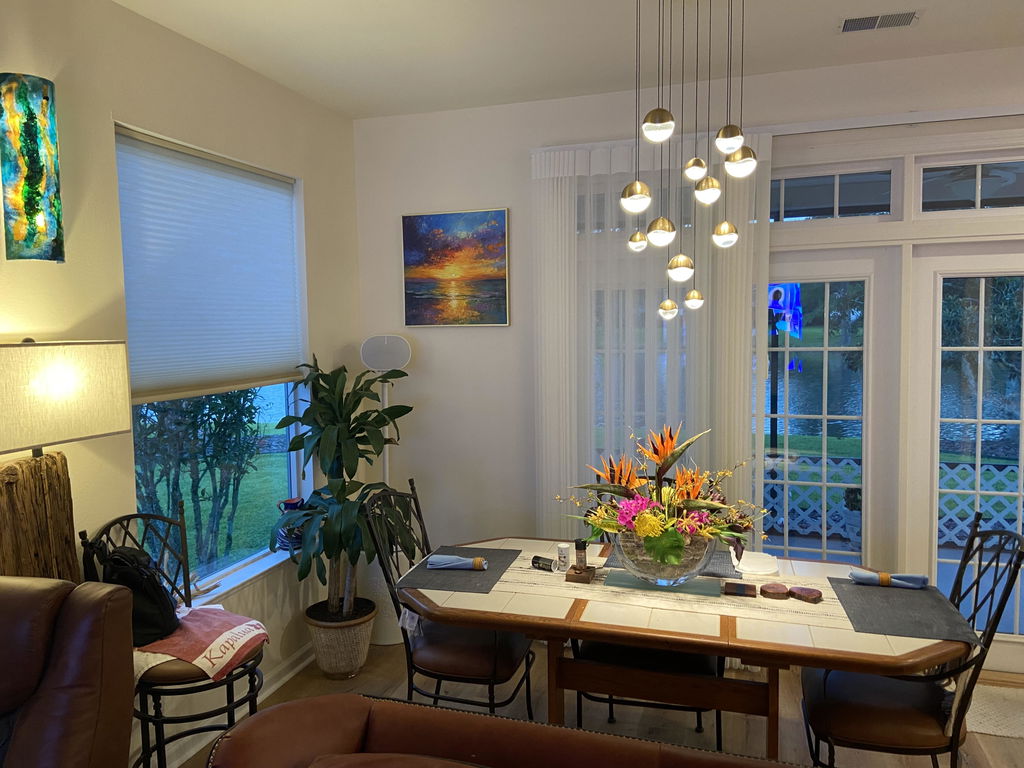
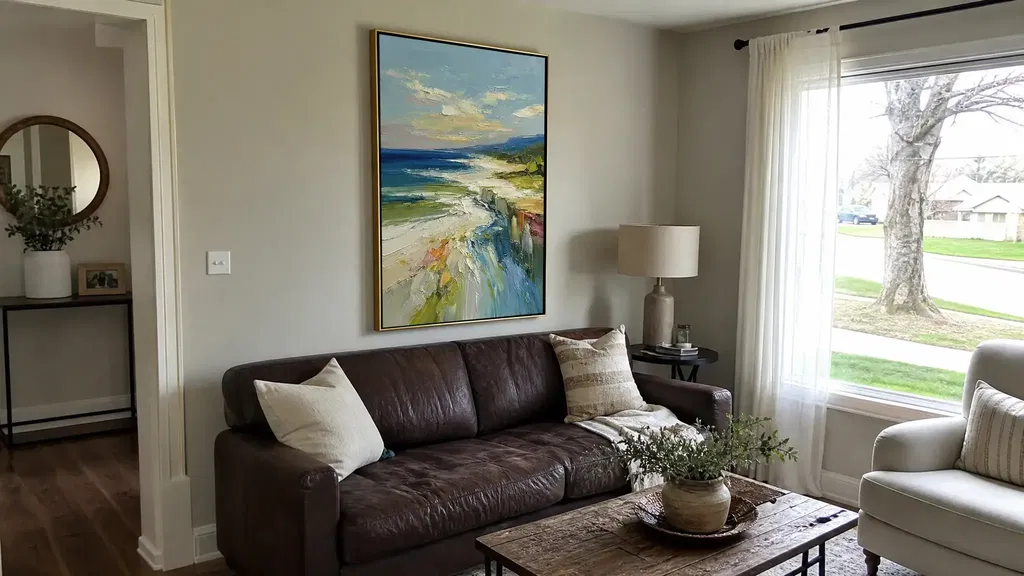
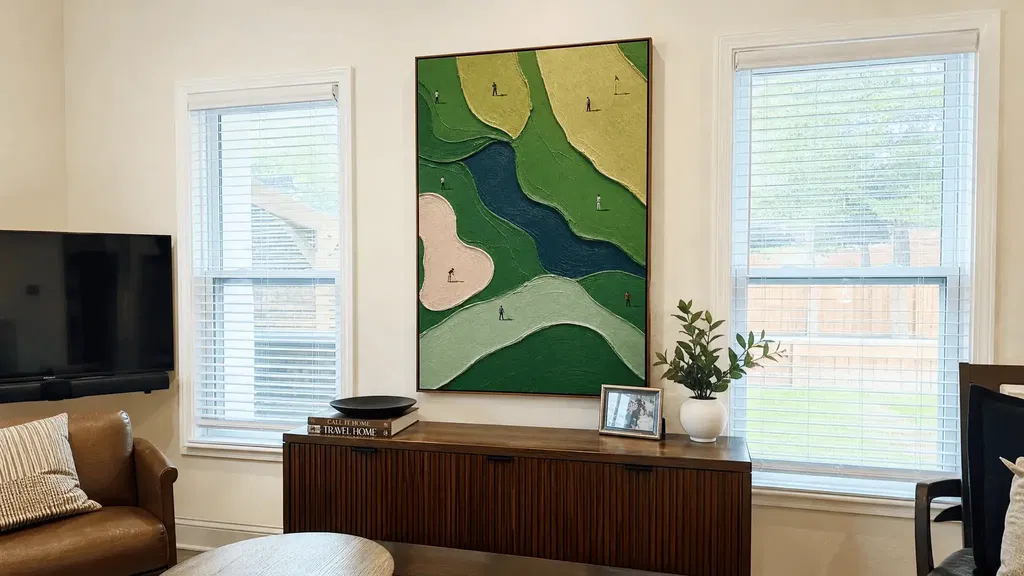
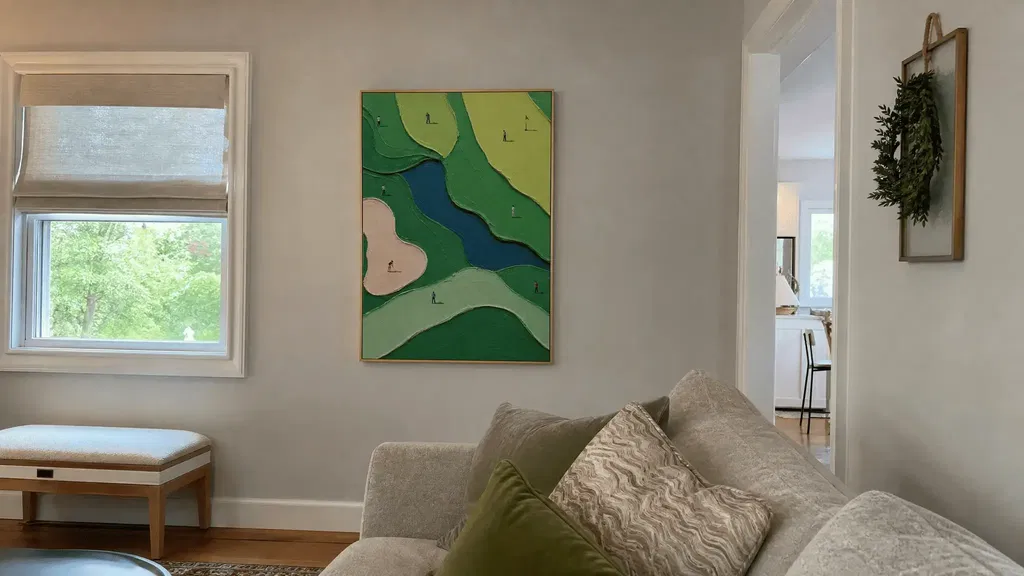
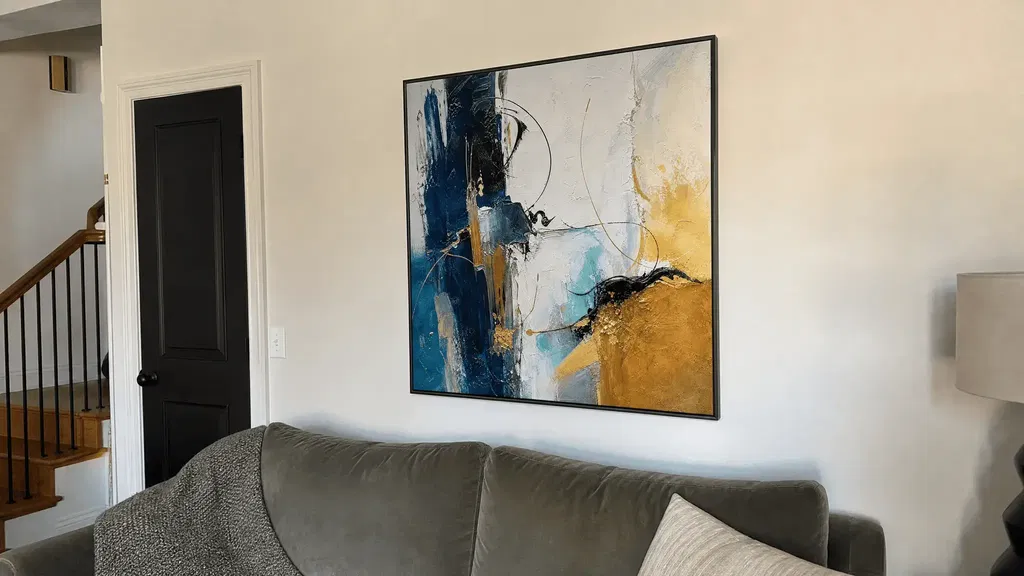
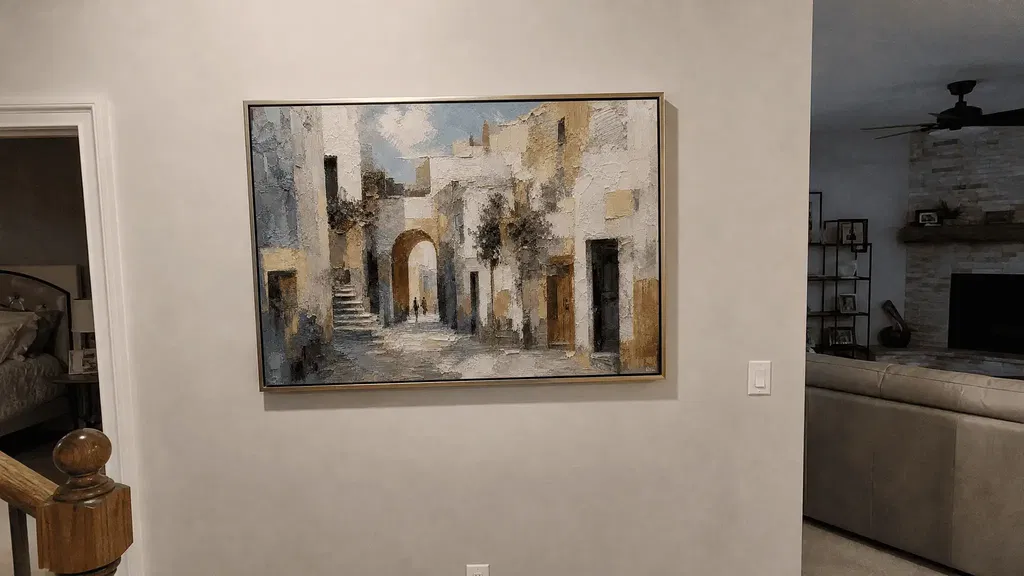
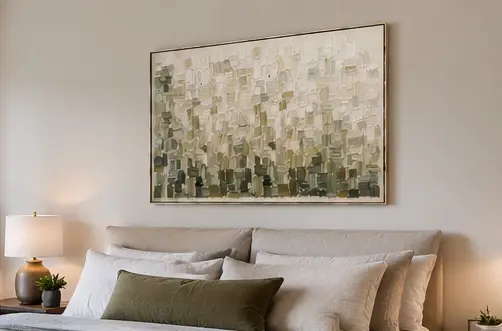
Kitchen wall art generally belongs on a lower-exposure wall—not automatically above or beside an active cooking area. Start with a circulation or dining-side wall away from the cooking plume, sink splash, concentrated heat, direct sunlight, and strong glare. Then check the wall during normal kitchen use, choose a format that matches its care limits, and move the piece if residue or moisture keeps returning. Don’t assume any frame, canvas, or textured finish is heatproof, steamproof, greaseproof, or moisture-resistant without product-specific documentation.
Choose the Lowest-Exposure Wall for Kitchen Wall Art
The best starting point is a wall that stays visible but has the least routine contact with cooking residue, steam, splashes, direct light, and glare. A lower-exposure wall is usually easier to inspect and maintain than a visually convenient spot beside the stove or sink, although the right choice depends on how your kitchen actually operates.
| Wall zone | Typical exposure path | Practical decision |
|---|---|---|
| Circulation or dining-side wall | Often farther from direct cooking, sink splash, and heavy steam | Usually the most practical starting point; confirm that an open-plan layout does not carry the cooking plume toward it. |
| Prep-area wall | May receive food splashes, cleaning spray, or occasional steam | Consider it only after observing normal prep and cleaning; choose a piece whose care instructions fit the remaining exposure. |
| Cooking-adjacent wall | More likely to face heat, steam, grease, vents, and frequent cleaning | Treat it as a higher-exposure location. Relocate to a calmer wall unless the specific artwork documentation supports the conditions. |
This is an exposure comparison, not a universal safe-zone rule. The Library of Congress recommends keeping preservation concerns such as direct light, vents, heat, water risk, and environmental extremes in mind when displaying artwork; kitchen placement requires applying that principle cautiously to your own room. See the Library of Congress guidance on environmental risks in matting and framing.

Before hanging the piece, stand where it will go and ask whether you can reach, inspect, and maintain it without working around cabinet doors, appliances, or a splash path. In an open-plan kitchen, distance across the room does not by itself prove low exposure. If a calmer wall suits the room, neutral wall art can be a style direction to browse after you choose the location—not a substitute for checking the individual piece’s care instructions.
Screen the Wall for Heat, Steam, Grease, Splashes, and Glare
A wall becomes a poorer location for kitchen artwork when normal cooking, cleaning, sunlight, or room lighting repeatedly creates heat, steam, residue, splashes, or viewing problems that you cannot manage gently. Check the wall while the kitchen is in use, not just when it is clean and idle.
Heat and Steam Change the Placement Decision
A wall near active cooking or a strong steam source deserves caution because repeated exposure may make it less practical for art. Observe the area during normal cooking: note the direction of the cooking plume, where steam rises, and whether an oven vent, kettle, or other source sends warm or damp air toward the wall.
There is no universal stove clearance that works for every appliance layout, ventilation pattern, and piece of artwork. If heat or steam regularly reaches the intended location, choose a wall farther from that path rather than relying on a guessed measurement.

Grease and Splashes Create a Cleaning Problem
Grease and water splashes can turn a display decision into a maintenance problem. The backsplash, sink-adjacent wall, and area directly facing a cooking surface deserve extra caution when residue or spray reaches them during ordinary use.
Look at the actual exposure path rather than relying on labels such as “prep wall” or “sink wall.” If the piece would need repeated wiping, household cleaner, or wet cleaning to remain presentable, it is a poor fit unless the artwork’s care instructions specifically permit that treatment. Open-plan placement can still expose art to airborne grease; guidance on protecting art in open-plan kitchens offers context, but the individual artwork instructions remain the controlling source.
Sunlight and Glare Affect Visibility and Care
Direct sunlight creates a separate display concern, while glare can make the artwork difficult to see from a dining table, island, or main work area. Check the wall in the morning and afternoon, then view it from normal seating and standing positions. Light-sensitive artwork can undergo cumulative, irreversible changes from direct or intense exposure, so persistent sunlight or glare may justify repositioning the piece. The Library of Congress explains this cumulative light risk in its guidance on limiting light damage.
A wall that looks ideal at night may be distracting or overly exposed during the day. If blinds, cabinet surfaces, or glossy appliances reflect light across the piece, test the viewing angle before committing to installation.
Match the Art Format to the Kitchen’s Exposure Level
Choose the format only after screening the wall. Lower exposure allows more flexibility, while a cooking- or sink-adjacent wall calls for greater caution or relocation. Framing, canvas construction, and surface texture affect inspection and care, but none of them proves that a piece can tolerate kitchen heat, steam, grease, or moisture.
| Format | More practical when | Main concern | Verify before hanging |
|---|---|---|---|
| Framed art | The frame and glazing remain away from direct residue, splashes, and concentrated steam | The package may still be affected by the room’s exposure; framing is not a sealed guarantee | Frame, glazing, backing, and artwork care instructions |
| Unframed canvas | The wall is calm and the surface will not require routine wiping | Grease, splash, and steam can create a difficult cleaning situation | Canvas surface and product-specific care limits |
| Textured or raised art | The piece is on a lower-residue wall where it can be inspected without frequent handling | Relief and grooves may make dust or greasy film harder to remove without disturbing the finish | Artist or product guidance for the surface and finish |
Framed Art Fits More Controlled Display Areas
Framed art is most practical where the frame and any glazing stay away from direct cooking residue, splashes, and concentrated steam. For some artwork, a suitable frame package can limit certain environmental and handling exposure, but the result depends on the specific glazing, backing, artwork, and installation. General preservation framing guidance should not be treated as proof that a particular frame is kitchen-ready; the Library of Congress framing guidance is broader than any one product’s documentation.
Verify the frame, glazing, backing, and care instructions before treating framing as a protection layer. If the wall remains in the cooking plume, framing does not remove the need to reconsider the location.
Canvas Needs a Lower-Exposure Location
Canvas is better treated as a lower-exposure choice when it cannot be routinely wiped or placed near direct grease, splash, or steam. Don’t hang canvas near a stove simply because that wall is convenient or visually balanced. Use the exposure screen first, then check the specific piece’s instructions.
A canvas piece can be a good fit on a dining-side or circulation wall while being a poor fit on a backsplash-facing wall. The deciding factor is the combination of actual exposure and permitted care—not the word “canvas” alone.
Textured Surfaces Need Extra Cleaning Caution
Textured or raised surfaces can be less practical beside active cooking because grooves and relief may hold dust or residue that is difficult to remove without disturbing the finish. Frequent airborne grease makes this mismatch more likely.
Use textured art on a calmer wall when the kitchen produces recurring residue, and check the artist’s or product’s care guidance before installation. If cleaning would require scrubbing, liquid, or pressure that the instructions do not approve, choose a different wall rather than trying to make the surface work harder.
Protect the Piece With Placement, Installation, and Gentle Care
Protect kitchen wall art in three stages: confirm that the location is workable, install it with the wall and surrounding activity in mind, then inspect it using only the care permitted for that piece. Relocate it when exposure repeatedly exceeds what can be managed gently.
- Confirm the wall’s exposure and the piece’s care limits.
- Install it where doors, appliances, work areas, hardware, and property rules do not create problems.
- Inspect the surface gently and move the piece if residue, moisture, glare, or cleaning difficulty keeps returning.
Confirm Clearance and Installation Conditions
- Confirm that the artwork will not obstruct kitchen work, cabinet doors, appliance doors, or normal circulation.
- Check the wall condition and use hardware appropriate for the wall and the piece. In a rental, follow property rules and favor an approved, removable approach when possible.
- View the proposed location from the main seating and work areas, checking glare as well as whether the piece is easy to reach and inspect.
- Look for splash and cleaning-spray paths before installation. A wall that is technically open but repeatedly contacted during cooking or cleanup is not a low-exposure wall.
Clean Conservatively and Inspect Regularly
- Identify the surface, frame, and finish, then read the artwork’s care instructions before touching it.
- If the instructions allow it, begin with the least invasive approach for loose dust only. Don’t default to household cleaner, excess water, or aggressive wiping.
- Inspect for greasy film, soot-like residue, moisture marks, loose components, or changes to the surface.
- Stop if the residue requires more than the permitted gentle care. For valuable or delicate work, seek specific professional guidance rather than improvising a solvent, coating, brush, cloth, or wet-cleaning method.
Cleaning methods depend on the materials and condition of the artwork, and improper cleaning can cause permanent damage. Smithsonian guidance likewise cautions against treating general conservation information as permission to use a particular household method on an unknown painted, textured, or mixed-media surface. Conservation research on dust capture also concerns professional treatment, not a DIY cleaning recipe. For broader guidance, see painting-cleaning limits.
Move the Artwork When Exposure Increases
Relocate the piece when grease or steam repeatedly settles on it, splashes reach it, glare prevents normal viewing, moisture marks appear, or cleaning around it becomes difficult. Recurring residue or visible surface changes are inspection signals, not invitations to scrub harder. The Smithsonian discusses factors behind changes to a painting’s image.
A lower-exposure wall is usually a better protection strategy than an unverified coating or improvised cover. If your cooking habits, ventilation, or kitchen layout change, repeat the exposure check rather than assuming the original placement still fits.
FAQs
These questions cover the main placement limits: check the actual exposure path, follow the individual artwork’s care instructions, and relocate the piece when gentle care is no longer enough.
Can You Hang Canvas Art Near a Stove?
You can, but a canvas piece beside a stove is a higher-risk choice when cooking plume, steam, grease, or cleaning residue reaches it. Observe the wall during normal cooking; if residue or heat reaches the piece, move it to a lower-exposure wall unless the specific care documentation expressly supports that location.
What Wall Art Works Best Near a Kitchen Sink?
There is no universally best sink-side material. First identify whether the piece sits in the direct splash and cleaning-spray path; if it does, choose a nearby wall outside repeated contact and confirm that the artwork’s care instructions do not require wiping the surface.
How Far Should Kitchen Wall Art Be From a Stove?
No universal distance applies to every stove, ventilation setup, wall position, and artwork. Instead of using a guessed number, observe whether heat, steam, grease, or splashes reach the proposed wall during normal cooking, and follow any distance or placement instructions supplied for the specific appliance and artwork.
When Should Kitchen Artwork Be Moved to Another Wall?
Move it when greasy film or moisture marks keep returning, splashes reach the surface, glare interferes with ordinary viewing, or cleaning requires more than the care instructions permit. Relocation is the next step when gentle maintenance no longer controls the exposure; an unverified coating is not a substitute for a calmer wall.