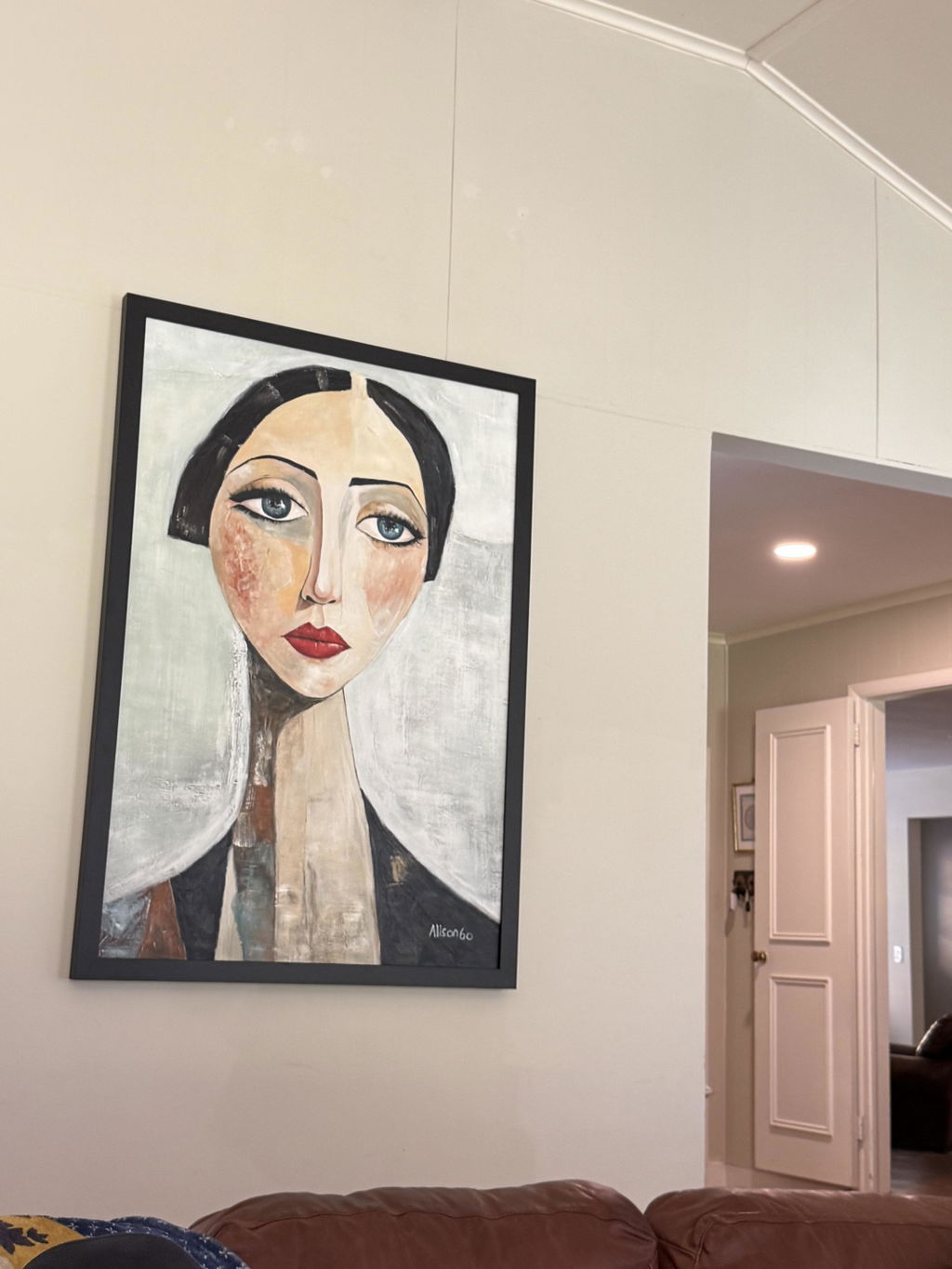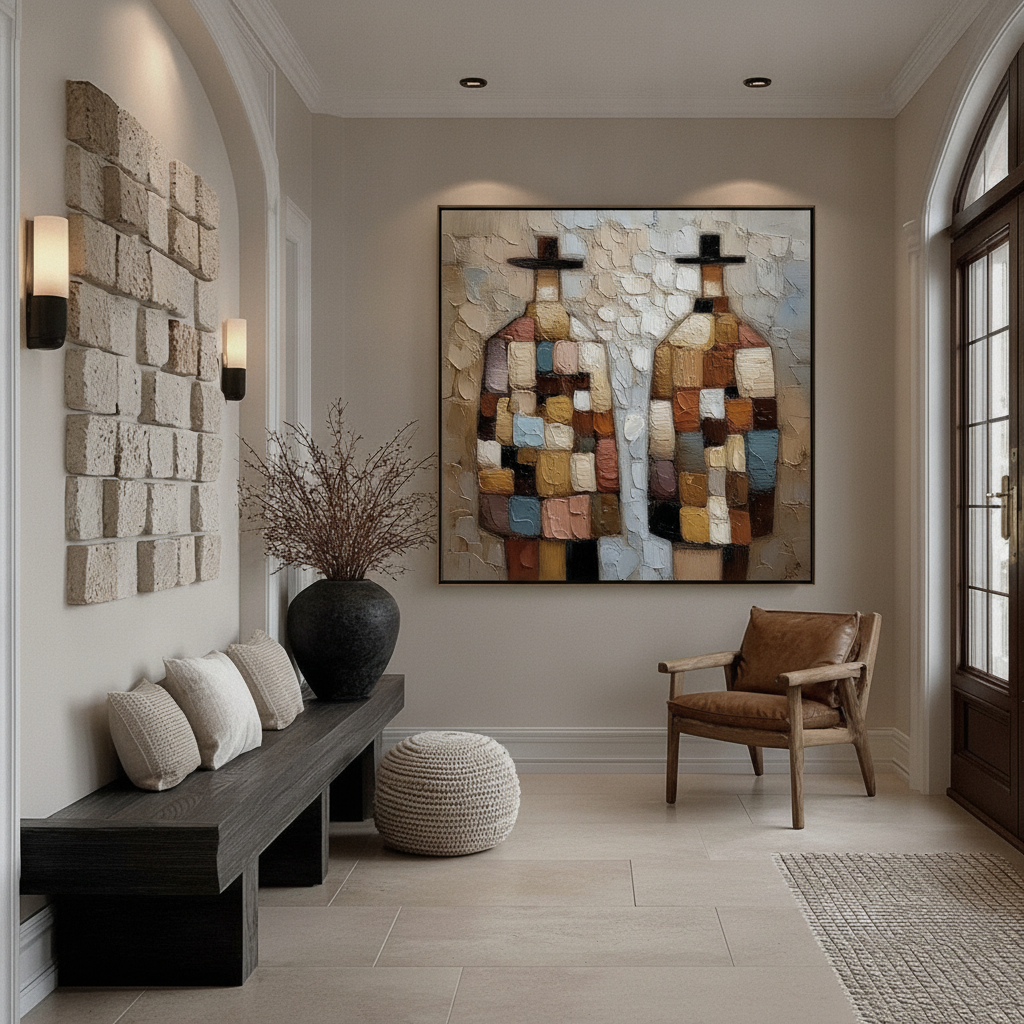
The Shift Toward "Real Application Value" in the Global Art Market
The landscape of high-end art acquisition is undergoing a fundamental structural correction. While the global art market maintains a massive economic baseline of approximately $65 billion, according to the Art Basel and UBS Art Market Report 2024, the era of speculative "vanity assets" is receding. In 2024, sales of auction pieces exceeding $10 million plummeted by 44%, as reported by Marketplace. This data signals a decisive retreat from purely financial instruments toward art with "real application value"—pieces that offer emotional resonance, aesthetic authority, and physical presence.
For professional collectors and interior designers, this shift necessitates a deeper understanding of "decision safety." The prestige of a hand-painted, heavily textured canvas is no longer enough; one must also secure the legal and operational certainty that modern e-commerce provides. As we move into 2025 and 2026, the tension between "industrial-grade reproducibility" and "fine art authenticity" is being resolved through rigorous provenance documentation and a clear-eyed view of Intellectual Property (IP) rights.

The Ownership Fallacy: Physical Possession vs. Intellectual Property
In our experience advising collectors, the most pervasive misunderstanding is what we call the "Ownership Fallacy." Data suggests that approximately 85% of private collectors mistakenly believe that physical ownership of a canvas automatically confers the right to reproduce the image for commercial gain or social media monetization.
In reality, under the Visual Artists Rights Act (VARA) and standard international IP law, the artist typically retains the copyright and "moral rights" unless a specific written transfer of those rights is executed. Physical ownership is a license to display, not a license to exploit the imagery.
Understanding Your Rights as a Collector
When you commission or purchase a custom work, you are acquiring a unique physical asset. However, the legal boundaries are strict:
- The Right of Display: You have the absolute right to display the work in private or commercial settings.
- The Right of Resale: You may sell the physical asset, but you cannot sell "prints" of it.
- Moral Rights: Under VARA, the artist has the right to prevent any intentional distortion, mutilation, or modification of the work that would be prejudicial to their honor or reputation.
For designers featuring artwork in a published portfolio, an "implied license" for display is usually sufficient. However, if that portfolio is used for high-traffic commercial advertising, a supplemental licensing agreement is a prudent step to avoid future litigation.
Logic Summary: This legal framework is grounded in the US Copyright Act and VARA (17 U.S.C. § 106A). Our "85% Fallacy" observation is a heuristic derived from common patterns in collector inquiries and secondary market disputes.
Provenance and the "Essential Identity" of the Human Hand
Why does a hand-painted mural command a premium that a high-definition print cannot reach? The answer lies in the "essential identity" of the work. Research from the University of Chicago confirms that digital replicas and NFTs often lack what consumers perceive as the artist’s "soul"—the physical connection between the creator and the medium.
This perception has a quantifiable commercial impact. A study by Columbia University found that consumers value art labeled as "AI-generated" 62% lower than authentic human-created art. For the collector, the Certificate of Authenticity (CoA) is the legal deed that bridges this gap. It must explicitly link the specific order ID to the artist’s hand to maintain long-term resale value.
The Physics of Texture
The "essential identity" is often found in the microtopography of the paint. Optical microprofilometry proves that the mm-scale texture of oil paintings is crucial to their aesthetic impact. The MUNCH Museum has even demonstrated that physical relief textures exponentially stimulate intrinsic motivation and satisfaction in viewers.

The Strategic ROI of Custom Murals in Real Estate
For commercial developers and interior designers, art is increasingly viewed as a "catalytic infrastructure." A single mural investment can provide hyper-leverage in triggering capital interest and property value.
Data-Backed Impact on Property
| Metric | Impact Value | Source Basis |
|---|---|---|
| Property Price Ranking | Significant relative gain | Royal Society CAR Model |
| Local Economic Growth | $1.4 Billion (Chicago study) | NC Realtors |
| Violent Crime Reduction | 40% Drop | University of Michigan |
| Student Academic Scores | 18% Increase | Americans for the Arts |
| Government Investment ROI | 7:1 | Americans for the Arts (AEP III) |
Methodology Note: These figures are based on longitudinal tracking and regression analysis (e.g., the CAR model). While individual property gains vary by neighborhood density and art quality, the correlation between "art geo-tags" and price appreciation is a robust industry heuristic.
Scenario Analysis: The Commercial Trump Card
- Scenario A (The Office Vacancy Crisis): In a post-pandemic market with high vacancy rates, top developers are using unique public art installations as marketing "trump cards" to lease millions of square feet. According to NAIOP, custom murals turn physical walls into commercial landmarks that generate organic foot traffic.
- Scenario B (The Hospitality "Authenticity" Play): Boutique hotels are discarding the "decorate first, buy art later" mindset. Following the lead of the Utne Hotel in Norway, designers are inviting local artists to customize interiors based on the colors and brushstrokes of their murals, providing travelers with a rare sense of "absolute authenticity."
Health, Safety, and the "Hidden" Chemicals in Art
A sophisticated collector must look beyond the image to the chemistry of the medium. The CDC NIOSH warns that chronic inhalation of volatile compounds in certain paints can lead to central nervous system issues. Furthermore, the International Agency for Research on Cancer (IARC) classifies cadmium compounds—common in vibrant yellows and reds—as Group 1 carcinogens.
Protecting Indoor Air Quality (IAQ)
For residential projects, particularly those involving nurseries or healthcare facilities, low-VOC (Volatile Organic Compound) paints are a prerequisite for LEED or WELL certification.
- The "Odorless" Myth: Princeton University warns that "odorless" solvents are not necessarily non-toxic; chronic inhalation can still cause brain damage.
- VOC Curing Rates: Research from Aalto University shows that coatings on wood with 16% moisture emit significantly fewer VOCs than dry wood, with emissions plummeting during the curing process.
Pigment Safety Cheat Sheet
| Pigment Type | Risk Factor | Recommended Action |
|---|---|---|
| Lead White | Neurotoxicity | Use Titanium White (90% market share, NCBI). |
| Cadmium Red/Yellow | Carcinogenic (Group 1) | Ensure the pigment is in a dense crystalline matrix or use organic alternatives. |
| Dry Pastels | Respiratory dust | Use water-based acrylics or ensure industrial exhaust systems are present. |
| Solvents (Turpentine) | Skin defatting/Narcosis | Replace with walnut oil or eco-friendly alternatives (Cincinnati Art Museum). |
Analysis Note: This data is derived from ICP-MS laboratory tests and EPA regulatory standards. We categorize these as "high-stakes" safety information for collectors concerned with long-term environmental health.
Future-Proofing: 2025-2026 Design and Ethics Trends
The 2026 high-end interior design trends are gravitating toward "understated elegance" where texture is the soul of the room. Zillow search data indicates a 21% rise in mentions of "artisan craftsmanship" and a 329% skyrocket in Yelp searches for "custom framing."
The Rise of Biophilic Murals
Biophilic design—art that features natural landscapes—is moving from a trend to a "public health infrastructure." A UPenn review found that 73% of patients in clinical settings reported significant mood improvements when exposed to environmental artworks. For corporate HR departments, painting a nature-themed mural by workstations is a low-cost strategy to reduce cognitive fatigue and burnout.
The Ethics of the Creative Economy
Modern consumers are increasingly sensitive to the "human cost" of art. A Wharton School survey found that 87% of consumers believe artists should receive fair compensation if their style is used by AI. Furthermore, supporting female hand-painters is a critical social metric, as women still comprise only 40% of represented artists and face a severe gender pay gap, according to the National Museum of Women in the Arts.

Securing Your Investment: Authentication and Longevity
To protect the resale value of custom art, collectors must move beyond the "Ownership Fallacy" and embrace proactive documentation. Artist signature verification and professional-grade canvas identification are the first steps.
The Technical Reality of Longevity
Collectors should be aware of the chemical interactions that can threaten a work's integrity:
- Support Induced Discoloration (SID): Transparent acrylic mediums applied thicker than 1/16 inch can draw impurities from the canvas, causing a yellow or brown tint.
- Lightfastness: ASTM D4303 protocols quantify how pigments fade. While Prussian Blue has a reputation for fading, modern acrylic polymers are often more resistant to embrittlement than traditional oil films.
- Microplastics: Stanford University warns that coatings and pigment breakdowns are a core source of aquatic microplastics. Choosing brands that prioritize eco-friendly binders is both an ethical and a regulatory safeguard.
By understanding the intersection of IP law, chemical safety, and market trends, collectors can achieve "decision safety." You are not just buying a piece of decor; you are acquiring a cultural heritage asset with measurable psychological and economic ROI.
Disclaimer: This article is for informational purposes only and does not constitute professional legal, medical, or financial advice. Readers should consult with qualified professionals regarding specific IP disputes, indoor air quality assessments, or art investment strategies.