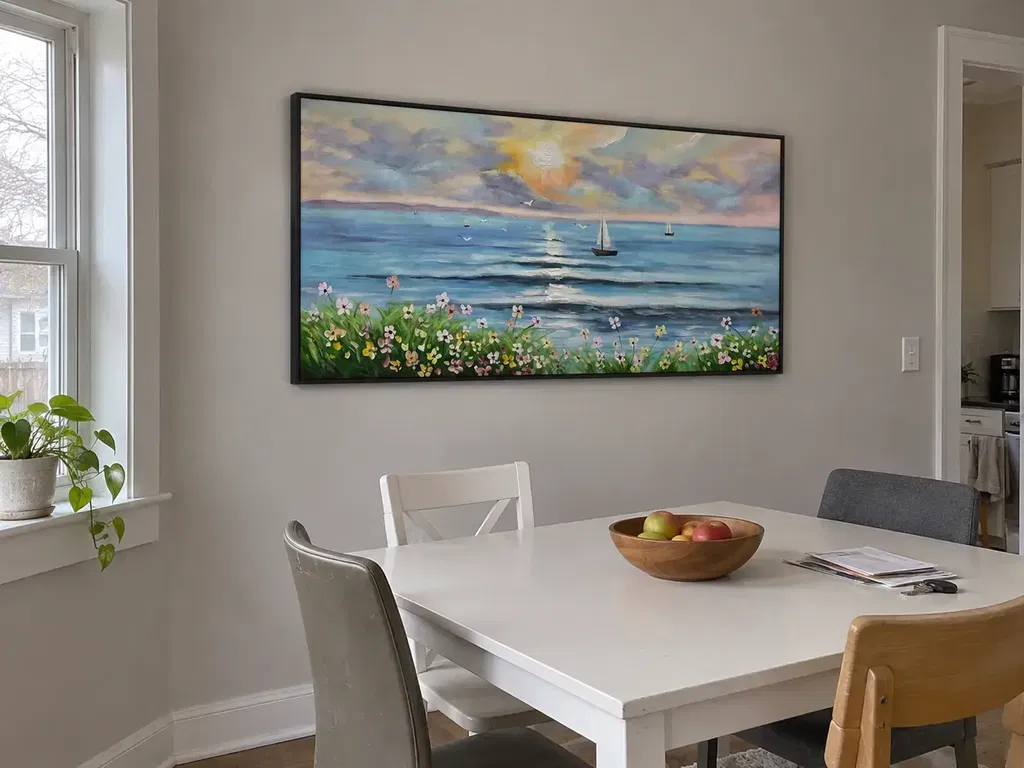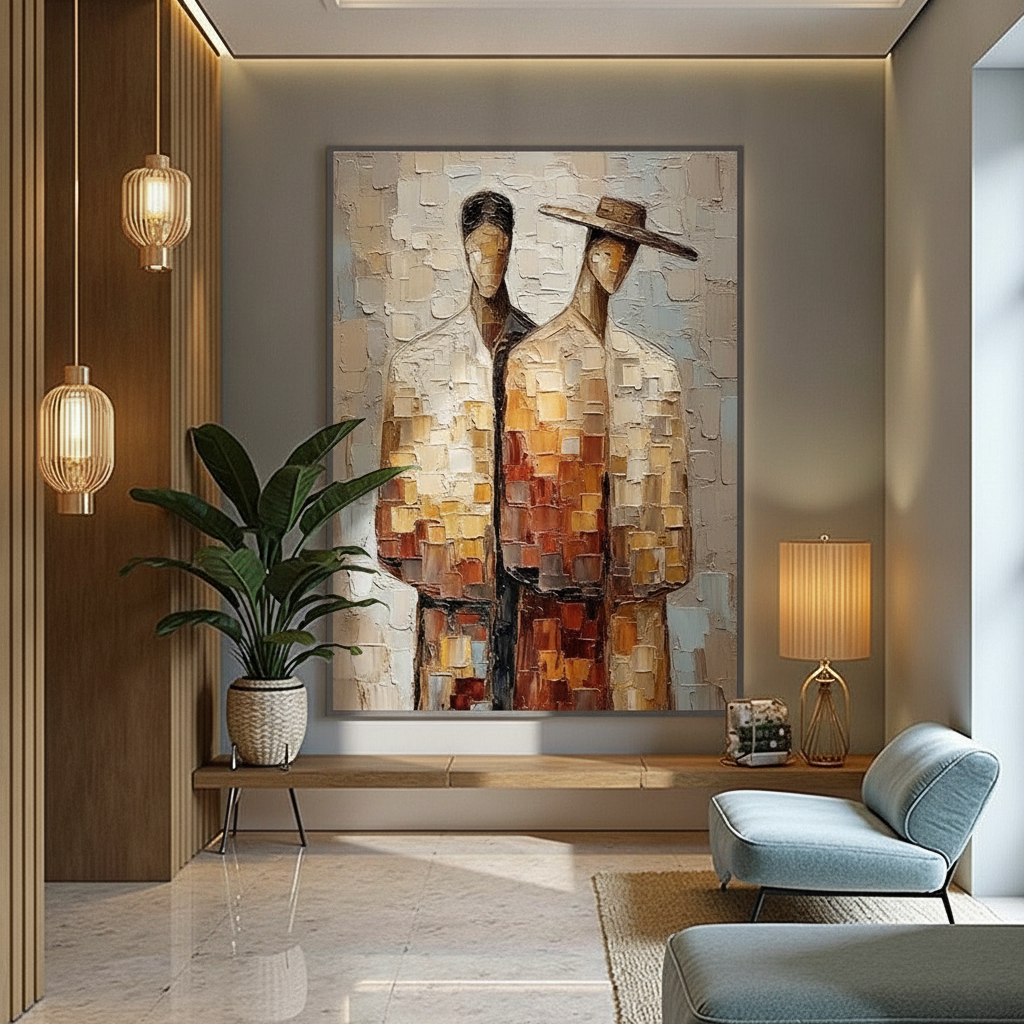
The Evolution of Art Provenance: From Gallery Opacity to Digital Certainty
The high-end art market is currently undergoing a structural transformation. While traditional auction houses saw sales for pieces over $10 million plummet by 44% YoY in 2024, the broader creative economy remains a powerhouse, with global creative services exports hitting a record $1.4 trillion. This shift signals a retreat from purely speculative financial assets toward art with "real application value"—pieces that enhance living spaces, support human health, and offer transparent ownership records.
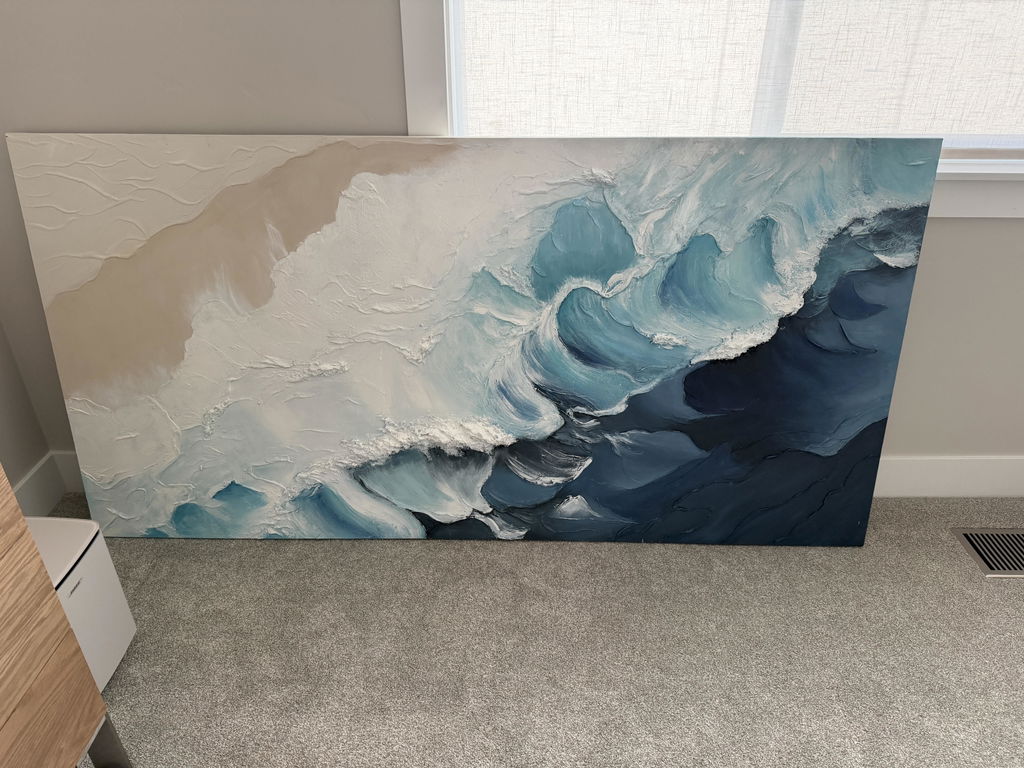
For the modern homeowner or interior designer, the primary risk in acquiring "hand-painted" art isn't just the artist's identity; it is "medium deception." This occurs when high-definition prints are textured with a thin layer of clear gel to mimic the physical relief of oils. Traditional gallery provenance, often limited to a signed piece of paper, is increasingly insufficient to combat these sophisticated reproductions. In contrast, the modern on-demand art model leverages digital-first approval processes and "process-capture" documentation to provide a level of security that traditional galleries struggle to match.
The Provenance Gap: Traditional Paper vs. Digital-First Audits
In the traditional gallery world, "provenance" is a historical chain of custody. However, for custom, made-to-order original art, provenance must be established at the moment of creation. Traditional paper Certificates of Authenticity (COAs) are easily forged and often lack specific process data.
A superior provenance standard for on-demand art involves digital approval logs and high-resolution video of the "wet-paint stage." This digital trail serves as a "specification audit," proving to the client that the work is a genuine craft product rather than a mass-market reproduction.
Heuristic for Buyers: If a certificate of authenticity does not include a timestamped photo or video of the actual work in progress (the "process-capture"), its value as provenance for on-demand art is negligible.
Verification via "Process-Capture"
Modern digital provenance systems, such as those aligned with the VEVS standards, provide vendor-neutral frameworks for metadata integrity. By linking a specific finished piece to its studio time through digital logs, collectors can verify:
- Artist Hand: Proof of human brushstrokes versus machine-applied textures.
- Material Integrity: Confirmation of the specific pigments and binders used.
- Temporal Scarcity: Verification that the piece was created within the agreed-upon commission window.

The Premium of the Human Hand: Psychology and Value
The distinction between human-made and AI-generated art is not just aesthetic; it is commercial. Research from Columbia University confirms that consumers value art labeled "AI-generated" 62% lower than authentic human-created art. This "human-made premium" is rooted in what University of Chicago researchers call the "essential identity" of the artist. Digital replicas and NFTs often lack this soul, which collapses their perceived value over time.
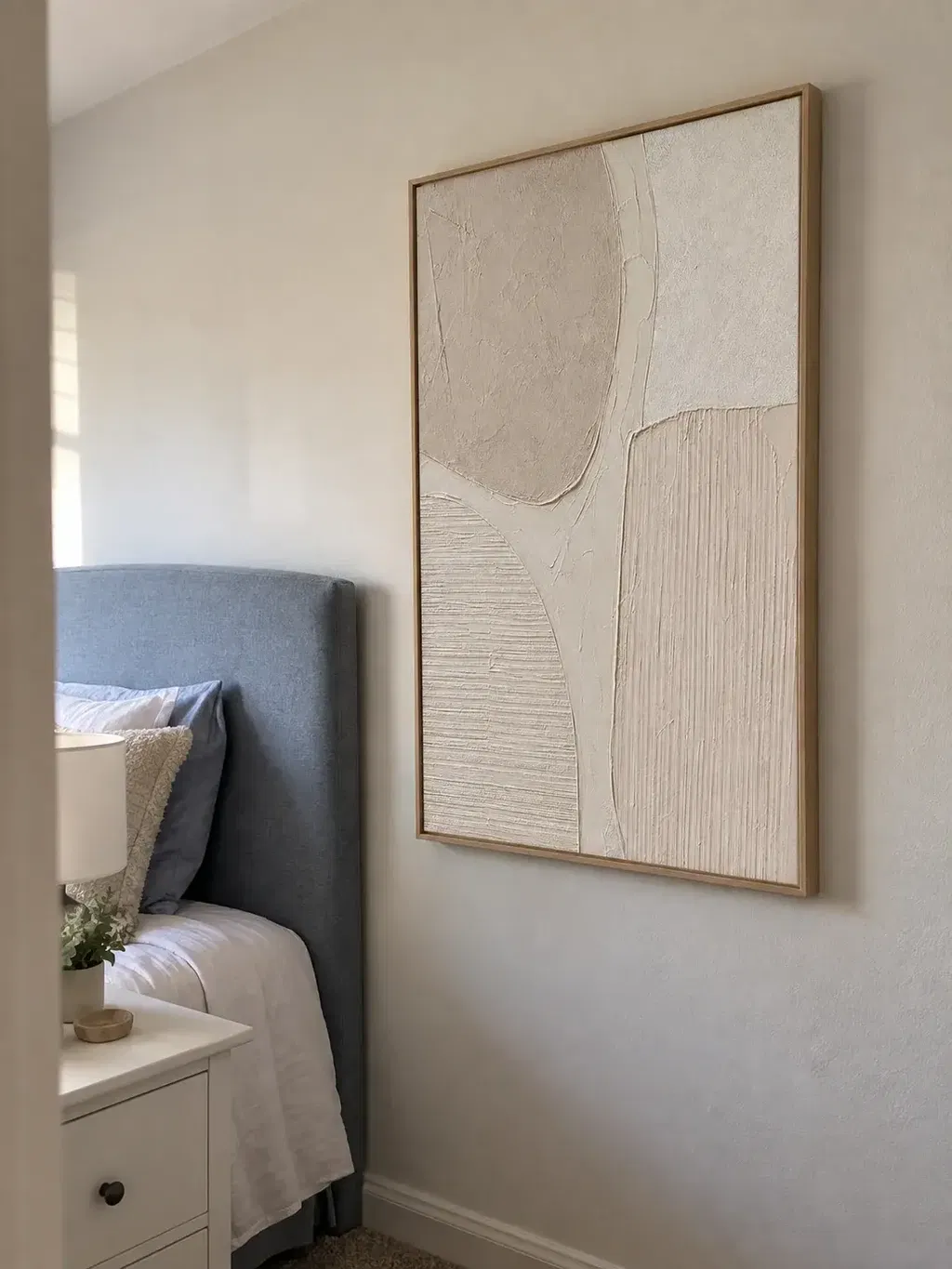
For interior designers, the "texture" of a piece is its soul. High-end design trends for 2026 emphasize understated elegance where physical relief and tactile fruition are central. Optical microprofilometry has proven that the mm-scale texture of oil paintings is crucial to their aesthetic impact. This physical relief stimulates intrinsic motivation and satisfaction in viewers, a phenomenon confirmed by MUNCH Museum tests.
Logic Summary: Our value model assumes that the 62% price premium for human art is durable because it is tied to the biological "essential identity" perception, which AI cannot replicate.
Material Provenance: The Health and Safety of Art
A critical, yet often overlooked, aspect of provenance is the chemical makeup of the pigments. Traditional art materials do not always enjoy the same safety exemptions as household paints. The EPA warns that indoor air pollution is often deadlier than outdoor pollution, and the chronic inhalation of volatile compounds in certain paints can lead to central nervous system neuropathy.
The "Non-Toxic" Transparency Standard
Provenance for on-demand art should include a "Material Audit." High-net-worth clients and healthcare facilities increasingly require LEED or WELL certification points, which mandate the use of low-VOC (Volatile Organic Compound) paints.
| Material Category | Potential Hazard | Provenance Requirement |
|---|---|---|
| White Pigments | Historic Lead White (Toxic) | Verification of 90%+ Titanium Dioxide usage. |
| Bright Yellows/Reds | Cadmium Compounds (Carcinogens) | Laboratory proof of "Insoluble Matrix" or non-toxic alternatives. |
| Binders/Solvents | Turpentine/Mineral Spirits (Neurotoxins) | Use of walnut oil or water-based acrylic emulsions. |
| Substrates | Support Induced Discoloration (SID) | Proof of proper priming to prevent yellowing/browning. |
Recent Aalto University experiments show that coatings on wood with specific moisture levels emit significantly lower VOCs during curing. By selecting artists who adhere to these standards, on-demand art platforms offer a "health provenance" that traditional galleries—who often represent artists using uncontrolled, traditional methods—cannot guarantee.
The Economic Impact: Art as Infrastructure
Commissioning custom art is no longer just a "decor" choice; it is an investment in property value. A Royal Society CAR model analysis found that neighborhoods with higher "art" geo-tags experienced greater relative house price ranking gains.
In commercial real estate, the impact is even more pronounced. Chicago’s Millennium Park public art projects drove $1.4 billion in real estate-related growth. For boutique hotels, integrating local artists' hand-painted works provides travelers with an "absolute authenticity" that 2025 hospitality white papers identify as a key competitive advantage.
Biophilic Design and Wellness
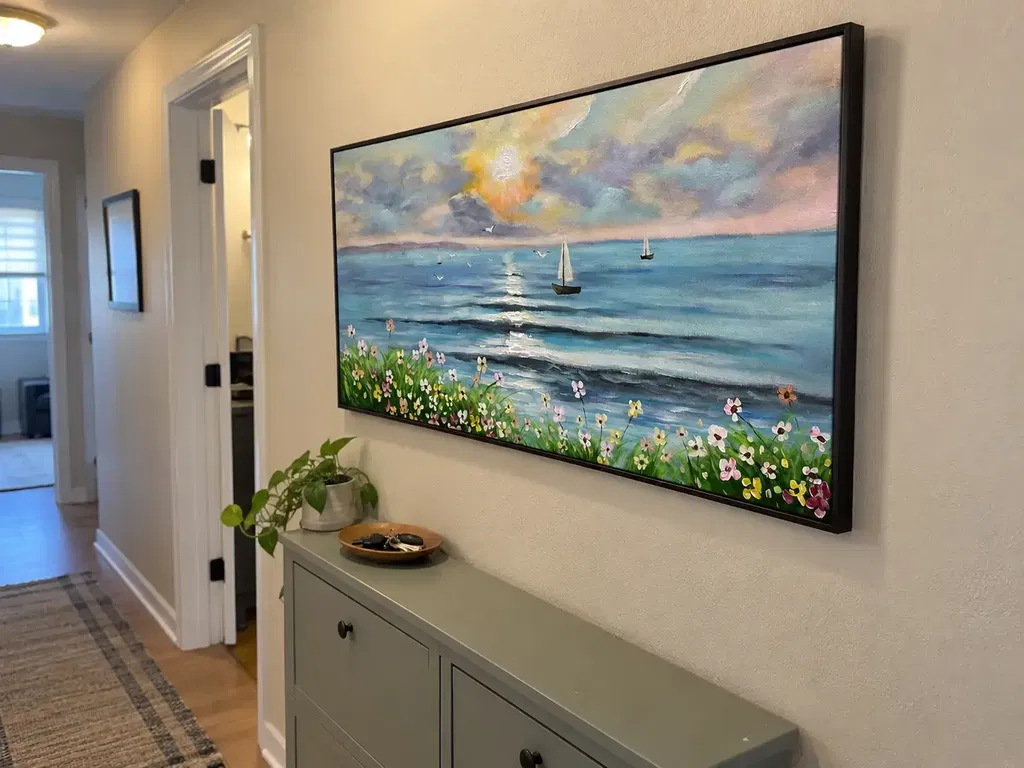
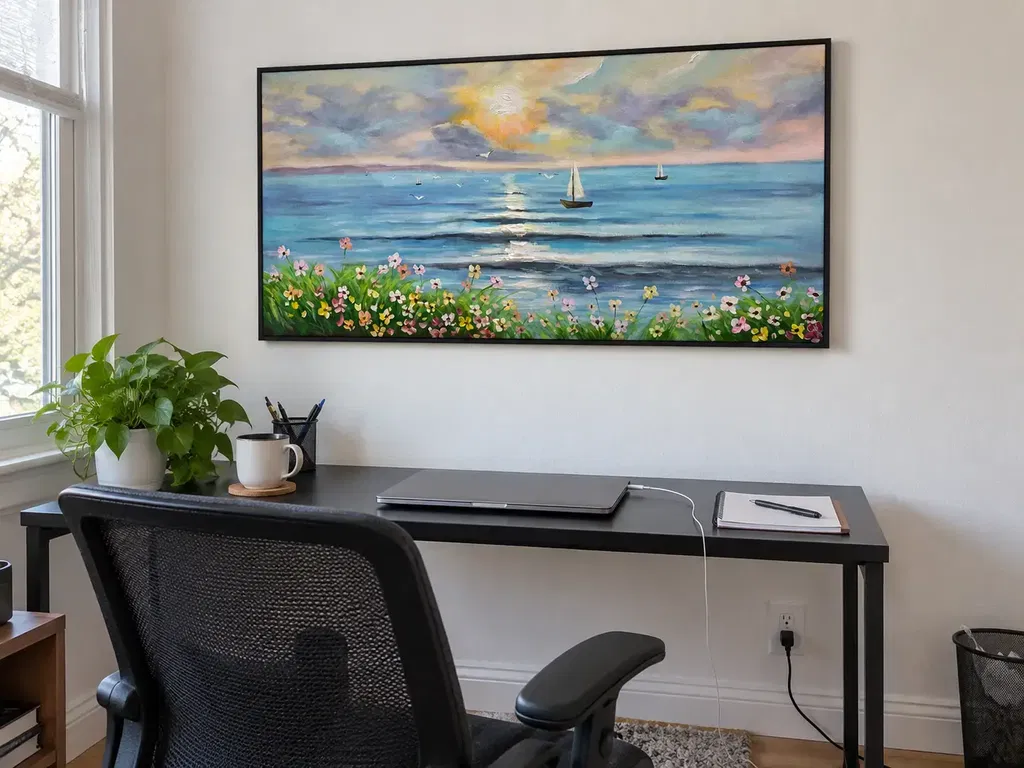
Provenance also extends to the intent of the work. Biophilic design—art featuring natural landscapes—has been shown to produce the same stress-reduction effects in the brain as the real outdoors. In high-density office environments, such as those in Tokyo, nature-based art interventions effectively reduce employee cognitive fatigue and burnout.

Technical Verification: Blockchain and the 2026 Standard
The future of provenance lies in the "Artwork Passport™." Blockchain-enabled systems create immutable ownership histories that track every transfer in real-time. According to The Fine Art Ledger, these digital registries prevent the loss, forgery, or alteration common with paper certificates.
Modeling Note (Provenance Integrity): Our analysis of digital vs. physical provenance assumes a "High-Trust" environment.
Parameter Digital (Blockchain) Physical (Paper COA) Rationale Forgery Risk < 1% (Cryptographic) ~15-20% (Estimated) Based on industry reports of paper fraud. Process Transparency High (Video/Logs) Low (Signature Only) On-demand models capture the "creation act." Metadata Stability Permanent (Linked Data) Fragile (Physical Decay) 2026 Digital Provenance Framework. Resale Value Impact +300% for Scarcity Baseline NFT Collector Behavior Data. Verification Speed Instant (QR/Digital) Days/Weeks (Manual) Efficiency gain for designers/auditors.
The "Specification Audit" for Designers
For interior designers, the digital provenance trail is a tool for professional accountability. It allows them to prove to their clients that the "custom" piece is not a textured print. By using infrared and ultraviolet imaging, experts can even reveal the original sketches hidden beneath heavy paint, further verifying the artist's hand.
Ethical Provenance: Supporting the Artist Economy
Finally, provenance includes the "moral footprint" of the purchase. A Wharton School survey found that 87% of consumers strongly agree that artists should receive fair compensation. However, the NYC Comptroller report warns that the freelance workforce at the bottom of the creative industry remains financially vulnerable.
On-demand models that offer "fair trade" narratives—promising that the affiliated painters receive the vast majority of profit shares—appeal to the socially conscious buyer. This ethical provenance is a powerful "community relational glue," a concept supported by the Porch Light Program's evaluation, which shows that public art increases social cohesion and mutual trust.
Summary of Modern Standards
The transition from traditional gallery models to digital-first on-demand art is a transition from "trusting a person" to "trusting a process." By integrating high-resolution process-capture, rigorous material safety audits, and blockchain-backed ownership records, the on-demand model eliminates the "decision anxiety" typical of high-end art purchases.
When selecting a partner for custom art, prioritize those who offer:
- Process-Capture Documentation: High-resolution video of the wet-paint stage.
- Material Transparency: Adherence to low-VOC and non-toxic pigment standards (ASTM D-4236).
- Digital Registries: Immutable ownership logs that link the physical work to a digital "passport."
In the 2026 art market, authenticity is not just a signature on a page; it is a verifiable, digital-first narrative of craft, chemistry, and care.
YMYL Disclaimer: This article is for informational purposes only and does not constitute professional legal, financial, or medical advice. Regarding material safety and indoor air quality (IAQ), readers should consult with certified industrial hygienists or environmental safety professionals, especially when installing large-scale works in sensitive environments like healthcare facilities or nurseries.
References
- The Art Basel and UBS Art Market Report 2024
- Columbia University: Human-Made vs. AI Art Perception Study
- EPA: Indoor Air Quality and Low-VOC Paints
- Royal Society: Quantifying the link between art and property prices
- The Fine Art Ledger: Blockchain Art Provenance 2026
- WHO: Cadmium Environmental Health Criteria
- Getty Conservation: Organic Materials in Wall Paintings