The best gallery wall ideas begin with one clear decision: what should this wall do for the room? It might create a focal point above a sofa, bring warmth to a hallway, or make a dining area feel more lived in.
Rather than treating each frame as a separate decoration, treat the full arrangement as one composition. Choose a visual starting point, repeat one or two connecting details, and plan the grouping before anything goes on the wall.
The result does not need to look perfectly matched. It should simply look as though every piece belongs in the same room.
Gallery Wall Ideas by Room and Mood
A useful starting point is to choose a layout that suits both the room and the way you want it to feel.
A Centered Trio Above a Sofa
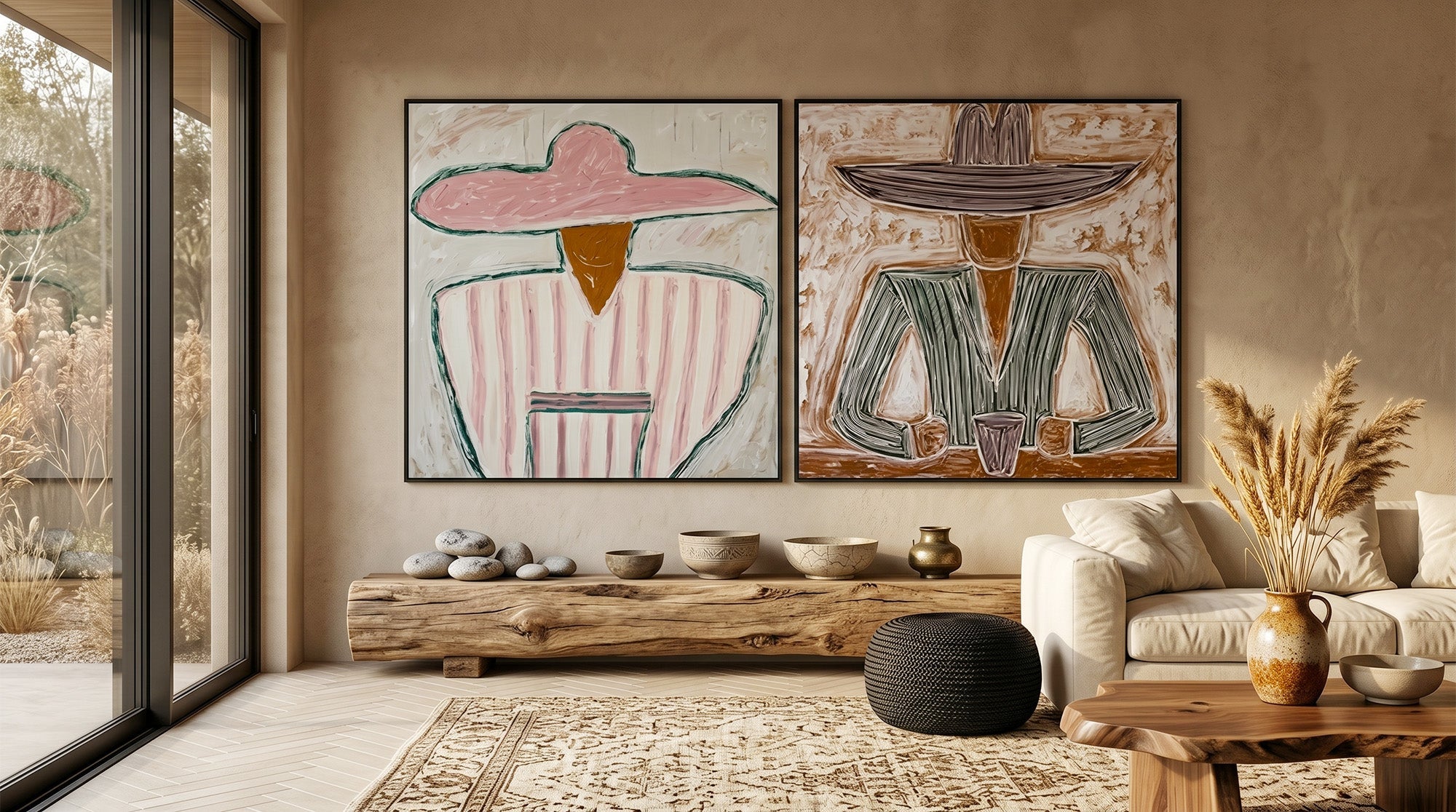
A three-piece grouping is one of the easiest ways to make a large wall feel finished without making it feel crowded.
Choose three artworks with a shared color family, similar frame finish, or related subject. The pieces do not need to be identical. A calm landscape painting in the center, for example, can sit comfortably beside two more abstract works that repeat its colors.
Keep the overall grouping wide enough to relate to the sofa below it, so the three pieces read as one horizontal composition rather than separate frames floating above the furniture.
A Relaxed Salon Wall in a Dining Area
A dining room can carry a more layered and conversational arrangement. Mix different frame sizes, then connect them through one consistent element, such as warm wood frames, black frames, or a palette built around earthy tones.
Begin with the largest piece near the center. Add medium artworks around it, then use smaller pieces to soften the outer edges. This approach works especially well when the room already contains a mix of materials, such as wood, linen, ceramic, and metal.
A Color-Threaded Hallway Collection
A narrow hallway is a good place to use smaller works with a simple repeated color.
You might combine a series of blue-toned landscapes, warm neutral abstracts, or black-and-white paintings with one recurring accent color. Keep the arrangement visually light by leaving comfortable space around each frame. In a passageway, viewers encounter the wall gradually, so rhythm matters more than dramatic scale.
A Quiet Grid for a Minimal Room
A grid layout is a strong choice when the room already feels calm and structured.
Use matching frames and align the outer edges precisely. The artwork can vary slightly, but keep contrast and color intensity relatively consistent. A grid of line drawings, muted abstracts, or closely related photographs can bring texture to a minimalist room without interrupting its sense of order.
A Staircase Story
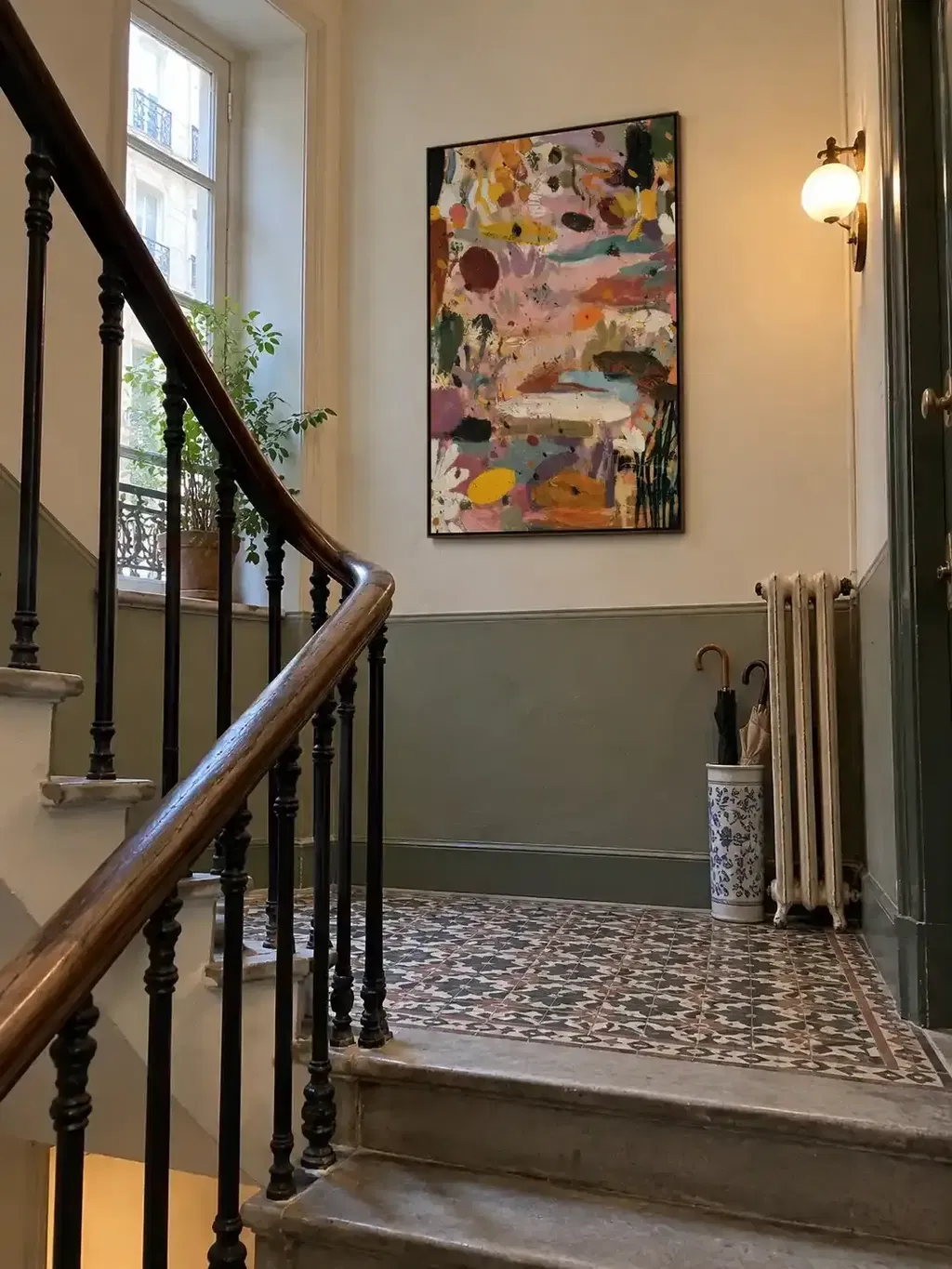
A staircase wall can become a visual timeline rather than one large focal point.
Arrange pieces so the composition follows the movement of the stairs. Start with a larger artwork near the lower section, then let the grouping rise naturally as the staircase does. Keep a repeatable frame finish or color thread so the wall feels connected even when the artworks vary in size.
Before hanging, view the arrangement from both the bottom and top of the staircase. A layout that looks balanced from one direction may feel uneven from the other.
One Large Anchor With Smaller Supporting Pieces
If you already have one artwork that draws attention, let it lead the arrangement.
Place the largest or most visually substantial piece first. Then add smaller works that echo its color, texture, or mood. This approach is especially effective when you want a gallery wall to feel art-led rather than decorative.
The supporting pieces should not compete with the anchor. Their role is to give the main work context and visual depth.

Choose One Unifying Detail
A gallery wall does not need a strict theme. In fact, a wall with only one subject or one frame style can sometimes feel too staged.
Instead, choose one unifying detail and let everything else vary.
Color is often the simplest option. A muted blue can appear in one landscape, a small abstract, and a photograph without making the wall look overly coordinated. Frame finish is another reliable choice, especially when the artwork includes different subjects or mediums.
You can also use visual weight. A dark, textured painting feels more substantial than a pale line drawing of the same size. Place heavier-looking works closer to the center or lower part of the composition, then use lighter pieces around the edges.
Plan the Whole Shape Before Hanging
The full outline matters as much as the individual artworks.
Before selecting final placements, mark the approximate boundary of the arrangement with painter's tape or paper templates. Think of the grouping as a soft rectangle, oval, or stepped form. This prevents the composition from spreading outward without purpose.
Paper templates are particularly useful when a wall includes light switches, sconces, furniture, or architectural details. Cut paper to match each frame, tape the shapes in place, and step back from the room's main viewing points.
Ask three questions:
- Does the grouping relate to the width and height of the furniture nearby?
- Does one side look noticeably heavier than the other?
- Does the arrangement still read as one composition from across the room?
If the answer to the last question is no, adjust the overall shape before adjusting the individual frames.
Keep Spacing Consistent
Consistent spacing is what makes a varied collection feel intentional.
For many gallery walls, keeping about 2 to 3 inches between frames creates a connected arrangement while allowing each piece to remain visible. Smaller frames can sit a little closer together. Larger artworks on a generous wall may need more room.
The exact measurement is less important than repeating it. A loose layout can still feel controlled when the gaps follow a clear rhythm.
Hang for the Room, Not for the Empty Wall
Do not position the artwork by looking only at the blank wall. Consider the sofa, console, bed, staircase, or table that shares the space.
Above furniture, the gallery wall should feel connected to what sits below it. In a hallway or entry, the visual center should feel comfortable from the perspective of someone walking through the room.

Before marking the wall, consider how high to hang art in your space, especially when the layout sits above furniture or follows a staircase.
Mix Art Without Making the Wall Feel Chaotic
A gallery wall can include paintings, photography, drawings, and personal pieces. The key is to control how many variables change at once.
If the artwork is highly varied, simplify the frames. If the frames vary, keep the color palette more focused. If the collection includes several bold artworks, add one or two quieter pieces with more open space.
It also helps to distribute strong colors around the arrangement. Avoid placing every dark or bright piece on one side of the wall. When color and scale are spread evenly, the composition feels more balanced from a distance.

Know When to Stop
A gallery wall is complete when it feels full enough to hold the room but open enough for each artwork to register.
Step back to the farthest point where you usually view the wall. If your eye can move through the arrangement without getting caught on an awkward gap or a crowded corner, the composition is likely working.
You do not need to fill every inch at once. Leaving a little room gives the collection space to grow when you find a piece that genuinely belongs there.
Build Your Gallery Wall Around Art You Want to Keep Seeing
The most successful gallery walls are not assembled around a formula. They grow from artwork you enjoy living with, then become stronger through proportion, spacing, and a clear visual thread.
If you are starting with a main piece, explore our abstract paintings and use the wall dimensions, existing palette, and room function to narrow your choices.
Gallery Wall FAQs
Can a Gallery Wall Work With Only Two or Three Artworks?
Yes. A small grouping can be more effective than a wall filled with many frames. Treat the pieces as one unit, give them enough scale for the wall, and use a repeated frame finish or color to make the relationship clear.
How Can I Create a Gallery Wall Around a TV?
Keep the TV as the visual anchor and place artwork with more restraint around it. Avoid highly reflective frames close to the screen, and use lower-contrast pieces so the arrangement supports the wall rather than competing with it.
Is a Gallery Wall Suitable for a Narrow Hallway?
Yes, provided the frames do not project too far into the walking path. Use a vertical rhythm, moderate frame depth, and a limited palette. A hallway wall works best when it gives the eye small moments to notice while moving through the space.
Can I Add to a Gallery Wall Over Time?
Yes. Start with a consistent principle, such as a frame finish, color family, or subject mood. Leave one edge of the arrangement slightly open so future pieces can extend the composition without making it feel crowded.