The Shift Toward Verticality: Why Entryways Matter in 2025
The global art market is undergoing a fundamental transformation. Recent data from Marketplace (2025) reveals that high-end auction sales for purely financial art assets plummeted by 44% year-over-year in 2024. This retreat from "vanity pieces" signals a return to real application value—art that enhances lived experience rather than just filling a portfolio. For the modern renter, this value is most acutely felt in the entryway: the literal threshold of the home.
Narrow entryways, often under 36 inches wide in urban rental units, present a unique architectural challenge. They are high-traffic transit zones where horizontal art creates visual clutter and physical obstruction. Choosing vertical solutions isn't just an aesthetic preference; it is a strategic response to spatial constraints that allows for a "premium first impression" without sacrificing floor space.
Methodology Note: Spatial Modeling Our recommendations for narrow spaces are based on a deterministic scenario model for urban rental units. We assume a standard hallway width of 30–36 inches and a ceiling height of 96 inches. The "breathing room" heuristic is calculated to prevent visual "tightness" that triggers cognitive fatigue in high-density environments.
The Geometry of the Narrow Entryway: Rules of Proportion
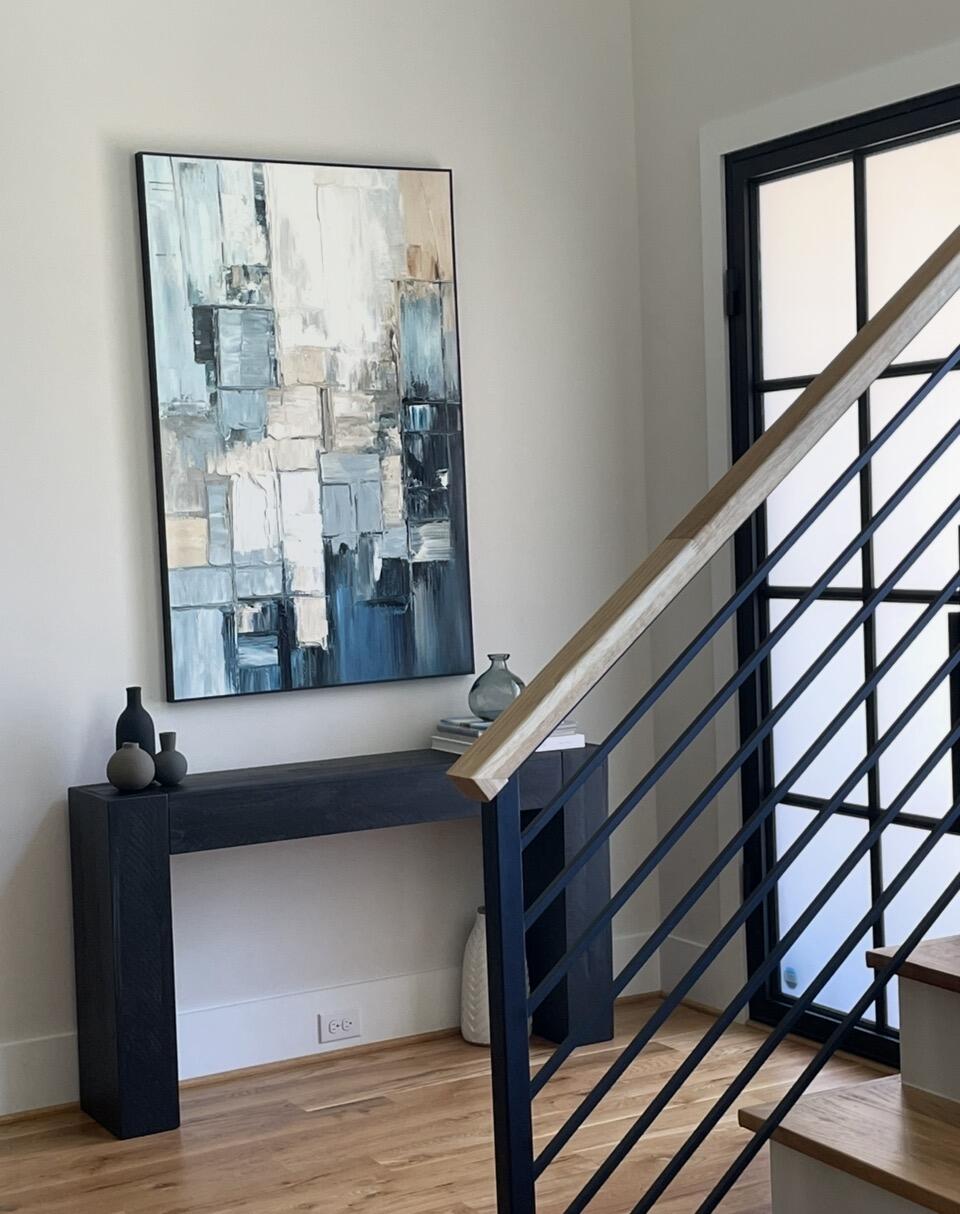
In a space where walls are close together, the aspect ratio of your artwork dictates the perceived volume of the room. Based on interior design heuristics for limited spaces, vertical pieces should ideally maintain a 2:1 or 3:1 height-to-width ratio.
The 12-15 Inch Rule
Experienced designers typically recommend leaving at least 12–15 inches of clear wall space on either side of the artwork. In a 36-inch wide entryway, this limits the artwork width to approximately 12–18 inches. Exceeding this width often leads to "visual crowding," where the piece feels like it is closing in on the viewer.
Optimal Hanging Height
The standard "gallery height" of 60 inches from the floor to the center of the piece often feels overwhelming in low-ceiling rental units. In these scenarios, dropping the center point to 54–57 inches can ground the artwork and prevent it from feeling disconnected from the floor.
| Parameter | Standard Rental Hallway | Ultra-Narrow Studio | Rationale |
|---|---|---|---|
| Wall Width | 36 inches | 28–32 inches | Standard urban architectural specs |
| Max Art Width | 18 inches | 12 inches | Maintains 12" breathing room |
| Aspect Ratio | 2:1 (Vertical) | 3:1 (Ultra-Vertical) | Elongates the wall vertically |
| Center Height | 57 inches | 54 inches | Prevents visual "ceiling crush" |
| Weight Limit | < 15 lbs | < 10 lbs | Aligns with damage-free mounting limits |

The Human Premium: Why Hand-Painted Art Outperforms Prints
In an era of mass-produced digital replicas, the "human hand" has become a scarce luxury. A landmark Consumer Perception Study by Columbia University confirmed that consumers value art labeled as "authentic human-created" 62% higher than AI-generated counterparts.
For a narrow entryway, where guests are physically close to the wall, the difference is tactile. Digital prints lack the "essential identity" and soul that University of Chicago research identifies as the root of perceived value.
The Optical Power of Texture
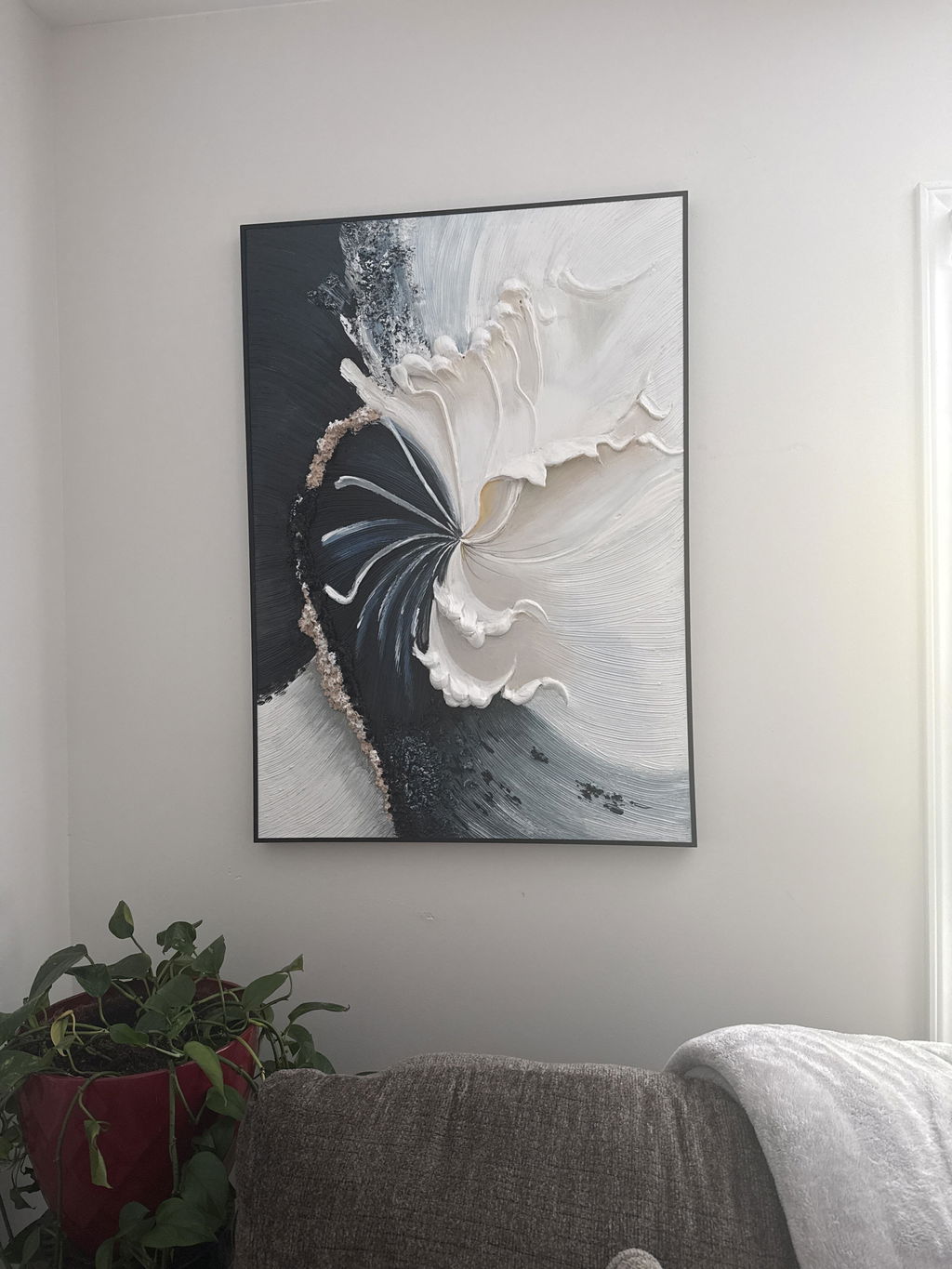
Hand-painted acrylics offer 3D relief and impasto textures that interact with entryway lighting. Tests at the MUNCH Museum confirm that physical relief textures exponentially stimulate intrinsic motivation and satisfaction in viewers. In a narrow space, these micro-topographies (measured at the mm-scale) create a sense of depth that a flat print cannot replicate.
Logic Summary: The "mPFC" Effect Viewing authentic, hand-painted art activates the medial prefrontal cortex (mPFC) and amygdala, which are responsible for emotional regulation. In a cramped entryway, this neurological response can mitigate the stress of a small space, turning a "hallway" into a "sanctuary."

The Renter’s Dilemma: Damage-Free Installation vs. Security Deposits
The most significant barrier for renters is the "no-hole" policy. While conventional wisdom suggests that adhesive hooks are a "safe" bet, the reality is more complex. Industry data indicates that 80% of security deposit disputes involve claims of wall damage, and improperly removed adhesives often cause more expensive paint peeling than a single small nail hole.
The Three-Tiered Hanging Strategy
To protect your deposit while enjoying premium art, we recommend a three-tiered approach based on the weight of the piece:
- Tier 1: Under 5 lbs (Lightweight Panels): Use museum putty or high-quality adhesive strips. Ensure the wall is cleaned with isopropyl alcohol first to prevent the "discoloration" often seen with long-term adhesive use.
- Tier 2: 5–15 lbs (Stretched Canvases): Utilize temporary picture rail systems or "no-stud" hangers that leave holes smaller than a thumbtack.
- Tier 3: Over 15 lbs (Heavy Framed Art): This requires strategic planning. We suggest negotiating a written lease addendum with the landlord. Given that high-quality art can increase property value rankings, many landlords are open to professional installations if they see it as a "built-in" aesthetic upgrade.
Mobility and Durability
Acrylic art is particularly well-suited for temporary occupants. Unlike oil paintings, which can take months to fully cure and remain sensitive to heat (ResearchGate), acrylics form a flexible, durable polymer film through physical coalescence. This makes them significantly more resistant to the "bumps and bruises" of frequent moving.
Health and Safety: The Invisible Value of Materials
When art is placed in a narrow entryway, you are breathing in its proximity every time you enter or leave. Many budget art supplies contain hidden hazards.
The VOC Warning
The EPA warns that indoor air pollution can be significantly higher than outdoor levels. Low-quality paints often emit Volatile Organic Compounds (VOCs) long after they appear dry. For renters—especially those in small, poorly ventilated apartments—selecting art created with low-VOC acrylics is a health prerequisite.
Avoiding Toxic Pigments
Authoritative toxicology reports from the International Agency for Research on Cancer (IARC) identify Cadmium compounds as Group 1 carcinogens. While many commercial "Cadmium Red" or "Yellow" paints are now synthetic "hues," some professional-grade pigments still use heavy metals.
- Expert Tip: Look for art that utilizes Titanium White (which dominates 90% of the market for its safety and opacity) rather than historical lead-based whites.
Support Induced Discoloration (SID)
A common "gotcha" for hand-painted art on cotton or linen canvas is Support Induced Discoloration. As noted by Golden Artist Colors, water-soluble impurities in the canvas can be drawn into the paint layer, causing a yellow or brown tint. High-quality artists prevent this by using specialized "Gesso" seals—a technical detail that separates premium hand-painted work from "starving artist" budget finds.
Biophilic Design: Reducing "Burnout" at the Front Door
The entryway is the transition point between the external world and your private life. Incorporating biophilic design—art featuring natural landscapes or organic forms—can have a measurable impact on your mental health.
A critical review by the University of Pennsylvania found that 73% of patients reported significant mood improvements when exposed to environmental artworks. Similarly, research on high-density office spaces in Tokyo suggests that nature-based art effectively intervenes in rates of cognitive fatigue and burnout. For a renter coming home from a high-stress job, a vertical landscape in the entryway acts as a "neural reset button."

Scenario Analysis: Matching Art to Your Space
To help you decide, let’s look at two common rental configurations:
Scenario A: The Standard "Long Hall" Entryway
- The Problem: A 10-foot long, 3-foot wide hallway that feels like a tunnel.
- The Solution: A series of two or three vertical canvases (diptych or triptych).
- Why it works: Breaking the art into multiple vertical segments creates "rhythm" and encourages the eye to move through the space rather than getting stuck on one large mass.
Scenario B: The "Studio Nook" Entryway
- The Problem: The front door opens directly into the living area with only a small 24-inch sliver of wall.
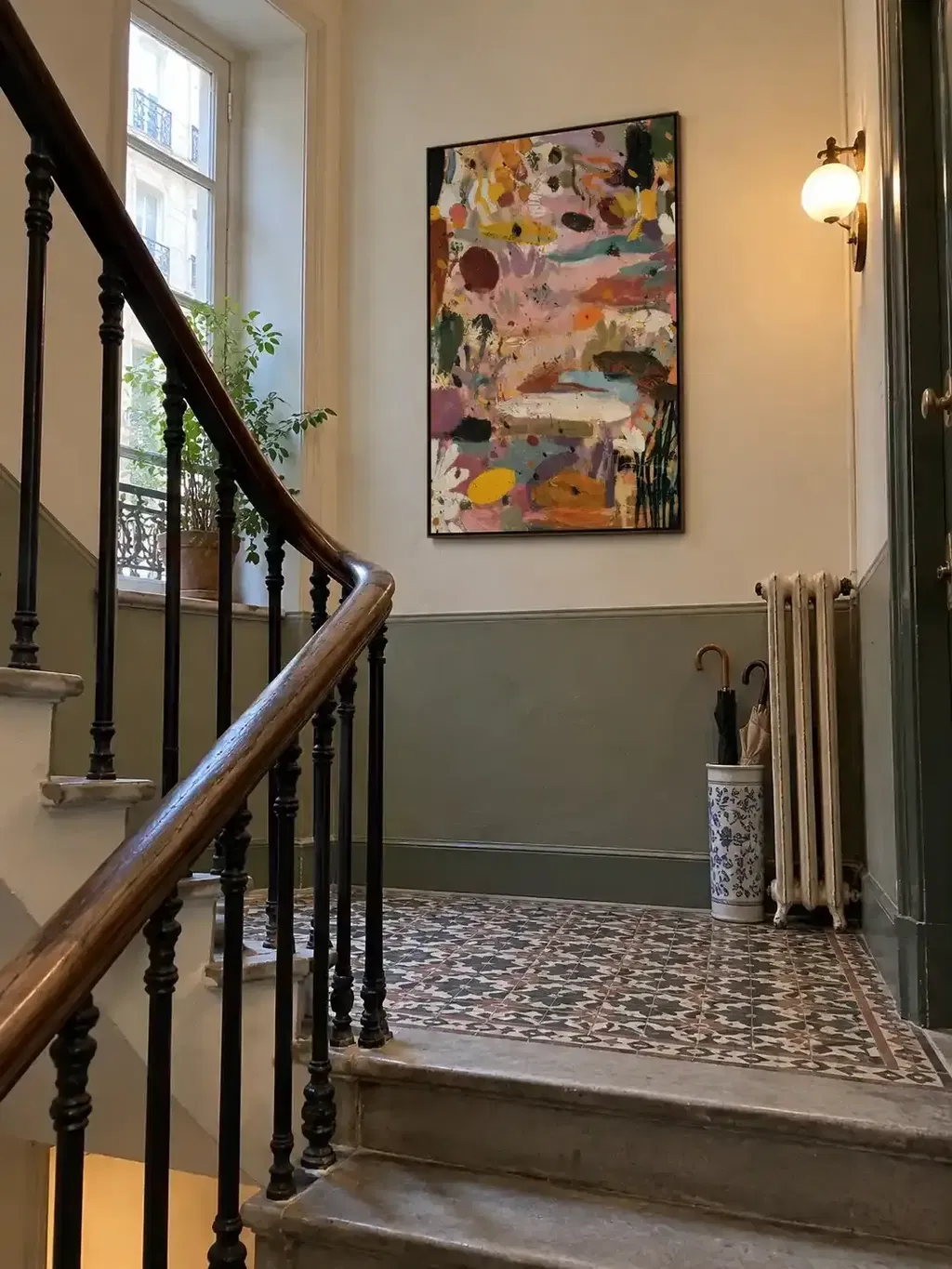
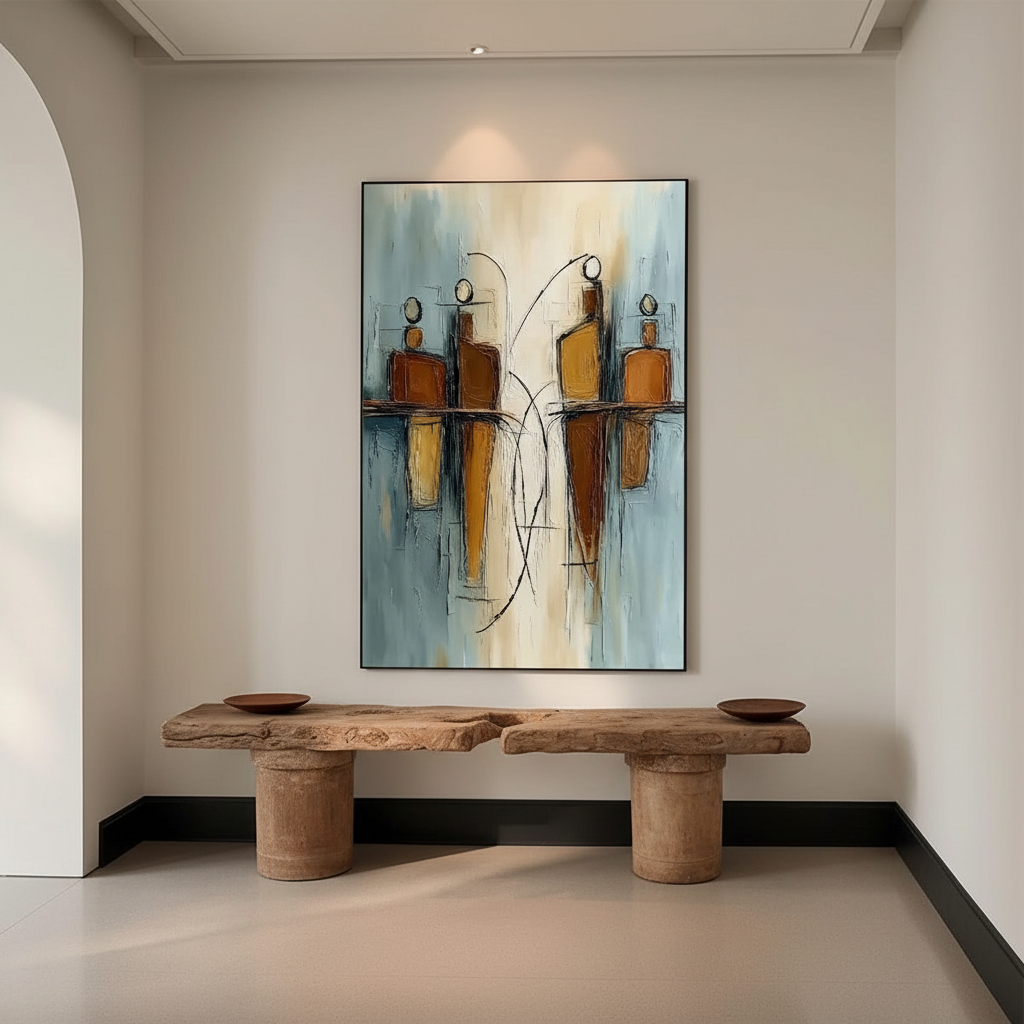
- The Solution: One high-impact, ultra-vertical piece (3:1 ratio) with heavy impasto texture.
- Why it works: The verticality draws the eye upward, making the low ceilings feel higher, while the texture provides a "focal point" that defines the entryway as a distinct zone from the living room.
Final Checklist for Renter Art Selection
Before committing to a piece for your narrow entryway, verify these five "Professional Insight" points:
- Weight Verification: Is the piece under 15 lbs? (Most 24x48 stretched canvases are ~8–12 lbs).
- Aspect Ratio Check: Does the height-to-width ratio exceed 2:1?
- Material Safety: Does the artist use low-VOC acrylics? (Crucial for small apartment air quality).
- Texture Depth: Does the piece have physical relief to catch the light in a narrow space?
- Clearance: Have you measured for at least 12 inches of "breathing room" on the sides?
Investing in high-quality, hand-painted vertical art is a way for renters to reclaim their space. It is a portable asset that preserves its value (and your mental well-being) regardless of where your next lease takes you.
Disclaimer: This article is for informational purposes only and does not constitute legal or professional advice regarding rental agreements or property damage. Always consult your lease agreement and local tenant laws before making modifications to your rental unit.
Sources
- The Art Basel and UBS Art Market Report 2024
- Columbia University: Human-Made vs. AI Art
- Royal Society: Quantifying the link between art and property prices
- EPA: Indoor Air Quality and Low-VOC Paints
- NCBI: Neurological mechanisms of creative arts
- Tate: Conservation Concerns for Acrylic Emulsion Paints