The Shift from Vanity to Value: Why Structural Safety Matters in Modern Art
In the current art market, we are witnessing a significant correction. While high-end auction sales for purely financial assets plummeted 44% YoY in 2024, buyers are returning to "real application value," according to Marketplace. This shift favors custom, hand-painted murals and large-scale acrylic works that possess what researchers at the University of Chicago call "essential identity"—a soul and presence that digital prints simply cannot replicate.
However, as these bespoke pieces grow in size and texture, they also grow in mass. One of the most common mistakes we see in our installation consulting is the dangerous underestimation of an acrylic painting's weight. Unlike a lightweight digital print or a thin oil sketch, a modern high-texture acrylic piece is a dense physical object. If you are an interior designer or a homeowner investing in a piece that holds its value better than AI-generated art—which Columbia University experiments confirm is valued 62% lower by consumers—you must treat the installation with the same rigor as structural engineering.

The Density Dilemma: Acrylic vs. Traditional Canvas
The primary reason for installation failure in modern art is "material surprise." Most homeowners use their experience with traditional oil-on-canvas as a baseline. However, the chemistry of modern acrylics changes the weight equation entirely.
Acrylic polymers consist of massive long-chain molecules that form films through a process called "coalescence," as noted by Golden Artist Colors. This results in a film that is often thicker and more flexible than oil, but significantly denser. When an artist uses heavy impasto techniques to create the "physical relief" that MUNCH Museum tests show exponentially stimulates viewer satisfaction, they are adding pounds of polymer to the substrate.
Substrate Weight Variance
The choice of what lies beneath the paint is the biggest variable in your wall load calculation. While a standard 48x36 inch canvas on a pine stretcher might weigh only 8–12 pounds, many modern artists prefer the stability of wood panels to prevent the "cracking" of heavy acrylic layers.
Logic Summary: Our weight estimations assume a "High-Texture" application (approx. 1/8 to 1/4 inch of medium) across 60% of the surface area. This is a scenario model based on common professional artist practices, not a controlled lab study.
| Substrate Type (48x36 inch) | Estimated Weight (lbs) | Rationale |
|---|---|---|
| Standard Cotton Canvas | 8 – 12 | Lightweight pine bars + thin fabric. |
| Heavy-Duty Gallery Wrap | 12 – 18 | Thicker 1.5" bars + heavy-weight canvas. |
| 1/2 inch Plywood Panel | 25 – 30 | High-density wood fibers + adhesive. |
| MDF (Medium Density Fiberboard) | 32 – 40 | Extremely dense engineered wood; highest risk. |
For those scaling up, Scaling Large Acrylic Canvases for Open-Plan Living Rooms provides further context on how dimensions impact spatial and structural requirements.
Framing Factors: The Weight of Modern Aesthetics
Framing isn't just a visual boundary; it’s a structural component that can increase the total load by 30% to 50%. The current trend in high-end interiors, as highlighted by NKBA 2025 design awards, favors "immersive" looks, often achieved through floater frames.
Aluminum vs. Wood Floater Frames
Floater frames are designed to let the hand-painted edges of the canvas breathe, but they add substantial "dead load" to your wall.
- Aluminum Floater Frames: These offer a sleek, museum-grade look. For a large 48x36 inch piece, expect an addition of 5–8 pounds.
- Wood Floater Frames: Depending on the hardwood used (oak vs. walnut), these can add 10–15 pounds.
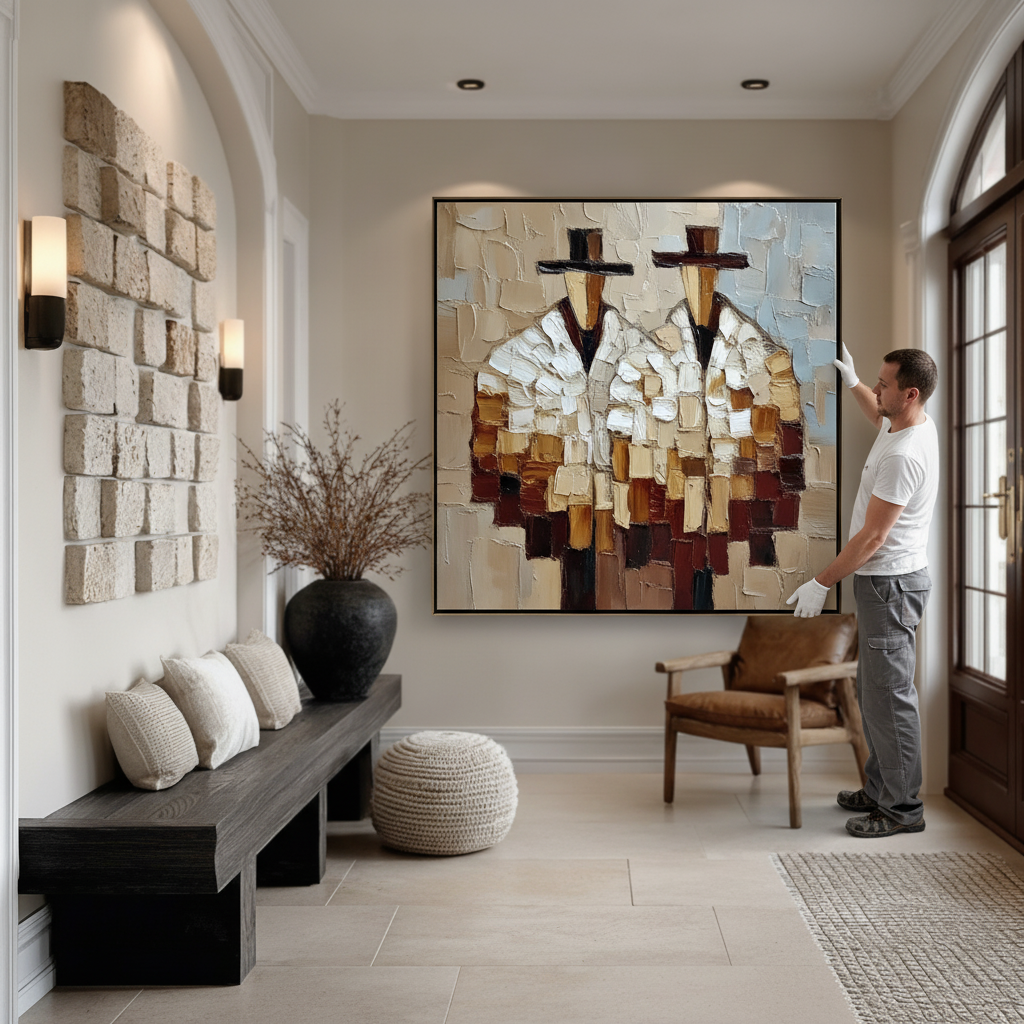
When you combine a plywood-backed acrylic painting (30 lbs) with a solid oak floater frame (15 lbs), you are suddenly dealing with a 45-pound object. This is no longer a "picture hanging" task; it is a "wall mounting" project.

The Math of Mounting: Calculating Wall Load Factors
To prevent the catastrophic failure of a valuable investment, professional installers move beyond "static weight" and look at "dynamic load factors."
The 50% Heuristic for Drywall
In our professional practice, we use a strict Heuristic Rule: For drywall installations, never exceed 50% of the hardware’s rated capacity.
Why? Because drywall is a friable material. Thermal expansion and contraction of the building, combined with the vibration from nearby doors or foot traffic, can cause anchors to "creep" over time. If an anchor is rated for 50 pounds, we treat its safe limit as 25 pounds for a permanent art installation.
Static vs. Dynamic Loads
While the painting sits still (static), the installation process and the environment introduce dynamic forces. According to professional installation guides, accidental bumps or even seismic activity can increase the force on mounting points by 2–3 times the dead weight.
Point Load Distribution
Weight is rarely distributed evenly. Frames are denser than the center of the canvas, and the mounting hardware creates "concentrated load points." For any work over 30 pounds, we strongly recommend using a French Cleat system. These aluminum or wood brackets distribute the weight across multiple wall studs, rather than relying on a single point of failure.
Method & Assumptions (Weight Calculation Model):
- Model Type: Deterministic Parameterized Model.
- Boundary Conditions: Indoor residential environment (68-75°F); standard 1/2" gypsum drywall; no significant moisture (RH < 60%).
- Assumptions: Hardware is installed using manufacturer-specified drill bits; at least one mounting point hits a timber or metal stud.
| Component | Weight Range (lbs) | Source/Category |
|---|---|---|
| Acrylic Medium (Heavy Texture) | 3 – 7 | Chemical Density (Polymer) |
| 48x36 Substrate (Plywood) | 25 – 30 | Material Density (Wood) |
| Floater Frame (Solid Oak) | 10 – 15 | Empirical Measurement |
| Mounting Hardware (Cleat) | 1 – 2 | Product Spec |
| Total Estimated Load | 39 – 54 | Combined Sum |
Environmental Integrity and Safety
Beyond the physical weight, the "safety" of an installation includes the air quality of the room. This is especially critical in B2B environments like clinics or corporate offices.
VOCs and LEED Certification
Indoor air pollution is often more concentrated than outdoor pollution. The EPA warns that low-VOC paints are a prerequisite for healthcare facilities seeking LEED or WELL certification. When installing large-scale art, ensure the pigments and binders are compliant. Research from Aalto University shows that while VOC emissions from painted wood plummet after curing, the initial selection of high-quality, non-toxic acrylics is vital for long-term occupant health.
Biophilic Benefits
The effort to securely hang a 50-pound nature-themed mural is justified by the psychological ROI. UPenn reviews indicate that 73% of patients report mood improvements when exposed to environmental artwork. In the workspace, nature-based biophilic design has been shown to reduce cognitive fatigue by 30% in high-density environments like Tokyo offices. Secure mounting ensures these benefits aren't overshadowed by safety anxieties.

Professional Installation SOP: A Checklist
For interior designers managing a made-to-order wall art project, follow this Standard Operating Procedure (SOP) to mitigate risk:
- Empirical Weighing: Never guess. Use a digital luggage scale to find the exact weight of the finished, framed piece before selecting hardware.
- Substrate Identification: Use a stud finder to determine if you are mounting into wood studs, metal studs, or hollow drywall.
-
Hardware Selection:
- < 15 lbs: High-quality wall hooks (e.g., Floreat hangers).
- 15 – 30 lbs: Heavy-duty toggle bolts or threaded anchors (following the 50% rule).
- > 30 lbs: French Cleats spanning at least two studs.
- The "Vibration Check": Ensure the piece is level and use adhesive "bumpers" on the bottom corners. This prevents the frame from vibrating against the wall, which can loosen anchors over years of building movement.
- Curing Verification: Ensure the acrylic medium is fully cured. Thick impasto can take weeks to reach maximum hardness. Hanging a "soft" painting can lead to substrate warping under its own weight. (See: Curing Timelines for Interior Designers).
Protecting the Essential Identity
Installing a large-scale, hand-painted acrylic piece is an investment in the "essential identity" of a space. While the global art market remains a stable $65 billion industry, the value of art in the built environment is increasingly measured by its impact on human well-being and property value.
By calculating your wall load factors with technical precision, you protect not only the physical artwork but also the people who inhabit the space. Whether you are transforming a corporate lobby or a private residence, remember that the most beautiful art is the art that stays safely on the wall.
YMYL Disclaimer: This article is for informational purposes only and does not constitute professional structural engineering or safety advice. Always consult with a certified professional installer or structural engineer for large-scale or heavy installations, especially in public or high-traffic areas. Mounting requirements may vary based on local building codes and specific wall conditions.
References
- Marketplace: The expensive art market continues to struggle
- University of Chicago: Does Artwork Preserve Essential Identity?
- Columbia Business School: Human-Made vs. AI Art Study
- EPA: Indoor Air Quality and Low-VOC Paints
- Golden Artist Colors: Aspects of Longevity of Oil and Acrylic Paints
- MOMAa: DIY Art Installation and Hanging Guide
- UPenn: Visual Art in the Built Environment Review