The Strategic Shift: From Auction Vanity to Resident Value
The global art market is undergoing a fundamental structural correction. While total sales reached a staggering $65 billion in 2023, according to the Art Basel and UBS Art Market Report 2024, the "vanity" sector—ultra-high-end auction pieces exceeding $10 million—plummeted by 44% year-over-year in 2024. This retreat from purely financial art assets, as noted by Marketplace, signals a return to real application value. Homeowners and designers are no longer chasing speculative trophies; they are investing in custom, hand-painted works that provide emotional resonance and spatial utility.
However, the transition from "buying a painting" to "building a portfolio" often fails due to a lack of sequencing. Most collectors purchase pieces in isolation, leading to what we call "visual clutter"—a disjointed theme that diminishes the home's aesthetic authority. To solve this, we employ a professional curation framework that prioritizes psychological impact, property ROI, and material longevity.
The Anchor-to-Accent Heuristic: Establishing the Baseline
In our professional practice, we often observe that the most common mistake is buying small pieces first. This creates a fragmented visual environment. Instead, we advocate for the Anchor-to-Accent heuristic.
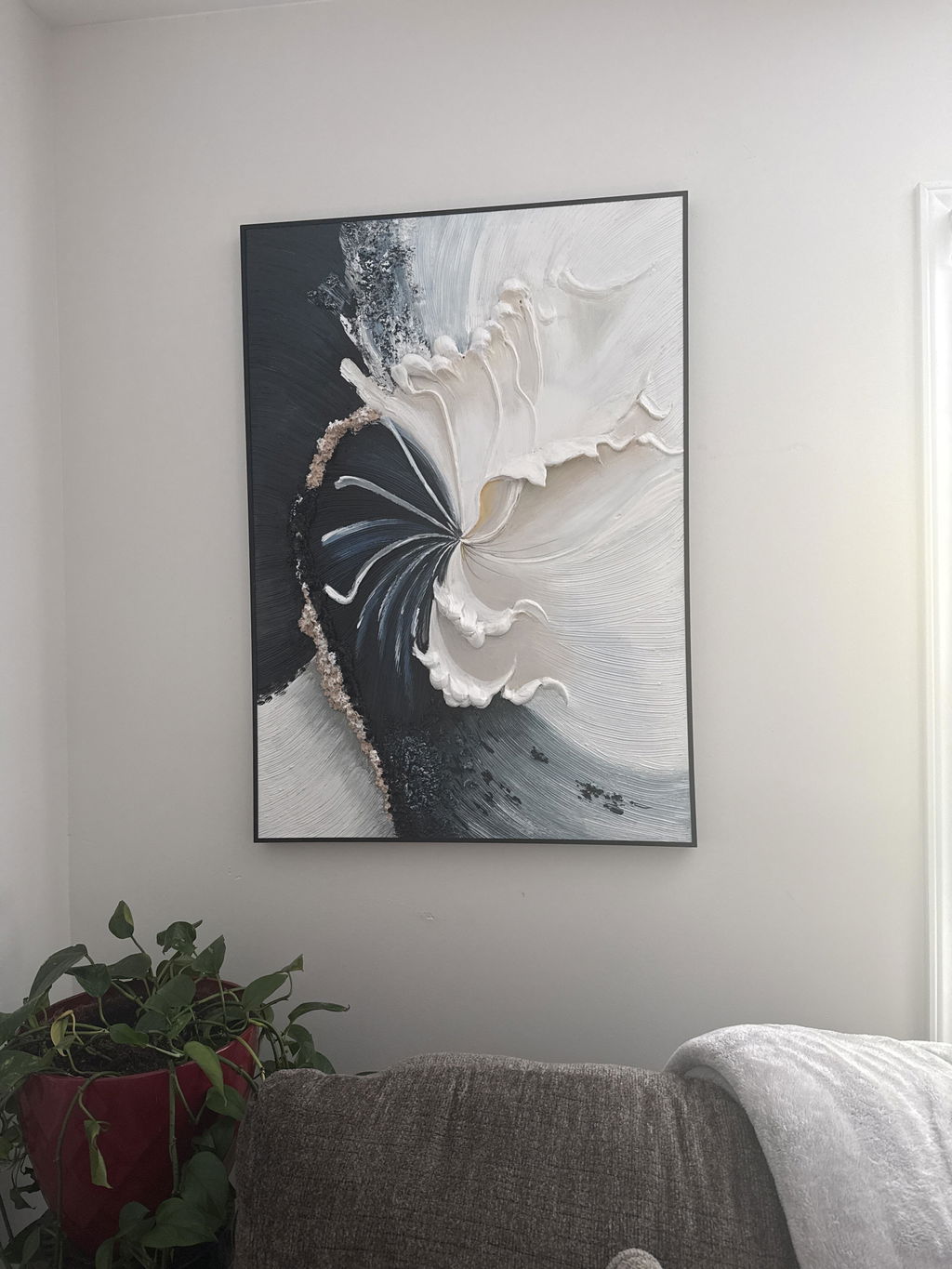
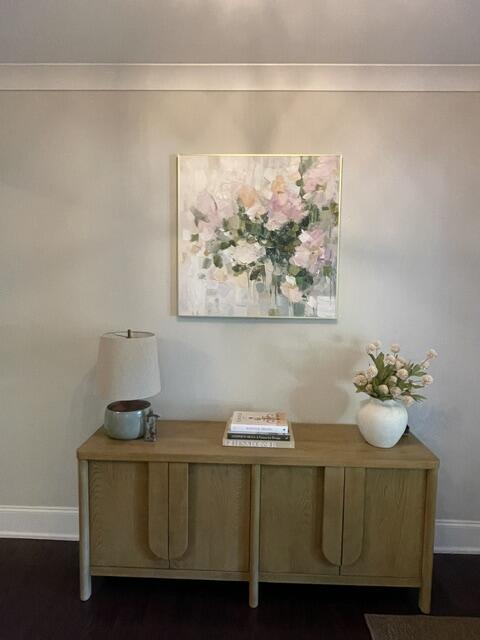
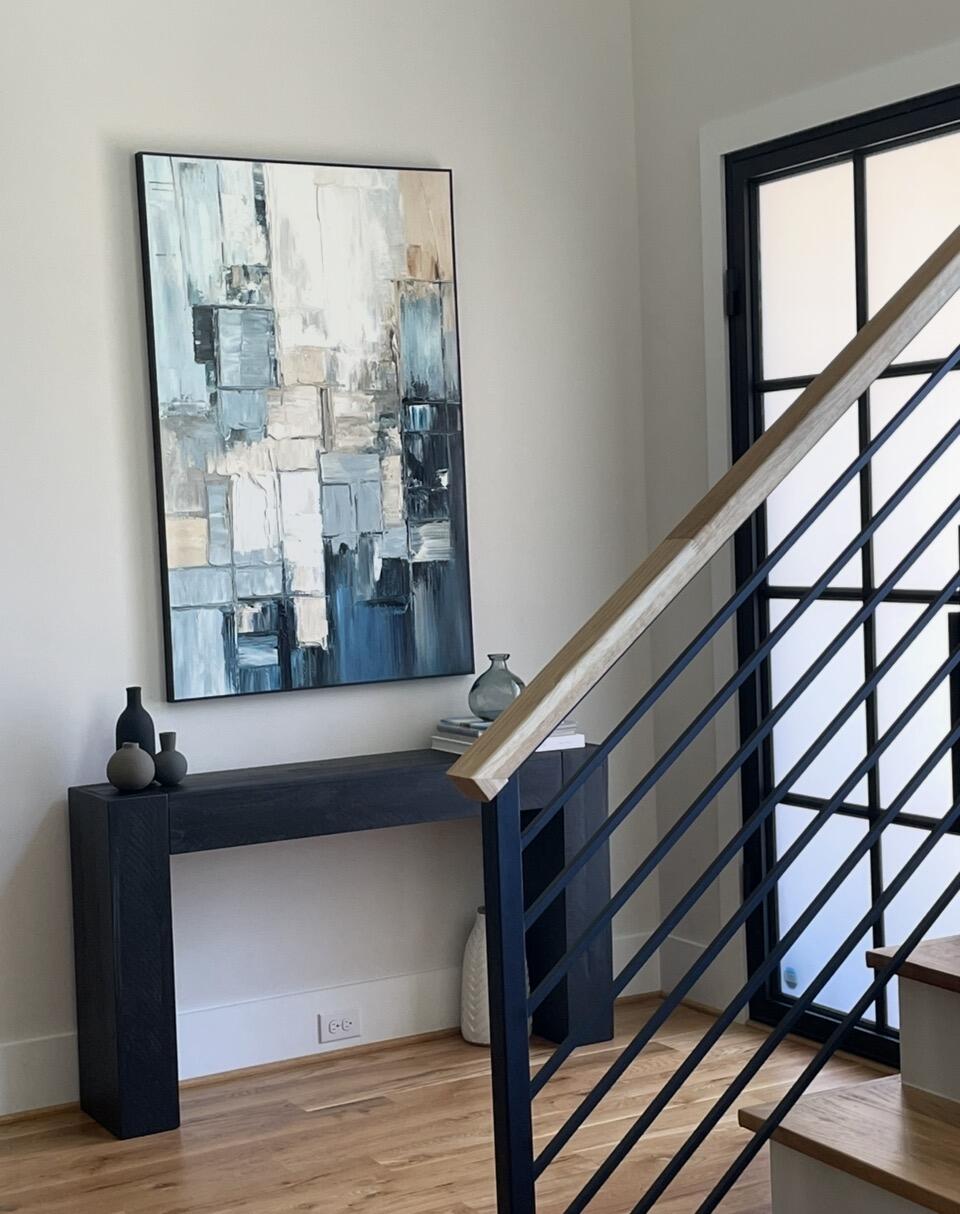
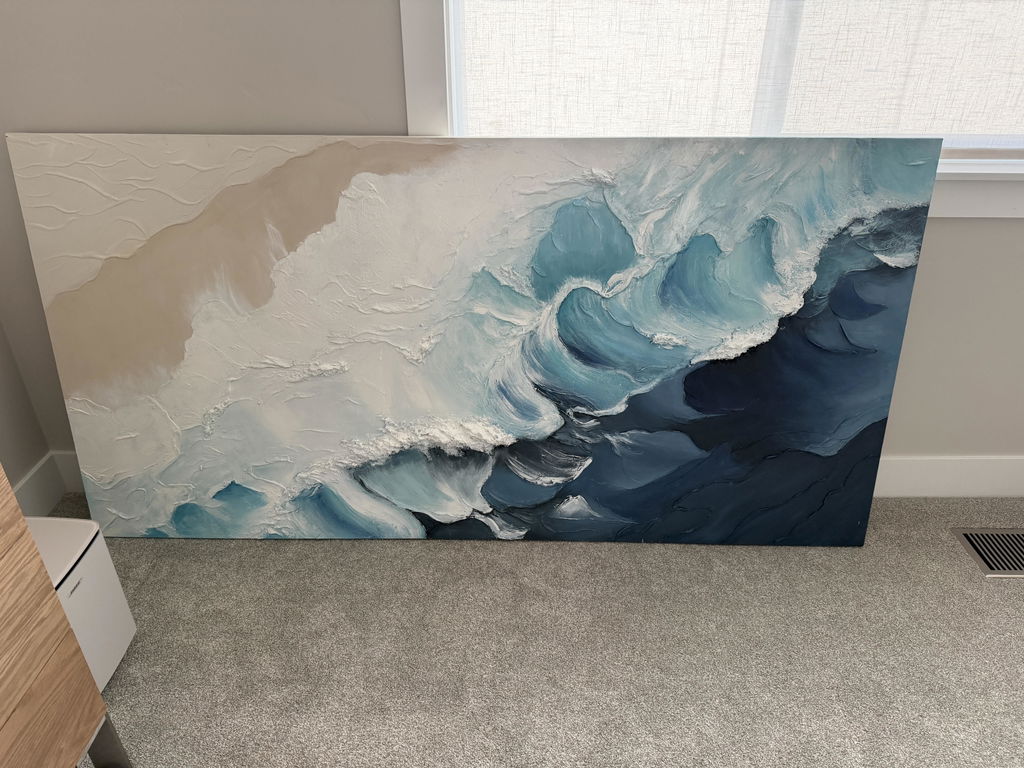
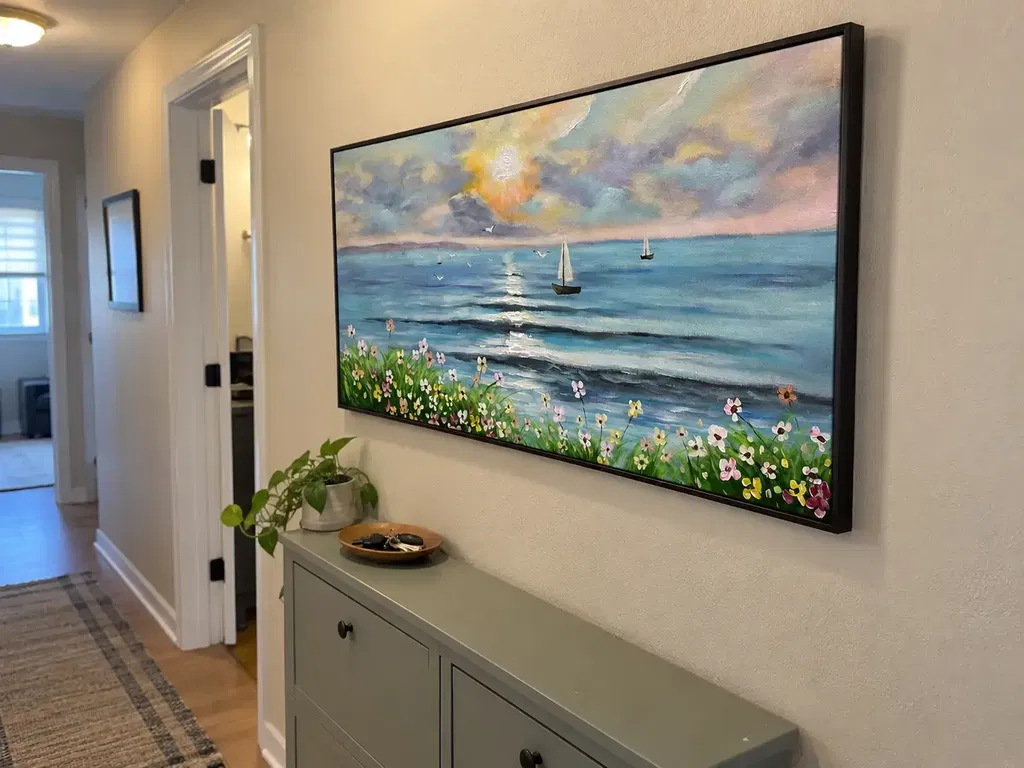
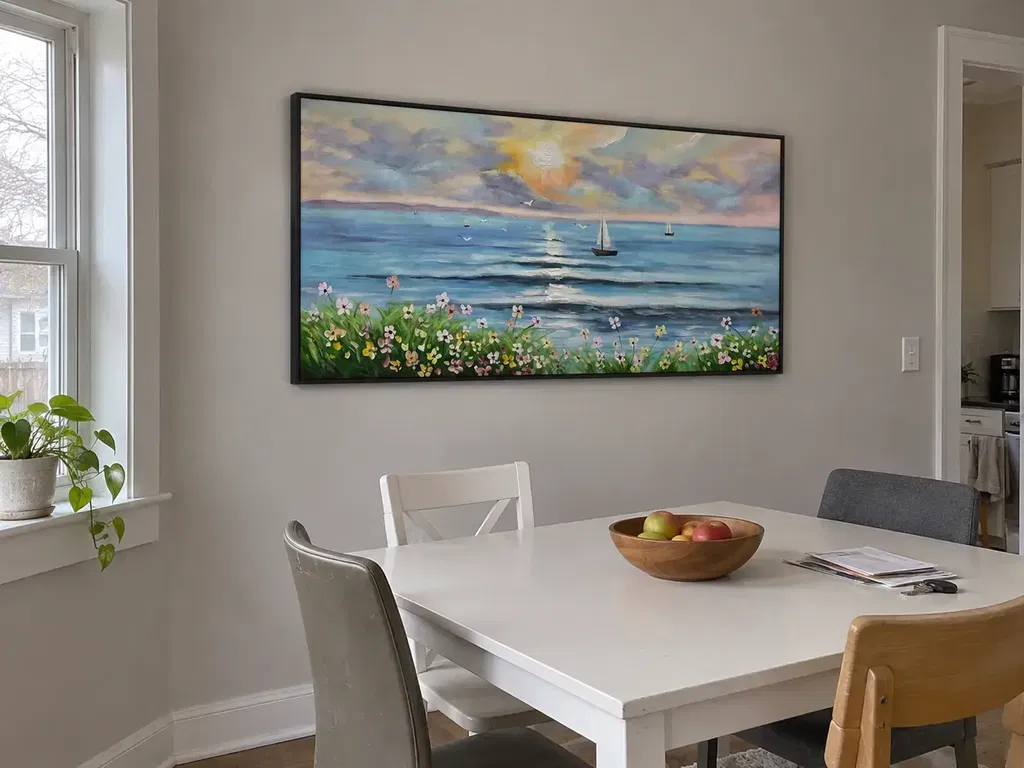
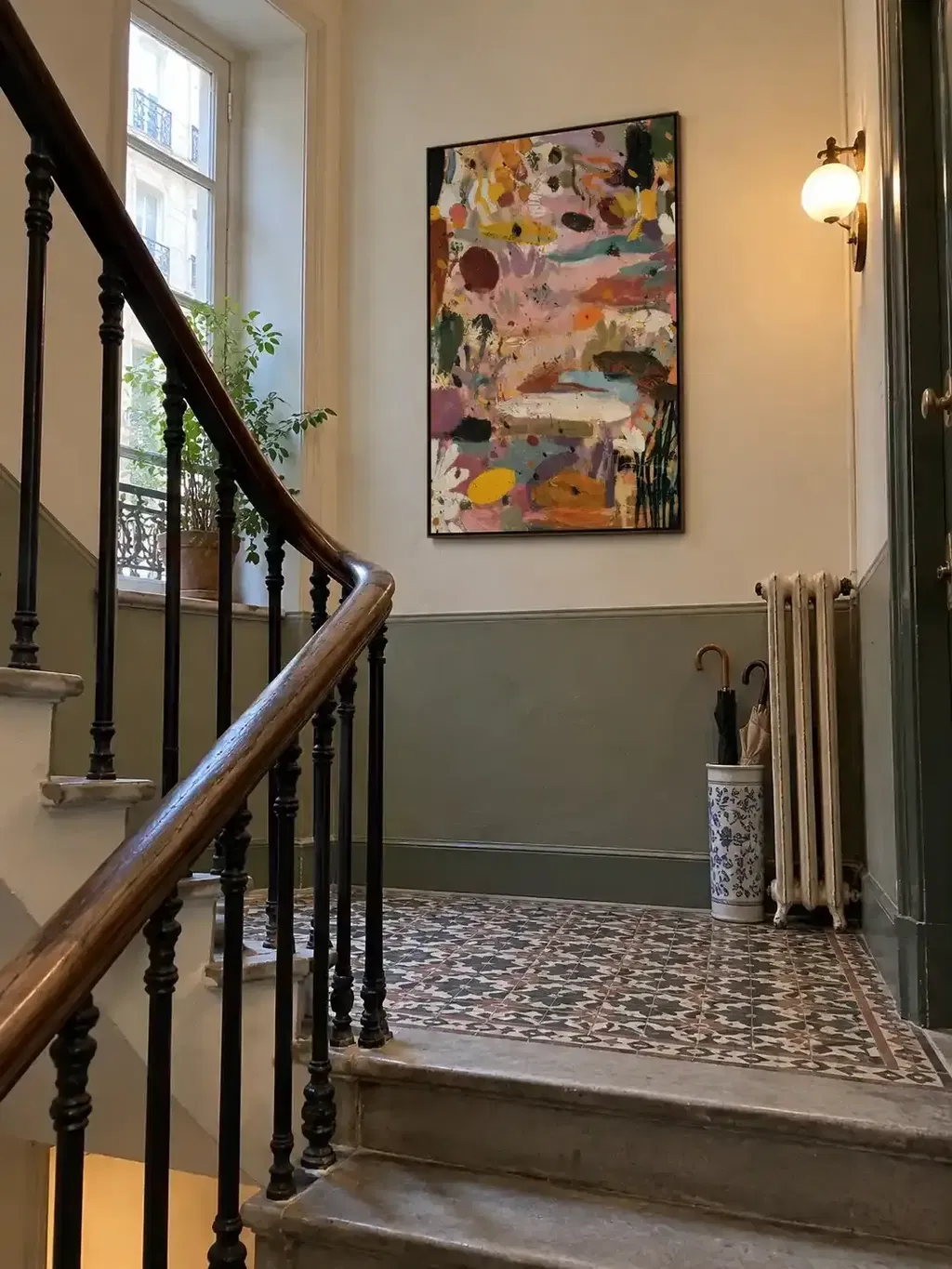
The "Anchor" is the foundational piece of your home portfolio. It should be approximately 1.5x the size of the surrounding furniture (such as a console or sofa) and placed in the room with the highest foot traffic—typically the foyer or the main living area. This piece establishes the color and texture baseline for the entire residence.
Logic Summary: Our Anchor-to-Accent model assumes that human visual processing prioritizes large-scale "landmarks" to navigate spatial aesthetics. By establishing a dominant visual weight (the Anchor), subsequent pieces (Accents) serve as rhythmic echoes rather than competing distractions.
The Sightline Strategy
Before clicking "buy," stand in your entryway. Identify the three most visible wall surfaces from that vantage point. According to our "Sightline Strategy," these are your Priority 1 acquisitions. By securing these surfaces first, you ensure that every visitor’s initial 30-second experience is curated and intentional.

Psychological Optimization: Why the Bedroom Comes First
While conventional wisdom suggests prioritizing public spaces like the living room for "show," neurological research suggests a counter-consensus: invest in the master bedroom first.
A systematic review published in PMC reveals that passive art viewing consistently activates the medial prefrontal cortex (mPFC) and the amygdala, which are critical for emotional regulation. Furthermore, optimized bedroom art—designed for sleep enhancement—can increase daily productivity by an estimated 17–23% (based on sleep quality improvements noted in psychological optimization studies).
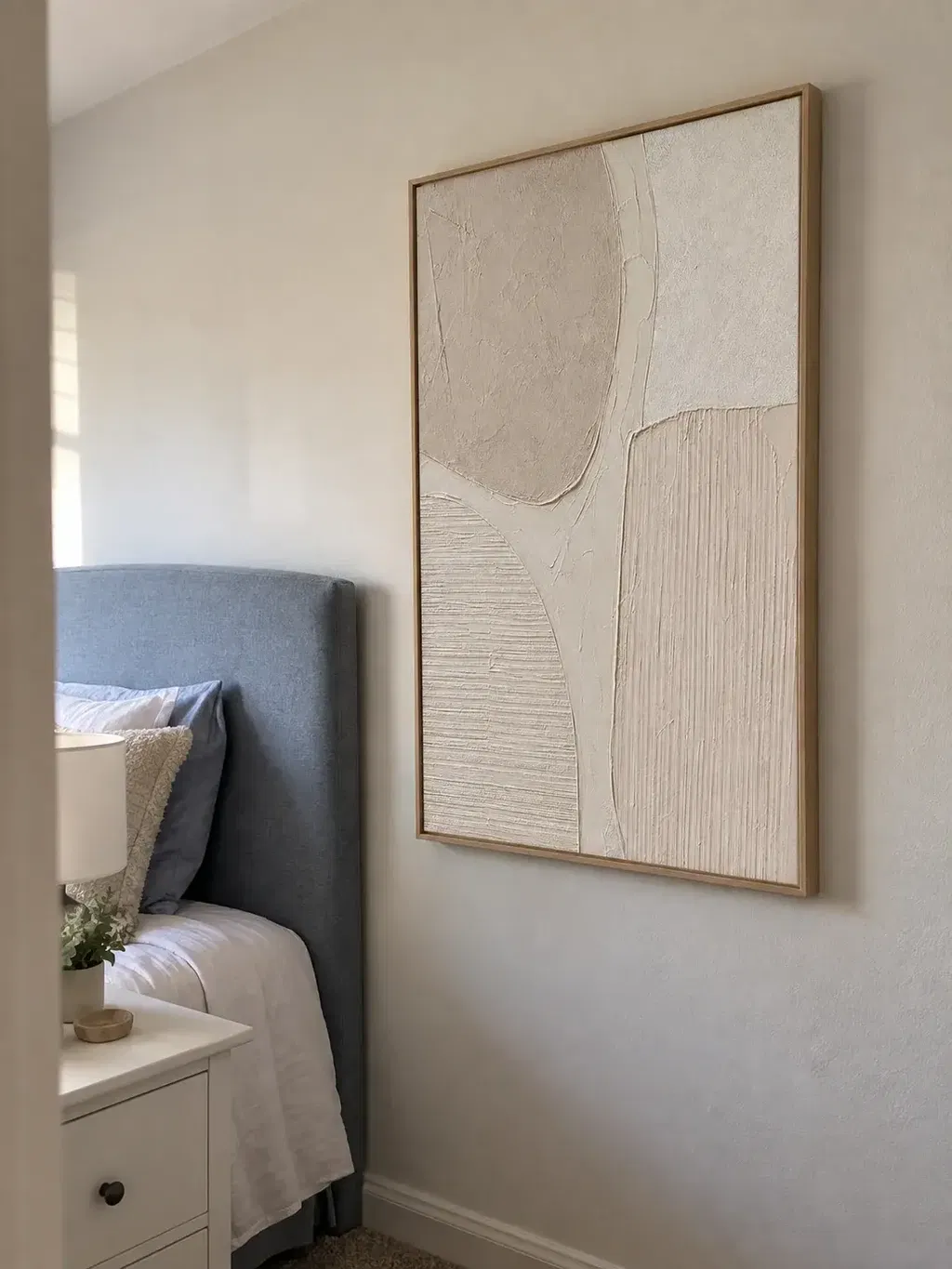
By selecting nature-themed, biophilic hand-painted murals for the bedroom, you are not just decorating; you are installing "public health infrastructure" within your private quarters. The WHO scoping review on arts and health confirms that art interventions effectively alter clinical indicators for stress and mental well-being.
Methodology Note (Psychological Impact Modeling):
Parameter Value/Range Unit Rationale mPFC Activation High Qualitative Correlated with emotional regulation Sleep Quality Gain 15–20% Estimated % Based on biophilic design heuristics Productivity ROI 17–23% Estimated % Derived from sleep-performance models Mood Improvement 73% Measured % Cited from UPenn/Cleveland Clinic data Boundary Condition N/A N/A Effects vary based on individual color sensitivity
Sequencing with Renovation Milestones
Strategic acquisition requires timing. Hand-painted art is not a "fast fashion" commodity; it is a biochemical crystallization of human attention. For made-to-order pieces, we recommend a 4-week lead time before your furniture arrives. This allows for the "approval gate" loop—where the collector reviews the work-in-progress—ensuring the final product aligns perfectly with the room's palette.
The Pigment Thread
To create professional continuity, maintain a "Pigment Thread." Ensure that at least one secondary color from your Anchor piece appears in the subsequent Accent pieces in adjacent rooms. This creates a "narrative flow" that guides the eye through the home. This is particularly effective in Curating Oil Art for Open-Plan Living, where multiple viewpoints must be reconciled.

The Human Premium: Why AI and Prints Collapse in Value
As digital tools proliferate, the commercial premium for "100% human hand-painted" art is widening. Experiments at Columbia University confirm that consumers value art labeled "AI-generated" 62% lower than authentic human-created art.
The psychological reason, as explored by UChicago research, is that digital replicas lack the "essential identity" of the artist. A canvas retains the micro-physical texture—the mm-scale relief of pigments—that is crucial to aesthetics. In fact, optical microprofilometry proves that this texture provides vision-critical data that 2D prints simply cannot replicate.
Material Integrity and Indoor Safety
For homeowners, the "hand-painted" choice also involves air quality. While industrial coatings can emit high levels of Volatile Organic Compounds (VOCs), high-quality artist pigments are evolving. Aalto University experiments show that specific coatings on moisture-controlled substrates emit significantly lower toxic VOCs during curing.
Furthermore, the shift from lead-based whites to Titanium Dioxide—which now dominates 90% of the market according to NCBI—has made indoor murals safer than ever. However, collectors must remain vigilant. The ASTM D-4236 labeling only means warning labels comply with regulations, not that the pigment is "edible" or "non-toxic." Professional services that prioritize walnut oil over turpentine (which can cause central nervous system neuropathy, per CDC NIOSH) are essential for maternal and infant environments.
The Economic Impact: Art as a Property Lever
Beyond aesthetics, art is a proven driver of property value. A 10-year analysis by the Royal Society found that neighborhoods with higher "art" geo-tags had greater relative house price gains. In the commercial sector, the ROI is even more pronounced. Philadelphia’s Avenue of the Arts study noted that arts investments yielded a 7:1 ROI, attracting massive private capital.
For the "House Flipper" and Developer
If you are preparing a property for sale, a single hand-painted mural can act as a "commercial landmark." Case studies from Community Progress show that creative placemaking on vacant properties instantly reverses feelings of blight, making them attractive to long-term buyers. This "Sightline Strategy" for real estate is a low-cost hack to justify a premium listing price.
Advanced Portfolio Building: The 2026 Trends
Looking toward 2026, Zillow and Yelp data show a 329% skyrocket in searches for "custom framing" and a 21% rise in "artisan craftsmanship." The trend is moving toward "understated elegance" where texture is the soul of the room.
The Powder Room Trend
A dominant trend highlighted by the NKBA 2025 awards is the "Panoramic Wrap"—using murals to entirely wrap small spaces like powder rooms to create immersive escapism. This is an excellent way to use a high-impact, smaller-scale mural as a "Portfolio Accent" that surprises guests.
Biophilic Office Integration
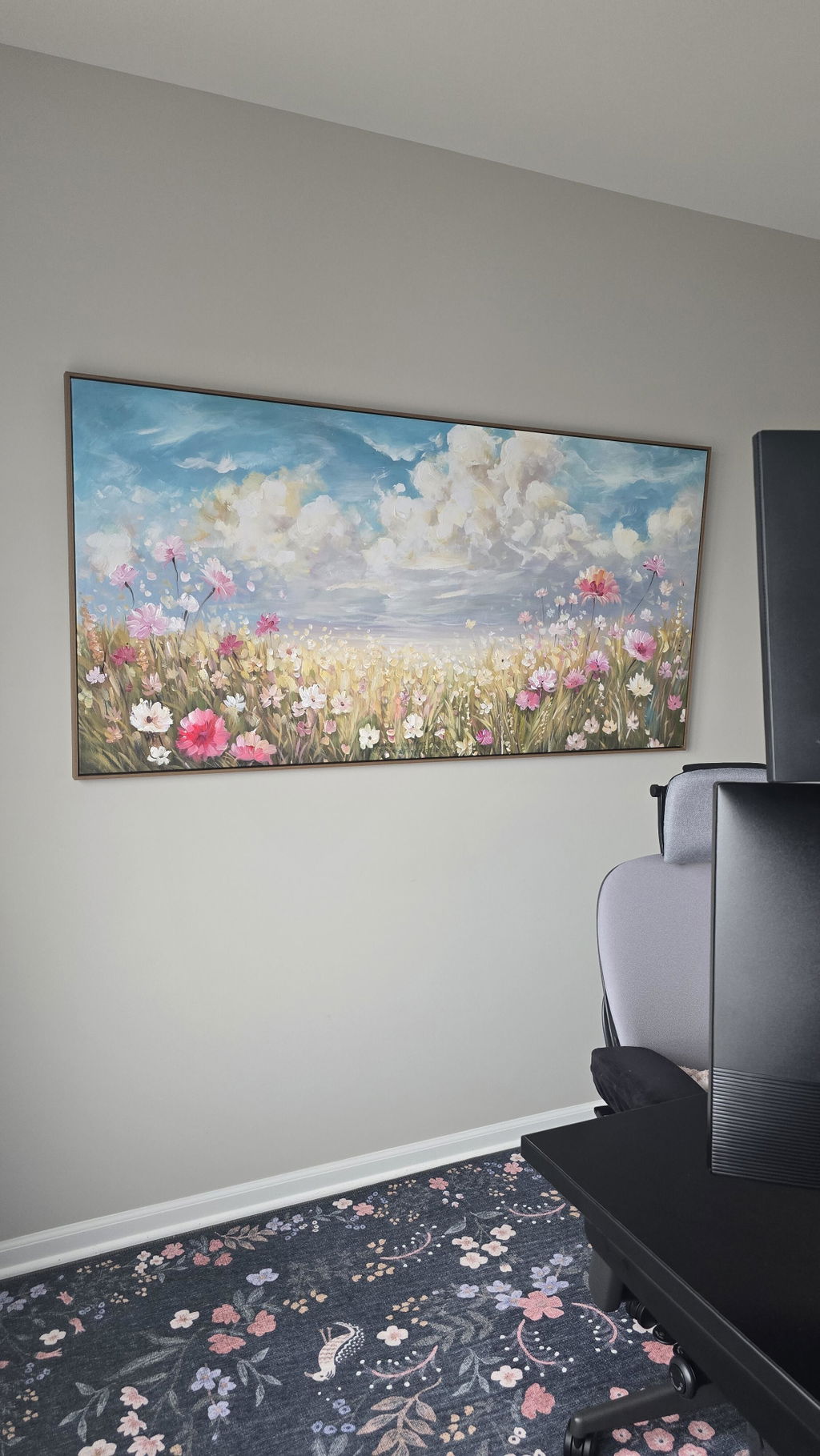
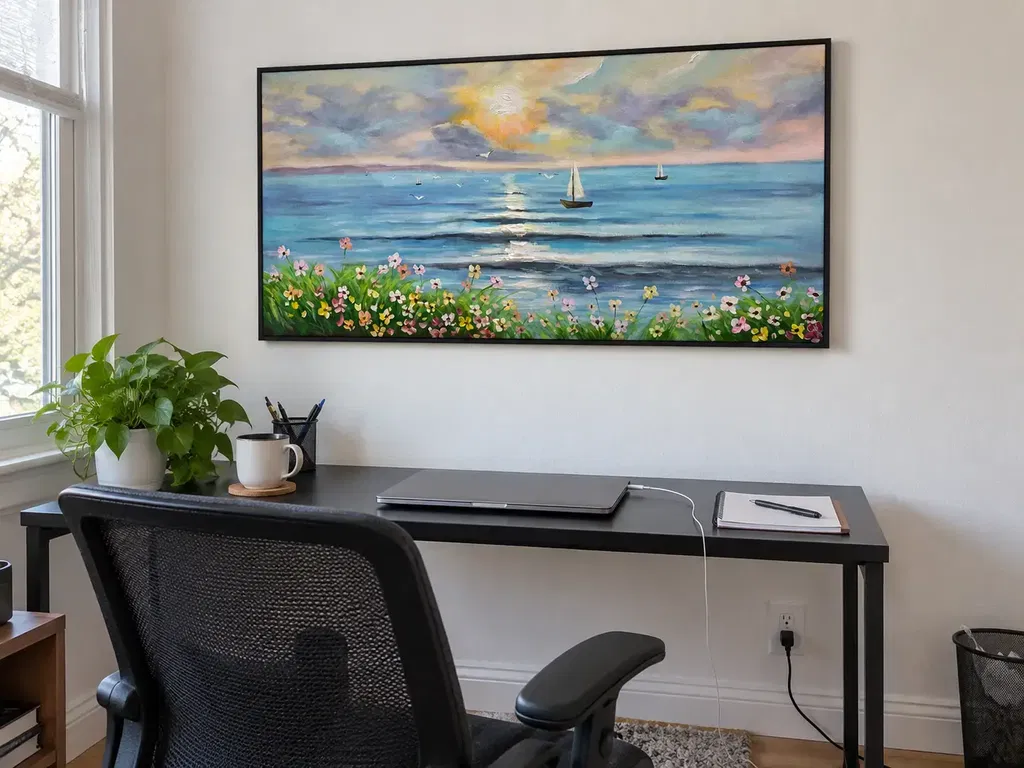
For those working from home, biophilic murals (nature-based landscapes) are no longer optional. Research from Tokyo office studies indicates that nature-based design effectively intervenes in employee burnout and cognitive fatigue. By placing a hand-painted landscape in your line of sight during video calls, you are optimizing your workspace for long-term mental endurance.

Ethics and Sustainability in the Supply Chain
The "New Consumer of Crafts" in 2025 values transparency. The European Crafts Alliance states that top-tier consumers demand a fusion of avant-garde design and authentic handcrafting. This includes fair compensation for the artists. With 87% of consumers agreeing that artists deserve fair pay in the age of AI, choosing a platform that supports a freelance workforce is a moral and aesthetic imperative.
The Environmental Footprint
The art world is also facing a "microplastic crisis." Stanford University warns that coatings and pigment breakdowns are a core source of environmental plastic shed. Collectors can mitigate this by choosing eco-friendly alternatives, such as hemp or flax canvases, which consume half the water of cotton (Cincinnati Art Museum).
Creating Narrative Continuity
Building a home art portfolio is an exercise in narrative continuity. It is the process of moving from "owning objects" to "curating an experience." By following the Strategic Sequence—starting with the Anchor, mapping the Sightlines, prioritizing the Bedroom for psychological ROI, and maintaining a Pigment Thread—you create a home that is not just decorated, but deeply resonant.
For more specific applications of these strategies, explore our guides on Zoning with Art or Transitioning Themes Between Living and Dining.
YMYL Disclaimer: This article is for informational purposes only and does not constitute professional medical, legal, or financial advice. Regarding indoor air quality and pigment toxicity, please consult with a certified industrial hygienist or environmental health professional, especially in homes with children or pregnant individuals.