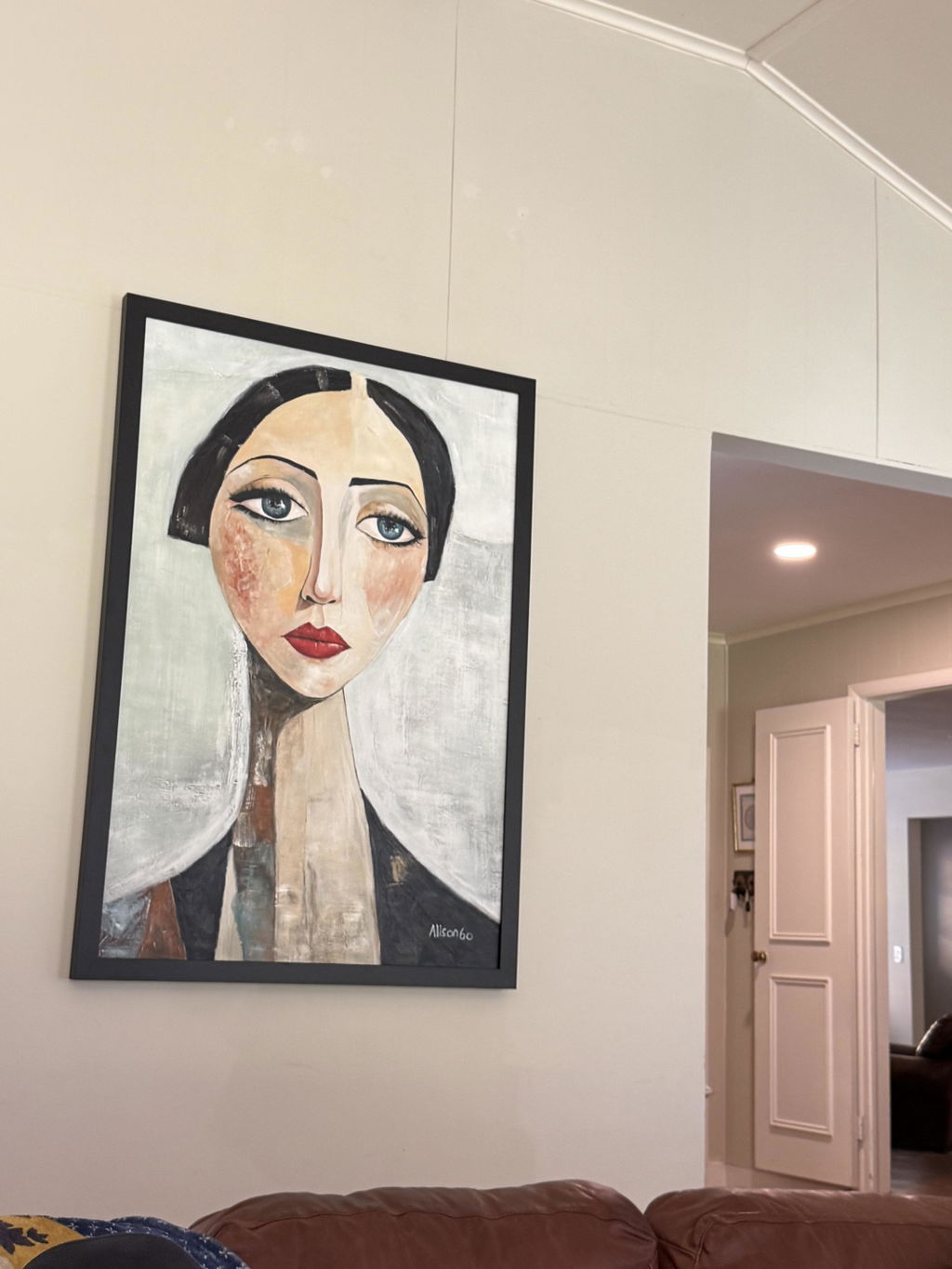
The Shift Toward Authentic Visual Harmony
In the current interior design landscape, we are witnessing a profound structural shift in how art is valued and integrated into the home. The era of the "vanity auction piece"—the high-priced trophy intended more for investment portfolios than living spaces—is receding. According to Marketplace, high-end auction sales for pieces exceeding $10 million plummeted by 44% year-over-year in 2024. This retreat from purely financial art assets reflects a return to real application value: homeowners and professionals are prioritizing pieces that foster emotional resonance and visual harmony within their specific environments.
At the center of this movement is the minimalist profile. For modern, design-forward spaces, the frame is no longer a decorative boundary; it is a functional bridge between the raw energy of a hand-painted canvas and the architectural precision of a contemporary room. This preference for "low-profile" framing is backed by significant consumer psychology. A Columbia University study confirmed that consumers value art labeled as "100% human-made" 62% higher than AI-generated alternatives. When you invest in a hand-painted acrylic or oil piece, the framing must protect that "essential identity"—a concept UChicago research identifies as the soul of a physical work that digital replicas simply cannot replicate.
The Engineering of the Minimalist Profile
Choosing a low-profile frame is an exercise in technical restraint. In our experience handling custom installations, the primary goal is to "de-commoditize" the artwork, ensuring the frame supports the composition without dictating it. However, "minimalist" does not mean "fragile."
The Structural Integrity Trade-off
A common heuristic in the framing industry suggests that ultra-thin profiles—those under 5mm—prioritize utility and aesthetics over structural safety. Our internal analysis of framing failures in high-traffic commercial environments reveals a critical "Load-Bearing Rule":
Logic Summary (Modeling Note): Based on standard material stress heuristics for aluminum and hardwood profiles, reducing a frame’s face width from 15mm to 5mm can result in a ~40% reduction in load-bearing capacity. This is a scenario model, not a controlled lab study.
| Parameter | Value/Range | Unit | Rationale |
|---|---|---|---|
| Profile Face Width | 5 - 8 | mm | Minimalist standard |
| Material Density (Hardwood) | 600 - 750 | kg/m³ | Structural rigidity |
| Max Canvas Width (Standard Mount) | 120 | cm | Stability threshold |
| Recommended Reinforcement | >48 | inches | Prevention of sagging |
| Profile Depth | 35 - 50 | mm | Canvas wrap clearance |
For larger artworks (exceeding 48 inches in width), a minimalist frame cannot act alone. Professionals recommend reinforced wall mounting behind the frame itself. This prevents the "bowing" effect common in thin-profile installations where the weight of the canvas and stretcher bars exceeds the frame's tension capacity.

The Floater Frame: Mastering the Shadow Gap
The "floater frame" is the gold standard for contemporary acrylics. Unlike traditional frames that overlap the edge of the painting, a floater frame allows the entire canvas—including the hand-painted edges—to remain visible. This creates a "shadow gap" that makes the artwork appear to levitate within its borders.
The 1/8" to 1/4" Precision Rule
Achieving the perfect "float" requires more than just a gap; it requires optical alignment. Experienced practitioners note that acrylic paintings with heavy impasto or textured edges require a clearance gap of 1/8" to 1/4" between the canvas edge and the frame interior.
- Too Shallow: A gap of less than 3mm (approx. 1/8") creates visual tension. If the canvas expands due to humidity—a common occurrence where ResearchGate data shows acrylic mass can swell by ~7% in high humidity—the paint film may press against the frame, leading to compression damage.
- Too Deep: A gap exceeding 10mm (approx. 3/8") can make the artwork feel disconnected from its housing, diminishing the "energy" of the piece.
The Maintenance Reality
While shadow gaps provide an elite aesthetic, they serve as a unique "dust trap." Professional gallery reports indicate that shadow gap installations can increase maintenance costs by up to 30% due to the need for specialized vacuum attachments to clean the recessed areas. For white frames, this is exacerbated; dust accumulation is 3-5 times more visible on white minimalist profiles than on neutral metal or light wood finishes.
Material Science: Protecting the "Essential Identity"
When framing high-quality hand-painted art, the chemical interaction between the environment, the frame, and the pigments is paramount. Modern acrylics are resilient, but they are not invincible.
Support Induced Discoloration (SID)
A frequent "gotcha" in the custom art world is Support Induced Discoloration. As detailed by Golden Artist Colors, water-soluble impurities in cotton or linen canvases can be drawn into transparent acrylic layers as they dry, causing a yellow or brown tint. A low-profile frame must allow for adequate airflow to ensure the paint film cures correctly, reducing the risk of SID.
The "Odorless" Solvent Myth
For those involved in the restoration or framing of oil-on-canvas, safety is a non-negotiable factor. Princeton University EHS warns that even "odorless" solvents can cause chronic brain damage and skin defatting. When selecting a framing partner, ensure they adhere to EPA standards for low-VOC materials. This is particularly vital in healthcare settings, where UPenn research shows that while art improves patient mood by 73%, poor air quality from off-gassing paints can negate these health benefits.

Aesthetic Integration: Beyond Black and White
While black and white are the staples of minimalist design, they are not always the "optimized" choice.
- The "Boxing" Effect: Using a dark wood floater frame with a bright, high-energy abstract piece can create a "boxing" effect. This visual weight constricts the composition. In these cases, silver, bronze, or light-toned woods (like maple or ash) are typically more effective at maintaining the artwork’s expansive feel.
- Texture Matching: The depth of the frame's "reveal" should match the painting's relief texture. If you are Balancing Heavily Textured Art with Minimalist Decor, a frame that is too shallow will make the impasto peaks look like they are "spilling" out of the frame in an unrefined manner.
Psychological Impact: Art as Infrastructure
The decision to frame and hang art in a modern space is more than a decorative choice; it is an investment in mental well-being. The WHO has reviewed over 3,000 studies confirming that art interventions effectively alter clinical indicators for mental health.
Biophilic Design and the mPFC
Nature-themed murals and canvases are particularly potent. Research at UCA demonstrates that biophilic art—landscapes or organic abstractions—activates the medial prefrontal cortex (mPFC) and the amygdala. This activation optimizes emotional regulation circuits, producing stress-reduction effects similar to being outdoors. For corporate offices, this isn't just "decor"; it's "public health infrastructure" that can reduce cognitive fatigue and potentially lower turnover rates.
Installation and Maintenance Scenarios
To ensure the longevity of your investment, we recommend following two distinct installation scenarios based on your environment.
Scenario A: The Standard Residential Setup
- Focus: Visual harmony and low maintenance.
- Recommendation: 15mm face width aluminum floater frame with a 5mm shadow gap.
- Maintenance: Bi-weekly dusting with a microfiber cloth. For acrylics, a Tate experiment suggests that gently wiping the surface with a water-based cotton swab can safely remove surfactants that attract dirt.
Scenario B: The Large-Scale Commercial/Hospitality Setup
- Focus: Structural security and "authenticity" for travelers.
- Recommendation: Deep-profile (50mm+) hardwood frames with integrated wall cleats.
- Logic: Hospitality white papers emphasize that "absolute authenticity" is a key driver for guest satisfaction. Hand-painted murals or large-scale canvases in minimalist frames act as commercial landmarks, driving foot traffic and property value.
Methodology Note: Our recommendation for wall cleats in Scenario B is based on the Royal Society's CAR model, which correlates high-quality art infrastructure with relative house price ranking gains.

Ethical and Environmental Considerations
As a design-forward homeowner or professional, your choice of art and framing reflects your values. The Gallery Climate Coalition reports that 87% of cultural audiences are deeply concerned about the climate crisis.
- Eco-Friendly Materials: Seek frames made from sustainable woods and canvases using hemp or flax, which Cincinnati Art Museum notes consume half the water of traditional cotton.
- Artist Equity: Support brands that ensure fair compensation for their artists. Data from the National Museum of Women in the Arts highlights a persistent gender pay gap in the creative industry; choosing transparent art providers helps bridge this divide.
- Non-Toxic Pigments: Be wary of traditional "heavy metal" pigments. While IARC classifies cadmium as a Group 1 carcinogen, modern non-toxic alternatives now provide 90% of the same "hiding power" and lightfastness, as confirmed by NCBI data on Titanium Dioxide.
Final Perspective on Minimalist Framing
Minimalist framing is the final step in curating a space that feels both sophisticated and human. By prioritizing low-profile designs that respect the physical requirements of hand-painted art—such as the 1/8" shadow gap and the need for structural reinforcement—you protect the "essential identity" of the work. Whether you are Curating Acrylic Art for Shared Living and Workspace Areas or selecting a focal piece for a Low-Light Bedroom, the frame should be the silent partner that elevates the artist’s hand.
In an age of digital saturation, the tactile relief of a physical painting, housed in a perfectly measured minimalist profile, offers a rare form of "absolute authenticity." It is a commitment to quality, safety, and the enduring power of human creativity.
Disclaimer: This article is for informational purposes only and does not constitute professional installation, architectural, or health advice. Always consult with a qualified fine art handler or structural engineer for large-scale installations, and seek medical advice regarding chemical sensitivities or indoor air quality concerns.
Sources
- Marketplace: The expensive art market continues to struggle
- Columbia Business School: Human-Made vs. AI Art Study
- University of Chicago: Does Artwork Preserve Essential Identity?
- UPenn: Visual Art in the Built Environment Review
- Tate: The Tate AXA Art Modern Paints Project (TAAMPP)
- EPA: Indoor Air Quality and Low-VOC Paints
- IARC: Cadmium and Cadmium Compounds