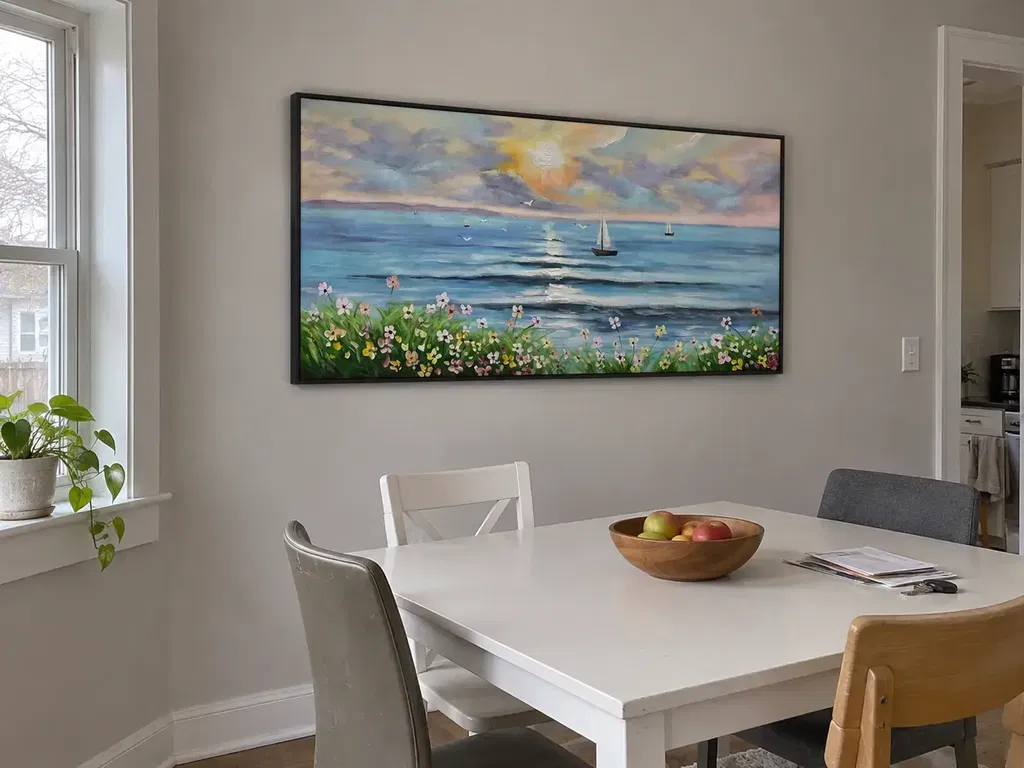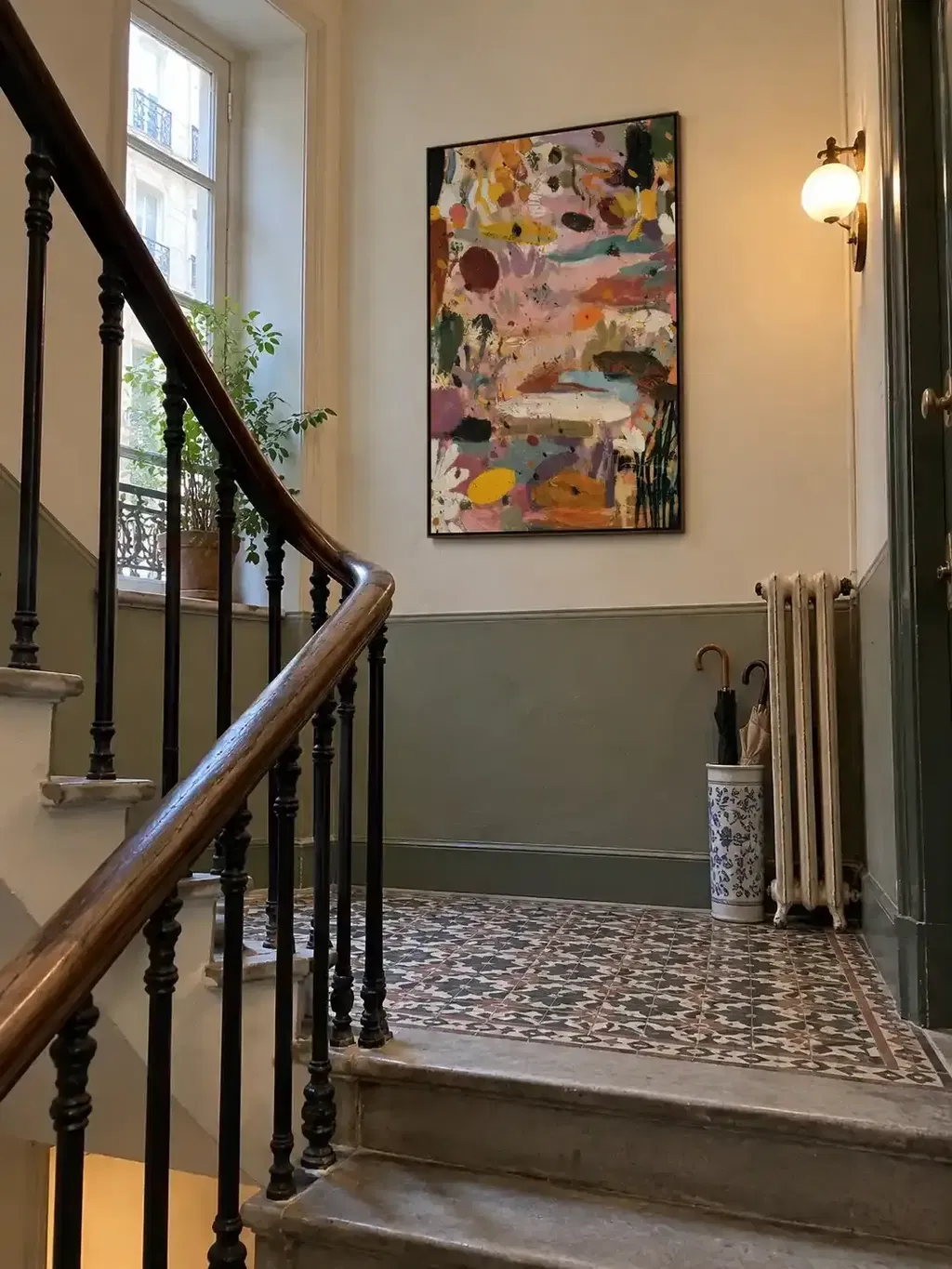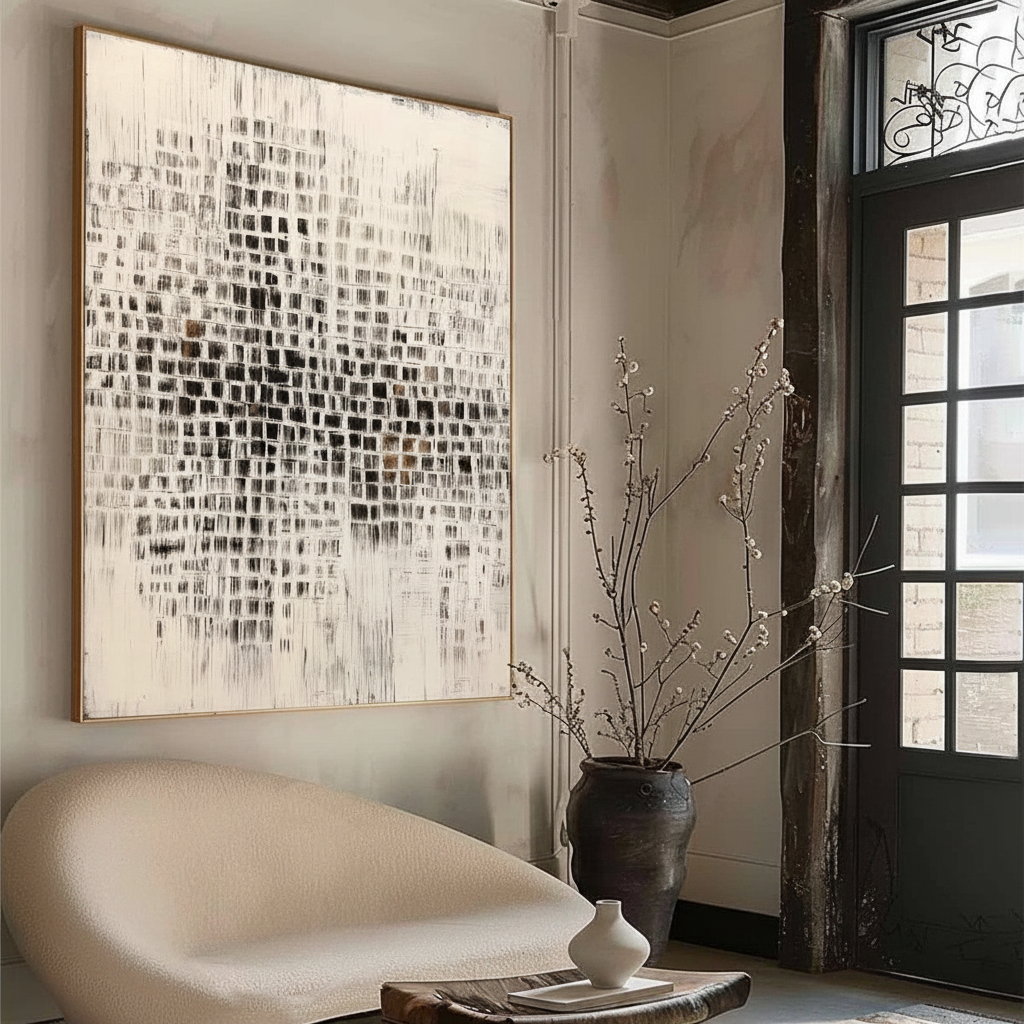
The Science of Visual Integration: Why Furniture Height Dictates Art Placement
In our years of collaborating with interior designers and homeowners, we have observed a recurring frustration: a stunning, hand-painted acrylic piece is commissioned, delivered, and then hung in a way that makes the entire room feel "off." The most common culprit isn't the art itself, but its relationship to the furniture below it.
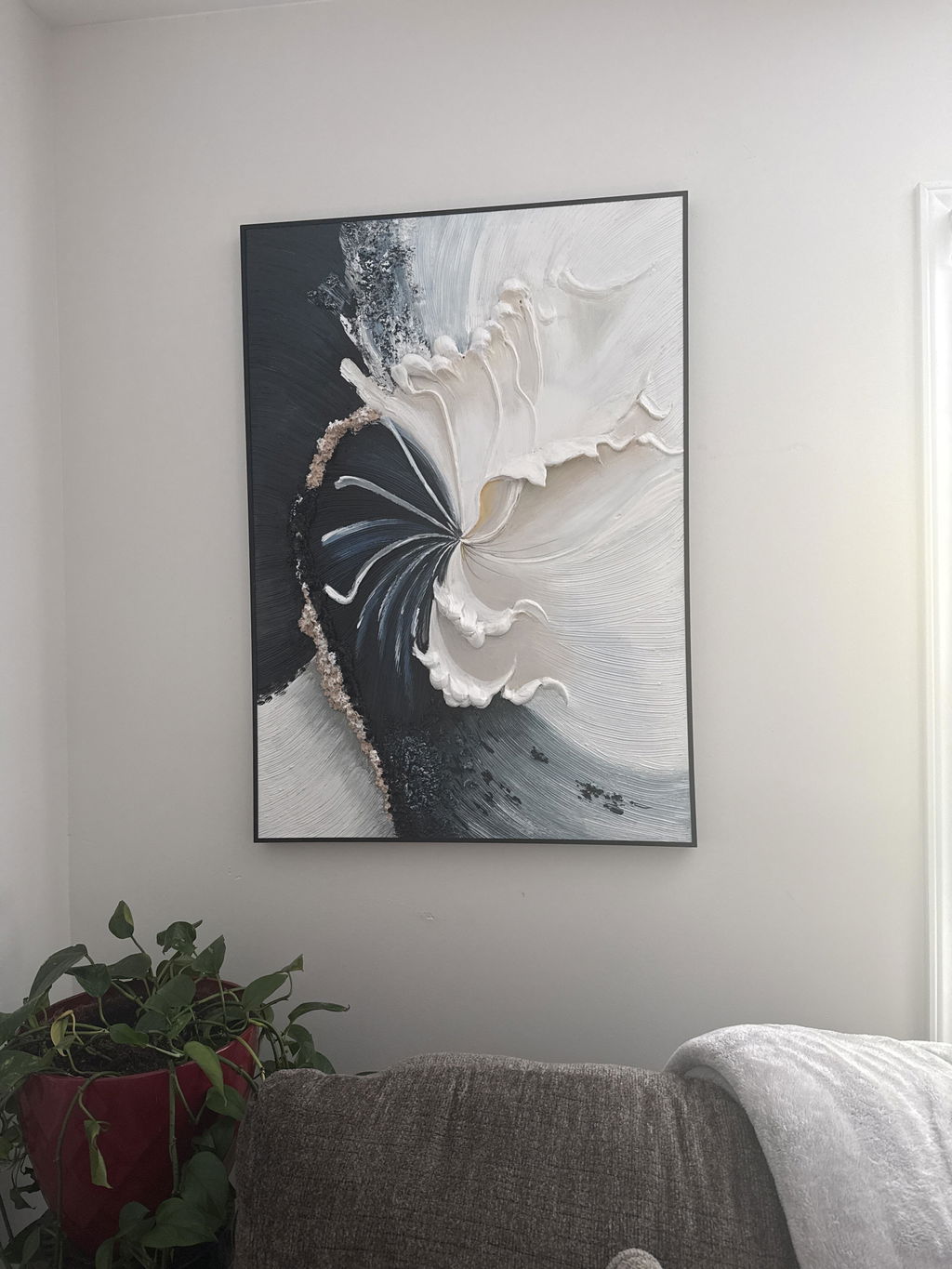
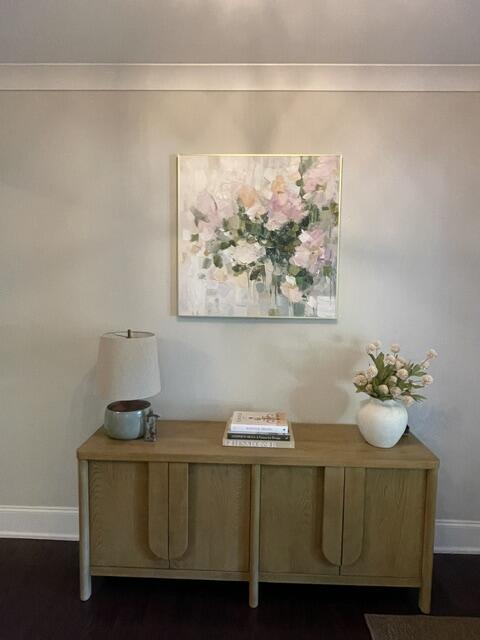
When art is hung too high—a phenomenon often called "gallery drift"—it loses its emotional connection to the living space. Instead of acting as a focal point that anchors a seating area, it floats aimlessly toward the ceiling. Conversely, when the scale is mismatched, the furniture can "swallow" the artwork, or the artwork can overwhelm a delicate console.
Integrating large-scale acrylic art requires more than a hammer and a level; it requires an understanding of architectural physics and human psychology. Recent data from the Royal Society suggests that neighborhoods with higher "art" engagement see greater relative house price gains, proving that the aesthetic harmony of a space has tangible economic value. To achieve this harmony, we must look at the specific technical requirements of the acrylic medium, which interacts with light and space differently than traditional oil or paper-based works.
The "Acrylic Glare" Heuristic: Why 57 Inches is Often Wrong
The "gold standard" for hanging art has long been the 57-inch rule: the center of the piece should be 57 to 60 inches from the floor, mimicking the average human eye level. However, through our installation patterns and client feedback, we have found that this standard often fails for acrylic media.
Acrylic paint, particularly when applied with heavy impasto or finished with a gloss varnish, possesses high reflectivity. According to classical optical theory found in Optica, light scattering and opacity reach theoretical extremes when particle diameter approaches half the wavelength of visible light. In a living room with overhead recessed lighting or large windows, hanging an acrylic piece at a standard 60-inch eye level often creates a "glare zone" that obscures the brushstrokes and color depth.
Logic Summary: We recommend the "Lower Horizon" heuristic for acrylics. By positioning the center of the artwork at 52–55 inches (roughly 5 inches lower than the standard), you shift the angle of incidence for most ceiling-mounted light sources. This minimizes specular reflection and allows the viewer to see the "essential identity" of the hand-painted texture rather than a white light bounce.

The Translucency Expansion Effect
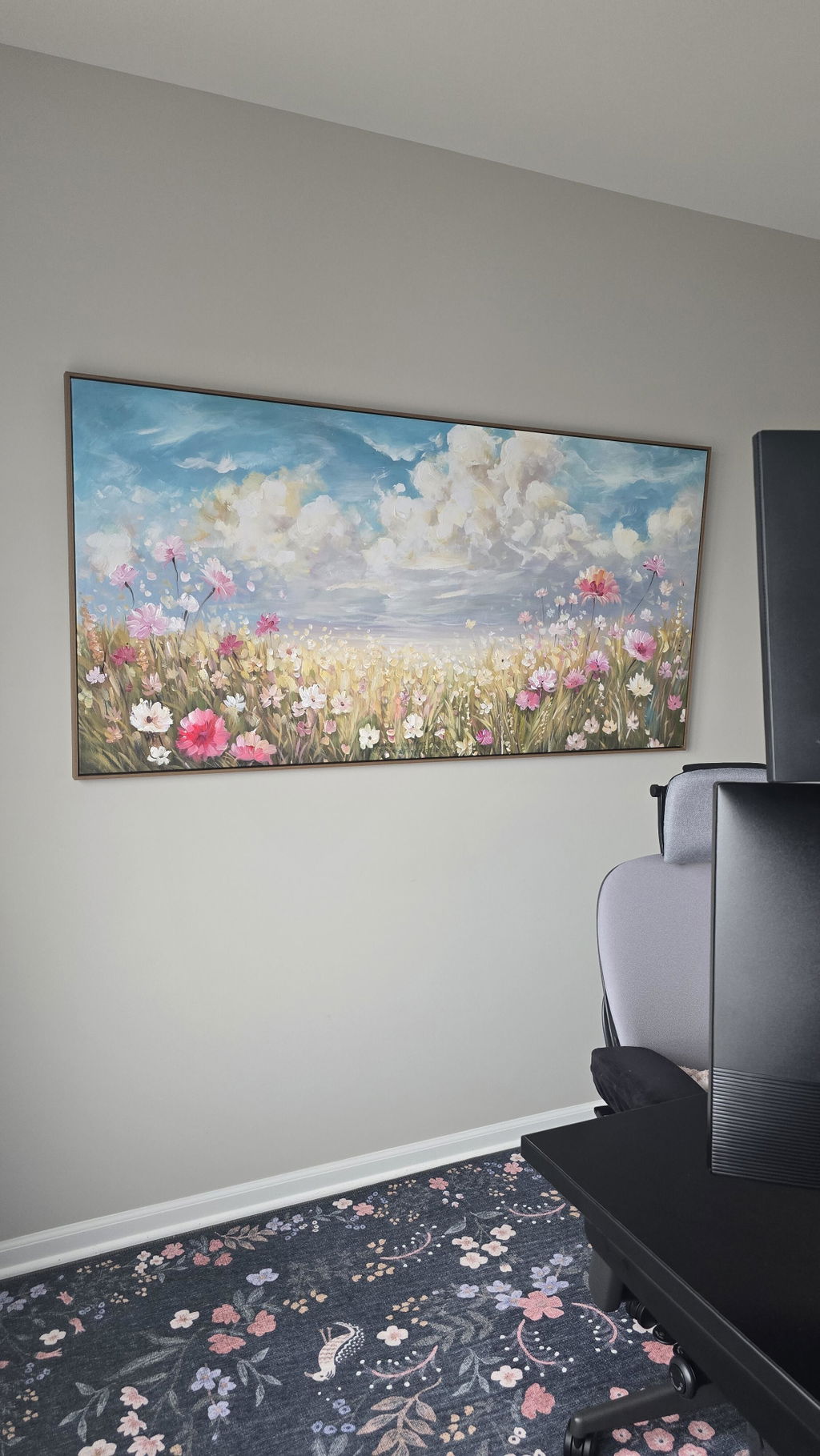
Expert observation suggests that acrylic art appears 15–25% visually larger than its physical dimensions. This is due to the polymer’s translucency; light penetrates the paint layers and reflects back, creating a "glow" or optical expansion. When planning your layout, this means an acrylic piece can be physically smaller than an oil painting while still achieving the same "visual weight" above a sofa or mantel.
Spacing Rules for Sofas, Consoles, and Mantels
To prevent your artwork from "floating," it must maintain a physical relationship with the furniture. We follow the "6-8 Inch Tether" rule.
The Sofa Anchor
For a standard sofa, the bottom of the artwork should sit 6 to 8 inches above the top of the back cushions. This creates a cohesive unit where the eye moves naturally from the seating to the art.
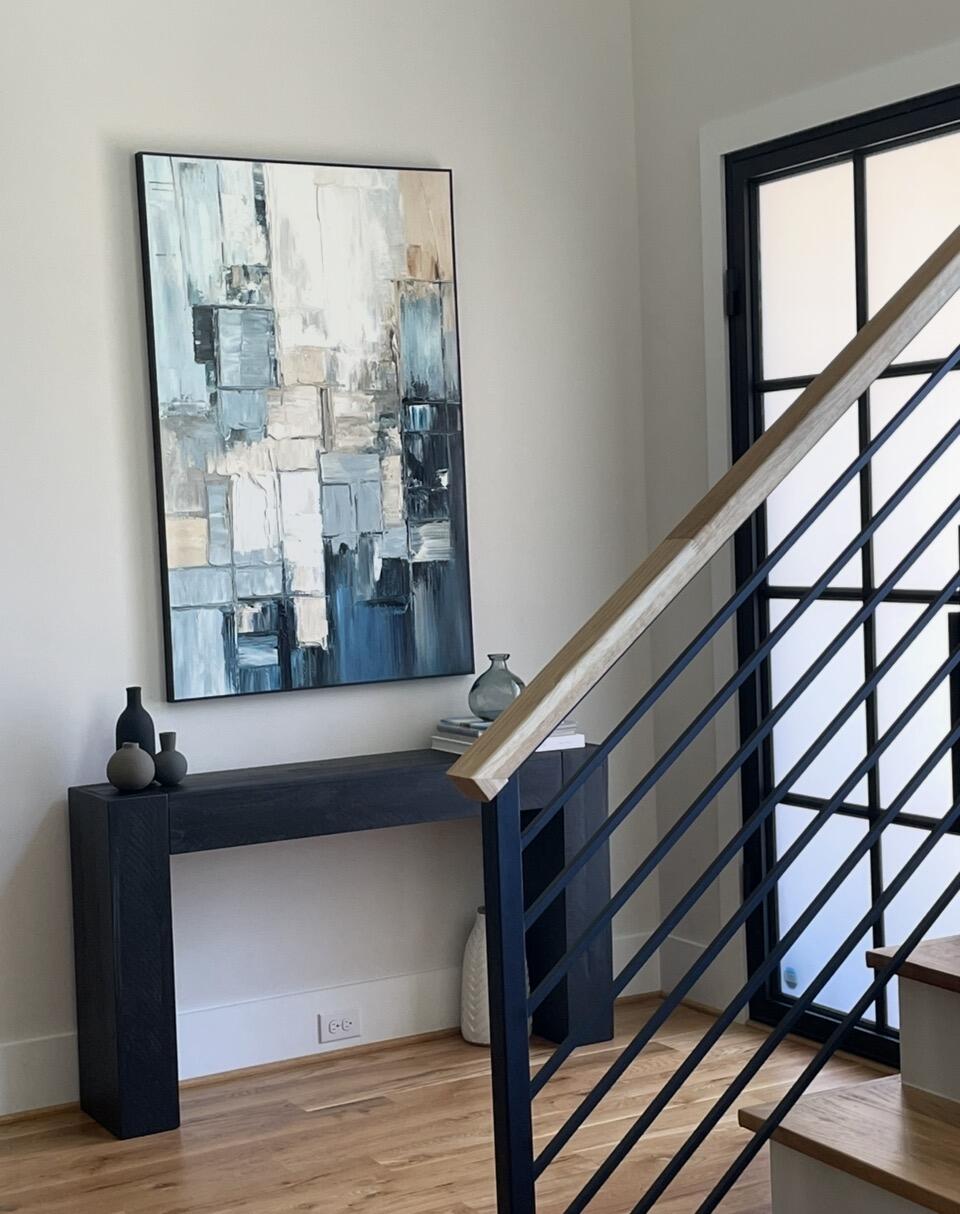
However, there is a technical "gotcha" unique to modern acrylic mounting. Many premium acrylic works utilize standoff mounting hardware—stainless steel bolts that suspend the art away from the wall. According to technical guides for standoff screws, these bolts typically create a 0.5 to 2-inch gap between the wall and the art. This physical depth creates a shadow line that makes the visual spacing appear larger than it is.
Methodology Note (Scenario Modeling): Our analysis of visual spacing assumes a standard 36-inch high sofa back and a viewing distance of 8–10 feet. | Parameter | Standard Framed Art | Acrylic with Standoffs | Unit | Rationale | | :--- | :--- | :--- | :--- | :--- | | Bottom-to-Furniture Gap | 6–8 | 7.5–10 | Inches | Accounts for standoff shadow depth | | Recommended Width | 2/3 of sofa width | 1/2 to 3/5 of sofa width | Ratio | Translucency expansion effect | | Center Height (Standing) | 57–60 | 52–55 | Inches | Glare reduction for gloss surfaces | | Mounting Cost Est. | $10–$50 | $50–$200 | USD | Specialized hardware (French cleats/Standoffs) | | Wall Offset | 0 | 0.5–2.0 | Inches | Airflow and depth perception |
The Mantel and Console
For mantels, the rules shift. Regardless of the mantel's height, the artwork should be positioned at eye level when standing. If the mantel is exceptionally high, we recommend leaning the artwork against the wall rather than hanging it. This "casual" placement reduces the formal distance and makes the room feel more lived-in and emotionally authentic.
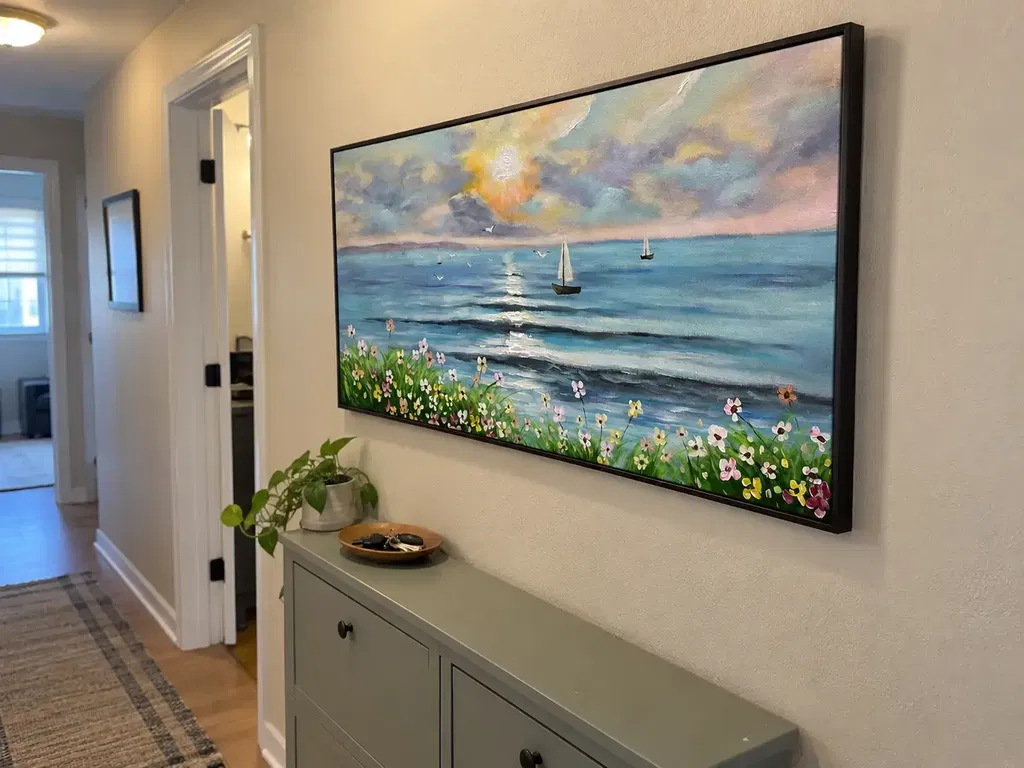
For consoles and entry benches, use the 1/3 to 2/5 rule: the artwork should occupy approximately 33% to 40% of the total wall space above the furniture. Anything less makes the art look like an afterthought; anything more makes the console look like a toy.

The Health and Safety of the "Camera-Ready" Room
While visual harmony is the priority for home improvers, the technical integrity of the materials is what ensures long-term social approval and safety. We often see clients concerned about the "smell" of new art, especially in nurseries or high-traffic living areas.
According to a 28-day chamber experiment by Aalto University, coatings on wood and canvas emit significantly lower toxic Volatile Organic Compounds (VOCs) once the curing process is complete. Furthermore, the EPA notes that low-VOC paints are a prerequisite for LEED and WELL certifications in healthcare facilities.
When we commission hand-painted works, we prioritize water-based acrylic emulsions. Unlike traditional oils, which may require toxic turpentine solvents that Princeton University warns can cause central nervous system neuropathy, modern acrylics are largely inert once cured. This makes them the "Designer's Choice" for high-traffic residential projects where air quality is paramount.
Biophilic Design: Beyond Just Decoration
Integrating art isn't just about height; it's about the psychological impact of the subject matter. A WHO scoping review of over 3,000 studies confirms that art interventions can effectively alter clinical indicators for mental health.
Specifically, "Biophilic Design"—using art that mimics natural landscapes and textures—has been shown to activate the medial prefrontal cortex (mPFC). A systematic review in PMC reveals that passive art viewing consistently optimizes emotional regulation circuits.
For a living room, choosing a large-scale acrylic with biophilic elements (abstracted nature, botanical textures, or earth tones) can reduce team cognitive fatigue and household stress. We recommend testing your placement with temporary paper mock-ups first. Because acrylic's surface interacts dynamically with light, a mock-up allows you to see how the "Biophilic Glow" changes from morning to evening before you commit to drilling holes for standoff bolts.
Authenticity vs. The Digital Replica
In a world saturated with AI-generated prints, performative authenticity—the ability to see real brushstrokes and physical relief—has become the ultimate luxury. Columbia University research confirms that consumers value art labeled as "human-created" 62% higher than AI-generated alternatives.
This value stems from what University of Chicago researchers call "essential identity." A digital print lacks the "soul" of the artist's hand. When you hang a hand-painted acrylic, you aren't just filling a gap above a sofa; you are investing in a non-renewable cultural heritage asset.
Furthermore, supporting real artists has a "catalytic effect" on the local economy. Data from Americans for the Arts shows that every dollar invested in the arts yields significant social ROI, including an 18% drop in serious crime in high-participation areas. By choosing made-to-order hand-painted décor, you are participating in a fair-trade ecosystem that supports the creative economy.

Practical Checklist for Installation
To ensure your living room feels balanced and professional, follow this step-by-step verification process:
- Identify the Focal Point: Sit in your primary seating position. Is the center of the art visible without straining your neck? (Optimal height: 52–55 inches for seated viewing).
- Measure the "Tether": Ensure the gap between the furniture top and art bottom is between 6 and 10 inches. If using standoffs, aim for the higher end of that range.
- Check the Width: The artwork should be approximately 2/3 the width of your sofa. If the art is acrylic, you can safely drop to 1/2 width due to the optical expansion effect.
- Audit the Lighting: Turn on your evening lights. If you see a bright white reflection "killing" the color, lower the piece by 2 inches.
- Verify Safety Labels: Ensure your art materials comply with ASTM D-4236 standards for chronic health hazard labeling.
The Path to a Harmonious Home
Hanging art is the final act of interior design—the moment where a house becomes a home. By moving away from rigid, outdated gallery rules and embracing the specific physics of the acrylic medium, you can create a space that is not only "camera-ready" but emotionally resonant.
Whether you are looking to zone a multi-use rental or simply want to balance textured art with minimalist decor, the key lies in the relationship between the brushstroke and the bench. When the heights are right, the art doesn't just sit on the wall; it lives in the room.
Disclaimer: This article is for informational purposes only and does not constitute professional interior design, architectural, or medical advice. Mounting large-scale artwork may require professional installation to ensure structural safety. Always consult a qualified contractor when installing heavy items or specialized hardware.
Sources
- Royal Society: Quantifying the link between art and property prices
- Columbia University: Human-Made vs. AI Art Perception
- UPenn: Visual Art in the Built Environment
- Aalto University: VOC Emissions from Painted Wood
- Getty Conservation Institute: Color Science and Pigment Mixture
- EPA: Indoor Air Quality and Low-VOC Paints
- Americans for the Arts: Impact of Arts in Our Communities