Triptych vs. Single: Navigating Narrow Hallway Constraints
The global art market is undergoing a fundamental shift. Recent data from Marketplace.org reveals that high-end auction sales plummeted 44% year-over-year in 2024, signaling a retreat from "vanity assets" toward art with real application value. For homeowners and interior designers, this value is found in the home—specifically in the challenging, high-traffic corridors we navigate daily.
When selecting large-scale art for a hallway, you face a classic engineering dilemma: the visual impact of a single, massive canvas versus the logistical flexibility of a triptych (three-panel) arrangement. While a single statement piece offers an uninterrupted narrative, the narrow confines of residential hallways introduce risks that go beyond aesthetics. From "pathway clearance" failures to visual distortion caused by tight viewing angles, the choice requires a balance of logistical feasibility and design precision.
The Engineering of the Entryway: Logistical Feasibility
The most common failure point for oversized art is not the quality of the brushwork, but the geometry of the building. We have observed through years of installation feedback that clients frequently order based on wall dimensions alone, neglecting the "maneuvering envelope" of their own homes.
The 3-Inch Pathway Heuristic
Before committing to a single large canvas, you must measure the narrowest passage point in your home—typically interior door frames, stairwell turns, or elevator doors. A reliable heuristic we use is to subtract at least 3 inches from the narrowest clearance point to account for hand placement and protective packaging.
If your hallway requires a 90-degree turn from a narrow vestibule, a single 72-inch canvas may be physically impossible to install without damaging the drywall or the artwork. In these scenarios, a triptych becomes the only viable high-impact solution.
Logic Summary: Pathway Clearance Modeling Our logistical analysis assumes standard residential door frames (30–36 inches) and a 90-degree turning radius.
- Modeling Type: Deterministic geometric constraint analysis.
- Boundary Condition: This model assumes the artwork is rigid and cannot be "flexed" (standard for heavy-duty stretcher bars).
| Parameter | Recommended Value | Unit | Rationale |
|---|---|---|---|
| Min. Doorway Clearance | Passage Width - 3 | Inches | Safety margin for hand-carry |
| Max. Single Panel Height | 84 | Inches | Standard elevator ceiling limit |
| Stairwell Pivot Space | Diagonal Width + 6 | Inches | Clearance for 90-degree rotation |
| Triptych Panel Gap | 1/8 of panel width | Ratio | Optimal compositional cohesion |
| Drywall Anchor Load | 5–10 | Lbs | Safety limit for non-stud mounting |
Triptych vs. Single: The Visual Integration Gap
The decision between one or three panels is often framed as a matter of taste, but in narrow spaces, it is an optical problem.
The Viewing Distance Constraint
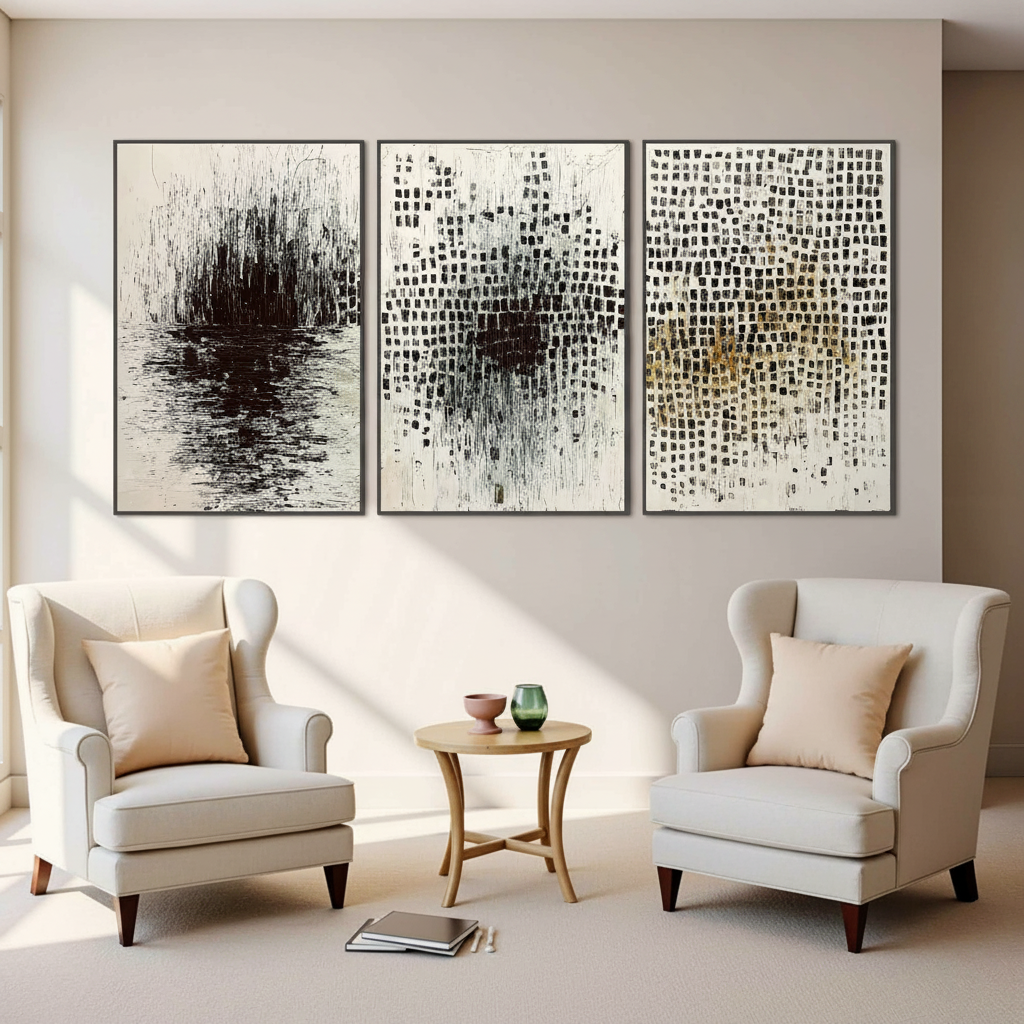
Conventional design wisdom suggests triptychs create a "bold impact." However, research into hallway print selection indicates that triptychs typically require a minimum viewing distance of 6 to 8 feet for the eye to integrate the three panels into a single cohesive composition.
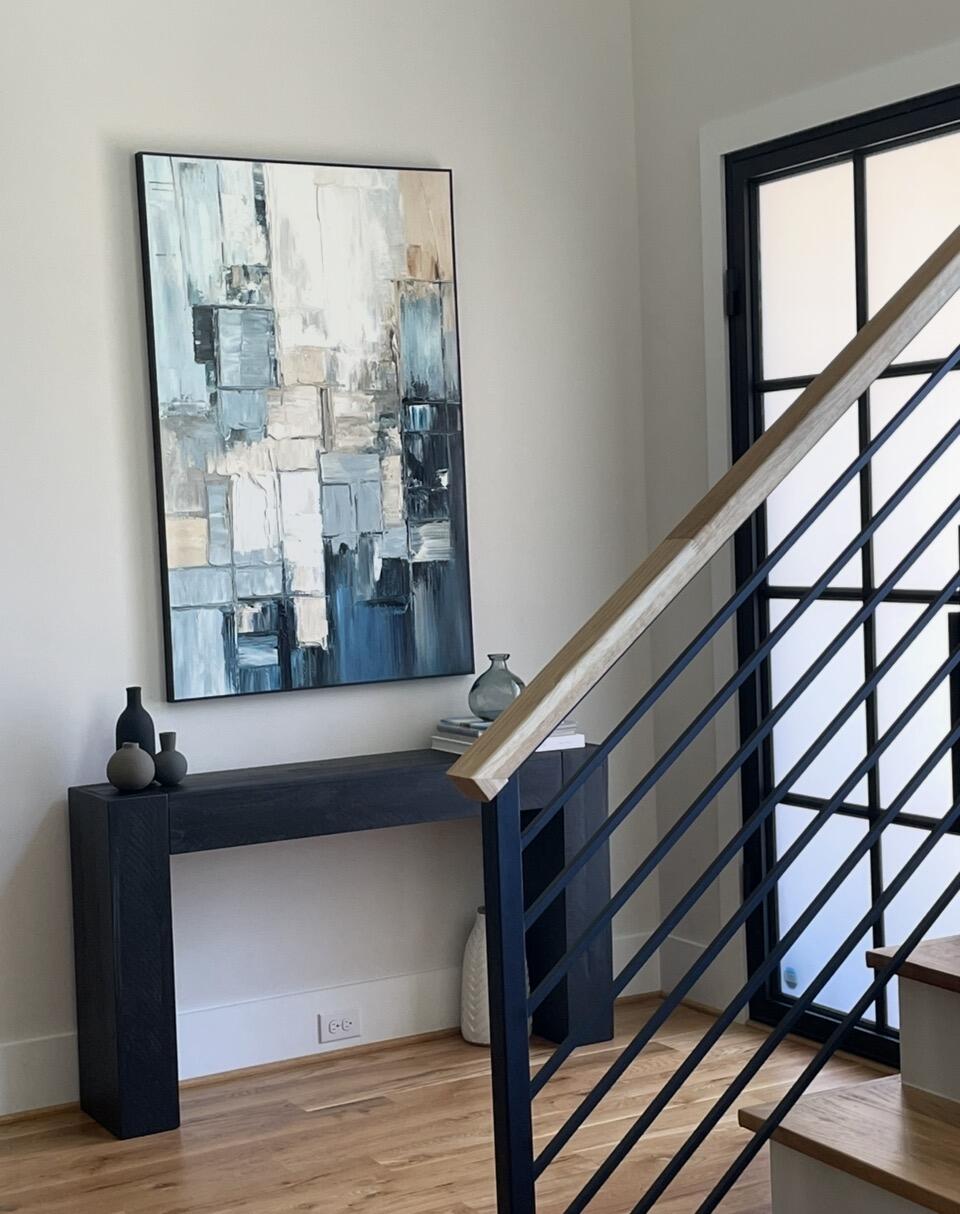
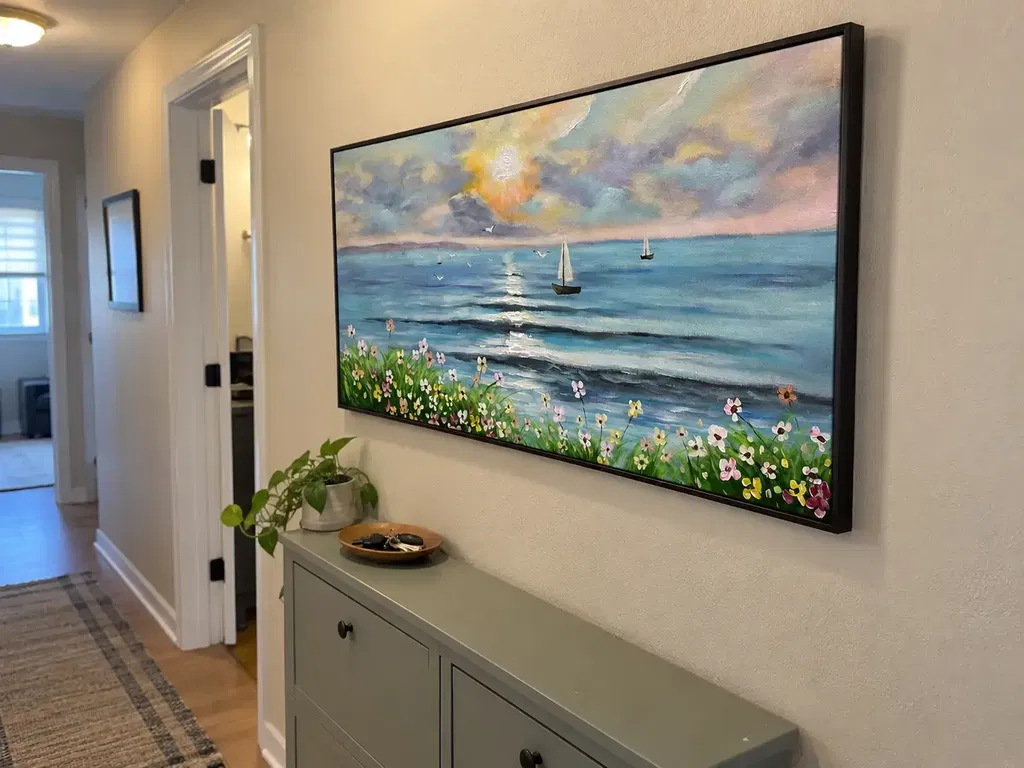
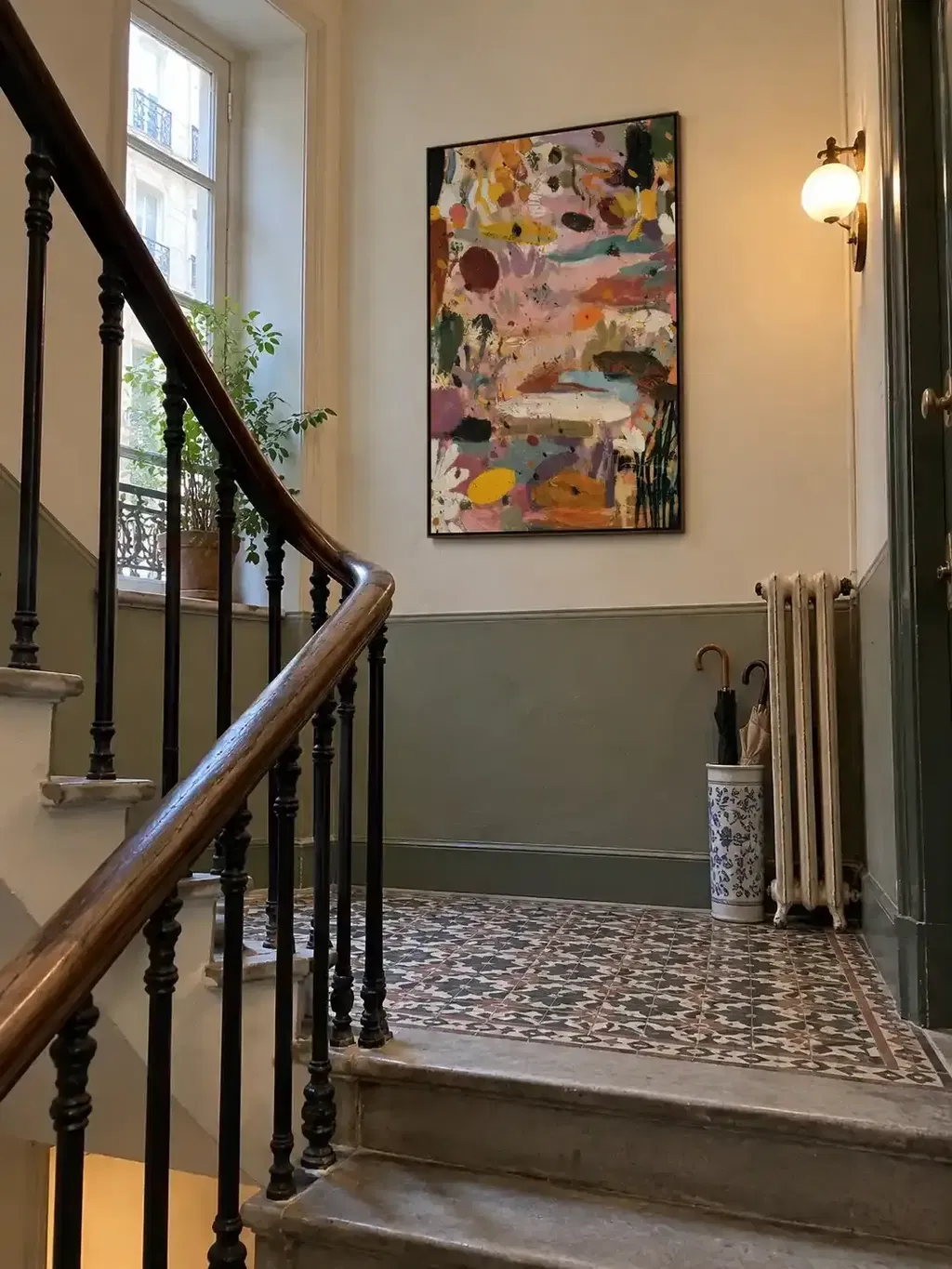
In a standard 3-to-4-foot-wide hallway, you cannot step back far enough to perceive the "whole." Instead, you experience the art as a series of fragmented views. A single, portrait-oriented canvas (ideally sized between 24x36 and 30x40 inches) is often more effective in these constrained environments because it aligns with the natural vertical scan of the human eye at close range.

Structural Integrity and Tension
For very large installations, a single canvas faces the risk of "sagging" over time. As discussed in our guide on Maximum Canvas Size Without Sagging, the tension on a massive frame can cause the wood to bow. A triptych mitigates this by distributing the weight and tension across three smaller, more stable frames.
Material Science: The "Soul" of Hand-Painted Art
In an era of AI-generated decor, the "essential identity" of a hand-painted piece has become a premium commodity. A study by Columbia University confirmed that consumers value art labeled as "human-created" 62% more than AI-generated equivalents. This isn't just sentiment; it is rooted in the physical microtopography of the paint.
The Physics of Texture
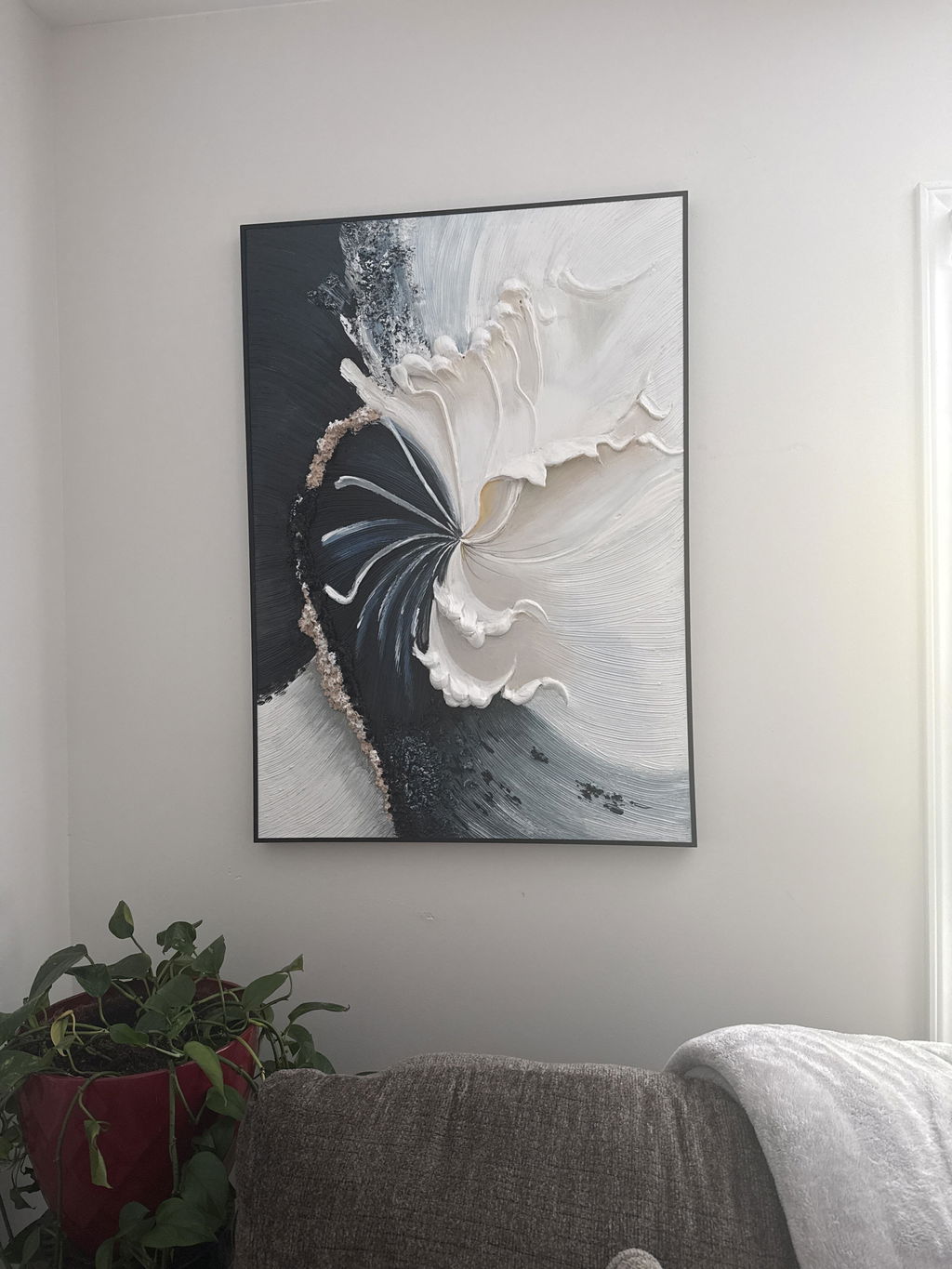
Optical microprofilometry proves that the millimeter-scale texture of oil and acrylic paintings is crucial to their aesthetic impact. According to research on 3D replicas, the way light scatters off physical brushstrokes creates a depth that flat prints cannot replicate. This is particularly important in hallways where lighting is often directional (from sconces or recessed cans), highlighting the "relief" of the paint.
Indoor Air Quality (IAQ) and Safety
Large-scale art covers a significant percentage of wall surface area, making paint chemistry a health consideration. The EPA warns that indoor air pollution can be more concentrated than outdoor air. For our clients, particularly in healthcare or maternal environments, we prioritize low-VOC (Volatile Organic Compound) acrylics.
Expertise Note: The "Haziness" Phenomenon We often receive inquiries about why acrylic paintings sometimes develop a white, cloudy film. According to Tate research, this is caused by PEG-type surfactants migrating to the surface during temperature or humidity fluctuations. Gently wiping the surface with a water-based swab—a technique validated by the Tate AXA Art Modern Paints Project—can remove these surfactants and restore clarity.
The Psychology of Space: Art as Public Health
Art in the home is more than decoration; it is an environmental intervention. A review by the University of Pennsylvania found that 73% of patients reported significant mood improvements when exposed to environmental artworks.
Biophilic Design in Corridors
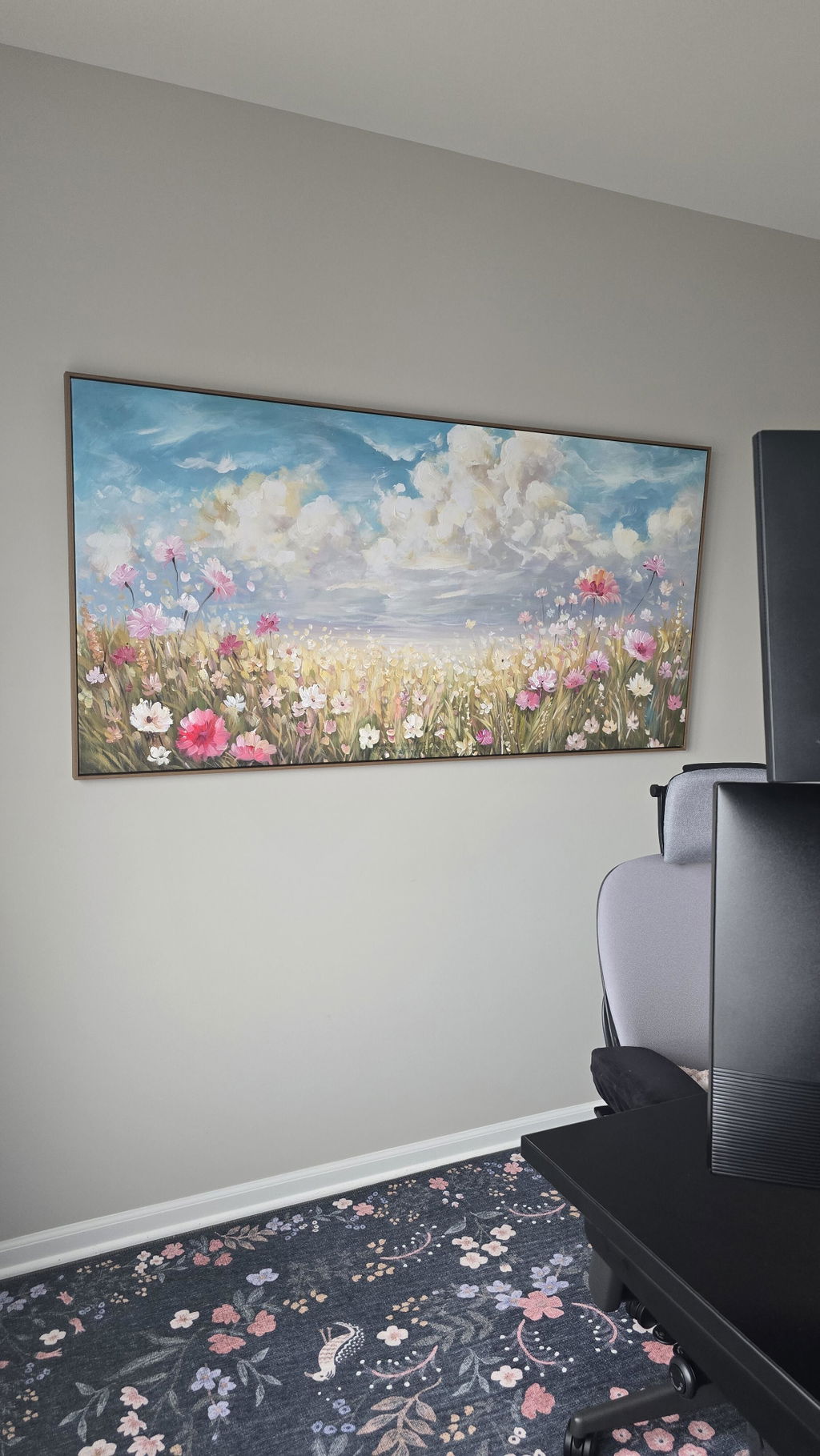
Hallways are often "dead zones"—windowless transitions that can feel claustrophobic. By utilizing "Biophilic Design"—art featuring natural landscapes—you can trigger the same stress-reduction effects in the brain as being outdoors. This is especially effective in corporate environments where nature-themed murals have been shown to reduce cognitive fatigue and burnout.

Investment Value and Property Impact
Commissioning original art is a strategic investment in real estate. Data analyzed by the Royal Society found a direct correlation between high "art" geo-tags and gains in local house price rankings.
The 2026 Artisan Trend
Current market trends are moving away from mass-produced minimalism. According to Zillow search data, mentions of "artisan craftsmanship" rose 21%, while interest in "custom framing" skyrocketed 329%. A hand-painted triptych or single canvas serves as a permanent physical billboard of quality, signaling to future buyers that the property has been curated, not just furnished.
Decision Checklist: Triptych vs. Single
To help you decide, we have synthesized our installation data into a practical decision framework:
| Factor | Choose a Single Canvas If... | Choose a Triptych If... |
|---|---|---|
| Hallway Width | > 5 feet (allows for better viewing angles) | < 4 feet (breaks up the visual "wall" effect) |
| Transport | You have a service elevator or wide stairwells | You have standard doors and tight corners |
| Wall Condition | You can hit at least two studs for a heavy load | You are limited to drywall anchors (distributes weight) |
| Lighting | Centered overhead lighting is available | You have multiple sconces that can light panels individually |
| Composition | You want a singular, immersive focal point | You want to create rhythm and movement |
A Note on Installation Precision
If you choose a triptych, precision is paramount. The standard spacing rule is to maintain a gap equal to roughly 1/8th of each panel's width. Too close, and the panels feel crowded; too wide, and the eye loses the compositional connection. For high-traffic hallways, we recommend using "security hangers" to prevent the panels from shifting when people walk by.
Summary of Best Practices
Navigating the constraints of a narrow hallway requires moving beyond aesthetic preference into the realm of spatial engineering.
- Measure the Path, Not Just the Wall: Ensure your single canvas can actually reach its destination.
- Respect the Viewing Distance: If you can't step back 6 feet, a single portrait-oriented piece is often more visually coherent than a fragmented triptych.
- Prioritize Human-Made Identity: The physical texture of hand-painted art provides a 62% value premium and superior light interaction compared to flat prints.
- Consider the "Curing" Timeline: As noted in our guide for Interior Designers on Curing Timelines, ensure the artwork is fully stabilized before installation in high-traffic zones where it might be bumped.
Whether you choose the singular power of a massive canvas or the rhythmic flexibility of a triptych, the goal is to transform a transitional corridor into a site of cognitive restoration and aesthetic value.
YMYL Disclaimer: This article is for informational purposes only. When installing heavy artwork, always consult a professional installer to ensure wall load capacities are respected. For information regarding paint toxicity or indoor air quality, please refer to official EPA or CDC guidelines.