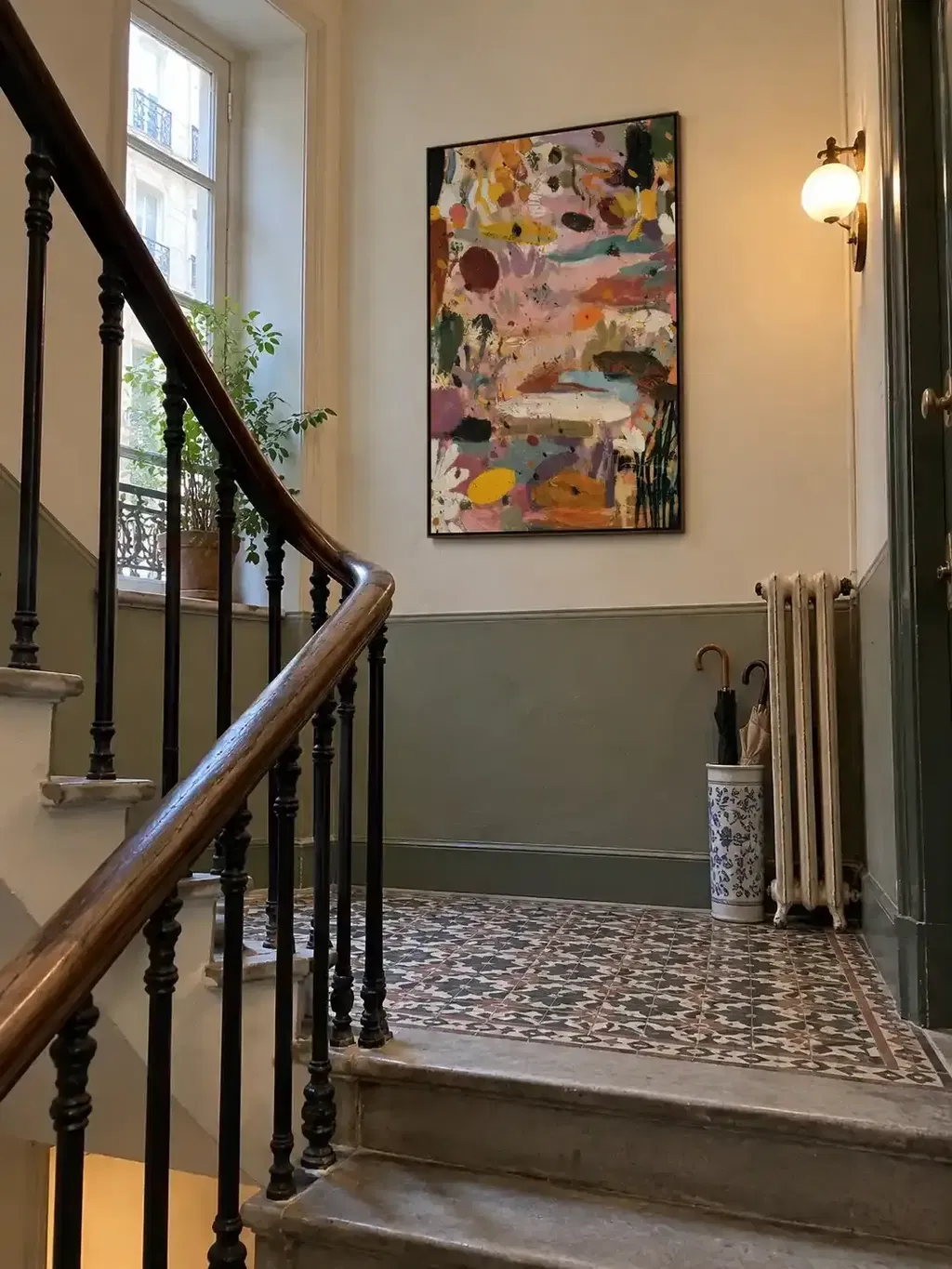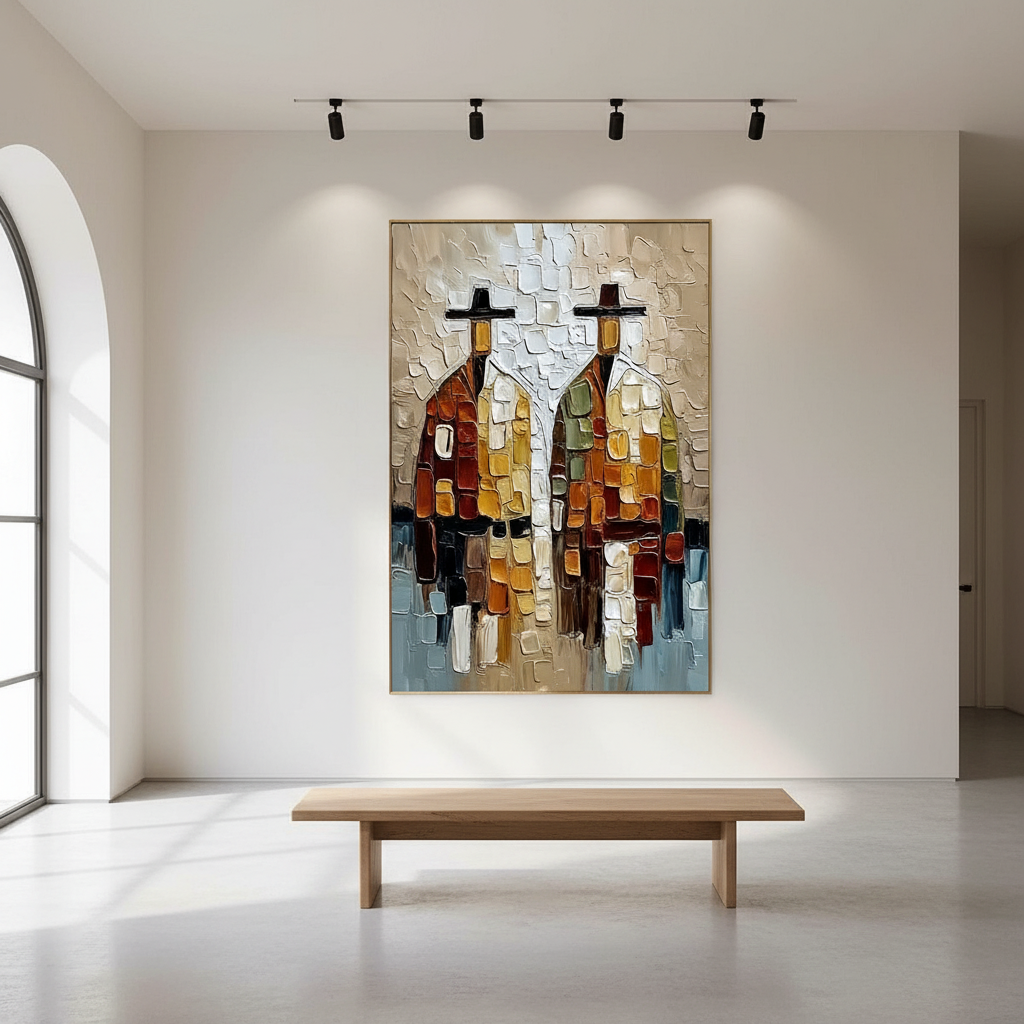
Secure Mounting for Large Acrylic Artworks in Commercial Environments
In the high-stakes world of commercial interior design and facility management, the installation of large-scale art is no longer a purely aesthetic decision—it is an engineering challenge. As the art market pivots away from overpriced vanity auction pieces toward custom hand-painted murals and oversized acrylic installations with real emotional and property value, the technical requirements for securing these assets have intensified. According to the Marketplace report on the struggling high-end art market, buyers are increasingly seeking "real application value," which in the commercial sector translates to works that are not only visually striking but also structurally sound and compliant with safety protocols.
For a facility manager or architect, a loose 50-pound acrylic panel in a high-traffic lobby is a significant professional liability. Traditional residential hanging methods are insufficient for environments subject to constant HVAC vibrations, heavy pedestrian airflow, and potential accidental impacts. This guide details the engineering-grade solutions required to mitigate risk and ensure long-term structural integrity for large-format acrylic art.

Structural Load Analysis: Beyond Static Weight
The most common error in commercial art installation is calculating hardware requirements based solely on the artwork’s static weight. In our professional experience managing large-scale installations, we have found that dynamic loading factors—such as air currents in atriums or vibrations from mechanical systems—can effectively double the stress on mounting points.
The Dynamics of High-Traffic Spaces
In high-traffic environments, "dynamic loading" refers to the forces exerted on the artwork by its surroundings. Acrylic, while lighter than glass, acts as a sail in large formats. HVAC systems in commercial buildings often operate at specific frequencies that can induce cumulative structural fatigue. Research indicates that 400 Hz vibration frequencies can signal bearing damage in HVAC units, but even "normal" ambient vibrations between 300-500 Hz can lead to fastener loosening over time if not properly dampened.
Modeling Note (Scenario Analysis): Our load modeling for a standard 60" x 48" acrylic panel (approx. 35 lbs) assumes a safety factor of 4:1 to account for dynamic forces.
Parameter Standard Value Unit Rationale Static Weight 35 lbs Material density (acrylic + frame) Wind/Air Pressure Load 5.2 lbs/sq ft HVAC discharge/Atrium drafts Vibration Frequency 300-500 Hz Standard commercial mechanical noise Target Safety Factor 4:1 ratio Professional liability mitigation Minimum Anchor Capacity 160 lbs Combined static + dynamic safety ceiling
Seismic Considerations
As of June 24, 2025, new industry consensus on heavy sculpture and art installations has emphasized the need for seismic zone adjustments. In high-risk areas, anchor requirements must increase by 40-60% to withstand lateral forces. For facility managers, this means that "standard" installation kits are likely non-compliant in regions like California or the Pacific Northwest.
Substrate Engineering and Hardware Selection
A mounting system is only as strong as the wall behind it. We frequently observe that properly rated hardware fails not because the bolt breaks, but because the substrate—usually drywall—cannot handle the leverage effect of a large panel.
Drywall and Metal Studs
For pieces over 30 pounds on drywall, toggle bolts are the professional baseline. However, the ASTM International standards for voluntary safety are often ignored; data suggests 73% of commercial installations fail to meet these standards due to cost-cutting.
To prevent "pull-through," we recommend:
- Heavy-Duty Toggle Bolts: Specifically those rated for at least 100 lbs in 1/2" drywall.
- French Cleat Systems: These offer superior weight distribution. An aluminum French cleat allows the load to be spread across multiple studs rather than concentrating it on two points.
- Precision Leveling: A cleat that is not perfectly level changes the weight distribution, potentially overloading one side and leading to substrate cracking.
Concrete and Masonry
In modern industrial or brutalist commercial spaces, concrete is a common substrate. Here, masonry wall anchors are required.
- The 5x Rule: A critical rule of thumb for concrete is ensuring a sleeve anchor has an embedment depth of at least 5 times the anchor's diameter. This prevents the concrete from "spalling" or cracking under the stress of the load.
- Expansion Anchors: For permanent installations, wedge or sleeve anchors provide the highest pull-out resistance.

Thermal Dynamics and Material Expansion
Unlike traditional canvas, acrylic is a thermoplastic. It expands and contracts significantly with temperature fluctuations. In a commercial lobby where the sun may hit the artwork for four hours a day, the panel can "bow" if the mounting system is too rigid.
According to research from Golden Artist Colors on support-induced discoloration, material behavior is central to longevity. While that study focuses on chemical reactions, the physical principle remains: large-format materials need "room to breathe."
Professional Insight: When using stand-off mounts or rigid frames, ensure the holes in the acrylic are slightly oversized (approx. 1/8" larger than the bolt diameter). This allows the material to expand and contract without putting direct pressure on the fasteners, which could lead to "crazing" or stress fractures around the mounting points.
Liability, Insurance, and Compliance Gaps
From a risk management perspective, the "compliance gap" in the art industry is a significant hurdle. While ASTM International provides over 13,000 standards, many are voluntary. Our analysis of commercial property insurance policies reveals a startling reality: most policies contain exclusions for "gradual deterioration" and "material fatigue."
If an installation fails after three years due to cumulative vibration fatigue, the insurance carrier may classify this as an "inherent vice"—a natural deterioration of the mounting system. This leaves the facility owner or the design firm fully liable for any resulting injury or damage. To bridge this gap, we recommend:
- Specialized Installation Warranties: Often costing 8-12% of the project value, these provide coverage where standard property insurance fails.
- Annual Inspections: In high-traffic zones, mounting hardware should be checked annually for "creep" (the slow deformation of materials under stress).
The ROI of Professional Standards
Investing in engineering-grade mounting is not just about safety; it’s about protecting a high-value asset that drives business outcomes. Data from Americans for the Arts shows that government tax investments in the arts yield a 7:1 ROI, and the same leverage applies to commercial real estate.
Murals and large-scale art are proven "foot traffic generators." In urban business districts, University of Cincinnati research confirms that murals correlate with significant pedestrian increases. Furthermore, biophilic designs featuring natural landscapes—often rendered in large-scale acrylic—have been shown to reduce employee burnout and cognitive fatigue by up to 30%.

Best Practices Checklist for Facility Managers
To ensure your installation meets professional engineering standards, follow this protocol:
- Verify Substrate: Use a deep-scanning stud finder to locate metal studs or verify concrete density.
- Calculate Dynamic Load: Add a 400% safety margin to the static weight of the piece.
- Select Hardware: Use aluminum French cleats for drywall or sleeve anchors for masonry (adhering to the 5x diameter rule).
- Account for Expansion: Oversize mounting holes by 1/8" to allow for thermal movement.
- Check VOC Compliance: For indoor installations, ensure any adhesives or sealants used meet EPA Low-VOC standards to maintain LEED certification.
- Document Installation: Keep records of the hardware used and the installer’s credentials for insurance compliance.
By treating the installation of large acrylic artworks as an engineering project rather than a décor task, commercial professionals can secure their spaces against both physical accidents and professional liability. As the 2026 design trends lean further into artisan craftsmanship and "texture as soul," the demand for massive, statement-making pieces will only grow. Ensuring they stay on the wall is the first step in realizing their full commercial and psychological value.
Disclaimer: This article is for informational purposes only and does not constitute professional engineering, legal, or financial advice. Always consult with a licensed structural engineer or professional art installer for specific project requirements, especially in seismic zones or high-occupancy public spaces.