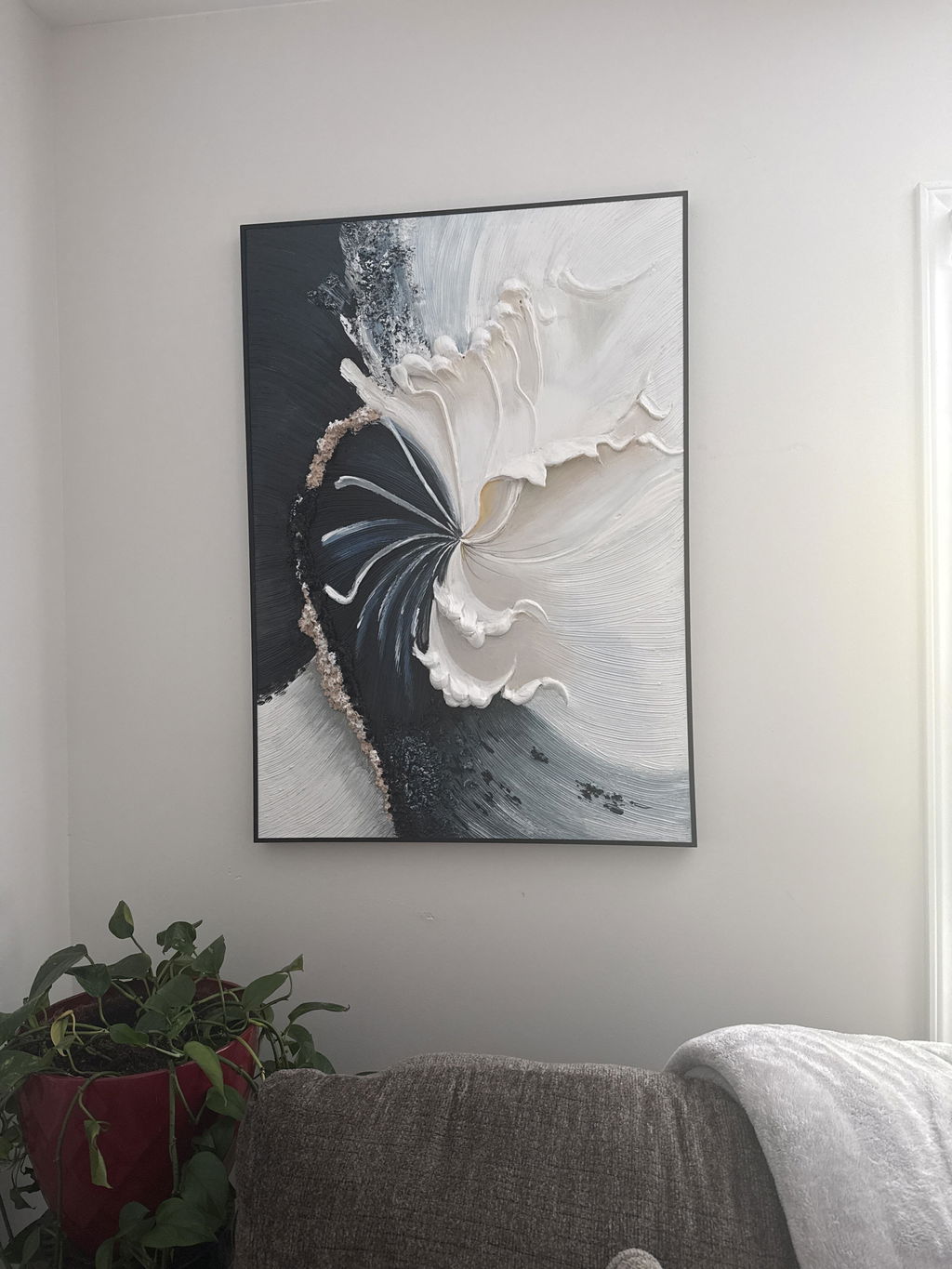
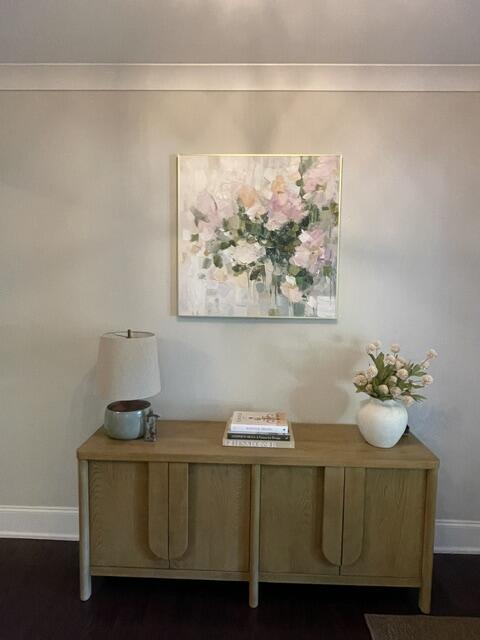
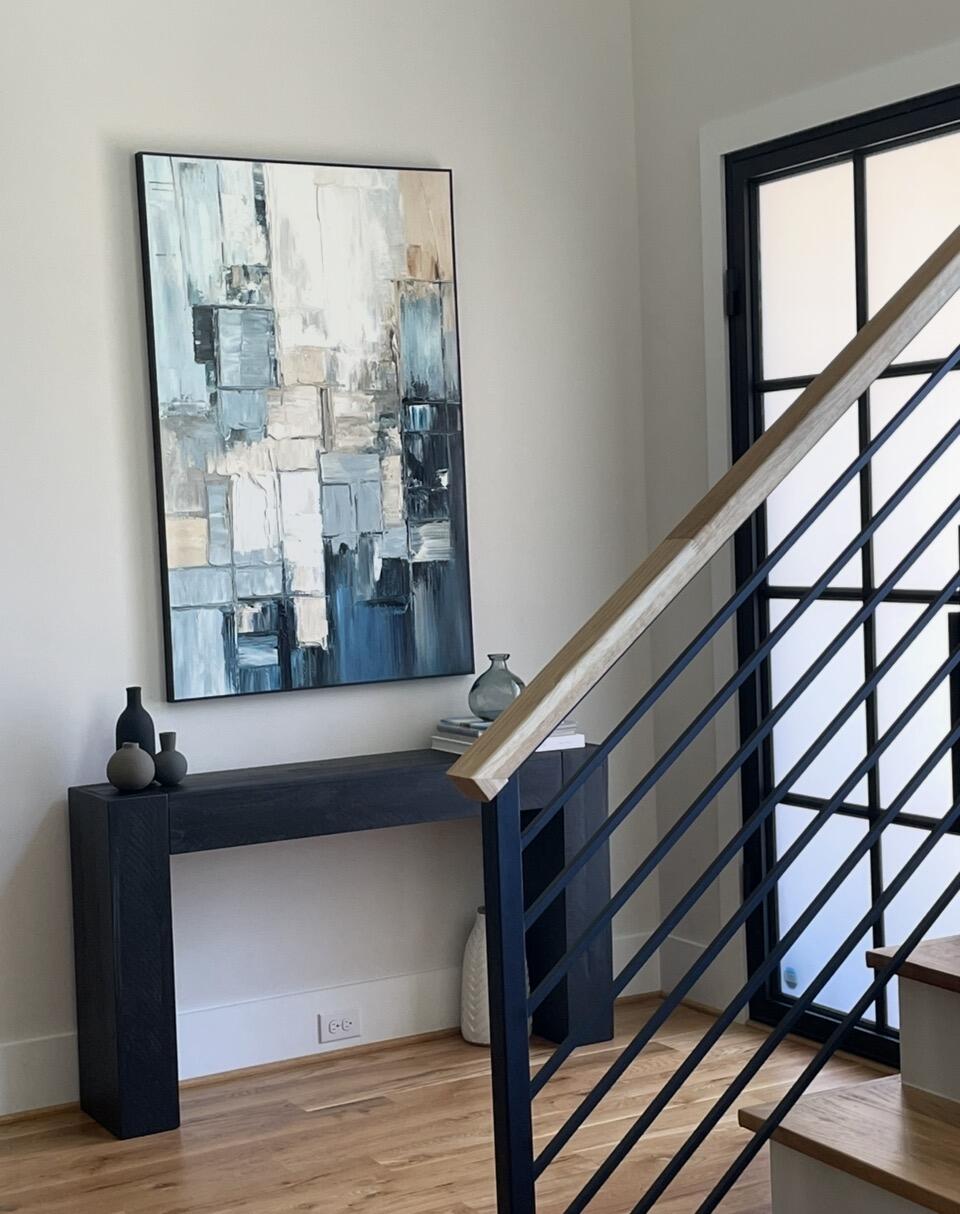
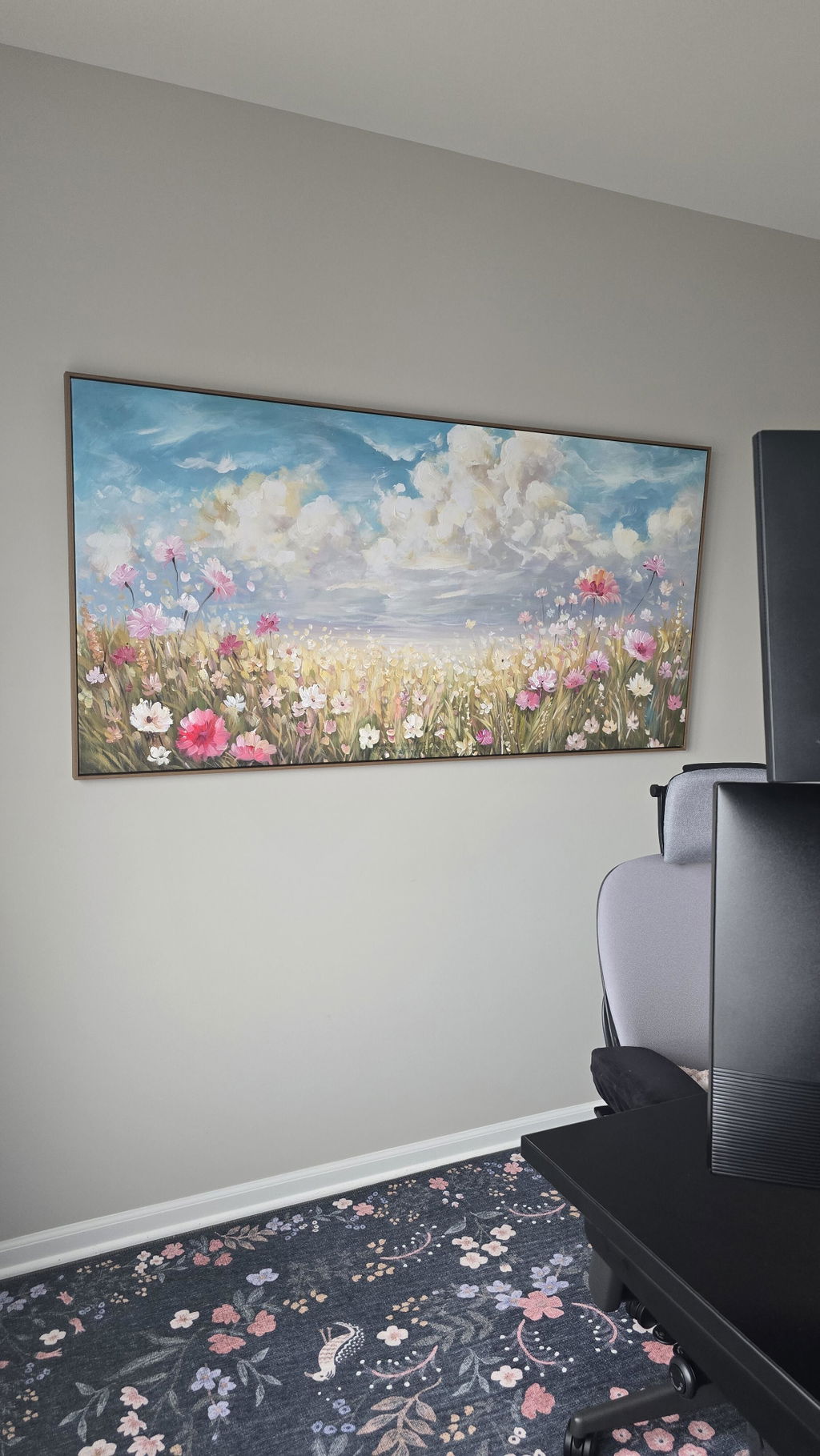
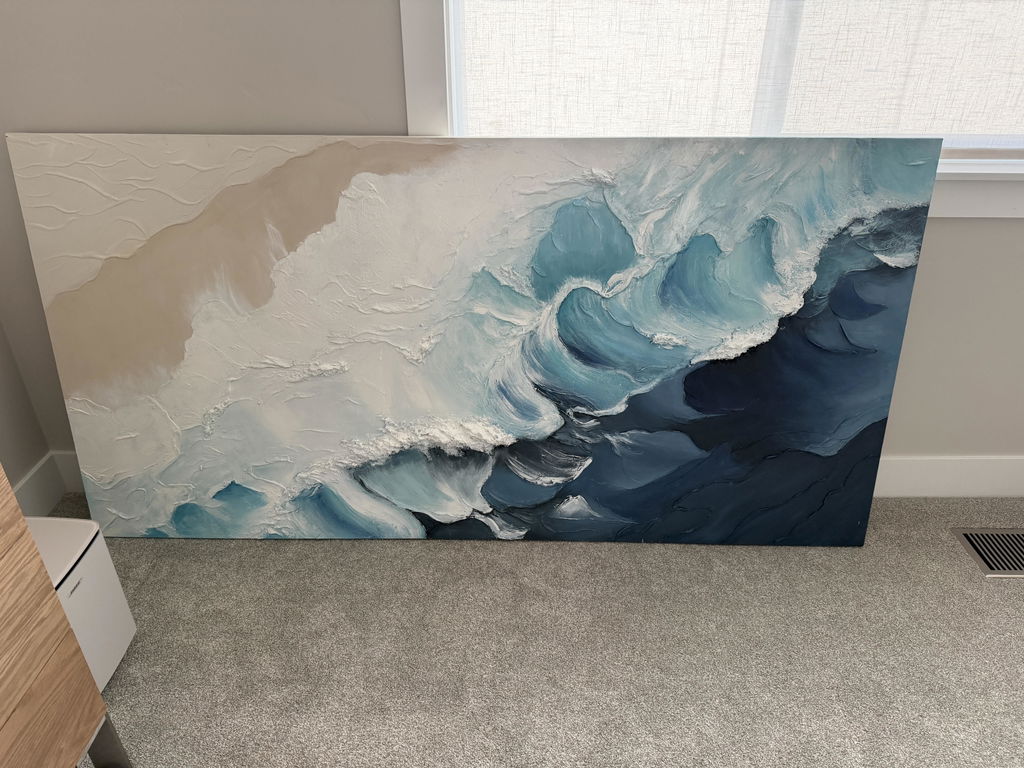
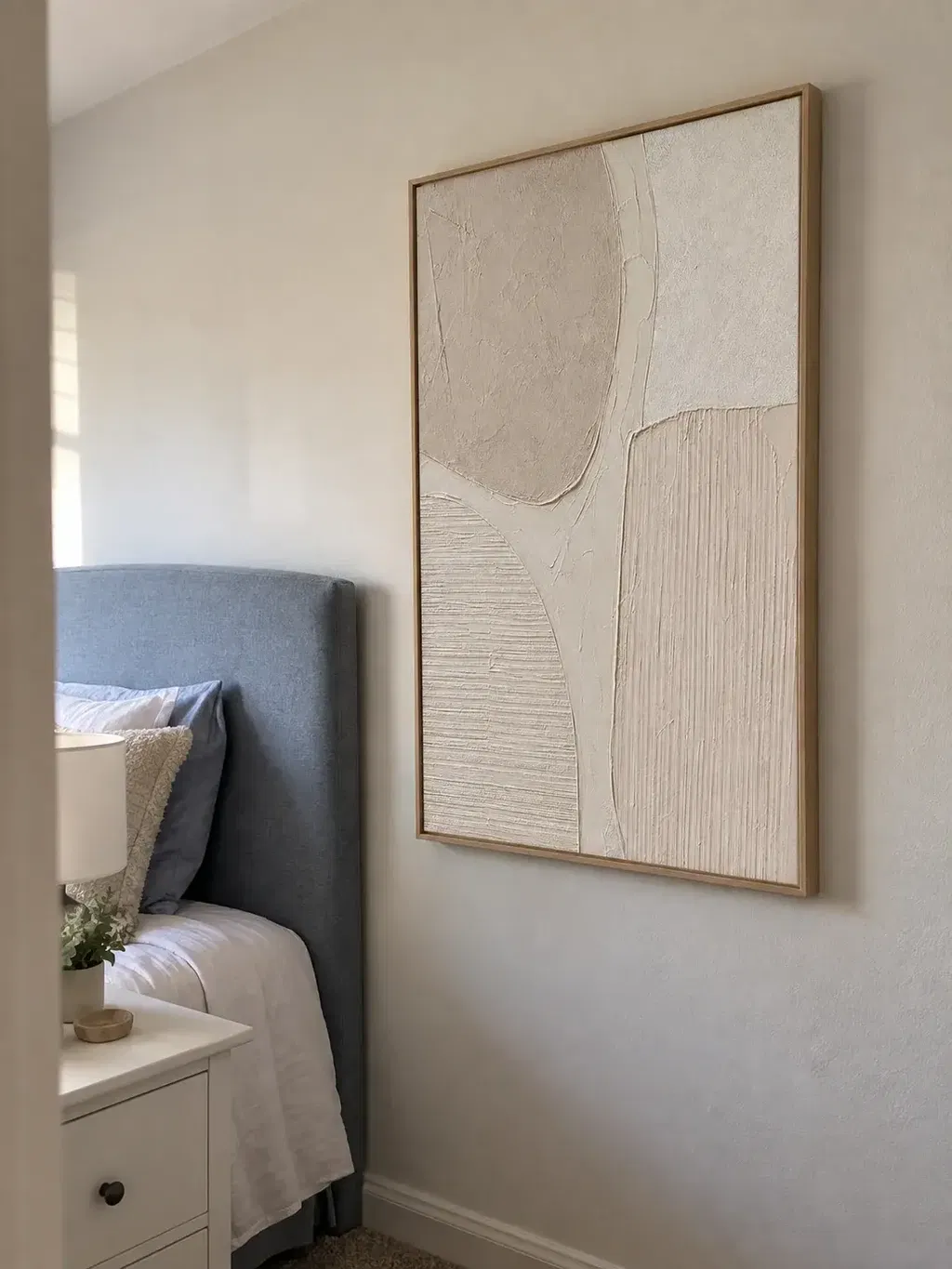
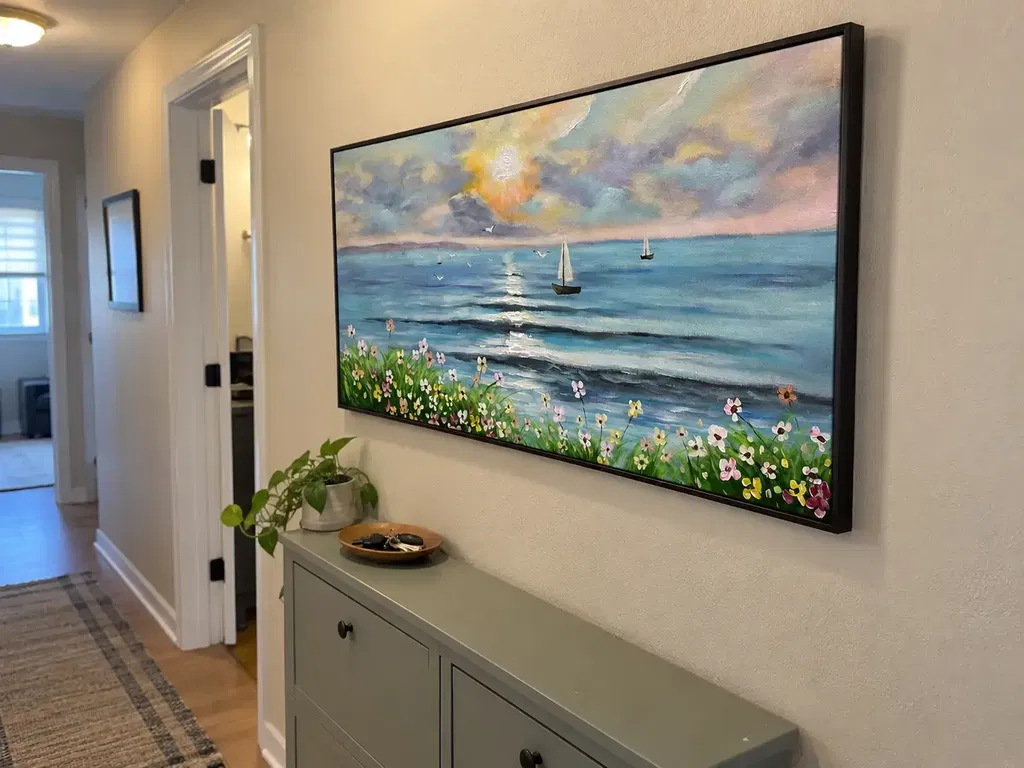
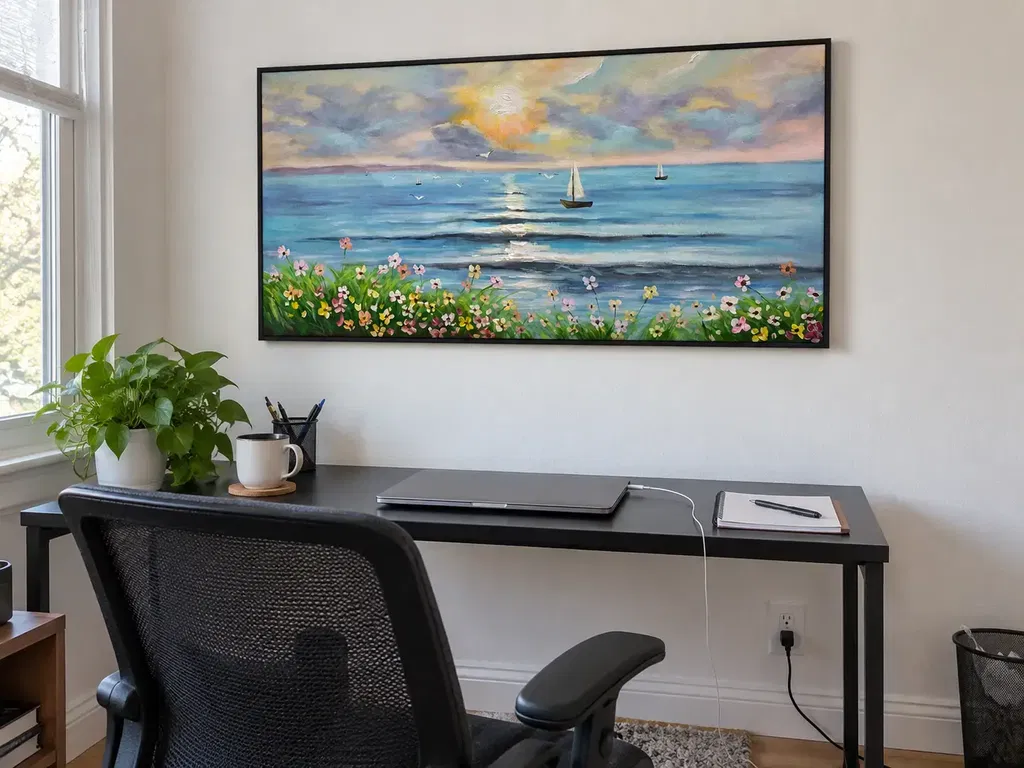
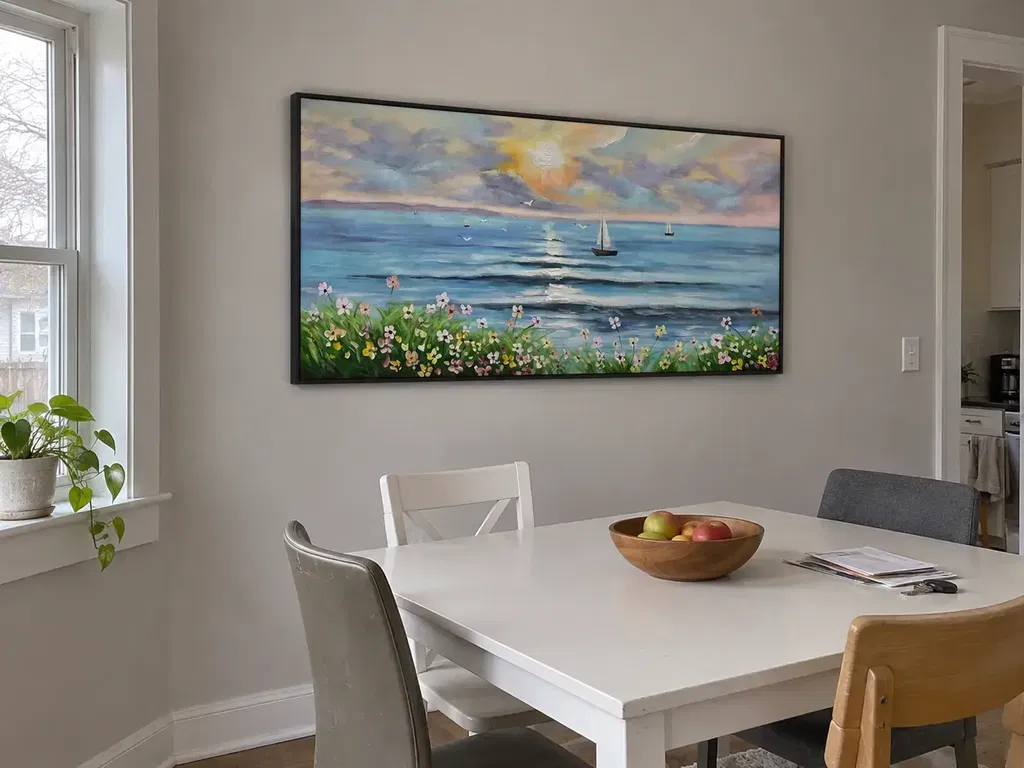
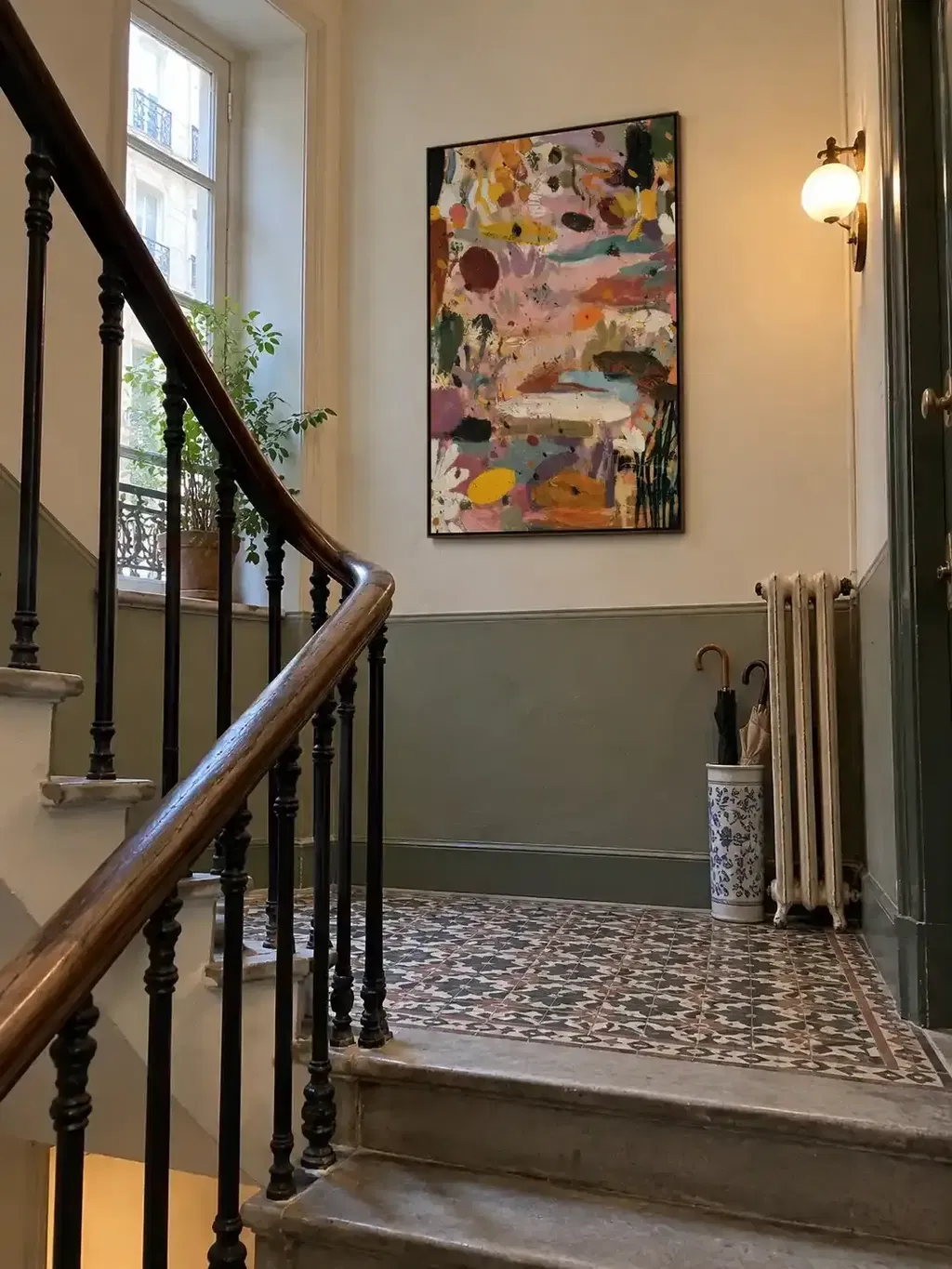
Textured art for new homes is often the missing layer that makes a room feel finished. In a new build or freshly renovated space, flat walls and clean finishes can look temporary until one strong piece adds warmth, depth, and a clear focal point. That effect starts with texture as a core design element, not with decoration for its own sake.
Why Blank Walls Feel Unfinished
Freshly painted walls can make a room feel more bare, not less. The space may already have good flooring, furniture, and lighting, but without visual depth it can still read as cold or underfinished.
Textured originals help because they add another layer for the eye to read. In practice, that means a room can feel warmer, more intentional, and less like you are waiting for the last piece to arrive. The goal is not to overpower the room. It is to give the room a finished point of focus.

That is why wall art for new construction home shoppers often look for more than color alone. Texture can make a large blank wall feel more grounded, while still staying calmer than a busy gallery wall.
Where Textured Art Fits Best
Textured art fits best where the room needs a visual anchor, not just another object. That is usually a living room, entryway, primary bedroom, or open-plan space with one wall that feels too empty to ignore. A well-chosen focal point during move-in helps the room feel organized before every other detail is finished.
New Construction Living Spaces
Open living rooms and great rooms usually benefit most from one larger piece. If the furniture is already neutral, the art can supply personality without adding clutter. This is often the right moment for textured art for new homes because the architecture is already doing the hard work, and the wall still needs one clear finishing move.
Renovated Rooms With Fresh Finishes
After a renovation, the room may feel polished but still incomplete. Fresh paint, new flooring, and updated trim can create a clean shell that still needs character. In that case, finish matching matters more than novelty. Choose wall art for a new construction home or renovated room that supports the new surfaces instead of competing with them.
Design-Forward Buyers and Home Stagers
If the space needs broad appeal, textured art can read more intentional than a flat print without becoming too personal. That makes it useful for staging, selling, or furnishing a room one step at a time. A good rule: if the room already has strong furniture or color, use the art to complete the look rather than introduce another loud idea.
How to Choose Scale, Color, and Style
Scale, color, and style work together. If one is off, the piece can look small, busy, or disconnected from the room. A practical sizing rule is to keep wall art roughly two-thirds to three-quarters the width of the furniture it anchors, which is a useful starting point for sofas, beds, and console tables art sized to furniture width.
| Room Condition | Best Scale Approach | Color Direction | Style Fit | Best Use Case |
|---|---|---|---|---|
| Open living room with tall blank wall | Lean larger so the piece holds the wall | Neutral, warm, or softly contrasted | Modern, transitional, abstract | One focal point behind the main seating zone |
| Entryway with limited wall space | Use a medium piece that reads fast | Calm palette with clear contrast | Minimal, organic, textural | First impression without crowding the passage |
| Primary bedroom | Proportion to the bed width first | Soft tones or restrained color | Quiet, soothing, balanced | A finished look without visual noise |
| Renovated family room | Match the new finishes before adding contrast | Pull from flooring, trim, or upholstery | Transitional or modern abstract | Tie the room together after updates |
Research on wall texture also suggests that texture can change how spacious a room feels, so the right piece can do more than add color. It can subtly shift perceived depth and openness texture changing perceived depth. That is helpful in new homes, where rooms can feel large but still visually flat.

For most buyers, the best test is simple: hold the art against the room's existing finishes. If the wall, trim, cabinetry, and upholstery already feel busy, keep the composition cleaner. If the room is quiet and neutral, texture can carry more of the visual work.
Placement Ideas That Finish the Room
Placement should make the piece feel integrated with the room, not tacked on as an afterthought. The strongest spots are usually above a sofa, on a main entry wall, or over a bed where one statement piece can define the zone.
Living Room and Great Room Focal Points
Above the sofa is usually the first place to check. A single larger piece often works better than several small ones because it matches the scale of the furniture and keeps the room from feeling scattered. If you are filling a large wall in a newly finished home, one confident piece often does more than a cluster of smaller works.
Entryways and Transitional Walls
Entry walls do a lot of first-impression work. Choose art that reads clearly from a few steps away and does not fight the traffic flow. If the home is still being furnished room by room, a textured piece here can make the whole space feel more deliberate even before every other room is finished.
Bedrooms, Fireplaces, and Viewing Height
Bedrooms usually call for quieter placement and more breathing room. If the art will be seen from a sofa or lounge chair, the seated perspective is more useful than a strict standing-height rule.
Fireplaces need room-specific judgment. Proportion, heat clearance, and mantel height all matter, so do not treat one universal height rule as the answer for every home. As a loose guide, many designers still use gallery-height placement, but it should be adjusted to the wall and the way people actually sit in the room.
Styles That Work in Finished Homes
Textured art is especially useful in modern, transitional, and minimalist spaces because it can soften hard finishes without making the room feel busy. Research also suggests texture can influence perceived spaciousness and depth, which helps explain why a textured piece often feels more dimensional than a flat print texture affecting perceived spaciousness.
Modern and transitional rooms usually benefit from abstract shapes, balanced palettes, and enough contrast to keep the wall from going flat. Minimalist and Wabi Sabi-leaning rooms often work best with quieter texture, softer edges, and restrained color. If the rest of the home is still settling in, calm neutrals and organic forms are usually easier to live with than a highly saturated statement piece.
The simplest style check is to look at the finishes you already have. Warm wood, cool stone, black hardware, and bright white trim each push the room in a slightly different direction. Choose the piece that repeats the dominant finish family instead of introducing a new one that has to fight for attention.
A Simple Buying Checklist
Before you add textured art for new homes to your cart, run one quick check on the room, the wall, and the care expectations.
- Pick the room that still feels unfinished, not just the one with the most empty wall.
- Measure the wall and the furniture it will sit above.
- Decide whether the piece needs to be the main focal point or a quieter support piece.
- Match the color temperature to the room's finishes, trim, and upholstery.
- Check the viewing height from the seat or standing position that matters most.
- Confirm that the texture level fits your care expectations, since heavier texture usually calls for gentler cleaning and more careful shipping.
If you want a faster next step, shortlist one room and one style direction, then browse the closest fit. For a clean modern look, start with modern textured square art. For a softer organic look, wabi sabi abstract art may fit better. If you want a nature-inspired focal point, textured landscape art is a useful path to check.
FAQs
How Do I Choose Textured Art for a New Home?
Start with the room that feels least finished, then choose scale before color. If the piece is going over furniture, aim for a width that feels proportional to the sofa, bed, or console. A good test is whether the art closes the visual gap without making the wall feel crowded.
What Rooms Usually Benefit Most From Textured Wall Art?
Living rooms, entryways, and primary bedrooms usually get the most value because they are the places where one strong focal point can finish the room fastest. Open-plan areas also benefit when the wall is large enough to make a small print look lost.
Can Textured Art Work in a Minimalist Interior?
Yes, if the composition stays restrained. The best minimalist fit usually uses fewer colors, simpler shapes, and texture as the main detail rather than extra decoration. If the room already has a lot of visual movement, keep the art quieter so it adds warmth instead of clutter.
Why Does a New Build Feel Empty Even When It Is Furnished?
Furniture fills the function of the room, but art often finishes the visual structure. In new construction, the shell can be complete while the room still lacks depth, contrast, and a clear focal point. That is why blank walls can feel unfinished even after the sofa and rug are in place.
What Should I Check Before Hanging Large Textured Art?
Check wall width, furniture width, and the viewing position first. Then make sure the piece can read clearly from the spot where people actually sit or walk through the room. If the wall is above a fireplace or behind a sofa, proportion matters more than filling every inch of space.