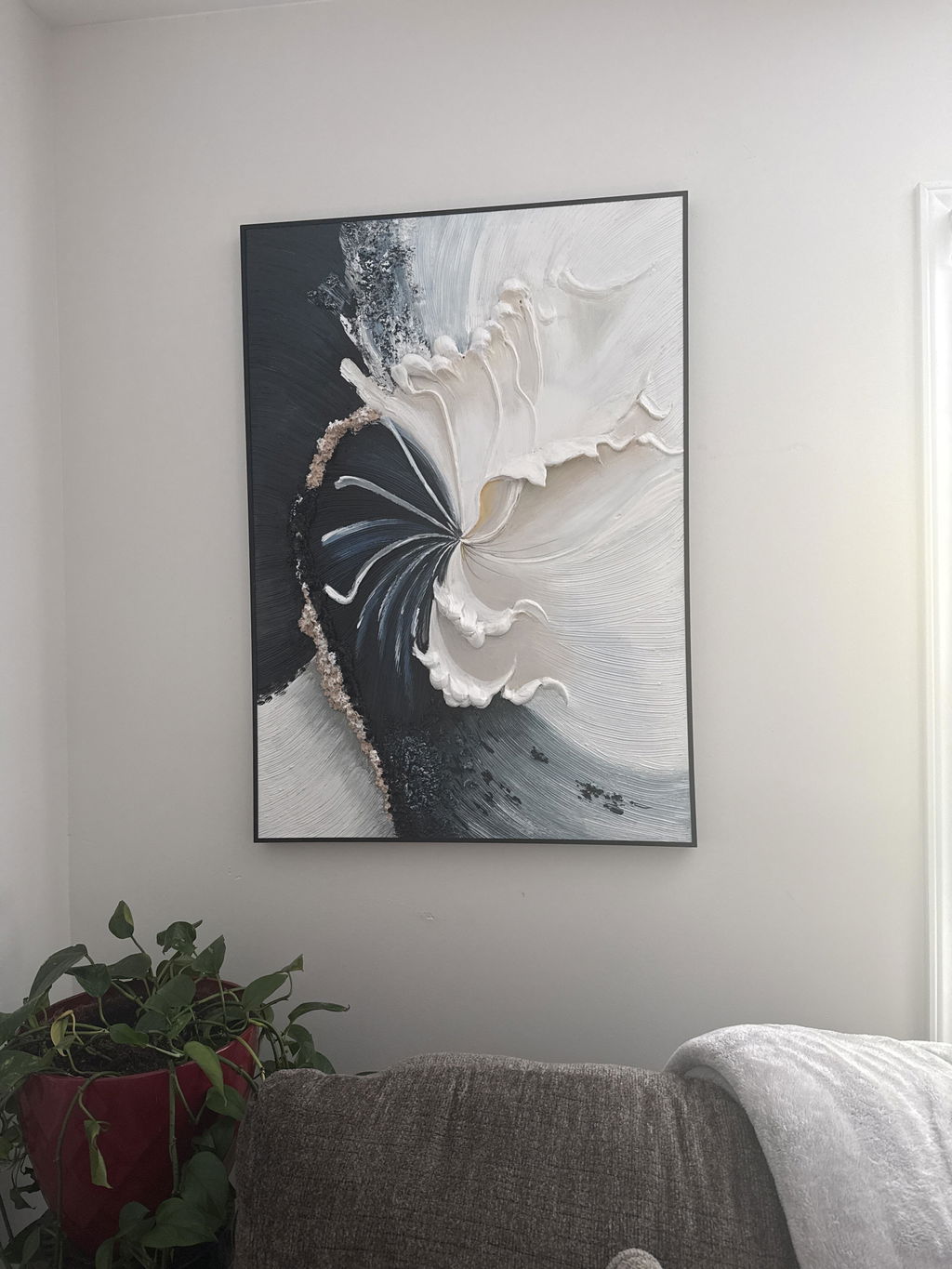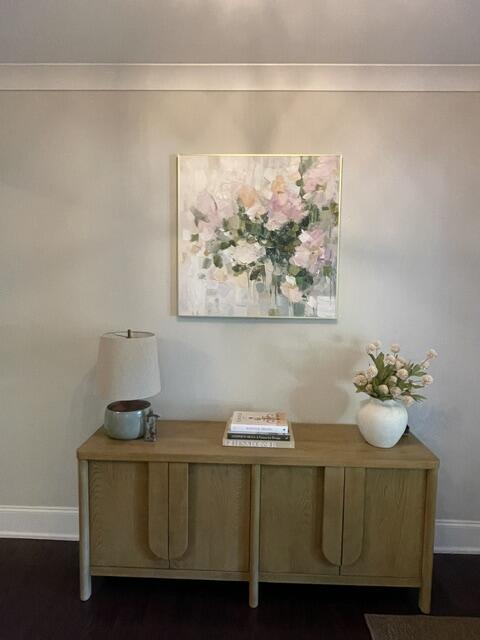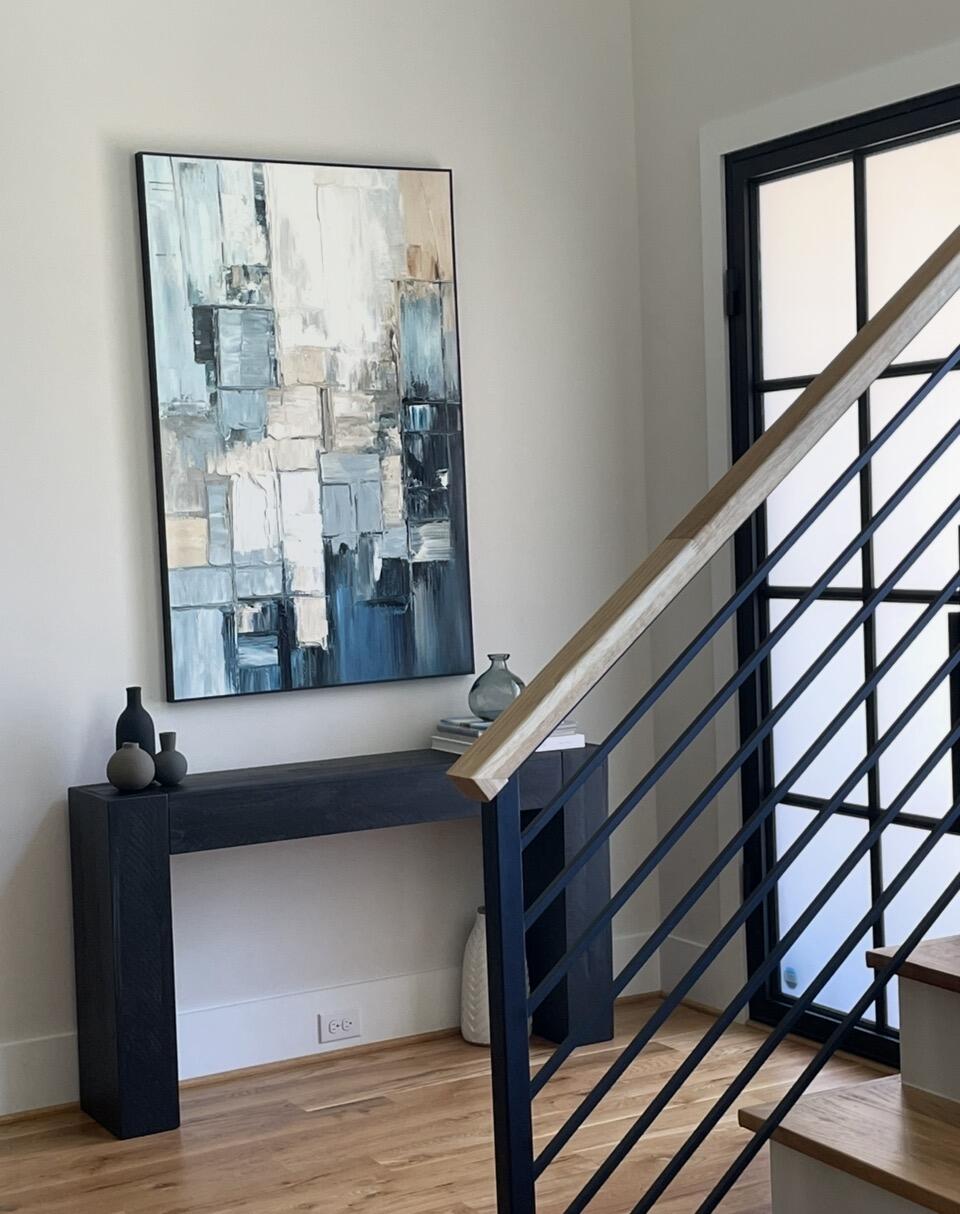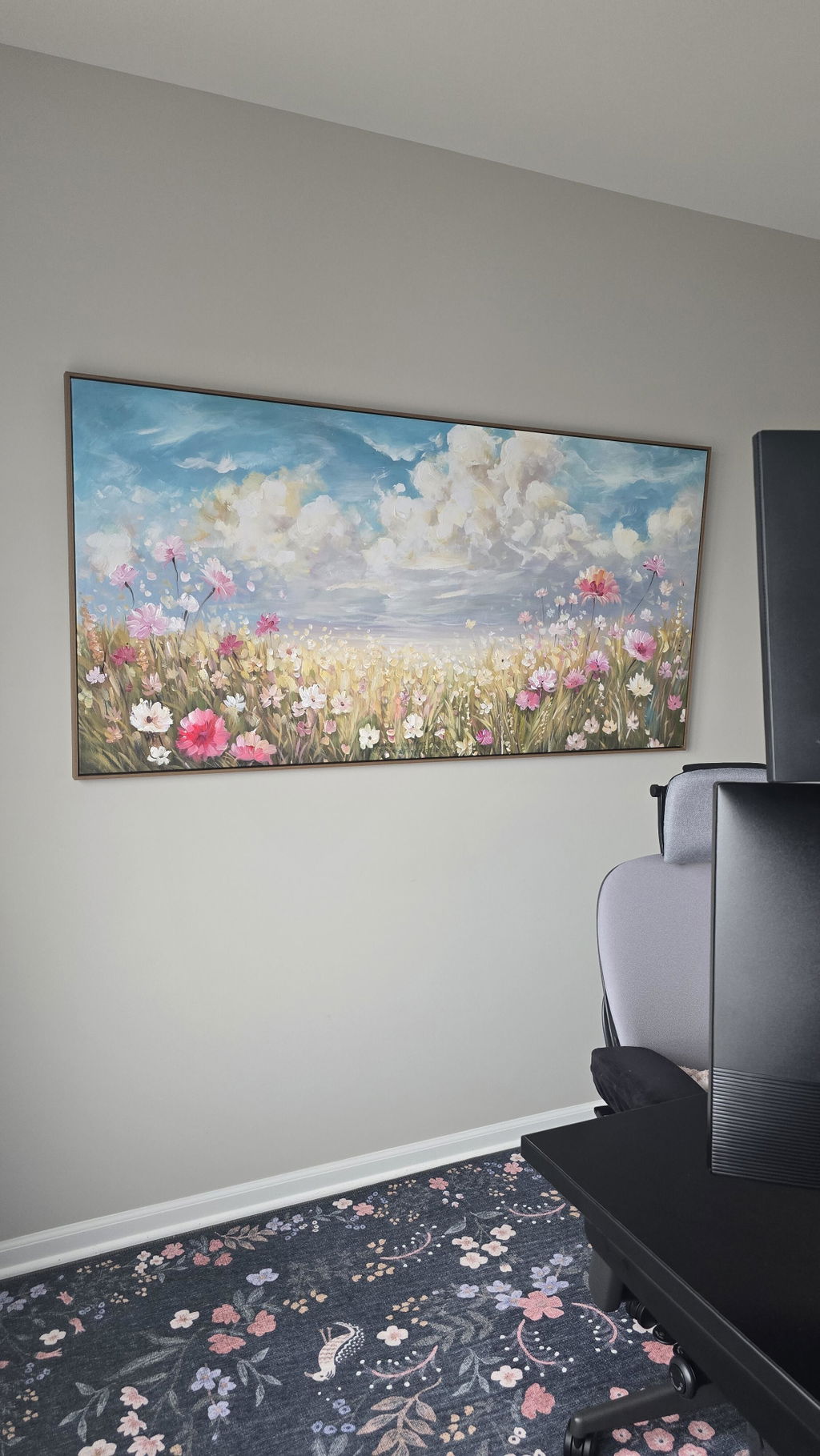
When choosing a new centerpiece for your home, the decision often comes down to a fundamental choice of finish: the bold, tactile energy of textured wall art or the serene, polished precision of smooth canvas. While both styles fall under the umbrella of modern abstract art, they interact with your room’s environment in vastly different ways.
The short answer? Choose textured abstract art if you want a high-energy focal point that changes with the light and adds "visual weight" to a large room. Choose smooth canvas art if you prefer a meditative, minimalist vibe, or if the piece will be placed in a high-traffic area where durability and easy cleaning are priorities.
The Quick Guide: Key Differences at a Glance
For those making a quick decision, the following table summarizes how surface topography influences the look and feel of a piece within your interior design.
| Feature | Textured Abstract Art | Smooth Canvas Art |
|---|---|---|
| Visual Vibe | Energetic, raw, and high-impact | Serene, polished, and meditative |
| Ideal Lighting | Directional or side-lighting (creates shadows) | Diffuse, soft, or uniform ambient light |
| Visual Weight | Heavy; commands attention as a focal point | Lighter; blends into minimalist surroundings |
| Maintenance | Higher; ridges can trap dust and debris | Lower; smooth surface is easier to wipe |
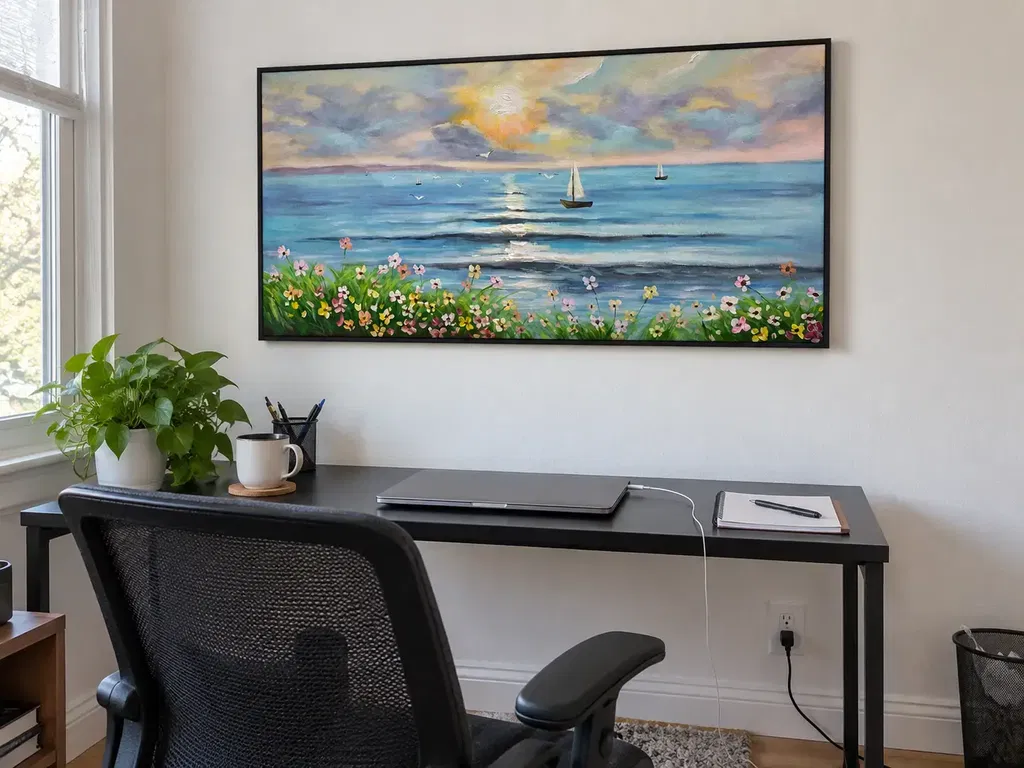
| Best Room | Living rooms, foyers, or industrial lofts | Bedrooms, nurseries, or home offices |
Visual Impact and Room Energy: Setting the Tone with Surface Depth

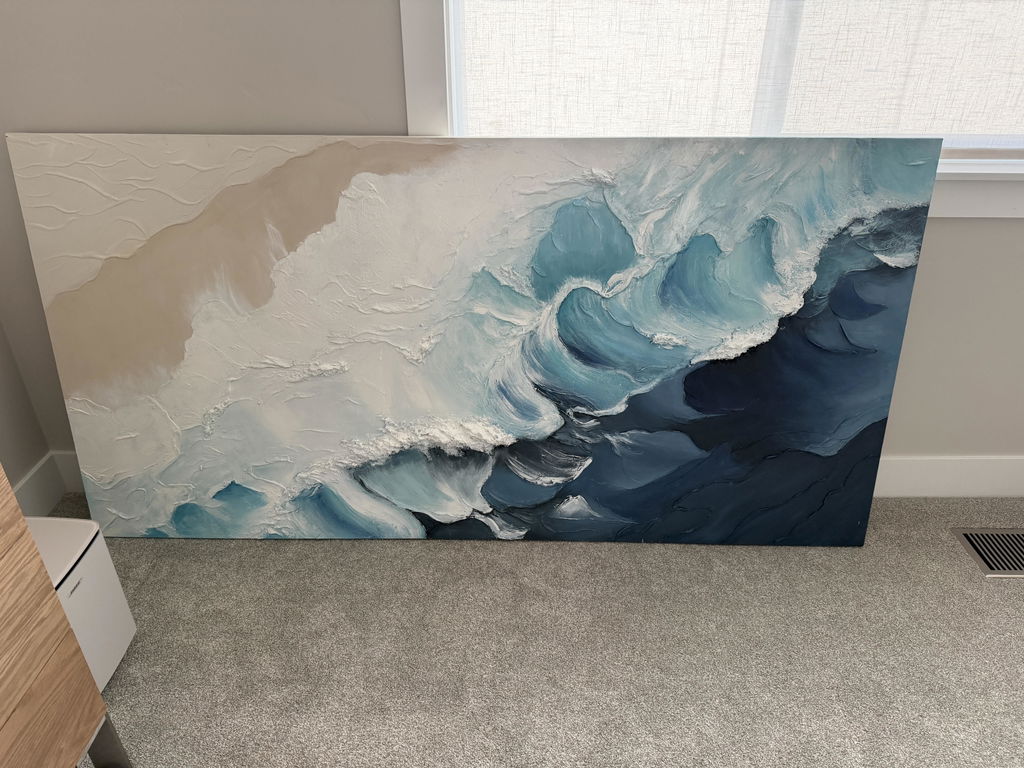
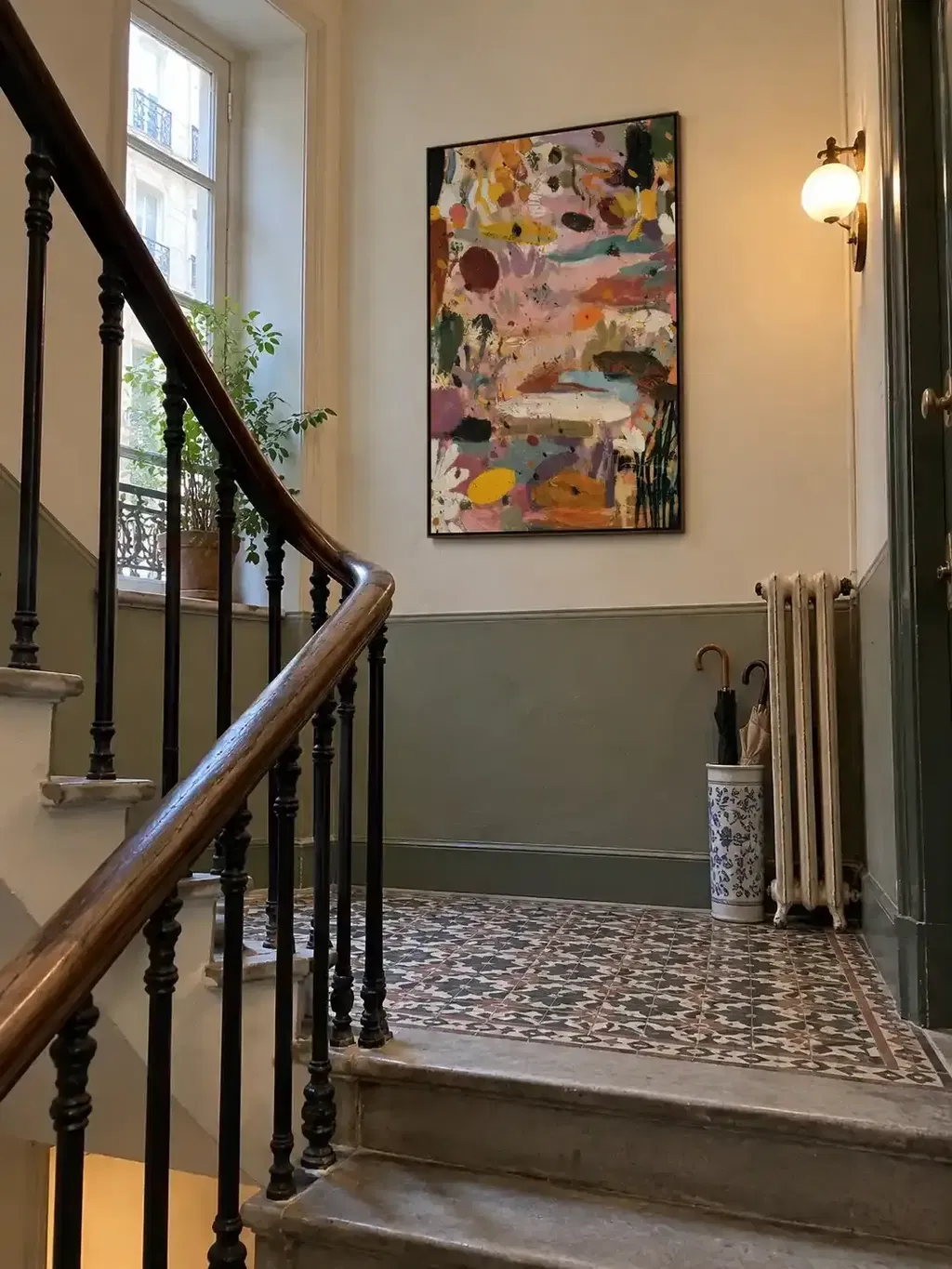
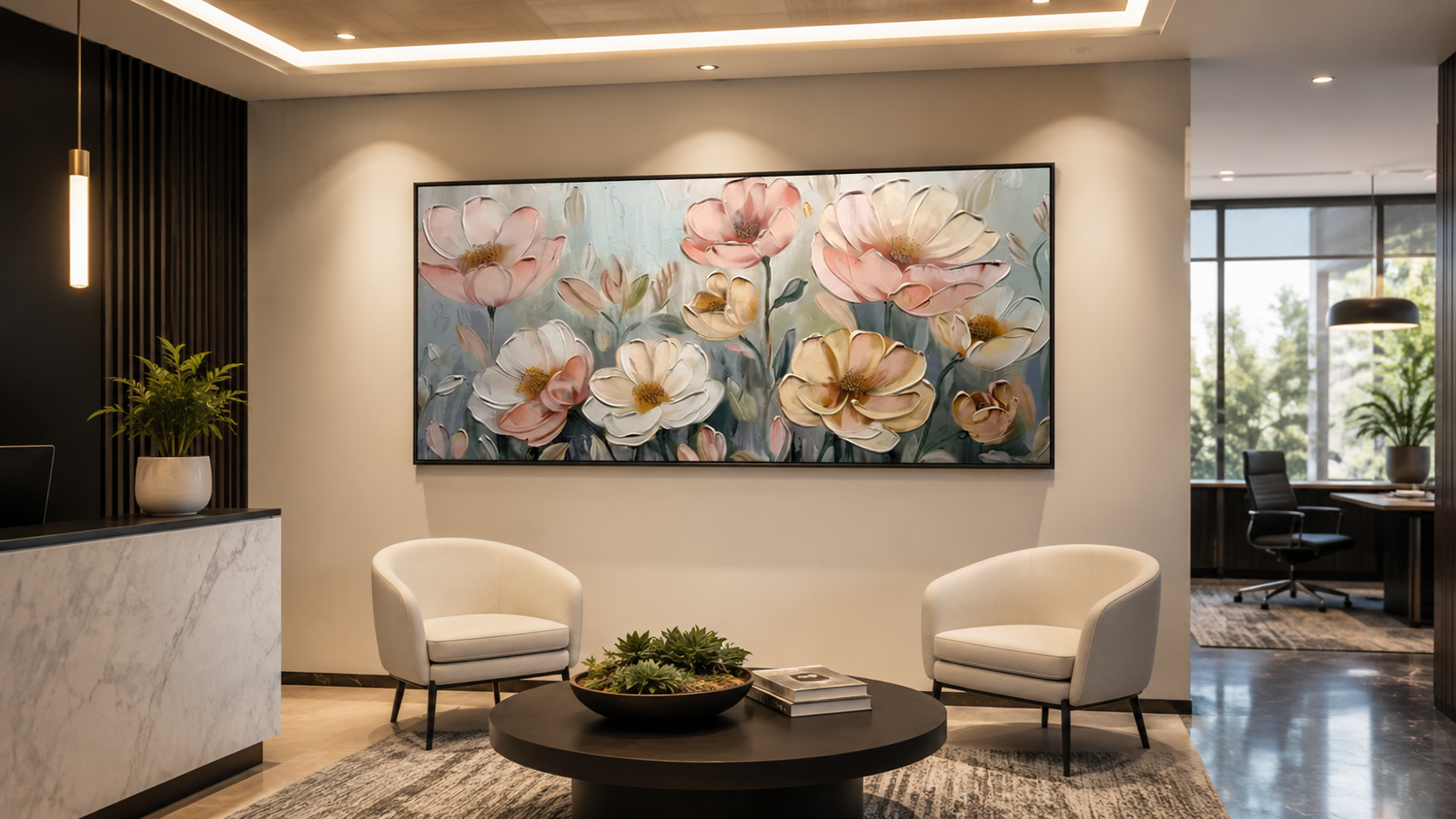
The surface of a painting does more than just hold color; it dictates the "room energy." Textured pieces often utilize an impasto technique, where paint is applied so thickly that it stands out from the surface. This creates a 3D effect that gives the artwork significant visual weight. In interior design, visual weight refers to the ability of an object to draw the eye. A large 3d textured painting created with a palette knife or modeling paste feels substantial and anchored, making it an excellent choice for spacious industrial lofts or rooms with high ceilings where a flat image might feel "lost."
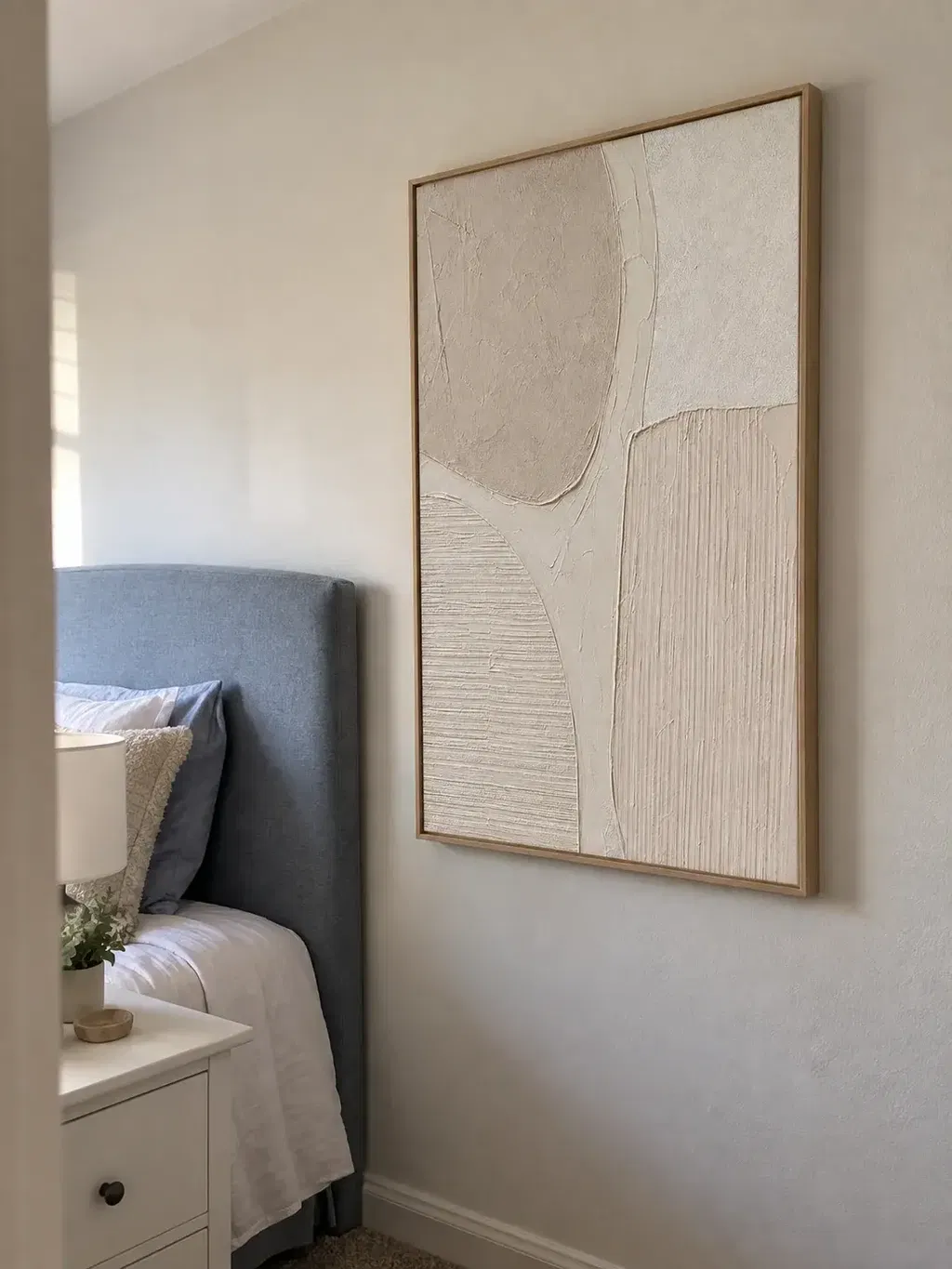
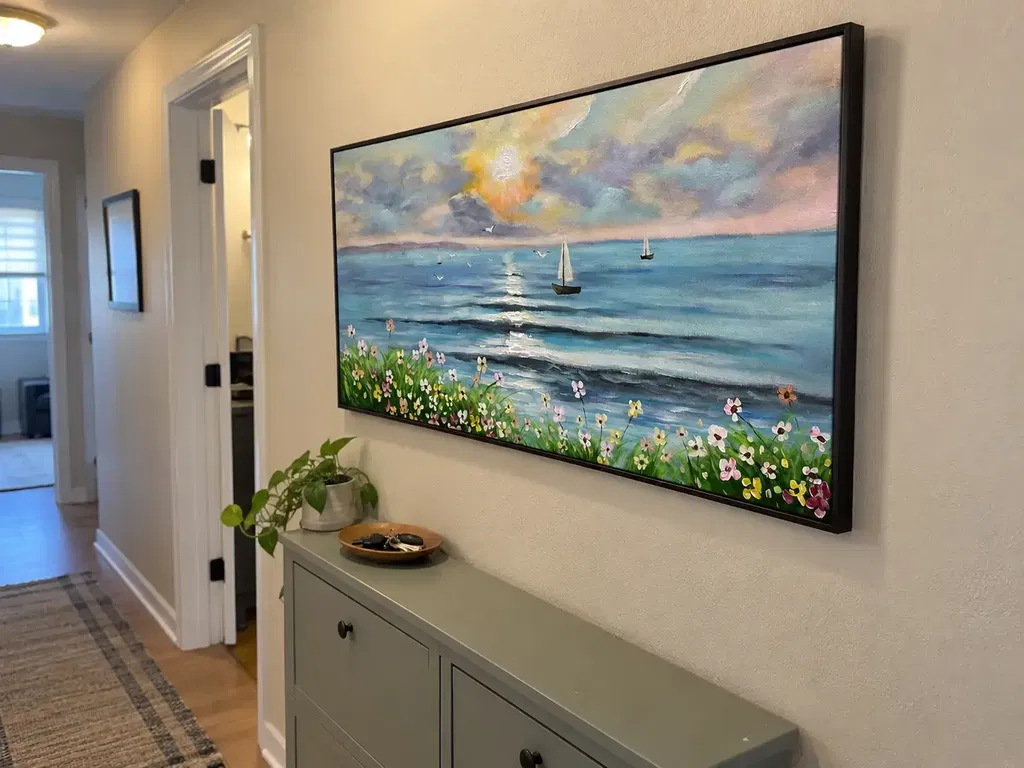
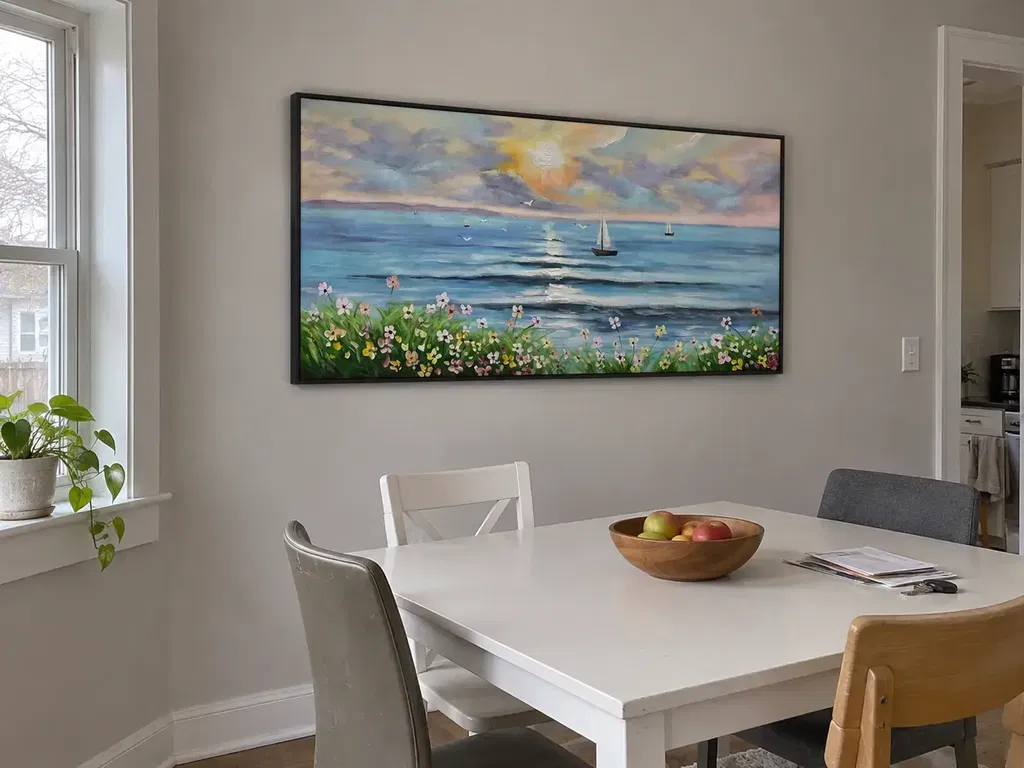
In contrast, smooth canvas wall art relies on the mastery of blending and color theory rather than physical depth. These pieces often use fine-grade weaves—frequently referred to as portrait-grade—to ensure that the texture of the fabric itself does not interfere with the artist's gradients. This style supports a minimalist aesthetic, offering a window-like quality that feels expansive rather than heavy. For a small apartment or a room already filled with complex furniture patterns, a smooth abstract piece provides a necessary visual rest, preventing the space from feeling cluttered.
Psychologically, the rougher surfaces of textured art can evoke feelings of raw emotion or organic chaos, whereas smooth surfaces are often associated with calm and sophisticated order. When selecting a large abstract painting for a shared space, consider whether you want the room to feel like a high-energy gallery or a quiet sanctuary.
The Role of Lighting: Highlighting Depth vs. Reducing Surface Glare
Lighting is the single most important environmental factor for artwork. Because textured art features physical topography, it interacts dynamically with light. When light hits the ridges of an impasto piece from the side, it casts small shadows that emphasize the artist's gestures. This creates a "living" piece of art that looks different at 10:00 AM than it does at 6:00 PM.
However, this 3D quality can be a double-edged sword. If a room has poor light placement—such as a single recessed light directly above the piece—the heavy textures may cast long, distracting shadows that obscure the colors. To maximize the impact of texture, controlled illumination at museum-light levels is often recommended, as it prevents light damage while allowing the depth to pop. For the best results, use adjustable spotlights directed at an angle toward the canvas.
Smooth canvas art is much more forgiving in varying light conditions. Because the surface is flat, it handles soft, uniform ambient light effectively. You won't have to worry about unwanted shadows breaking up a delicate color transition. However, smooth surfaces can be prone to glare if they have a high-gloss varnish. If your room has many windows, a matte smooth finish is often the better choice to ensure the artwork remains visible from all angles without reflecting the outdoors.
Maintenance and Longevity: The Practicalities of Owning Textured Pieces
Before you purchase, consider the reality of long-term care. Textured surfaces are essentially "dust traps." The crevices created by heavy acrylics or modeling paste can collect airborne particles over time. According to the Canadian Conservation Institute (CCI), keeping unprotected paintings away from air intakes and fireplaces is critical to preventing the buildup of soot and grease that is difficult to remove from porous surfaces.
Acrylic art, while flexible, is sensitive to its environment. The Smithsonian Museum Conservation Institute notes that dried acrylic paint can be softened by heat, making it particularly vulnerable to dust that becomes "baked" into the surface if the art is placed above a radiator. Cleaning these pieces requires a delicate touch; a soft-bristled brush is generally safer than a cloth, which can snag on sharp paint ridges.
Smooth canvas art is significantly easier to maintain. Because there are no deep valleys for dust to settle in, a light dusting with a microfiber cloth is usually sufficient. Furthermore, smooth canvases are often less prone to physical damage. Heavy impasto layers can be brittle; if a textured painting is bumped or dropped, the thick layers of paint are more likely to chip or crack compared to the thinner, more flexible layers found on smooth canvas works. All canvas paintings should ideally have backing boards installed to protect against punctures and humidity-driven expansion.
Room-by-Room Selection Guide: Where Each Style Performs Best

The Living Room: A Hub for Statement Texture
The living room is typically the largest space in the home and the one where you want to make a lasting impression. This is the ideal environment for a large abstract painting with heavy texture. The energetic surface acts as a conversation starter and provides a focal point that can stand up to the presence of large sofas and coffee tables. In an industrial-style living room with exposed brick, the raw nature of textured art feels right at home.
The Bedroom: Smooth for Serenity
In a space dedicated to rest, the visual "noise" of a highly textured piece can sometimes be too stimulating. Smooth canvas art, particularly in soft palettes or minimalist styles, promotes a sense of calm. The lack of shadows and physical ridges allows the eye to slide across the piece, facilitating a meditative atmosphere. It is also a safer choice for placement above the headboard, as smooth art is less likely to shed small flakes of paint over time.
High-Traffic Areas: Practicality Wins
Hallways and mudrooms are prone to accidental bumps and higher levels of dust. For these zones, smooth canvas art is the superior choice. Its durability and ease of cleaning mean it can withstand the occasional brush of a shoulder or the dust kicked up by daily movement. If you do choose texture for a hallway, ensure it is appropriately wrapped and protected if you ever need to move it, as the raised surfaces are easily abraded.
Final Decision Checklist: Choosing Between Textured and Smooth Canvas Art
When you are ready to make a purchase, run through this final checklist to ensure your choice aligns with your room’s unique requirements:
- Check Your Lighting: Does the room have directional spotlights (best for texture) or soft ambient light (best for smooth)?
- Evaluate Room Size: Is the room large enough to handle the "visual weight" of a 3D surface, or would a smooth piece help a small room feel more open?
- Assess Maintenance Levels: Are you willing to use a soft brush to clean crevices every few months, or do you need a low-maintenance, "wipe-clean" surface?
- Consider Humidity and Temperature: Is the room prone to heat or humidity fluctuations? If so, remember that humidity changes cause canvas supports to expand and contract, which can stress heavy paint layers more than thin ones.
- Analyze Existing Decor: Does your furniture have clean, sharp lines (smooth art) or organic, rustic textures (textured art)?
By matching the physical characteristics of the artwork to the environmental realities of your home, you ensure that your modern abstract art remains a beautiful, lasting investment. Whether you choose the tactile drama of a textured piece or the sleek elegance of a smooth canvas, the right choice is the one that harmonizes with your lifestyle and your vision for the space.
Safety Notice
This article provides general guidance for displaying and maintaining home artwork. When hanging large or heavy paintings, always use appropriate wall anchors and hanging hardware rated for the specific weight of the piece to prevent falling damage. If you are cleaning an original piece of art, test any cleaning method on a small, inconspicuous corner first. For high-value or antique works, consult a professional conservator before attempting any maintenance, as inappropriate cleaning methods can cause irreversible damage to paint layers and canvas fibers.
FAQs
Is textured abstract art harder to keep clean?
Yes, heavy impasto and modeling paste create crevices that trap dust more easily than smooth surfaces. It is best to use a soft-bristled brush for regular dusting rather than a cloth, which can snag.
Does textured art look better in large or small rooms?
Textured art has significant 'visual weight' and usually works best as a focal point in larger spaces. In very small rooms, a smooth piece can help the space feel less cluttered.
What is the best lighting for a textured painting?
Directional side-lighting or adjustable spotlights are ideal. This highlights the 3D topography and creates depth by allowing the texture to cast subtle shadows.