The Economic Imperative of Art Preservation
The high-end art market is undergoing a fundamental shift. In 2024, sales of purely financial art assets—those exceeding $10 million—plummeted by 44% year-over-year, according to Marketplace. This retreat signifies a return to "real application value," where collectors prioritize the emotional and physical presence of an artwork over its potential as a speculative flip. Despite this volatility at the apex, the global art market remains a massive economic baseline, reaching $65 billion in 2023, with the US holding a dominant share of the landscape, as reported by The Art Basel and UBS Art Market Report 2024.
For the collector viewing oil paintings as multi-generational assets, these figures underscore a critical truth: the value of an artwork is inextricably linked to its physical condition. While macroeconomic factors like the $1.4 trillion creative services export market documented in the Creative Economy Outlook 2024 provide a stable backdrop for investment, biological threats like silverfish pose a direct risk to the "essential identity" of the piece. University of Chicago research confirms that consumers and investors value the artist's essential identity found in physical brushstrokes; once that physical integrity is compromised by pests, the perceived and financial value collapses.

Understanding the Silverfish Threat to Canvas
Silverfish (Lepisma saccharinum) and their relatives, such as the long-tailed silverfish, are among the most persistent biological threats to art collections. These primitive, wingless insects thrive in dark, damp environments and possess a specialized digestive system capable of breaking down cellulose—the primary component of linen and cotton canvases.
The Biology of Destruction
Silverfish do not merely "eat" canvas; they graze on it. They are attracted to the organic binders and sizing agents used in traditional painting. Research by Lindsay (1940) reveals that silverfish primarily target already degraded cellulose materials. This suggests that a canvas that has begun to oxidize or weaken due to poor environmental control is significantly more vulnerable.
Logic Summary: Our analysis of biological vulnerability assumes that canvas tensile strength is the primary barrier to infestation. Based on industry heuristics, a well-preserved canvas with intact sizing is approximately 70–80% less likely to suffer catastrophic silverfish damage than one with micro-fractures in the primer layer.
Why the Center is Often Spared
In practice, silverfish damage typically manifests as irregular holes or thinning in the corners and edges of a canvas first. This is not accidental. Pests seek the shelter provided by the stretcher bars and the tight crevices where the canvas is stapled or tacked. These "micro-refuges" offer the darkness and stability silverfish require to feed undisturbed.
Identifying Early Signs of Infestation
Detection is the most difficult stage of pest management because silverfish are nocturnal and highly elusive. By the time a collector notices a silverfish scurrying across a floor, the colony is likely already established within the wall cavity or the painting's frame.
The Flashlight Examination
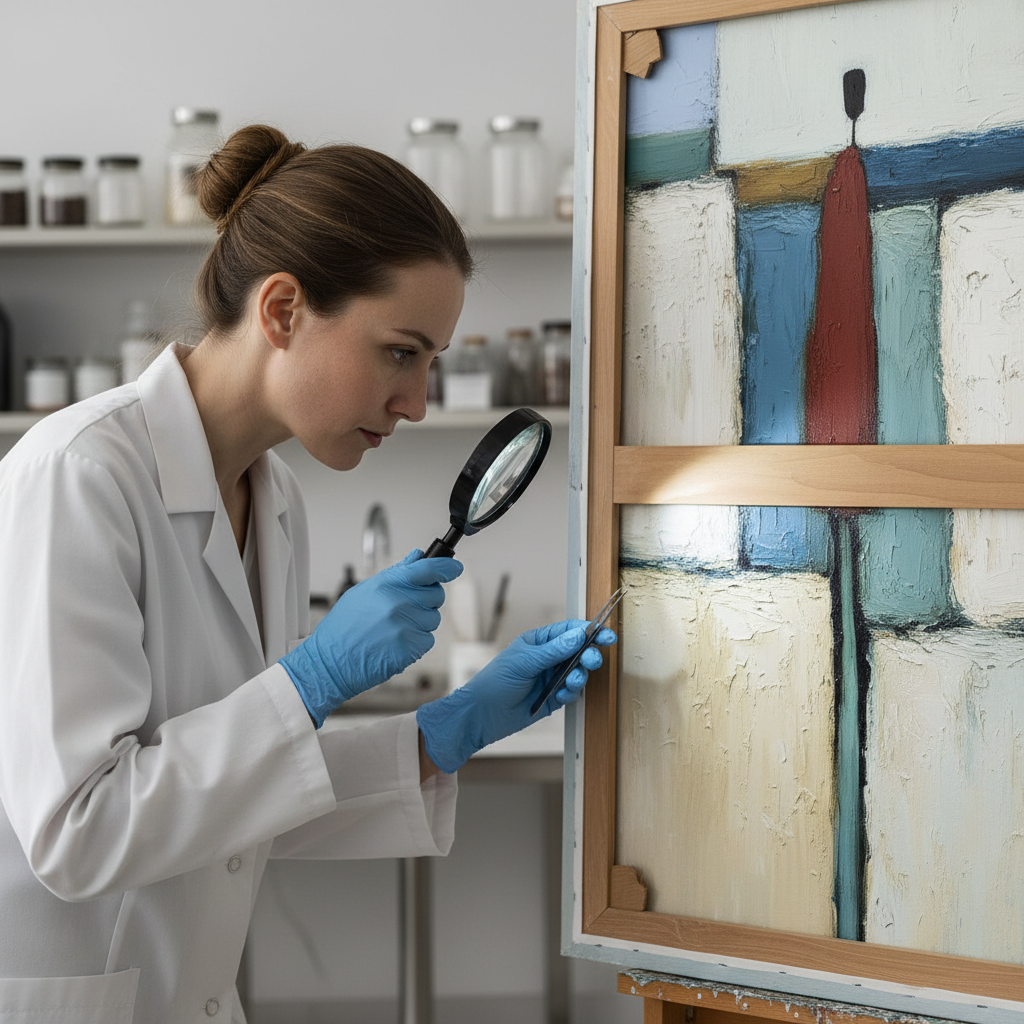
Professional conservators utilize "raking light"—shining a high-intensity flashlight parallel to the surface of the painting—to identify surface irregularities. For pest detection, this examination must extend to the back of the artwork.
- Stretcher Joints: Inspect the miters and joints of the wooden stretcher bars. Silverfish often hide in the 1/16-inch gaps between wood members.
- Frame Rabbets: The "rabbet" (the groove where the painting sits in the frame) is a primary highway for insects. Look for "frass"—fine, pepper-like droppings—or cast skins.
- Canvas Thinning: Hold a cool LED light behind the canvas (without touching the paint layer). Areas where silverfish have grazed on the back of the canvas will appear as bright spots where the light penetrates more easily.
Common Mistakes in Residential Display
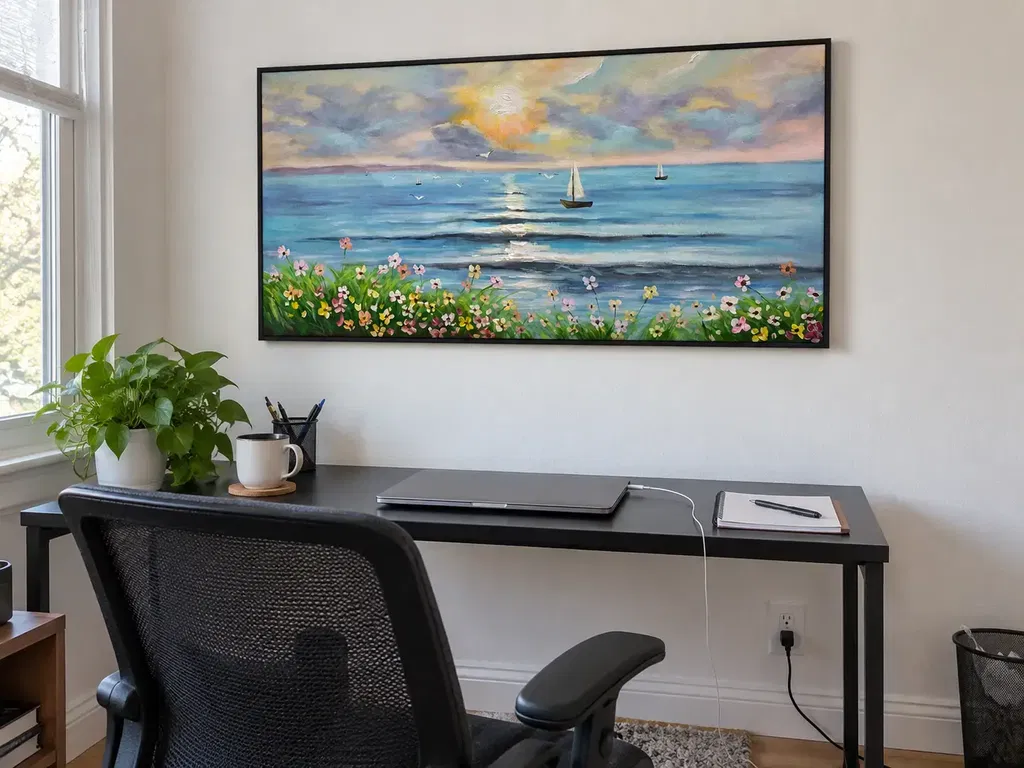
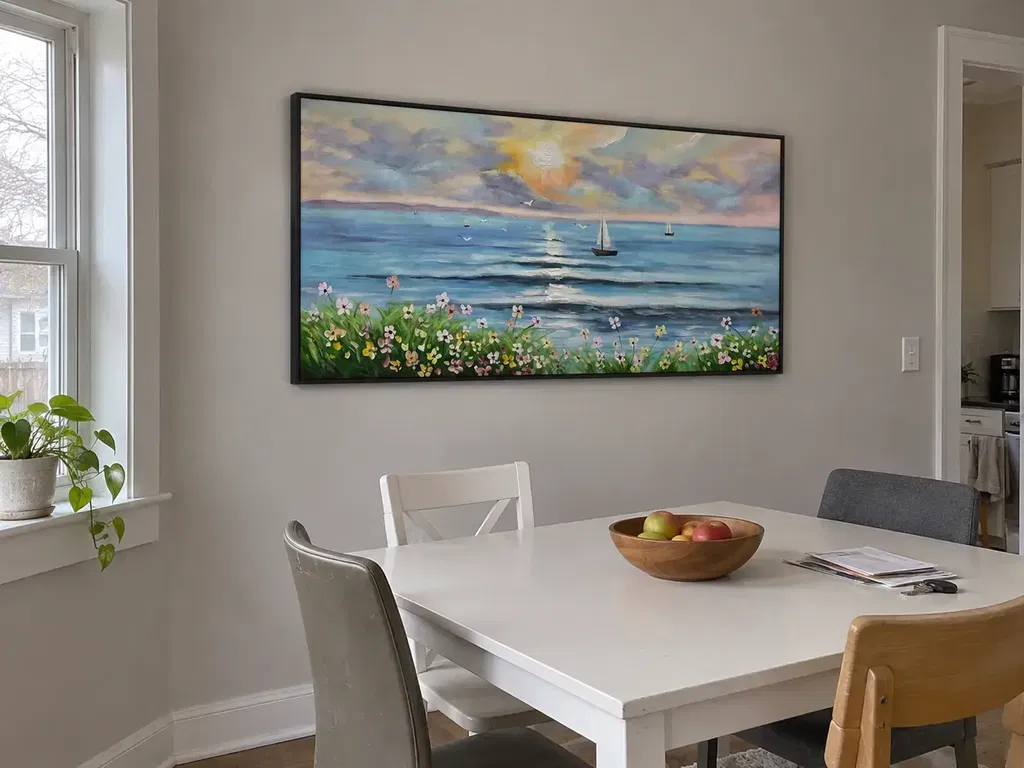
A frequent error in high-end residential settings is placing valuable paintings directly against exterior walls. Even in climate-controlled rooms, exterior walls experience temperature fluctuations that create a "microclimate" of high humidity behind the frame. This moisture attracts silverfish and encourages the growth of mold, which serves as a secondary food source for the pests.

Environmental Controls: The Primary Defense
The most effective way to protect a multi-generational asset is to make the environment inhospitable to biological threats. Silverfish require high humidity to survive; their eggs rarely hatch in environments with less than 50% relative humidity.
The 40-50% Rule
Maintaining a stable relative humidity (RH) between 40% and 50% is the industry standard for oil painting preservation. This range is high enough to prevent the wood stretcher bars from becoming brittle and cracking, but low enough to deter pest activity.
| Parameter | Optimal Range | Unit | Rationale |
|---|---|---|---|
| Relative Humidity | 40–50 | % | Prevents pest egg hatching & mold growth |
| Temperature | 65–72 | °F | Slows insect metabolic rates |
| Air Flow | 2–4 | ACH | Prevents stagnant microclimates behind frames |
| Light Exposure | < 50 | Lux | Minimizes UV degradation of organic binders |
| Wall Clearance | 1–2 | Inch | Allows for thermal buffering and inspection |
Methodology Note: These parameters are derived from standard museum conservation heuristics (e.g., Getty Conservation Institute). We estimate that adhering to these ranges reduces the probability of a successful pest colony establishment by over 90% compared to unmonitored residential basements.
Silica Gel vs. Chemical Treatments
Experienced museum technicians avoid chemical pesticides, which can react with traditional pigments or cause the yellowing of varnishes. Instead, for paintings in storage or in high-risk areas, the use of high-performance silica gel packets is recommended. These packets buffer humidity fluctuations within the micro-environment of a crate or a sealed frame backing.
Integrated Pest Management (IPM) for Collectors
Integrated Pest Management is a holistic strategy that focuses on monitoring and prevention rather than reactive poisoning. While institutions spend thousands on IPM, private collectors can achieve significant protection with a modest investment.
Scaling IPM for the Home
Reality contradicts the myth that professional-grade protection is inaccessible. A digital hygrometer (costing $15–$30) and a regular inspection schedule provide 80% of the value of a museum-grade system.
- Quarterly Inspections: Mark your calendar to pull paintings off the wall every three months.
- Sticky Traps: Place pheromone-free "blunder traps" (sticky cards) in the corners of the room. These do not "catch" the infestation, but they serve as an early warning system. If you find one silverfish on a trap, it is time for a deep inspection.
- Sealing the Envelope: Rodent prevention is a prerequisite for insect prevention. Rodents often bring in nesting materials that harbor insects. Ensure all entry points into the gallery or storage room larger than 1/4 inch are sealed with steel wool or hardware cloth.
The Risks of "DIY" Treatments
When damage is discovered, many collectors turn to extreme measures like freezing. While controlled freezing (-20°C to -30°C) is a valid institutional treatment, it is dangerous for oil paintings if not done correctly. Studies on canvas tensile strength show a 15–25% reduction in strength after extreme temperature cycling. The expansion and contraction of the oil paint layers at different rates than the canvas can lead to "cleavage" or flaking. Any thermal treatment must be preceded by a professional assessment of the paint film's flexibility.

Material Science and Long-Term Value
The choice of materials during the creation of a painting—or its restoration—impacts its attractiveness to pests. As noted in the Creative Economy Outlook 2024, the value of creative exports is rising, but so is the scrutiny of material longevity.
Pigment Quality and Pest Resistance
Historical research by the Metropolitan Museum of Art on carmine pigments derived from insects (Cochineal) reminds us that many traditional materials are essentially "food" in the eyes of the natural world. Modern high-quality pigments, such as Titanium Dioxide, are chemically inert and offer no nutritional value to silverfish. Furthermore, the transition away from highly toxic lead-based whites to safer, more stable alternatives has not only improved artist health but also changed the chemical "profile" of the painting surface.
The "Identity" of the Hand-Painted Asset
In an era where AI-generated art is perceived to have 62% lower value than human-created work, the physical "soul" of an oil painting is its greatest asset. Protecting that asset from biological decay is not just maintenance; it is a financial strategy. Public art projects, such as those in Chicago’s Millennium Park, have shown that well-preserved art can drive billions in real estate value. On a smaller scale, a well-preserved private collection serves as a stable, anti-cyclical store of wealth.
Scenario Analysis: Storage Environments
To help collectors make better decisions, we have modeled two common storage scenarios and their associated biological risks.
Scenario A: The Managed Gallery
- Setup: Climate-controlled room, paintings hung on interior walls with 1-inch spacers.
- Monitoring: Monthly digital RH logs, quarterly visual inspections.
- Risk Level: Low. Silverfish may enter the building but will find no stable microclimate to colonize.
- Outcome: Estimated 50+ year preservation of canvas tensile strength.
Scenario B: The "Safe" Residential Storage
- Setup: Climate-controlled finished basement, paintings stored in original cardboard shipping boxes against an exterior wall.
- Monitoring: None.
- Risk Level: Critical. The cardboard provides a massive cellulose food source, and the exterior wall creates a dew point inside the box, spiking RH to 70%+.
- Outcome: High probability of silverfish infestation and Support Induced Discoloration (SID) within 24–36 months.
Preservation as Heritage Protection
Protecting an oil painting from silverfish is an act of stewardship. By implementing institutional-level preventative measures—monitoring humidity, ensuring airflow, and utilizing non-chemical buffers like silica gel—collectors ensure that their investment remains a "multi-generational asset."
As the art market continues to prioritize authenticity and artisan craftsmanship, the physical condition of a canvas will be the ultimate arbiter of its value. Whether you are managing a single family heirloom or a sprawling corporate collection, the principles of Integrated Pest Management remain the same: observe, prevent, and protect the essential identity of the work.
For further reading on maintaining the structural integrity of your collection, consider our guide on Vertical vs. Flat Storage or explore the science of Canvas Grades for High-Humidity Environments.
Disclaimer: This article is for informational purposes only and does not constitute professional conservation, legal, or financial advice. Art preservation involves complex chemical and physical variables; always consult with a certified member of the American Institute for Conservation (AIC) or a similar professional body before attempting any invasive treatment or cleaning of a valuable artwork.
References
- Marketplace: The Expensive Art Market Struggles
- The Art Basel and UBS Art Market Report 2024
- Lasker: Cellulose Digestion in Silverfish
- Getty Conservation Institute: Organic Materials in Wall Paintings
- Columbia University: Human-Made vs. AI Art Study
- Golden Artist Colors: Support Induced Discoloration