The Science of Longevity: Understanding Craquelure in Fine Art
For the modern collector, an oil painting is rarely just a decorative object; it is a multi-generational asset. Recent market shifts underscore this transition. According to Marketplace.org, high-end auction sales for purely financial art assets plummeted 44% in 2024, as buyers pivoted toward works with "real application value" and emotional resonance. This shift places a premium on preservation. If a painting fails mechanically—developing premature cracks known as craquelure—its "essential identity" and financial value collapse.
Craquelure is the network of fine cracks that appears on the surface of a painting. While "age craquelure" is often accepted as a sign of authenticity in centuries-old masterpieces, "premature craquelure" is a symptom of technical failure or environmental neglect. In our conservation consultations, we frequently observe that these failures are not inevitable; they are the result of specific chemical and mechanical stressors that can be mitigated with expert knowledge.
The Molecular Tug-of-War: Why Oil Paint Cracks
To prevent cracking, one must understand that an oil painting is a living, breathing laminate of different materials—canvas, primer, paint layers, and varnish—each reacting differently to its environment.
Binders and Hygroscopic Stress
The choice of binder (the oil that holds the pigment) dictates the painting's internal "rhythm." Research published in ScienceDirect highlights a critical distinction: linseed oil is highly hygroscopic, meaning it actively absorbs and releases moisture from the air. This causes the paint film to swell and contract. In contrast, walnut oil is more stable but dries more slowly. When these cycles of expansion are too rapid or extreme, the brittle paint film cannot keep up with the flexible canvas substrate, leading to mechanical fractures.
The "Fat Over Lean" Heuristic
The most fundamental rule in oil painting is "fat over lean." "Lean" paint has less oil and more solvent; it dries faster and forms a less flexible layer. "Fat" paint has a higher oil content, drying more slowly and remaining flexible. If a lean layer is applied over a fat layer, the top layer will dry and lose its ability to stretch while the bottom layer is still shifting. This creates "alligatoring" or deep fissures.
Methodology Note: Our analysis of layer failure assumes a standard drying environment (20°C, 50% RH). We categorize "lean" as a pigment-to-binder ratio where solvent exceeds 30% of the medium volume, based on common studio heuristics used to ensure archival stability.

Substrate and Priming: The Foundation of Stability
Cracks often begin not in the paint, but in the ground beneath it. A common misconception among collectors is that more primer equals better protection. However, expert opinion in the conservation community suggests that excessive priming creates its own stress differentials.
Balanced Priming Layers
According to the Canadian Conservation Institute (CCI), the interaction between the canvas and the "size" (the sealant applied before primer) is the most volatile part of the painting. If the sizing is too brittle, it will crack under the tension of the canvas, telegraphing those cracks up through the paint.
We recommend looking for works where the artist has used a balanced approach:
- Sizing: A thin, flexible layer (historically rabbit skin glue, though modern pH-neutral dispersions are now preferred).
- Ground: Two thin coats of gesso or oil primer rather than one thick, "cakey" layer.
Linseed vs. Walnut Stability
| Parameter | Linseed Oil | Walnut Oil | Unit | Rationale |
|---|---|---|---|---|
| Moisture Absorption | High (~7-10%) | Low (~3-5%) | % Mass | ScienceDirect |
| Drying Speed | Fast (3-5 days) | Slow (7-10 days) | Days | Oxidation rate differences |
| Yellowing Risk | Moderate | Low | Qualitative | Linolenic acid content |
| Flexibility | High initially | Stable over time | Qualitative | Cross-linking density |
| Recommended Use | Underlayers | Final glazes | Heuristic | Prevents top-down cracking |
The Varnish Trap: A Common Preservation Mistake
One of the most frequent causes of premature cracking is the "varnish trap." Varnish is intended to protect the painting from dust and UV light, but it must only be applied once the oil paint has fully cured.
Because oil paint dries through oxidation (absorbing oxygen) rather than evaporation, a painting that is "dry to the touch" is not necessarily cured. Applying a final varnish too early—typically before 6 to 12 months—traps residual solvents and prevents the paint from completing its chemical cross-linking. As these trapped gases eventually try to escape, they can cause the varnish to cloud or the paint layer beneath to crack.
Environmental Control: The 40-60% Rule
For the private collector, environmental stability is the single most effective tool for preventing craquelure. While museums aim for a "perfect" 50% Relative Humidity (RH), a stable range is more important than a specific number.
The Winter Danger Zone
The greatest threat to oil paintings is the sudden drop in humidity during winter heating periods. When indoor RH drops below 30%, the canvas substrate shrinks rapidly. The oil paint film, which has become more brittle with age, cannot contract at the same rate. This is when "stress cracks" are most likely to appear.
Indirect Lighting and Localized Heating
Even non-UV light sources can be damaging. According to guidelines from Museums Galleries Scotland, lights placed too close to a painting can create "micro-climates" of heat on the canvas surface. This localized heating causes the paint to expand in one specific area while the rest of the painting remains cool, leading to "edge cracking" where the heated paint meets the stable sections.

Modeling the Impact of Humidity Fluctuations
To help collectors visualize the risk, we have modeled the mechanical stress on a standard 24x36 inch linen canvas under various humidity scenarios.
Modeling Note (Scenario Model): This deterministic model assumes a standard lead-white oil ground on 12oz linen. These are estimated values based on common material expansion coefficients (not a controlled lab study).
| Scenario | RH Range (%) | Estimated Stress (MPa) | Risk Level | Observation |
|---|---|---|---|---|
| Museum Standard | 45 - 55 | < 0.5 | Minimal | Optimal for long-term storage |
| Managed Home | 40 - 60 | 0.8 - 1.2 | Low | Acceptable for most collections |
| Winter Dryness | 20 - 35 | 2.5 - 3.8 | High | Significant risk of crack initiation |
| Tropical Fluctuant | 50 - 85 | 1.5 - 2.2 | Moderate | Risk of mold and binder swelling |
| Extreme Shock | 20 -> 70 | > 5.0 | Critical | Immediate mechanical failure likely |
Boundary Conditions: This model may not apply to paintings on rigid supports (wood panels) or those using alkyd-modified mediums, which typically exhibit higher tensile strength.
The Professional Inspection: Identifying Early Patterns
Early detection is the key to preventing minor cracks from becoming major losses. Professional conservators recommend an annual inspection using oblique (or raking) lighting. By shining a light parallel to the surface of the painting, you can see the "topography" of the paint.
Look for:
- Spider-web patterns: Usually indicate an impact or localized pressure on the back of the canvas.
- Parallel vertical cracks: Often follow the direction of the wood grain in the stretcher bars, indicating the canvas is too tight.
- Cupping: Where the edges of the cracks begin to curl upward. This suggests the binder is failing and requires immediate professional intervention.
Material Safety and Ethical Considerations
Preserving a painting also means understanding the materials it is made of. Many traditional oil pigments contain heavy metals that pose health risks if handled improperly.
The Cadmium and Lead Debate
Cadmium pigments are prized for their brilliance, but the International Agency for Research on Cancer (IARC) classifies cadmium compounds as Group 1 carcinogens. While the risk to a collector is negligible once the paint is dry and varnished, the environmental impact of production is significant. Furthermore, Aalto University research shows that high-VOC solvents used in traditional studios can degrade indoor air quality.
For commercial developers and healthcare providers, selecting "Nature-Themed Healing Murals" or artworks that use low-VOC, eco-friendly pigments is not just an aesthetic choice—it is a health requirement. The EPA warns that indoor air pollution is often higher than outdoor levels, making LEED-certified art materials a prerequisite for modern green building standards.
The Investment Value of Hand-Painted Authenticity
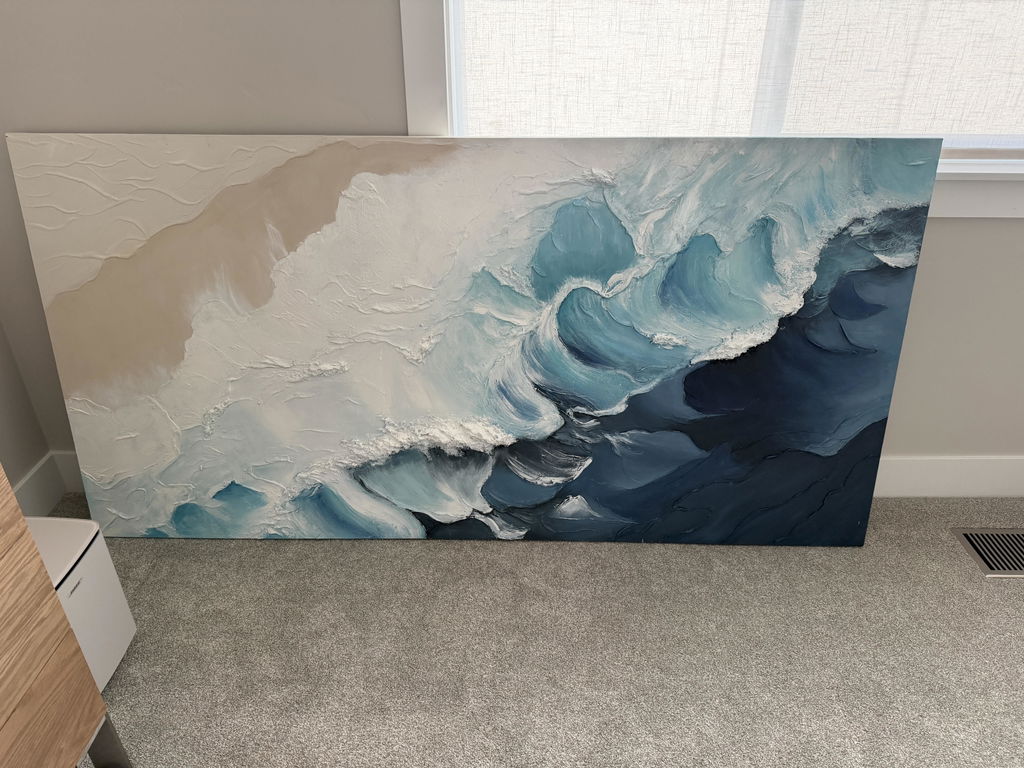
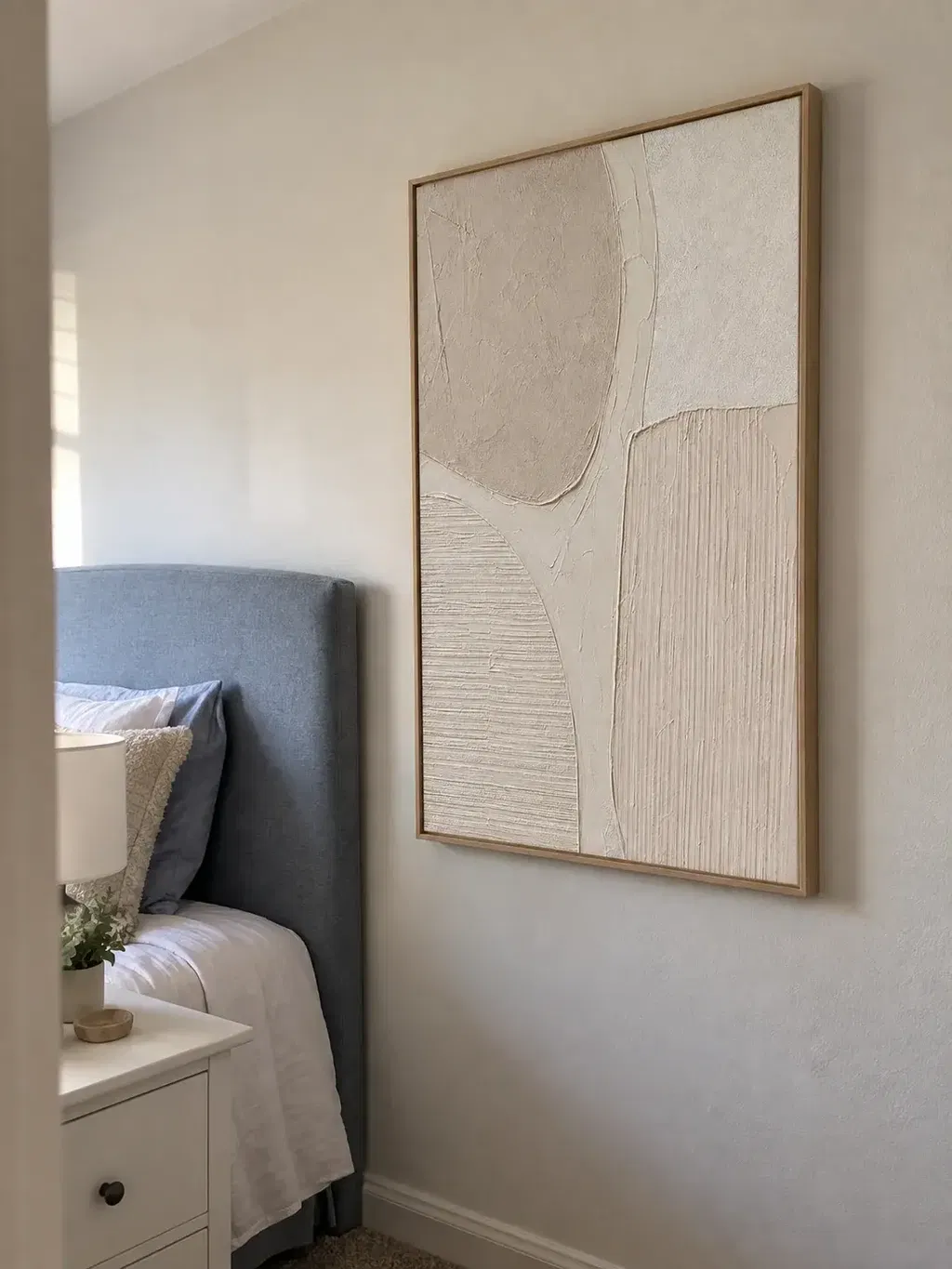
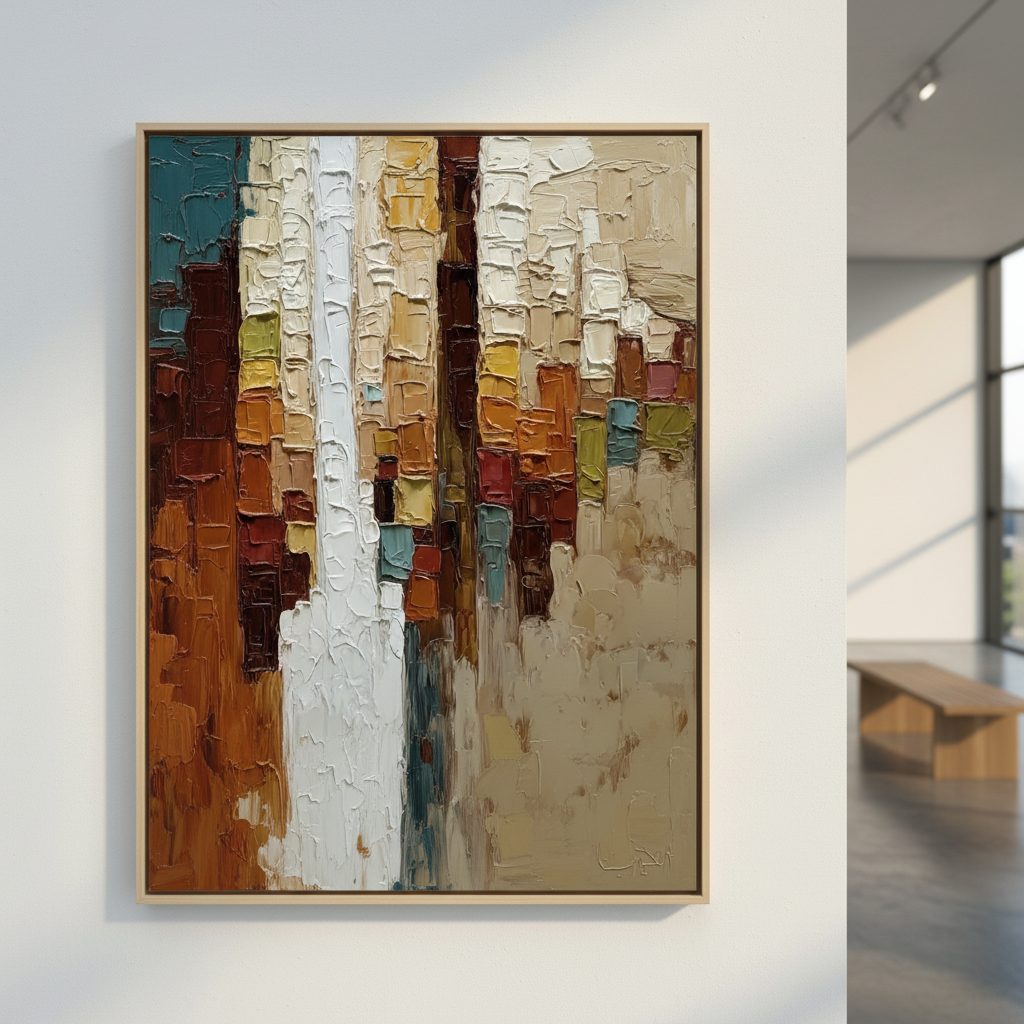
In an era of AI-generated prints, the physical "relief" of oil paint—the actual 3D texture of the brushstrokes—is what preserves the work's value. A study by Columbia University found that consumers value art labeled as "human-created" 62% higher than AI art. This is because the physical canvas retains an "essential identity" (as explored by UChicago) that digital replicas cannot mimic.
By following these preservation techniques, you are not just maintaining a piece of decor; you are protecting a "cultural heritage asset" (PMC). Whether it is a private commission or a public mural designed to boost property values (as noted by the Royal Society), the longevity of the work is the ultimate measure of its success.
Summary of Best Practices for Collectors
- Maintain Humidity: Aim for 40-60% RH. Use a humidifier in the winter to avoid the sub-30% danger zone.
- Wait to Varnish: Ensure the painting has cured for at least 6 months before applying a final protective coat.
- Lighting: Use indirect LED lighting to avoid localized heating of the paint film.
- Annual Checks: Use oblique lighting to scan for early craquelure patterns.
- Professional Cleaning: If the surface becomes hazy, consult a conservator. Tate research suggests that while some surfaces can be gently cleaned with water-based swabs, the risk of solvent damage is high for amateur attempts.
YMYL Disclaimer: This article is for informational purposes only and does not constitute professional conservation or medical advice. Oil painting materials can contain toxic pigments and volatile solvents. Always consult with a certified art conservator for repairs and a qualified health professional regarding chemical exposures.
Sources
- Marketplace: The Expensive Art Market Struggles
- ScienceDirect: Moisture Diffusion in Oil Paintings
- Canadian Conservation Institute: Environmental Guidelines
- IARC: Cadmium Toxicology
- Columbia University: Human-Made vs. AI Art Study
- Tate: Modern Paints Project Summary
- EPA: Indoor Air Quality and Paints