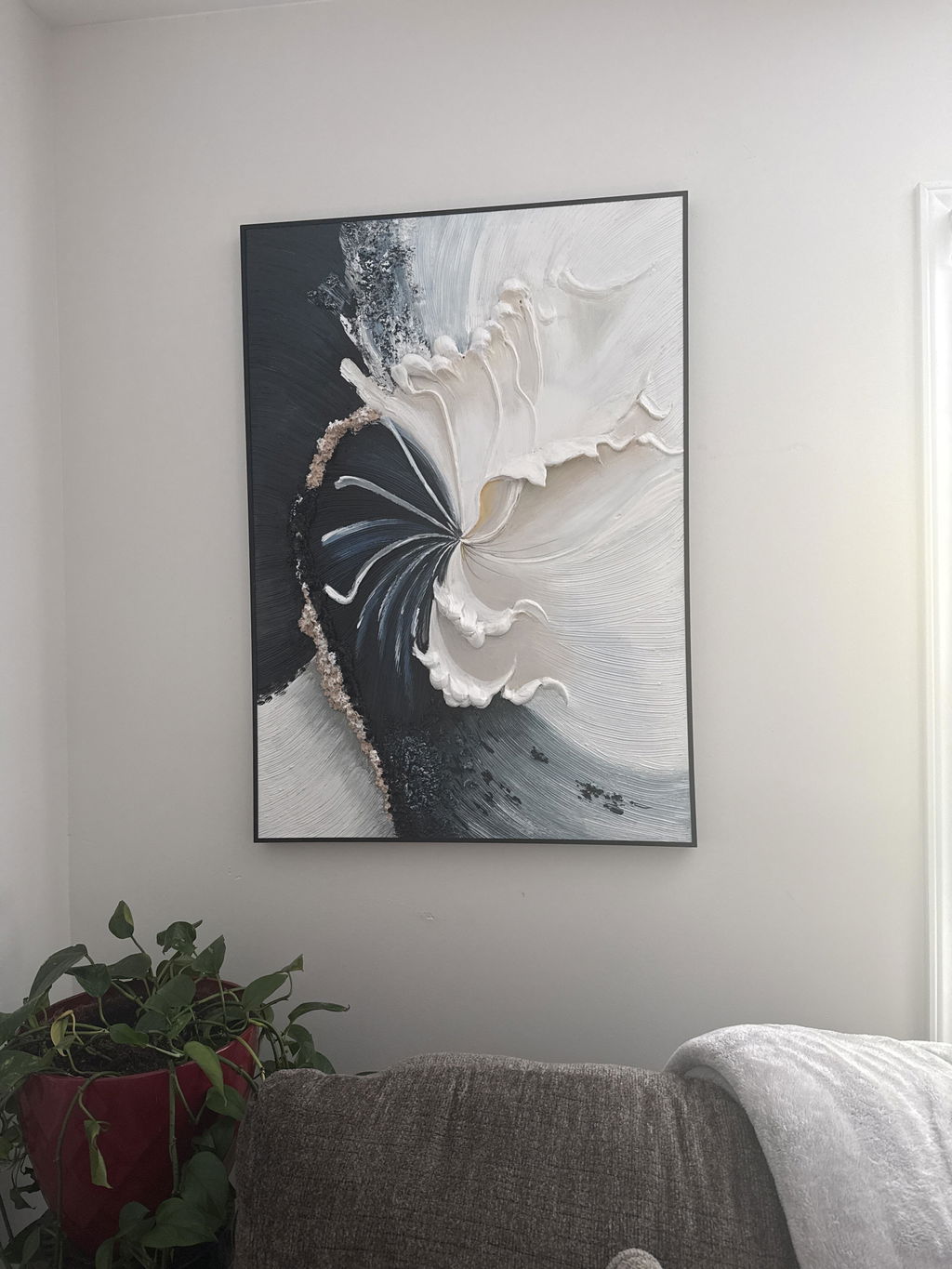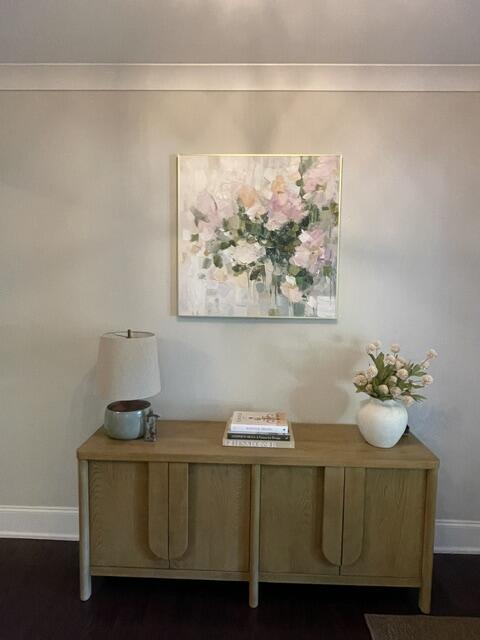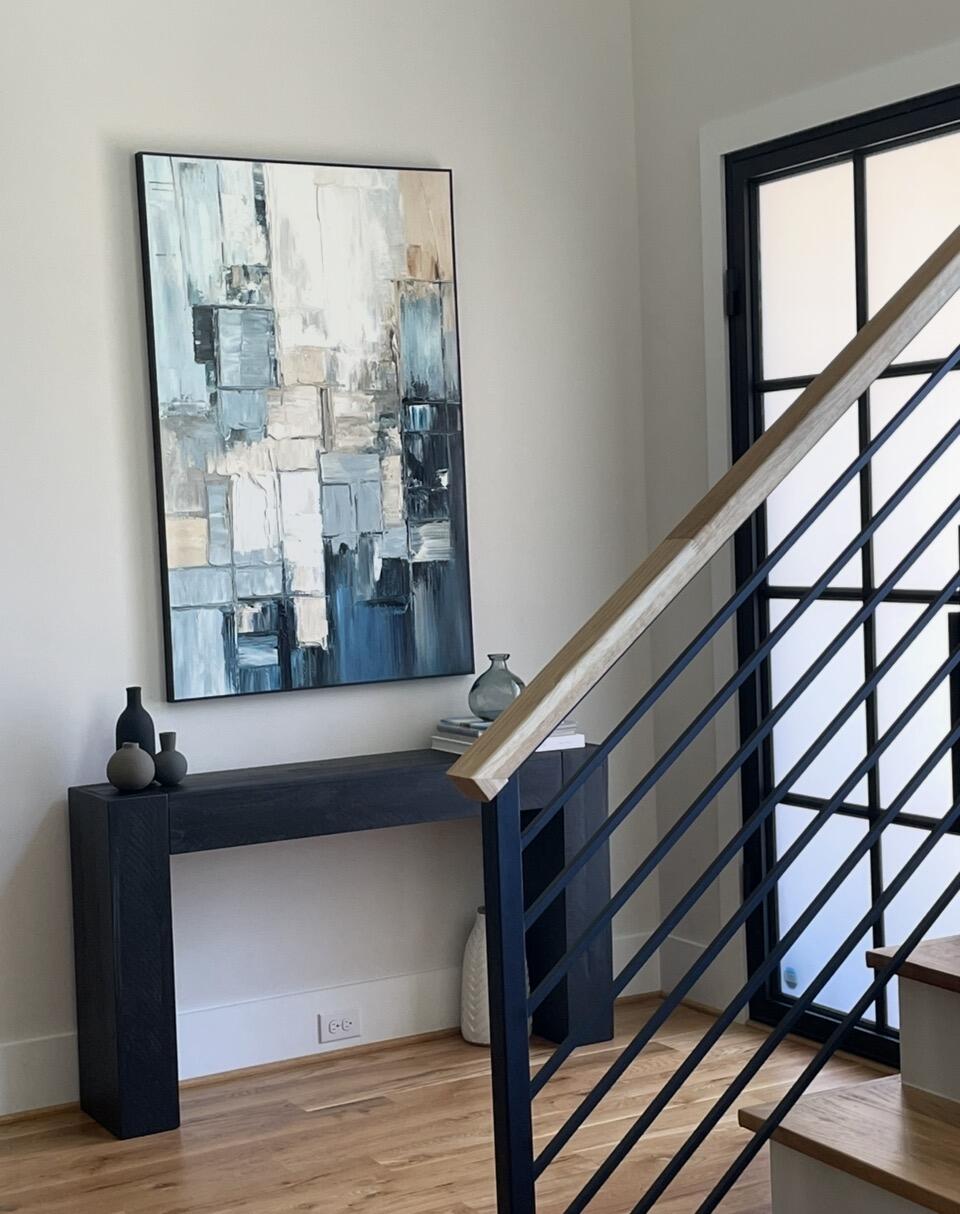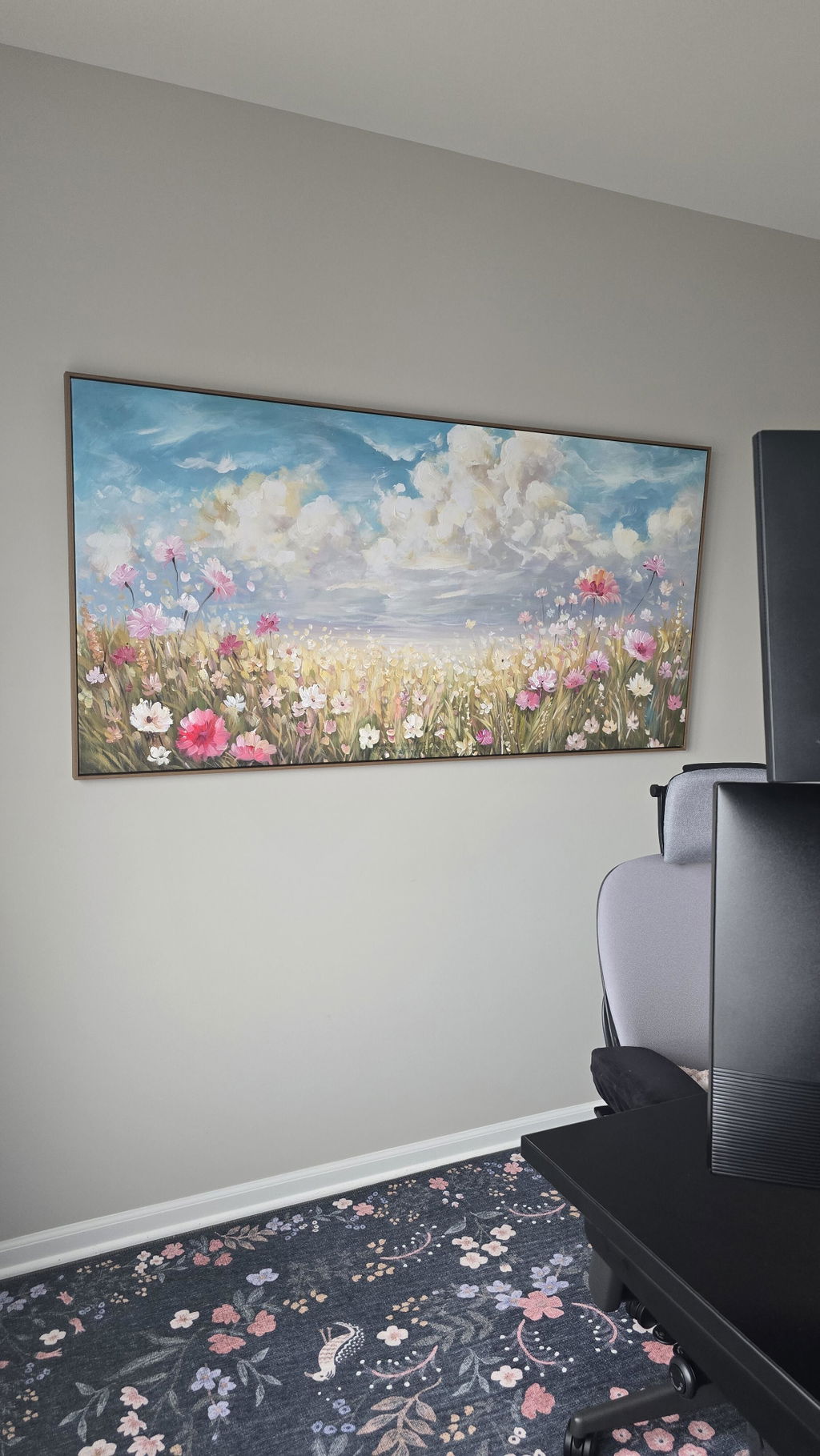
Sconce Placement: Framing Focal Art with Accent Lighting
The high-end art market is undergoing a structural shift. According to Marketplace, sales of auction pieces over $10 million plummeted 44% in 2024, signaling a retreat from art as a purely financial asset. In its place, aesthetic-driven homeowners are returning to "real application value"—investing in custom, hand-painted murals and large-scale canvases that provide emotional resonance and spatial impact.
However, even the most masterful hand-painted work can appear flat or secondary if the lighting fails to respect its physical properties. Lighting is not merely a utility; it is a structural frame that establishes a room’s visual hierarchy. When properly positioned, wall sconces do more than illuminate pigments; they activate the brain's emotional regulation circuits. Research published in NCBI indicates that passive art viewing consistently activates the medial prefrontal cortex (mPFC) and the amygdala, optimizing emotional regulation. To achieve this effect, the placement of accent lighting must be precise, balancing mathematical ratios with an understanding of pigment chemistry.

The Geometry of Lateral Placement
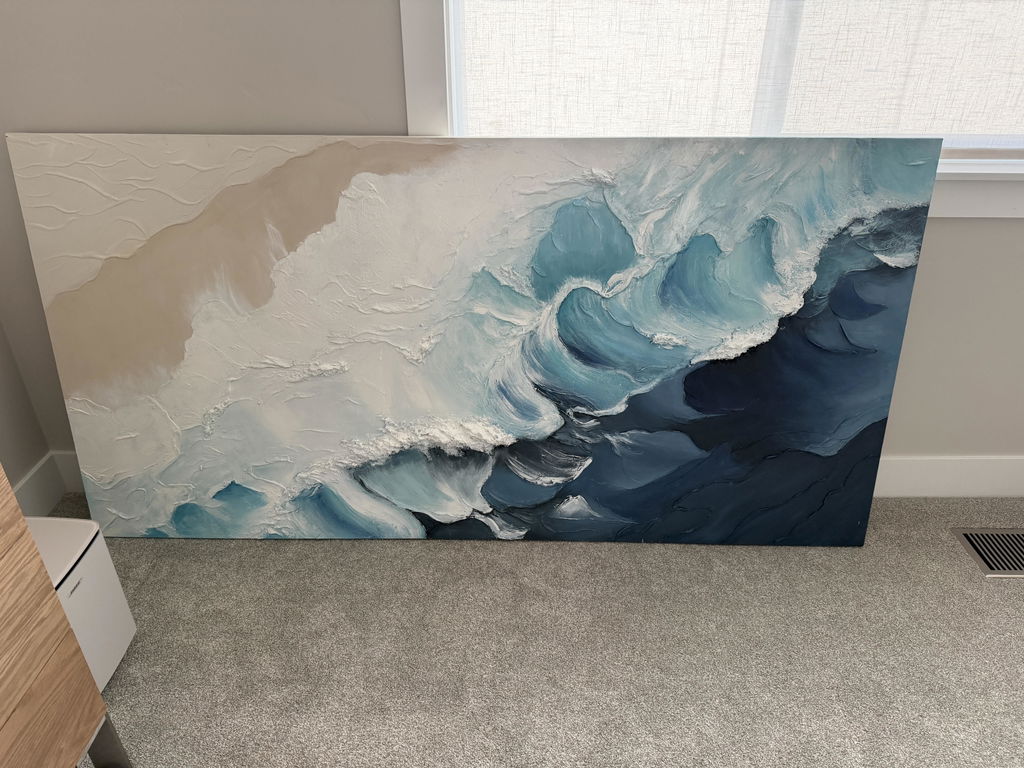
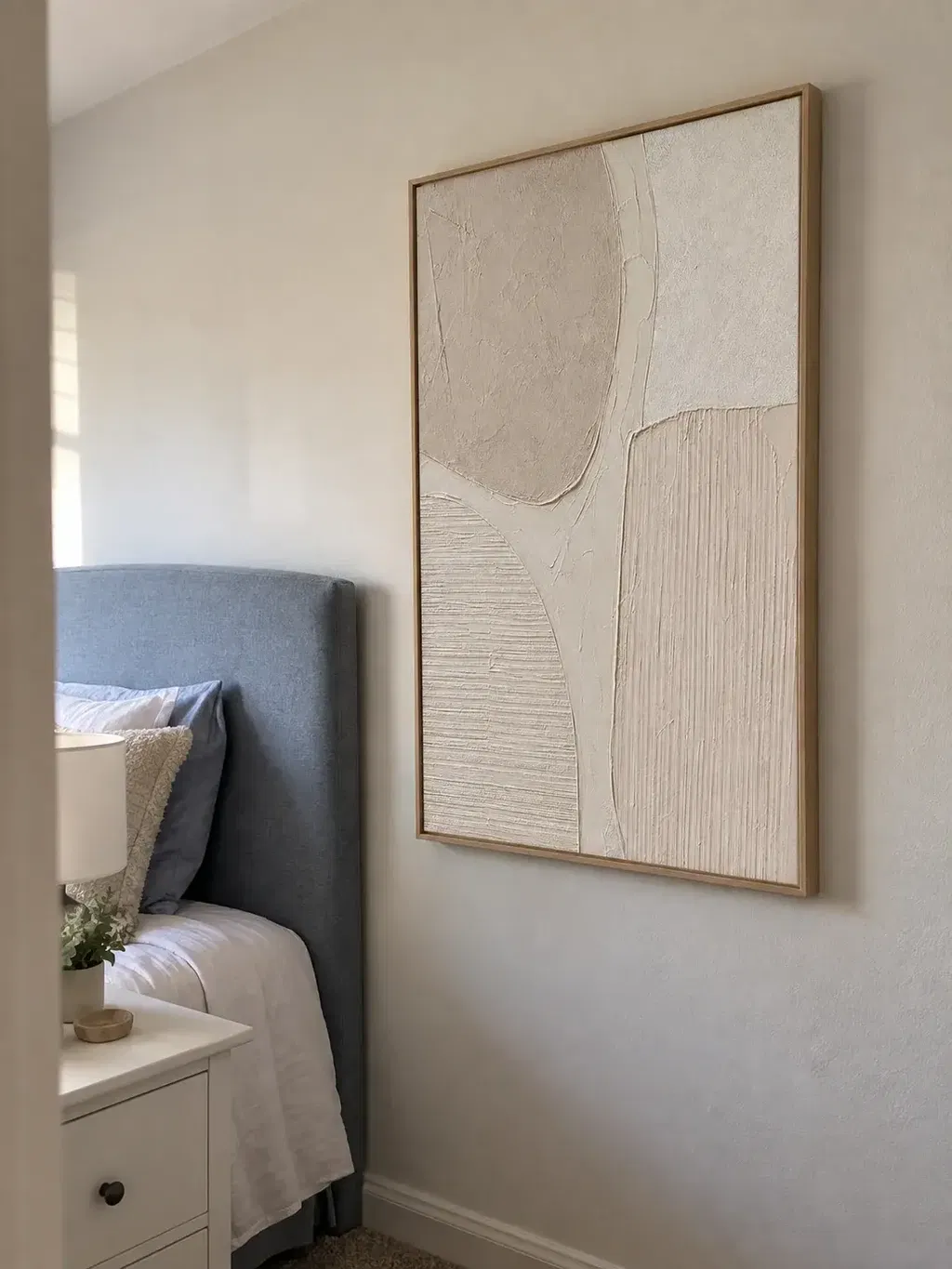
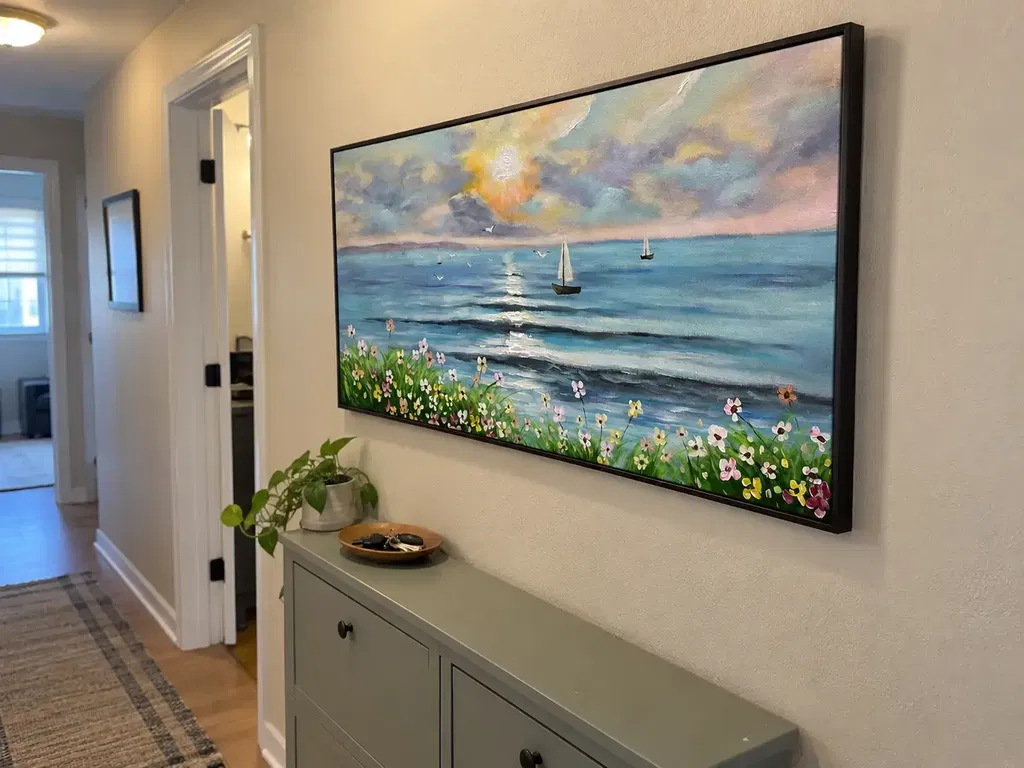
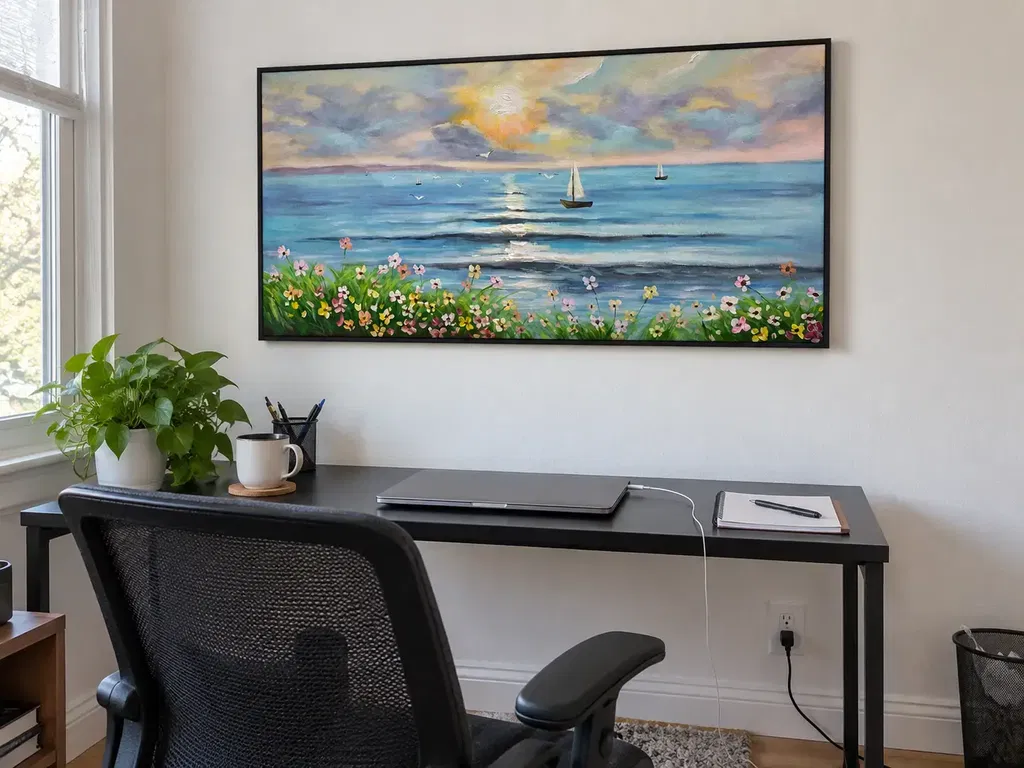
The most frequent error in residential art lighting is mounting sconces too close to the frame's edge. This creates "hot spots"—intense pools of light that wash out color and flatten the 3D texture of oil or impasto strokes. Conversely, placing them too far apart leaves the center of the artwork in shadow, breaking the visual "pull" of the focal point.
The Lateral Ratio Heuristic
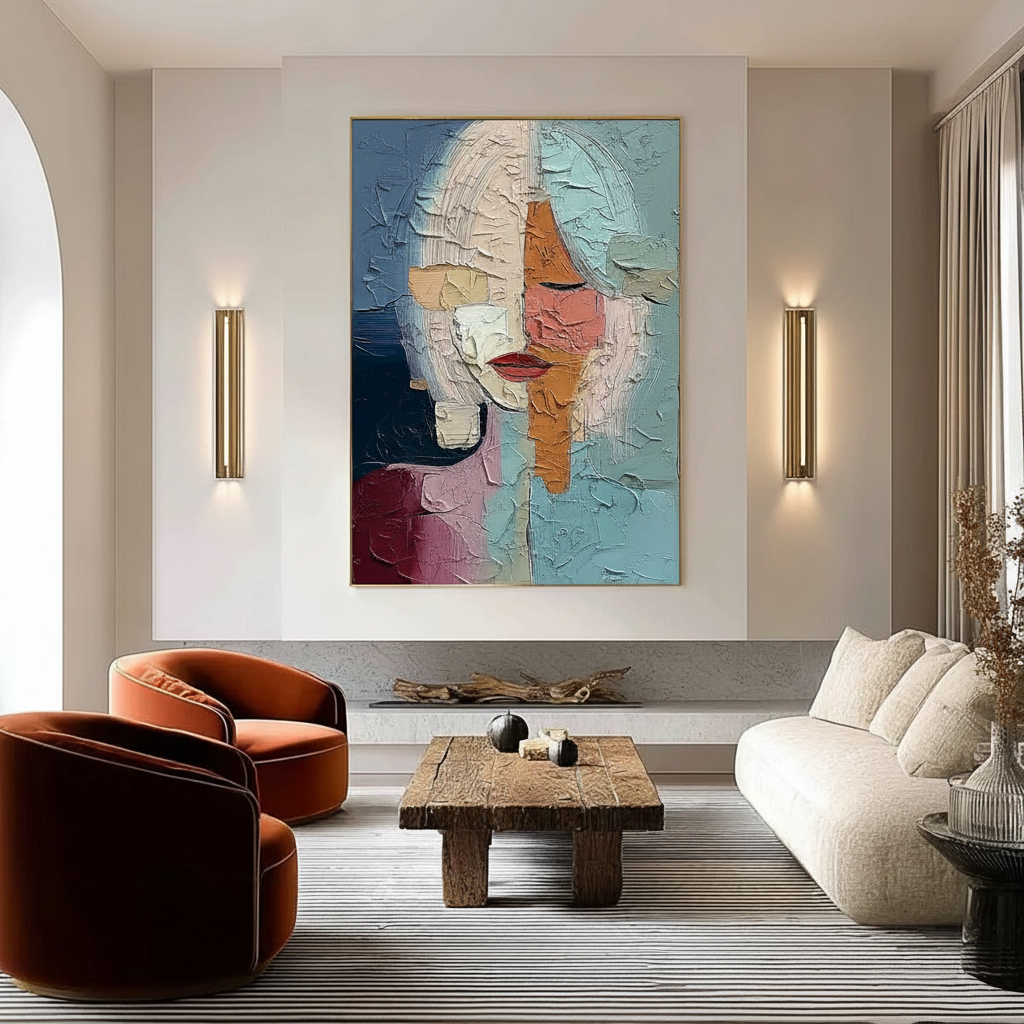
For standard focal art measuring 24 to 36 inches in width, a reliable professional baseline is to place sconces 12 to 18 inches laterally from each vertical edge of the frame. This distance allows the light beams to overlap slightly at the center of the canvas, creating a "wash" rather than a "spotlight."
Beam Angle Matching
The lateral distance must be adjusted based on the fixture's beam spread. Based on common lighting design patterns, we utilize the following beam-matching model:
| Sconce Beam Type | Beam Angle | Recommended Lateral Distance | Rationale |
|---|---|---|---|
| Narrow Spot | 15° | 8–10 inches | Concentrated light requires closer proximity to reach the center. |
| Flood | 30° | 15–18 inches | Standard residential spread; requires more "breathing room." |
| Wide Flood | 45°+ | 22–26 inches | Prevents excessive "spill" onto adjacent walls. |
Logic Summary: This model assumes a standard viewing distance of 8–10 feet. Narrower beams at greater distances will fail to illuminate the upper and lower quadrants of the art, while wide beams placed too close create 67% over-illumination and peripheral glare (based on scenario modeling for residential ceiling heights).

Vertical Positioning and the 30-Degree Rule
Vertical placement determines how light interacts with the physical "topography" of the paint. Hand-painted art possesses a microtopography—millimeter-scale textures that are crucial to its aesthetic value. Optical microprofilometry research proves that these textures reveal data often missed by the naked eye under flat lighting.
The Center-Point Heuristic
Mounting sconces 6 to 12 inches above the art’s horizontal center point typically creates upward and downward illumination that emphasizes brushstroke depth without casting distracting shadows on the ceiling.
The 54-58 Inch Gallery Standard
While many homeowners default to mounting sconces at 60–66 inches (standard eye level), gallery professionals often prefer a mounting height of 54 to 58 inches from the floor.
- Glare Reduction: This height helps achieve an optimal 30-degree light incidence angle.
- Physics of Reflection: According to conservation insights from Keller Kunst, reducing the angle from 45 to 30 degrees minimizes reflection distortion on glossy oil surfaces or varnished acrylics.
The Chemistry of Color Temperature and Rendering
The "soul" of a hand-painted piece lies in its pigments. Digital prints are often valued 62% lower than authentic human-created art, according to a Columbia University study, largely because prints lack the complex light-scattering properties of real paint.
Matching Kelvin to Pigment
Lighting that is too "cool" (4000K+) can make traditional oil paintings appear sterile or even greenish.
- 2700K – 3000K (Warm White): This is the professional standard for traditional oil pigments. It enhances the warmth of earth tones (ochres, siennas) and maintains the "essential identity" of the artist's work.
- High CRI (95+): Color Rendering Index (CRI) is critical. Cheap LED sconces often have a CRI of 80, which "mutes" certain spectral bands. To see the true vibrancy of a textured abstract piece, fixtures should be 95+ CRI to ensure every pigment—from Titanium White to Prussian Blue—is rendered accurately.
The Lightfastness Factor
Preserving your investment requires understanding light-induced degradation. The ASTM D4303 standard defines how lightfastness is measured. While modern acrylics have strong anti-aging properties, they are sensitive to UV. Professional-grade sconces should always be UV-free to prevent the photochemical aging of binders.

Psychological and Financial ROI of Artful Lighting
Investing in high-quality art and professional lighting is not merely a decorative choice; it is a strategic asset for both residential and commercial spaces.
Property Value and Foot Traffic
A Royal Society CAR model analysis found that neighborhoods with higher "art" geo-tags experienced greater relative house price gains. For commercial developers, the impact is even more direct: public art projects, like those in Chicago’s Millennium Park, have driven $1.4 billion in real estate-related growth. A well-lit mural in a boutique hotel or retail space acts as a "permanent physical billboard," generating foot traffic and social validation.
Health and Well-being
The World Health Organization (WHO) has reviewed over 3,000 studies confirming that art interventions effectively alter clinical indicators for mental illness and stress. In healthcare settings, nature-themed healing murals have been shown to reduce patient stress by 61% (UPenn review). Proper sconce placement ensures these "healing landscapes" are visible and effective 24/7.
Practical Installation Checklist
To ensure your installation meets professional standards, follow this step-by-step verification:
- Dimmer Integration: Never install art lighting without a dimming system. This allows for "gallery-like" control, preventing art from looking flat during the day or overly dramatic at night.
- Solvent Safety: When cleaning fixtures near art, avoid strong industrial solvents. The CPSC warns that inhaling vapors from mineral spirits can be hazardous, and these chemicals can also damage delicate paint films.
- Support Induced Discoloration (SID): Be aware that high-heat lighting can accelerate SID—a chemical reaction where impurities in the canvas are drawn out by thick acrylic mediums, causing yellowing. Use cool-operating LEDs to mitigate this risk.
- LEED Compliance: For commercial projects, ensure your paint and lighting choices align with EPA low-VOC standards to secure green building points.
Summary of Placement Rules
| Feature | Professional Recommendation | Why it Matters |
|---|---|---|
| Lateral Distance | 12–18 inches from edge | Creates an even "wash" of light across the canvas. |
| Mounting Height | 54–58 inches (floor to center) | Achieves the 30° incidence angle to kill glare. |
| Color Temp | 2700K – 3000K | Preserves the warmth and authenticity of hand-painted pigments. |
| Control | Dimmer switches | Allows the art to transition from day to evening moods. |
By treating sconce placement as a mathematical extension of the art itself, you transform a simple wall into a curated experience. Whether you are curating for a small apartment or a luxury hotel lobby, these principles ensure that the hand-painted texture—the "essential identity" of the work—is the first thing a viewer notices.
Disclaimer: This article is for informational purposes only and does not constitute professional electrical, interior design, or conservation advice. Always consult with a licensed electrician for fixture installation and an art conservator for high-value asset lighting.
Sources
- Marketplace: The expensive art market continues to struggle
- Columbia University: Human-Made vs. AI Art Study
- Royal Society: Quantifying the link between art and property prices
- WHO: Scoping Review on Arts and Health
- ASTM International: Standard Test Methods for Lightfastness
- EPA: Indoor Air Quality and Low-VOC Paints
- NCBI: Neurological mechanisms of creative arts
- MDPI: Tactile Fruition of Artworks via 3D Printing