The Evolution of the Entryway: From Transit to Statement
The entryway is no longer a mere "pass-through" zone. For the career-focused homeowner, it has evolved into a high-stakes visual handshake—a space that signals ambition, modern connectivity, and a sophisticated identity. As the expensive art market continues to struggle, with high-end auction sales for pieces over $10 million plummeting 44% YoY in 2024, we are seeing a profound retreat from purely financial art assets. Buyers are returning to real application value: art that functions as a strategic design element rather than a speculative line item.
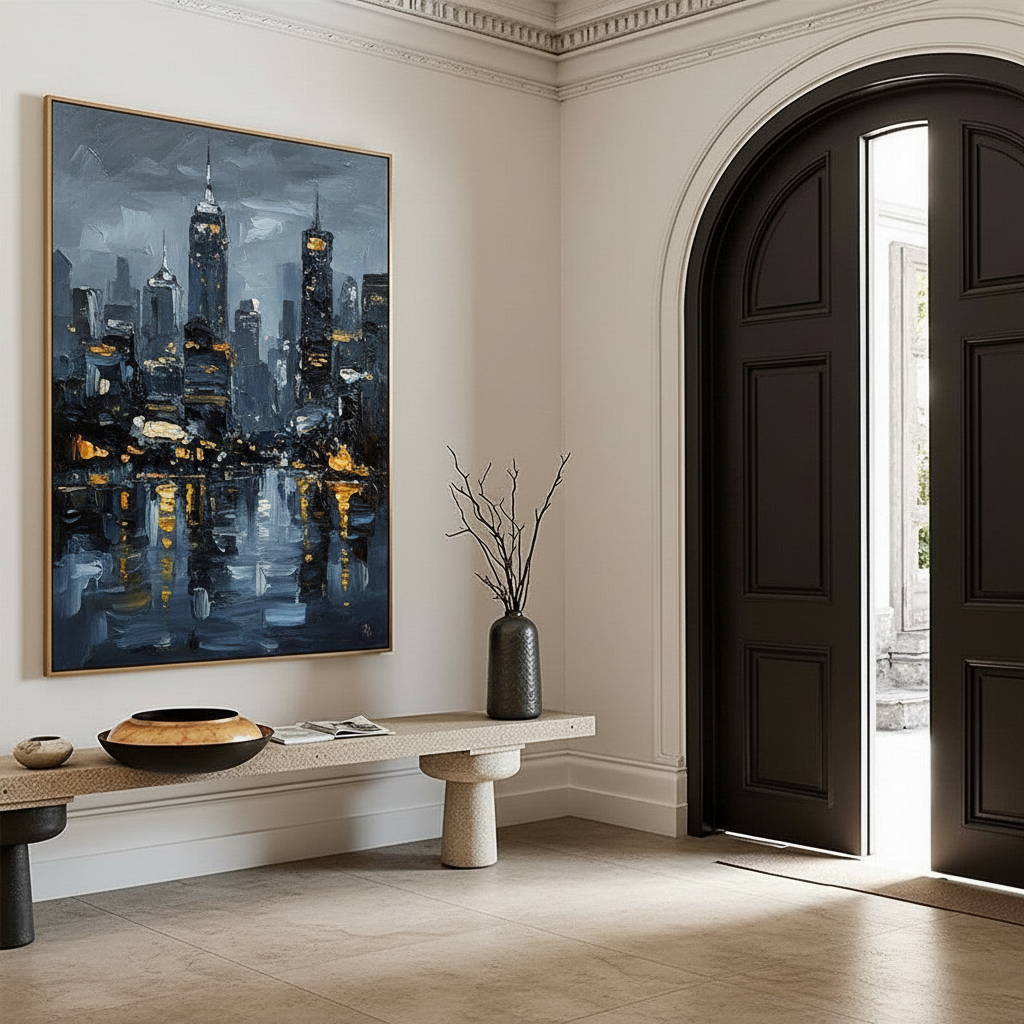
In this landscape, urban vistas and metropolitan cityscapes have emerged as the premier choice for transitional spaces. These subjects do more than decorate; they bridge the gap between the chaotic energy of the outside world and the serene atmosphere of a private sanctuary. By selecting a subject that mirrors the owner's professional drive, the entryway becomes a psychological "cool down" and a visual manifesto of modern life.
The Cognitive Science of Metropolitan Subjects
Why do certain cityscapes feel more "right" in an entryway than others? The answer lies in neuroaesthetics. A systematic review of 85 records indicates that passive art viewing consistently activates the medial prefrontal cortex (mPFC) and the amygdala, optimizing emotional regulation circuits. When you walk through your front door after a high-pressure day, a well-chosen urban vista can actually help your brain recalibrate.
The "Blue Hour" Palette
We often recommend "blue hour" palettes—deep navies and twilight golds—for entryways. This specific color profile serves a dual purpose:
- Psychological Transition: The deep blues provide a sense of calm, while the golds mimic the warmth of a home’s interior lights, creating a bridge between public and private spaces.
- Modern Connectivity: These tones signal a cosmopolitan awareness, aligning the home with the rhythm of global hubs like NYC, London, or Shanghai.
Biophilic Urbanism
Interestingly, the most effective urban vistas often incorporate biophilic elements. Research shows that biophilic design featuring natural landscapes produces stress-reduction effects in the brain similar to the real outdoors. An urban vista that includes a park, a river, or even a sky filled with "blue hour" light can accelerate healing and spark creativity, making it an ideal choice for households that prioritize mental performance.

Spatial Expansion: The Vanishing Point and Sizing Heuristics
In high-end residential design, art is a tool for architectural correction. If your entryway feels narrow or claustrophobic, the right cityscape can "trick" the eye into perceiving more depth.
The Vanishing Point Technique
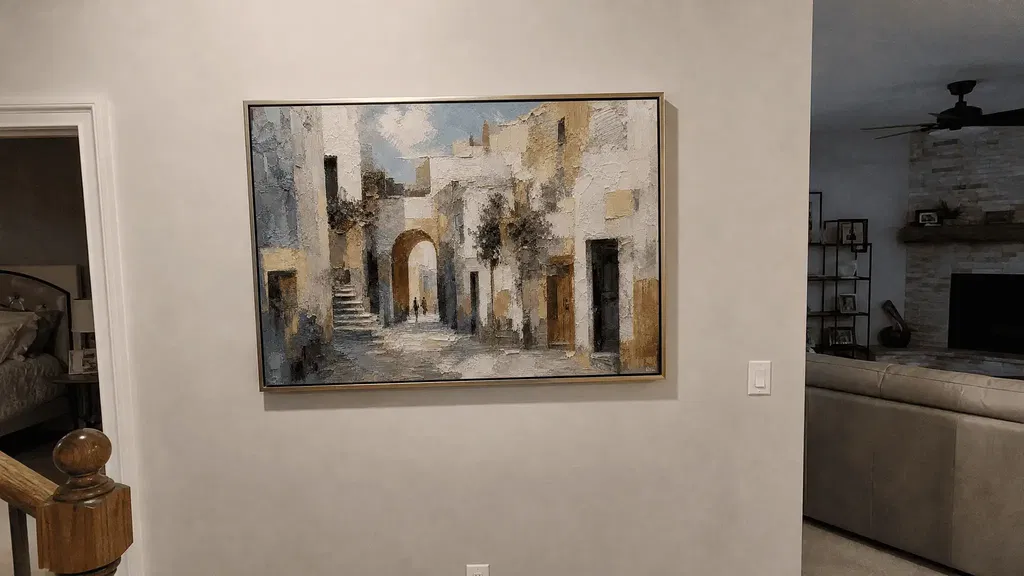
By choosing an urban vista with a clear vanishing point—such as a long street receding into the distance—you create a "window" that extends the room's visual boundaries. This is a common professional heuristic we use to make a narrow entryway feel significantly deeper than its physical dimensions.
The 60% Rule for Visual Balance
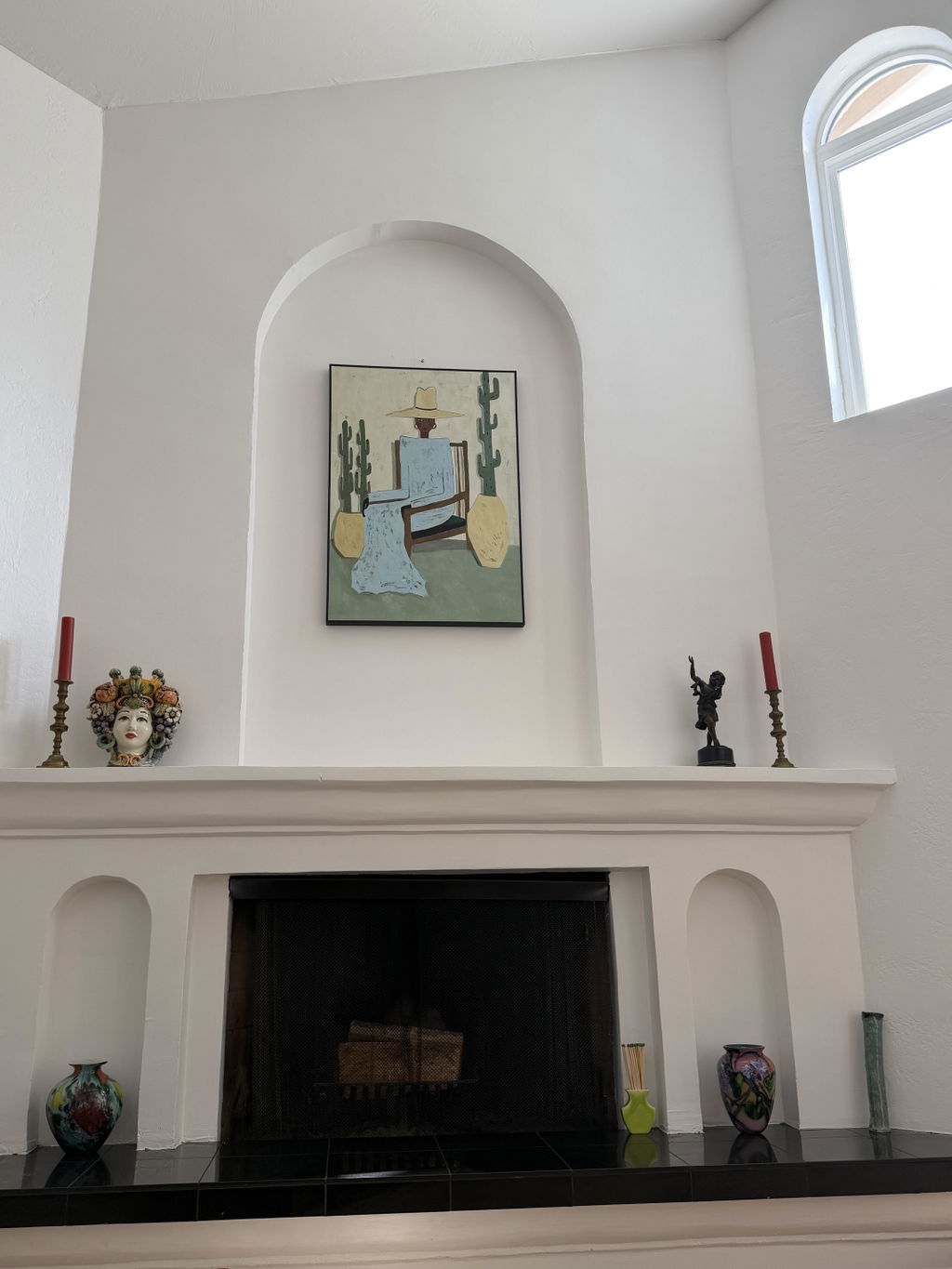
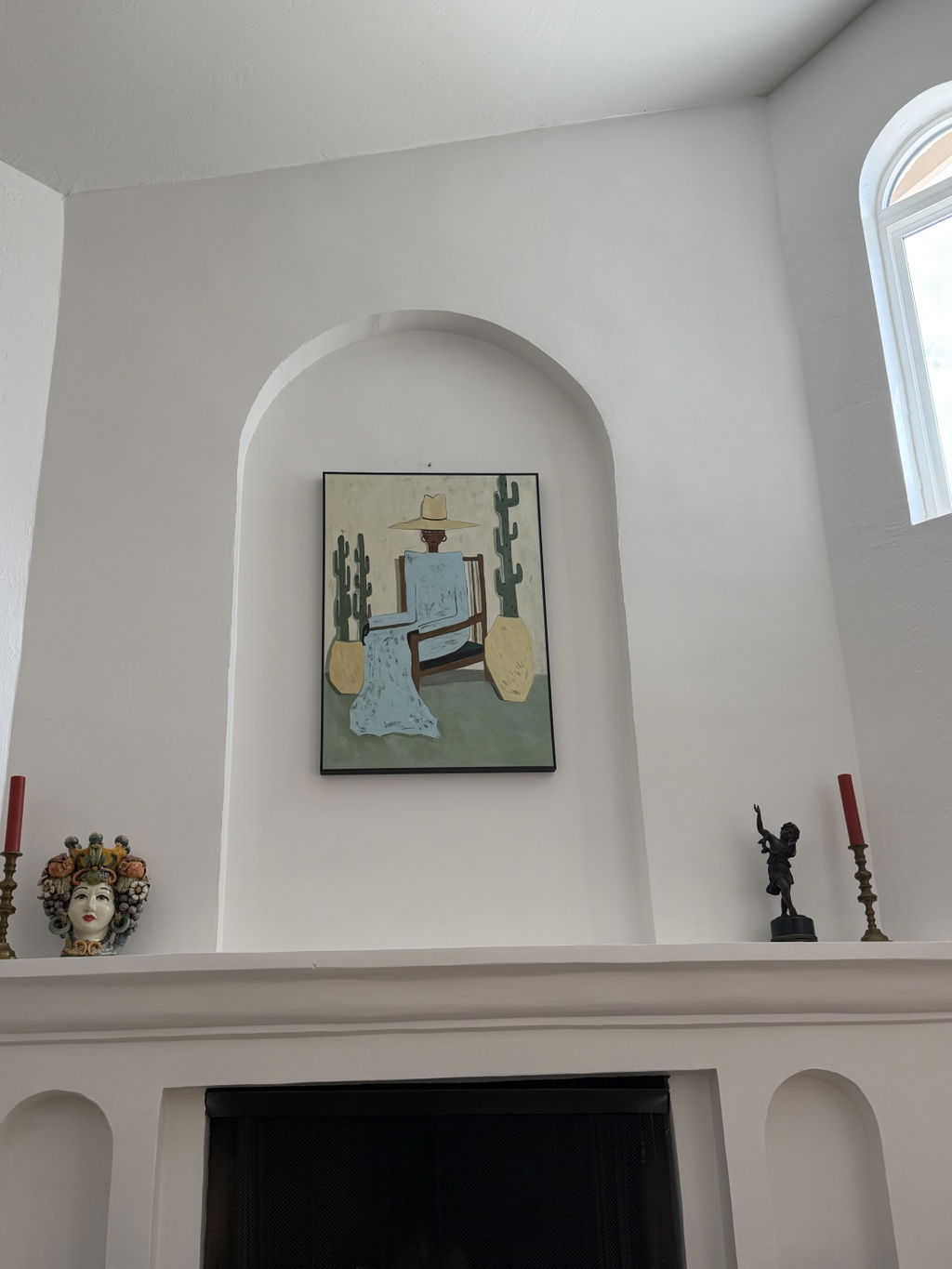
A recurring professional heuristic for entryway art is the 60% Rule. To maintain visual balance above a console table or bench, the artwork should occupy roughly 60-75% of the wall space above that furniture.
Logic Summary: This ratio is based on common design patterns from interior staging (not a controlled lab study). It ensures the art is large enough to anchor the space without overwhelming the furniture or leaving awkward "dead" space on the sides.
| Parameter | Value/Range | Unit | Rationale |
|---|---|---|---|
| Artwork Width | 60–75 | % of furniture width | Prevents the piece from appearing "lost" or top-heavy. |
| Mounting Height | 57–60 | inches (center) | Aligns the focal point with the average human eye level. |
| Lighting Angle | 30 | degrees | Minimizes glare while highlighting surface texture. |
| Side Clearance | 6–12 | inches | Provides "breathing room" between the frame and adjacent walls/moldings. |
| Console Gap | 4–8 | inches | The vertical distance between the bottom of the frame and the console top. |
For more on managing large-scale pieces in tight spaces, see our guide on Large Art in Small Living Rooms.
The Human Premium: Why Authentic Texture Outperforms Digital Prints
In an era of mass-produced decor and AI-generated imagery, the "real art" feel—defined by physical texture and hand-painted quality—has become the ultimate luxury marker.
The Identity Crisis of Digital Replicas
Research from the University of Chicago shows that digital replicas and NFTs lack the artist's "essential identity" in the eyes of consumers, which causes their perceived value to collapse. Furthermore, experiments at Columbia University confirmed that consumers value art labeled as AI-generated 62% lower than authentic human-created art.
The Power of Micro-Physical Texture
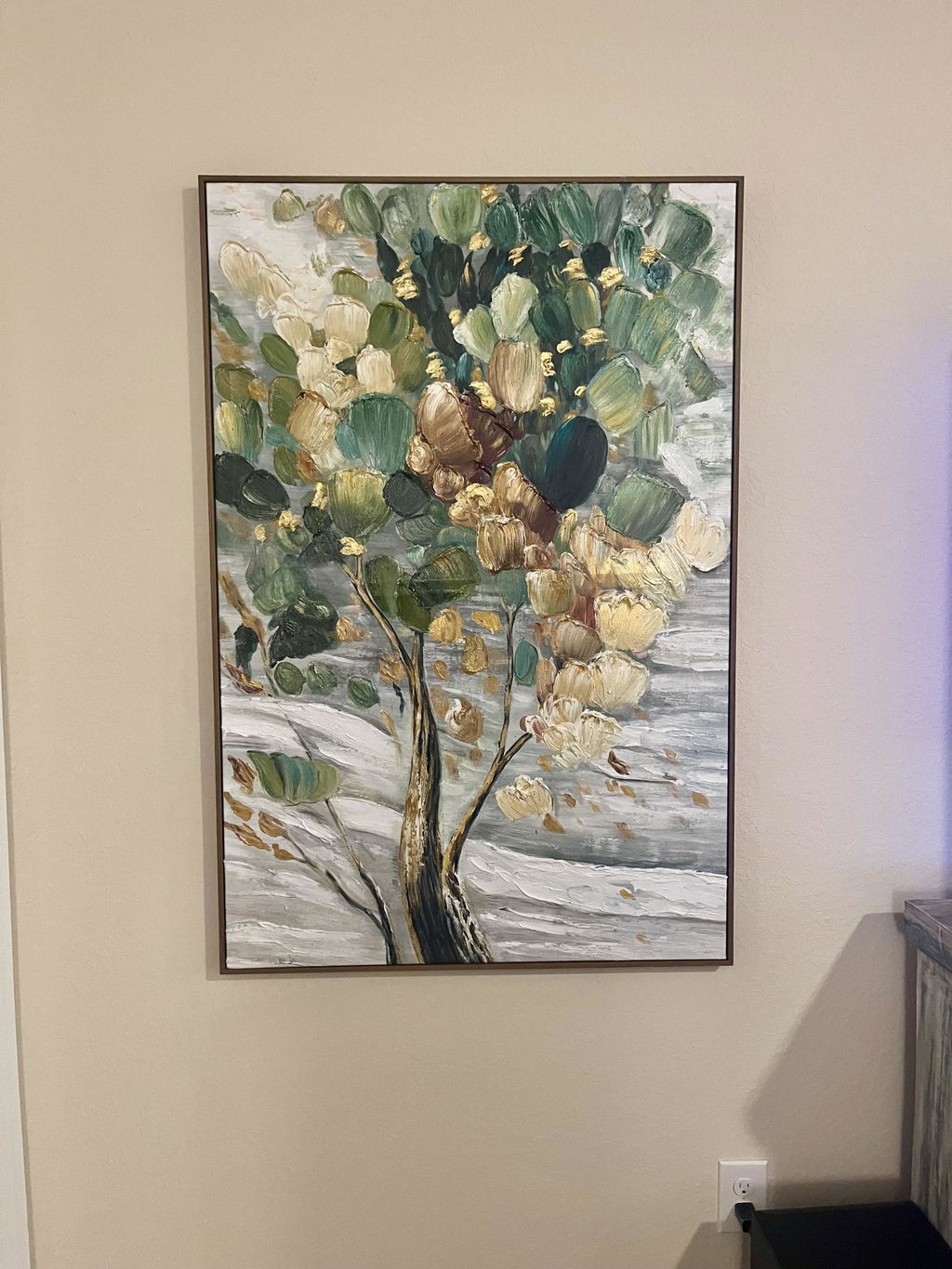
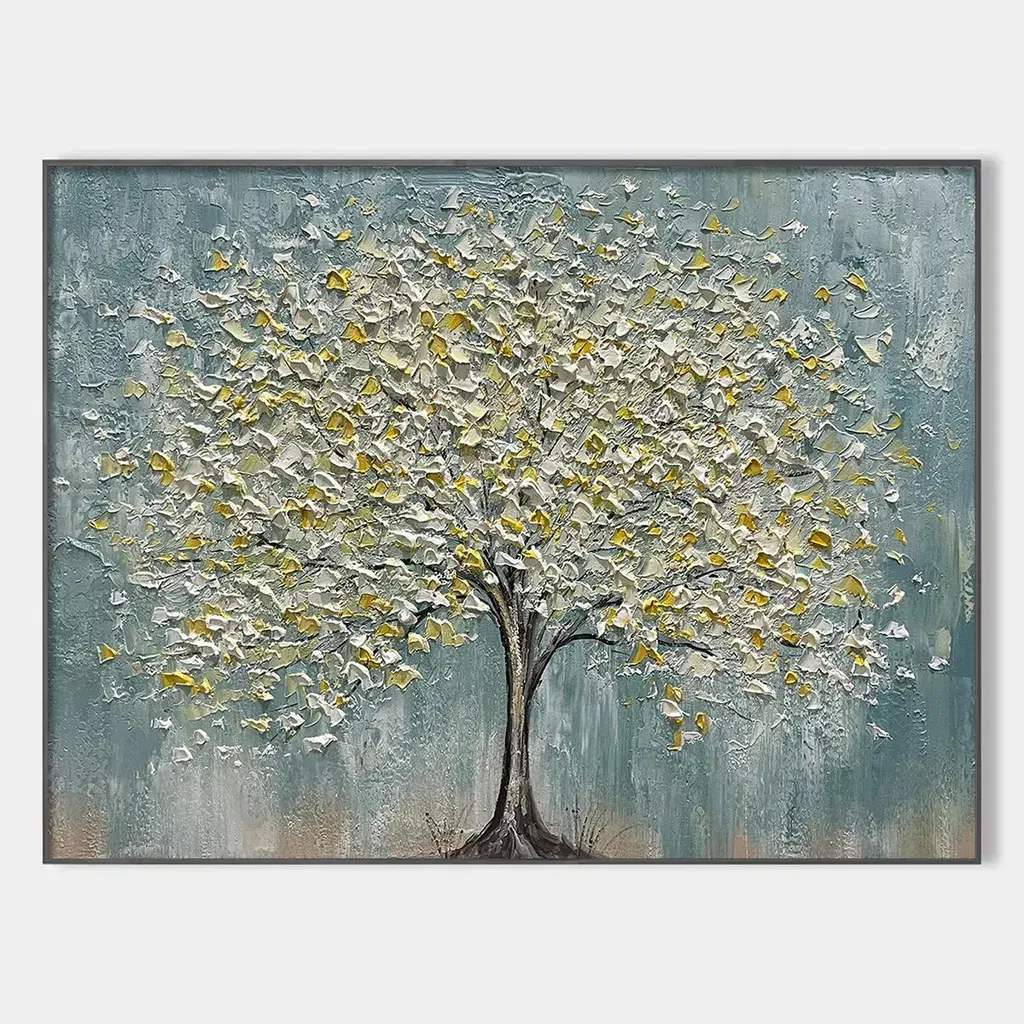
What makes a hand-painted oil or acrylic piece so captivating? It’s the microtopography. Optical microprofilometry has proven that the mm-scale texture of oil paintings is crucial to their aesthetics. These physical reliefs stimulate "intrinsic motivation and satisfaction" in viewers (MUNCH Museum tests). When you walk past a hand-painted cityscape, your brain registers the unique brushstrokes and the way they catch the light—a tactile experience that a flat print simply cannot replicate.

The Commercial Edge: Real Estate Valuation and Foot Traffic
For developers and homeowners looking to increase property value, the installation of high-quality murals and art is more than an aesthetic choice—it's a financial strategy.
Quantifying the Art-Property Link
A Royal Society CAR model analysis of 10-year data found that neighborhoods with higher "art" geo-tags had greater relative house price ranking gains. In commercial contexts, the impact is even more dramatic. Public art projects, like Chicago's Millennium Park, have driven $1.4 billion in real estate-related growth.
Modeling the Mural ROI
Based on data from Americans for the Arts, government tax investments in the arts yield an astonishing 7:1 ROI. While individual residential returns vary, the "catalytic effect" of a single high-quality mural can trigger significant private investment and capital interest in a property.
Modeling Note (Scenario Analysis):
- Scenario A (Residential): A custom hand-painted mural in a high-end entryway acts as a "luxury anchor," potentially reducing days-on-market during a sale by creating a memorable "camera-ready" first impression.
- Scenario B (Commercial): A storefront mural acts as a "permanent physical billboard," increasing pedestrian foot traffic (as correlated by University of Cincinnati regression analysis).
Safety, Sustainability, and the Science of Pigments
For households with children or health-conscious residents, the chemical composition of art materials is a critical concern. The "camera-ready" home must also be a healthy home.
The VOC Myth
Many consumers believe that "low odor" means "non-toxic." However, Princeton University guidelines warn that acute inhalation of high-concentration solvents can cause narcosis, while chronic exposure can lead to brain damage. This is why we prioritize water-based acrylics and low-VOC paints for indoor murals.
Toxic Pigment Awareness
When commissioning art, it is vital to understand what is on the canvas.
- Cadmium: The International Agency for Research on Cancer (IARC) classifies cadmium as a Group 1 carcinogen.
- Lead: EU REACH regulations have a comprehensive prohibition on lead white in concentrations exceeding 0.1%.
- Titanium White: Modern high-quality paints use titanium dioxide, which dominates 90% of the white pigment market due to its chemical inertness and superior hiding power.
The "ASTM D-4236" Label
Don't be misled by the ASTM D-4236 logo. According to the EPA, this label only means that the warning labels comply with regulations—it does not mean the pigment is non-toxic. Always consult with a professional who uses non-toxic, eco-friendly alternatives like hemp canvases and walnut-oil-based solvents.
Lighting the Narrative: Practical Installation Strategies
Once you have selected your urban vista, how you light it determines its final impact. For high-texture oils and acrylics, standard overhead lighting is often the enemy.
Grazing Lighting for Texture
To highlight the "real art" feel, experts recommend grazing lighting. This involves placing fixtures to the side of the piece. The light "grazes" the surface, casting small shadows behind each brushstroke, which emphasizes the three-dimensional quality of the paint.
Glare Reduction
Direct overhead spotlights often create a blinding glare on the glossy surface of oil paintings. By using side lighting and high-CRI (Color Rendering Index) bulbs, you can ensure the colors remain vibrant and the details visible from every angle. For more technical tips, see our guide on High-CRI Lighting for Oil Paintings.

Summary of the Modern Entryway Strategy
The modern entryway is a strategic intersection of psychology, design, and health. By choosing an urban vista, you are not just buying decor; you are investing in a "spatial solution" that signals ambition and enhances your home's perceived value.
- Subject: Use "blue hour" palettes to bridge the gap between public energy and private rest.
- Depth: Leverage vanishing points to expand narrow foyers.
- Authenticity: Prioritize hand-painted textures to capture the "human premium."
- Safety: Stick to low-VOC and non-toxic pigments (avoid Cadmium and Lead).
- Scale: Follow the 60-75% width heuristic for visual balance.
By grounding your art choices in these principles, you create a space that is not only "camera-ready" but also deeply aligned with the identity of the modern, career-focused homeowner.
Disclaimer: This article is for informational purposes only and does not constitute professional medical, safety, financial, or legal advice. Art materials can contain hazardous chemicals; always consult safety data sheets (SDS) and follow manufacturer guidelines. Property valuation increases are estimates based on market trends and are not guaranteed.
References & Sources
- Marketplace: The Expensive Art Market Struggles
- NCBI: Neurological Mechanisms of Creative Arts
- Columbia Business School: Human-Made vs. AI Art
- WHO: Scoping Review on Arts and Health
- Royal Society: Quantifying the link between art and property prices
- EPA: Indoor Air Quality and Low-VOC Paints
- IARC: Cadmium and Cadmium Compounds
- UCincinnati: How street murals impact communities