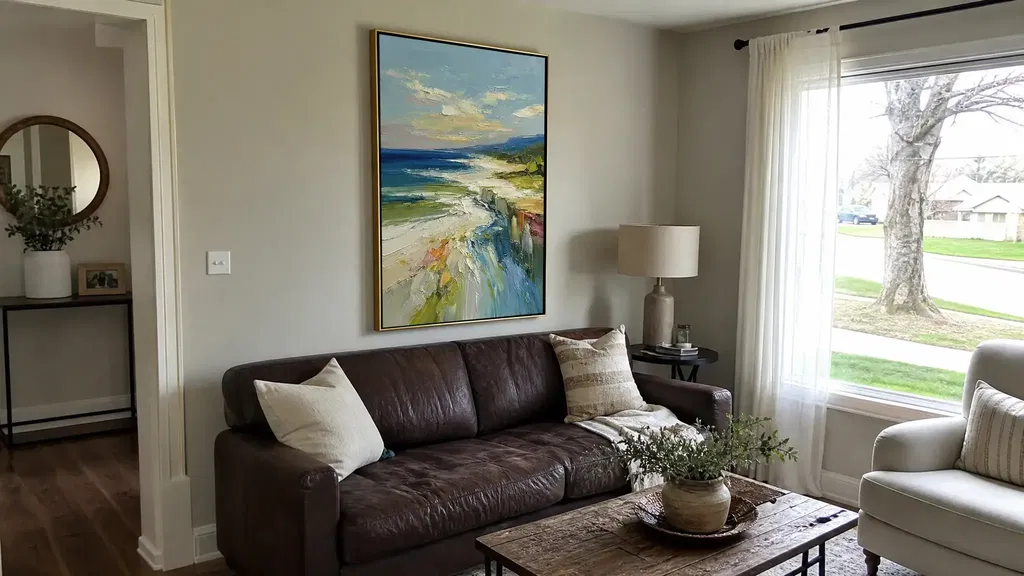
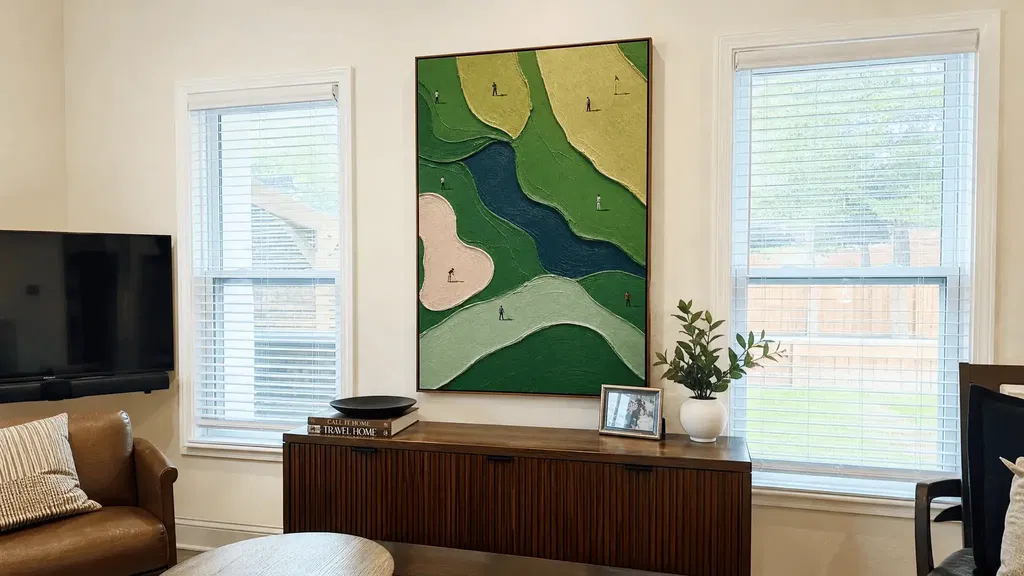
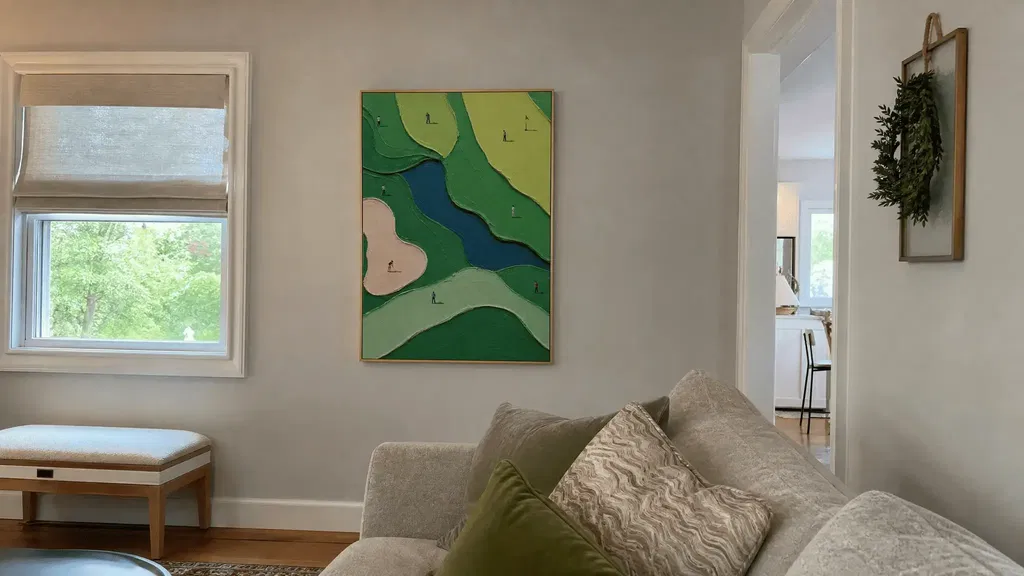
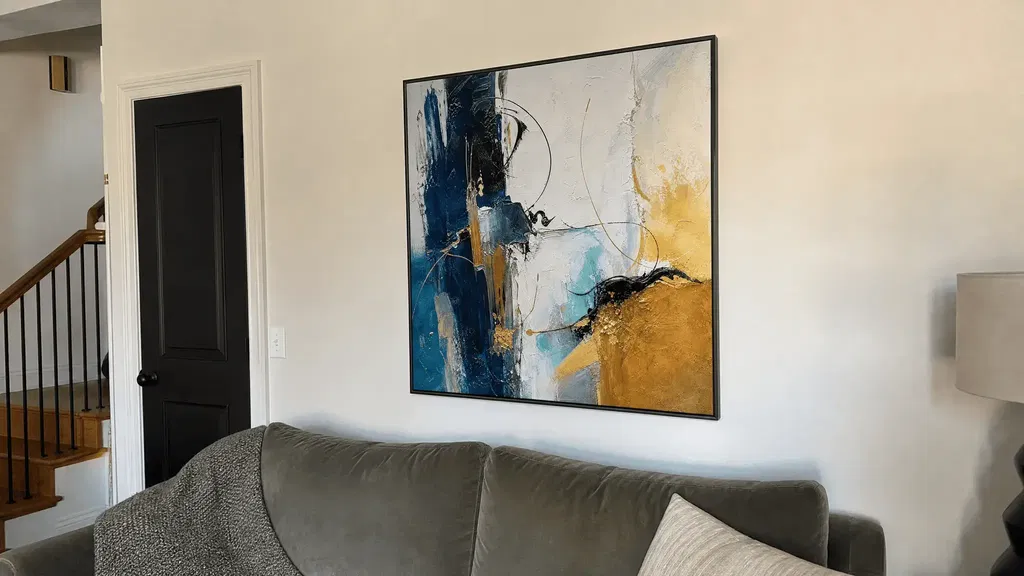
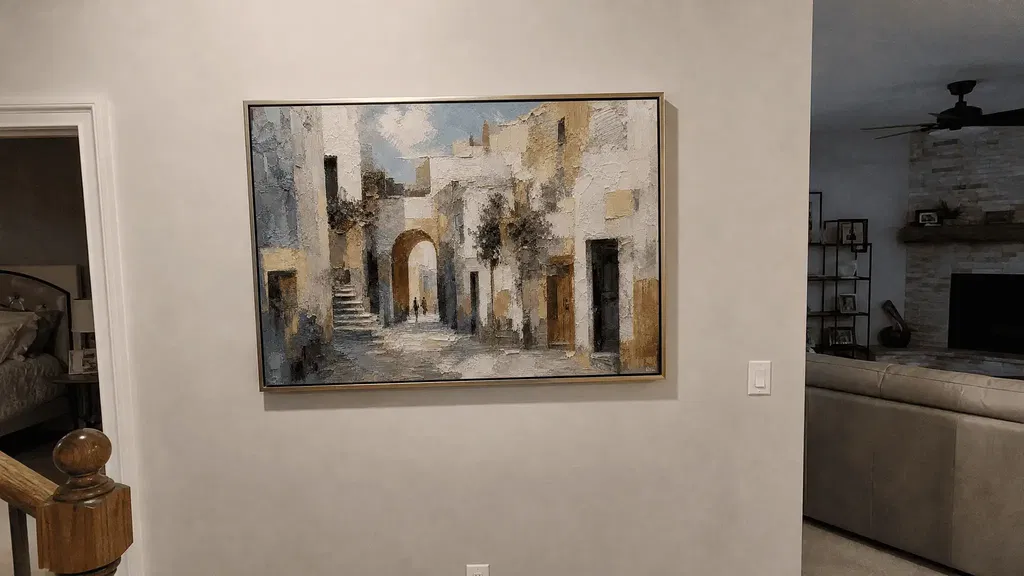
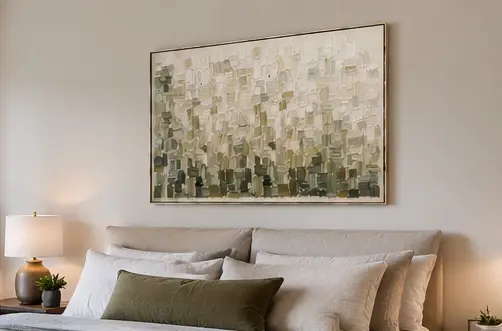
Plaster paintings generally suit buyers who want painted movement, color variation, and a canvas-based presentation, while plaster-style decor suits those seeking deeper architectural relief and stronger cast shadows. Neither format is automatically lighter, safer, easier to clean, or more durable. The deciding checks are the exact piece's construction, finished weight, backing, frame, care instructions, and the room's light, activity, and environmental exposure.
Plaster Paintings or Textured Canvas: Start With the Look You Want
Choose textured canvas when layered brushwork and color movement should lead the room; choose plaster-style decor when quiet planes, pronounced relief, and architectural shadow matter more. View the exact finish from the distance where it will hang, in both the room's daylight and evening light, before deciding.
Match Relief Depth to Viewing Distance and Lighting
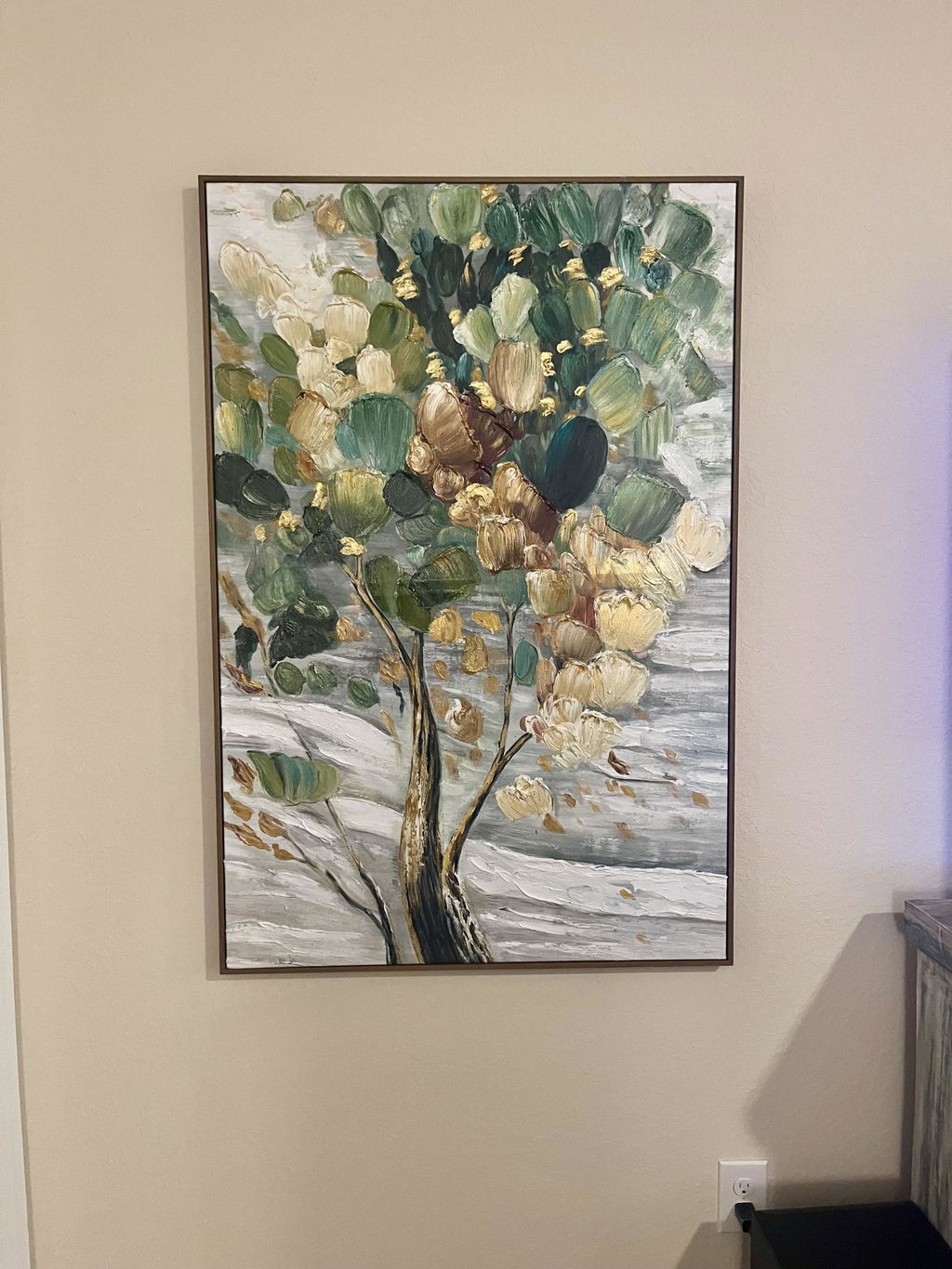
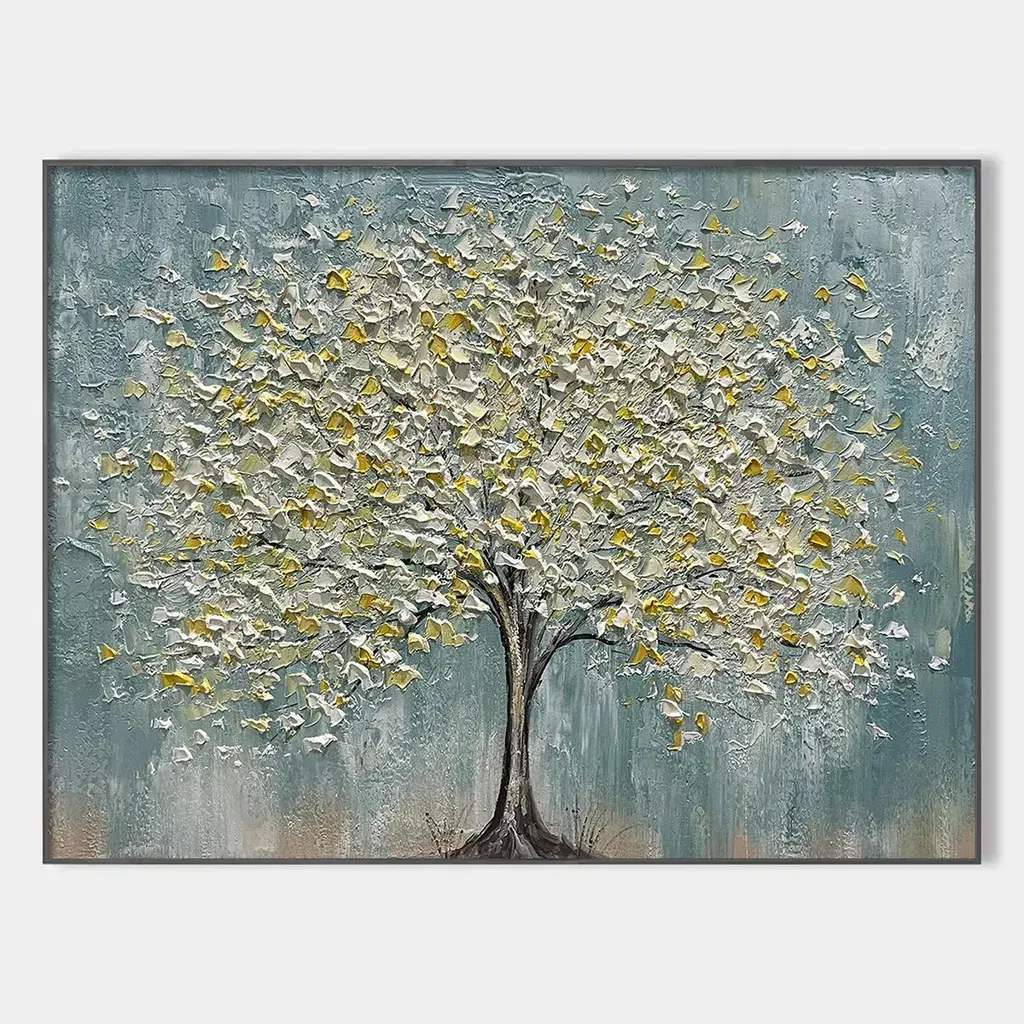
Low or moderate relief may read mainly as surface texture from across a living room, while deeper relief can create a more sculptural focal point. Directional light makes ridges and recesses more visible, but it can also reveal glare or make a finish feel busier than it did in a straight-on product image.
For a practical relief wall art buying guide, inspect side-angle views, visible ridges, irregularity, and shadows cast by real or directional light. If the listing only shows a flat front image, you may not have enough information to judge whether the work will read as subtle texture or a dominant three-dimensional statement.

This relief depth guide offers useful context, but the exact artwork's images and finish should decide.
Decide Between Painted Movement and Quiet Architectural Texture
The difference between plaster wall art versus textured paintings is most useful as a visual tendency, not a standardized material ranking. “Plaster-style” may describe a look rather than a single substrate, coating, or construction method, so ask what the relief is actually made from when care or installation matters.
| Visual priority | Stronger format fit | What to look for |
|---|---|---|
| Color movement | Textured canvas | Layered brushwork, tonal shifts, and an expressive contemporary art presence |
| Quiet warmth | Either, depending on finish | Earthy or neutral color, soft texture, and low visual contrast |
| Pronounced shadow | Plaster-style decor | Recesses and ridges that remain visible under directional light |
| Variation at normal distance | Textured canvas | Painted changes that read across the room, not only in a close-up |
| Material-forward statement | Plaster-style decor | Restrained color and tactile planes that act more like architectural relief |
This is also why contemporary textured art should be judged by finish and lighting rather than by a category label alone. A restrained canvas can feel architectural, and a painted relief piece can be highly expressive.
Compare Weight, Hanging, and Moving Before You Commit
Textured canvas can be the more practical starting point for a buyer who expects to move or reposition artwork, but the format name does not tell you the finished weight or mounting requirements. Confirm the individual piece's dimensions, construction, finished weight, backing, frame, hardware, and wall conditions before checkout. Plan the display around the object itself, not a general canvas-versus-plaster assumption; see this individual artwork verification guidance.
| Ownership task | Textured canvas considerations | Plaster-style decor considerations |
|---|---|---|
| Carrying and doorways | Check the packed and finished dimensions; depth and frame still affect access | Confirm depth, edges, and finished weight before moving through narrow routes |
| Repositioning | May suit changing layouts, but construction and hardware remain decisive | Better treated as a stable-installation choice when relief and presence outweigh frequent moves |
| Storage | Protect the textured face and edges from contact; follow the maker's instructions | Protect exposed relief from impact and avoid assuming stacked or leaning storage is suitable |
| Wall preparation | Verify backing, hardware, wall condition, and the method recommended for the exact piece | Ask for the same information, especially when the piece is deep, wide, or difficult to handle |
| Installation support | Use seller, framer, or installer guidance when dimensions or construction are unusual | Do not guess at anchors or load capacity; the hanging method must match the artwork and wall |
For drywall, plaster, masonry, or a wall in uncertain condition, the right next step is a wall-specific installation check rather than a universal hardware recommendation. Public-art framing guidance likewise emphasizes matching support to the artwork's construction and weight; review this framing guidance.

Set the Care and Protection Tradeoff
Neither format is maintenance-free, and the safer choice depends on the exact surface, finish, condition, and household exposure. Follow the maker's care instructions, avoid assuming that water or household cleaners are acceptable, and stop DIY cleaning if the relief is cracking, flaking, lifting, or otherwise unstable; collection housekeeping guidance supports this conservative approach.
Balance Fragility Against Everyday Cleaning
Raised texture can make dust and accidental contact more noticeable, especially in an active home, but that does not establish a universal care difference between canvas and plaster-style decor. Raw or uncoated plaster-like surfaces may be particularly sensitive to moisture, so do not assume that a “plaster” finish can be wiped with water; the coating and condition control the answer. This conservation guidance on plaster care illustrates why the material and condition matter.
Use this stop check before buying or cleaning:
- Confirm the maker-approved method for the specific finish; do not substitute water, solvents, scrubbing, or pressure.
- Consider whether children, pets, furniture traffic, or a narrow walkway create frequent contact with the relief.
- Treat chips, cracks, flaking, lifting, or loose texture as reasons to pause and request guidance rather than experiment.
- If care instructions are missing, ask the seller what the surface, coating, and backing are before committing to a high-relief piece.
The key distinction in textured canvas art or plaster wall decor is not a promise that one is washable. It is whether the exact surface and your household can be managed within clearly stated care limits.
Choose Framing for Protection and Finish
Framing is both a visual and practical decision. A frame can affect edge protection, depth clearance, support, backing, and installation, while an unframed presentation may keep the relief more immediate. Neither presentation is universally safer or easier to move.
Compare the finished edge, the distance between the relief and any glazing or protective element, the backing, and the proposed hanging method. General preservation guidance treats fit, depth, separation, and environmental protection as part of framing decisions, but those principles do not replace piece-specific advice for textured canvas or plaster-style work; consult this preservation framing guidance.
For shoppers who want to browse a canvas-based direction after this check, our textured impasto paintings provide a relevant starting point. The collection link is for browsing; verify each artwork's construction and care details separately.
Test the Format Against the Room
Choose based on activity, environmental exposure, scale, and lighting rather than style alone. Canvas-based art may fit a color-led focal point that you expect to reposition, while plaster-style decor may fit a stable, quieter architectural statement—but damp, highly active, or environmentally variable rooms call for extra verification before either format is chosen.
Use this room-fit checklist:
- Activity: Is the artwork near a walkway, seating edge, play area, pet route, or piece of furniture that could make contact more likely?
- Moisture: Could steam, splashes, leaks, or condensation reach the wall? If so, confirm the exact finish, ventilation needs, and maker guidance first.
- Environmental exposure: Check for vents, radiators, direct exposure, and noticeable temperature or humidity swings. Artwork placement guidance identifies these conditions as relevant placement concerns.
- Wall scale: Does the piece have enough surrounding space for its relief to read, or will nearby molding, shelving, and furniture compete with it?
- Light direction: Compare the artwork under the room's daylight and evening lighting. A side-lit surface may show much stronger shadows than a front-lit one.
- Nearby texture: If the room already has stone, fluting, heavy upholstery, or patterned rugs, decide whether the wall art should echo that texture or provide visual relief.
- Focal-point strength: Choose painted movement for a color-led presence or architectural relief for a more material-focused statement; do not select maximum depth simply because a close-up image looks dramatic.
In a living room, bedroom, entryway, or office, the same format can feel different depending on sight lines and contact risk. If environmental limits or care requirements are unavailable, delaying the purchase is more useful than treating the style label as a compatibility guarantee.
Choose the Format That Fits Your Non-Negotiables
The best choice is the format that passes every practical condition after it meets your visual goal. Choose textured canvas when painted variation and a canvas-based presentation lead your priorities; choose plaster-style decor when pronounced relief and architectural presence matter more; defer either purchase when essential ownership information is missing.
- Define the visual priority. Decide whether you want color movement, layered brushwork, quiet planes, cast shadows, or maximum relief at normal viewing distance.
- Check handling and wall constraints. Measure the route to the wall, review dimensions and finished weight, and confirm construction, backing, frame, hardware, and wall condition. This is where a canvas-based option may become the more practical shortlist for frequent rearrangement, but do not assume it will be lighter without exact specifications.
- Verify care and presentation. Request finish-specific care instructions and compare framed versus unframed edges, depth, support, and installation. If the surface is unstable or the care method is unclear, stop rather than improvise.
- Shortlist or defer. Buyers whose criteria favor painted, canvas-based texture can browse all paintings as a next step. Buyers who prioritize architectural relief can shortlist plaster-style pieces only after confirming the same ownership details. If dimensions, construction, finished weight, mounting approach, care instructions, or environmental limits remain unknown, delay the purchase.
That is the practical answer to how to choose relief wall art: start with the look, test the room and handling constraints, then let the exact piece—not the label—decide.
FAQs
These questions focus on purchase checks that can change how plaster paintings or textured canvas fit your home. Use seller or maker guidance whenever the material, finish, hardware, or environmental limits are unclear.
Can plaster-style wall decor work in a bathroom or kitchen?
Only after you confirm the exact finish, ventilation needs, and maker guidance for moisture and temperature exposure. Otherwise, choose a drier wall or delay the purchase.
What should I check before hanging relief art on drywall?
Confirm the piece's dimensions, construction, finished weight, backing, frame, hardware, and wall condition. Ask a seller, framer, or qualified installer about the specific setup when any detail is uncertain.
Does strong sunlight change which tactile wall-art format I should choose?
It can change glare, shadows, color, and texture. Compare the finish in the actual room at different times of day, then ask about placement limits if direct exposure is unavoidable.
Is framed or unframed relief art better for a frequently rearranged room?
Neither is universally better. Compare edge treatment, protection, backing, handling, and installation details, and prioritize clearly documented requirements over the presentation label.