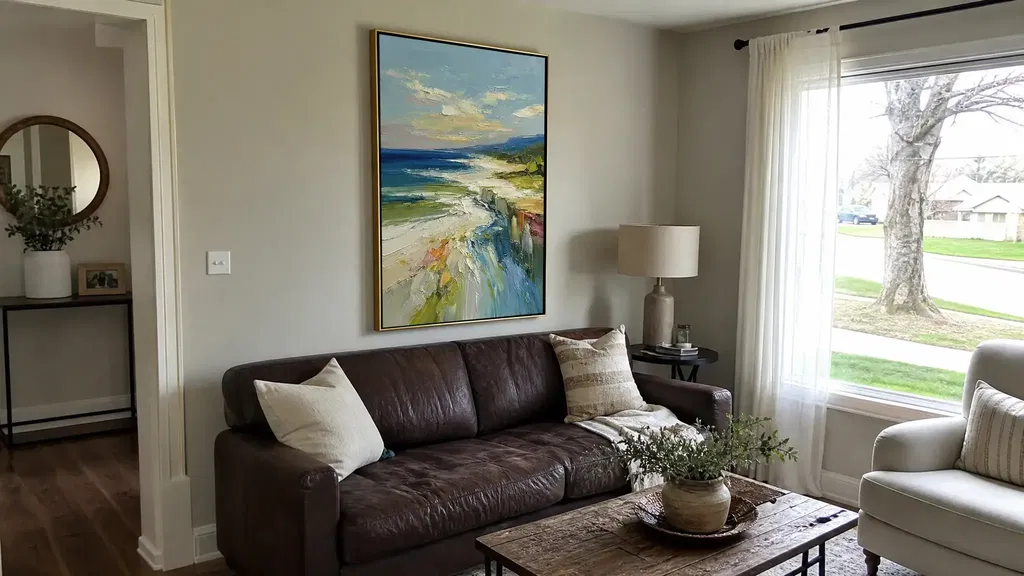
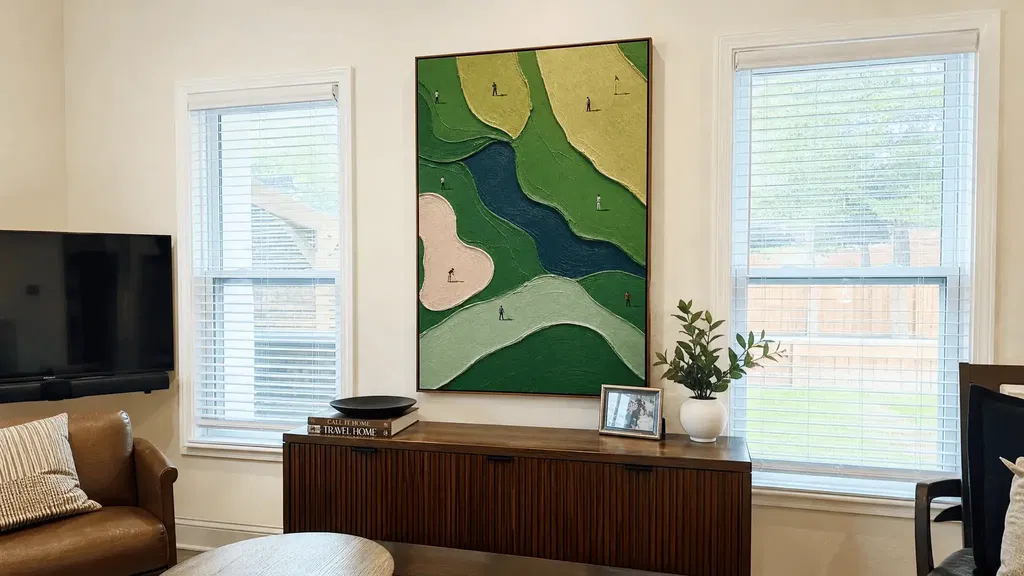
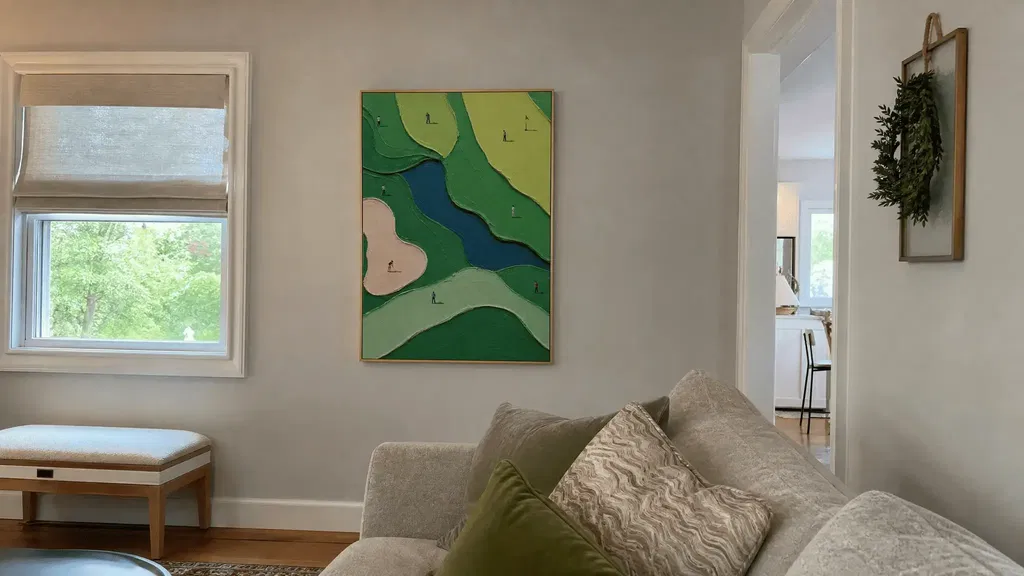
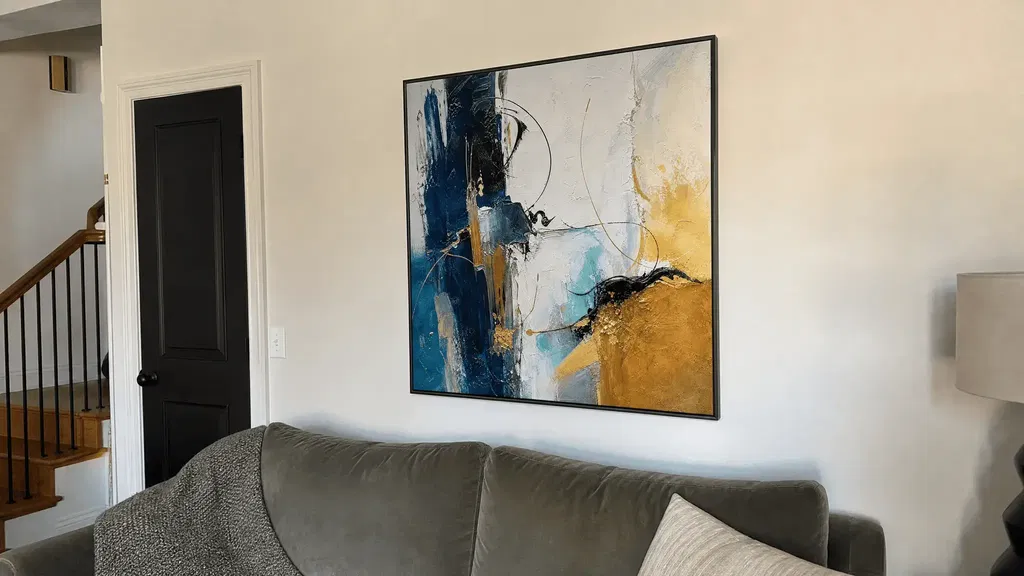
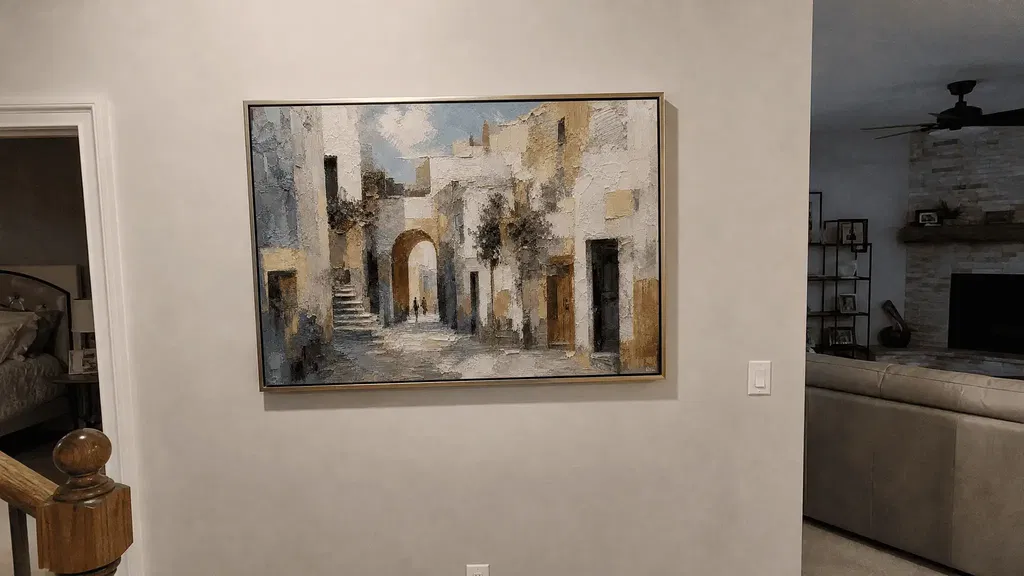
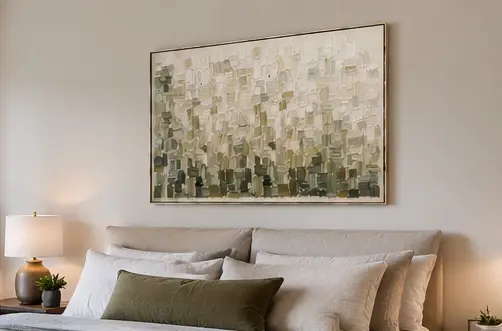
The Shift Toward Authentic Texture in Modern Interiors
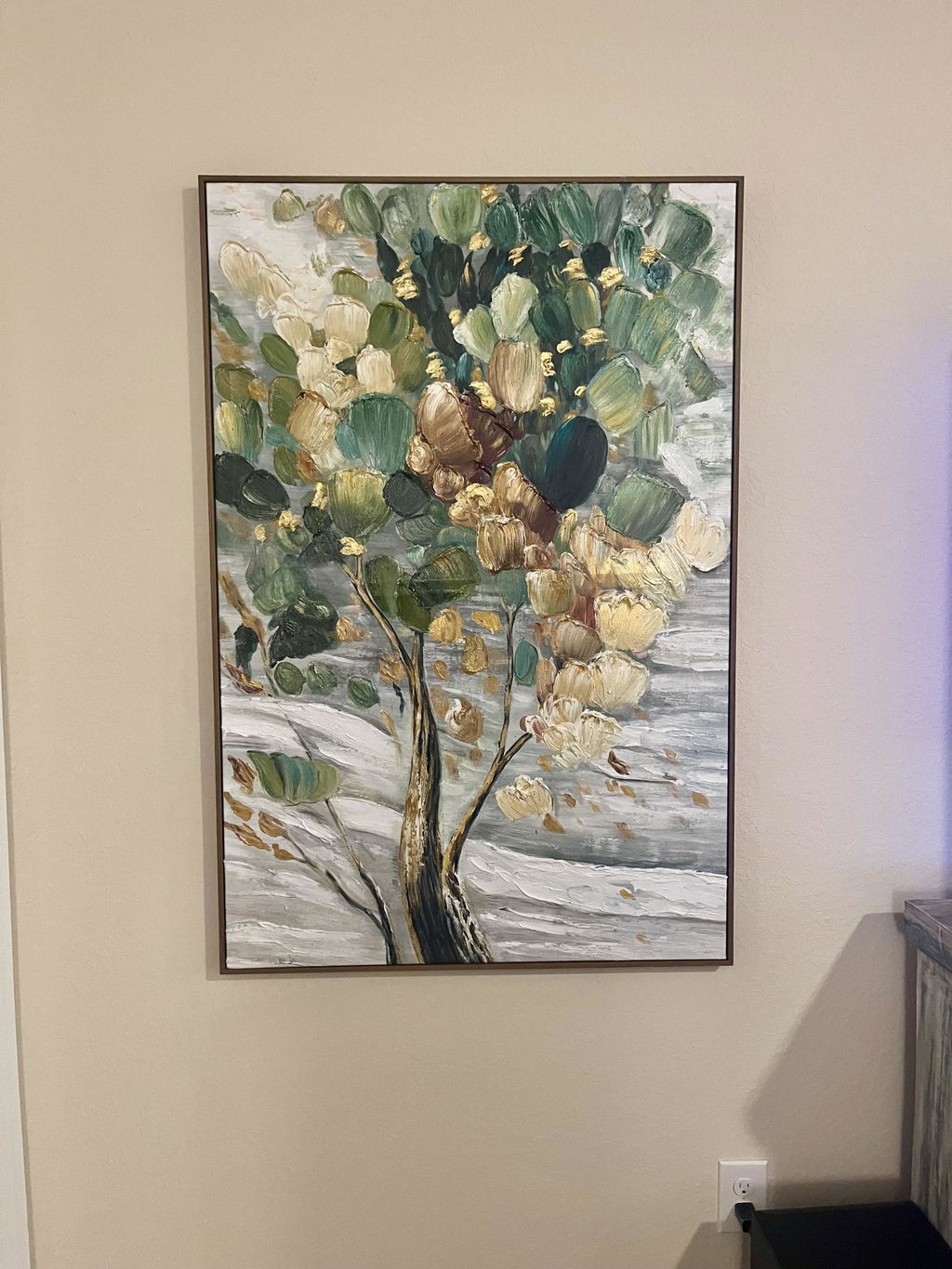
The global art market is undergoing a profound structural correction. In 2024, high-end auction sales for purely financial art assets plummeted by 44%, according to Marketplace, signaling a decisive retreat from "vanity pieces" toward artwork with real emotional and application value. As collectors move away from speculative digital assets and flat prints, the demand for tactile, hand-painted oil paintings—specifically those utilizing the heavy impasto technique—has surged.
Impasto, characterized by thick, relief-like brushstrokes that stand off the canvas, offers a sensory experience that digital replicas cannot replicate. Research from Columbia University confirms that consumers value art labeled "human-created" significantly higher than AI-generated prints, with the latter perceived as having 62% less value. This "essential identity" of the artist’s hand, as explored by the University of Chicago, is physically manifested in the peaks and valleys of a textured canvas.
However, the very quality that makes impasto desirable—its three-dimensional physical presence—presents a unique challenge for framing. A standard frame designed for a flat canvas or a paper print can be a "death sentence" for a heavily textured work, leading to compressed paint, cracked layers, and obscured details. Selecting a frame for deep-texture art is not merely an aesthetic choice; it is a technical preservation requirement.
The Physics of Impasto: Why Standard Frames Fail
To understand the framing requirements of deep-texture art, one must look at the micro-physical texture of the medium. Optical microprofilometry has proven that the millimeter-scale topography of oil paintings is crucial to their aesthetic impact; these textures interact with light to create shadows and highlights that change as the viewer moves.
When a painting features impasto peaks exceeding 1/4 inch, a standard "rabbet" (the inner groove of a frame) often lacks the depth to accommodate the canvas without the frame’s lip or the glazing (glass/acrylic) physically touching the paint.
The Risks of Improper Clearance
- Mechanical Compression: Fresh or even "cured" oil paint remains somewhat pliable for years. Direct pressure from a frame or glass can flatten peaks, destroying the artist's intended relief.
- Adhesion and Shearing: If the paint surface touches the glazing, fluctuations in temperature and humidity can cause the paint to "bond" to the glass. According to conservationists at Fine Art Restoration, attempting to remove a painting stuck to glass often results in catastrophic paint loss.
- Humidity Pockets: Standard framing often traps air. For textured works, these recesses can become micro-climates. If foam-based liners are used without proper ventilation, they can create humidity pockets that accelerate the deterioration of the paint film.
Logic Summary: The Impasto Clearance Heuristic Our framing recommendations are based on common patterns observed in professional conservation and high-end gallery installations. We utilize a "50% Buffer Rule" for clearance:
- Heuristic: Measure the highest peak of the paint from the canvas surface.
- Requirement: The distance between the paint peak and the glazing (or frame lip) should be at least 50% of the peak's height.
- Example: A 10mm paint peak requires a minimum 15mm total internal depth (10mm for the paint + 5mm air gap).

Selecting the Right Frame Style: Floating vs. Shadow Box
For deep-texture paintings, the choice usually narrows down to two professional configurations: the Floating Frame and the Shadow Box.
1. The Floating Frame (Gallery Standard)
Floating frames are the preferred choice for modern impasto works. The painting is mounted from the back, leaving a "moat" or gap between the edge of the canvas and the frame.
- Pros: It allows the entire texture, including the edges of the canvas, to be visible. It also provides excellent air circulation, reducing the risk of humidity-related "haziness" or surfactant migration, a phenomenon identified in Tate’s TAAMPP research.
- The "Gotcha": Large impasto paintings can be surprisingly heavy. Standard floating frames may lack the structural rigidity to prevent the canvas from sagging over time. For works exceeding 2kg, cross-bracing of the stretcher bars is essential before framing.
2. The Shadow Box
A shadow box is a deep frame, usually glazed with acrylic, that treats the painting like a three-dimensional object in a museum case.
- Pros: Maximum protection from dust and physical contact. Ideal for "ultra-high" relief where paint extends more than 1/2 inch from the canvas.
- The "Gotcha": Lighting becomes critical. Because the frame walls are deep, they can cast unwanted, harsh shadows across the textured areas if the lighting is not perfectly diffused.
| Feature | Floating Frame | Shadow Box |
|---|---|---|
| Texture Depth Support | Up to 1/2 inch | 1/2 inch to 3 inches |
| Air Circulation | Excellent | Limited (requires spacers) |
| Aesthetic | Modern, "Open" | Formal, "Protected" |
| Weight Distribution | Back-mounted | Rabbet-mounted |
| Typical Cost | Moderate | High (due to custom depth) |
Structural Integrity: Managing the Load of Heavy Paint
A common mistake in home decoration is underestimating the weight of a high-relief oil painting. Thick layers of pigment and binder are dense. When combined with a solid wood frame, the dynamic load on wall hardware can be significant.
According to structural guidelines for hanging heavy art, standard wire and nail systems are often insufficient for deep-profile frames. For any framed work exceeding 50mm (approx. 2 inches) in depth, a French Cleat mounting system is recommended. This system uses two interlocking brackets—one on the wall and one on the frame—to distribute the weight evenly across the wall studs. This prevents the "forward tilt" often seen with heavy paintings hung on wires, which can cause the top of the frame to pull away from the wall.
Methodology Note: Weight-to-Hardware Modeling
Our analysis of hanging requirements assumes a standard 12oz cotton canvas primed with universal gesso.
- Assumed Paint Density: ~1.2g/cm³.
- Scenario: A 24x36 inch painting with 1/4 inch average impasto coverage adds approximately 1.5kg of weight in paint alone, excluding the frame and stretcher.
- Boundary Condition: This model does not apply to lightweight acrylic "texture pastes" which use aerated fillers. It is specifically designed for traditional heavy-body oils or high-solid acrylics.
Environmental and Chemical Considerations
Framing isn't just about support; it's about creating a stable environment for the chemical life of the paint.
The SID Phenomenon
One of the most frustrating issues for collectors of textured art is "Support Induced Discoloration" (SID). As noted by Golden Artist Colors, water-soluble impurities in the canvas can be drawn into thick, transparent layers of paint as they dry, causing a yellow or brown tint. A professional framer will ensure the painting is fully cured and potentially sealed before it is "closed" into a frame, especially if a shadow box configuration is used.
VOCs and Indoor Air Quality
Safety is a premium priority. Traditional oil painting solvents like turpentine emit high levels of Volatile Organic Compounds (VOCs). While Aalto University research shows that VOC emissions plummet during the curing process, enclosing a "fresh" painting in a frame too early can trap these gases. For healthcare facilities or nurseries, achieving LEED certification requires the use of low-VOC paints and sealants. If your impasto work is intended for a sensitive environment, ensure the frame is not made of off-gassing composite woods (MDF) that could add to the chemical load.
UV Protection and Glazing
Deep texture creates more surface area for light to hit. This makes lightfastness critical. While ASTM D4303 provides standards for pigment stability, the physical peaks of impasto are more vulnerable to "chalking" if exposed to direct UV.
- Expert Recommendation: For textured art, use Museum-Grade Acrylic with UV400 filtration. Unlike glass, acrylic is shatter-resistant (safer for heavy frames) and provides more uniform light diffusion, which helps reduce the "hot spots" on paint peaks.
Aesthetic Trends: The "Whimsical" Gallery Wall
As we look toward 2026, interior design trends are shifting toward "understated elegance" where texture is the soul of the room. Zillow search data indicates a 329% skyrocket in searches for "custom framing," alongside a 21% rise in "artisan craftsmanship."
Collectors are increasingly opting for "Dali-inspired" surrealist custom pieces that utilize extreme relief. To align with these trends, designers are moving away from matching frames. Instead, they are using varied frame depths—some shallow for sketches, some extremely deep for impasto—to create a "layered" gallery wall that emphasizes the three-dimensionality of the collection.
Logic Summary: The Visual Rhythm Model When mixing frame depths on a single wall:
- Heuristic: Keep the "face" width of the frames consistent (e.g., all 1/2 inch wide) while varying the "side" depth (e.g., 1.5 inch to 3 inch).
- Rationale: This creates a sense of intentionality and "rhythm" without making the wall feel cluttered. It directs the viewer's eye to the physical depth of the art rather than the frame itself.

Practical Checklist for the Buyer
Before finalizing a framing order for a deep-texture piece, use this verification checklist to ensure your investment is protected:
- Measure the Peak: Use a ruler to find the highest point of paint. Is there at least 1/2 inch of clearance in the frame you've selected?
- Check the Stretcher: For large works, are there cross-braces? If the canvas is "bouncy," the movement can cause thick paint to crack against the frame edge.
- Specify Spacers: If using a shadow box, ensure the framer uses "museum-grade spacers" rather than traditional matting. Mats can create uneven pressure points on textured surfaces.
- Confirm Mounting: For frames deeper than 2 inches, have you requested French Cleats or heavy-duty D-rings? (Avoid wire for heavy impasto).
- Environment Check: Is the room humid? If so, ensure the frame allows for air circulation to prevent the "haziness" identified by Tate’s conservation team.
Final Considerations for the Discerning Collector
Investing in a hand-painted impasto work is an investment in human creativity and physical presence. As the World Health Organization notes, passive art viewing—especially of nature-themed or highly tactile works—can significantly reduce somatic stress and improve mood.
By selecting a frame that respects the physical requirements of deep texture, you are doing more than decorating a room; you are preserving a "cultural heritage asset" (PMC). Whether you choose a sleek floating frame for a minimalist loft or a protective shadow box for a high-traffic office, the goal remains the same: let the texture breathe, let the light play, and ensure the artist's "essential identity" remains uncompressed for decades to come.
Disclaimer: This article is for informational purposes only. Framing requirements may vary based on the specific medium, age, and condition of the artwork. For high-value or antique pieces, always consult with a professional fine art conservator or a certified picture framer.
Sources
- Marketplace: The Expensive Art Market Struggles (2025)
- Columbia University: Human-Made vs. AI Art Perception Study
- Fine Art Restoration: Caring for Impasto Paintings
- EPA: Indoor Air Quality and Low-VOC Paints
- Golden Artist Colors: Stopping Support Induced Discoloration
- Tate: TAAMPP Modern Paints Research Project