The Deadline Dilemma: Balancing Artistic Soul with Renovation Schedules
When you are three weeks away from a move-in date or a gallery-opening renovation, the "soul" of a hand-painted mural often clashes with the cold reality of a shipping calendar. For the aesthetic-driven home improver, the choice between oil and acrylic isn't just a matter of "look and feel"; it is a logistical calculation. You need the confidence that your investment will arrive bone-dry, scent-free, and ready to hang before the moving truck pulls into the driveway.
Recent market shifts suggest that consumers are increasingly prioritizing this "real application value" over purely financial art assets. In fact, high-end auction sales for vanity pieces plummeted 44% year-over-year in 2024, according to Marketplace, as buyers return to custom, hand-painted works that offer emotional resonance and spatial utility. However, with custom work comes the "curing clock."
In our experience handling hundreds of deadline-sensitive commissions, the most common source of friction isn't the artistic style—it’s the misunderstanding of chemical drying times. We often see clients assume that because a painting is "dry to the touch," it is ready for the rigors of international transit or a humid bathroom installation. This guide breaks down the technical mechanisms of oil and acrylic mediums to help you choose the right path for your specific timeline.

The Science of the "Cure": Why Oils Require Luxury Patience
To understand why oil paintings are the "marathon runners" of the art world, we have to look at their molecular structure. Unlike water-based paints, oils do not dry through evaporation. Instead, they undergo a complex process called oxidative cross-linking.
When linseed or walnut oil is exposed to air, it absorbs oxygen, causing the liquid molecules to link together into a solid, plastic-like film. This is a slow, exothermic reaction. While a painting might be "touch-dry" in 3 to 4 days, the full hardening (curing) can take anywhere from 6 to 12 months depending on the thickness of the impasto layers.
Logic Summary: Our timeline modeling for oil curing assumes a standard indoor environment (21°C, 50% humidity). We categorize "Safe Handling" as the point where the surface film is strong enough to resist light pressure without deforming, whereas "Full Cure" represents the completion of the oxidative chain.
The Exponential Scaling of Large-Scale Oils
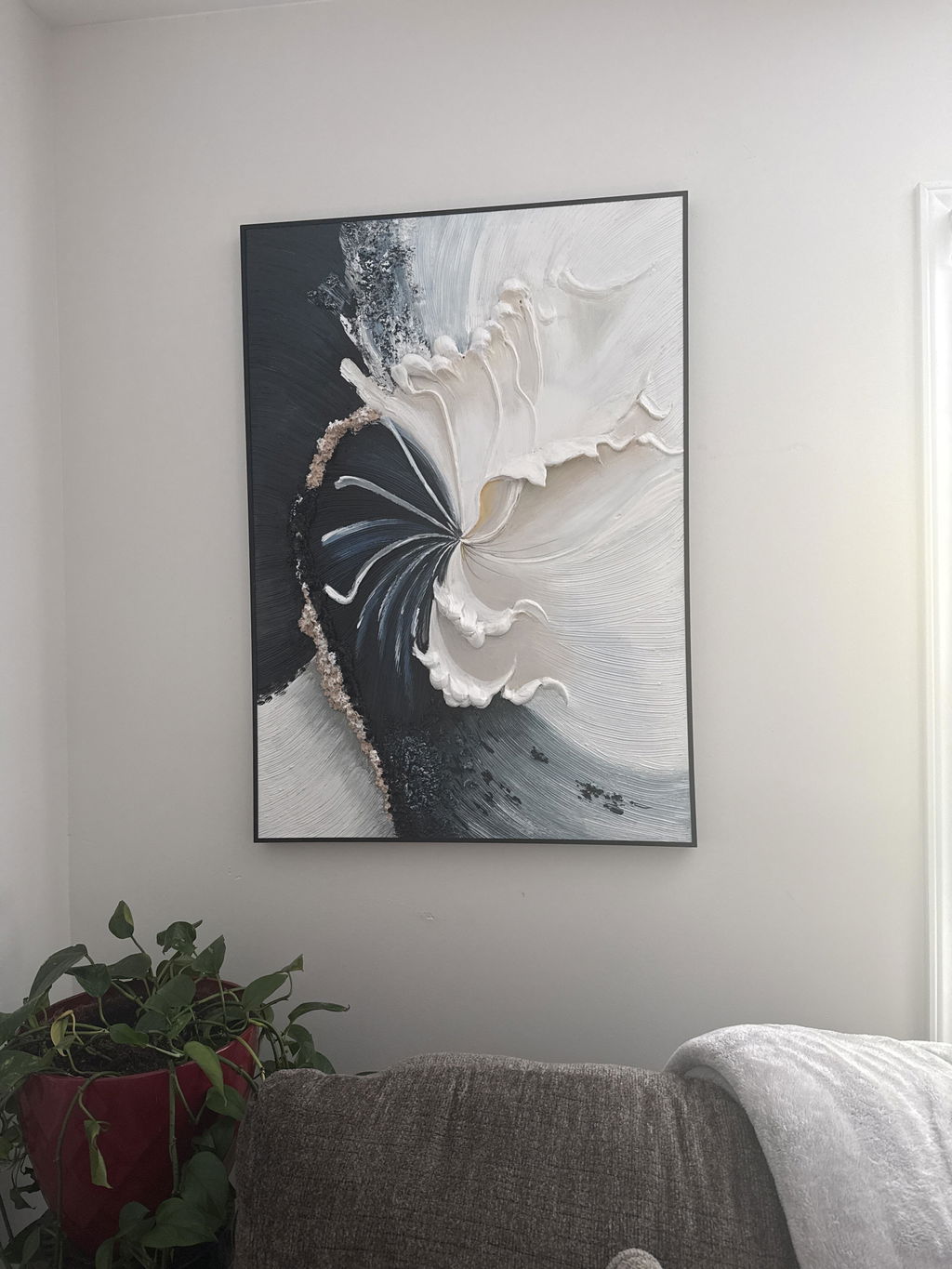
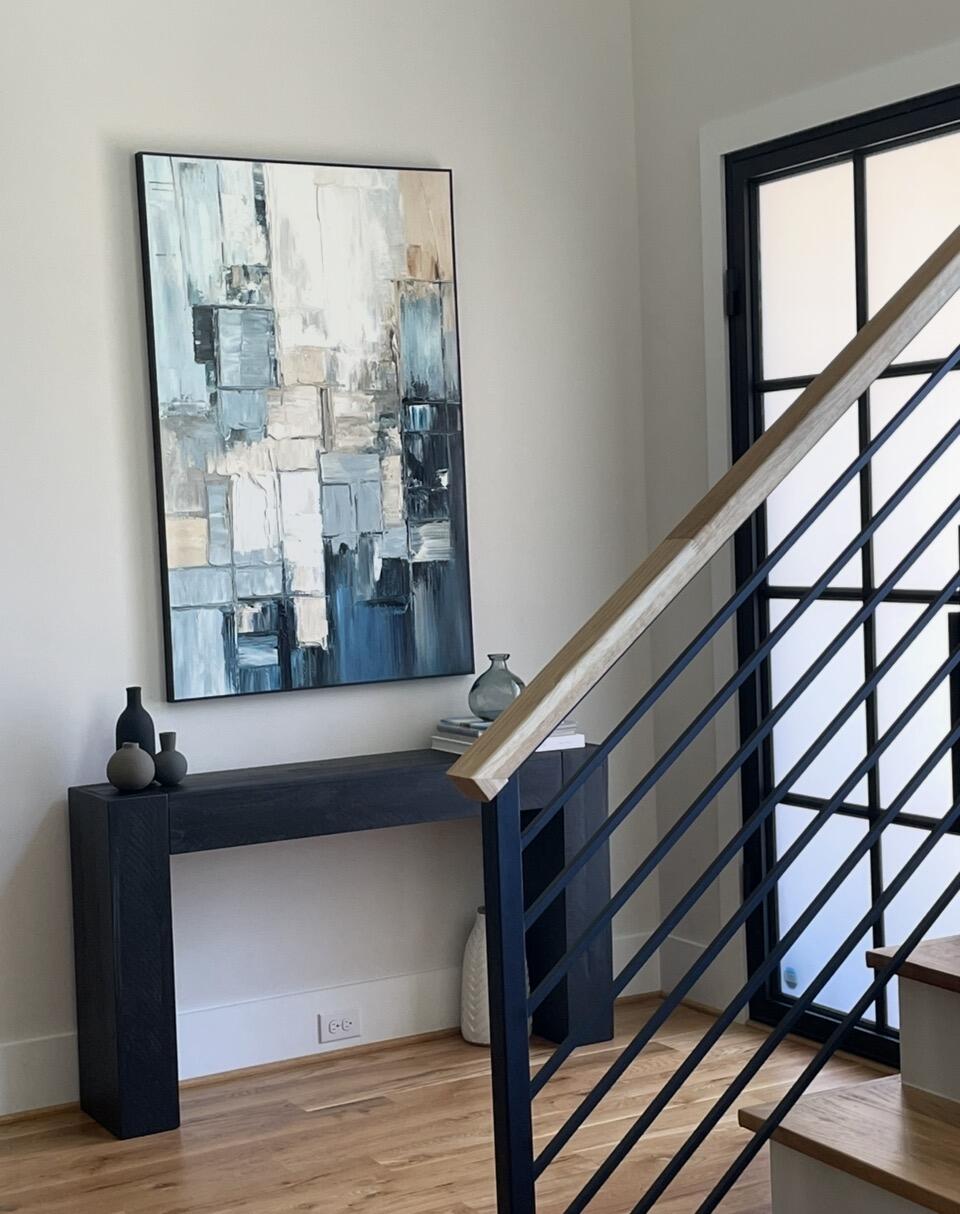
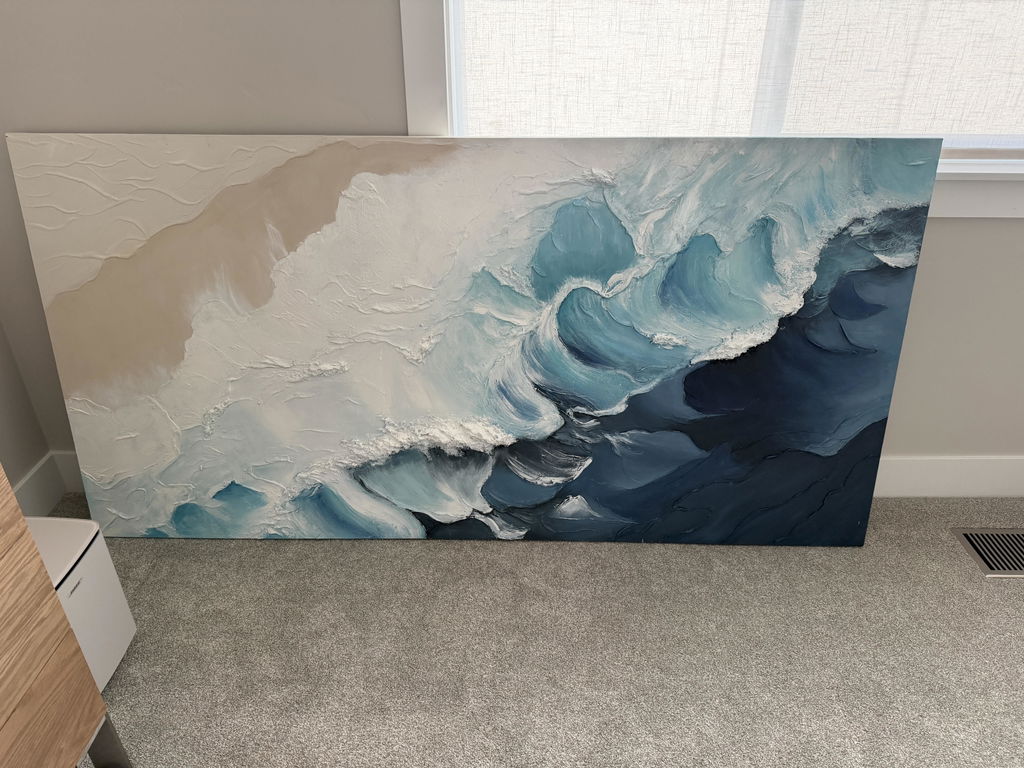
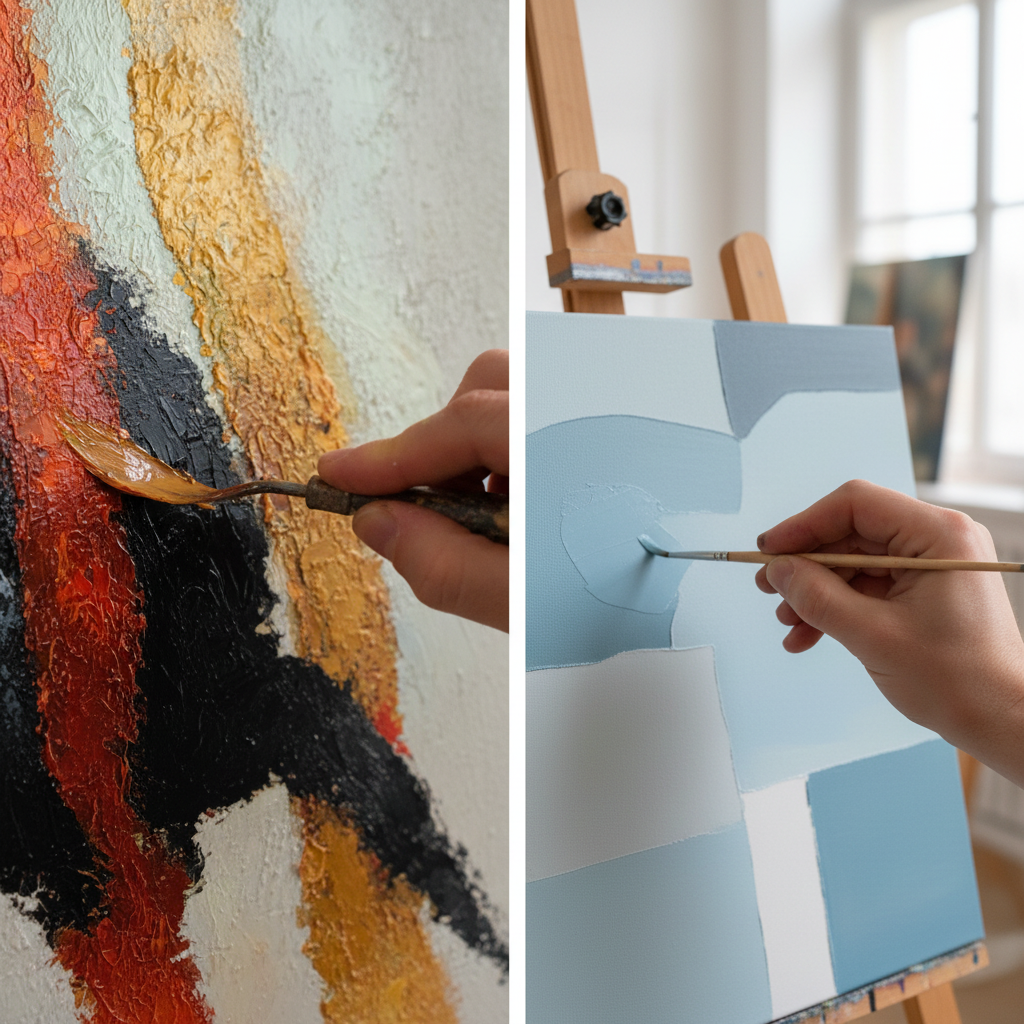
For pieces larger than 36 inches, the curing time doesn't just increase; it scales exponentially. A thin glaze might dry in 48 hours, but the heavy "relief" textures found in modern abstract works—the kind that MUNCH Museum tests prove exponentially stimulate viewer satisfaction—trap wet oil beneath a "skin." If shipped too early, this skin can rupture under the pressure of packing materials, leading to catastrophic surface damage.
The "Pro Hack": Drying Accelerators
Experienced artists working on 30-to-60-day deadlines often utilize catalysts like alkyd mediums or cobalt-based driers. These additives bridge the gap, reducing the initial handling window to 24–48 hours. However, even with these accelerators, we maintain a strict rule: if your project must be complete and installed within 30 days, oil is a high-risk gamble.
Acrylics: The Sprint Champion for Modern Renovations
If oil is a marathon, acrylic is a 100-meter dash. Acrylic paints are water-based polymers that dry through simple coalescence. As the water evaporates, the polymer spheres move closer together and fuse into a continuous film.
According to research from Golden Artist Colors, this process allows for workable layers within minutes and safe shipping within 24 to 48 hours. This predictability is why professional decorators working on tight move-in deadlines default to acrylics for any project with a lead time under two weeks.
Technical Nuance: The "Haze" and the "SID"
While acrylics are faster, they aren't without their "gotchas." Advanced collectors often notice a slight cloudiness in newly dried pieces. Research from the Tate Modern identifies this as the migration of PEG-type surfactants to the surface, creating water-soluble microcrystals. This "haziness" is a temporary chemical byproduct that can usually be resolved with gentle surface cleaning once the film has fully stabilized (typically 4-7 days).
Another common mistake is over-dilution. We've found that adding more than 20% water to high-flow acrylics can destroy the paint film's adhesion. At that point, the "art" becomes a "stain," losing the archival durability that makes hand-painted work a better investment than digital prints.

The Deadline Matrix: A Practical Selection Guide
To help you navigate your renovation schedule, we have modeled the typical production cycles for both mediums. These ranges are based on standard studio practices and assume professional-grade pigments.
| Project Phase | Acrylic Timeline | Oil Timeline (Standard) | Oil Timeline (Accelerated) |
|---|---|---|---|
| Workable Layering | 20–60 Minutes | 12–24 Hours | 4–6 Hours |
| Touch-Dry (Safe to Move) | 4–6 Hours | 3–5 Days | 24 Hours |
| Shipping Ready | 48 Hours | 14–21 Days | 7–10 Days |
| Varnishing Window | 7 Days | 6–12 Months | 3–6 Months |
| Odor Dissipation | < 24 Hours | 2–4 Weeks | 1–2 Weeks |
Modeling Note (Reproducible Parameters): This scenario model is a deterministic estimate based on common industry heuristics, not a controlled lab study.
- Assumed Humidity: 45%–55% RH.
- Assumed Temperature: 20°C–22°C.
- Coating Thickness: ~1.5mm (Medium Impasto).
- Substrate: Triple-primed cotton canvas.
- Boundary Condition: Times may double in coastal/high-humidity environments or for "heavy-texture" palette knife applications (>5mm).
Health, Safety, and the "New Home" Smell
For many home improvers, especially those with young children or respiratory sensitivities, "Indoor Air Quality" (IAQ) is a non-negotiable priority. This is where the choice of medium becomes a health decision.
VOCs and the EPA Warning
The EPA warns that indoor air pollution is often significantly higher than outdoor levels. Traditional oil painting involves mineral spirits and turpentine, which emit Volatile Organic Compounds (VOCs). While "odorless" solvents exist, Princeton University EHS guidelines warn that these can still cause central nervous system neuropathy if used in poorly ventilated spaces.
If you are moving into a brand-new home that is already off-gassing from new carpets and cabinetry, adding an un-cured oil painting can overwhelm the space's air filtration. In these cases, we recommend:
- Acrylics: Which are virtually VOC-free and pass strict IAQ tests for healthcare LEED certification.
- Eco-Friendly Oils: Utilizing walnut oil or hemp-based binders, which eliminate the need for toxic solvents altogether, as noted by the Cincinnati Art Museum.
The Heavy Metal Factor
When commissioning art for a nursery or playroom, the pigment chemistry matters. Laboratory tests published in PMC detected heavy metals like zinc and cadmium in certain budget-grade paints. We strictly adhere to the ASTM D-4236 labeling standards, ensuring that every piece uses pigments where the heavy metals are chemically "locked" in a crystalline matrix, preventing migration into the environment.
Beyond the Clock: The Investment Value of Hand-Painted Art
Why go through the stress of timelines at all when digital prints are instant? The answer lies in what the University of Chicago calls "essential identity." Their empirical research shows that consumers perceive digital replicas as lacking the artist's soul, leading to a collapse in long-term value.
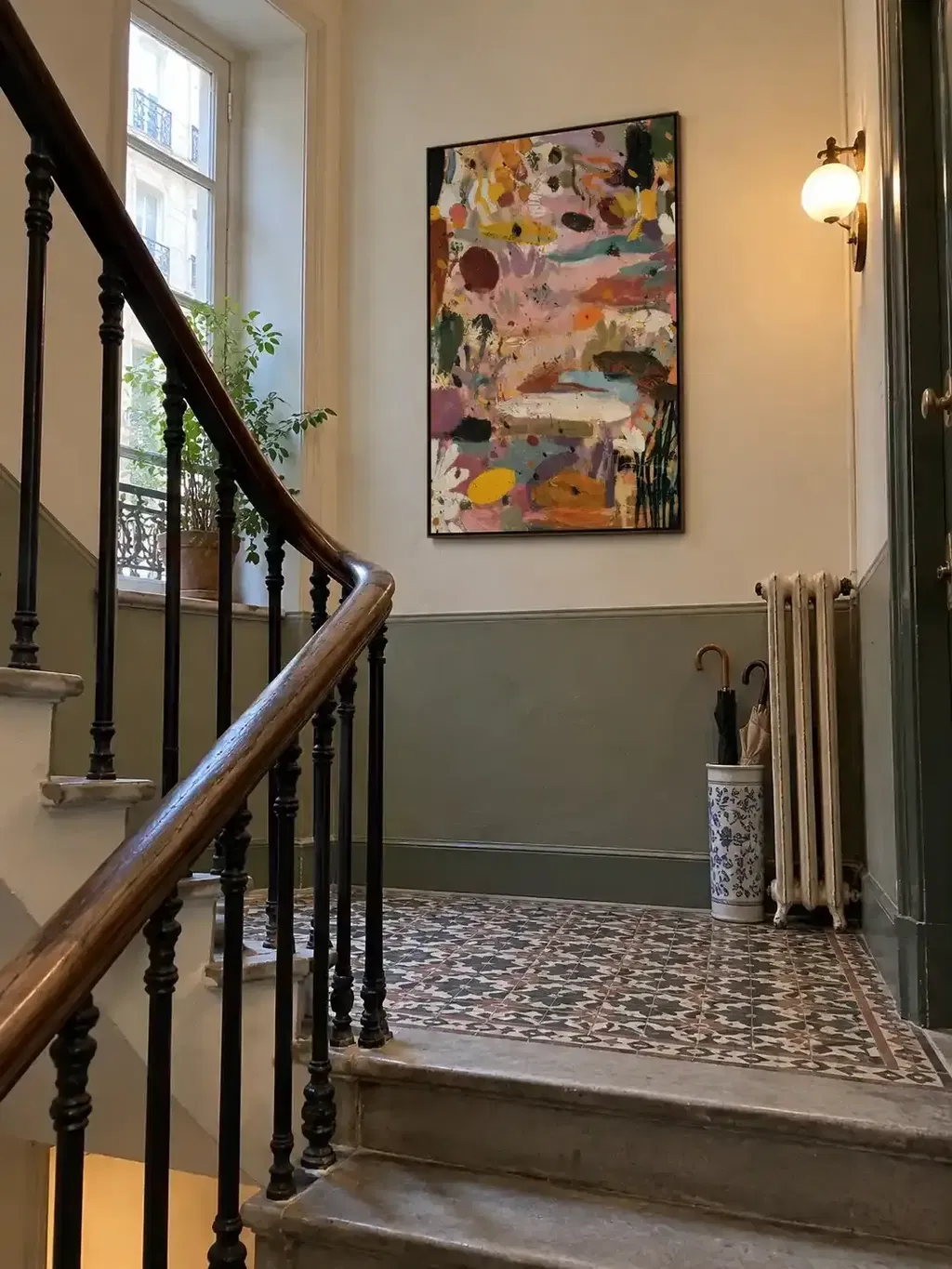
Furthermore, a hand-painted mural isn't just decor; it’s a property value multiplier. A Royal Society analysis found that neighborhoods and homes with high "art" presence saw greater relative price gains. In the commercial sector, the impact is even more dramatic—Chicago’s Millennium Park art projects drove $1.4 billion in real estate growth.
Biophilic Benefits for the Modern Workspace
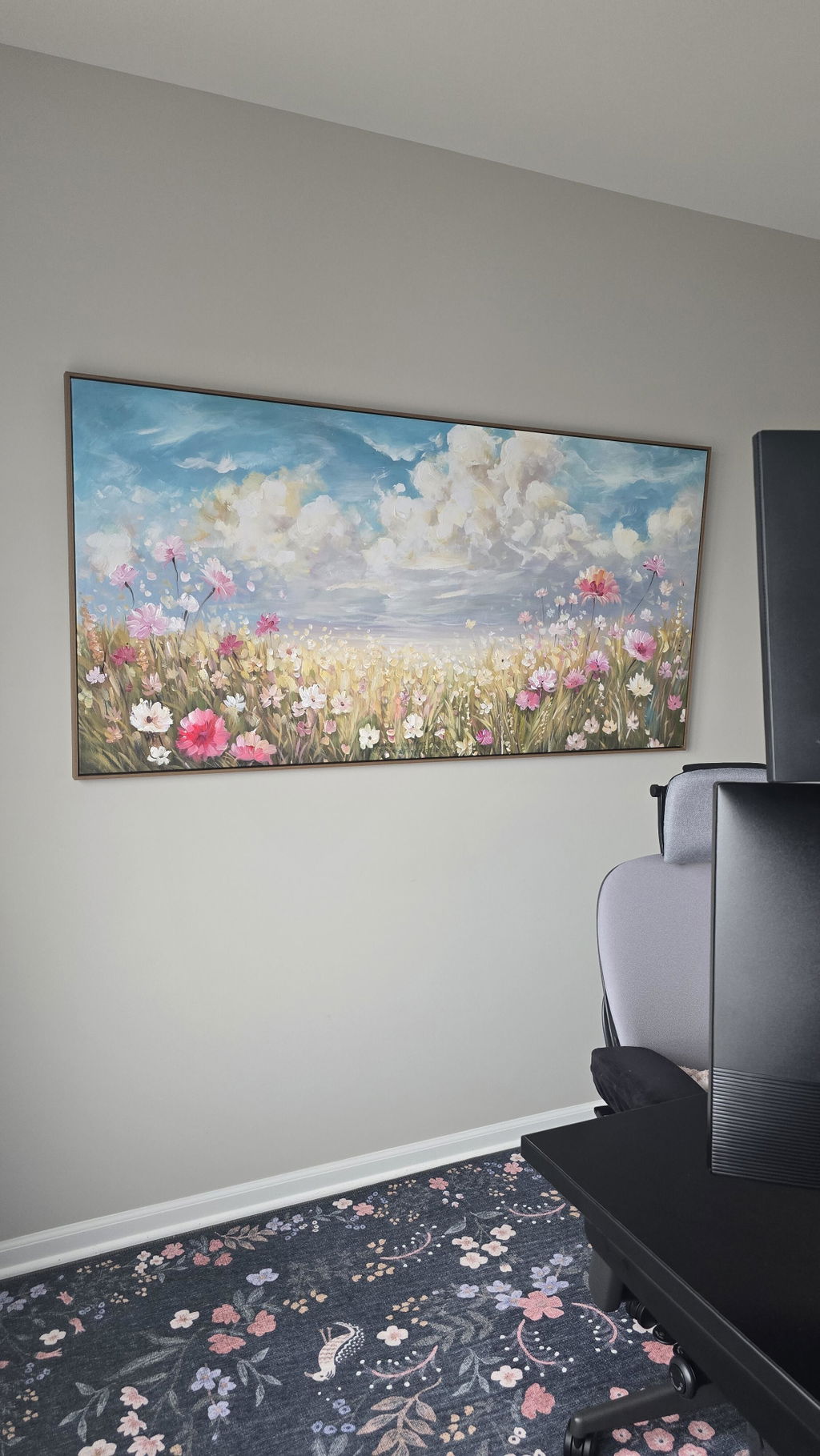
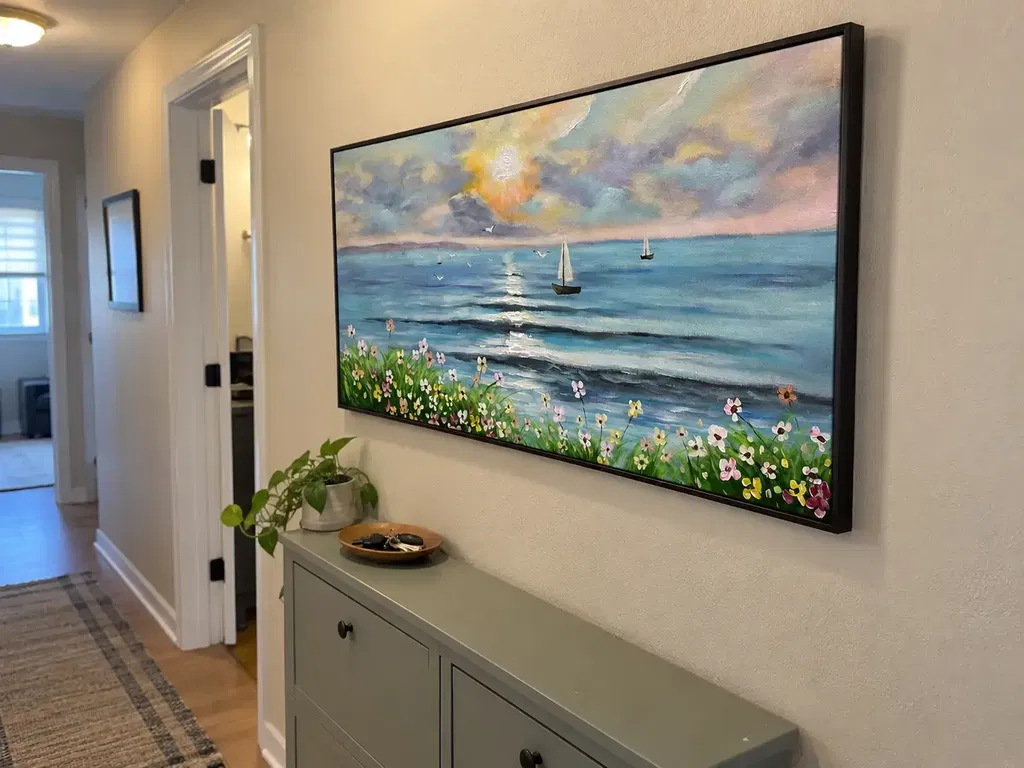
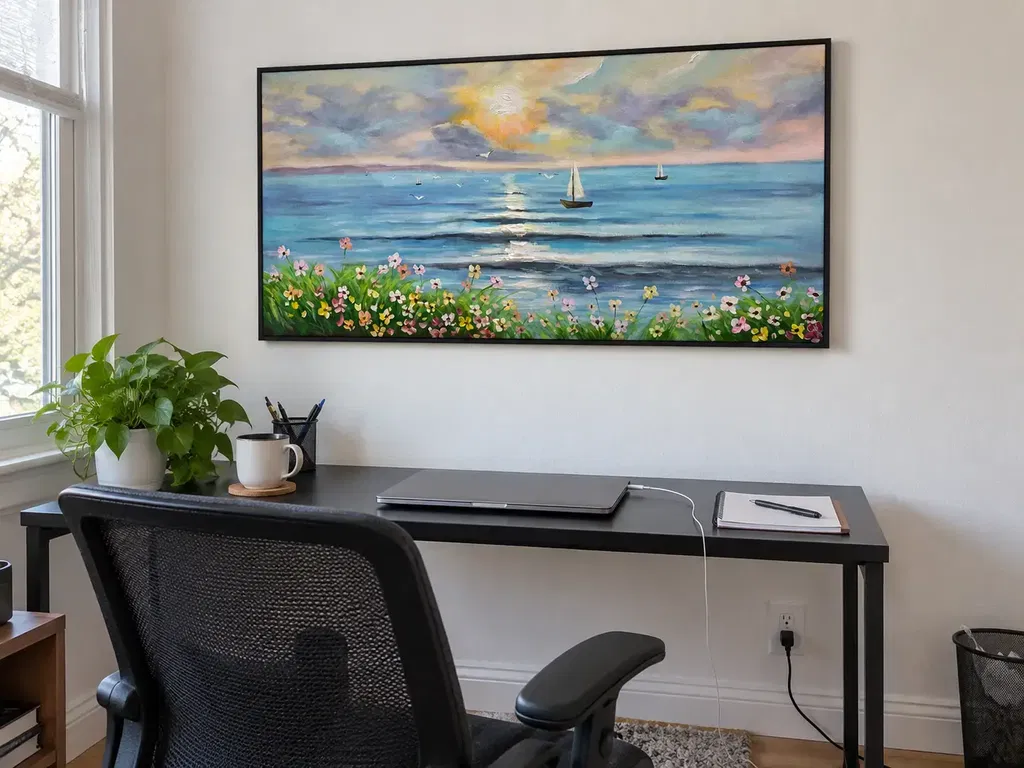
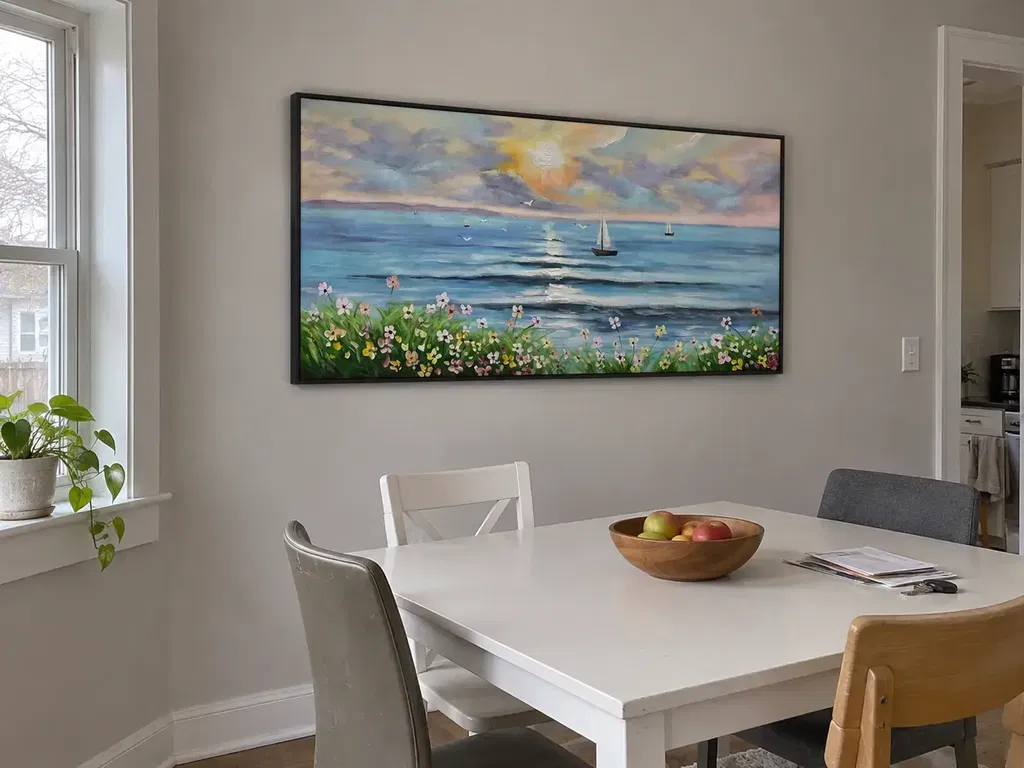
If you are renovating a home office, a nature-themed mural does more than fill a wall. According to the University of Central Arkansas, biophilic design featuring natural landscapes produces the same stress-reduction effects in the brain as being outdoors. This accelerates healing and sparks creativity, potentially reducing "cognitive fatigue" by up to 30% for those working in high-density urban environments.

Making the Final Call: A Three-Question Checklist
Before you sign off on a commission, run your project through this final heuristic:
- What is the "Hard" Deadline? If you need the art in hand in less than 21 days, choose acrylic. If you have 45+ days, oil becomes a viable luxury.
- What is the Installation Environment? For high-humidity areas (bathrooms, kitchens), acrylic's resistance to moisture swelling—as documented in ResearchGate aging studies—makes it the superior choice.
- Are there IAQ Sensitivities? If the room is for a child or someone with chemical sensitivities, prioritize zero-VOC acrylics or solvent-free oil alternatives.
Choosing between oil and acrylic isn't about which is "better"—both are capable of museum-grade beauty. It’s about aligning the medium's chemical reality with your life's logistical needs. By respecting the "cure," you ensure that your new home is filled with art that is as enduring as it is beautiful.
YMYL Disclaimer: This article is for informational purposes only and does not constitute professional medical, safety, or financial advice. The chemical properties and drying times mentioned are based on generalized industry models and may vary by specific paint brand, application technique, and environmental conditions. Always consult with a professional conservator or IAQ specialist for sensitive installations.
References
- Marketplace: The Expensive Art Market Struggles (2025)
- Tate Modern: Conservation Concerns for Acrylic Emulsion Paints
- Royal Society: Quantifying the link between art and property prices
- EPA: Indoor Air Quality and Low-VOC Paints
- Golden Artist Colors: Drying Technical Notes
- Columbia Business School: Human-Made vs. AI Art Perception Study
- UChicago: Does Artwork Preserve Essential Identity?